消费

Search documents
光大期货金融期货日报-20251205
Guang Da Qi Huo· 2025-12-05 08:17
1. Report Industry Investment Rating - Stock index: Oscillating [1] - Treasury bonds: Relatively strong [1] 2. Core Viewpoints of the Report - The liquidity-driven market since June has ended, and the market refocuses on fundamental logic. New productive forces represented by AI have optimistic growth expectations, especially in the upstream hardware manufacturing of the technology sector, but there's a lack of event catalysts near the year - end. Traditional economic sectors are in a process of oscillating recovery. Overseas tech stocks have divergent expectations. The market volume and volatility are decreasing, and the risk appetite is falling. The index is expected to oscillate in the short term [1]. - Treasury bond futures closed with declines. The central bank conducted reverse repurchase operations, and there was a net withdrawal of funds. The bond market showed a situation where good news was exhausted, with treasury bond yields oscillating slightly upward and the yield curve steepening. It's expected to continue narrow - range oscillations within the year [1][2] 3. Summaries by Relevant Catalogs Research Viewpoints - **Stock Index**: The A - share market oscillated flatly, with the TMT sector rising and the consumer sector回调. The Wind All - A index rose 0.01% with a trading volume of 1.56 trillion yuan. Different stock indexes had varying degrees of increase. The market is expected to oscillate in the short term [1]. - **Treasury Bonds**: Treasury bond futures closed with declines. The central bank carried out 1808 billion yuan of 7 - day reverse repurchase on December 4, with a winning bid rate of 1.4%. There was a net withdrawal of 1756 billion yuan in the open market. The money market showed certain changes, and the bond market is expected to have a narrow - range oscillation within the year [1][2] Market News - The Chinese government conducts export controls on rare - earth related items in accordance with laws and regulations, approves compliant civilian export applications in a timely manner, and promotes compliant trade in dual - use items [4] Chart Analysis - **Stock Index Futures**: It includes the trend charts of IH, IF, IM, IC main contracts and the basis trend charts of each index futures contract [5][6][7] - **Treasury Bond Futures**: It includes the trend chart of treasury bond futures main contracts, the yield chart of treasury bond spot, the basis chart, the inter - period spread chart, the cross - variety spread chart, and the fund interest rate chart [12][13][16] - **Exchange Rates**: It includes the intermediate price charts of the US dollar, euro against the RMB, the forward exchange rate charts of the US dollar, euro against the RMB, and the charts of the US dollar index, euro - US dollar, pound - US dollar, and US dollar - yen exchange rates [20][21][27]
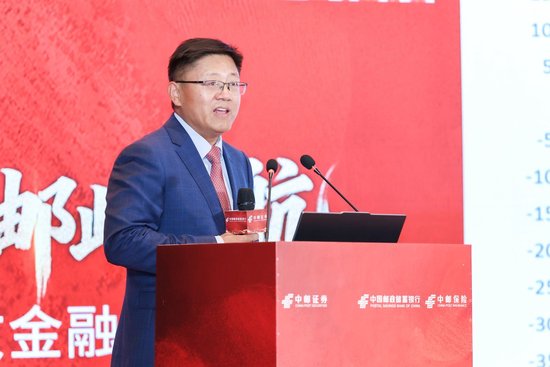
港股消费ETF(159735)年初至今涨超21%,零跑汽车涨超1%,机构:消费有望延续温和增长的新常态
2 1 Shi Ji Jing Ji Bao Dao· 2025-12-05 02:15
Group 1 - The Hong Kong stock market opened lower and continued to decline, with the Hong Kong Consumer ETF (159735) dropping by 0.48% as of the report date, although it has risen over 21% year-to-date as of December 4 [1] - Notable stocks within the ETF include Li Auto and Techtronic Industries, which both increased by over 1%, while Chow Tai Fook, Li Ning, Hengan International, and Midea Group also showed positive performance [1] - The Hong Kong Consumer ETF tracks the CSI Hong Kong Stock Connect Consumer Theme Index, which consists of 50 large-cap, liquid consumer-related stocks within the Stock Connect framework, weighted by free float market capitalization to reflect the overall performance of consumer stocks [1] Group 2 - According to CMB International, consumer spending is expected to see a slight recovery in 2025, with a moderate growth trend continuing into 2026 characterized by slower overall demand growth [2] - The new normal in consumption will be driven by rational consumer behavior and an upward shift in demand levels, leading to structural differentiation that becomes a significant growth driver in niche markets [2] - The market is anticipated to gradually establish a new balance focused on uncovering consumer demand, emphasizing operational efficiency; companies need to accurately perceive consumption trends through product, channel, technology innovation, and supply chain optimization to seize structural opportunities in the new normal [2]



期指:周末临近,政策关注继续升温
Guo Tai Jun An Qi Huo· 2025-12-05 01:46
Group 1: Report Industry Investment Rating - No relevant content Group 2: Core View of the Report - On December 4th, all the current - month contracts of the four major stock index futures rose. IF increased by 0.38%, IH by 0.44%, IC by 0.61%, and IM by 0.39%. The total trading volume of stock index futures declined on this trading day, indicating a cooling of investors' trading enthusiasm. In terms of positions, the total positions of IF, IH, IC, and IM all decreased [1][2]. Group 3: Summary According to Related Catalogs 3.1 Stock Index Futures Data Tracking - **CSI 300 and Related Futures**: The CSI 300 closed at 4546.57, up 0.34%. Among its futures, IF2512 closed at 4530.6, up 0.38% with a basis of - 15.97, and its trading volume was 63708 (down 4155) and position was 136475 (down 5723) [1]. - **SSE 50 and Related Futures**: The SSE 50 closed at 2974.34, up 0.38%. IH2512 closed at 2968.2, up 0.44% with a basis of - 6.14, and its trading volume was 27688 (up 123) and position was 53262 (down 2692) [1]. - **CSI 500 and Related Futures**: The CSI 500 closed at 7012.81, up 0.24%. IC2512 closed at 6983.2, up 0.61% with a basis of - 29.61, and its trading volume was 64721 (down 2618) and position was 123278 (down 10513) [1]. - **CSI 1000 and Related Futures**: The CSI 1000 closed at 7248.66, up 0.01%. IM2512 closed at 7213.4, up 0.39% with a basis of - 35.26, and its trading volume was 116454 (down 2178) and position was 181088 (down 11986) [1]. 3.2 Total Trading Volume and Position Changes - The total trading volume of IF decreased by 5184 lots, IH by 44 lots, IC by 2272 lots, and IM by 5429 lots. The total positions of IF decreased by 3942 lots, IH by 3020 lots, IC by 8576 lots, and IM by 13768 lots [2]. 3.3 Top 20 Member Position Changes - **IF**: For IF2512, long - positions decreased by 5074 and short - positions decreased by 4412; for IF2603, long - positions increased by 581 and short - positions increased by 642 [5]. - **IH**: For IH2512, long - positions decreased by 2193 and short - positions decreased by 1830; for IH2603, long - positions decreased by 511 and short - positions decreased by 214 [5]. - **IC**: For IC2512, long - positions decreased by 7954 and short - positions decreased by 7808; for IC2601, long - positions increased by 737 and short - positions increased by 721 [5]. - **IM**: For IM2512, long - positions decreased by 8399 and short - positions decreased by 10183; for IM2601, long - positions increased by 959 and short - positions increased by 896 [5]. 3.4 Trend Intensity - The trend intensity of IF and IH is 1, and that of IC and IM is also 1. The trend intensity ranges from - 2 to 2, with - 2 being the most bearish and 2 being the most bullish [6]. 3.5 Important Driving Factors - Chinese President Xi Jinping held talks with French President Macron. The two leaders exchanged views on the Ukraine crisis and witnessed the signing of cooperation documents in multiple fields. There was also an inaccurate media report about the Japanese Prime Minister's stance on Taiwan, which was refuted by the Chinese Foreign Ministry [6]. 3.6 Other Market Information - The central bank will conduct a 1 - trillion - yuan 3 - month repurchase operation on December 5th to offset the maturity amount. The three major US stock indexes closed mixed. The Shanghai Composite Index fell 0.06%, while the Shenzhen Component Index rose 0.4% and the ChiNext Index rose 1.01%. The A - share market turnover was 1.56 trillion yuan [7].
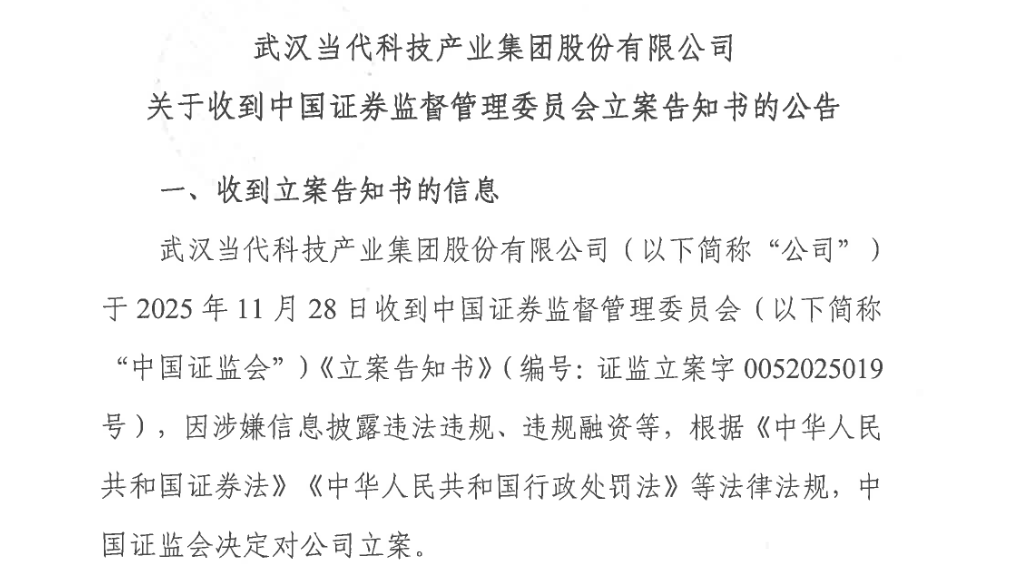
当代集团、天风证券双双被立案
Jin Rong Shi Bao· 2025-12-04 13:19
Group 1 - On December 1, Wuhan Contemporary Technology Industry Group Co., Ltd. (referred to as "Contemporary Group") announced that it received a notice of investigation from the China Securities Regulatory Commission (CSRC) on November 28 for suspected violations of information disclosure and illegal financing [1] - Tianfeng Securities also received a notice of investigation on the same day for similar violations, indicating a strong correlation between the two cases [1] - Both companies have committed to cooperating with the CSRC's investigation and fulfilling their information disclosure obligations [1] Group 2 - As of December 4, Tianfeng Securities' stock price was 4.25 yuan per share, with a market capitalization of 428 billion yuan, having lost nearly 13 billion yuan in market value over the past three months [2] - The Contemporary Group, once the largest private enterprise in Hubei, has faced severe debt crises and legal challenges since April 2022, leading to its involvement in Tianfeng Securities' issues [3][4] - Tianfeng Securities has been significantly affected by the financial troubles of Contemporary Group, with approximately 1.9 billion yuan in non-operating fund occupation reported [3] Group 3 - The relationship between Tianfeng Securities and Contemporary Group has been characterized by deep financial entanglement, with Tianfeng assisting in financing and holding a substantial amount of Contemporary's bonds [4] - In 2022, the local government intervened to separate the two companies, with Hubei Hongtai Group becoming the controlling shareholder of Tianfeng Securities [4] - Contemporary Group is currently undergoing a bankruptcy reorganization process, with uncertainties regarding its execution [4] Group 4 - Tianfeng Securities is planning to issue up to 960 million USD (approximately 6.9 billion yuan) in overseas bonds to manage its debt, which is subject to shareholder approval [5] - The company has historically relied on bond financing for expansion, raising a total of 107.06 billion yuan since its listing, with over 86.35 billion yuan from bond financing [6] - In 2023, under new state ownership, Tianfeng Securities reported a significant increase in revenue and a turnaround in net profit, although 2024 projections indicate a potential decline [6] Group 5 - Despite improvements, Tianfeng Securities' return on equity remains low at 0.60%, significantly below the industry average of 6.16% [7] - The company's risk coverage and net stable funding ratios are concerning, with the net stable funding ratio falling below the regulatory warning line [7] - Recent capital increases and bond issuances are expected to enhance Tianfeng's risk management capabilities and asset quality [8]

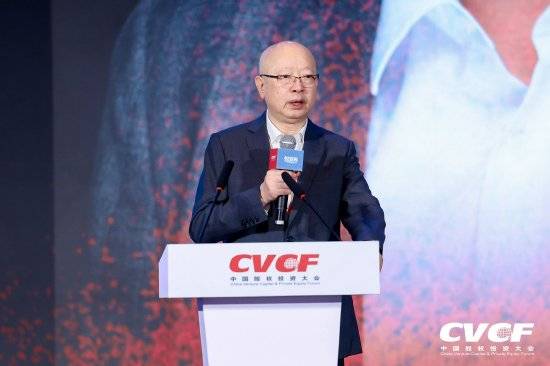
前海方舟靳海涛:目前资本市场对消费领域关注不够,这是错误的
Sou Hu Cai Jing· 2025-12-04 05:08
Core Viewpoint - The current venture capital funds should focus on five major processes that are expected to yield good investment returns, including addressing supply chain issues, digital transformation, carbon neutrality, health advancements, and consumption upgrades [3][8]. Group 1: Five Major Processes for Investment - The first process is the "short board" process, which aims to solve critical supply chain issues and ensure safety and self-control [3][8]. - The second process is the digital transformation process, emphasizing the need to use digital technology to reform traditional industries and improve various aspects of life and work [3][9]. - The third process is the carbon neutrality process, which has evolved from being driven by financial products to policy-driven, and now is entering a demand-driven phase [3][10]. - The fourth process is the "big health" process, shifting from symptomatic treatment to root cause resolution, with predictions that China will lead in biopharmaceuticals in the next seven to eight years [3][11]. - The fifth process is the consumption upgrade process, which is crucial for economic growth and should receive more attention and support from the capital market [3][11]. Group 2: Global Perspectives on Venture Capital - The development trends in the venture capital industry are influenced by changes in demand and supply, requiring innovation and reform in products and services [4][5]. - Countries are adopting different development paths, with some focusing on innovation-driven investment strategies that support small and medium enterprises and disruptive innovation, while others rely on traditional investment strategies [5][6]. - China has maintained an innovation-driven investment strategy, which has significantly contributed to its technological advancements and economic growth [6][7]. Group 3: Investment Impact and Achievements - Since the emergence of venture capital in 1999, China's GDP has increased over 13 times, with venture capital contributing more than 43% to this growth [7]. - Venture capital has played a significant role in establishing a complete industrial chain in China, with over 40% of major industrial products leading globally [7]. - The venture capital sector has supported the development of leading companies in various industries, including semiconductors and renewable energy [7]. Group 4: Future Recommendations for Venture Capital - The industry should focus on "early, small, and future" investments, promoting patient capital as a fundamental requirement for a healthy venture capital ecosystem [12]. - The capital source structure should be optimized to include government capital, various financial capitals, and family wealth, creating a balanced investment environment [13]. - Emphasis should be placed on post-investment management and support to help companies grow, rather than solely pursuing high-profile successes [14]. - The development of S funds and follow-up funds is essential to avoid potential market disruptions and support the real economy [15].
中信证券朱烨辛:消费医疗双轮驱动,构建资本市场共生生态
Sou Hu Cai Jing· 2025-12-04 05:07
中信证券党委委员、经营管理委员会执行委员、研究部行政负责人朱烨辛在致辞中表示,当前全球经济 格局与技术革命深刻变革,中国正沿高质量发展航道破浪前行。消费领域正经历从规模化向品质化、个 性化的质变,多种新业态、新模式加速涌现,既满足14亿人美好生活需要,也为国内大循环注入新动 能。医疗健康产业依托生命科学突破,在精准医疗、数字健康、创新药、智慧养老等领域迎来黄金发展 期,既是民生保障基石,更是科技自立自强的战略支点。 朱烨辛表示,消费与医疗构成的双轮驱动将相互赋能。论坛旨在汇聚产业智慧、揭示趋势机遇,推动结 构性机遇转化为发展动能,为构建共生共荣的资本市场生态提供指引。 12月3日至4日,由中信证券主办的2025年"全球消费医药联合主题论坛"在上海举行。 ...

中美新老经济分化格局下,债券利率下行更为确定
2025-12-04 02:21
Summary of Conference Call Records Industry and Company Overview - The records discuss the economic landscape in the United States and China, focusing on the differentiation between new and old economies, particularly in the context of rising bond rates and economic pressures [1][2][5]. Core Insights and Arguments - **Economic Challenges in the U.S.**: The U.S. economy is facing "three highs" challenges: high inflation, high interest rates, and high wages, leading to increased operational costs for traditional businesses and significant economic downward pressure [1][4]. - **Differentiation in Economic Sectors**: There is a clear divide between new and old economies in both the U.S. and China. In the U.S., sectors related to AI and technology are experiencing rapid investment growth, while traditional industries like automotive manufacturing are under pressure from tariffs and rising costs [5]. In China, although emerging industries are growing quickly, they still represent a small portion of the economy, with traditional sectors like real estate facing significant downward pressure [5]. - **Market Trends**: Funds are increasingly flowing into emerging industries in the stock market, while the bond market is attracting capital due to the financing needs of traditional industries and favorable monetary policies [6]. The U.S. stock market is considered overvalued, but not to an extreme level compared to historical bubbles [6]. - **Electricity Consumption and Metal Usage**: The records highlight that electricity consumption in emerging sectors like AI and chips is increasing, while traditional sectors like real estate show lower consumption. Additionally, demand for copper is strong, while demand for rebar is weak, indicating a disparity in resource utilization between new and old industries [7]. - **Gold Price Dynamics**: Gold prices are performing strongly despite the overall economic conditions. This is attributed to a divergence in the relationship between gold prices and bond yields, as well as the copper-gold ratio, which has been declining while bond yields remain high [8]. This suggests a market contradiction where new economic sectors are thriving while old sectors face challenges, leading investors to seek safety in gold and bonds [8]. Other Important Insights - **Employment and Consumer Confidence**: The U.S. is experiencing deteriorating non-farm employment data, with rising layoffs and consumer confidence hitting historical lows, indicating significant issues within the traditional economy [4]. - **China's Market Performance**: In 2025, China's stock market is performing well, with the bond market outperforming stocks. This performance is closely linked to capital returns, which are influenced by trade surpluses and fiscal deficits [9]. The strong capital returns are driving the stock market's performance, highlighting the impact of new and old economic differentiation [9].
A股三大指数小幅高开,沪指涨0.04%
Feng Huang Wang Cai Jing· 2025-12-04 01:36
Group 1 - A-shares opened slightly higher with the Shanghai Composite Index up 0.04%, Shenzhen Component Index up 0.02%, and ChiNext Index up 0.01% [1] - Sectors such as robotics and non-ferrous metals showed strong performance [1] Group 2 - CITIC Securities highlighted strong investment enthusiasm in energy storage, with planned investment projects in Inner Mongolia expected to double compared to this year [2] - The demand for energy storage is expected to continue growing due to high load growth and the ongoing development of renewable energy [2] - Battery materials, including cathodes, anodes, electrolytes, and separators, are anticipated to see sustained price increases, with a positive outlook for battery and integration segments [2] Group 3 - Tianfeng Securities noted strong bottom-line support for the cement industry, with over 85% of clinker lines in northern provinces currently offline due to winter production restrictions [3] - The cement industry is expected to see a significant reduction in production capacity, with a total of 5,250 million tons of new capacity being added and 8,359 million tons of capacity being exited by November [3] - The effects of production capacity governance in the cement sector are expected to become evident by 2026 [3] Group 4 - Huatai Securities projected a steady recovery in domestic demand, driven by ongoing consumption policies and structural growth opportunities in the consumer sector [4] - The report emphasized four key investment themes for 2026: the rise of domestic brands, technology-driven consumption, emotional consumption, and undervalued high-dividend blue-chip leaders [4] - New consumer segments such as trendy toys, beauty and personal care, and ready-to-drink beverages are expected to emerge as strong growth areas [4]


“高认购+高波动”,港交所多只新股股价“过山车”
Mei Ri Jing Ji Xin Wen· 2025-12-03 13:06
Core Insights - The year 2025 is characterized as a "profitable year" for IPOs in the Hong Kong stock market, with several new stocks experiencing first-day gains exceeding 100% [1][2] - However, a prevailing trend of "high open, low close" has emerged, where many stocks see significant initial gains but subsequently decline [1][2] - The phenomenon is attributed to high subscription enthusiasm and significant oversubscription, leading to a supply-demand imbalance that drives initial price surges [2][3] Group 1: IPO Performance - The IPO market in Hong Kong has shown strong performance in 2025, with many new stocks achieving substantial first-day price increases ranging from 20% to 330% [2][4] - Notable examples include Golden Leaf International Group, which had an oversubscription rate of over 11,500 times and a first-day closing gain of 330%, but has since fallen back to its issue price [1][2] - The median first-day return for new stocks is around 30%, but the distribution is uneven, with leading companies performing well while many smaller stocks face significant declines [6][7] Group 2: Market Dynamics - The high subscription rates and the resulting "one share hard to get" situation have led to a market environment where investors are eager to realize profits on the first day [3][4] - The introduction of new regulations by the Hong Kong Stock Exchange in August 2025 has altered the allocation mechanisms for IPOs, allowing for a higher percentage of shares to be allocated to institutional investors, which may reduce the chances for retail investors [3][7] - The trading environment encourages short-term behavior, with many investors aiming for quick profits on the first day due to the absence of price limits and the T+0 trading mechanism [6][7]
中邮证券黄付生:权益市场持续结构牛市,大宗商品酝酿超级周期
Xin Lang Cai Jing· 2025-12-03 12:36
Core Viewpoint - The 2026 Chinese equity market is expected to enter a "long cycle, structural bull market," while the bond market will shift to a phase of volatility, and a super cycle for commodities may gradually begin, with global asset allocation focusing more on China [1][7]. Group 1: Chinese Equity Market - In the first 11 months of 2025, global major assets showed a comprehensive increase, with the South Korean Composite Index and COMEX gold rising over 60%, while the CSI 300 and Hang Seng Index increased over 25% [3][9]. - Foreign capital inflow into the Chinese stock market reached $50.6 billion in the first 10 months of 2025, significantly surpassing the total of $11.4 billion for the entire year of 2024 [3][9]. - The allocation ratio of global active mutual funds to Chinese stocks is currently at 6.4%, which is below the historical average of 9%, indicating significant room for growth [3][9]. - The equity allocation ratio of domestic wealth management products is only 2.1%, and if it rises to the average of 5.44% from 2017 to 2024, it could bring an additional 1.15 trillion yuan [3][9]. - The investment themes for 2024 Q3 to 2025 Q3 will focus on "innovative drugs + technology growth" (including innovative drugs, computers, and semiconductors), with energy storage and lithium batteries taking over in Q4 2025, and chemicals and consumer sectors entering a recovery cycle in 2026 [3][9]. Group 2: Bond Market - The rapid decline in bond market interest rates has ended, with the policy interest rate reduction space narrowing to 10-20 basis points, and the 10-year government bond yield expected to fluctuate between 1.5% and 1.9%, while the 30-year yield is projected to be between 1.8% and 2.3% [4][10]. - The bond market's single-sided bull market has concluded, and future trends are expected to be dominated by volatility [4][10]. Group 3: Commodity Market - Current commodity prices are at multi-decade lows relative to U.S. stocks, with the commodity equity ratio approaching historical lows, and gold has already begun to rise, along with noticeable increases in copper and aluminum prices [4][10]. - A new super cycle for commodities is anticipated, driven by global interest rate cuts, economic recovery, and factors such as the U.S. being the only source of growth in global oil production and OPEC+ reaching production limits [4][10].