
石油化工

Search documents
中辉能化观点-20260203
Zhong Hui Qi Huo· 2026-02-03 05:36
中辉能化观点 | 品种 | 核心观点 | 主要逻辑 | | --- | --- | --- | | | | 中东地缘缓和,油价回落,短期仍有较强不确定性。地缘:中东地缘拉扯, | | 原油 | 谨慎看空 | 美伊谈判仍有较大不确定性,油价波动加剧,短期防风险为主;核心驱动: | | ★ | | 供给过剩格局仍未扭转,需求淡季到来,油价仍有下行压力;关注变量: | | | | 美国页岩油产量变化,俄乌以及中东地缘进展。 | | | | 中东地缘缓和,成本端油价大幅回落,液化气跟随油价回落。成本端油价 | | LPG | | 短期受地缘扰动反弹走强,沙特上调 2 月 CP 合同价,成本端利好;供需 | | ★ | 谨慎看空 | 方面,液化气商品量出现下降,PDH 开工率维持在 70%上方,下游化工 | | | | 需求存在韧性;库存端利多,港口库存环比下降。 | | L | | 两油石化库存重新累库,寒潮影响阶段性回落,盘面回吐地缘和天气溢价, | | ★ | 空头盘整 | 短期产业可关注逢高套保机会。近期装置陆续回归,预计本周产量环比增 | | | | 加,基差跌至同期低位,关注后市需求验证情况。 | | | ...
地缘局势的预期差为原油带来重估机会,石化ETF(159731)连续19个交易日合计“吸金”超14亿元
Sou Hu Cai Jing· 2026-02-03 05:36
石化ETF(159731)及其联接基金(017855/017856)跟踪中证石化产业指数,聚焦"大能源"安全逻 辑。不仅能分享下游化工品的利润修复,此外通过高配"三桶油"等炼化龙头,锁定能源上游资源价值, 在油价上行周期具备更强的业绩韧性。 2月3日午后,中证石化产业指数延续上行趋势,成分股涨多跌少,浙江龙盛、光威复材、和邦生物等领 涨。相关ETF方面,同标的指数规模最大的石化ETF(159731)获资金逢低布局,连续19个交易日合 计"吸金"14.13亿元,最新份额达16.56亿份,最新规模16.16亿元。 25年12月以来美国政府相继加大对俄罗斯、委内瑞拉和伊朗等产油国的限制力度,原油供应端也开始出 现实质性受损,OPEC+提供的增产缓冲也有所退坡。上周伊朗地缘局势继续发酵,布伦特油价上涨重 回70美元/桶附近。尽管油价出现近5%回调,但整体产能过剩或在下半年迎来更实质性地改善,将有望 为油价提供边际成本指引和中枢上移机会。 东方财富证券认为,2026年,石油化工行业面临宏观油价博弈与国内产业深刻变革的双重背景。一方 面,原油市场在供需基本面趋弱与地缘风险事件的拉锯下宽幅震荡;另一方面,国内产业在"十五五 ...
盘面大幅回撤,沥青基差反弹
Hua Tai Qi Huo· 2026-02-03 05:18
石油沥青日报 | 2026-02-03 盘面大幅回撤,沥青基差反弹 市场分析 1、2月2日沥青期货下午盘收盘行情:主力BU2603合约下午收盘价3299元/吨,较昨日结算价下跌169元/吨,跌幅 4.87%;持仓127490手,环比下跌18383手,成交297354手,环比下跌65479手。 2、卓创资讯重交沥青现货结算价:东北,3506—3550元/吨;山东,3250—3300元/吨;华南,3300—3320元/吨; 华东,3200—3280元/吨。 近期能源板块整体上涨背后有来自宏观、地缘、资金面等多重因素的驱动,上周五特朗普提名凯文沃什作为新一 任美联储主席,美元指数低位反弹,宏观情绪有所转弱,大宗商品流动性整体出现阶段性退潮。站在地缘层面来 看,上周伊朗局势较为紧张,市场担忧美国与以色列对伊朗采取军事打击,导致油市地缘溢价一度大幅攀升。周 末并未爆发冲突,从伊朗和美方最新表态来看局势有边际缓和的迹象,地缘溢价有所回落。在前期推涨因素退潮 后,昨日能源板块整体出现大幅下跌,沥青期货盘面跟随板块走低。 站在沥青自身市场结构的角度,目前基本面处于供需两弱格局,近期期货大涨带动基差走低,盘面大幅回撤时现 货端 ...
美油供应三重收紧;资金连续10日加仓,化工行业ETF易方达(516570)受市场关注
Sou Hu Cai Jing· 2026-02-03 04:27
Group 1 - The China Petroleum and Chemical Industry Index (H11057) increased by 0.65%, with major stocks like Wanhua Chemical, Salt Lake Potash, Cangge Mining, Hualu Hengsheng, and Yuntianhua rising over 1% [1] - As of February 2, the index has risen by 41.19% over the past year [1] - The E Fund Chemical Industry ETF (516570), which tracks the index, has seen a net inflow of over 1.3 billion in the last 10 days, with its latest fund size reaching 1.537 billion [1] Group 2 - U.S. crude oil inventories fell to 24.785 million barrels, a decrease of 1.11%, nearing warning levels [1] - U.S. crude oil production decreased by 36,000 barrels per day to 13.696 million barrels per day [1] - A winter storm in the U.S. has caused short-term production cuts of up to 2 million barrels per day, affecting refinery operations and tightening supply [1] Group 3 - A report from Bank of America Securities on January 29 indicated that commodities are showing moderate support, led by oil [1] - Historically, Brent crude oil tends to trend upward in February, with strong performance typically occurring in the last third of the month [1] Group 4 - The E Fund Chemical Industry ETF (516570) covers major oil companies, providing a low-cost investment opportunity in the traditional energy sector with a total management and custody fee of only 0.2% per year [2]
纯苯:供需重构 震荡修复
Zhong Guo Hua Gong Bao· 2026-02-03 03:37
Core Insights - The chemical industry is expected to transition from price competition to value creation by 2025, leading to a systematic restructuring of the entire chemical supply chain [1] - The pure benzene market experienced a significant decline in 2025, with prices dropping from 7464 yuan per ton in January to 5318 yuan in December, a decrease of over 40% [1] - For 2026, industry experts anticipate a "supply-demand restructuring and oscillatory recovery" in the pure benzene market, with overall transaction levels expected to gradually improve [1] Supply Dynamics - The rapid expansion of pure benzene production capacity in China has led to a supply surplus, with 2025 production reaching approximately 23 million tons and imports at 5.6083 million tons, marking increases of 10% and 30.03% year-on-year, respectively [2] - In 2026, the supply of pure benzene is expected to show "limited growth and structural optimization," as capacity expansion slows down, with new capacity additions around 2.26 million tons [2] - The exit of outdated production capacity, driven by carbon reduction policies, is accelerating, with about 15% of existing old facilities facing elimination or upgrades [2] Demand Factors - Traditional demand for pure benzene remains stable, primarily driven by the styrene sector, which accounts for approximately 48% of demand [4] - Although traditional demand is steady, emerging market demand is weak, with high-end applications like electronic-grade solvents and pharmaceutical intermediates making up less than 5% of total demand [4] - The overall growth rate for pure benzene demand in Asia is projected to be only 1.6% in 2026 due to global economic uncertainties and trade barriers [4] Market Outlook - The pure benzene market is expected to experience a "bull-bear tug-of-war and oscillatory recovery" in 2026, with prices rising from 5300 yuan to 6200 yuan, a 17% increase driven by improved fundamentals and pre-holiday stockpiling [5] - The market may enter a phase of oscillatory consolidation due to high inventory levels and the acceptance of price increases by downstream enterprises [5] - Long-term, the chemical sector's new cycle narrative will dominate the market, with supply-side constraints and steady traditional demand providing support for price recovery [6]
中韩石化百万吨级航煤装置投产
Zhong Guo Hua Gong Bao· 2026-02-03 03:01
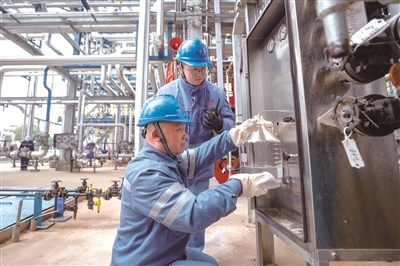
该装置位于武汉中韩石化炼油厂区,采用拆旧改建模式实现零增地建设,依托中国石化石科院自主开发 的上行式连续液相床航煤加氢技术,核心装备与控制系统100%国产化,是国内首套应用该技术的百万 吨级航煤装置。该项目投产后,中韩石化航煤总产能跃升至160万吨/年,单位能耗降低50%,年减排二 氧化碳5.5万吨,预计年产值突破80亿元。 图为装置操作人员正在采集航煤样品准备送检。 (付松/图) 中化新网讯 2月1日,中韩石化120万吨/年液相航煤加氢装置一次投产成功,产出合格精制航煤。 ...

在石化等行业持续开展数智技术、绿色技术改造和产线升级,石化ETF(159731)长期布局价值凸显
Mei Ri Jing Ji Xin Wen· 2026-02-03 02:44
石化ETF(159731)及其联接基金(017855/017856)紧密跟踪中证石化产业指数,从申万一级行 业分布来看,基础化工行业占比为60.02%,石油石化行业占比为32.43%,随着石化产业淘汰落后产能 和加强技术创新,产业链的价值将进一步提升。 2月3日早盘,石油化工行业迎来修复,中证石化产业指数震荡上行,现涨约1.65%,成分股蓝晓科 技、浙江龙盛、兴发集团等领涨。相关ETF方面,同标的指数规模最大的石化ETF(159731)获资金逢 低布局,连续19个交易日合计"吸金"14.13亿元,最新份额达16.56亿份,最新规模16.16亿元。 上海市《政府工作报告》表示,今年要聚焦建设现代化产业体系,在石化、钢铁等行业持续开展数 智技术、绿色技术改造和产线升级。国贸期货分析称,新能源的加速普及,叠加大型国企和民企一体化 炼化基地的规模与技术优势,正在持续挤压传统独立地炼企业的市场份额。中小型、装置落后、产品单 一的地炼企业面临日益严峻的生存压力,行业整合与淘汰进程加快,市场份额进一步向具备成本、环保 和产业链协同优势的头部企业集中。 每日经济新闻 (责任编辑:董萍萍 ) 【免责声明】本文仅代表作者本人观点 ...
化工行业2025年信用回顾与2026年展望
新世纪资信评估· 2026-02-03 02:35
Investment Rating - The chemical industry is rated as "Weak" and stable for 2025, with expectations of continued low economic prosperity and pressure on profitability [1]. Core Insights - The chemical industry is expected to remain in a low prosperity phase in 2025, with most raw material and product prices at historical lows. The decline in oil, coal, and gas prices has eased raw material cost pressures for chemical companies, but has weakened support for product prices [1][7]. - The overall profitability of the chemical industry is under pressure, with different segments experiencing varying levels of impact. The supply side shows a slowdown in fixed asset investment, while certain petrochemical raw materials like ethylene and propylene are expected to see significant new capacity released [1][4]. - Demand from downstream sectors is expected to remain weak, with notable differences across industries. Real estate demand continues to be sluggish, while automotive production is growing rapidly, and the demand for chemical raw materials in the new energy and new materials sectors remains high [1][27][32]. Summary by Sections Industry Overview - The chemical industry is categorized into basic chemicals and fine chemicals, with basic chemicals including acids, alkalis, and plastics, while fine chemicals encompass pesticides, fuels, and specialty chemicals [6]. Supply and Demand Dynamics - The supply of basic chemical raw materials is expected to grow moderately, while demand is anticipated to improve slightly. However, issues of overcapacity and homogenized competition are expected to persist in the short term [4][18]. - Fixed asset investment in the chemical industry has shown a general slowdown, with significant growth in the petrochemical and chemical fiber sectors, while investment in chemical raw materials and products has decreased [20][21]. Financial Performance - In the first three quarters of 2025, the overall operating income of sample companies in the chemical sector showed a slight decline, with profitability remaining at historical lows. However, cash flow from operations has improved [2][3]. - The credit quality of the chemical industry has weakened, with a concentration of credit ratings in the AAA and AA+ categories. The financing environment is stable, with a focus on leading companies [3][4]. Price Trends - The CCPI index for chemical products has shown a downward trend, with an average decline of 12.69% compared to 2023. Prices for many chemical products have reached historical lows due to weak demand and oversupply [9][17]. Sector-Specific Insights - In the agricultural chemicals sector, prices for key products like urea and glyphosate have fluctuated, influenced by global price trends and domestic demand [31]. - The new energy sector continues to drive demand for chemical raw materials, with significant growth in lithium battery production and renewable energy installations [32]. Future Outlook - The chemical industry is expected to face challenges in 2026, including continued overcapacity and competition issues. However, the fine chemicals sector is projected to develop towards high-end, green, and intelligent growth [4][5].
中国石化根植巴渝大地 谱写高质量发展华章
Sou Hu Cai Jing· 2026-02-03 02:16
Core Viewpoint - China Petroleum & Chemical Corporation (Sinopec) has significantly contributed to the economic and energy landscape in Chongqing during the 14th Five-Year Plan period, achieving over 14 billion yuan in taxes and sales of 24 million tons of oil, gas, and fine chemical products, while also ensuring energy security through the development of shale gas resources [3][4][5]. Group 1: Economic Contributions - Sinopec's enterprises in Chongqing have generated over 14 billion yuan in taxes and sold 24 million tons of oil, gas, and fine chemical products during the 14th Five-Year Plan [3][4]. - The company has confirmed shale gas reserves exceeding 1 trillion cubic meters, with production surpassing 80 billion cubic meters, providing stable energy supply for over 200 million residents along the Yangtze River Economic Belt for more than a decade [5][6]. Group 2: Technological Advancements - Sinopec has developed a six-core technology system for shale gas extraction, addressing the unique challenges of deep and complex geological formations in China [6]. - The implementation of AI-driven optimization systems has improved production capacity forecasting accuracy to over 85%, showcasing a shift from experience-driven to data-driven decision-making [6][7]. Group 3: Environmental Initiatives - Sinopec has invested in environmental protection measures, achieving a 20% reduction in solid and hazardous waste compared to the end of the 13th Five-Year Plan, with a comprehensive utilization rate exceeding 98% [11][15]. - The company has established a wastewater treatment system that ensures 100% reuse or resource recovery of produced water, contributing to sustainable practices in the shale gas sector [15]. Group 4: Industry Transformation - Sinopec is transitioning from a raw material supplier to a provider of material solutions, focusing on high-end fine chemicals and new materials, aligning with national industrial development strategies [9][10]. - The company has successfully developed domestic alternatives for high-end materials, reducing reliance on imports and enhancing the competitiveness of local manufacturing [10]. Group 5: Community Engagement - Sinopec's operations have created over 12,000 direct jobs and fostered a cluster of over 50 related enterprises, generating an annual output value exceeding 10 billion yuan [16]. - The company actively participates in rural revitalization efforts, including educational support and local industry development, demonstrating its commitment to social responsibility [17]. Group 6: Future Outlook - Looking ahead to the 15th Five-Year Plan, Sinopec aims to deepen its technological innovations, enhance green and low-carbon transformations, and expand its comprehensive energy services to support the construction of a modernized Chongqing [18][19].

月论高股息-防御配置价值显现
2026-02-03 02:05
月论高股息:防御配置价值显现 20260202 摘要 红利股配置价值上升,周期型红利股如石油石化、建材、有色等表现强 劲。精工红利择时模型转为看多,建议关注公用事业、保险、出版等稳 定性高股息板块,以及铁路、公路、环保、大众消费和地产等潜力型高 股息板块。 险资出于现金收益和股息需求,将继续增配红利股,成为确定性主题。 年初分红险保单销售良好,保费流入增加,险资将在长债、成长股和红 利股中趋势性增配红利。 高速公路板块调整幅度较大,龙头企业如招商公路股息率达 4~4.5%, 部分小票超 5%。1 月货运量边际走强,春运旺季人流出行预测良好, 板块景气度上行,资金流入情况良好,推荐龙头企业。 建筑建材行业看好央企重组优化提速背景下低估值企业,中长期看好涂 料和定制板材赛道,推荐兔宝宝。水泥领域看好业绩稳定且具有投资收 益来源的公司,如防水企业雨虹。 建筑建材行业推荐中材国际和四川路桥等国央企或地方国企,其在局部 区域需求景气或出海业务方面具有较高的业绩增长确定性及分红确定性, 股息率约为 5.5%至 6%。 Q&A 近期市场波动较大,春节前后红利股的配置价值如何? 近期受到海外地缘冲突和美联储主席人选变动的影响 ...

