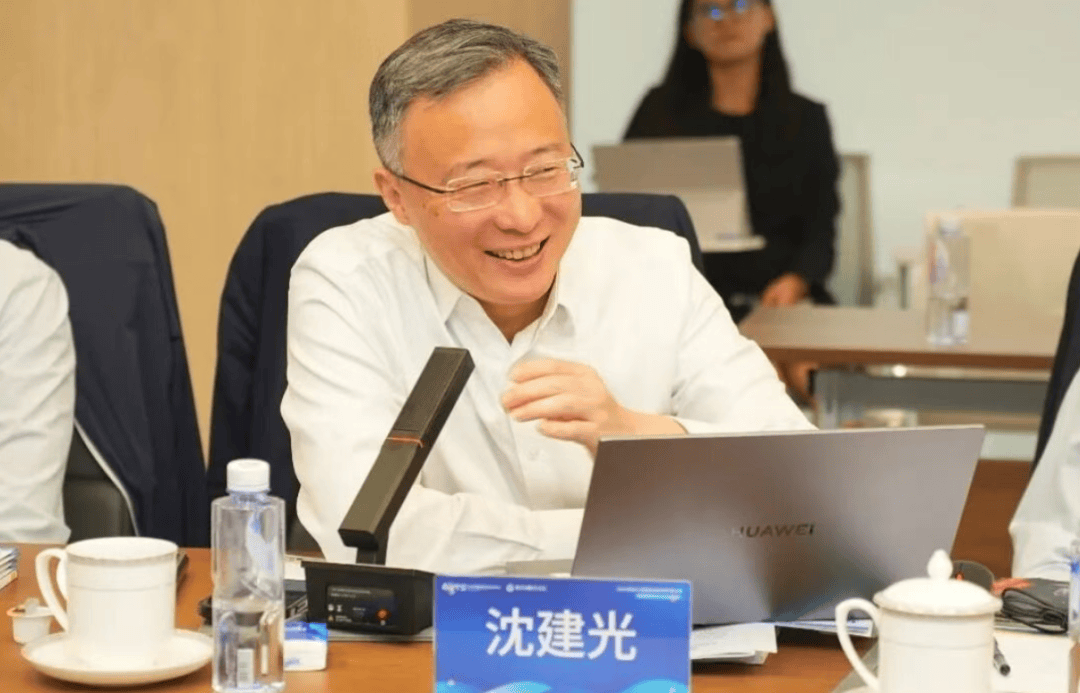
船舶

Search documents
七部门联合推动服务型制造创新发展 到2028年,打造50个领军品牌,建设100个创新发展高地
Zheng Quan Shi Bao· 2025-10-12 22:01
Core Viewpoint - The Ministry of Industry and Information Technology and six other departments have jointly issued the "Implementation Plan for Deepening the Innovation and Development of Service-Oriented Manufacturing (2025-2028)", aiming to enhance the role of service-oriented manufacturing in high-quality development by 2028 [1] Group 1: Objectives and Tasks - The plan aims to complete 20 standard formulations, create 50 leading brands, and establish 100 innovation development hubs by 2028 [1] - It identifies seven main tasks and three special actions to promote the innovation and development of service-oriented manufacturing [1] Group 2: Challenges and Solutions - Current challenges in service-oriented manufacturing include weak supply capacity of key technologies, an incomplete standard system, uneven application of typical models across industries, and difficulties in statistical monitoring [1] - The plan proposes to strengthen technological innovation by focusing on key common technology breakthroughs and model innovations, and to publish a list of key common technologies for service-oriented manufacturing [1] Group 3: Support for Productive Services - The plan emphasizes the need to cultivate and expand key productive service industries, including technology services, industrial design, software and information services, productive financial services, intellectual property services, energy-saving and environmental protection services, and quality management services [2] - It aims to promote the application of service-oriented manufacturing models across various sectors, including raw materials, equipment manufacturing, electronics, and consumer goods [2] Group 4: Infrastructure and Technology Integration - The plan calls for strengthening new information infrastructure, deepening the integration of "5G + Industrial Internet", and enhancing the supply of industrial data elements [2] - It also emphasizes the integration of artificial intelligence technology with service-oriented manufacturing to foster innovation [2] Group 5: Brand and Platform Development - The plan includes actions to enhance shared manufacturing, develop shared manufacturing platforms and factories, and promote resource sharing in inspection and testing [3] - It aims to cultivate leading enterprises and brands in service-oriented manufacturing, along with strengthening brand evaluation and promotion [3] Group 6: Policy Support and Implementation - The plan requires robust policy support to ensure the implementation of related initiatives, including incorporating key common technology breakthroughs into the scope of technical transformation support [3] - It encourages local governments to increase support for manufacturing enterprises' service businesses and guides financial institutions to enhance financial services based on market principles [3]
把握特朗普TACO交易——策略周聚焦:中美贸易摩擦再启,本轮贸易摩擦与4月相比异同点
Huachuang Securities· 2025-10-12 12:45
Group 1 - The report highlights the re-emergence of US-China trade tensions since October, with key areas of focus including shipping port fees, semiconductors, rare earths, and tariffs. The market response has seen initial pullbacks in risk assets and a rise in safe-haven asset trading [2][10][12] - The report identifies five key differences between the current trade tensions and those from April, including a shift from generalized to targeted measures, the active role of China in leveraging its strengths, a transition from multi-front to single-front US strategies, resilience in both economies, and greater monetary and fiscal space for both parties [10][19][20] Group 2 - The impact of trade tensions on the market is expected to be limited in terms of fundamental economic effects, primarily affecting risk appetite in the short term. The report suggests that the current market may reflect profit-taking behavior following a six-month rise in global risk assets, predicting that the magnitude and duration of the pullback will be less severe than in April [3][35][41] - The report emphasizes the necessity for structural rebalancing in the market, indicating that the current industry differentiation has reached a significant level, with leading sectors showing an average increase of 51% since April, while lagging sectors have seen no growth [5][11][17] Group 3 - The report recommends focusing on two main investment opportunities post-rebalancing: the technology sector, particularly in hard tech areas such as AI applications and quantum computing, and cyclical sectors with tight supply conditions, including non-ferrous metals and chemicals [6][11][12] - It notes that the trade tensions will not alter the fundamental recovery and bull market dynamics, which are shifting from liquidity-driven to fundamentals-driven, suggesting that adjustments in the market present opportunities for strategic asset allocation [6][11][12]

最新!商务部就特朗普威胁关税加到100%给予回应
是说芯语· 2025-10-12 04:19
Core Viewpoint - The Chinese government has implemented export controls on rare earth materials to maintain national security and international stability, emphasizing that these measures are not a ban on exports but a regulated process to ensure compliance with legal frameworks [1][2]. Group 1: Export Control Measures - The export control measures on rare earth materials are a legitimate action by the Chinese government to enhance its export control system amid global instability and military conflicts [1]. - China will conduct licensing reviews based on legal regulations, ensuring that compliant applications for civilian use will be approved, thus promoting legitimate trade [2]. Group 2: Response to U.S. Actions - The U.S. has announced a 100% tariff on Chinese rare earth exports and export controls on key software, which China views as a double standard and an abuse of export control measures [3]. - China has expressed strong opposition to the U.S. imposing high tariffs and has reiterated its unwillingness to engage in a trade war, while also stating it will take necessary measures to protect its legitimate rights [3][4]. Group 3: Bilateral Relations and Negotiations - Following the recent U.S. measures, China has attempted to engage in dialogue and negotiations but has faced a dismissive attitude from the U.S., which has led to the implementation of countermeasures by China [4]. - China aims to maintain a stable and healthy development of Sino-U.S. economic relations through mutual respect and dialogue, urging the U.S. to correct its course [3][4].

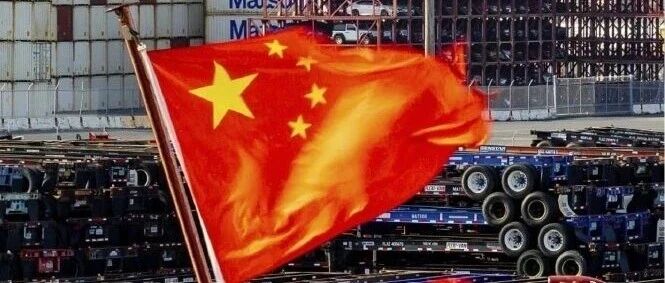
2025年1-8月全国铁路、船舶、航空航天和其他运输设备制造业出口货值为3130.7亿元,累计增长18.6%
Chan Ye Xin Xi Wang· 2025-10-12 02:48
Group 1 - The core viewpoint of the articles highlights the growth in the export value of the railway, shipbuilding, aerospace, and other transportation equipment manufacturing industries in China, with significant year-on-year increases reported [1][2] - In August 2025, the export value reached 40.8 billion yuan, marking a year-on-year growth of 21.4% [1] - Cumulatively, from January to August 2025, the total export value was 313.07 billion yuan, reflecting a year-on-year increase of 18.6% [1] Group 2 - The companies mentioned include Shanxi Luqiao, Dongguan Holdings, Modern Investment, China Railway Special Cargo, and others, indicating a diverse range of players in the transportation equipment sector [1] - The report by Zhiyan Consulting provides insights into the market research and development prospects for the aerospace industry in China from 2026 to 2032 [1][2] - Zhiyan Consulting is recognized as a leading industry consulting firm in China, specializing in deep industry research and providing comprehensive solutions for investment decisions [2]

美方宣布,针对中方采取的稀土等相关物项出口管制,将对中方加征100%关税,商务部:对于关税战,我们不愿打,但也不怕打
中国基金报· 2025-10-12 02:35
Core Viewpoint - The Chinese government has implemented export controls on rare earth materials to enhance its export control system, citing the importance of these materials in military applications and the need to maintain global peace and regional stability [2][4]. Group 1: Export Control Measures - The export control measures on rare earth materials are a legitimate action by the Chinese government based on legal regulations, aimed at maintaining national security and international safety [2][4]. - China emphasizes that the export controls are not a ban on exports; applications that meet regulations will be approved, and the government is open to facilitating compliant trade through various measures [3][4]. Group 2: Response to U.S. Actions - The U.S. has announced a 100% tariff on Chinese rare earth exports and additional export controls on key software, which China views as a double standard and a violation of fair trade principles [3][4]. - China has expressed strong opposition to the U.S. actions, highlighting that the U.S. has a much larger export control list compared to China, which undermines international trade order and stability [4][5]. Group 3: Maritime and Shipping Issues - The U.S. plans to impose port fees on Chinese vessels starting October 14, which China claims violates WTO rules and the principles of the China-U.S. maritime agreement [6]. - In response, China has decided to implement countermeasures, including special port fees on U.S. vessels, to protect its legitimate rights and maintain fair competition in the international shipping market [6].
利好来了,七部门重磅部署
21世纪经济报道· 2025-10-11 12:25
Core Viewpoint - The article discusses the implementation plan for promoting service-oriented manufacturing innovation development from 2025 to 2028, emphasizing the integration of services into the manufacturing sector to enhance quality and efficiency [1]. Group 1: Implementation Goals - By 2028, the role of service-oriented manufacturing in high-quality development of the manufacturing industry is expected to be significantly enhanced, with the completion of 20 standards, the creation of 50 leading brands, and the establishment of 100 innovation development hubs [1]. - The plan aims to optimize the industrial ecosystem, promote the rapid development of productive service industries, and establish a service-oriented manufacturing system with Chinese characteristics and world-class standards [1]. Group 2: Key Tasks - The plan outlines seven main tasks, including strengthening key common technology research and model innovation, cultivating key productive service industries, and promoting the application of service-oriented manufacturing models [2]. - It emphasizes the need for a technology list for service-oriented manufacturing, encouraging enterprises to increase innovation investment and upgrade typical models such as shared manufacturing and personalized customization [2]. Group 3: Development of Productive Service Industries - Productive service industries are crucial for supporting service-oriented manufacturing by providing technical research, design, information, and financial services [3]. - The plan calls for increased policy support and the development of various productive service sectors, including technology services, industrial design, software services, and logistics [3]. Group 4: Promotion of Service-oriented Manufacturing Models - The plan highlights the importance of promoting service-oriented manufacturing models across various industries, including raw materials, equipment manufacturing, and consumer goods [5]. - It aims to enhance the service-oriented manufacturing capabilities in key industries such as new energy vehicles, engineering machinery, and pharmaceuticals [5]. Group 5: Infrastructure and Innovation - The plan stresses the need to strengthen new information infrastructure, enhance the integration of 5G and industrial internet, and improve data resource management [5]. - It also proposes actions to promote shared manufacturing, enhance service-oriented manufacturing brands, and encourage innovative application scenarios [5][6]. Group 6: Brand Development and Application Scenarios - The initiative includes actions to cultivate leading service-oriented manufacturing enterprises and brands, fostering a positive environment for development [6]. - It encourages the creation of application scenarios that meet production and consumer demands, as well as those aligned with national strategic needs [6].
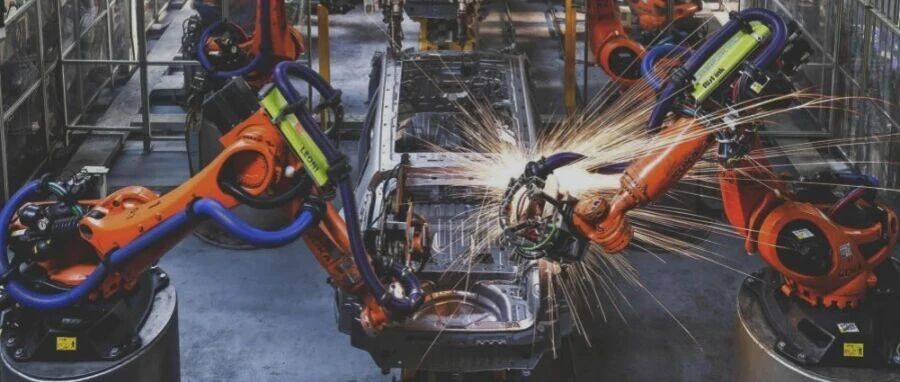
七部门发文推动服务深度嵌入制造业,涉及装备制造、消费品等行业
2 1 Shi Ji Jing Ji Bao Dao· 2025-10-11 12:14
Core Viewpoint - The joint implementation plan by seven government departments aims to promote service-oriented manufacturing, integrating services deeply into the manufacturing sector to enhance the industry's quality and efficiency by 2028 [2][3]. Group 1: Implementation Goals - By 2028, the role of service-oriented manufacturing in high-quality development will be significantly enhanced, with the establishment of 20 standards, creation of 50 leading brands, and development of 100 innovation hubs [2]. - The plan emphasizes the widespread adoption of typical service-oriented manufacturing models and the emergence of new models, optimizing the industrial ecosystem [2]. Group 2: Key Tasks - The plan outlines seven main tasks, including strengthening key common technology research, fostering key productive service industries, and promoting the application of service-oriented manufacturing models [3][4]. - It encourages enterprises to increase innovation investment and focuses on upgrading typical models such as shared manufacturing and personalized customization [3]. Group 3: Development of Productive Services - Productive service industries are crucial for supporting service-oriented manufacturing through technology research, design, and financial services [4]. - The plan aims to enhance policy support and optimize the industrial development ecosystem for various productive service sectors, including technology services and logistics [4]. Group 4: Infrastructure and Innovation - The plan emphasizes the need for new information infrastructure, promoting the integration of 5G and industrial internet, and enhancing data resource management [5]. - It includes actions to cultivate shared manufacturing, enhance service-oriented manufacturing brands, and innovate application scenarios [5][6]. Group 5: Application Scenarios - The plan encourages the creation of integrated application scenarios that cater to production needs, consumer demands, and national strategic requirements [6]. - It aims to establish a platform for promoting new models and scenarios, facilitating cooperation between supply and demand sides [6].
工信部等七部门联合发布!
中国能源报· 2025-10-11 11:27
Core Viewpoint - The article emphasizes the importance of promoting service-oriented manufacturing innovation from 2025 to 2028, focusing on enhancing green and low-carbon services, optimizing production processes, and integrating advanced manufacturing with modern services to improve competitiveness and resilience in the industry [3][4]. Summary by Sections Overall Requirements - The initiative is guided by Xi Jinping's thoughts and aims to implement the spirit of the 20th National Congress of the Communist Party, focusing on building a modern industrial system centered on advanced manufacturing and deepening the integration of information technology and industrialization [3][4]. Main Tasks - **Strengthening Key Technologies and Model Innovation**: The plan includes a list of key common technologies for service-oriented manufacturing, encouraging enterprises to increase innovation investments and promote the application of integrated research and development [4][5]. - **Cultivating Key Productive Service Industries**: The strategy aims to enhance the supply capacity of productive services, including technology services, industrial design, software and information services, financial services, and intellectual property services [7][9]. - **Promoting Service-Oriented Manufacturing Models**: The focus is on advancing service-oriented manufacturing models across various industries, including raw materials, equipment manufacturing, and consumer goods, to enhance service integration [9]. Specific Actions - **Building Shared Manufacturing Platforms**: The initiative encourages the establishment of shared manufacturing platforms that consolidate production resources and enhance service functionalities [10]. - **Standard System Construction**: The plan emphasizes the development of a unified and comprehensive standard system for service-oriented manufacturing, promoting industry-specific standards and encouraging enterprises to adopt these standards [11]. - **Enhancing Business Vitality**: The strategy aims to foster collaboration among leading enterprises and support small and medium-sized enterprises in their digital transformation [12]. Brand Development - The initiative supports the creation of service-oriented manufacturing brands, aiming to cultivate 100 leading enterprises and 50 flagship brands by enhancing brand management and market promotion [13]. Innovation Development High Grounds - The plan encourages local governments to focus on characteristic industries and establish 100 innovation development high grounds for service-oriented manufacturing, promoting policy coordination and innovation applications [14]. Application Scenario Innovation - The strategy promotes the creation of integrated application scenarios that cater to production and consumer needs, enhancing the digital integration of the consumer goods industry [15]. Foundation for Development - The initiative highlights the importance of strengthening new information infrastructure and promoting the integration of 5G and industrial internet technologies to enhance data resource utilization [17].
七部门:推动巩固提升新能源汽车、通信设备等产业优势地位
Bei Ke Cai Jing· 2025-10-11 10:49
围绕原材料、装备制造、电子制造、消费品等行业和安全生产领域,加强政策统筹、分类指导,推进服 务型制造典型模式广泛普及,及时总结提炼推广服务型制造新模式,促进服务要素更大范围更宽领域更 深层次融入制造业,充分发挥服务对制造的赋能作用。加大重点行业服务型制造发展力度,推动巩固提 升新能源汽车、工程机械、通信设备等产业优势地位,促进钢铁、石化、医药、船舶等产业提质增效。 新京报贝壳财经讯 工业和信息化部等七部门近日联合印发《深入推动服务型制造创新发展实施方案 (2025—2028年)》,提出分类推进服务型制造模式推广应用。 编辑 王进雨 ...
中国经济与消费展望
Sou Hu Cai Jing· 2025-10-11 03:20
Core Viewpoint - China's economy is showing resilience with a GDP growth rate of 5.3% in the first half of 2025, but signs of slowdown are evident in the third quarter, necessitating measures to boost consumption to stabilize growth [1][4]. Group 1: Economic Performance - The fiscal policy has significantly strengthened since September last year, with net financing of government bonds reaching 7.66 trillion yuan, marking the second-highest issuance since 2020 [5]. - Broad fiscal expenditure grew by 9.3% year-on-year from January to July, the highest level since 2022, indicating a strong fiscal push [5]. - Retail sales growth reached 5% in the first half of the year, surpassing last year's annual growth of 3.5%, largely due to fiscal measures [5]. Group 2: Consumption Trends - The shift in policy focus from investment to consumption has led to a notable increase in retail sales, particularly after the implementation of the "trade-in" policy, which saw a 20% to 30% growth in related products [6]. - New consumption trends include a surge in health-related products, the rise of domestic brands, rapid growth in AI product consumption, and increased spending by the elderly, although consumption remains uneven across different city tiers [6][10]. Group 3: Challenges Ahead - Economic data from July to August indicates a significant slowdown, with retail growth dropping to 3.4% in August, and fixed asset investment continuing to decline [8]. - Exports are facing challenges, with a year-on-year growth rate of only 4.4% in August, and a notable decline in toy and bag exports by approximately 20% [8][9]. - The real estate market continues to struggle, with a 10.6% year-on-year drop in sales area in August and a nearly 20% decline in new construction starts [9]. Group 4: Policy Recommendations - Expanding the categories eligible for the "trade-in" program is recommended to sustain retail growth, including adding baby products to the list [11]. - Increasing support for service consumption through subsidies and vouchers for sectors like dining, tourism, and health is suggested to enhance overall demand [11]. - Encouraging high-end consumption by relaxing restrictions in areas such as yacht purchases could stimulate significant economic activity [12].