贵金属

Search documents
EasyMarkets易信:金价结构性转型与避险锚点
Xin Lang Cai Jing· 2026-02-17 14:31
Core Viewpoint - The current gold market is consolidating around the $5000 level, but this is not the end of the upward trend, with EasyMarkets raising the second-quarter target price to $5800 due to a deep restructuring of global macro logic [1][2]. Group 1: Market Dynamics - Analysts believe that despite a recent drop from the previous high of $5600, the underlying logic supporting this bull market is fundamentally different from historical cyclical peaks [1][2]. - The anticipated interest rate cuts by the Federal Reserve in 2026, with expectations of 25 basis point reductions in March and June, are expected to drive real interest rates lower, providing solid support for gold prices [1][2]. Group 2: Structural Changes - A structural transformation in the global financial system is acting as a "booster" for gold prices, as traditional safe-haven assets face a severe trust crisis, and rising debt levels are causing long-term bond premiums to widen [3]. - Until structural fiscal issues in major economies are resolved, gold's strategic value as a transitional asset will continue to be released [3]. Group 3: Investment Trends - The explosion of global investment demand in 2026 is expected to take over from central bank gold purchases, with total holdings in gold ETFs projected to exceed 4800 tons this year, particularly driven by growth in emerging markets [4]. - Currently, gold ETFs account for less than 3% of mainstream investment portfolios, meaning even small-scale asset rotation from bonds to gold could have a significant leverage effect on gold prices [4]. - For silver, its performance will continue to be anchored to gold, but due to its sensitivity to industrial demand at high prices, silver's performance in 2026 may lag behind that of gold [4].


金丰来:跨年迷雾下的贵金属调配
Xin Lang Cai Jing· 2026-02-17 14:25
Group 1: Gold Market Insights - The global gold market is experiencing a complex interplay of factors as it approaches 2026, with sovereign demand providing a solid price floor despite conflicting signals from the U.S. job market and macroeconomic policy uncertainty [1][3] - In 2025, global central banks are projected to have a net gold purchase of 328 tons, with Poland leading at 102 tons, indicating gold's continued status as a core reserve asset [1][3] - The U.S. job data showed an unexpected growth of 130,000 in January, but the downward revision for the entire year exceeded 1 million, creating a scenario of superficial prosperity alongside deeper concerns [1][3] Group 2: Silver Market Dynamics - The silver market is undergoing a structural shift due to high prices, transitioning from "speculative-driven" to "physical monetization" as the spot premium for silver surged [2][4] - The value of silver coin assets from before 1965 has nearly tripled in the past year, activating the North American secondary supply market, with family heirlooms and pure silver items returning to the market [2][4] - The current market state is viewed as a cooling-off period following a significant price surge, with gold around $5,000 facing seasonal adjustments and silver fluctuating near $76.215 [2][4]
RYOEX:贵金属波动性加剧 美元敞口重塑
Xin Lang Cai Jing· 2026-02-17 14:25
Core Insights - The global precious metals market is entering a new volatility-driven cycle as of 2026, influenced by deep adjustments in the Federal Reserve's monetary policy and a reevaluation of dollar exposure worldwide [1][2][3] Group 1: Market Dynamics - A recent anomaly observed in the market is the rapid decline of the U.S. 10-year Treasury yield from 4.30% to 4.00%, without a corresponding significant increase in gold prices, indicating a profound transformation in the gold market's operational logic [2][3] - Traditionally, there has been a strong negative correlation between the 10-year real interest rates and gold prices, a relationship that has been effective since the collapse of the Bretton Woods system. However, this pricing model began to fail after 2022, with a notable decrease in gold's sensitivity to real interest rates [2][3] Group 2: Central Bank Actions - The independence of central bank decision-making remains a key factor in assessing gold price volatility. Any interference in monetary policy formulation could trigger a risk premium for gold prices [4] - Since 2022, central bank gold purchases have reached 2 to 3 times the average levels of previous years, becoming a crucial support for maintaining high gold prices amid a backdrop of currency devaluation [4] Group 3: Investment Trends - Despite the influx of capital into the stock market driven by the AI sector, which has slowed the pace of funds flowing into gold, the actual value of gold, when adjusted for inflation, has surpassed historical peaks from the 1980s (approximately $3,400 in today's terms) [4] - The current trajectory indicates that gold remains in a long-term bull market, with initial rapid price increases likely accompanied by significant volatility. Investors should not doubt gold's safe-haven attributes due to short-term fluctuations, as high volatility is expected to be a characteristic of market participation in 2026 [4]
Gold (XAUUSD) Price Forecast: Traders Eye 50-Day MA for Gold Rally Price Prediction
FX Empire· 2026-02-17 14:12
Group 1 - The recent US consumer price data showed an increase less than expected in January, while the jobs report exceeded expectations, suggesting that traders believe the Fed may have more flexibility for policy easing this year [1] - Gold traders are looking for indications in the Fed minutes that two rate cuts this year remain possible, with a focus on whether labor market conditions or inflation will be the deciding factor for any rate cuts [2] - The Fed faces a dilemma where strong labor and firm inflation may keep rates on hold, leading to sideways or lower trading in gold, with uncertainty about the conditions under which rate cuts could occur [3] Group 2 - Market confidence is high (90%) that the Fed will not cut rates in March, shifting focus to the June FOMC meeting, where traders see only a 50/50 chance of a cut, insufficient to trigger major buy signals in gold [4] - The appointment of Kevin Warsh as the new Fed chairman could influence gold trader sentiment, particularly if he supports President Trump's interest rate reduction agenda [4]
金银价格大跳水
Xin Lang Cai Jing· 2026-02-17 08:19
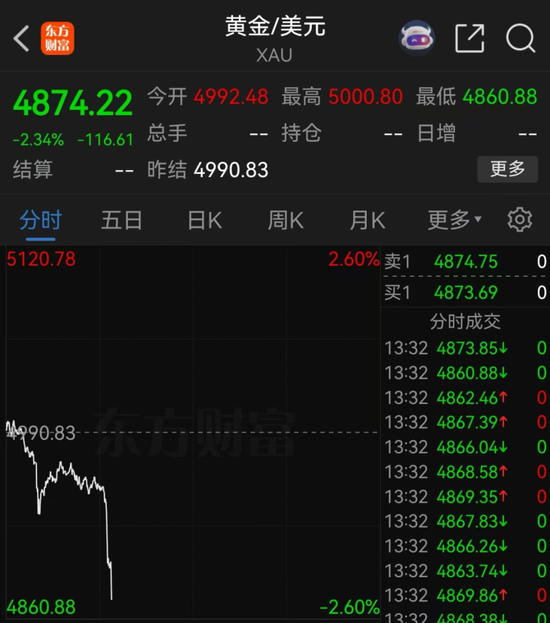
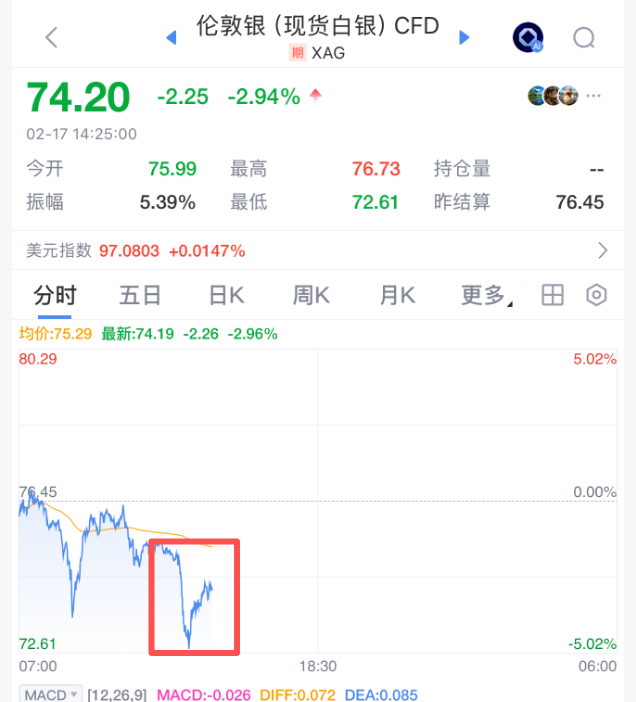
Core Viewpoint - The precious metals market is experiencing downward pressure due to a combination of factors, including a cooling expectation of interest rate cuts by the Federal Reserve and profit-taking by investors, leading to significant price drops in gold and silver [1][3]. Market Performance - On February 17, gold prices fell below $4,900 per ounce, dropping over 2% during the day, while silver prices decreased nearly 5%, falling below $73 [1][3]. - The trading volume in the precious metals market was low due to multiple major markets being closed for traditional holidays [1][3]. Price Movements - Gold opened at $4,874.22, reached a high of $4,992.48, and a low of $4,860.88, ultimately reflecting a decrease of 2.34% [4]. - Silver opened at $72.98, peaked at $76.55, and hit a low of $72.81, showing a decline of 4.75% [5].
黄金白银大跌原因找到了
Sou Hu Cai Jing· 2026-02-17 07:52
Group 1 - The global markets experienced a quiet trading session due to traditional holidays on the 17th [1] - Gold faced resistance at the key psychological level of $5000 per ounce amid cooling expectations for a Federal Reserve interest rate cut [1] - Profit-taking by some investors intensified the downward pressure on precious metal prices [1]
突然,全线跳水!
Zhong Guo Ji Jin Bao· 2026-02-17 07:37
Group 1 - The core viewpoint of the article highlights a significant drop in gold and silver prices, with silver experiencing a decline of approximately 5% and gold falling below $4900 per ounce [1][4]. - The U.S. stock market futures also saw a decline across major indices, with the Nasdaq down 0.8%, the Nikkei 225 down 0.5%, and the FTSE China A50 futures dropping over 0.7% [4]. - Market analysts suggest that the current market behavior is defensive due to multiple market holidays and a lack of positive news, with traders closely monitoring developments between the U.S. and Iran, particularly following recent military exercises by Iran [6]. Group 2 - The ongoing geopolitical tensions, particularly the nuclear negotiations between Iran and the U.S., are contributing to market caution, as previous threats from the U.S. regarding Iran's nuclear program loom large [6]. - Analysts indicate that the reduced liquidity due to holidays in the U.S. and Asia may lead to market movements that are not indicative of broader trends, with remaining investors exhibiting cautious sentiment [6]. - The psychological impact of the late January crash in gold and silver prices, which occurred alongside stock market declines, continues to affect investor sentiment [6].
24小时跌掉36%,白银的惊魂夜,撕开了多少人的幻想,但它的故事远不止是穷人的黄金
Sou Hu Cai Jing· 2026-02-16 19:24
Group 1: Market Dynamics - The silver market experienced a dramatic "flash crash" on January 30, 2026, with spot silver prices plummeting over 36% from a historical high of $121.64/oz to a low of $74.28/oz, leading to significant losses for retail and leveraged investors [1][3] - The immediate trigger for the crash was the nomination of Kevin Walsh, perceived as hawkish, for the next Federal Reserve Chair, coupled with higher-than-expected core Producer Price Index (PPI) data, which raised market expectations for prolonged high interest rates [3] - Prior to the crash, the silver market had accumulated substantial risk, with COMEX silver futures' open interest reaching historical peaks, indicating a concentration of speculative funds that exacerbated the sell-off when prices began to decline [3] Group 2: Industrial Demand and Supply - Over 60% of the annual silver production is utilized in industrial applications, including electronics and solar energy, making silver's price closely tied to global industrial production [4][6] - The solar industry has been a major driver of silver demand, with rising costs leading manufacturers to seek alternatives, such as "silver-coated copper," to mitigate expenses as silver prices soared [6][12] - The World Silver Association projected a supply shortage in the global silver market for the sixth consecutive year, with a deficit of approximately 67 million ounces (about 2,083 tons), primarily due to the nature of silver extraction as a byproduct of mining other metals [7][9] Group 3: Market Reactions and Investment Implications - The volatility in the silver market affected investment products, such as the Guotou Ruijin Silver LOF fund, which faced a trading halt and subsequent drop upon reopening, highlighting the disconnect between market prices and net asset values [10] - The recent price fluctuations have complex implications for consumers; while lower prices may benefit those purchasing silver jewelry, investors must recognize the higher volatility of silver compared to gold and the diverging market dynamics between the two metals [10][12] - The silver market is now characterized by a dual demand dynamic, with traditional industrial uses being challenged by technological advancements in AI and data centers, which are increasing silver consumption [12]
金价跌出46年最差纪录!全球疯狂抛售,中国却连买15个月黄金
Sou Hu Cai Jing· 2026-02-16 18:53
Core Viewpoint - The global gold market experienced a historic crash on January 30, 2026, with gold prices plummeting by over 12% in a single day, marking the largest daily drop since 1983, while silver saw a staggering decline of 26.42%, the worst in nearly 46 years [1][3]. Group 1: Market Reactions - Following the crash, both retail and institutional investors rushed to sell gold to protect their investments, leading to widespread panic in the market [3][4]. - The futures market saw over 220,000 accounts liquidated due to excessive leverage, resulting in estimated losses exceeding $5 billion [1]. Group 2: China's Gold Accumulation - In stark contrast to the global panic, the People's Bank of China reported an increase in gold reserves to 7.419 million ounces (approximately 2307 tons) as of the end of January, marking a 15-month streak of steady accumulation [3][4]. - This strategic accumulation is viewed as a deliberate financial strategy to enhance national financial security amidst global geopolitical uncertainties [3][6]. Group 3: Global Geopolitical Context - The current geopolitical landscape is fraught with instability, including ongoing conflicts in Ukraine and the Middle East, which amplify the appeal of gold as a safe-haven asset [4][6]. - Central banks worldwide have been increasing gold purchases, reflecting collective anxiety over the reliability of the U.S. dollar, with global central bank net gold purchases exceeding 1000 tons annually since 2022 [4][11]. Group 4: China's Financial Strategy - China's strategy to increase gold reserves is part of a broader effort to optimize its foreign exchange reserve structure, which stood at $33.991 trillion as of January 2026, marking a ten-year high [6][9]. - The current gold proportion in China's official international reserves is approximately 9.7%, significantly lower than that of Western countries, indicating room for improvement in reserve diversification [6][9]. Group 5: Operational Strategy - The People's Bank of China has adopted a "small steps, slow walk" approach to gold purchases, which helps control procurement costs and stabilize market volatility [8][9]. - This cautious strategy reflects a strong sense of confidence and strategic foresight in managing financial operations amid global market turbulence [9][12]. Group 6: Global Trends in Gold Reserves - A recent survey indicated that 95% of central banks expect to continue increasing their gold reserves in the coming year, highlighting a global trend towards "de-dollarization" [11]. - The shift in reserve asset preferences, with gold surpassing U.S. Treasury bonds as the primary reserve asset for many central banks, signifies a profound transformation in the global financial landscape [11].
黄金、白银突然集体大跳水!降息预期降温,市场真相全拆解
Sou Hu Cai Jing· 2026-02-16 17:34
Core Viewpoint - The precious metals market is under pressure due to strong U.S. economic data, particularly the non-farm payroll report, which has altered market expectations regarding the Federal Reserve's interest rate policy [1][3][24]. Economic Data Impact - On February 11, the U.S. Labor Department reported that 130,000 non-farm jobs were added in January, significantly exceeding market expectations of 50,000 to 75,000 [3][4]. - The unemployment rate fell from 4.4% in December to 4.3% in January, and average hourly earnings increased by $0.15 to $37.17, marking a year-on-year growth of 3.7% [3][4]. Sector-Specific Employment Trends - Job growth in January was primarily driven by a few sectors: healthcare added 82,000 jobs, social assistance added 42,000, and construction added 33,000 [4][20]. - Conversely, sectors such as finance saw a reduction of 22,000 jobs, and federal government employment decreased by 34,000, totaling a loss of 327,000 jobs since October 2024 [6][20]. Inflation Data - The Consumer Price Index (CPI) for January showed a year-on-year increase of 2.4%, below the expected 2.5%, and down from 2.7% in the previous month [7][24]. - Core CPI, excluding volatile food and energy prices, rose by 2.5% year-on-year, matching market expectations but lower than the previous 2.6% [7][9]. Market Reactions - Following the release of the non-farm payroll data, the market adjusted its expectations for the Federal Reserve's interest rate cuts, with the probability of a 25 basis point cut in March dropping to 9.8% [10][18]. - The market now anticipates that the first rate cut may be delayed until July, with a cumulative cut of 61 basis points expected for the year [10][20]. Precious Metals Market Dynamics - The strong U.S. economic data has led to a decrease in demand for precious metals, traditionally viewed as safe-haven assets, as investors shift towards riskier assets [12][15]. - The recent decline in gold and silver prices is attributed to increased opportunity costs of holding non-yielding assets in a high-interest-rate environment [12][13]. Analyst Perspectives - Analysts from various firms have differing views on the sustainability of the job growth and its implications for Federal Reserve policy. Some suggest that the job growth is not broadly based and may not warrant immediate rate cuts [16][20]. - The overall sentiment indicates that while the labor market shows resilience, there are underlying concerns about the quality and sustainability of job growth across sectors [16][17].