猪肉

Search documents
法国拒不接受中国反制,马克龙转身发现不妙,特朗普也对欧盟出手
Sou Hu Cai Jing· 2025-12-26 11:44
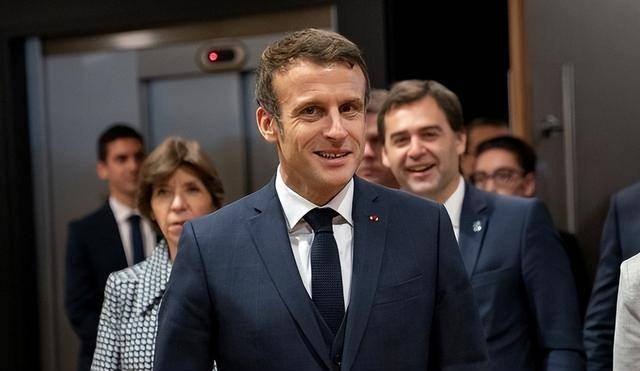
Group 1 - The European Union imposed anti-subsidy tariffs on Chinese electric vehicles in October last year, with France playing a significant role in protecting its domestic industry while seeking support from other member states [1] - In response, China initiated anti-dumping investigations on EU pork and brandy, leading to a decline in exports for France, a major exporter [1] - On December 22, China announced temporary anti-subsidy measures on EU dairy products, effective the next day, prompting a strong reaction from France, which sought an emergency meeting with the EU [1][3] Group 2 - China's retaliatory measures were not arbitrary; they followed failed negotiations with the EU regarding electric vehicle tariffs, where China proposed a minimum export price to allow for adjustments [3] - France's government criticized China's actions as non-compliant and urged the EU Commission to initiate a response process, highlighting the significant impact on its dairy exports [3] - President Macron emphasized the need to maintain EU interests and warned that continued trade imbalance could lead to increased tariffs on Chinese goods [3] Group 3 - Concurrently, the U.S. imposed visa bans on five Europeans, including a key figure in the EU's digital services law, which was perceived as a direct attack on EU digital sovereignty [5] - The U.S. actions have strained transatlantic relations, with European leaders, including Macron, condemning the bans as coercive and a threat to European digital autonomy [5] - The EU's internal response to the U.S. actions reflects a commitment to uphold its digital regulations despite external pressures [5][6] Group 4 - France's trade with China has already incurred tangible costs, with adjustments in pork exports and accumulating dairy product inventories [6] - The EU's internal divisions regarding a unified stance on China have become more pronounced, especially in light of China's retaliatory measures [6] - The simultaneous U.S. actions in the digital domain complicate the EU's position, as France must navigate trade pressures from China while supporting EU digital regulations [6]

顺鑫农业:白酒业务聚焦核心产品与营销创新
Sou Hu Cai Jing· 2025-12-26 10:09
Group 1 - The company management is focused on shareholder interests and long-term development despite ongoing market challenges [2] - The company is actively responding to industry adjustments by concentrating on core products and marketing innovation in its liquor business [2] - In the pork business, the company is working on optimizing its structure and reducing costs to enhance efficiency [2]

中方已经忍无可忍,对欧盟发出2道制裁,英国还想对中企下黑手
Sou Hu Cai Jing· 2025-12-25 16:16
Core Viewpoint - Since December, China has implemented two trade countermeasures against the EU, targeting dairy products and pork, indicating a serious retaliation rather than a mere warning [1][3]. Group 1: Trade Measures - Starting December 23, China will impose countervailing duties ranging from 21.9% to 42.7% on various dairy products originating from the EU [1]. - On December 16, China decided to levy anti-dumping duties of 4.9% to 19.8% on pork imported from the EU [1][7]. - The countermeasures are partly aimed at maintaining industrial safety and partly as a proportional response to EU actions [7]. Group 2: Background and Motivations - The trigger for these retaliatory measures was French President Macron's comments regarding trade imbalances between China and the EU, suggesting potential tariffs on Chinese goods if issues were not resolved [3]. - France is particularly affected, with 12 out of 15 surveyed companies involved in the dairy sector being French, highlighting the direct impact of China's measures on French businesses [3][5]. Group 3: Market Dynamics - China's dairy industry has been suffering losses due to low-priced EU products, with French cheese, yogurt, and cream benefiting from substantial agricultural subsidies, often priced lower than local brands [5]. - An 18-month investigation concluded that EU products were being sold at unfairly low prices, adversely affecting China's pig farming industry [8]. Group 4: Future Implications - China is considering further assessments on other European products such as brandy and wine, indicating that more European goods could be targeted in future retaliatory actions [8]. - If the EU continues its hardline stance, China may expand countermeasures to include wine, luxury goods, and even aerospace components, which could significantly impact the market share of French products in China [15]. Group 5: Broader Context - The ongoing tensions are not limited to trade, as the UK has also imposed sanctions on Chinese companies over alleged cyberattacks, indicating a broader geopolitical struggle that extends beyond trade issues [16][20]. - China's response to the UK's actions emphasizes the need for cooperation in cybersecurity, while also highlighting the multifaceted nature of the current international competition [20].
行业比较周跟踪(20251213-20251219):A股估值及行业中观景气跟踪周报-20251221
Shenwan Hongyuan Securities· 2025-12-21 11:52
Valuation Summary - The overall valuation of A-shares as of December 19, 2025, shows the CSI All Share Index (excluding ST stocks) with a PE of 21.1 times and a PB of 1.8 times, positioned at the 77th and 39th historical percentiles respectively [2][5] - The Shanghai Composite Index has a PE of 11.7 times and a PB of 1.3 times, at the 61st and 40th historical percentiles [2][5] - The CSI 300 Index has a PE of 14 times and a PB of 1.5 times, at the 62nd and 34th historical percentiles [2][5] - The ChiNext Index has a PE of 39.9 times and a PB of 5.4 times, at the 32nd and 61st historical percentiles [2][5] Industry Valuation Comparison - Industries with PE valuations above the 85th historical percentile include Real Estate, Retail, and IT Services (Software Development) [2] - Industries with PB valuations above the 85th historical percentile include Electronics (Semiconductors) and Communications [2] - The Medical Services industry has both PE and PB valuations below the 15th historical percentile [2] Industry Economic Tracking New Energy - The photovoltaic industry chain prices remained stable, with battery cell spot prices rebounding by 8.1% [2] - The price of polysilicon futures increased by 6.4%, while the price of lithium carbonate rose by 7.4% [2] - Concerns about tightening lithium supply emerged due to local mining permit cancellations [2] Real Estate Chain - The average sales area of commercial housing in China from January to November 2025 decreased by 7.8% year-on-year, with a notable decline in real estate investment by 15.9% [3] - The price of rebar increased by 1.2%, while iron ore prices rose by 1.6% [3] Consumer Sector - The average price of live pigs increased by 0.9%, while the wholesale price of pork rose by 0.2% [3] - Retail sales from January to November 2025 grew by 4.0% year-on-year, showing a slight decline in growth rate compared to the previous ten months [3] Midstream Manufacturing - Manufacturing investment from January to November 2025 increased by 1.9% year-on-year, while infrastructure investment (excluding electricity) decreased by 1.1% [3] - Heavy truck sales in November 2025 surged by 65.4% year-on-year, with new energy heavy trucks seeing a significant increase in sales [3] Technology TMT - The production of integrated circuits and optoelectronic devices in China increased by 10.6% and 9.7% year-on-year respectively [3] Commodities - The price of Brent crude oil futures fell by 1.1% to $60.55 per barrel, amid rising supply pressures [3] - The price of thermal coal decreased by 5.6%, while coking coal prices rose by 0.5% [3]
中方敲山震虎,荷兰尝到没收中企股份恶果,欧洲:理当对中国开放
Sou Hu Cai Jing· 2025-12-19 03:47
Group 1 - China has imposed anti-dumping duties on EU pork and pork products, ranging from 4.9% to 19.8%, for five years, signaling a significant impact on the Netherlands, the highest per capita pork exporter in the EU [1] - The anti-dumping measures are based on thorough investigations by China, indicating a legitimate basis for the actions rather than arbitrary decisions [1] - The current EU is under pressure and is unlikely to confront China directly, as the anti-dumping measures serve as a warning signal [1] Group 2 - Europe faces three major pressures: deteriorating security due to the Ukraine conflict, technological lag behind the US and China, and competition from Chinese electric vehicles impacting traditional industries like automotive [3][4] - The EU is compelled to cooperate with China, as the pressure from China is primarily market competition rather than political or military threats, and China is open to dialogue [4] - French President Macron has emphasized the need to rebalance EU-China relations, advocating for market openness while ensuring that Chinese investments contribute to job creation and innovation [6]

万洲国际(00288.HK):12月18日南向资金增持1944.3万股
Sou Hu Cai Jing· 2025-12-18 19:22
Core Insights - Southbound funds increased their holdings in WH Group Limited (00288.HK) by 19.44 million shares on December 18, indicating strong investor interest [1] - Over the past five trading days, there has been a cumulative net increase of 108 million shares, with southbound funds increasing their holdings on 5 out of those 5 days [1] - In the last 20 trading days, there has been a cumulative net increase of 125 million shares, with southbound funds increasing their holdings on 15 out of those 20 days [1] - Currently, southbound funds hold 748 million shares of WH Group, representing 5.82% of the company's total issued ordinary shares [1] Company Overview - WH Group Limited primarily engages in the pork business and operates through three segments [1] - The meat products segment is involved in the production, wholesale, and retail of both chilled and frozen meat products [1] - The pork segment focuses on the slaughtering of live pigs, wholesale and retail of fresh and frozen pork, and pig farming [1] - The other segment is engaged in poultry slaughtering and sales, as well as providing related products and services, including logistics, seasoning production, and packaging materials [1]


不到24小时,欧盟从中国收到两条消息,一好一坏,就看欧盟怎么选
Sou Hu Cai Jing· 2025-12-18 04:12
Group 1 - The EU is experiencing anxiety regarding its rare earth supply, despite a temporary easing of trade tensions between China and the US, as China has relaxed its export controls on rare earths to the US and started purchasing US soybeans [1] - The European Commission's Trade and Economic Security Commissioner, Šefčovič, stated that China has begun issuing longer-term rare earth export licenses, allowing European companies to access these critical minerals, but this does not mean a complete restoration of supply [1][3] - The licenses issued by China are valid for one year, indicating that China still maintains a dominant position in the global rare earth supply chain, leaving the EU in a precarious position [1][5] Group 2 - The EU's recent experience of receiving a one-year rare earth export license from China is seen as a stroke of luck, given China's absolute control over the rare earth supply, which is more significant than the control Middle Eastern countries have over oil [3] - Following the issuance of the rare earth licenses, China announced anti-dumping investigations against EU pork products, indicating ongoing trade tensions and a fragile relationship between China and the EU [3][7] - China's actions reflect its strategy to maintain autonomy in trade relations, emphasizing that while it can sell rare earths, it will respond to any actions by the EU that it perceives as harmful to its interests [5][7]
A股开盘涨跌不一,“国内GPU第二股”上市
Di Yi Cai Jing Zi Xun· 2025-12-17 01:49
Group 1 - The core point of the article is the successful listing of domestic GPU giant Muxi Co., which saw its stock price surge over 568% to 700 CNY after an initial offering price of 104.66 CNY per share [3][4]. - Muxi Co. is noted as a rare full-stack GPU manufacturer in China, indicating its unique position in the market [3]. - The company has maintained rapid revenue growth in recent years, which is a significant factor contributing to its strong market performance [3]. Group 2 - The A-share market opened with mixed results, with the Shanghai Composite Index down 0.06%, while the Shenzhen Component Index and the ChiNext Index saw slight increases of 0.10% and 0.03%, respectively [5]. - In the Hong Kong market, the Hang Seng Index opened up 0.03%, and the Hang Seng Tech Index rose by 0.09%, with notable stocks like Zijin Mining and Geely Automobile performing well [6][7]. - The market trends indicate a weakness in sectors such as smart driving and nuclear fusion, while lithium mining and pork-related stocks showed strength [5].
重磅反击!中国官宣对欧盟加税,该治治欧洲的“巨婴”病了
Sou Hu Cai Jing· 2025-12-16 23:35
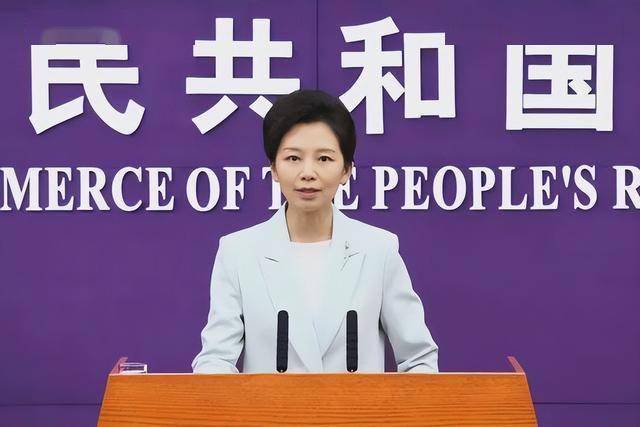
Group 1 - The Chinese Ministry of Commerce has announced the imposition of anti-dumping duties on imported pork and pork products from the EU, effective December 17, for a duration of five years [1][3] - This decision follows a year and a half investigation that confirmed the EU's dumping practices, which have caused substantial harm to China's related industries [4][19] - The move is seen as a retaliatory measure against the EU's previous tariffs on Chinese electric vehicles, highlighting a tit-for-tat approach in trade relations [5][6][12] Group 2 - The imposition of anti-dumping duties on pork is particularly impactful for European agricultural sectors, especially for countries heavily reliant on pork exports [10][12] - The EU's perception of the situation reflects a sense of entitlement, believing it can exploit China's market while disregarding fair trade principles [10][15] - China's response is characterized as a necessary countermeasure to protect its agricultural industry and maintain fair competition in the global market [12][19] Group 3 - The article critiques the EU's political behavior, describing it as exhibiting "infantile syndrome," where it expects to benefit without reciprocating fairness [15][18] - Historical dependencies on cheap energy and goods from Russia and China have contributed to this mindset, leading to unrealistic expectations from the EU [15][18] - The effectiveness of China's response is framed as a clear message that it possesses the tools and patience for a sustained and proportional counteraction [19][21] Group 4 - The article emphasizes that the global landscape has changed, urging the EU to recognize the need for equal respect and rule-based interactions with China [21] - It warns that continued hardline approaches towards China could result in significant economic consequences for the EU [21] - The imposition of tariffs on pork serves as a wake-up call for the EU to engage in mature and constructive dialogue rather than relying on outdated aggressive tactics [21]
晚报 | 12月17日主题前瞻
Xuan Gu Bao· 2025-12-16 14:50
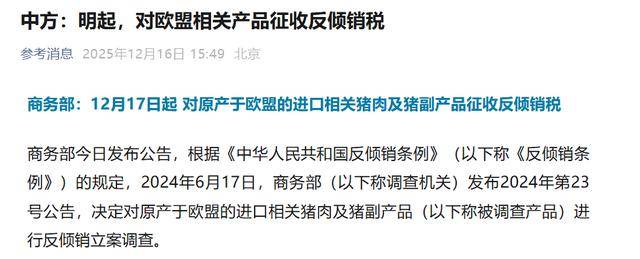
Group 1: Commercial Aerospace - Yu Shi Space, the only team in China using the "stainless steel rocket + capture arm recovery" scheme, has completed the ground verification test for the first full-size "chopstick" capture arm, marking the delivery of China's first full-size prototype comparable to SpaceX's Starship recovery model. The AS-1 rocket aims to reduce launch costs to 20,000 yuan per kilogram (down to 10,000 yuan per kilogram after recovery), which is only 1/6 of traditional rocket costs [1] - The breakthrough in China's reusable rocket technology is seen as a significant cost revolution and technological upgrade within the aerospace industry, as well as a crucial support for national strategic security, high-end manufacturing upgrades, and the reshaping of the global competitive landscape [1] Group 2: Large Models - China Telecom Research Institute, in collaboration with partners including Huawei and Mu Xi, has successfully completed the industry's first cross-architecture large model inference technology verification, achieving a core goal of "one framework code, three-chip transparent migration" [2] - This technology reduces the adaptation cycle of large model operators from "weekly" to "daily" and achieves 90% performance of the native operator library, addressing the multi-architecture adaptation challenge and providing business decision support [2] Group 3: Tungsten Prices - Tungsten concentrate prices have surpassed 400,000 yuan, up 190.2% since the beginning of the year, while APT prices have exceeded 600,000 yuan, up 189.1%, and tungsten powder prices are nearing 1,000 yuan, up 202.3% [3] - The market is experiencing a tense atmosphere due to supply concerns, driven by production halts and a reluctance to sell, leading to increased demand for limited stock [3] Group 4: Storage Market - An internal analysis document from SK Hynix reveals a severe imbalance in the storage market, predicting that DRAM supply shortages will persist until 2028, with demand for DDR memory expected to grow by 20.7%, significantly outpacing supply growth [4] - The domestic semiconductor equipment and materials companies are expected to benefit from the dual drivers of AI storage demand and supply chain autonomy, leading to a virtuous cycle of technological breakthroughs and market expansion [4] Group 5: Hydrogen Energy - The world's largest integrated green hydrogen and ammonia project, the China Energy Construction Songyuan Hydrogen Energy Industrial Park, has officially commenced production, with a planned capacity of 3 million kilowatts of renewable energy generation and 80,000 tons of green ammonia and methanol [5] - The first phase of the project will produce 45,000 tons of green hydrogen and 200,000 tons of green ammonia and methanol annually, significantly reducing crude oil consumption and carbon emissions [5] Group 6: Pork Import Duties - The Ministry of Commerce has announced the final ruling on anti-dumping investigations against imported pork and pork by-products from the EU, determining that such imports are being dumped and will impose anti-dumping duties starting December 17, 2025 [6] - The decision is influenced by the current difficulties faced by the domestic industry and strong calls for protection [6]