铝制品

Search documents
特朗普通告日韩新关税为25%
日经中文网· 2025-07-08 03:03
Core Viewpoint - The article discusses President Trump's announcement of new tariffs on various countries, emphasizing the need for reciprocal trade relationships and the adjustments in tariff rates for specific nations [1][4]. Group 1: Tariff Announcement - Trump announced a new tariff rate of 25% on imports from Japan and South Korea, effective August 1, citing the need to address trade imbalances [1][4]. - The deadline for negotiations on reciprocal tariffs was extended from July 9 to August 1 [1][4]. Group 2: Specific Tariff Rates - The new tariff rates for various countries include: Malaysia 25%, Indonesia 32%, Thailand 36%, and South Africa 30%, with most rates either unchanged or slightly adjusted from previous announcements [2][3]. - A comparison of the new rates with those announced in April shows that Japan's rate increased from 24% to 25%, while rates for Kazakhstan and Tunisia were reduced [3][4]. Group 3: Negotiation and Trade Relations - Trump expressed that the current trade relationships are not reciprocal and indicated that the 25% tariff is insufficient to correct trade imbalances [1][4]. - There is a possibility of negotiating lower tariffs if countries reconsider their tariff and non-tariff barriers [4]. Group 4: Ongoing Trade Agreements - The Trump administration has reached trade agreements with the UK and Vietnam, while negotiations with the EU are ongoing to maintain the current 10% tariff rate [5]. - A separate measure has been put in place for China, suspending the increase of additional tariffs until August 12 [6].

美国大使称美加"双赢"协议触手可及
Hua Er Jie Jian Wen· 2025-07-05 01:13
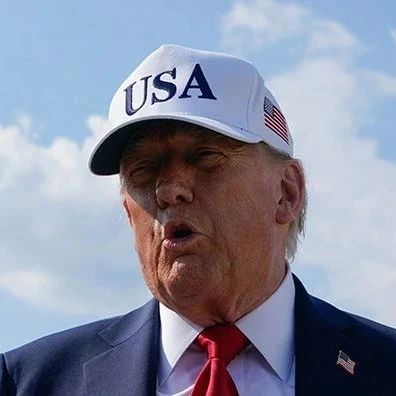
Group 1 - The U.S. Ambassador to Canada, Pete Hoekstra, expressed optimism about the trade negotiations between the U.S. and Canada, believing a fair agreement will be reached soon [1] - Hoekstra highlighted that both President Trump and Canadian Prime Minister Carney are negotiating for beneficial agreements for their respective countries, aiming for a "real win-win" situation [1] - Following the suspension of trade talks by Trump, Canada announced the cancellation of its digital services tax, aiming to finalize a trade agreement by July 21 [1] Group 2 - The background of the tariff dispute includes a trade agreement between the U.S., Canada, and Mexico, signed during Trump's first term, which was later disregarded by Trump in his second term [2] - In response to the U.S. imposing a 50% import tax on steel and aluminum, Canada implemented counter-tariffs on U.S. manufactured goods worth billions, including vehicles and consumer products [2] - Canadian Prime Minister Carney chose not to retaliate when Trump raised tariffs on steel and aluminum shortly after taking office [2]
WTO就加拿大对中国电动汽车等产品收附加税设立争端解决小组
第一财经· 2025-06-24 13:42
Core Viewpoint - The article discusses the establishment of a dispute resolution panel by the WTO regarding Canada's imposition of additional tariffs on Chinese electric vehicles, steel, and aluminum products, which China claims violate GATT regulations [1][2][4]. Group 1: Dispute Background - On October 1, 2024, Canada officially implemented a 100% additional tariff on electric vehicles imported from China, followed by a 25% additional tariff on steel and aluminum products from China starting October 22, 2024 [3][5]. - China initiated a lawsuit at the WTO against Canada's unilateral and protectionist measures, asserting that these actions are inconsistent with WTO rules [3][6]. Group 2: Tariff Details - The dispute, numbered DS627, involves Canada's 100% additional tariff on all Chinese-made electric vehicles and a 25% tariff on steel and aluminum products [4][5]. - In 2023, the trade value affected by these measures was approximately $1.7 billion for electric vehicles, $950 million for steel products, and $720 million for aluminum products [10][11]. Group 3: Responses and Negotiations - China expressed willingness to engage in constructive dialogue with Canada despite the request for the establishment of an expert group [7][8]. - Canada maintains that its measures comply with GATT regulations and also expresses a desire for constructive dialogue with China [8]. Group 4: Countermeasures and Further Actions - In response to Canada's tariffs, China announced anti-discrimination measures, including a 100% tariff on certain Canadian imports such as canola oil and specific seafood products, effective March 20, 2025 [14][15]. - Canada argues that China's countermeasures exceed the commitments made under GATT and seeks expedited processing of the dispute due to the perishable nature of the goods involved [16][17]. Group 5: Future Implications - China's ambassador to Canada highlighted the potential for cooperation in the electric vehicle sector, emphasizing the benefits for both countries and the need for a fair trade environment [11]. - The article concludes with the assertion that the resolution of these disputes hinges on Canada's actions regarding the discriminatory tariffs imposed on Chinese products [19].
WTO就加拿大对中国电动汽车等产品收附加税设立争端解决小组
Di Yi Cai Jing· 2025-06-24 09:29
Core Viewpoint - China is taking necessary measures to firmly protect the legitimate rights and interests of its enterprises in response to Canada's imposition of additional tariffs on Chinese electric vehicles, steel, and aluminum products, which China claims violate WTO rules [1][4]. Group 1: Dispute Resolution and Tariff Measures - The WTO's Dispute Settlement Body (DSB) has agreed to establish a dispute resolution panel regarding China's complaint about Canada's additional tariffs on electric vehicles and steel/aluminum products [1][2]. - Canada will impose a 100% additional tariff on all imported electric vehicles from China starting October 1, 2024, and a 25% additional tariff on steel and aluminum products from China starting October 22, 2024 [1][2]. - The trade value affected by the 100% tariff on electric vehicles is approximately $1.7 billion, while the tariffs on steel and aluminum products involve $950 million and $720 million, respectively [4]. Group 2: China's Response and Negotiation Stance - China has formally requested consultations and further negotiations regarding the additional tariffs, asserting that these measures are inconsistent with multiple provisions of the GATT [2][3]. - Despite the establishment of a dispute resolution panel, China remains open to constructive dialogue with Canada to amicably resolve the dispute [4][7]. - China's ambassador to Canada emphasized the potential for cooperation in the electric vehicle sector, which could benefit consumers and help Canada achieve its climate goals [4][5]. Group 3: Countermeasures and Additional Disputes - In response to Canada's tariffs, China has initiated an anti-discrimination investigation and announced countermeasures, including additional tariffs on certain Canadian agricultural and seafood products [6][7]. - The countermeasures include a 100% tariff on canola oil, oilseed meal, and peas, as well as a 25% tariff on specific seafood and pork products, effective March 20, 2025 [6].
全线下跌!关税,突传重磅!
券商中国· 2025-06-19 23:22
Group 1: EU and US Tariff Negotiations - The EU is attempting to reach a trade agreement with the US similar to the one between the UK and the US, aiming to resolve some disputes before the July 9 deadline to avoid immediate tariff retaliation against the US [2][4] - As of June 19, major European stock indices fell over 1%, indicating market concerns regarding the ongoing tariff negotiations [2] - The US has raised tariffs on EU steel and aluminum products from 25% to 50%, with President Trump threatening to increase tariffs to 50% if no agreement is reached [5] Group 2: Global Investment Risks - The UN warns that due to tariff policy uncertainties and escalating geopolitical tensions, global foreign direct investment (FDI) is at risk of declining for the third consecutive year [3][17] - The UN's report indicates a projected 11% decline in global FDI in 2024, following a significant drop in 2023 [18] - The report highlights that trade tensions have led to a downward adjustment of most FDI outlook indicators, with early 2025 data showing record lows in transaction and project activities [19] Group 3: Internal EU Dynamics - Internal divisions within the EU are weakening its negotiating position, with some countries like France advocating for retaliation against the US, while others like Italy and Hungary prefer continued negotiations [9][10] - The EU is considering a 10% "reciprocal tariff" along with lower tariff quotas in sectors like steel and automobiles, which some member states may reluctantly accept [11] - The EU has proposed increasing purchases of liquefied natural gas and military equipment to reduce its trade surplus with the US, which stands at €198 billion annually [12]
弱预期下的资产选择
HUAXI Securities· 2025-06-11 05:48
Group 1: Economic Outlook - The US economy is expected to grow at an annualized rate of 5.2% in Q2 2025, with domestic demand contributing significantly to this growth[8] - The unemployment rate in the US is currently at 4.2%, indicating a state of full employment[19] - The US fiscal deficit is projected to increase by approximately $1.76 trillion over the next five years due to recent fiscal policies[27] Group 2: Monetary Policy and Interest Rates - The Federal Reserve is anticipated to maintain the federal funds rate between 4.25% and 4.50% as of May 2025, with a potential for rate cuts in September and December 2025[64][65] - The Fed's balance sheet has decreased from $9 trillion to $6.7 trillion, reflecting a reduction in monetary stimulus[67] Group 3: Inflation and Consumer Prices - The Consumer Price Index (CPI) in the US was reported at 2.3% in April 2025, showing a slight decline from previous months[61] - Core CPI remained stable at 2.8% in April 2025, indicating persistent inflationary pressures despite recent policy measures[61] Group 4: Trade and Tariff Policies - The US has implemented tariffs on steel and aluminum, raising rates to 50%, which may impact inflation and trade balances[46] - The average tariff rate on imports from China is currently around 16.80%, reflecting ongoing trade tensions[45] Group 5: Market Trends and Asset Performance - The stock market is expected to remain in a state of fluctuation due to weak catalysts and stable economic fundamentals[7] - Bond yields are projected to decline slightly if the central bank resumes purchasing government bonds[7]
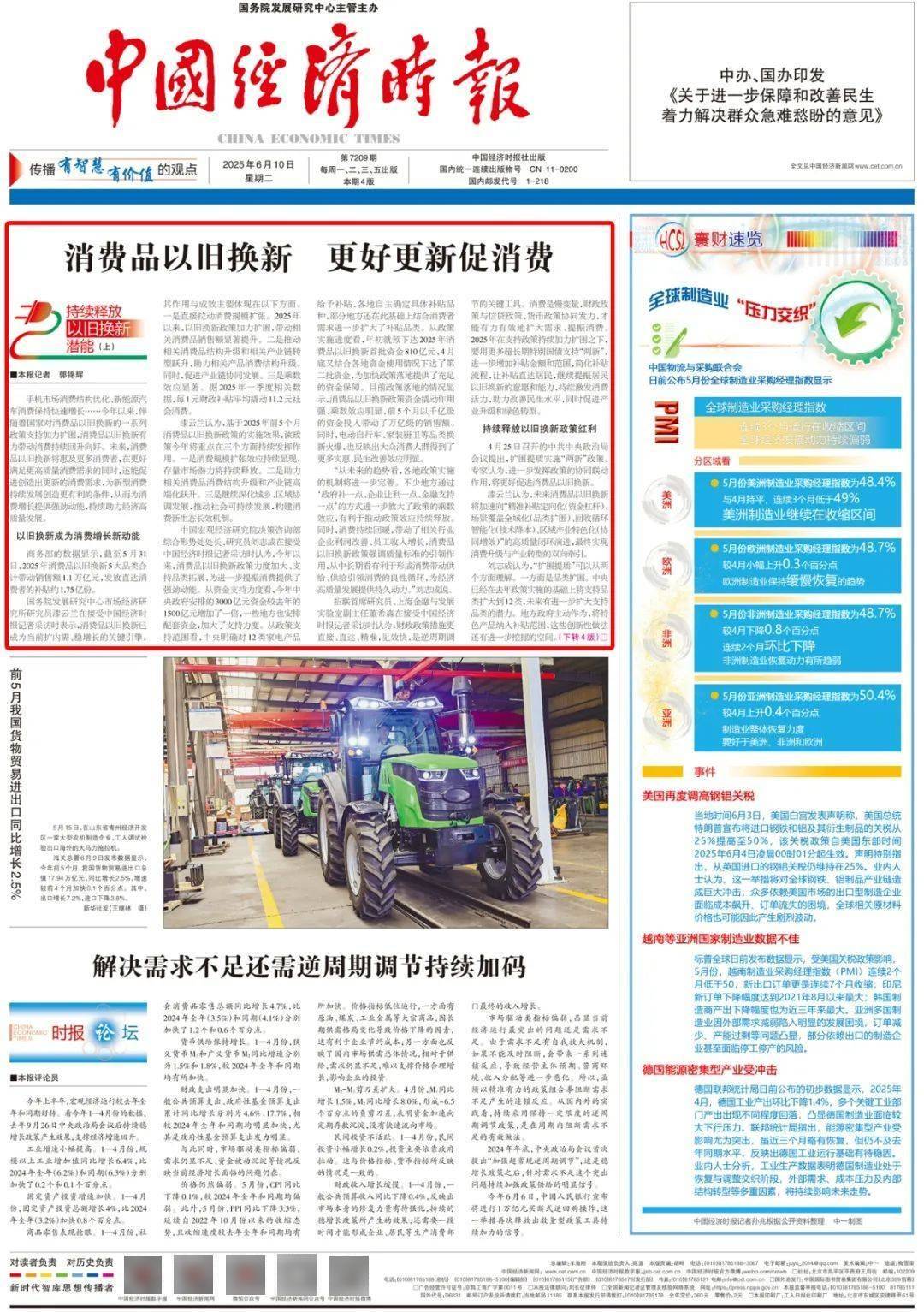
持续释放以旧换新潜能丨消费品以旧换新 更好更新促消费
Sou Hu Cai Jing· 2025-06-10 01:21
Core Viewpoint - The "old-for-new" consumption policy in China has become a key driver for economic growth, significantly boosting consumer spending and promoting structural upgrades in related industries [2][3][4]. Group 1: Policy Impact - As of May 31, 2025, the "old-for-new" policy has driven sales of 1.1 trillion yuan across five major categories, with approximately 175 million subsidies issued directly to consumers [2][21]. - The policy has been identified as a crucial engine for expanding domestic demand and stabilizing growth, with a notable multiplier effect where every 1 yuan of fiscal subsidy stimulates an average of 11.2 yuan in social consumption [2][3][4]. Group 2: Financial Support - The central government has allocated 300 billion yuan for the "old-for-new" policy in 2025, doubling the previous year's funding of 150 billion yuan, with local governments also increasing their support [3][4]. - The policy has been implemented with a focus on 12 categories of household appliances, with local governments having the flexibility to expand the list based on consumer needs [3][4]. Group 3: Future Trends - Experts predict that the "old-for-new" policy will evolve towards more precise subsidies, broader category coverage, and enhanced recycling technologies, ultimately driving both consumption upgrades and industrial transformation [5][11]. - The emphasis on quality standards within the policy is expected to foster a virtuous cycle where consumption drives supply and vice versa, contributing to sustainable economic growth [4][5].
450亿,今年杭州最大IPO诞生
投资界· 2025-06-05 03:17
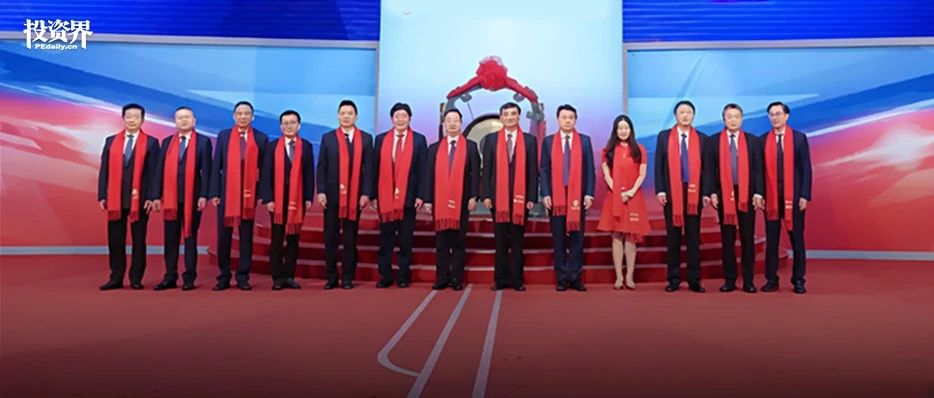
Core Viewpoint - The article highlights the successful IPO of Zhongce Rubber, marking it as the largest IPO in A-shares this year, with a market valuation reaching nearly 500 billion yuan at one point, reflecting the resurgence of manufacturing in Hangzhou [1][11]. Company Overview - Zhongce Rubber, established from the Hangzhou Haichao Rubber Factory founded in 1958, has become a leading tire manufacturer in China, selling 200 million tires annually and generating over 39 billion yuan in sales [1][4]. - The company is known for its well-recognized tire brands such as "Zhaoyang," "Weishi," and "Westlake," with a significant portion of its sales coming from international markets, accounting for approximately 46.91% to 48.32% of total sales from 2022 to 2024 [6][7]. Financial Performance - The projected revenue for Zhongce Rubber from 2022 to 2024 is approximately 31.89 billion yuan, 35.25 billion yuan, and 39.25 billion yuan, respectively, with net profits expected to rise from 1.22 billion yuan to 3.79 billion yuan during the same period [6][7]. - The company’s total assets are projected to reach approximately 44.82 billion yuan by the end of 2024, with a debt-to-asset ratio of 66.55% [7]. Ownership and Management - The actual controllers of Zhongce Rubber are Qiu Jianping and his daughter, holding a combined 46.95% stake, while state-owned enterprises in Hangzhou hold 25% and 15% stakes [8][10]. - Qiu Jianping, a prominent figure in mergers and acquisitions, has successfully expanded his business portfolio to include four publicly listed companies, with a total market value of around 100 billion yuan [14]. Industry Context - The article emphasizes the broader trend of manufacturing resurgence in Hangzhou, which is diversifying beyond its digital economy roots, with significant investments in new manufacturing sectors [16][17]. - The city has initiated plans to enhance its manufacturing competitiveness by integrating digital technologies and focusing on high-growth industries such as biomedicine, integrated circuits, and new materials [17][18].
等不到90天!贸易谈判毫无进展,特朗普威胁将在6月1日起对欧盟征收50%关税
智通财经网· 2025-05-23 13:05
智通财经APP获悉,美国总统特朗普威胁从 6 月 1 日起对来自欧盟的商品征收 50% 的关税,并表示"我 们与他们的谈判毫无进展"。 该提案还概述了美国和欧盟可以合作的领域,例如能源、人工智能和数字连接方面的相互投资和战略采 购。 但有迹象表明美国对该提议并不满意。商务部长霍华德·卢特尼克周三在Axios活动上表示,一些贸易谈 判已被证明"不可能"。 卢特尼克表示,"就像欧盟一样——这非常困难,因为你知道,德国想达成协议,但他们不被允许," 由美国贸易代表杰米森·格里尔领衔的特朗普贸易团队,拟向欧盟贸易委员马尔科什·谢夫乔维奇表明: 欧盟最新提交的"解释性说明"未能满足美方对谈判取得进展的期待。 美国已于三月对欧盟汽车、钢铁和铝制品加征25%关税,四月又对部分欧盟产品课以20%关税。该20% 关税随后被减半征收至7月8日,为双方达成更广泛关税协议创造了90天谈判窗口。 特朗普周五在"真相社交"网站上发帖称:"欧盟成立的主要目的是在贸易上占美国的便宜,因此很难对 付。"他批评欧盟"设置了强大的贸易壁垒、征收增值税、对企业实施荒谬的惩罚措施、非货币贸易壁 垒、进行货币操纵,并针对美国企业发起了不公平且不合理的诉 ...
被欧盟告了后,美国同意就“对等关税”和汽车关税等在WTO展开磋商
Di Yi Cai Jing· 2025-05-23 12:56
Core Viewpoint - The European Union (EU) has initiated consultations with the World Trade Organization (WTO) regarding the tariffs imposed by the United States, claiming these tariffs violate WTO principles [1][2][4]. Group 1: EU's Actions - The EU has submitted a consultation request to the WTO concerning the U.S. tariffs on certain imported products, citing the Safeguards Agreement [2][4]. - The EU's consultation request is based on Article 12.3 of the Safeguards Agreement, which allows for discussions if an agreement is not reached within 30 days [2][5]. - The EU has expressed significant interest in the matter, as it is a major exporter of the affected products, and has requested prompt consultations with the U.S. [5][6]. Group 2: U.S. Response - The U.S. has acknowledged receipt of the EU's consultation request but disagrees with the premise that the tariffs are considered safeguards under the Safeguards Agreement [6][7]. - The U.S. argues that the tariffs are justified under national security concerns as per Section 232 of the Trade Expansion Act and the International Emergency Economic Powers Act (IEEPA) [6][7]. - Despite its disagreement, the U.S. has expressed willingness to discuss the issue with the EU [6][7]. Group 3: Tariff Details - The U.S. has imposed a 25% tariff on passenger cars and light trucks from the EU, along with additional tariffs on various imported products [4][5]. - The EU has prepared a list of products worth €95 billion for potential countermeasures against U.S. tariffs [4]. - The U.S. has also implemented tariffs on imported beer and aluminum cans, which the EU claims fall under the Safeguards Agreement [5].