能源

Search documents
帮主郑重:油金背离、金属跳水!商品市场的“明牌”与“暗流”
Sou Hu Cai Jing· 2026-01-17 00:58
Group 1: Oil Market - Oil prices experienced a slight recovery, closing above $59 per barrel, primarily driven by a "weekend risk-off" sentiment rather than strong market optimism [3] - The geopolitical risk premium remains, but the underlying fundamentals supporting sustained oil price increases, such as global demand, are being scrutinized [3] - A senior strategist indicated that if the U.S. does not take action soon, market attention will shift back to less optimistic inventory and supply-demand data [3] Group 2: Gold Market - Gold prices fell due to a rebound in the dollar and rising U.S. Treasury yields, with deeper concerns stemming from Trump's statements regarding the Federal Reserve chair selection [4] - Market expectations for significant Fed rate cuts next year, which had previously driven gold prices to new highs, are now in doubt due to Trump's indecision [4] - The future trajectory of gold prices is increasingly tied to U.S. interest rate expectations, shifting from a geopolitical risk narrative to a financial story closely linked to the Fed's actions [4] Group 3: Base Metals Market - Base metals, including copper and tin, saw a significant decline after reaching historical highs, with tin prices dropping nearly 8% [4] - This collective drop is attributed to traders in Shanghai and London synchronously taking profits and closing positions, highlighting the volatility in speculative positions [4] - The market's reaction serves as a reminder that even in favorable long-term trends like global decarbonization, prices can experience significant corrections [4] Group 4: Investment Strategy - Investors are advised to differentiate between "event-driven" and "trend-driven" factors, with geopolitical events impacting oil prices being more volatile and less predictable [5] - Maintaining calm during market exuberance is crucial, as the recent correction in base metals illustrates the risks associated with prices deviating significantly from their fundamentals [5] - The strength of the dollar is emphasized as a key factor influencing all dollar-denominated commodities, with any shifts in Fed policy likely to create significant market impacts [5]


大宗商品综述:油价小涨 金价下跌 基本金属全线走低
Xin Lang Cai Jing· 2026-01-16 21:21
Oil Market - Oil prices ended a volatile week with a slight increase, as traders assessed tensions in Iran and broader market sentiment [2][12] - WTI futures for February delivery rose by 0.4% to settle at $59.44 per barrel, recovering from a 4.6% drop earlier in the week, the largest decline since June [2][12] - Brent futures for March delivery increased by 0.6%, settling at $64.13 per barrel [2][13] - President Trump's comments regarding Iran's decision to cancel the execution of protesters reduced market expectations for immediate U.S. intervention [13][14] - The U.S. is increasing its military presence in the Middle East, with at least one aircraft carrier deployed and more military assets expected in the coming days [13][14] - Traders typically hedge bearish bets before weekends during periods of heightened geopolitical risk [14] Precious Metals - Gold prices declined as President Trump expressed reservations about Kevin Hassett's nomination as the next Federal Reserve Chairman, adding uncertainty to the selection process [4][16] - Following Trump's remarks, the dollar narrowed its losses, and U.S. Treasury yields rose, leading to a 1.7% drop in gold prices [5][17] - Gold spot prices fell by 0.66% to $4,585.61 per ounce, while silver spot prices decreased by 3.25% to $89.4164 per ounce [17] Base Metals - Base metal prices on the London market experienced significant declines at the end of a dramatic week [18][19] - Benchmark futures for copper, tin, zinc, and aluminum all fell, with LME copper down 2.3% to $12,803 per ton and LME tin down 7.8% to $47,982 per ton [20] - The sell-off in the Shanghai market contributed to the speed and characteristics of the market movements, with traders likely closing long positions rather than driven by new demand or macro signals [19][20]
央企重大项目开工“赶前抓早”
Zheng Quan Ri Bao· 2026-01-16 16:26
Group 1 - The core point of the news is the commencement of major infrastructure projects by central enterprises in China, signaling a strong push for investment and development in various sectors, including energy and construction [1][2][3] Group 2 - China National Nuclear Corporation's Jiangsu Xuwei Nuclear Energy Heating Power Plant has begun concrete pouring for its first unit, marking the start of the world's first large-scale coupling project between nuclear energy and the petrochemical industry [1] - The first phase of the project plans to construct two Hualong One reactors and one high-temperature gas-cooled reactor, which will supply 32.5 million tons of industrial steam annually and generate over 11.5 billion kilowatt-hours of electricity [1] - The project is expected to reduce coal consumption by 7.26 million tons and cut carbon dioxide emissions by 19.6 million tons each year, providing high-quality low-carbon industrial steam to the Lianyungang petrochemical industry base [1] Group 3 - In January, China Energy Investment Corporation's Ningxia Tengger 1.5 million kilowatt wind power project is set to officially commence construction, with a total installed capacity of 1.5 million kilowatts and plans to install 209 wind turbines [2] - The company also plans to start construction on the Dadu River Danba Hydropower Station in the first quarter of this year [2] Group 4 - State Grid Corporation of China announced that its fixed asset investment during the 14th Five-Year Plan period is expected to reach 4 trillion yuan [3] - The concentrated launch of major projects by central enterprises is seen as a clear signal of increased investment, which is expected to have multiplier effects on economic stability and growth [3] - These investments are anticipated to provide strong momentum for China's economy in the current year and lay a foundation for future economic transformation and competitiveness over the next five to ten years [3]


方洪波谈企业家精神:不被过往成绩束缚,不被路径依赖拖累
Shang Hai Zheng Quan Bao· 2026-01-16 15:47
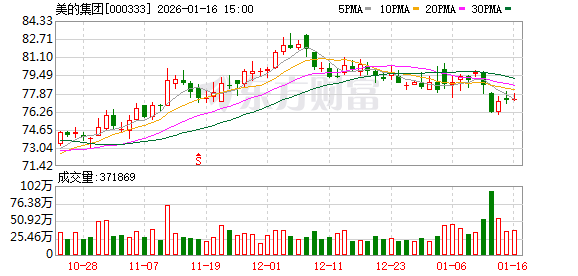
Core Insights - The annual speech by Midea Group's Chairman and President, Fang Hongbo, emphasized the company's achievements over the past year and outlined the strategic direction for the upcoming year, focusing on core business and diversification strategies [2][5]. Business Performance - Midea Group has made significant progress in various business sectors, achieving notable results through a strategy of simplification and self-disruption, leading to breakthroughs in technology, product innovation, and global expansion [6]. - In the smart home sector, Midea introduced the industry's first AI butler and continued to lead in air conditioning technology with multi-model AI interaction, while also launching innovative products like the 45CM ultra-thin refrigerator [6]. - The industrial technology segment saw the introduction of new products such as wide-frequency rotary compressors and the establishment of manufacturing facilities in Mexico and Brazil, enhancing the company's capabilities in core components for electric vehicles and robotics [6]. - Midea's energy business is expanding rapidly, with significant growth in distributed photovoltaic installations and the launch of self-developed energy storage systems in multiple international markets [7]. Future Strategy - For 2026, Midea aims to focus on core businesses and markets, promoting synergy between ToC (business-to-consumer) and ToB (business-to-business) operations to create a sustainable growth model [9][10]. - The company plans to enhance its core capabilities in white goods and HVAC, targeting a leading position globally while improving its presence in key markets such as Southeast Asia, North America, and the Middle East [10][11]. - Midea is committed to innovation in its secondary core businesses, including robotics, energy, and healthcare, recognizing their potential for significant market opportunities [11]. Management Philosophy - Fang Hongbo highlighted the importance of self-revolution and breaking path dependence to adapt to increasing market competition, advocating for a culture of innovation and agility within the organization [12][13]. - The company emphasizes the need for decisive action and the elimination of redundant operations to maintain organizational efficiency and responsiveness [13]. Conclusion - The overarching message from Fang Hongbo's speech is one of resilience and adaptability, encouraging the organization to embrace change and pursue growth opportunities while remaining grounded in core competencies [14].

格陵兰会是下一个“黑天鹅”吗?德银总结了未来走向的四种情景
Hua Er Jie Jian Wen· 2026-01-16 12:15
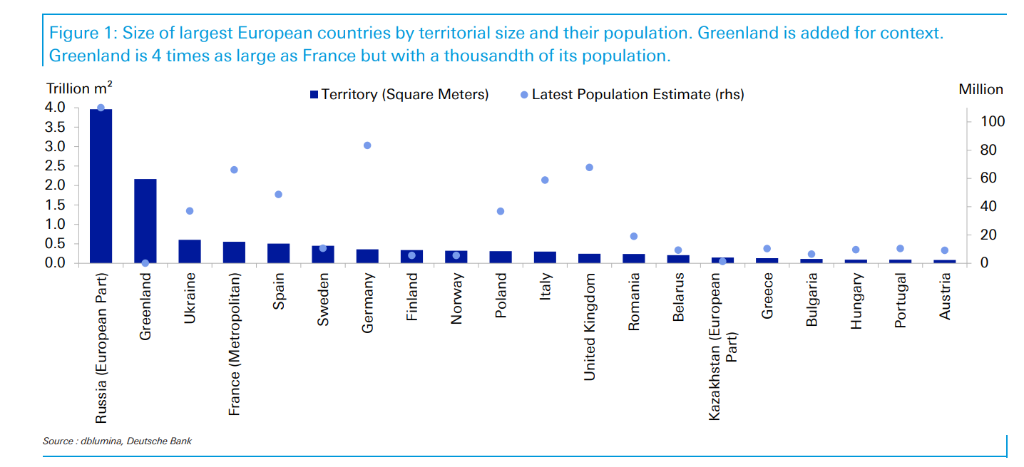
Core Viewpoint - Deutsche Bank considers Greenland as a potential "black swan" that could impact global markets due to its strategic geopolitical significance and the rising tensions surrounding it [1][4]. Group 1: Geopolitical Context - President Trump has reiterated the U.S. interest in acquiring or controlling Greenland, which is set against a backdrop of recent unilateral military actions by the U.S. [1] - A meeting between U.S. officials and Danish and Greenlandic leaders failed to resolve core sovereignty disputes, highlighting political divisions and increasing tail risks for investors [3]. Group 2: Strategic Assets and Motivations - Deutsche Bank identifies three main drivers for U.S. interest in Greenland: national security, critical minerals, and Arctic trade routes [4]. - Greenland's strategic location offers unique Arctic advantages, including proximity to key missile tracking systems and emerging shipping routes that could reduce transit times between Asia and Europe by up to 50% [4]. - The island is estimated to have significant rare earth reserves, potentially up to 1.5 million tonnes, which is crucial for the U.S. as it seeks to reduce dependence on Chinese mineral dominance [4]. Group 3: Future Scenarios - Deutsche Bank outlines four potential scenarios for Greenland's future that could influence market risk pricing: 1. A negotiated security agreement that enhances U.S. presence without altering sovereignty [5]. 2. A long-term lease arrangement granting the U.S. effective control while avoiding direct sovereignty transfer [5]. 3. A free association agreement granting Greenland semi-independence but with U.S. control over defense and foreign affairs [5]. 4. A military coercion scenario, which poses significant risks of escalation and could lead to severe crises within NATO, impacting economic relations and causing market volatility [5].

丧权辱台!台美达成关税协议,台湾地区须赴美投资5000亿美元
Sou Hu Cai Jing· 2026-01-16 10:41
Core Viewpoint - Taiwan has committed to invest $500 billion in the U.S., raising questions about whether this is a mutually beneficial partnership or if Taiwan is being exploited as a financial resource by the U.S. [1][3] Group 1: Investment Details - The agreement includes three main highlights: tariff adjustments, supply chain cooperation, and the $500 billion investment [3]. - Tariffs will be reduced to 15% without stacking, which alleviates cost pressures for Taiwanese companies exporting to the U.S. [3][5]. - The investment will be split into two parts: $250 billion from Taiwanese companies and a $250 billion credit guarantee from the Taiwanese government to support loans for enterprises [7]. Group 2: Economic Implications - The investment plan may lead to a potential outflow of high-end talent and technology from Taiwan, particularly in the semiconductor and AI sectors [11]. - The Taiwanese government will bear the financial risk if the enterprises fail, which could lead to increased financial burdens on Taiwanese taxpayers [7][11]. - The agreement is seen as a way for the U.S. to secure its technological advantage amid rising competition from China, particularly in high-tech industries [13][15]. Group 3: Risks and Concerns - There are concerns that the agreement may lead to the hollowing out of Taiwan's local industries, as resources and talent may shift to the U.S. [19][21]. - The international community has criticized the deal, viewing it as more beneficial to the U.S. while placing significant risks on Taiwan [17]. - The long-term economic impact on Taiwan could be severe, with potential disruptions to local industries and increased financial costs [19][21].

“十四五”时期湛江崛起两个年产值千亿产业集群 去年GDP有望冲刺四千亿
Nan Fang Ri Bao Wang Luo Ban· 2026-01-16 07:53
Economic Growth and Industrial Development - By 2025, Zhanjiang's GDP is expected to reach 400 billion yuan, with industrial added value exceeding 100 billion yuan and a double-digit growth rate for industrial added value above designated size [1] - Zhanjiang has established a "four greens and one blue" industrial system, focusing on green steel, green petrochemicals, green energy, green food, and blue ocean economy, with both green petrochemicals and modern agriculture achieving annual output values exceeding 100 billion yuan [1] - The Zhanjiang Lingang Economic Zone has been recognized as a national zero-carbon park, and the Zhanjiang Economic Development Zone has been designated as a national hydrogen energy pilot area, with an average annual growth of 33.5% in industrial added value above designated size [1] Urban and Rural Integration and Transportation - Zhanjiang is advancing the "Hundred Counties, Thousand Towns, and Ten Thousand Villages High-Quality Development Project," with eight counties (cities, districts) crossing the new 10 billion yuan economic threshold [2] - The city has enhanced its role as a national comprehensive transportation hub, with Zhanjiang Port becoming the first deep-water port in South China capable of accommodating 400,000-ton vessels and the completion of the Zhanjiang Wuchuan International Airport, which has a passenger throughput exceeding 3.1 million annually [2] - The opening of the Guangzhan High-Speed Railway allows for a 90-minute rapid connection between Zhanjiang and the Guangdong-Hong Kong-Macao Greater Bay Area [2] Ecological and Social Development - Zhanjiang has launched the country's first "blue carbon" trading project and has been recognized as a pilot for the ecological product value realization mechanism [3] - Over 80% of the general public budget expenditure is allocated to livelihood-related spending, with over 310,000 new urban jobs created and 142 "Elderly Canteens" established [3] - The "Fresh Zhanjiang" tourism brand has driven total tourism revenue to exceed 110 billion yuan, attracting over 100 million visitors [3]
全世界都没想到, 3年全面战争, 俄罗斯经济竟越挫越勇?欧洲反倒先撑不住了
Sou Hu Cai Jing· 2026-01-16 06:16
2026年初的布鲁塞尔寒夜,街道被拖拉机堵得水泄不通,欧盟总部周围弥漫着紧张的气息。愤怒的农民将土豆狠狠砸向警察的盾牌,抗议声像雷霆般撕裂了 欧洲政治的体面——这一幕,成为西方制裁俄罗斯四年后最讽刺、最讽刺的注脚。寒风中,怒吼与呐喊交织,街头的混乱仿佛在无声地质问那些制定制裁政 策的人:你们真的算计对了吗? 谁能料到呢?当俄罗斯超市的货架依旧琳琅满目,卢布汇率稳得如泰山般不动时,欧洲的工厂却因为能源价格飙升而纷纷外迁,德国制造业连续数月萎缩。 这场经济博弈的结果,让所有曾经预测俄罗斯会迅速崩溃的专家哑口无言,连他们的脸色也因意外而有些扭曲。曾经的战略自信,如今在现实面前显得脆弱 而讽刺。 俄罗斯的绝地反击堪称教科书级别。当西方切断SWIFT系统时,普京迅速推出天然气卢布令,强制要求不友好国家必须用卢布购买能源。这一操作不仅稳住 了卢布汇率,还让卢布一度成为全球最强货币。如今,俄罗斯与友好国家的贸易额已占其进出口总额的77%,稳固了经济底盘,也让国际金融市场为之一 振。 更令人瞩目的,是俄罗斯向东看的战略。欧洲在是否全面禁运俄罗斯油气的问题上犹豫不决,而印度和中国则成为急切的大买家。2025年第一季度, 俄罗斯 ...
日度策略参考-20260116
Guo Mao Qi Huo· 2026-01-16 06:01
1. Report Industry Investment Ratings - No clear overall industry investment ratings are provided in the report. However, specific ratings for some individual industries are as follows: - Industrial silicon is rated "bearish" [1] -沪胶 is rated "bullish" [1] 2. Core Views of the Report - The stock index is expected to continue rising after a period of shock adjustment. The bond market is favored by the asset shortage and weak economy, but short - term interest rate risks are prompted by the central bank. The prices of various commodities show different trends due to factors such as macro - policies, supply - demand relationships, and geopolitical situations [1] 3. Summary by Related Catalogs Macro - financial - **Stock index**: After the policy of lowering the margin trading leverage, the market speculative sentiment declined. The central bank's measures of lowering interest rates and increasing loan quotas are expected to further loosen the capital side. The stock index is expected to continue rising after shock adjustment [1] - **Treasury bonds**: The asset shortage and weak economy are beneficial for bond futures, but the central bank's short - term interest rate risk prompt and the Japanese central bank's interest rate decision need attention [1] Non - ferrous metals - **Copper**: The downstream demand is relatively pressured. With the cooling of market sentiment, copper prices have fallen from high levels and are currently in a volatile trend [1] - **Aluminum**: Due to limited industrial drivers and weakening macro - sentiment, aluminum prices have fallen from high levels and are expected to fluctuate [1] - **Alumina**: The alumina production capacity has a large release space, and the industrial side exerts downward pressure on prices. However, the current price is close to the cost line, so it is expected to fluctuate [1] - **Zinc**: The cost center of zinc fundamentals is stabilizing, but there is inventory pressure. Although zinc prices have made up for losses due to good macro - sentiment recently, the upside space is cautiously viewed [1] - **Nickel**: The 2026 RKAB target of Indonesian nickel mines is about 260 million wet tons, but the supply shortage pattern is difficult to change. Nickel prices are expected to be strongly volatile in the short term, and attention should be paid to Indonesian policies, macro - sentiment, and futures positions [1] - **Stainless steel**: The price has risen sharply due to the supply shortage of nickel ore. The price of raw material nickel - iron has been rising, the social inventory of stainless steel has slightly decreased, and steel mills' production in January has increased. The stainless steel futures are expected to be strongly volatile [1] - **Tin**: Due to good macro - sentiment and continuous supply disturbances, tin prices have continued to rise. The exchange's margin - increasing action on the 15th has had a short - term impact on tin prices [1] Precious metals and new energy - **Precious metals**: With the easing of geopolitical tensions and Trump's decision to postpone the tariff on key minerals, the upward momentum of precious metal prices has slowed down. Gold and silver prices are expected to fluctuate widely at high levels in the short term. Platinum and palladium prices are expected to fluctuate widely in the short term. In the long term, due to the supply - demand gap of platinum and the relatively loose supply of palladium, platinum can be allocated at a low price or a [long - platinum, short - palladium] arbitrage strategy can be adopted [1] - **Lithium carbonate**: It is in the traditional peak season of new energy vehicles, with strong demand for energy storage and increased supply from restarts. It is expected to be strongly volatile, but the spot market is weak, and the upward momentum is insufficient [1] Black metals - **Rebar and hot - rolled coil**: High output and high inventory suppress the price increase space. The transmission from futures price increases to the spot market is not smooth. Unilateral long positions should be closed and observed, and cash - and - carry arbitrage positions can be participated in [1] - **Iron ore**: There is obvious upward pressure, and it is not recommended to chase long positions at the current position [1] - **Coking coal and coke**: If the "capacity - reduction" expectation continues to ferment and there is pre - holiday stockpiling in the spot market, coking coal may still have room to rise. However, since the "capacity - reduction" expectation mainly comes from online rumors, the actual upward space is difficult to judge, and the volatility increases after a sharp rise [1] - **Glass and soda ash**: The short - term market sentiment has warmed up, and supply and demand are supportive. However, in the medium term, supply and demand will continue to be in surplus, and prices will be under pressure. Soda ash mainly follows the trend of glass, and its supply - demand situation is more relaxed in the medium term, so the price is under pressure [1] Agricultural products - **Palm oil**: The rumor that Indonesia will not implement B50 has put pressure on the market. It is expected to enter a shock - consolidation phase in the short term, waiting for positive driving factors such as Indian stockpiling and inventory reduction in the producing areas [1] - **Soybean oil**: It has a strong fundamental situation, and it is recommended to allocate more in the oil market. Consider a long - soybean - oil, short - palm - oil spread strategy [1] - **Rapeseed oil**: The expectation of improved Sino - Canadian trade and the Australian commercial crushing are expected to improve the tight domestic supply situation. Coupled with the global rapeseed harvest in the new season, the fundamentals of rapeseed oil are relatively weak in the oil market [1] - **Cotton**: There is support from the new - crop purchase price, and the downstream has rigid replenishment demand. However, there is currently no clear driving factor. Future attention should be paid to the central government's No.1 Document in the first quarter of next year, planting intentions, weather during the planting period, and the peak - season demand in March and April [1] - **Sugar**: The global sugar market has a surplus, and the domestic new - crop supply has increased. There is a strong consensus on short positions. If the futures price continues to fall, there will be strong cost support below, but there is a lack of continuous fundamental drivers in the short term [1] - **Corn**: The grain - selling progress has slowed down but is still faster than the same period last year. The port inventory is low, and there is a certain pre - holiday replenishment demand from the middle and lower reaches. The spot price is still firm in the short term, and the futures price is expected to fluctuate at a high level [1] - **Soybeans**: The USDA report is bearish. The expected harvest pressure in South America is gradually reflected in the Brazilian CNF premium. The domestic futures market is expected to be weakly volatile. In the first quarter, the concentrated ownership of imported soybeans may lead to structural problems, which may support the pre - holiday spot price, but the domestic auction policy is uncertain [1] Energy and chemicals - **Crude oil**: OPEC+ has suspended production increases until the end of 2026, the uncertainty of the Russia - Ukraine peace agreement, and US sanctions on Venezuelan oil exports have an impact on the market [1] - **Fuel oil**: It follows the trend of crude oil in the short term. The probability of the "14th Five - Year Plan" rush - work demand is falsified, and the supply of Venezuelan crude oil is not short [1] - **Asphalt**: The raw material cost provides strong support, the futures - spot price difference has rebounded significantly, and the mid - stream inventory has increased significantly [1] - **BR rubber**: The futures position has declined, the new warehouse receipts have increased, and the short - term upward momentum has slowed down. The spot price has led the recovery of the basis, and attention should be paid to the upward momentum above 12,000. The processing profit of butadiene rubber has narrowed, and the overseas cracking device capacity has been cleared, which is beneficial for the long - term domestic butadiene export [1] - **PTA**: The PX market has experienced a sharp rise, which is not due to fundamental changes. The PX fundamentals are supported, and the market is expected to be tight in 2026. Domestic PTA maintains high - level operation, and the high gasoline spread supports aromatics [1] - **Ethylene glycol**: Two MEG plants in Taiwan, China, with a total capacity of 720,000 tons/year, plan to shut down next month. Ethylene glycol has rebounded rapidly due to supply - side news. The current polyester downstream operating rate is maintained above 90%, and the demand performance slightly exceeds expectations [1] - **Styrene**: The Asian styrene market is generally stable. Suppliers are reluctant to lower prices due to continuous losses, while buyers insist on pressing prices due to weak downstream polymer demand and profit compression. Although the downstream demand is weak, the domestic market has a strong bullish sentiment due to export support. The market is in a weak - equilibrium state, and the short - term upward momentum depends on the overseas market [1] - **Hydrogen**: The upward space is limited due to weak domestic demand, but there is support from anti - involution and the cost side [1] - **PE**: The supply pressure is relatively large due to high operating load and less maintenance. The downstream improvement is less than expected, and the price has returned to a reasonable range. Geopolitical conflicts may lead to a rise in crude oil prices [1] - **PVC**: There is less global production in 2026, and the future expectation is optimistic. The cancellation of export tax rebates may lead to a rush - export phenomenon. The implementation of differential electricity prices in the northwest region may force the elimination of PVC production capacity [1] - **LPG**: The January CP has risen unexpectedly, providing strong support for the import cost. The escalation of the Middle East geopolitical conflict has increased the short - term risk premium. The EIA weekly C3 inventory accumulation trend has slowed down and is expected to turn into inventory reduction, and the domestic port inventory has also decreased. Domestic PDH maintains high - level operation but is deeply in deficit [1] Others - **Container shipping**: It is expected to reach the peak in mid - January. Airlines are still cautious about trial resumption of flights. The pre - holiday replenishment demand still exists [1] - **Paper pulp**: Affected by the decline of the commodity macro - market, paper pulp has fallen but has not broken through the shock range. The short - term commodity sentiment fluctuates greatly, and it is recommended to observe cautiously [1] - **Log**: The spot price of logs has shown signs of bottom - rebounding recently, and the further decline space of the futures price is limited. However, the January overseas offer has still declined slightly, and the log futures and spot markets lack upward driving factors, and it is expected to fluctuate in the range of 760 - 790 yuan/m³ [1] - **Live pigs**: The spot price has gradually stabilized recently. Supported by demand and with the unsold slaughter weight, the production capacity still needs to be further released [1]
中国灯塔工厂数量已突破百家大关
麦肯锡· 2026-01-16 04:01
Core Insights - The Global Lighthouse Network has added 23 new manufacturing benchmark companies, reflecting the ongoing industrial transformation and ambition for change in the global manufacturing sector since its inception in 2018 [2][3] - The new lighthouse factories are transitioning from fragmented digital pilots to comprehensive AI-driven transformations, excelling in five dimensions: production efficiency, supply chain resilience, customer-centricity, sustainability, and talent [3][5] - China has surpassed 100 lighthouse factories, marking a significant milestone in smart manufacturing and showcasing the country's capabilities in large-scale implementation and technological innovation [6] Group 1: New Lighthouse Factories - The new lighthouse factories are focusing on three AI-enabled scenarios: building scalable digital and data infrastructure for agility, empowering employees through human-machine collaboration, and enhancing AI impact through cross-departmental collaboration [5] - These factories are evolving from "smart factories" to "cognitive networks," achieving a balance between speed, standardization, autonomy, visibility, connectivity, and cybersecurity [5] Group 2: Industry Impact - The Global Lighthouse Network aims to recognize world-class factories and value chains that excel in production efficiency, supply chain resilience, customer-centricity, sustainability, and talent [8] - The initiative is a collaboration between the World Economic Forum and McKinsey & Company, supported by industry leaders committed to shaping the future of global manufacturing [8]