家电

Search documents
中银量化多策略行业轮动周报–20260212
Bank of China Securities· 2026-02-13 07:50
Investment Rating - The report does not explicitly state an overall investment rating for the industry but provides insights into sector allocations and performance metrics. Core Insights - The current allocation in the multi-strategy industry configuration system includes: Basic Chemicals (22.4%), Home Appliances (10.1%), Telecommunications (10.0%), Pharmaceuticals (7.7%), and others [1]. - The best-performing sectors this week were Non-ferrous Metals (6.2%), Oil & Petrochemicals (5.1%), and Basic Chemicals (4.7%), while the worst were Food & Beverage (-4.1%), Retail (-3.1%), and Agriculture (-1.9%) [3][10]. - The composite strategy achieved a cumulative return of 2.6% this week, outperforming the benchmark by 1.3% [3]. Summary by Sections Recent Industry Performance Review - The average weekly return for the 30 sectors was 1.3%, with a monthly average return of 1.2% [10]. - The top three sectors for the week were Non-ferrous Metals (6.2%), Oil & Petrochemicals (5.1%), and Basic Chemicals (4.7%) [11]. Industry Valuation Risk Warning - Current valuation alerts indicate that sectors such as Retail, Computers, Non-ferrous Metals, Defense, Oil & Petrochemicals, Electronics, Media, Machinery, Coal, and Textiles have PB ratios above the 95th percentile of their historical range, signaling potential overvaluation [13][14]. Top Performing Strategies and Recent Performance - The S1 strategy focusing on industry profitability tracking has the highest weight at 21.4%, while the S3 macro style rotation strategy has the lowest at 18.0% [3]. - The top three sectors based on the S1 strategy are Telecommunications, Basic Chemicals, and Home Appliances [16]. Composite Strategy and Performance Review - The composite strategy has significantly increased its positions in consumer and mid-cycle sectors while reducing exposure to TMT and upstream cyclical sectors [3]. Macro Style Rotation Strategy - The top six sectors favored by current macro indicators are Banking, Telecommunications, Oil & Petrochemicals, Construction, Home Appliances, and Coal [24]. Long-term Reversal Strategy - The recommended sectors for the long-term reversal strategy include Comprehensive, Pharmaceuticals, Basic Chemicals, Electric Equipment & New Energy, and Consumer Services [28].
中银量化多策略行业轮动周报–20260212-20260213
Bank of China Securities· 2026-02-13 07:31
Core Insights - The report highlights the current industry allocation of the Bank of China’s multi-strategy system, with the highest weights in basic chemicals (22.4%), home appliances (10.1%), and telecommunications (10.0) [1] - The report indicates that the S1 industry profitability tracking strategy has outperformed the benchmark by 1.4%, while the S2 implied sentiment momentum strategy has achieved an excess return of 2.7% [2] - The macro style industry rotation strategy (S3) has yielded a monthly excess return of 1.9%, and the long-term reversal strategy (S4) has provided a 1.0% excess return [2] Recent Industry Performance Review - The best-performing sectors this week include non-ferrous metals (6.2%), petroleum and petrochemicals (5.1%), and basic chemicals (4.7%), while the worst performers are food and beverage (-4.1%), commercial retail (-3.1%), and agriculture, forestry, animal husbandry, and fishery (-1.9%) [3][10] - The average weekly return for the 30 CITIC primary industries is 1.3%, with an average return of 1.2% over the past month [10] Industry Valuation Risk Warning - The report employs a valuation warning system based on the past six years' PB ratios, identifying industries with PB ratios above the 95th percentile as overvalued [13] - Current industries triggering high valuation warnings include commercial retail, computers, non-ferrous metals, defense and military, petroleum and petrochemicals, electronics, media, machinery, coal, and textiles [14] Single Strategy Performance - The S1 high profitability industry rotation strategy currently ranks communication, basic chemicals, and home appliances as the top three industries based on profitability expectations [15][16] - The S2 implied sentiment momentum strategy ranks building materials, light industry manufacturing, and basic chemicals as the top three industries based on sentiment indicators [20] - The S3 macro style rotation strategy identifies banking, telecommunications, petroleum and petrochemicals, construction, home appliances, and coal as the top six industries based on macroeconomic indicators [24] Long-term Reversal Strategy Recommendations - The long-term reversal strategy recommends industries including comprehensive, pharmaceuticals, basic chemicals, electric power equipment and new energy, and consumer services for investment [28]
同洲电子澄清研发传闻,股价震荡机构关注度低
Jing Ji Guan Cha Wang· 2026-02-13 06:30
Group 1 - The core point of the news is that Tongzhou Electronics (002052) clarified on February 10, 2026, that it is not currently developing an 8KW gallium nitride liquid-cooled power supply, which may affect investor expectations regarding the company's capabilities in power technology [1] Group 2 - In the recent stock performance, Tongzhou Electronics experienced a volatile trend over the past week, with a stock price increase of 1.02% on February 10, closing at 11.90 yuan and a trading volume of 2.32 billion yuan, followed by a decrease of 1.27% on February 12, closing at 11.65 yuan with a trading volume of 1.51 billion yuan [2] - As of February 13, the stock price slightly declined by 0.69% to 11.57 yuan, with a total market capitalization of 87.06 billion yuan, influenced by market interest in computing power and lithium battery concepts, as well as the company's high overseas revenue proportion and the impact of RMB depreciation [2] Group 3 - According to Guojin Securities' home appliance industry weekly report released on February 7, 2026, the home appliance sector showed a mixed performance, with Tongzhou Electronics ranking high on the weekly decline list, indicating a shift in the industry from scale-driven to value-driven [3]

主权与韧性的时代:五十图“马”说2025
Minsheng Securities· 2026-02-13 05:50
Macro Trends - China's economy is transitioning from a real estate cycle bottoming out to a strategic shift towards high-end manufacturing, with real estate prices stabilizing around 4.53% of GDP, approaching the lower end of the 4%-6% range seen in the US and Japan[12][14]. - The manufacturing sector is accelerating domestic substitution in key areas like automotive and machinery, moving from scale dividends to high-value global value chain competition[2]. Global Expansion - Chinese companies are evolving from merely exporting products to building ecosystems, leveraging channels, capital, and products for comprehensive value and cultural output[3]. - The gaming industry has seen significant success, with 12 Chinese games ranking in the global top 30 revenue list, led by Tencent's "Honor of Kings"[50]. Consumer Behavior - The consumption cycle is shifting from a "total volume era" to a "structural era," focusing on precise segmentation and supply reconstruction, driven by a younger high-net-worth demographic[4]. - Retail and commercial real estate are transitioning from simple sales to a focus on professionalism and experiential offerings, reflecting a K-shaped differentiation in consumer preferences[4]. Asset Management - The global asset management landscape is undergoing a profound transformation, with gold and other assets moving independently from traditional stock-bond frameworks, challenging conventional asset allocation strategies[5]. - The rise of quantitative products and the diversity of ETF funds are significantly impacting active management models, reshaping the funding ecosystem both domestically and internationally[5].
5亿家庭,1个选择:美的空调的人文商业进化论
Mei Ri Jing Ji Xin Wen· 2026-02-13 04:34
Core Insights - Midea's air conditioning products are addressing specific consumer needs, such as quiet operation and even heating, which sets them apart from competitors focused on technical specifications [1][4][5] - The company emphasizes understanding human needs and providing innovative solutions, which is seen as a key driver of its competitive advantage [2][15] Product Innovation - Midea's "No Wind" air conditioning technology has received over 343 patents and has sold over 10 million units, effectively addressing consumer pain points related to direct airflow [5][14] - The "Fresh Air Machine T6" combines multiple functions such as air conditioning, purification, and humidification, making it highly valued among families, especially during flu seasons [6][14] Market Position - Midea has achieved the status of the world's largest air conditioner manufacturer for two consecutive years, with significant market share in various segments, including inverter air conditioners and eco-friendly models [13][11] - The company has consistently led the industry in technological innovation, starting from the introduction of inverter technology in the early 2000s to the recent advancements in "No Wind" technology [13][14] Consumer-Centric Approach - Midea's user research center has gathered extensive consumer feedback, which has directly influenced product development and innovation, ensuring that products meet real-life needs [14][15] - The company's focus on human-centered design and user experience is seen as a critical factor in its sustained growth and market leadership [8][15]


人生大事看百吋,海信100寸大屏让年味拉满!
Sou Hu Wang· 2026-02-13 04:26
要说今年春节最值得入手的百吋大屏,海信2026年首款RGB-Mini LED电视100吋E8S,称得上是高端机 型里"闭眼冲"的首选。春节假期少不了休闲娱乐,而不管是全家追春晚、补大片,还是约好友打游戏、 看赛事,这台电视都能给你"相见恨晚"的绝佳体验。 前所未有的画质冲击,点亮新年的"五光十色" 马年的脚步越来越近,街头巷尾的年味也越来越浓。过年,从来都是中国人最隆重的人生大事,全家围 坐看春晚、聊家常、话未来,每一个温馨瞬间都值得好好珍藏。而一台画质顶尖、观感舒适的100吋巨 幕电视,堪称拉高团圆幸福感的"神来之笔",让家里的年味瞬间热火起来。 前所未有的舒适畅快,适配全家才够"夯" 不少人对大屏还存有顾虑,尤其是家里有孩子的,最怕屏大伤眼,也担心自己长时间看大屏更容易视觉 疲劳。再就是屏幕虽然大,难免有不佳视角,在家庭聚会这种人多的场合,坐在角落的人反而体验不 好。针对这些痛点,海信100吋E8S逐一击破,真正让全家都满意。 先说护眼问题。E8S的三原色背光直出技术,不仅比QD-OLED电视节能40%,还能从源头有效过滤有害 蓝光,降幅达42%。这就不是那种调暗画面的"伪护眼",而是真正的硬件级保护。老 ...


MeetBrands 出海向新 | 带电品类成出海主力:家电的破局之道
3 6 Ke· 2026-02-13 04:12
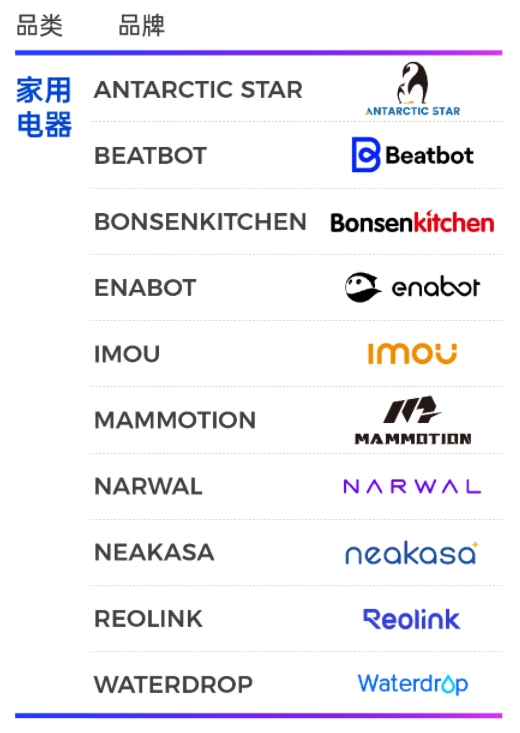
Core Insights - In 2024, China's home appliance export value is expected to exceed $100 billion for the first time, with an annual growth rate significantly higher than the global average, indicating strong growth momentum [1] - Approximately 20% of the brands listed in the 2025 Meet Brands report are from the home appliance category, reflecting a 6 percentage point increase from the previous year, highlighting the category's continued expansion in the overseas market [3] Industry Trends - The home appliance category is transitioning from a phase of "category expansion" to a refined competition stage focused on scenario understanding and product systems [5] - AI technology is becoming a key support for the home appliance category's overseas expansion, with products increasingly capable of autonomous environmental understanding and decision-making [6][7] - Home security management is becoming a new necessity for overseas households, with smart security appliances transitioning from optional to standard [11][12] Brand Development - Brands in the home appliance sector are moving towards a dual-driven model of software and hardware, focusing on a comprehensive evaluation of product performance rather than just hardware functionality [5] - The development focus for brands has shifted from single camera products to a more segmented approach that addresses various spaces and usage scenarios within the home [12][16] Marketing Challenges - New brands face challenges in building trust and educating users, as home appliances are durable goods that require consumer confidence before purchase [19] - The fragmented nature of media channels complicates customer acquisition, as consumers often need to compare and validate information across multiple platforms [20] - Many brands experience a disconnect between traffic acquisition and conversion due to mismatched content and presentation styles on their websites [21] Case Study - BeyondClick has successfully assisted TCL in optimizing its marketing strategy for the Black Friday shopping season in Spain, focusing on a multi-channel approach to enhance conversion efficiency [22][24]

全省超200场新春促消费活动陆续登场
Hai Nan Ri Bao· 2026-02-13 03:37
Core Viewpoint - The Hainan province is launching over 200 Spring Festival promotional activities from now until March 3, aimed at boosting consumer spending across various sectors [2]. Group 1: Promotional Activities Overview - The promotional activities cover eight major categories: "Island-wide Discounts," "New Year Gifts," "Online Shopping," "Culinary Celebrations," "Duty-Free Benefits," "Invoice Lottery," "Financial Support," and "Cultural Tourism" [2][3]. - Activities include purchasing New Year goods, upgrading home appliances, duty-free shopping, dining experiences, live-stream shopping, and tourism [2]. Group 2: Specific Initiatives - In the "Island-wide Discounts" category, major shopping districts and supermarkets will host events such as markets, food tasting, and cultural performances, offering discounts, member rewards, and interactive lotteries [2]. - The "New Year Gifts" category features government subsidies and merchant discounts for purchasing home appliances and mobile phones, with brands like Gree, Midea, Huawei, and Xiaomi participating [2]. - The "Online Shopping" segment includes a live-streaming e-commerce festival, allowing consumers to shop for local products like tropical fruits and seafood [2]. Group 3: Culinary and Duty-Free Promotions - The "Culinary Celebrations" category will distribute dining vouchers for family reunion meals and feature food festivals and cultural experiences [3]. - The "Duty-Free Benefits" category includes the opening of five duty-free stores and various promotional activities such as gift boxes and consumption vouchers [3]. Group 4: Additional Incentives - The "Invoice Lottery" initiative in Haikou allows individuals to participate in a lottery with a maximum prize of 800 yuan by obtaining electronic invoices from various sectors [3]. - Financial institutions like China Construction Bank and Bank of Communications are offering consumer red envelopes and discounts at duty-free shops and restaurants [3]. - The "Cultural Tourism" category will feature events such as village performances and special exhibitions in museums [3].
大行评级丨大和:重申上半年中国股市乐观展望,将老铺黄金与金山云纳入首选名单
Ge Long Hui· 2026-02-13 03:24
Group 1 - The report from Daiwa indicates that if the GDP target for 2026 is set at around 5% during the National People's Congress on March 5, it may suggest stronger economic stimulus measures are forthcoming [1] - The anticipated fiscal stimulus is expected to focus on fixed asset investment, consumption, and real estate [1] - Daiwa maintains an optimistic outlook for the Chinese stock market in the first half of 2026, with the stimulus policy season likely extending until April [1] Group 2 - The likelihood of large-scale stimulus policies remains low, but the introduction of gradual stimulus measures along with strong policy assurances could boost investment sentiment in the short term [1] - Companies such as China Resources Land and Midea are expected to benefit from these developments as part of Daiwa's preferred stocks [1] - Due to strong downstream demand driving price increase expectations, companies like Laopu Gold and Kingsoft Cloud have been added to the preferred list [1]

今年“两新”政策支持范围更聚焦、补贴方式更灵活、实施机制更便捷 从“定额补贴”转向“精准化、差异化”设计
Si Chuan Ri Bao· 2026-02-13 01:41
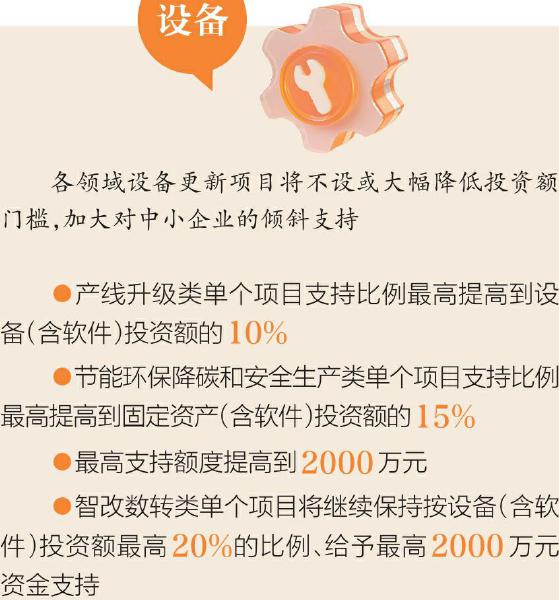
Group 1: Policy Overview - The new policy in Sichuan aims to support large-scale equipment updates and consumer goods replacement with clear arrangements for the year [3] - The total budget for subsidies is set at 6 billion yuan, focusing on optimizing the coverage of equipment updates, promoting green and low-carbon products, and enhancing fund usage supervision [4][6] Group 2: Equipment Update Support - The support ratio for single projects in production line upgrades is increased to a maximum of 10% of the equipment (including software) investment amount, with a maximum support limit of 20 million yuan [7] - For energy-saving, environmental protection, and safety production projects, the support ratio is raised to a maximum of 15% of fixed assets (including software) investment, also with a maximum of 20 million yuan [7] - The support for intelligent transformation projects remains at a maximum of 20% of the equipment (including software) investment amount, with a cap of 20 million yuan [7] Group 3: Consumer Goods Replacement Subsidies - The new subsidy standards for vehicle replacement are linked to the price of new cars, implementing a "proportion + limit" approach [9] - For scrapping updates, subsidies are set at 12% of the price for new energy vehicles and 10% for fuel vehicles, with maximums of 20,000 yuan and 15,000 yuan respectively [9] - For replacement updates, subsidies are 8% for new energy vehicles and 6% for fuel vehicles, with maximums of 15,000 yuan and 13,000 yuan respectively [9] Group 4: Implementation and Fairness - The policy emphasizes fairness in subsidies, allowing each consumer to choose only one scrapping or replacement subsidy per year [9] - The implementation of the subsidy program will be more localized, with each city managing its own subsidy applications based on specific needs [10] - The number of supported categories for household appliances has been reduced from 18 to 6, while the number of digital and smart products has increased from 3 to 4 [10]