茶饮

Search documents
喜茶600多家店消失背后:加盟商陷盈利困局
新华网财经· 2025-12-16 09:31
Core Viewpoint - The new tea beverage industry is entering a period of stock competition, with store turnover becoming a market norm. While brands like Mixue Ice City and Gu Ming continue to consolidate their scale advantages, Heytea is experiencing a contraction in its store count, with a significant decline in total stores over the past year [1][4]. Store Count and Franchise Challenges - Heytea has seen a net decrease of over 600 stores, as franchisees face profitability issues and begin to withdraw from the market. The first batch of franchise agreements is nearing expiration, and it remains unclear whether both parties will choose to renew [4][12]. - As of October 2024, Heytea's total store count was 4,610, which decreased to 3,930 by October 2025, marking a net reduction of 680 stores within a year. This represents a year-on-year decline of 15.41% [5][6]. Franchisee Experience and Investment - Franchisees report significant losses, with one franchisee stating a loss of over 1 million yuan from a single store closure. Many stores across various provinces, including Shandong and Guangdong, have closed this year [5][6]. - The initial investment for opening a Heytea store was high, with costs reaching over 1 million yuan, including rent and personnel expenses. Despite high initial revenues, many franchisees are struggling to achieve profitability [6][7]. Operational Challenges - Franchisees face high costs and low efficiency, with some reporting that the cost of materials supplied to franchise stores can increase by up to 40%. This, combined with the pursuit of higher quality products, has further squeezed profit margins [9][10]. - The operational model of Heytea relies heavily on manual labor, leading to slower service times compared to competitors that utilize more automated processes. This has resulted in lower sales volumes for Heytea stores during competitive periods [10]. Strategic Adjustments - In response to market pressures, Heytea has temporarily halted new franchise applications, indicating a strategic correction to address issues of market saturation and overexpansion. This move is seen as a way to refocus on product innovation and brand building [12][15]. - The company is providing support to existing franchisees, including financial incentives based on order amounts, while also increasing oversight on franchise operations, which adds to the operational pressure on franchisees [14][15]. Market Position and Future Outlook - The shift from a scale-driven growth model to a value-driven approach reflects a fundamental change in the growth logic of new tea brands. Heytea must prioritize resolving the profitability challenges faced by existing franchisees and work on restoring its high-quality brand image [15].


2025消费行业年度趋势分析报告
Sou Hu Cai Jing· 2025-12-15 17:11
Core Trends in the Consumer Industry - The consumer industry in 2025 is characterized by market polarization, organizational restructuring, multi-point industry explosions, and talent resilience [1] - Understanding these trends is essential for businesses, investors, and professionals to seize opportunities amid uncertainty [1] Market Trends: New Opportunities in Polarization - The consumer market is undergoing significant transformation, with the "middle price range" cooling, rational consumption rising, and the silver economy booming [3] - High-income consumers are pursuing quality upgrades, while low- to middle-income consumers focus on cost-effectiveness, leading to a notable "polarization" in consumption [4] - The core driver of consumption upgrade is "value recognition," with high-income consumers willing to pay a premium for innovative, socially responsible, and health-oriented products [4] - The tea beverage industry exemplifies this trend, with low-cost brands like Mixue Ice Cream seeing over 40% profit growth, while mid-range and high-end brands face declining profits [5] Rational Consumption Rise - The brand premium is diminishing, with consumers now prioritizing quality and effectiveness over brand recognition [6] - Consumers are increasingly pragmatic, utilizing both online and offline channels for price comparison and product selection [6] - The rise of "ingredient-focused" consumers and the popularity of private label products reflect this shift, with significant growth in ingredient searches on platforms like Tmall [7] Silver Economy: A New Growth Frontier - The silver economy is transitioning from a niche market to a trillion-dollar sector, driven by an aging population and stable income for retirees [8] - By 2035, the number of individuals aged 60 and above in China is expected to reach 480 million, providing a solid foundation for this market [9] - Various sectors, including finance, entertainment, and consumer goods, are witnessing significant growth, with health products and senior-friendly smart devices gaining traction [9] Organizational Trends: Streamlining and Empowerment - Consumer companies are undergoing profound changes in organizational structure, focusing on efficiency and agility [11] - Many companies are engaging in "slimming down" initiatives, shedding non-core operations to concentrate resources on key business areas [12] - Strategic roles are evolving from advisory to operational, requiring personnel to be deeply involved in business execution [14] Industry Trends: Diverse Growth Across Segments - The beauty and personal care sector is shifting from online dominance to a blend of online and offline experiences, emphasizing the importance of physical retail [20] - The food and beverage industry is experiencing steady growth, with a focus on health and quality, as well as a shift towards high-quality price competition [22] - The health supplement market is booming, with a projected market size of 355.4 billion yuan in 2024, driven by diverse consumer demands and innovative product forms [24] - The pet industry is expanding, with a focus on emotional spending and professional services, reflecting a shift towards health and companionship [26] - Outdoor sports are experiencing explosive growth, driven by increased health awareness and diverse leisure activities [28] - The tourism sector is evolving towards quality and experiential offerings, with new business models reshaping the industry landscape [32] Talent Market: Opportunities Amidst Challenges - The talent market is characterized by intensified competition and a focus on immediate capabilities, with companies prioritizing recent industry experience [38] - The demand for social e-commerce talent is surging, driven by the transformation of traditional fast-moving consumer goods (FMCG) channels [39] - Building career resilience is essential for professionals to navigate the evolving job landscape and seize emerging opportunities [41]

霸王茶姬创始人迎娶天合光能联席董事长,两家公司市值超572亿
2 1 Shi Ji Jing Ji Bao Dao· 2025-12-15 12:33
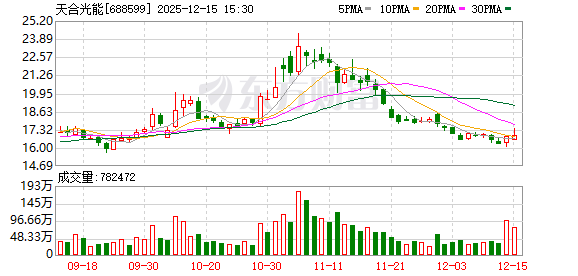
Group 1 - The wedding of Zhang Junjie, founder of Bawang Tea Ji, and Gao Haichun, co-chairman of Trina Solar, took place on December 15, with Bawang Tea Ji milk tea served to guests [2] - Zhang Junjie responded to rumors regarding his personal life, stating he has never been married before meeting his wife and has taken legal action against those spreading false information [2] - As of December 12, Bawang Tea Ji (CHA) closed at $13.65, with a market capitalization of $2.505 billion (approximately ¥17.657 billion) [2] Group 2 - As of December 15, Trina Solar (688599.SH) closed at ¥16.9, with a market capitalization of ¥39.589 billion [2] - The combined market capitalization of Bawang Tea Ji and Trina Solar is approximately ¥57.246 billion [2]

霸王茶姬今日联姻天合光能,“新贵+老钱”强强联合
3 6 Ke· 2025-12-15 12:22
12月15日,江苏常州中吴宾馆高朋满座。一场备受瞩目的婚礼正在这里举行。 新郎是张俊杰,新中式茶饮品牌"霸王茶姬"的创始人兼CEO;新娘是高海纯,全球光伏巨头"天合光 能"的联席董事长。此前,尽管双方公司都默契地表示这"属于个人事务,不涉及商业合作",但资本市 场早已嗅到了不一样的气息。 一位是带领奶茶大军南征北战、将东方文化织入杯盏的青年才俊;一位是继承父辈衣钵、在周期低谷中 执掌光伏航母的实业公主。他们的结合,被外界解读为新消费与新能源的跨界融合,甚至是一场"心照 不宣"的品牌营销。 这场联姻的象征意义,远远超出了两个年轻企业家的个人范畴。它折射出中国商业版图上两条截然不 同、却又开始交汇的路径:一条是轻资产、高增长、流量驱动的消费"新贵"之路;另一条是重资产、强 周期、技术驱动的制造"老钱"之路。 当狂飙突进的"新贵"遇上正在艰难转型的"老钱",当代表着未来的消费模式与代表着国之基石的制造业 家族结合。 一个深刻的问题摆在了所有众多中国企业家面前:在新旧动能转换的时代,企业该如何在实控人家族的 纵横捭阖和起伏变动之间,从组织层面实现稳定发展乃至做大做强。诸如一批霸王茶姬和天合光能样的 家族联合,或许是一 ...
霸王茶姬创始人举办婚礼,现场展台摆满奶茶
第一财经· 2025-12-15 11:27
2025.12. 15 本文字数:1158,阅读时长大约2分钟 封图| 左 张俊杰,右 高海纯 据中国蓝新闻,12月15日, 霸王茶姬创始人张俊杰与光伏龙头天合光能创始人高纪凡之女高海纯举 办婚礼。 婚礼现场部分视频及图片流出, 给宾客准备的饮品是大量霸王茶姬奶茶。 . 据红星资本局11月20日消息,天合光能创始人高纪凡和吴春艳发出婚礼邀请,邀请嘉宾参加新郎张 俊杰、新娘高海纯的婚礼。有知情人士确认,该请柬为真,霸王茶姬创始人张俊杰与天合光能的高海 纯结婚,还有网友透露婚礼酒店为天合光能所在的常州本地的一家宾馆。当天,记者从该宾馆确认了 此事。 此前,霸王茶姬创始人张俊杰婚礼一事,一度成为舆论焦点。 第一财经记者获悉,11月21日,张俊杰本人通过朋友圈证实了这一婚讯,并透露已于今年6月登记 领证。在感谢公众祝福的同时,张俊杰也表示:此前围绕他婚姻和创业的诸多谣言,让其本人及家人 受到了很大伤害,"有必要站出来说话"。 "我郑重声明:在我遇见我妻子(高海纯)前,从未有过婚姻,也从未发生'茶叶富商残疾女儿'的任 何故事。"张俊杰在他的朋友圈表示。 拟江廻九批0)安丁之門,八个月已相烟, 也从未发生过"茶叶富商残疾 ...

万物奔涌的时代,爱是唯一的答案:祝福张俊杰和高海纯
混沌学园· 2025-12-15 11:03
Core Viewpoint - The article highlights the union of two individuals, Zhang Junjie and Gao Haichun, who met at Chaos Academy, emphasizing their personal growth and shared journey rather than a focus on business achievements [2][11]. Group 1: Personal Growth and Connection - The wedding is portrayed as a significant moment where two life paths converge, symbolizing growth and connection [3]. - The founder of Chaos Academy, Li Shanyou, reflects on the couple's journey, noting Junjie's exceptional talent and Haichun's commitment to sustainable energy, showcasing their dedication to personal and professional development [5][6]. - The narrative emphasizes that their relationship is built on unconditional love, which has allowed them to reach a profound connection [8]. Group 2: Learning and Exploration - Both individuals are described as lifelong learners who shed their professional identities in the classroom, focusing on curiosity and the essence of knowledge [12]. - Haichun is noted for her enthusiasm and depth in discussions, while Junjie is recognized for his ambitious goals and strong will, illustrating their commitment to learning and growth [15]. Group 3: Spiritual and Emotional Resonance - The article suggests that their meeting was not coincidental but rather a necessary outcome of their mutual growth and introspection [16]. - The entrepreneurial journey is likened to an inward spiritual quest, where only like-minded souls can truly connect [17][18]. - Their union is characterized as a resonance rather than dependency, indicating a shared expansion of life boundaries [19].

天合光能“千金”婚礼人手一杯霸王茶姬,两家公司市值超572亿
3 6 Ke· 2025-12-15 10:50
Core Insights - The wedding of Zhang Junjie, founder of Bawang Chaji, and Gao Haichun, co-chairman of Trina Solar, has become a significant event, showcasing Bawang Chaji's brand through the wedding's extensive use of its milk tea products [1][4][12] - Zhang Junjie has transformed from a street child in Yunnan to the leader of a publicly listed company, while Gao Haichun, daughter of Trina Solar's founder, has a strong educational and professional background in the solar energy sector [4][6][13][14] Company Performance - As of December 12, 2023, Bawang Chaji's stock closed at $13.65, with a market capitalization of approximately $2.505 billion (about ¥17.657 billion) [4] - Trina Solar's stock closed at ¥16.9 on December 15, 2023, with a market capitalization of approximately ¥39.589 billion, bringing the combined market capitalization of both companies to about ¥57.246 billion [4][6] Background of Key Individuals - Gao Haichun, born in 1993, graduated from Brown University and has held various leadership roles at Trina Solar, including her recent appointment as co-chairman [6][7] - Zhang Junjie, born in 1993, faced significant hardships in his early life but eventually founded Bawang Chaji, which has rapidly expanded to over 6,440 stores globally by the end of 2024 [16][17] Business Growth - Bawang Chaji's sales reached a gross merchandise volume (GMV) of ¥10.8 billion in 2023, with projections for 2024 to exceed ¥20 billion, indicating a doubling of revenue [16] - The company has seen rapid expansion, growing from just over 1,000 stores at the end of 2022 to over 4,500 stores within a year and a half [16] Industry Context - The wedding has sparked interest in the potential collaboration between the tea and solar industries, although there are currently no formal business ties between Bawang Chaji and Trina Solar [9][12]

联姻茶饮大佬的高海纯能否带天合光能突围光伏“寒冬”?
Xin Lang Cai Jing· 2025-12-15 09:21
Core Viewpoint - The wedding of Gao Haichun, daughter of Trina Solar's founder, and Zhang Junjie, founder of Bawang Tea, has attracted significant attention due to their prominent family backgrounds and the companies they represent. Both companies are publicly listed, but there are currently no business collaborations between them [1][3]. Company Overview - Trina Solar, founded in 1997, is a leading player in the global photovoltaic (PV) industry, having once been the largest PV module supplier globally. However, its ranking has declined in recent years [9][11]. - The company went public on the New York Stock Exchange in 2006 but was privatized in 2017 and later re-listed on the STAR Market in China [10]. Leadership and Management - Gao Haichun, born in 1993 and a graduate of Brown University, has been involved in Trina Solar since 2017, holding various positions including Vice General Manager of Strategic Investment and Chairman of Trina Solar's subsidiary [4][5]. - In January 2023, she was appointed Co-Chairman of Trina Solar, indicating a significant step in her succession plan within the family business [4]. Financial Performance - Trina Solar's net profits during the peak years of 2021-2023 were 1.804 billion, 3.681 billion, and 5.527 billion yuan respectively [13]. - However, starting in 2024, the company is projected to incur losses of 3.443 billion yuan, with a loss of 4.201 billion yuan reported in the first three quarters of the year [15]. Market Position and Challenges - Trina Solar's stock price has dropped by 80%, leading to a market capitalization loss of over 140 billion yuan [16]. - The company has faced challenges in the distributed PV market, where its subsidiary Trina Bifacial was once ranked among the top two globally, holding nearly 20% market share in the domestic household market [18]. Strategic Shifts - In response to market conditions, Trina Solar is seeking to transform its business model from a PV product manufacturer to a provider of energy storage and smart energy solutions [22]. - The company has set ambitious targets for its energy storage segment, aiming for a shipment goal of 15-16 GWh in 2024, with recent orders significantly exceeding previous years' performance [27][28]. Industry Context - The PV industry is currently facing price competition and supply-demand imbalances, which pose significant challenges for leading companies like Trina Solar [29]. - The introduction of policies such as the "Document 136" has added uncertainty to the profitability of distributed PV projects, complicating the business landscape further [20].
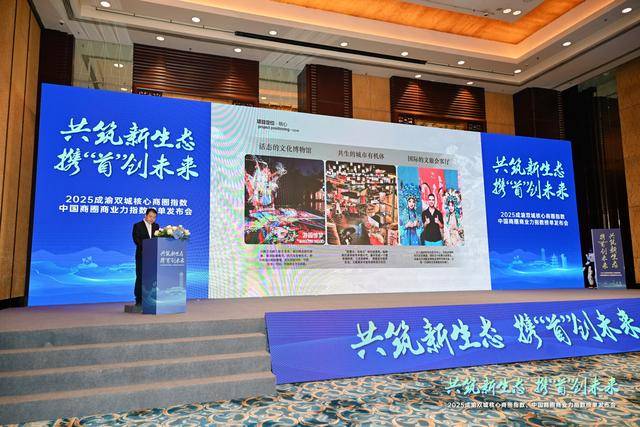
首批首发经济创领品牌与创新场景发布
Sou Hu Cai Jing· 2025-12-15 07:22
Core Insights - The event "Building a New Ecosystem, Creating the Future" highlighted the launch of innovative brands and economic scenarios in the Jinjiang District, including HADO, Bawang Chaji, and others, showcasing the district's commitment to fostering a vibrant consumer market and innovative economic development [1][3]. Brand Highlights - Bawang Chaji has established over 7,000 global stores since moving its headquarters to Jinjiang in 2021, successfully integrating local culture with tea consumption [4][20]. - HADO, a leading AR sports technology brand, has created a comprehensive industry chain that combines sports, education, and technology, appealing to a young demographic [15][17]. - Zigzag Mountain, a honey tea brand, has chosen Chengdu's Chunxi Road for its flagship store, aiming to establish a local supply chain and cultural IP [14]. Innovative Economic Scenarios - The "Robot World" platform in Jinjiang serves as a core hub for brand display and consumer experience, with plans for a 28,000 square meter development to create a full lifecycle ecosystem for products and services [8][10]. - The "Shishuo Wuyu" online platform, leveraging social media for product launches, has achieved over 100 million in sales, indicating a strong market presence [11]. Market Trends - The Jinjiang District has seen a surge in new store openings, with 266 new stores established from January to October 2023, accounting for nearly 40% of the city's total [25]. - The first city duty-free store in Chengdu has opened, blending international quality with local characteristics, further enhancing the consumer landscape [25].
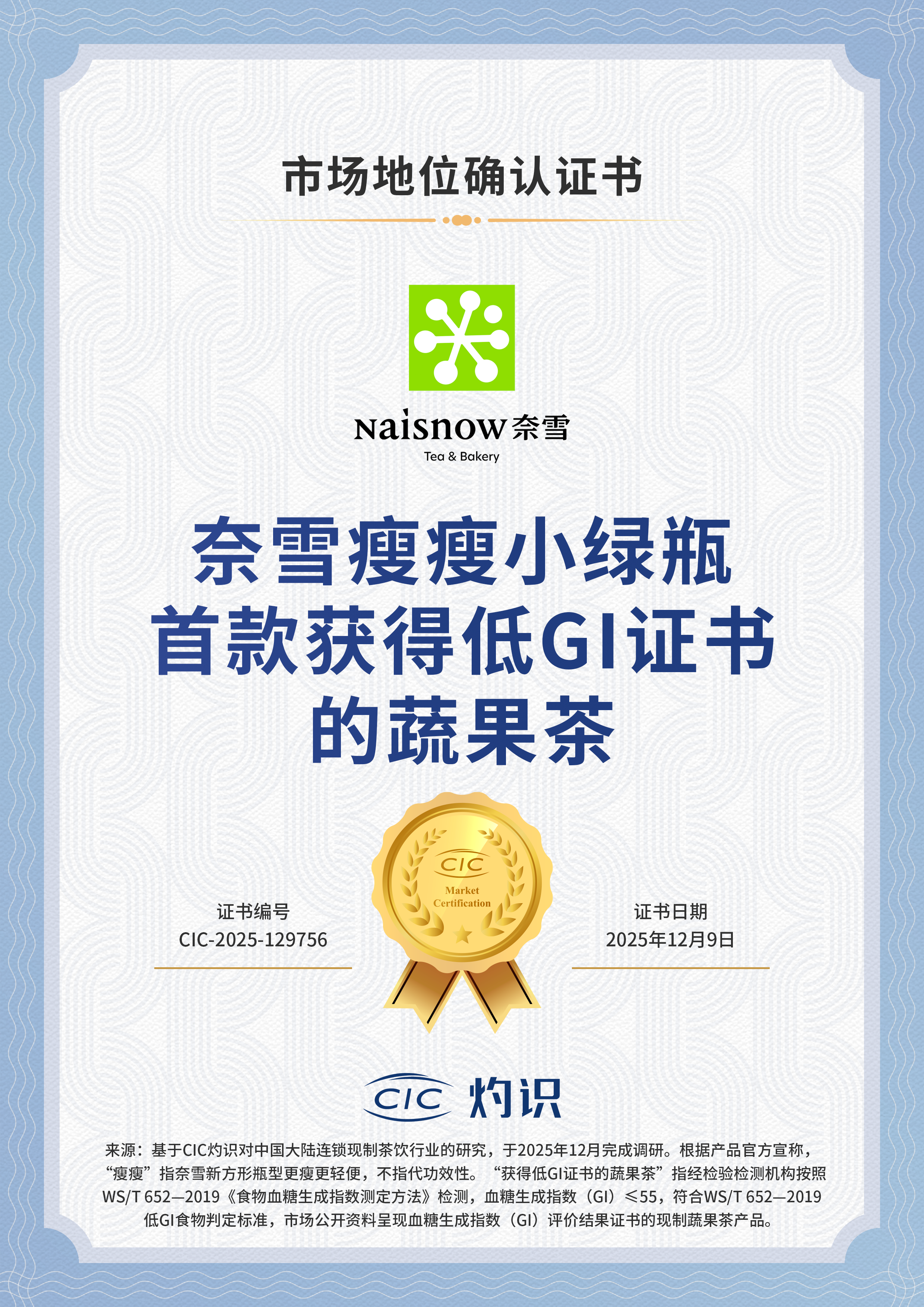
奈雪“瘦瘦小绿瓶” 获CIC灼识“首款获得低GI证书的蔬果茶”市场地位确认
Sou Hu Wang· 2025-12-15 06:21
Core Insights - The article highlights that Nayuki's Tea's flagship product, "Slim Green Bottle" fruit tea, has received global consulting firm CIC's authoritative certification as the first fruit tea in the industry to obtain a low GI (Glycemic Index) certificate, with a GI value as low as 37, significantly below the low GI standard of ≤55, reinforcing its position as a benchmark in healthy tea beverages [1][4][5] Product Performance - "Slim Green Bottle" has achieved remarkable sales, exceeding 20 million cups, maintaining the top position in both brand sales and repurchase rates, and has been recognized as the "Annual Star Ambassador" for Nayuki's 10th anniversary, receiving endorsements from celebrities like actress Gao Yuanyuan and Olympic champion Chen Meng, establishing itself as a symbol of healthy consumption in the tea beverage market [3][8] Health Benefits - The product's health advantages stem from two core strengths: the use of D-alloheptulose, a "perfect sweetener," which contributes to its low GI certification, and the incorporation of multiple superfoods, adhering to the "rainbow diet" and the recommendation of consuming 500g of fruits and vegetables daily, effectively creating a "liquid salad" that meets daily nutritional needs [5][7] Industry Impact - The low GI certification of "Slim Green Bottle" signifies a shift in the tea beverage industry towards "health value competition," providing consumers with quantifiable scientific bases for their choices and marking a fundamental transition in competitive dimensions from taste and collaborations to a focus on scientifically certified products, representing a key step towards professionalization and health-oriented development in the new tea beverage industry [9][10]