
纺织

Search documents
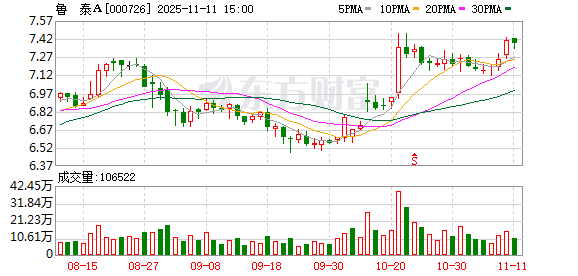
鲁 泰A:目前未涉及航天相关面料研发
Mei Ri Jing Ji Xin Wen· 2025-11-11 11:09
鲁泰A(000726.SZ)11月11日在投资者互动平台表示,公司目前未涉及航天相关面料研发。 (文章来源:每日经济新闻) 每经AI快讯,有投资者在投资者互动平台提问:公司是否考虑向太空服等特种功能面料领域拓展?目 前是否已参与国家航天相关面料的研发或合作,后续在特种纺织领域有何规划? ...


中国织材控股(03778)因“10并1”基准进行股份合并而削减11.27亿股
智通财经网· 2025-11-11 08:39
Core Viewpoint - China Textile Holdings (03778) announced a share consolidation of 11.27 billion shares due to a "10-for-1" basis effective on November 11, 2025 [1] Group 1 - The company will reduce its total number of shares by 11.27 billion as part of the consolidation process [1]
股神谢幕:巴菲特的传承、失误与伯克希尔的百年蜕变
Sou Hu Cai Jing· 2025-11-11 08:00
Core Insights - Warren Buffett is set to step down from Berkshire Hathaway after 61 years, marking the end of an era with a letter reflecting gratitude and wisdom [2] - The transition of leadership to Greg Abel signifies a blend of triumphs and challenges in the company's history [2] Company Evolution - Berkshire Hathaway began as a textile company in 1839, facing significant challenges by the time Buffett took over in 1965, including a 10-year decline in shareholder equity and losses exceeding $10 million [3] - Buffett's transformative strategies included acquiring an insurance company in 1967, investing in Coca-Cola in 1988, and acquiring Burlington Northern Santa Fe Railway in 2010, leading to a diversified empire across various sectors [3] Current Challenges - As of 2025, Berkshire's market capitalization is approximately $1.07 trillion, with a stock price increase of less than 10% since the beginning of the year, underperforming compared to major indices [4] - Following the announcement of Buffett's retirement, the stock price has decreased by 7.93%, contrasting with a 20.15% rise in the S&P 500 during the same period, raising questions about the sustainability of the "Buffett premium" [4] - Berkshire's cash reserves have reached $354.3 billion, accounting for 29% of total assets, presenting a challenge for the incoming leadership to effectively utilize these funds [4] Lessons from Buffett's Career - Buffett has openly discussed his investment mistakes, which have contributed to the maturation of Berkshire's investment logic [5][6] - Key mistakes include emotional decision-making in acquiring Berkshire's textile operations, misjudging trends with Dexter Shoe Company, and the consequences of blind pursuit of high valuations in Kraft Heinz [7][8][10] - Buffett's experiences highlight the importance of rational decision-making, timely corrections, and understanding one's investment circle of competence [11][12] Leadership Transition - Greg Abel, the incoming CEO, has a background in accounting and has been with Berkshire since 1992, demonstrating a track record of successful management and strategic acquisitions [12][13] - Buffett has expressed confidence in Abel's ability to manage the company, emphasizing a shared philosophy of cost control and prudent management [14][16] Buffett's Final Reflections - In his farewell letter, Buffett shared insights on wealth, life lessons, and the importance of learning from past mistakes, urging investors to remain optimistic about Berkshire's future [16][17] - He acknowledged the potential risks associated with leadership transitions and the need for careful management of executive health and compensation disclosures [18] Conclusion - Buffett's departure marks a significant transition for Berkshire Hathaway, but the company's foundational principles and investment strategies are expected to endure under Abel's leadership [19][20] - The future success of Berkshire will depend on its ability to adapt to market conditions while maintaining its established investment philosophy [20]

10月辽宁工业生产者出厂价格同比下降1.2%
Xin Hua Cai Jing· 2025-11-11 06:45
Core Insights - In October 2025, the Producer Price Index (PPI) in Liaoning decreased by 1.2% year-on-year, with the decline narrowing by 1.9 percentage points compared to the previous month [1] - The Industrial Producer Price Index (IPI) fell by 3.8% year-on-year, with a reduction of 1.1 percentage points from the previous month [1] Price Trends - The prices of production materials decreased by 0.7% year-on-year in October, with the mining industry down by 4.3% and processing industry down by 1.1% [1] - Consumer goods prices fell by 3.2% year-on-year, with food prices down by 4.6%, daily necessities down by 2.5%, durable goods down by 2.4%, and clothing down by 0.7% [1] Raw Material Price Movements - In October, the prices of nine major raw materials showed a "three increases and six decreases" trend year-on-year [1] - Prices for non-ferrous metals and wires increased by 0.8%, wood and pulp by 0.6%, and textile raw materials by 0.1% [1] - Other industrial raw materials and semi-finished products decreased by 0.7%, black metal materials by 3.2%, construction materials and non-metallic products by 4.6%, fuel and power by 6.5%, agricultural products by 7.0%, and chemical raw materials by 7.1% [1]
中国织材控股(03778):股份合并将于11月11日生效
智通财经网· 2025-11-10 12:50
Core Viewpoint - China Textile Holdings (03778) has received approval from the Stock Exchange for a share consolidation, which was formally passed by shareholders at a special meeting on November 7, 2025 [1] Summary by Relevant Sections - **Share Consolidation Approval** - The Stock Exchange has approved the share consolidation for China Textile Holdings [1] - The ordinary resolution for the share consolidation was officially passed by shareholders on November 7, 2025 [1] - **Effective Date and Trading Changes** - The share consolidation will take effect on November 11, 2025 [1] - After the consolidation, the trading unit on the Stock Exchange will change from 4,000 existing shares to 2,000 consolidated shares [1] - The original trading position for the consolidated shares will reopen on November 25, 2025, at 9:00 AM Hong Kong time [1]
南非贸工部答21:南非力推产业本地化,中资制造业将迎合作机遇
2 1 Shi Ji Jing Ji Bao Dao· 2025-11-10 11:13
Core Viewpoint - South Africa is actively encouraging local steel manufacturing and aims to attract Chinese companies with advanced technology to invest in steel production projects within the country [1][3]. Group 1: South Africa's Industrial Strategy - Since 2019, South Africa's Department of Trade, Industry and Competition has launched comprehensive plans across various sectors, including automotive, textiles, and steel, to enhance manufacturing capacity, boost exports, create jobs, and promote localization [2]. - The strategic focus is on targeted policy interventions and multi-party cooperation to enhance industrial resilience, transitioning the economy from mere resource exports and assembly to a higher value-added manufacturing system [2][4]. - The "South African Automotive Masterplan 2035" sets a localization target of 60% and aims to double employment in the automotive value chain by 2035, increasing vehicle production to capture 1% of the global market share [2][4]. Group 2: Renewable Energy Initiatives - South Africa is advancing the "Renewable Energy Master Plan" and "Independent Power Producer Procurement Program" to promote local manufacturing in the solar, wind, and energy storage sectors [2][5]. - The goal is to enable South Africa to not only export raw materials but also to complete higher value-added production locally [2][5]. Group 3: Collaboration with China - China is viewed as a crucial partner in South Africa's systematic re-industrialization strategy, particularly in steel and renewable energy sectors [3][6]. - As of September 2025, China is South Africa's largest source of imports, accounting for approximately 22.8% of total imports, and the largest destination for exports, making up about 11.6% of total exports [3]. - South Africa encourages local steel manufacturing and seeks to attract Chinese companies with advanced technology to invest in local steel production [6].
黑牡丹:股东恽伶俐减持计划完成,减持约8.88万股
Mei Ri Jing Ji Xin Wen· 2025-11-10 09:52
Group 1 - The company Black Peony (SH 600510) announced that as of November 10, 2025, Ms. Yun Lingli has reduced her shareholding by approximately 88,800 shares, accounting for about 0.0086% of the total share capital [1] - The company's market capitalization is currently valued at 9.5 billion yuan [1] Group 2 - For the year 2024, the revenue composition of Black Peony is as follows: Real estate industry accounts for 48.69%, construction industry 31.34%, textile industry 17.35%, other industries 1.33%, and other businesses 1.29% [1]

中国宏观周报(2025年11月第1周):农产品价格强于季节性-20251110
Ping An Securities· 2025-11-10 09:27
Group 1: Industrial Sector - Midstream production is recovering, with daily pig iron output and asphalt operating rates declining, while most chemical products see an increase in operating rates[2] - The operating rates for polyester in textiles and tire production have rebounded slightly[2] - The South China industrial price index fell by 0.7%, with black raw materials down 3.0% and non-ferrous metals down 0.1%[2] Group 2: Real Estate - New home sales in 30 major cities decreased by 38.6% year-on-year as of November 7, showing a decline compared to the previous month[2] - The second-hand housing listing price index fell by 0.81% in the last four weeks, a slight increase in the decline compared to the previous value[2] Group 3: Domestic Demand - In October, retail sales of passenger cars reached 2.387 million units, a year-on-year increase of 6%[2] - Major home appliance retail sales fell by 17% year-on-year as of October 17, a decline of 13.4 percentage points from the previous value[2] - Domestic flights increased by 2.3% year-on-year as of November 7, with the Baidu migration index up by 10.9%[2] Group 4: External Demand - Port cargo throughput increased by 1.9% year-on-year as of November 2, with container throughput up by 8.2%[2] - The export container freight index rose by 3.6% week-on-week, while Shanghai and Ningbo's export container freight rates turned from rising to falling[2] Group 5: Price Trends - The agricultural product wholesale price index rose by 2.2% week-on-week, outperforming seasonal trends, particularly in vegetables and pork[2] - Industrial product prices mostly declined, with rebar futures down 2.3% and spot prices down 1.0%[2]
综合晨报:中国10月出口增速录得-1.1%,前值8.3%-20251110
Dong Zheng Qi Huo· 2025-11-10 01:14
1. Report Industry Investment Ratings - Gold: Short - term, the price is in a correction trend, pay attention to the risk of decline [12] - US Dollar Index: Short - term, it is expected to fluctuate [16] - US Stock Index Futures: Short - term, the pessimistic sentiment may ferment, the market will fluctuate and adjust, but maintain a bullish view overall [19] - Treasury Bond Futures: Short - term, the bond market will fluctuate, it is recommended to observe more and trade less [23] - Stock Index Futures: Allocate long positions in each stock index evenly [26] - Thermal Coal: The price is strongly supported, but there is regulatory pressure above 800 yuan, pay attention to the risk of price correction [27] - Iron Ore: The price center is gradually weakening, and it is expected to be weak in the short - term [31] - Palm Oil and Soybean Oil: For palm oil, the MPOB report is crucial; for soybean oil, focus on US bio - fuel policies and US soybean purchases [34] - Sugar: The Zhengzhou sugar futures will be mainly volatile in the short - term, and the 1 - 5 contract long spread can be held [39] - Cotton: In the short - term, it will fluctuate between 13300 - 13600 - 13800; in the long - term, it is cautiously bullish, wait for the opportunity to go long on dips [44] - Bean Meal: It is currently in a situation of "cost support below and supply - demand suppression above", and pay attention to actual soybean purchases and South American production forecasts [47] - Steel: In the short - term, consider the steel price to be in a weak and volatile trend [51] - Corn Starch: In the medium - long term, the spot rice - flour price difference is expected to shrink, it is recommended to trade in bands [53] - Red Dates: The market is in intense game, operate cautiously, and focus on the price game and purchase progress in the producing areas [56] - Corn: The 01 contract is expected to be weak and volatile in the short - term, and rebound in the medium - long term; do not be overly optimistic about the far - month contracts [58] - Copper: Unilaterally, it is recommended to go long on dips; for arbitrage, it is recommended to wait and see [63] - Polysilicon: In November, it enters the critical point of policy and fundamentals game. Consider shorting on rallies [66] - Industrial Silicon: It is more cost - effective to go long on dips, and take profit at high levels [68] - Lithium Carbonate: In the short - term, it will fluctuate within a range; in the medium - term, consider shorting on rallies [74] - Nickel: Pay attention to the opportunity to go long on dips after the inflection point of inventory accumulation [78] - Lead: Industrially, consider shorting on rallies in the medium - term; for spreads, wait and see; for internal - external spreads, consider long internal - short external spreads [80] - Zinc: Industrially, consider shorting on rallies in the medium - term, but wait and see in the short - term; for spreads, consider long spreads in the medium - term; for internal - external spreads, it has a certain profit - loss ratio [81] - EU Carbon Emissions: The EU carbon price will fluctuate in the short - term [83] - Crude Oil: The oil price is expected to maintain a low - level oscillation [86] - PTA: In the short - term, the futures will be volatile and strong, but be cautious about the upside space [88] - Bottle Chip: Consider shorting the far - month processing margin on rallies, and the absolute price follows the polyester raw materials [92] - Urea: It will fluctuate within the range of 1580 - 1780 yuan/ton, and adjust according to the actual spot feedback [94] - Container Freight Rate: In the short - term, the market will fluctuate, and continuously monitor the spot price changes [96] 2. Core Views - The US government shutdown shows signs of resolution, which may boost market risk appetite and weaken the US dollar index. The US stock index futures market sentiment has recovered, but the consumer confidence index has declined [14][16][19] - China's October export growth rate decreased significantly, but it is expected to have resilience in the future. The bond market is currently in a volatile state, and positive spread strategies can be considered [20][22][23] - Various commodities have different market situations. For example, the iron ore price is weakening, the palm oil market is waiting for the MPOB report, and the copper market is affected by macro - expectations and inventory structures [28][33][62] 3. Summaries by Directory 3.1 Financial News and Comments 3.1.1 Macro Strategy (Gold) - In October, China's gold reserves increased by about 0.93 tons. The US consumer confidence index declined in November, inflation expectations slightly rose, and the short - term gold price continued to fluctuate [10][11] 3.1.2 Macro Strategy (Foreign Exchange Futures - US Dollar Index) - The Fed needs to weigh various factors in the next interest - rate decision. The potential agreement to end the US government shutdown is being reached, and the US dollar index is expected to weaken in the short - term [13][15][16] 3.1.3 Macro Strategy (US Stock Index Futures) - The Fed should act cautiously as the interest rate approaches the neutral level. The US government shutdown shows signs of resolution, but the consumer confidence index is close to a record low. The short - term market will fluctuate and adjust [17][18][19] 3.1.4 Macro Strategy (Treasury Bond Futures) - China's October inflation data was slightly better than expected, but the export growth rate decreased significantly. The bond market is worried about the fund fee rate new regulations, and it is currently in a volatile state [20][22][23] 3.1.5 Macro Strategy (Stock Index Futures) - China has suspended some export control measures. The A - share market has shown a stable volume and rising price, and it is recommended to evenly allocate long positions in each stock index [24][25][26] 3.2 Commodity News and Comments 3.2.1 Black Metal (Thermal Coal) - In November, the thermal coal price has risen, and it is expected to be strong, but there is regulatory pressure above 800 yuan [27] 3.2.2 Black Metal (Iron Ore) - A South African iron ore mine will be temporarily closed, but it will not affect global supply. The iron ore price is weakening, and the inventory is expected to increase [28][29][31] 3.2.3 Agricultural Products (Soybean Oil/Rapeseed Oil/Palm Oil) - Brazil's soybean planting progress is slower than last year and the five - year average. The palm oil market is waiting for the MPOB report, and the soybean oil market is concerned about US bio - fuel policies [32][33][34] 3.2.4 Agricultural Products (Sugar) - Brazil's sugar export reached a new high in October. The new sugar production in Guangxi will start later, and the Zhengzhou sugar futures will be mainly volatile in the short - term [36][38][39] 3.2.5 Agricultural Products (Cotton) - China's textile and clothing export decreased in October. The cotton picking progress is fast, and the Zhengzhou cotton futures will fluctuate in the short - term and be cautiously bullish in the long - term [40][42][44] 3.2.6 Agricultural Products (Bean Meal) - China has restored the soybean import qualification of three US companies. The domestic soybean import is abundant, and the oil mill's开机 rate is expected to rise [45][46][47] 3.2.7 Black Metal (Rebar/Hot - Rolled Coil) - Some areas in Hebei have lifted the heavy - pollution weather emergency response. The steel price is in a weak and volatile state, and more market - oriented production cuts are needed [48][50][51] 3.2.8 Agricultural Products (Corn Starch) - The starch sugar industry's开机 rate has increased. The starch enterprise is profitable, and the inventory pressure is acceptable [52] 3.2.9 Agricultural Products (Red Dates) - The red date price in the Hebei market is weak and stable. The new jujubes are about to be harvested, and the market game is intense [54][56] 3.2.10 Agricultural Products (Corn) - The feed enterprise's corn inventory days have increased, and the deep - processing enterprise's inventory has decreased slightly. The 01 contract is expected to be weak in the short - term and rebound in the medium - long term [57][58] 3.2.11 Non - Ferrous Metals (Copper) - Chile's copper export increased in October. The copper price is affected by macro - expectations and inventory structures, and it is recommended to go long on dips [59][62][63] 3.2.12 Non - Ferrous Metals (Polysilicon) - A company has reduced its stake in Tianhe光能. The polysilicon spot price is under pressure, and it is recommended to short on rallies in November [64][65][66] 3.2.13 Non - Ferrous Metals (Industrial Silicon) - The Sichuan and Yunnan silicon enterprises'开机 rate is weak. The industrial silicon price may fluctuate, and it is recommended to go long on dips [67][68] 3.2.14 Non - Ferrous Metals (Lithium Carbonate) - A company has won a large lithium project contract. The lithium demand is strong, but the supply is also increasing. The short - term price will fluctuate, and consider shorting on rallies in the medium - term [69][72][74] 3.2.15 Non - Ferrous Metals (Nickel) - Indonesia plans to complete the feasibility study of 18 downstream projects in December and has stopped approving some nickel intermediate product plants. The nickel price is affected by market sentiment and fundamentals, and pay attention to the opportunity to go long on dips [75][77][78] 3.2.16 Non - Ferrous Metals (Lead) - The LME lead is at a discount. The recycled lead industry is in the stage of large - scale resumption of production, and the short - term supply and demand will be strong. Consider shorting on rallies in the medium - term [79][80] 3.2.17 Non - Ferrous Metals (Zinc) - The LME zinc is at a premium. The LME zinc may face a short - squeeze risk, and the domestic zinc inventory has decreased. Consider shorting on rallies in the medium - term [81] 3.2.18 Energy and Chemicals (Carbon Emissions) - The EU carbon price is affected by weather and power - price policies and will fluctuate in the short - term [82][83] 3.2.19 Energy and Chemicals (Crude Oil) - The US oil rig count remains unchanged. The US will exempt Hungary from sanctions on importing Russian oil. The oil price is expected to maintain a low - level oscillation [84][85][86] 3.2.20 Energy and Chemicals (PTA) - The PTA spot price has increased, and the futures market is affected by supply - side factors. The short - term futures will be volatile and strong, but be cautious about the upside space [87][88] 3.2.21 Energy and Chemicals (Bottle Chip) - The bottle chip factory's export price is stable. The supply is stable, the demand is in the off - season, and consider shorting the far - month processing margin on rallies [91][92] 3.2.22 Energy and Chemicals (Urea) - India has issued a new urea import tender. The urea futures have rebounded due to export policy changes and replenishment demand. It will fluctuate within a certain range [93][94] 3.2.23 Shipping Index (Container Freight Rate) - The new - shipbuilding market is active. The SCFI index has declined, and the container freight rate will fluctuate in the short - term, and monitor the spot price changes [95][96]

宏观经济点评:有色与中下游制造带动PPI同比回升
KAIYUAN SECURITIES· 2025-11-09 14:42
Group 1: CPI Analysis - In October, the CPI year-on-year increased to 0.2%, up 0.5 percentage points from the previous value of -0.3%[15] - The core CPI month-on-month rose to 0.2%, recovering from a seasonal low in September[6] - The food CPI month-on-month growth narrowed to +0.3%, down 0.4 percentage points from the previous value[5] Group 2: PPI Analysis - The PPI year-on-year improved to -2.1%, up 0.2 percentage points from the previous value of -2.3%[27] - The PPI month-on-month returned to positive territory at 0.1%, marking the first increase in 2025[27] - Input factors and domestic high-end manufacturing reduced their drag on PPI year-on-year by 0.4 percentage points each[30] Group 3: Future Predictions - November CPI is expected to rise to approximately 1.2% year-on-year, with a month-on-month increase of around 0.4%[34] - November PPI is anticipated to decline year-on-year, with an average forecast of -2.6% for 2025[35] - The CPI-PPI year-on-year differential is projected to widen in November, indicating diverging inflation trends[36]