贵金属

Search documents
直线拉升!黄金、白银大涨
Sou Hu Cai Jing· 2026-02-11 15:10
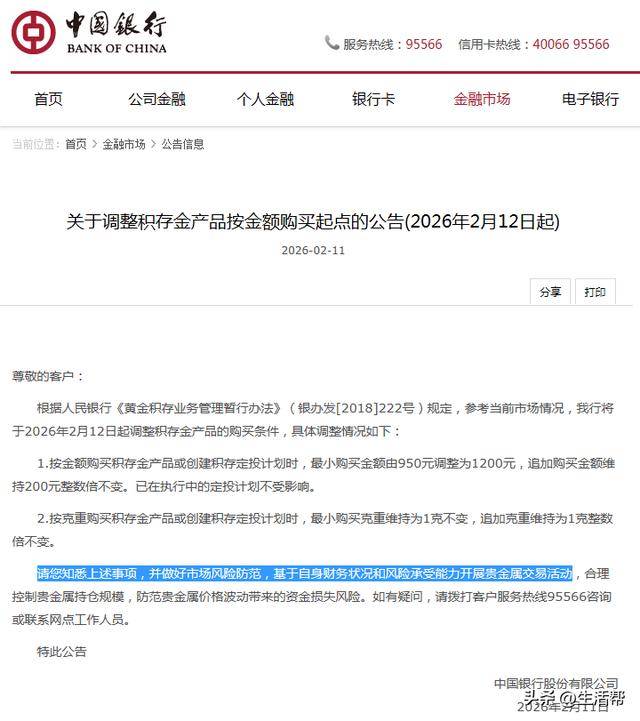
Group 1 - The international precious metals market experienced a significant surge, with spot gold reaching $5,100 per ounce for the first time since January 30, marking a daily increase of 1.56%. Spot silver saw a dramatic rise of over 6%, reaching $85.85 per ounce before slightly retreating [1] - Gold stocks performed well, with Zijin Mining International (02259.HK) rising over 9%, Lingbao Gold (03330.HK) increasing nearly 8%, and Chifeng Jilong Gold (06693.HK) up approximately 6% [1] - Bank of China announced an adjustment to its gold accumulation product purchase conditions, increasing the minimum purchase amount from 950 yuan to 1,200 yuan, effective February 12, 2026, while maintaining the additional purchase amount at 200 yuan [1] Group 2 - Huayuan Futures indicated that the Federal Reserve still has considerable policy space, suggesting that the current interest rate cut cycle may be prolonged due to frequent inflation disturbances, which could extend the bullish window for gold [4] - Forecasts from major banks suggest a bullish outlook for gold prices, with Societe Generale predicting a rise to $6,000 per ounce, Wells Fargo raising its target to $6,300, and JPMorgan estimating a potential price of around $8,000 per ounce by the end of the decade if private sector demand continues to grow [5] - The World Silver Association reported that the silver market is expected to experience a supply gap for the sixth consecutive year in 2026, with a gap of 67 million ounces anticipated, driven by factors such as tight physical supply in London and geopolitical uncertainties [5]

赫克拉矿业股价波动加剧,受贵金属市场情绪影响
Jing Ji Guan Cha Wang· 2026-02-11 13:17
近期贵金属市场波动加剧,受美联储主席提名等因素影响,黄金白银价格出现调整,但机构长期看好贵 金属前景。作为美国主要白银生产商,赫克拉矿业可能间接受到行业情绪变化驱动。2月11日港股黄金 股板块反弹,紫金矿业(601899)等个股上涨,反映出市场对贵金属的关注度提升。 经济观察网赫克拉矿业(HL.N)近7天股价呈现显著波动。2026年2月4日,该股收盘报23.11美元,成交额 为5.90亿美元,较前一日减少18.06%。随后,2月5日股价大跌7.79%至21.31美元,成交额5.31亿美元;2 月6日反弹6.85%至22.77美元;2月9日上涨5.14%至23.94美元;2月10日下跌4.01%至22.98美元,成交额 降至3.30亿美元。近5个交易日累计跌幅为1.96%,年初至今涨幅为19.75%,区间成交活跃度有所下降。 当前股价较2月4日收盘价微跌0.56%,振幅达13.93%。 近期事件 以上内容基于公开资料整理,不构成投资建议。 ...

有色还能再涨吗?小金属价格狂飙,有色ETF(159876)最高上探3.35%!北方稀土登顶A股吸金榜!
Xin Lang Ji Jin· 2026-02-11 11:44
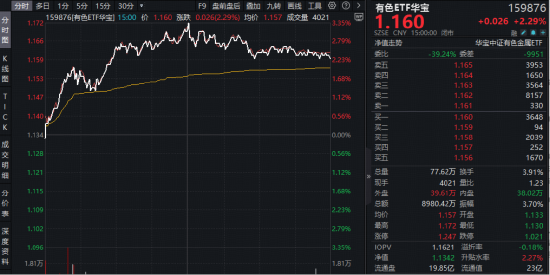
Core Viewpoint - The non-ferrous metal sector has seen a significant inflow of over 13.7 billion yuan in main funds, leading the 31 Shenwan first-level industries, with the non-ferrous ETF Huabao (159876) experiencing a peak increase of 3.35% and closing up 2.29% on February 11 [1][3]. Group 1: Market Activity - The non-ferrous metal sector attracted the highest capital inflow among all industries, with a total trading volume of 89.8 million yuan, marking an 80% increase compared to the previous period [1]. - Notable stocks in the small metal sector, such as Xiamen Tungsten, Jinchuan Group, and others, saw gains exceeding 7%, while companies like Tengyuan Cobalt and Huayou Cobalt increased by over 5% [1][3]. - Northern Rare Earth received a net inflow of 2.322 billion yuan, ranking first in A-share capital absorption [1]. Group 2: Price Trends and Insights - Prices of small metals, including rare earths, tungsten, molybdenum, tin, and antimony, have all risen, supported by tight supply and surging demand [3]. - The current geopolitical tensions have led to increased safe-haven demand for precious metals, with spot gold recovering to $5,050 per ounce [3]. - Analysts from CITIC Securities maintain an optimistic outlook on precious and non-ferrous metal prices, citing ongoing uncertainties from the Trump administration's policies and geopolitical factors [3]. Group 3: Future Outlook - China International Capital Corporation (CICC) suggests that the resource stock market is not over, with potential for a mid-term recovery following short-term adjustments [3]. - Huatai Securities emphasizes that the macro logic for non-ferrous metals remains intact, advocating for a strategic investment approach in the sector [3]. - The Huabao non-ferrous ETF and its linked funds cover a wide range of metals, providing an efficient tool for investors to gain exposure to the non-ferrous metal sector [3].

金价震荡反弹,长期仍存支撑,黄金股票ETF(517400)收涨超2.6%
Sou Hu Cai Jing· 2026-02-11 10:39
Core Viewpoint - Gold prices are experiencing a rebound, with long-term support expected, as historical patterns suggest a significant new upward trend may follow after current fluctuations [1] Group 1: Market Trends - Gold stocks ETF (517400) rose over 2.6% on February 11 [1] - Historical analysis indicates that major shifts in gold bull markets often require significant narrative reversals, such as the end of the oil embargo in the 1970s and the transition from inflation to deflation post-2008 [1] Group 2: Long-term Support Factors - Current factors supporting gold prices include the Federal Reserve's interest rate cuts, rising global uncertainties, and the trend of de-dollarization [1] - The demand for gold as a safe asset is increasing due to frequent global geopolitical tensions and challenges to the dollar credit system amid excessive money supply and fiscal deficit monetization [1] Group 3: Investment Opportunities - Investors are encouraged to monitor investment opportunities in gold ETFs, specifically Cathay Gold ETF (518800) and gold stocks ETF (517400) [1]
中国蓝观察丨为何近期国际金价波动如此频繁?
Xin Lang Cai Jing· 2026-02-11 10:16
Core Viewpoint - The international precious metals market continues to exhibit volatile "roller coaster" trends in 2026, with gold prices reaching historical highs and experiencing significant fluctuations, indicating a complex interplay of market dynamics and investor sentiment [1][14]. Price Movements - In January 2026, the London spot gold price surged from $4,500 to $5,598.75 per ounce, marking a monthly increase of over 24%. However, by the end of January, gold experienced a sharp decline, with a single-day drop of 9%, the largest since 1980, reaching a low of $4,440 per ounce. By February 4, the price rebounded to over $5,050 per ounce before another drop [1][14]. Market Dynamics - Analysts suggest that the traditional factors influencing gold prices, such as geopolitical tensions, dollar exchange rates, and interest rates, are undergoing a shift in their impact. The current demand for gold reflects a reassessment of the international monetary system and geopolitical landscape, positioning gold as a strategic reserve against long-term uncertainties rather than merely an investment asset or temporary safe haven [3][16]. Changing Influences on Gold Prices - Historical data indicates that gold price fluctuations have long been influenced by factors like safe-haven demand, dollar credit, and real interest rates, but the weight of these factors has varied significantly over time. In the 1970s, inflation concerns drove gold prices, while from the 1980s to the early 21st century, economic growth and a strong dollar led to a prolonged period of low gold prices [4][17]. New Characteristics of the Current Gold Price Cycle - The current gold price increase is characterized by a structural shift, where traditional real interest rate logic is weakening. The dual drivers of safe-haven attributes and credit reassessment are becoming more prominent. With global debt at historical highs, gold's risk-hedging properties are amplified, shifting the pricing mechanism from cost-based to risk-based [6][19]. Dynamic Balance in Gold Pricing - In 2026, a phenomenon of "strong dollar" and "strong gold" coexists, with a noticeable reduction in the correlation between the two. This suggests that gold prices are seeking a new dynamic balance influenced by multiple factors [8][21]. Institutional Demand and Central Bank Purchases - Global central banks have transitioned from being net sellers to net buyers of gold, with purchases expected to remain high at around 755 tons in 2026, significantly above historical averages prior to 2022. This shift reflects a strategic reassessment of reserve asset security amid geopolitical uncertainties, with gold being viewed as a crucial defensive asset [11][24]. Strategic Role of Gold - The current trends indicate that gold is evolving from a mere financial investment tool to a strategic cornerstone for national economic security. As geopolitical dynamics stabilize, gold will continue to serve as a vital hedge against uncertainty, with its price fluctuations mirroring changes in the global political and economic landscape [13][26].

FPG财盛国际:金银脱离官定叙事 布局商品战争高地
Xin Lang Cai Jing· 2026-02-11 10:04
Group 1 - The current precious metals market is experiencing a significant conflict between government expectations and institutional actions, indicating a potential market explosion [1][3] - Despite official narratives labeling the recent surge in gold prices as a "speculative bubble," top Wall Street banks' positions reveal a different reality, reflecting deep skepticism towards the credibility of fiat currencies [1][3] - FPG Financial International highlights that the price of tungsten, a critical asset for the defense industry, has seen over a 100% quarterly increase, rising from approximately $673 in November to $1375 in early February 2026, driven by supply chain disruptions [4][5] Group 2 - Following a 30% intraday drop in the silver market, market sentiment turned anxious; however, this "flash crash" was triggered by algorithmic trading rather than a fundamental collapse [2][5] - For long-term investors, such volatility often provides better entry points, and FPG Financial International suggests focusing on junior mining stocks with physical extraction rights and policy advantages in the current bull market [2][5] - Major financial institutions like JPMorgan and Bank of America have set short-term gold price targets at $6,000, while Goldman Sachs anticipates $5,400, supporting a strategy of allocating 50% of asset portfolios to junior mining stocks [2][5] Group 3 - Looking ahead to 2026, investors are advised to adopt a "buy on dips" strategy, particularly for assets like the Grassy Mountain project and resource stocks in nickel and copper that show strong drilling results [6] - The recent rise in precious and strategic metals is seen as an inevitable outcome of intertwined geopolitical conflicts and fiscal deficits, with ignoring this trend posing greater risks than accepting market volatility [6]

Mhmarkets迈汇:金价稳立五千 贵金属现历史分化
Xin Lang Cai Jing· 2026-02-11 09:58
2月11日,当前的美国经济正处于一种罕见的历史性裂变之中,金融市场的狂欢与实体经济的疲软形成 了鲜明对比。这种"双速现实"正重新定义资产配置的逻辑。尽管道琼斯指数在50000点高位震荡,且日 均成交量突破1万亿美元,但实体层面的压力已不容忽视。Mhmarkets迈汇表示,12月美国零售销售额 环比持平(0.0%),且消费者违约率飙升至4.8%,这一近十年来的最高水平预示着底层消费引擎的动 力正在衰竭。 这种宏观脱节的背后是全球资本的"漏斗效应"。人工智能(AI)领域的结构性机遇正吸引着全球流动性 源源不断地注入少数科技巨头。Mhmarkets迈汇认为,目前日均超万亿美元的交易额在很大程度上反映 了国际投资者对英伟达、谷歌等企业的刚性配置需求。这种全球资本的集中流入,导致了市场交易量的 高度浓缩。 在信贷市场,这种分化同样显著。头部科技企业展现出了"类主权"的融资能力,例如Alphabet近期成功 发行了极具象征意义的100年期债券。这反映了AI基础设施建设所需的庞大资本开支,而这些巨头凭借 sovereign-grade(主权级)的资产负债表,在资本市场如鱼得水。 2月11日,当前的美国经济正处于一种罕见的历 ...
邦达亚洲:美联储降息预期降温 黄金回落收跌
Xin Lang Cai Jing· 2026-02-11 09:24
Group 1: Retail Sales Data - In December, U.S. retail sales remained unchanged month-on-month at 0%, significantly below the expected 0.4% and lower than November's 0.6% increase [1][6] - Core retail sales, excluding automobiles and gas stations, decreased by 0.1% month-on-month [1][6] - Out of 13 retail categories, 8 experienced a decline in sales, with notable drops in clothing and furniture stores, as well as automobile dealers [1][6] Group 2: Consumer Spending Concerns - The report heightened concerns about consumer spending momentum, which is a key driver of U.S. economic growth [1][6] - Despite stock market gains potentially supporting high-income household spending, low-income groups reliant on wage growth showed weak consumption performance [1][6] Group 3: Silver Market Insights - Silver prices have stabilized around $80 per ounce, although still below last month's historical highs [2][7] - The World Silver Association reported a structural supply shortage expected to last until 2026, with a projected gap of 67 million ounces [2][7] - Key factors supporting silver prices include tight physical supply in London, geopolitical tensions, U.S. policy uncertainties, and concerns over the independence of the Federal Reserve [2][7] Group 4: Gold Market Overview - Gold prices experienced slight declines, trading around 5060, influenced by profit-taking and hawkish comments from Federal Reserve officials [3][8] - Market risk aversion continues to limit the downside potential for gold prices [3][8] Group 5: Currency Exchange Rates - The USD/JPY pair fell to a seven-day low at approximately 153.10, affected by concerns over potential intervention by the Bank of Japan and weak U.S. economic data [4][9] - The USD/CAD pair also saw a slight decline, trading around 1.3520, influenced by weak retail sales data and high oil prices due to supply concerns [5][10]
基本金属全线飘红 沪镍涨逾4% 碳酸锂飙升超9% 纽银涨逾2%
Sou Hu Cai Jing· 2026-02-11 09:13
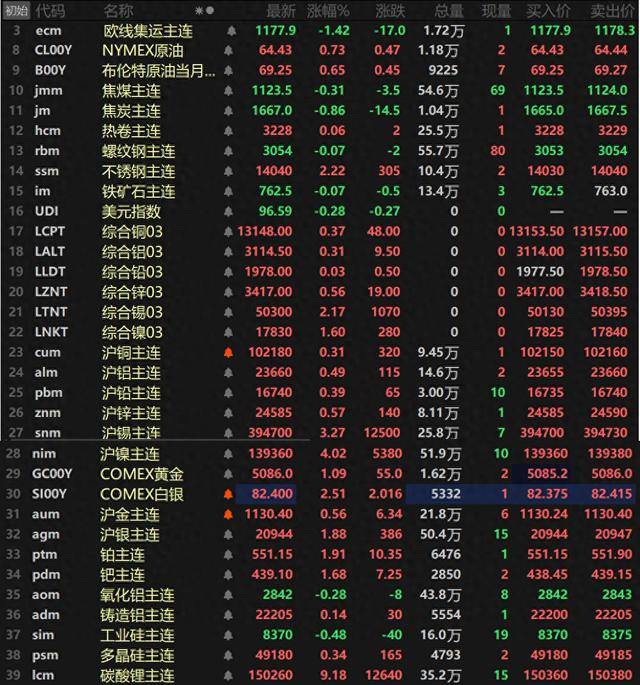
Metal Market - Domestic base metals collectively rose, with nickel leading at a 4.02% increase and tin at 3.27% [1] - Lithium carbonate surged by 9.18% to 150,260 yuan/ton, while aluminum oxide fell by 0.28% [1][4] - In the black metal sector, stainless steel rose by 2.22%, while iron ore and rebar saw slight declines [1] - Internationally, base metals also experienced gains, with tin up by 2.17% and nickel by 1.6% [1][2] Precious Metals - COMEX gold increased by 1.09% and silver by 2.51%, while domestic gold and silver rose by 0.56% and 1.88% respectively [1][2] Macro Economic Indicators - The National Bureau of Statistics reported a 0.2% year-on-year increase in the Consumer Price Index (CPI) for January, with the Producer Price Index (PPI) showing a 1.4% year-on-year decline [5] - The People's Bank of China conducted a net injection of 4.035 billion yuan through reverse repos [5] Currency and Oil Market - The US dollar index fell by 0.28% to 95.59, with expectations of lower non-farm payroll data putting pressure on the dollar [7] - Oil prices rose, with WTI up by 0.73% and Brent by 0.65%, supported by geopolitical uncertainties in the US and Iran [9]
机构重申金价6000美元目标
Di Yi Cai Jing Zi Xun· 2026-02-11 08:51
2026.02.10 本月初,因市场担忧美元可能面临更长期的贬值,美元指数曾跌至96附近。引发这些担忧的部分原因是 美国总统特朗普称,美元 "表现出色",这一言论表明他对美元过去一年的走弱并不特别担忧。特朗普 此前曾提到美元走弱的好处,称这可以降低美国出口成本,让美国企业更容易在全球竞争中占据优势。 自特朗普上任以来,美元指数累计下跌超10%,美联储降息、财政信用恶化、去美元化加速及政治风险 等因素相互交织,推动美元进入趋势性走弱通道,与此同时,外界对美元是否可能失去全球储备货币地 位的质疑始终没有消失。 本文字数:1566,阅读时长大约3分钟 作者 |第一财经 樊志菁 本周首个交易日,市场对美元前景的担忧再度浮现。受日本议会选举结果及美债资产减持报道的双重影 响,美元指数承压走低。随着失守97关口,指数回落至2022年2月以来的低位区间。与此同时,贵金属 市场迎来强劲反弹,国际金价日内大涨超2%,重回5000美元关口。 美元低迷 导致美元走弱的因素之一是上周末日本议会选举结果 ——日本首相高市早苗领导的执政党赢得超多数 席位,消除了市场此前面临的一项不确定性。 另一影响因素是媒体援引匿名知情人士的报道称,美 ...