
能源化工

Search documents
A股成交额破3万亿为历史次高
Dong Zheng Qi Huo· 2025-08-26 00:42
1. Report Industry Investment Ratings No relevant content provided. 2. Core Views of the Report - A-shares continued their unilateral upward trend, with the liquor sector catching up, indicating market recognition of the market. Shanghai's real - estate policy adjustment sent a clear signal to support the real - estate market. The A - share trading volume reached 3.18 trillion yuan, the second - highest in history [2][23][26]. - In the bond market, although the expectation of loose monetary policy increased, caution was still recommended in the short term, and chasing high was not recommended [3][29]. - Steel prices oscillated. The increase in market risk appetite and strong coking coal prices supported steel prices, but there was still inventory accumulation pressure, limiting the upward movement [4][45]. - Zinc prices were expected to oscillate in the short term. Both domestic and overseas macro factors were positive, but the upward height of Shanghai zinc might be restricted by domestic fundamentals [5][74]. - PTA's short - term unilateral price was expected to be oscillating and slightly stronger. Considering the forced cancellation of 09 warehouse receipts, a 10 - 1 long - short spread strategy could be attempted at low levels [6][84]. 3. Summary According to the Catalog 3.1 Financial News and Comments 3.1.1 Macro Strategy (Gold) - US President Trump considered renegotiating the US - South Korea agreement and increasing purchases from South Korea. US new home sales in July were 652,000 units, slightly higher than expected. Gold prices oscillated and closed down. The market's expectation of the Fed's interest rate cut slightly decreased. In the long term, the Fed's interest rate cut space was limited. The dollar rebounded, putting pressure on gold prices. It was recommended to pay attention to the risk of correction in the short term [13][14][15]. 3.1.2 Macro Strategy (Foreign Exchange Futures - US Dollar Index) - Dallas Fed President Logan said the money market might face temporary pressure at the end of the quarter, but the Fed still had room to reduce the balance sheet. The meeting between Russian and Ukrainian leaders was not arranged, and the US dollar was expected to oscillate in the short term [16][18][19]. 3.1.3 Macro Strategy (US Stock Index Futures) - The market became more cautious before NVIDIA's earnings report, but with the support of interest - rate cut expectations, the market risk appetite remained high. The stock index was expected to be oscillating and slightly stronger in the near future [21][22]. 3.1.4 Macro Strategy (Stock Index Futures) - A - share trading volume reached a historical second - high, and Shanghai optimized real - estate policies. It was recommended to hold long positions in stock index futures [23][26][27]. 3.1.5 Macro Strategy (Treasury Bond Futures) - The central bank conducted 288.4 billion yuan of 7 - day reverse repurchase operations and 600 billion yuan of MLF operations. The bond market strengthened, but caution was still needed in the short term, and chasing high was not recommended [28][29][30]. 3.2 Commodity News and Comments 3.2.1 Agricultural Products (Soybean Meal) - Brazil's soybean exports in August increased year - on - year, and the good - quality rate of US soybeans rose. Domestic oil - mill soybean meal inventory increased. Soybean meal futures prices were expected to be oscillating and slightly stronger [31][32][35]. 3.2.2 Agricultural Products (Soybean Oil/Rapeseed Oil/Palm Oil) - Malaysian palm oil exports from August 1 - 25 increased by 10.89% year - on - year. It was recommended to buy on dips, focusing on the production recovery in Indonesia and Malaysia [36]. 3.2.3 Agricultural Products (Cotton) - Pakistan's new cotton listing volume decreased year - on - year, and India's cotton planting area growth slowed. China issued 200,000 tons of sliding - scale duty processing trade quotas. Zhengzhou cotton was expected to be oscillating and slightly stronger in the short term, but the market was not optimistic during the peak new - cotton listing period in the fourth quarter [37][38][41]. 3.2.4 Black Metals (Rebar/Hot - Rolled Coil) - Shanghai adjusted housing purchase restrictions. Steel prices oscillated. There was inventory accumulation pressure, and the release of terminal demand was expected to be slow. It was recommended to adopt an oscillating trading strategy [42][45][46]. 3.2.5 Black Metals (Steam Coal) - Coal exports from three ports in North Queensland decreased month - on - month in July. The daily coal consumption was at the end of the seasonal high, and coal prices entered a weak consolidation phase. It was expected that coal prices would oscillate between 650 - 700 yuan [47]. 3.2.6 Black Metals (Iron Ore) - The central bank adjusted Shanghai's personal housing loan interest rate policy. Iron ore prices oscillated. Steel mills in the north reduced production, but the impact on raw materials was limited. It was recommended to wait and see [48][49]. 3.2.7 Agricultural Products (Corn Starch) - Corn starch exports increased in July, but the over - capacity and weak - demand situation was expected to continue [50]. 3.2.8 Agricultural Products (Corn) - Corn prices showed different trends. Futures oscillated around 2150. It was expected that the 2150 support level might be broken. It was recommended to hold short positions and pay attention to the 11 - 3 reverse spread [50][52]. 3.2.9 Agricultural Products (Red Dates) - Xinjiang's red - date producing areas entered the sugar - increasing stage. Futures prices oscillated. It was recommended to wait and see, paying attention to weather changes [53][54][55]. 3.2.10 Non - Ferrous Metals (Polysilicon) - China's photovoltaic cumulative installed capacity increased from January to July, but the single - month new - installed capacity in July decreased. The price of polysilicon was expected to be between 49,000 - 57,000 yuan/ton in the short term and was expected to reach over 60,000 yuan/ton in the long term [56][57][58]. 3.2.11 Non - Ferrous Metals (Industrial Silicon) - Dongyue Silicon Materials' safety improvement project was filed. The inventory of industrial silicon was expected to change according to the resumption of production of large factories in Xinjiang. The short - term price was expected to be between 8200 - 9500 yuan/ton [59][60]. 3.2.12 Non - Ferrous Metals (Nickel) - The Shanghai Futures Exchange's nickel futures warehouse receipts decreased. The macro - environment was expected to be positive in the short term, but the nickel market was in a supply - surplus situation in the medium term. It was recommended to pay attention to short - term trading opportunities and medium - term short - selling opportunities [61][62][63]. 3.2.13 Non - Ferrous Metals (Lithium Carbonate) - Pilbara Minerals' lithium concentrate production increased in the 2025 fiscal year. It was recommended to pay attention to buying on dips and long - short spread opportunities [64][65]. 3.2.14 Non - Ferrous Metals (Copper) - Marimaca Copper planned to acquire a sulfuric acid plant to reduce costs. US scrap - copper traders redirected shipments to avoid Chinese tariffs. Copper prices were expected to be slightly stronger in the short term, but the upward space was limited [66][67][69]. 3.2.15 Non - Ferrous Metals (Lead) - The LME lead spread was at a discount, and Henan restricted the entry of vehicles below the National V emission standard. Lead prices oscillated, and the supply - demand situation was weak. It was recommended to wait and see [70][71][72]. 3.2.16 Non - Ferrous Metals (Zinc) - The LME zinc spread was at a discount, and Bolivia's zinc concentrate production decreased. Domestic zinc inventory increased. Zinc prices were expected to oscillate in the short term. It was recommended to wait and see on the long - short side and pay attention to medium - term long - short spread opportunities [73][74]. 3.2.17 Energy and Chemicals (Liquefied Petroleum Gas) - The spot price in East China was stable, and the CP recommended price was announced. The PG domestic price was expected to be slightly stronger before the sentiment was digested, and attention should be paid to narrowing the PG - FEI spread [75][76][77]. 3.2.18 Energy and Chemicals (Asphalt) - Asphalt refinery inventory decreased, and social inventory remained flat. The asphalt market was in a fragile state, and it was recommended to wait and see [78][79]. 3.2.19 Energy and Chemicals (PX) - PX prices rose slightly. The short - term price was expected to be oscillating and slightly stronger, and it was recommended to buy on dips [80][81]. 3.2.20 Energy and Chemicals (PTA) - PTA spot prices declined, and the market was quiet. The short - term price was expected to be oscillating and slightly stronger, and a 10 - 1 long - short spread strategy could be attempted at low levels [82][84][85]. 3.2.21 Energy and Chemicals (Caustic Soda) - The price of liquid caustic soda in Shandong increased, and the downstream receiving sentiment was positive. The price was expected to be stable in the short term, and it was recommended to be cautious when chasing high [85][86]. 3.2.22 Energy and Chemicals (Pulp) - The imported wood pulp spot market was mostly stable. The pulp market was expected to oscillate [87][89]. 3.2.23 Energy and Chemicals (PVC) - The domestic PVC powder market price increased slightly. The PVC market was expected to oscillate in the short term [90]. 3.2.24 Energy and Chemicals (Urea) - The urea market was weak, and new orders were scarce. The 01 contract was expected to oscillate in the short - to - medium term [92][93]. 3.2.25 Energy and Chemicals (Bottle Chips) - Bottle - chip factory export quotes were mostly stable. Attention should be paid to the pressure on processing fees caused by device restart and new - capacity release [93][94]. 3.2.26 Energy and Chemicals (Styrene) - Styrene port inventory increased. Styrene was expected to be slightly stronger in September but might face inventory accumulation pressure in the fourth quarter. Attention should be paid to policy variables [95][96][97]. 3.2.27 Shipping Index (Container Freight Rate) - Maersk planned to invest $1 billion to develop Indian ports. The container freight rate was expected to continue to decline, and the 10 - contract was expected to test the support level of 1300 [98][99][100].
岳阳兴长(000819)公司事件点评报告:中报业绩承压 加速建设第二增长极
Xin Lang Cai Jing· 2025-08-26 00:37
Core Viewpoint - The company reported a significant decline in revenue and net profit for the first half of 2025, primarily due to the downturn in the energy and chemical industry, influenced by falling international oil prices and domestic market conditions [1][2]. Financial Performance - In the first half of 2025, the company achieved total revenue of 1.529 billion yuan, a year-on-year decrease of 19.17%, and a net profit attributable to shareholders of -29 million yuan [1]. - In Q2 alone, the company recorded revenue of 466 million yuan and a net profit of -43 million yuan [1]. Industry Context - The energy and chemical sector faced significant pressure due to geopolitical factors and OPEC's increased production, leading to a 15.05% year-on-year decline in the average Brent crude oil price [2]. - Domestic gasoline prices also fell, with an average price of 8,339 yuan per ton, down 8.03% year-on-year, impacting related products like MTBE and industrial isooctane, which saw price drops of 18.56% and 6.35%, respectively [2]. Cost Management - The company experienced increased expense ratios in sales, management, finance, and R&D, with management expenses rising significantly due to maintenance activities [3]. - The net cash flow from operating activities was -104 million yuan, prompting the company to secure bank credit lines to manage liquidity [3]. Strategic Initiatives - The company is actively transitioning towards new materials and energy-saving industries, focusing on high-end polyolefins and other emerging sectors [4]. - A subsidiary resumed production of metallocene polypropylene after maintenance, aiming for profitability in Q4 and enhancing the resource utilization chain [4]. Profit Forecast - The company's performance is expected to improve with the new high-end polyolefin projects, with projected net profits of 56 million yuan, 105 million yuan, and 169 million yuan for 2025-2027 [5]. - The earnings per share (EPS) are forecasted to be 0.15, 0.28, and 0.46 yuan for the same period, with corresponding price-to-earnings (PE) ratios of 111.1, 59.4, and 36.8 [5].

中原期货期权周报-20250826
Zhong Yuan Qi Huo· 2025-08-25 23:31
Report Summary 1. Report Industry Investment Ratings - Not provided in the given content. 2. Core Viewpoints - The report maintains the current bull - market judgment for the stock market, suggesting investors to pay attention to short - term adjustment opportunities in IF, IM, and IC. For other commodities, it provides specific outlooks and trading suggestions based on their respective fundamentals and market conditions [2][3]. 3. Summary by Variety Options - A - shares continued to rise this week, with the Shanghai Composite Index breaking through 3800 points. The trading volume of the market exceeded 2 trillion for 8 consecutive trading days. For different index options (IO, MO, HO), the trading volume and open interest changed, and implied volatility increased. Trend investors should focus on the strength - weakness arbitrage opportunities between varieties, and volatility investors should go long on volatility when the target index rises and short on volatility when it falls. August 27th was the last trading day for the August contracts of SSE and SZSE ETF options [2]. Stock Index - The three major stock indexes had three consecutive weekly positive lines. The Shanghai Composite Index was relatively stable in the short - term, while the ChiNext had a relatively high short - term deviation rate and signs of overheating. The market showed a technology - growth and small - cap style advantage. The main channels for residents' funds to enter the market were the continuous increase in margin trading balances, private fund sizes, and active individual investor account openings. The report maintains the bull - market judgment and suggests investors to pay attention to short - term adjustment opportunities in IF, IM, and IC [3]. Aluminum - The market is still speculating on the Fed's September interest - rate cut expectation. Due to the release of supply increments and the off - season of consumption, the inventory accumulation expectation is strong. Aluminum prices are expected to maintain high - level consolidation in the short term, with a reference range of 20,000 - 21,000 yuan/ton [3]. Carbonate Lithium - The spot price of battery - grade carbonate lithium was 80,500 - 86,500 yuan/ton this week, with a futures price of 78,100 - 90,100 yuan/ton. The Friday closing price was 78,960 yuan/ton, a weekly decline of 7,940 yuan or 9.14%. If only the Jiaxiaowo mine stops production for several months, overseas lithium mines and salts can make up for the domestic reduction after sufficient logistics time. The supply - demand will gradually return to balance after November. Before that, the shortage will be mainly offset by digesting social inventories. The price is expected to be in a wide - range shock [3]. Coking Coal and Coke - The weekly raw coal production was 1912,000 tons, a week - on - week increase of 33,000 tons, and the raw coal inventory was 4716,000 tons, a week - on - week increase of 15,000 tons. The coking coal production was 771,000 tons, a week - on - week increase of 7,000 tons, and the coking coal inventory was 2756,000 tons, a week - on - week increase of 180,000 tons. The seventh round of coke price increases was fully implemented. With the Fed's interest - rate cut expectation and the improvement of the domestic macro - environment, the prices of coking coal and coke are expected to be firm and fluctuate strongly in the short term [4]. Urea - The domestic urea market price dropped significantly over the weekend, with the mainstream factory - gate price around 1680 yuan/ton. The daily production of the urea industry fluctuated around 190,000 - 200,000 tons. The inventory of upstream urea enterprises continued to accumulate, and the port inventory increased to 501,000 tons. The demand from compound fertilizer enterprises decreased, but there is an expectation of marginal improvement in downstream提货 at the end of the month. The futures market is expected to fluctuate weakly [4]. Steel (Rebar and Hot - Rolled Coil) - The production of rebar decreased while demand increased, and the inventory increase slowed down. The production and demand of hot - rolled coil both increased, and the inventory accumulation expanded slightly. The overall inventory accumulation speed was slow. With the Fed's possible September interest - rate cut and the upcoming SCO Summit, the market sentiment is relatively optimistic. Steel prices are expected to fluctuate strongly next week [4]. Eggs - The national egg spot price fell steadily last week and stabilized over the weekend. After this round of adjustment, due to the support of Mid - Autumn Festival stocking, the spot price is not expected to decline significantly. The futures market has a large premium over the spot, and the market has been shorting the high - premium contracts [5]. Pigs - The live - pig spot price declined last week. The supply is sufficient while the demand is weak, and the price is expected to continue to fall in the short term. The futures market showed a divergence in trends, with the near - term contracts reflecting the oversupply situation and the far - term contracts reflecting the expectation of capacity reduction. The market is expected to remain range - bound [5]. Sugar - The domestic sugar spot price was 5940 - 5950 yuan/ton, and the ICE raw sugar price was 16.2 - 16.09 cents/pound. The Brazilian sugar production is in a peak period, but the actual production is lower than expected, so the final output is uncertain. The domestic sugar price is greatly affected by the international price and is expected to follow the international trend and fluctuate weakly [5]. Cotton - The cotton spot price was 15,210 - 15,243 yuan/ton, and the ICE cotton price decreased by 0.7% week - on - week. The Zhengzhou cotton price decreased by 0.64% week - on - week. The international market lacks upward drivers, and the domestic market is expected to see a stable - to - increasing output as the new cotton listing approaches, which will put pressure on the long - term market. The demand side has shown some improvement, and the cotton market is expected to fluctuate within a range. Attention should be paid to the support at around 13,900 yuan [6].
“黑色包袱”变“绿色财富”
Jing Ji Ri Bao· 2025-08-25 21:44
Core Viewpoint - The company is advancing towards a green development path by implementing a near-zero discharge system for industrial wastewater and enhancing the comprehensive utilization rate of industrial solid waste from 28% in 2020 to a projected 53% by 2024, with plans to exceed 60% by the end of the 14th Five-Year Plan [1][2]. Group 1 - The company has established a leading industrial wastewater near-zero discharge system, utilizing a three-tier process of wastewater treatment, reuse, and regeneration [1]. - The comprehensive utilization rate of industrial solid waste has significantly increased, with a target of over 60% by the end of the 14th Five-Year Plan [1]. - In 2023, the company has integrated industrial solid waste management into ecological protection actions, launching 22 demonstration projects with an additional annual processing capacity of 21.9 million tons [1]. Group 2 - The company is focusing on building a green industrial chain for resource reuse, targeting areas such as mine filling, construction materials, high-value utilization, and cross-industry linkages [2]. - A pilot project for the collaborative remediation of geological environments using industrial solid waste has been initiated, in partnership with the Chinese Academy of Sciences [2]. - The company is also working with research institutions to establish technical standards for the use of coal-based solid waste in saline-alkali and desertified lands [2].
能源专题报告:碳中和趋势下的船舶替代燃料前景展望
Hua Tai Qi Huo· 2025-08-25 12:05
Report Industry Investment Rating No information provided in the content. Core Viewpoints of the Report - The shipping industry is transitioning from environmental awareness to mandatory compliance, and decarbonization has become a necessity. The IMO's new strategy and other policies are driving the industry towards green alternative fuels [2][11]. - Methanol is leading in commercial applications, while ammonia is considered the most promising long - term solution for ocean shipping. However, both face challenges such as high green production costs and low energy density [3]. - Biofuels offer a short - term transition for existing fleets, while hydrogen and electricity are mainly used in short - distance markets due to infrastructure and energy density limitations [4]. Summary According to the Directory 1. Policy Background of Ship Alternative Fuels - **IMO《2023 年船舶温室气体减排战略》**: In 2023, the IMO replaced the 2018 strategy with a new one, significantly raising the target requirements. By 2050, it aims for net - zero emissions in international shipping, making green methanol and green ammonia priority options [12][13][15]. - **EU ETS**: Since January 1, 2024, the shipping industry has been included. It requires ships to pay for carbon emissions, changing the demand logic for alternative fuels and driving the industry towards compliance [16][17]. - **US《通胀削减法案》**: It provides production tax credits for clean hydrogen and subsidies for low - carbon transportation fuels. It also allocates $3 billion for port infrastructure. However, policy changes under Trump may weaken support [18][19]. - **China's "Dual Carbon" Goal Strategy**: China is promoting the green transformation of the shipping industry from both supply and demand sides. It aims to increase the market share of green - powered ships and build an incentive and infrastructure system [20][21]. 2. Current Situation and Limitations of Mainstream Ship Fuels - **Fossil Fuels**: They still dominate the shipping industry, accounting for over 90% of sales. Although the industry can adapt to some regulations, they cannot meet the net - zero emission requirements [23][29][30]. - **LNG**: It has developed rapidly, with the global fleet expected to nearly double by 2028. But due to methane emissions, it is difficult to meet the net - zero goal [31][32][33]. 3. Future Alternative Fuel Solutions - **Methanol**: It is the fastest - growing alternative fuel in commercialization. It has advantages in storage and infrastructure compatibility but has low energy density and high green production costs [38][41][46]. - **Ammonia**: It offers a zero - carbon solution but faces challenges such as toxicity, low energy density, and harmful emissions [48][49][51]. - **Biofuels (Renewable Diesel)**: HVO can be directly used in existing engines and facilities, reducing emissions immediately. However, raw material supply is a major constraint [53][54][57]. - **Electricity**: Battery - powered ships offer zero - emissions but are limited by low energy density, high costs, and lack of infrastructure, mainly used in short - distance markets [58][60][61]. - **Hydrogen**: It has high energy potential but faces storage difficulties, lack of infrastructure, and immature technology, mainly in the demonstration stage [62][63][67]. 4. Future Development Trends of Ship Alternative Fuels - **Policy and Market - Driven Fuel Pattern**: Regional policies will shape the choice of alternative fuels, leading to the emergence of "green corridors" [71][72]. - **New Shipbuilding Orders**: LNG is still the leading alternative fuel in terms of orders but is a transitional option. Methanol is rising rapidly, especially in container ships. Ammonia orders are few but show industry confidence in long - term use [74][76][77].
岳阳兴长(000819):公司事件点评报告:中报业绩承压,加速建设第二增长极
Huaxin Securities· 2025-08-25 09:36
Investment Rating - The report maintains an "Accumulate" investment rating for the company [9] Core Views - The company faced significant performance pressure in the first half of 2025, with total revenue declining by 19.17% year-on-year to 1.529 billion yuan, and a net profit attributable to shareholders of -29 million yuan [4][5] - The decline in performance is attributed to a downturn in the energy and chemical industry, influenced by falling international oil prices and domestic gasoline price reductions [5] - The company is actively pursuing a transformation towards new materials and energy-saving industries, with a focus on high-end polyolefins and other emerging sectors [7][8] Summary by Sections Market Performance - The company’s stock price is currently at 16.86 yuan, with a total market capitalization of 6.2 billion yuan and a 52-week price range of 13.39 to 20.72 yuan [1] Financial Performance - In the first half of 2025, the energy and chemical segment generated 768 million yuan in revenue, down 43.79% year-on-year, significantly impacting overall performance [5] - The company reported a net cash flow from operating activities of -104 million yuan due to losses, but managed to maintain a cash and cash equivalents balance of 273 million yuan through bank financing [6] Growth Strategy - The company is accelerating the construction of its second growth engine, aiming to establish a complete green propylene supply chain by the end of the year [7][8] - The high-end polyolefins project is expected to become a new core growth driver, with profit forecasts for 2025-2027 showing a gradual recovery in net profit from 56 million yuan to 169 million yuan [9][11] Earnings Forecast - The report forecasts net profits of 56 million yuan, 105 million yuan, and 169 million yuan for 2025, 2026, and 2027 respectively, with corresponding EPS of 0.15, 0.28, and 0.46 yuan [9][11]
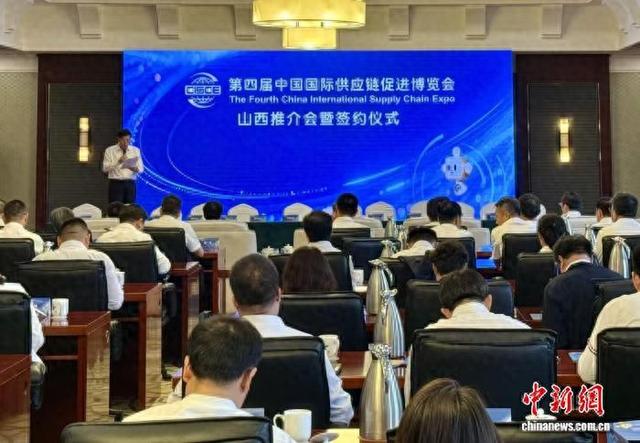
山西省贸促会:搭平台、链资源 助企拓展国际“朋友圈”
Zhong Guo Xin Wen Wang· 2025-08-23 06:13
Core Insights - The participation of Shanxi enterprises in the Fourth China International Supply Chain Promotion Expo has significantly increased from 6 in 2024 to 22 in 2025, indicating a strong growth in engagement [1][2]. Group 1: Event Overview - The Fourth China International Supply Chain Promotion Expo was held in Taiyuan, with a focus on enhancing global supply chain cooperation [2][4]. - Key representatives from companies such as Honeywell, GE Healthcare, and China Construction Bank participated in discussions on leveraging the expo for deeper involvement in global supply chains [2]. Group 2: Strategic Goals - The expo aims to facilitate connections among various enterprises across the supply chain, promoting collaboration between large and small businesses [2]. - Shanxi Province's trade promotion agency is focusing on sectors like clean energy, advanced manufacturing, digital technology, green agriculture, and health to showcase the province's supply chain advantages [2][3]. Group 3: International Cooperation Initiatives - Shanxi's trade promotion agency is actively organizing events to enhance the province's brand recognition and encourage international collaboration through initiatives like "Shanxi Brand Silk Road" [3]. - Plans are in place for Shanxi to participate in the 2025 Osaka World Expo, promoting products in hydrogen energy, advanced manufacturing, and cultural tourism [5].

嘉化能源: 北京海润天睿律师事务所关于浙江嘉化能源化工股份有限公司2025年第二次临时股东大会的法律意见书
Zheng Quan Zhi Xing· 2025-08-22 16:29
Core Points - The legal opinion letter confirms that the procedures for convening and holding the 2025 Second Extraordinary General Meeting of Shareholders of Zhejiang Jiahua Energy Chemical Co., Ltd. comply with relevant laws and regulations [4][14] - The meeting was announced on August 6, 2024, and was held on August 22, 2025, with a total of 329 shareholders present, representing 570,127,055 shares, which is 43.2251% of the total voting shares [3][5] - The voting process included both on-site and online voting, with specific time frames for each method [3][7] Meeting Procedures - The meeting was convened following a resolution and notification sent to all shareholders, published in major financial newspapers and on the Shanghai Stock Exchange website [3][4] - The meeting was chaired by the company's chairman, Han Jianhong, and took place at the Jiahua Research Institute [3][4] Attendance and Voting - A total of 329 participants, including shareholders and their proxies, attended the meeting, confirming their qualifications as per legal requirements [5][14] - The voting results showed that 569,746,455 shares (99.9333%) were in favor of the proposals, with only 270,400 shares (0.4362%) against [7][10] Resolutions - All items on the agenda were approved without any additions, rejections, or modifications, aligning with the meeting notification [5][14] - The resolutions passed included ordinary and special resolutions, with the required majority achieved for each [10][14]

宝城期货能化板块数据周报-20250822
Bao Cheng Qi Huo· 2025-08-22 09:35
Report Overview - Report Date: August 22, 2025 [4] - Report Type: Weekly Report on Energy and Chemicals Sector - Author: Chen Dong [4] 1. Industry Investment Rating - No investment rating information is provided in the report. 2. Core Viewpoints - This week, the domestic energy and chemical commodity sector showed a trend of oscillating and stabilizing. The rebound of crude oil futures strengthened the cost support for downstream products, boosting the performance of the aromatic hydrocarbon, polyolefin, and oil - chemical sectors. [4] - Methanol futures rebounded after a significant decline, but the port inventory accumulation trend continued, and there were still upward resistance. Fuel oil and asphalt also had a slight inventory increase. [4] - In the aromatic hydrocarbon sector, PTA had a slight inventory increase, while ethylene glycol had a slight inventory decrease. In the polyolefin sector, plastics, PVC, polypropylene, and styrene all showed a slight inventory increase. [4] - With the improvement of the macro - environment and the increasing expectation of the Fed's interest rate cut, macro factors outweighed industrial factors. Although there was inventory pressure in the energy and chemical sector, it did not prevent the sector from oscillating and stabilizing this week. [4] 3. Summary by Related Catalogs Energy and Chemical Sector - The overall trend of the domestic energy and chemical commodity sector this week was oscillating and stabilizing, affected by cost support and macro - environment changes. [4] Rubber - There are data charts on rubber, including rubber basis, 9 - 1 month spread, futures inventory on the Shanghai Futures Exchange, Qingdao Free Trade Zone rubber inventory, and tire (full - steel and semi - steel)开工率. [6][7][9] Methanol - Data charts cover methanol basis, 9 - 1 month spread, domestic port inventory, inland social inventory, methanol - to - olefin开工率, and coal - to - methanol cost accounting. [19][21][23] Crude Oil - Charts show crude oil basis, futures inventory on the Shanghai Futures Exchange, US commercial crude oil inventory, US refinery开工率, and net position changes of WTI and Brent crude oil. [32][34][36] Fuel Oil - There are charts on the basis of domestic high - sulfur fuel oil, monthly spread, domestic production from 2016 - 2025, Singapore inventory from 2020 - 2025, global shipping index from 2022 - 2025, and futures inventory on the Shanghai Futures Exchange. [47][48][50] Asphalt - Data includes domestic asphalt basis from 2020 - 2025, monthly spread, domestic production from 2016 - 2025, import volume from 2020 - 2025, domestic refinery asphalt装置开工率, and weekly inventory on the Shanghai Futures Exchange from 2016 - 2025. [61][62][64] PTA - Charts show domestic PTA basis from 2020 - 2025, 9 - 1 month spread,装置开工率, weekly production, enterprise weekly inventory, and Zhengzhou Commodity Exchange PTA warehouse receipts. [72][74][76] Ethylene Glycol - Data includes ethylene glycol basis, 9 - 1 month spread, domestic开工率 from 2021 - 2025, weekly production, polyester industry chain开工率, and East China inventory from 2018 - 2025. [90][87][92] Styrene - There are charts on styrene basis from 2020 - 2025, 9 - 1 month spread, domestic开工率 from 2016 - 2025, factory inventory, registered warehouse receipts, and East + South China port inventory from 2020 - 2025. [99][100][102] Plastic - Data includes LLDPE basis, 9 - 1 month spread, domestic PE and LLDPE monthly production from 2019 - 2025, polyethylene import volume from 2018 - 2025, Dalian Commodity Exchange plastic warehouse receipts, and domestic plastic products data. [111][114][115] PP - Charts show polypropylene basis, 9 - 1 month spread, Taiwan's polypropylene production from 2010 - 2025, domestic PP import volume from 2016 - 2025, domestic downstream开工率, and domestic polypropylene warehouse receipts from 2020 - 2025. [133][124][126] PVC - Data includes domestic PVC basis from 2019 - 2025, 9 - 1 month spread, ethylene production from 2016 - 2025, domestic PVC import volume from 2018 - 2025, Dalian Commodity Exchange PVC warehouse receipts, and housing completion and sales area cumulative value from 2018 - 2025. [135][136][138]
美国8月制造业和服务业PMI超预期反弹
Dong Zheng Qi Huo· 2025-08-22 02:25
1. Report Industry Investment Ratings No relevant information provided. 2. Core Views of the Report - The US economic data in August showed mixed results. The manufacturing and services PMIs rebounded unexpectedly, but the initial jobless claims increased more than expected. The inflation pressure rose, and the market's expectation of the Fed's interest rate cut cooled down [2][13]. - In the commodity market, different products had different trends. For example, the price of动力煤was expected to be stable in the short - term, while the price of豆粕was affected by the US harvest and China's purchase policy [3][4]. 3. Summary by Relevant Catalogs 3.1 Financial News and Comments 3.1.1 Macro Strategy (Gold) - The preliminary value of the US S&P Global Manufacturing PMI in August was 53.3, higher than the expected 49.5 and the previous value of 49.8. The services PMI and the composite PMI also showed good performance [12]. - The Fed's Hammack indicated that the FOMC might not cut interest rates in September. The gold price fluctuated and closed down. The market's expectation of the Fed's interest rate cut cooled down [13]. - Investment advice: The gold price remained in a range - bound state [14]. 3.1.2 Macro Strategy (Stock Index Futures) - The total social electricity consumption in July reached 1.02 trillion kWh, with a year - on - year increase of 8.6%. The proportion of new energy increased significantly [15]. - A new policy - based financial instrument of 500 billion yuan might be launched, focusing on emerging industries and infrastructure [16]. - Investment advice: It is recommended to allocate long positions in various stock indexes evenly [17]. 3.1.3 Macro Strategy (Foreign Exchange Futures - US Dollar Index) - The US and the EU took further measures to finalize the trade agreement, including plans to reduce US tariffs on European cars [19]. - The Atlanta Fed President still expected one interest rate cut this year and paid attention to the labor market [20]. - The US manufacturing activity expanded at the fastest pace since 2022, which supported the US dollar index [21]. - Investment advice: The US dollar is expected to rebound in the short - term [22]. 3.1.4 Macro Strategy (US Stock Index Futures) - The preliminary value of the US S&P Global Manufacturing PMI in August was 53.3, reaching a 39 - month high. The services PMI also performed well [23]. - The Fed's Collins said that if the labor market deteriorated, it might be appropriate to cut interest rates in the short - term. Hammack did not support an interest rate cut in September [24][25]. - Investment advice: Pay attention to the opportunity of buying on dips after the correction, as the fundamental data remains resilient [26]. 3.1.5 Macro Strategy (Treasury Bond Futures) - The central bank conducted a 253 billion yuan 7 - day reverse repurchase operation on August 21, with a net injection of 124.3 billion yuan [27]. - Investment advice: If the short - term increase is high, it is recommended to pay attention to the short - hedging strategy [28]. 3.2 Commodity News and Comments 3.2.1 Agricultural Products (Soybean Meal) - As of the week ending August 14, the net increase in US soybean export sales was 1.1369 million tons, in line with expectations [29]. - The Pro Farmer field inspection indicated a potential bumper harvest of US soybeans. The market focused on whether China would resume purchasing US soybeans [30]. - Investment advice: The price of soybean meal futures is expected to fluctuate. Pay attention to the US field inspection results and China's purchase policy [30]. 3.2.2 Agricultural Products (Soybean Oil/Rapeseed Oil/Palm Oil) - Indian importers started to buy palm oil from Colombia and Guatemala at a large discount [31]. - The Trump administration was expected to make a ruling on the exemption of small refineries [32]. - The palm oil export volume in Indonesia increased in June, and the inventory decreased slightly [33]. - Investment advice: After the adjustment, the US biodiesel policy might boost the price of the oil market. It is recommended to buy on dips, but pay attention to China's purchase of US soybeans [33]. 3.2.3 Agricultural Products (Red Dates) - The main producing areas of red dates in Xinjiang were about to enter the sugar - increasing period. The futures price of the main contract CJ601 rose slightly [34][35]. - Investment advice: Due to the uncertainty of the new - season production, it is recommended to wait and see. Pay attention to the weather in the producing areas and the pre - festival stocking in the main sales areas [35]. 3.2.4 Agricultural Products (Corn Starch) - Corn starch enterprises were affected by equipment maintenance, and the operating rate decreased. The inventory increased slightly [36]. - Investment advice: The CS11 - C11 spread was expected to strengthen when the new - season production was determined [37]. 3.2.5 Black Metals (Rebar/Hot - Rolled Coil) - The inventory of the five major steel products increased by 250,700 tons week - on - week as of August 21. The rebar inventory increased significantly [38]. - Investment advice: The steel price was expected to continue to fluctuate weakly in the short - term. It is recommended to wait for the market to correct [39]. 3.2.6 Agricultural Products (Corn) - The inventory of deep - processed corn decreased, and the consumption also decreased [40]. - Investment advice: The 11 and 01 contracts of corn futures were expected to decline. Hold short positions and pay attention to the weather [41]. 3.2.7 Black Metals (Steam Coal) - The total social electricity consumption in July increased by 8.6% year - on - year [42]. - Investment advice: The peak of the coal price was expected to have passed, and the price was expected to be stable in the short - term [43]. 3.2.8 Black Metals (Iron Ore) - The import of recycled steel raw materials in July was 21,700 tons, with a month - on - month increase of 12.10% and a year - on - year increase of 20.03% [44]. - Investment advice: The iron ore price was expected to continue to fluctuate. It is recommended to pay attention to arbitrage opportunities [44]. 3.2.9 Agricultural Products (Cotton) - In July, China's cotton product export volume increased, but the export value decreased [45]. - India temporarily exempted cotton import tariffs from August 19 to September 30 [46]. - The Indian Cotton Association expected that the cotton production in 2025/26 would increase despite the decrease in the planting area [47]. - Investment advice: Before the new cotton was listed in China, the supply was tight, which supported the price in the short - term. However, the price was expected to be under pressure in the fourth quarter [49]. 3.2.10 Non - Ferrous Metals (Polysilicon) - Trump reiterated that the US would not approve new photovoltaic or wind power projects [50]. - Investment advice: The futures price of polysilicon had strong support at 49,000 yuan/ton. It was recommended to take a bullish view on pull - backs and pay attention to the 11 - 12 reverse arbitrage opportunity [51][52]. 3.2.11 Non - Ferrous Metals (Industrial Silicon) - The export volume of primary polysiloxane in July decreased [53]. - Investment advice: The price of industrial silicon was expected to fluctuate between 8,200 - 9,200 yuan/ton. Pay attention to range - trading opportunities [54]. 3.2.12 Non - Ferrous Metals (Lead) - On August 20, the LME 0 - 3 lead was at a discount of $39.48/ton. The domestic lead inventory decreased slightly [55]. - Investment advice: It is recommended to wait and see in the short - term [56]. 3.2.13 Non - Ferrous Metals (Zinc) - On August 20, the LME 0 - 3 zinc was at a discount of $9.33/ton. The domestic zinc inventory decreased [57]. - Investment advice: It is recommended to wait and see in the short - term for single - side trading. Pay attention to the medium - term positive arbitrage opportunity [58]. 3.2.14 Non - Ferrous Metals (Lithium Carbonate) - The Zulu lithium project in Africa made a major breakthrough [59]. - Investment advice: It is recommended to look for opportunities to buy on dips and conduct positive arbitrage [60]. 3.2.15 Non - Ferrous Metals (Copper) - Codelco in Chile lowered its 2025 copper production guidance [61]. - The S3 expansion project of First Quantum Minerals in Zambia was put into operation [62]. - Investment advice: It is recommended to wait and see for single - side trading and pay attention to the internal - external reverse arbitrage strategy [63]. 3.2.16 Non - Ferrous Metals (Nickel) - The LME nickel inventory increased by 252 tons on August 21 [64]. - Investment advice: It is recommended to pay attention to short - term trading opportunities and medium - term short - selling opportunities [67]. 3.2.17 Energy Chemicals (Carbon Emissions) - On August 21, the closing price of CEA was 70.92 yuan/ton, with a 0.3% decrease [68]. - Investment advice: The CEA price was expected to fluctuate in the short - term [69]. 3.2.18 Energy Chemicals (Liquefied Petroleum Gas) - The weekly commercial volume of LPG in China increased, and the inventory decreased slightly [70][71]. - Investment advice: The PG price was expected to be strong in the short - term [73]. 3.2.19 Energy Chemicals (Natural Gas) - The US natural gas inventory increased week - on - week. Trump's statement on not approving new wind and photovoltaic projects might affect the demand for natural gas [74]. - Investment advice: The Nymex natural gas price was expected to fluctuate in the short - term and decline in the medium - term [75]. 3.2.20 Energy Chemicals (Urea) - As of August 21, the inventory of urea at Chinese ports increased by 37,000 tons week - on - week [76]. - Investment advice: The urea price was expected to be in a range - bound state. Pay attention to the new Indian tender and domestic demand [76]. 3.2.21 Energy Chemicals (PTA) - Two PTA plants in South China were planned to be shut down for maintenance [77]. - Investment advice: The PTA price was expected to be strong in the short - term. It is recommended to buy on dips [79]. 3.2.22 Energy Chemicals (Caustic Soda) - On August 21, the price of liquid caustic soda in Shandong was adjusted locally [80]. - Investment advice: The caustic soda price was expected to be strong, but it is recommended to be cautious when chasing the price [81]. 3.2.23 Energy Chemicals (Pulp) - The import pulp spot market continued to be weak [82]. - Investment advice: The pulp price was expected to fluctuate in the short - term [85]. 3.2.24 Energy Chemicals (PVC) - The domestic PVC powder market price was slightly stronger [86]. - Investment advice: The PVC price was expected to be weak in the short - term due to India's anti - dumping ruling [86]. 3.2.25 Energy Chemicals (Styrene) - An East China styrene plant with a capacity of 320,000 tons/year was planned to be shut down for maintenance in September [87]. - Investment advice: The styrene price was expected to continue to fluctuate. The supply and demand were expected to be balanced in September, but there was a risk of inventory accumulation in the long - term [88]. 3.2.26 Energy Chemicals (Bottle Chips) - The export quotes of bottle chip factories mostly increased [89]. - Investment advice: Pay attention to the pressure brought by the resumption of production and new plant commissioning in late August and September [91]. 3.2.27 Energy Chemicals (Soda Ash) - As of August 21, the total inventory of domestic soda ash producers was 1.9108 million tons, with a 0.71% increase [92]. - Investment advice: It is recommended to short the soda ash price on rallies and pay attention to supply disruptions [92]. 3.2.28 Energy Chemicals (Float Glass) - On August 21, the price of float glass in the Shahe market decreased [93]. - Investment advice: It is recommended to be cautious in single - side trading and pay attention to the arbitrage strategy of buying glass and shorting soda ash [94]. 3.2.29 Shipping Index (Container Freight Rate) - The global container ship order volume reached a record high, and the over - supply of shipping capacity was expected to last until 2029 [95]. - Investment advice: The container freight rate was expected to fluctuate in the short - term. It is recommended to pay attention to short - selling opportunities on rallies [97].