商超

Search documents
胖东来的第一批学徒,已经挂科了
商业洞察· 2026-01-22 09:38
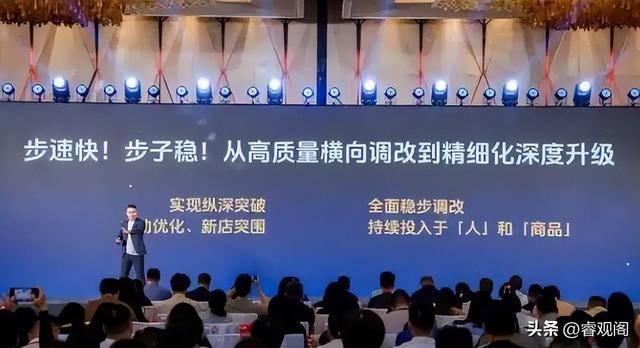
Core Viewpoint - The article discusses the challenges and complexities of learning from the "胖东来" (Pang Donglai) retail model, highlighting the struggles of various supermarket chains in adapting to this model and the inherent difficulties in transforming traditional retail practices into a more efficient and profitable system [2][4][14]. Group 1: Industry Challenges - The retail industry is facing significant challenges, with major players like 永辉超市 (Yonghui Supermarket) reporting substantial losses, including a projected annual loss and a nearly 20% revenue decline for 中百 (Zhongbai) [5][10]. - The article notes that while some companies like 步步高 (Bubugao) have shown revenue growth, they still face operational challenges, including a significant drop in net profit [5]. - The difficulties in replicating the success of 胖东来 are emphasized, as many companies struggle to understand and implement the key aspects of its operational model [7][14]. Group 2: Learning from 胖东来 - The essence of learning from 胖东来 lies in fundamentally changing the survival strategies of traditional supermarkets, moving away from a reliance on key account (KA) sales to a model that prioritizes direct consumer engagement and product selection [14][20]. - 胖东来’s model emphasizes the importance of self-owned brands and a direct relationship with suppliers, which contrasts sharply with traditional practices that often involve significant fees for shelf space and product placement [16][19]. - The article highlights the difficulty of changing entrenched procurement practices within traditional supermarkets, which often leads to resistance against adopting new operational models [22][24]. Group 3: Management and Employee Relations - 胖东来 is noted for its generous employee compensation and benefits, which are designed to foster loyalty and reduce corruption within the procurement process [33][39]. - The management practices at 胖东来 are characterized by strict rules and high expectations, which can lead to challenges in maintaining quality as the company scales [44][45]. - The article discusses the complexities of managing a large organization while trying to implement a detailed and rigorous management system, indicating that as companies grow, the effectiveness of such systems may diminish [48][50]. Group 4: Market Dynamics and Future Outlook - The retail landscape is evolving, with traditional supermarkets facing competition from e-commerce and new retail formats, making it essential for them to adapt quickly to changing consumer preferences [56][60]. - The article suggests that the success of 胖东来 may not be easily replicable due to its unique context and the personal leadership style of its founder, indicating a potential "survivor bias" in attempts to emulate its model [62][63]. - The future of retail may require a reevaluation of existing business models, as companies navigate the complexities of modern consumer behavior and market conditions [58][61].


商超上“红装” 文创受青睐
Xin Lang Cai Jing· 2026-01-21 22:37
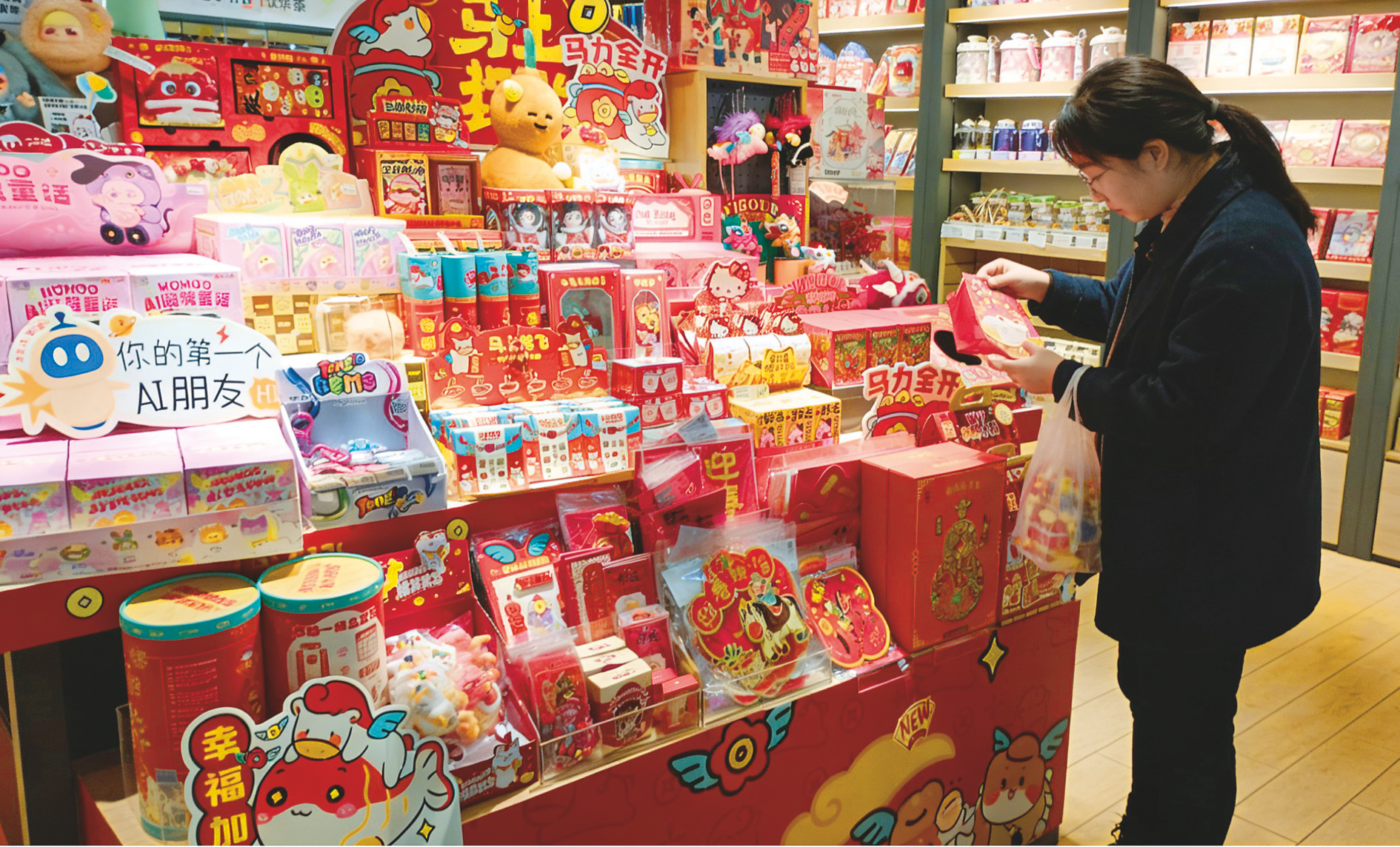
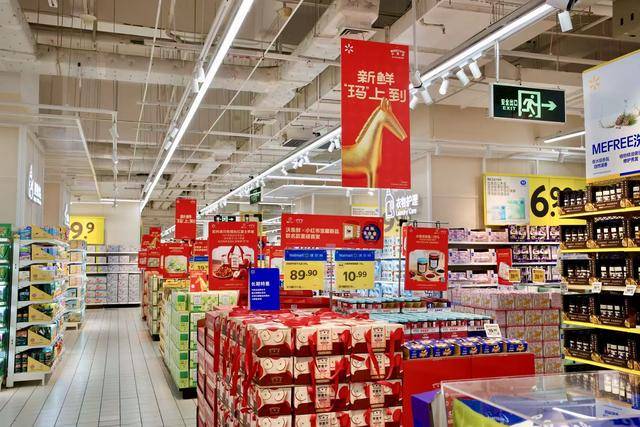
商家透露,今年的新春文创产品注重的是年轻化、个性化,配上IP联名、国潮元素、迷你尺寸等设计,精准契合年轻人的消费喜好,既满足了营造年味的需 求,又能作为新年礼物送给亲友。 本报讯(记者韦薇)2026年农历马年春节日益临近,我市会展·航洋城等各大商场的精品店、超市已换上"红装",各式喜庆挂饰、萌趣文创小物件集中亮 相,为城市增添了浓郁的节日氛围。1月21日,记者走访会展·航洋城、南宁万象城看到,精品店里的显眼位置已被红彤彤的新春文创专区"抢占",从传统 的"福"字挂饰到新潮动漫元素的联名产品,丰富的品类吸引消费者前来挑选。 记者在会展·航洋城一家饰品店看到,"恭喜发财""福气满满"等立体福语小挂饰以红金配色为主,搭配绒布烫金工艺,既保留了传统年味,又凸显新潮精 致。货架上的迷你对联贴纸、对联冰箱贴等小物件成为年轻消费者的"心头好"。 在另一家杂物社里,"马上有福"主题展区十分吸引眼球,憨态可掬的小马玩偶、"大展宏图"主题挂饰,结合了马年元素与国潮插画风格,中国传统氛围迎面 扑来。"福禄悬耕画"等DIY文创产品别具一格,市民尝试动手制作装饰,体验新春的仪式感。 会展·航洋城超市的年货区里充满创意,兼具装饰性与实用 ...
物美调改后员工薪资涨了吗?30%-50%普涨+福利加码实证
Jin Rong Jie· 2026-01-19 06:12
Core Viewpoint - Wumart has implemented a dual incentive policy of "salary increase + welfare upgrade" since March 2025, resulting in a salary increase of 30%-50% for grassroots employees, with a minimum base salary raised to 6000 yuan, showcasing a people-oriented reform approach [1][2][5] Summary by Relevant Sections Salary Increase for All Employees - The salary increase is a universal benefit rather than a localized trial, aimed at re-evaluating the value of "people" and establishing a positive operational cycle through improved employee treatment [2] - Grassroots employees have seen a salary increase of 30%-50%, with the minimum monthly salary raised from approximately 4000 yuan to 6000 yuan, and some skilled positions earning between 8000-10000 yuan [2][3] - In Tianjin, employees in various positions also received a 30%-50% salary increase, with benefits such as 10 days of paid annual leave and profit-sharing rights [2] Management Positions and Welfare Upgrades - Management salaries have significantly increased, with new positions offering salaries ranging from 16,000 to 23,000 yuan, a 30% increase from previous levels, along with comprehensive benefits [3] - Existing management staff have also seen salary increases of 25%-40% alongside performance bonuses, encouraging better service and operational management [3] Retention of Existing Employees - Policies ensure that existing employees retain their salaries and benefits during internal transfers, with no one experiencing a salary reduction due to the reforms [4] - Employees who participate in skill training for new business areas can receive additional salary increases of 10%-15% [4] Underlying Logic of Salary Increases - The salary increases are a strategic choice for sustainable operations, driven by the need for service upgrades and the attraction of quality employees to maintain service quality [5][6] - The operational logic emphasizes a positive cycle where salary increases and reduced working hours lead to improved employee satisfaction, which in turn enhances customer service and drives sales growth [5] Mutual Benefits from Salary Increases - Employee feedback and store performance data confirm the positive impact of the salary increase policy, with significant sales growth observed in reformed stores [7] - The average daily sales at the Xueqing Road store increased from 200,000 yuan to 700,000 yuan, demonstrating the effectiveness of the "salary increase → service upgrade → performance improvement" cycle [7] Commitment to Employee Satisfaction - Wumart's salary adjustments are comprehensive and inclusive, with a focus on employee needs, aiming to enhance training systems and career advancement opportunities [7]
永辉超市五连亏后启动31亿定增,叶国富主导胖改转型
Sou Hu Cai Jing· 2026-01-15 14:21
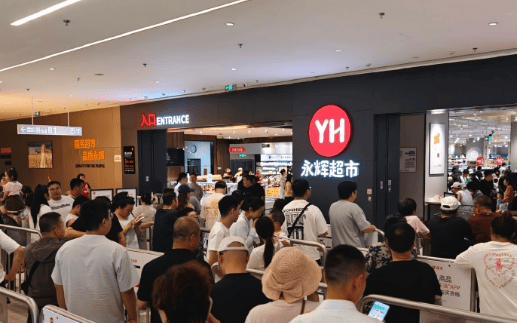
Core Viewpoint - Yonghui Supermarket is facing significant challenges with continuous losses over five years, but it is pursuing a transformation strategy that includes a major fundraising effort of over 3 billion yuan to upgrade its stores and logistics, aiming for a new lifecycle post-restructuring [2][3]. Group 1: Financial Performance and Store Closures - Yonghui Supermarket announced a pre-loss for 2025, continuing its trend of losses with a projected revenue of 424.34 billion yuan, a 22.21% decrease year-on-year, and a net loss of 15.02 billion yuan [4]. - The company has closed over 325 stores, reducing its total from a peak of 1,000 to 450, focusing on eliminating inefficient locations [4]. - The closures have resulted in significant costs, with the closure of 104 stores in Q3 2025 leading to a loss of 6.12 billion yuan, averaging nearly 600,000 yuan per store [4]. Group 2: Transformation Initiatives - Yonghui has initiated a "Pang Reform" movement, aiming to revamp its stores by eliminating 70% of low-efficiency products and introducing high-potential new items [5]. - The reform has led to an average customer traffic increase of over 80% in remodeled stores, with over 60% of these stores achieving profitability exceeding their five-year peak [6]. - Despite these improvements, the overall financial performance remains under pressure, with a significant decline in revenue and a net loss of 2.41 billion yuan in the first half of 2025 [6]. Group 3: Fundraising and Financial Strategy - Yonghui announced a 31.14 billion yuan fundraising plan, reduced from an initial 39.92 billion yuan, to finance store upgrades, logistics improvements, and to address liquidity needs [8][11]. - The fundraising will focus on upgrading stores in high-potential areas and enhancing logistics capabilities, including the construction of cold storage facilities [8][11]. - The company faces severe financial pressure, with a debt ratio of 88.96%, indicating a critical need for effective use of the raised funds to stabilize its financial situation [11]. Group 4: Competitive Landscape and Industry Trends - The retail industry is experiencing a structural adjustment, with stronger players like Pang Donglai setting benchmarks for success, while weaker competitors struggle [14]. - Yonghui's transformation is seen as a gamble to escape ongoing losses, positioning it as a key player to watch in the retail sector [3][16]. - The success of Yonghui's transformation will depend on the efficiency of its remodeled stores, the effective deployment of its fundraising, and the execution of its new strategic initiatives [16].
自有品牌成年货大战“主力”!沃尔玛年货上新主打“沃集鲜”
Sou Hu Cai Jing· 2026-01-10 09:44
Core Insights - The upcoming Spring Festival is driving significant sales in the retail sector, with major supermarkets like Walmart China launching hundreds of new products, particularly their private label "沃集鲜" which has become a popular choice among consumers [1][3] - The retail landscape is shifting towards healthier and more diverse product offerings, reflecting changing consumer preferences for quality, health attributes, and innovative options during the festive season [3][4] - Private labels are becoming a key differentiator for supermarkets, with cost advantages allowing them to achieve higher profit margins compared to traditional brands [4][5] Retail Trends - The Spring Festival typically accounts for 15%-20% of annual revenue for supermarkets, with core product categories contributing over 30% of quarterly revenue [1] - The retail market is transitioning from a "transactional" to a "lifestyle" focus, emphasizing the importance of creating engaging shopping experiences and enhancing the sense of ritual during the festival [3][4] - Nielsen IQ forecasts an 8%-10% increase in overall consumption for the 2026 Spring Festival, with offline supermarkets expected to see sales growth exceeding 12% due to their advantages in immediacy and experiential shopping [4][5] Private Label Strategy - Major retailers are intensifying their focus on private labels, which have established differentiated advantages in the market [4] - The gross margin for traditional distribution products is only 15%-20%, while private labels often exceed 30%, highlighting the financial benefits of this strategy [4] - The competition for Spring Festival sales is expected to intensify, with private labels creating unique selling points that are crucial for capturing market share [5]

换帅不到两年,盒马猛冲1000亿
Xin Lang Cai Jing· 2026-01-10 07:00
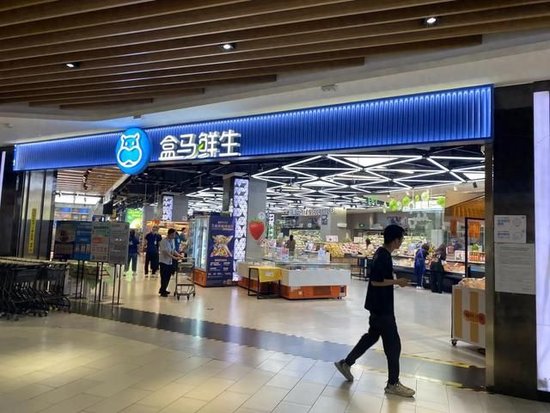
Core Insights - Hema's CEO, Yan Xiaolei, announced that the company achieved over 40% revenue growth in 2025, with a projected GMV exceeding 100 billion yuan by the end of the fiscal year in March 2026 [1][15][19] - The company has successfully opened stores in 40 new cities and plans to continue its aggressive expansion strategy, focusing on lower-tier markets [1][16][19] - Hema's strategy includes leveraging its integration with Alibaba's ecosystem, which has significantly boosted online order volumes [19][25] Expansion Strategy - Hema Fresh has opened approximately 500 stores, while Super Hema has around 400, with a focus on lower-tier cities where 70% of new stores are located [1][16][19] - The company has seen strong performance in cities like Tianjin, where new stores have achieved daily sales of 1 million yuan [3][18] - The dual-channel strategy targets both high-end and discount markets, with a significant emphasis on community penetration [19][28] Warehouse and Logistics Innovation - Hema has rapidly expanded its front warehouse model, with around 200 operational by the end of 2025, aiming for 300 [20][22] - The front warehouse model allows for faster delivery and better service coverage, addressing gaps in traditional store delivery [22][25] - The efficiency of front warehouses is highlighted by their ability to process 2-3 times more orders than traditional stores [25] Financial Performance and Challenges - Hema reported nine consecutive months of profitability, largely due to strategic closures of unprofitable stores and a focus on key performance indicators [10][26][27] - The company has implemented a comprehensive financial reform, including outsourcing a significant portion of its workforce to reduce costs [10][26] - Despite achieving significant revenue, concerns remain about the sustainability of profitability, especially with increasing competition and market pressures [27][28] Market Dynamics and Consumer Behavior - Hema's strategy reflects a deep understanding of changing consumer behaviors, particularly in emerging markets where price sensitivity is high [19][30] - The company faces challenges in maintaining product quality while competing on price, especially in lower-tier markets [30] - Recent food safety incidents have raised concerns about brand trust, which is critical for long-term success in the retail sector [30]
山姆日卖3.8亿,永辉艰难求生:中国商超的悲欢为何不相通?
Sou Hu Cai Jing· 2026-01-09 11:14
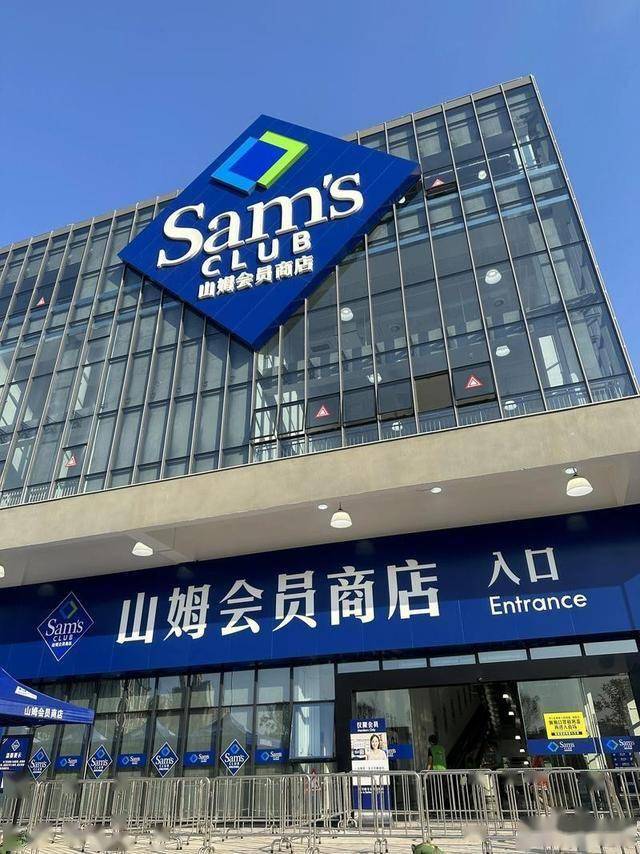
Group 1 - Sam's Club achieved a sales revenue of 140 billion yuan in 2025, with a year-on-year growth of 40%, averaging daily sales of 380 million yuan [4][12] - The success of Sam's Club is attributed to three main strategies: integration of online and offline sales, precise store location selection, and a focused product selection strategy [6][9][24] - Sam's Club's online sales now account for over 50%, utilizing services like "Express Delivery" and "Citywide Delivery" to enhance customer convenience [6][9] Group 2 - In contrast, Yonghui Supermarket reported a revenue of approximately 29.95 billion yuan in the first half of 2025, a year-on-year decline of 20.73%, and a net loss of 241 million yuan [12][14] - Yonghui's challenges stem from its traditional hypermarket model, which has struggled to adapt to the rise of e-commerce and instant retail, leading to a significant reduction in store numbers from 1,440 to over 600 [14][20] - Yonghui is attempting to transform its business model by adopting strategies from successful competitors, including optimizing product offerings and enhancing customer service [18][20] Group 3 - The differences in performance between Sam's Club and Yonghui highlight contrasting business models and target demographics, with Sam's focusing on high-income families and premium products, while Yonghui targets a broader audience [24][26] - The retail landscape in China is evolving, with both Sam's Club and Hema achieving over 40% growth, indicating a competitive shift towards warehouse membership stores [27][29] - Future competition in the retail sector will center on supply chain optimization, user experience enhancement, and maintaining cost-effectiveness while ensuring product quality [29][31]
冲上1400亿,山姆2026年5家新店招聘发布
3 6 Ke· 2026-01-08 02:51
Core Insights - Walmart China has announced its latest recruitment needs for 2026, indicating the imminent opening of five new Sam's Club stores in various cities, marking a significant expansion phase for the brand in China [1] - In 2025, Sam's Club achieved a record-breaking sales performance of over 140 billion, reflecting a nearly 40% increase compared to the previous year [1][2] - The retail landscape in China is becoming increasingly competitive, with Sam's Club, Hema, and Pang Dong Lai emerging as the top three brands in the supermarket sector for 2025 [3] Group 1: Sam's Club Expansion - Sam's Club is set to open at least 10 new stores in 2026, with several already under construction and expected to open soon [4][5] - The total number of Sam's Club stores in China reached 63 by the end of 2025, marking the highest number of openings in a single year since its entry into the Chinese market [4] - The growth strategy includes the establishment of over 50 new front warehouses, which are crucial for supporting the sales performance of the new stores [2] Group 2: Competitor Performance - Hema's sales growth in 2025 was primarily driven by the opening of 40 new stores across 40 new cities, with a projected annual sales of over 100 billion, reflecting a 33% year-on-year increase [2] - Pang Dong Lai reported a sales figure of 23.53 billion for 2025, achieving a year-on-year growth of 38.71% [2][3] - The supermarket sector remains a core business for Pang Dong Lai, with sales from this segment reaching 12.64 billion, accounting for 53.73% of total sales [3] Group 3: Digital and E-commerce Growth - Walmart China reported a 22% increase in sales in Q3, with e-commerce sales growing over 30%, highlighting the strong performance of Sam's Club and its digital channels [6] - The penetration rate of e-commerce in China has reached 50%, with rapid delivery capabilities allowing 80% of digital orders to be delivered within one hour [6]
2026年度策略-看好内需顺周期主线-出海关注龙头Alpha
2026-01-08 02:07
Summary of Conference Call Notes Industry and Company Focus - **Industry**: Various sectors including travel, high-end consumption, education, and export markets - **Companies Mentioned**: China Duty Free Group, Lao Pu Gold, Chao Hong Ji, Huatu Shanding, China Oriental Education, Anker Innovations, Star Technology, Small Commodity City, and others Key Points and Arguments Domestic Demand Strategy - **Focus Areas**: - **Cyclical Beta**: Prioritize travel-related sectors such as aviation, hotels, and tourism due to significant demand improvement driven by policy catalysts [1][3] - **High-End Consumption**: Strong recommendations for duty-free and high-end gold jewelry sectors, with expectations of price increases driving both valuation and performance [1][6] - **Value Consumption**: Marginal improvement in demand is unclear; sectors depend on income growth or improvements in PPI and CPI data [1][7] - **Counter-Cyclical Industries**: Education sector shows strong demand resilience, particularly in vocational education and public examination training, with AI technology enhancing efficiency [1][8] Service Consumption - **Characteristics**: Service-oriented consumption is elastic, quick to respond, and has no inventory issues, significantly aiding employment and economic recovery [4][11] - **Current Proportion**: Service consumption accounts for approximately 55% of personal consumption expenditure in China, compared to 70% in the US, indicating room for growth [12] High-End Retail and Luxury Market - **Market Recovery**: High-end retail and luxury markets began to recover in Q2 and Q3 of 2025, driven by a stable high-net-worth population and wealth effect [4][16] - **Consumer Sentiment**: The recovery of middle-class confidence is crucial, as they contribute 60% of luxury sales [16] Export Market Opportunities - **Outlook for 2026**: Anticipation of more opportunities in the second half of 2026, with resilient exports and better-than-expected US demand [9][23] - **Key Companies**: Focus on leading companies with alpha attributes such as Anker Innovations and Star Technology for performance-driven growth [9][23] Education Sector - **Demand Characteristics**: The education sector, particularly vocational training and public examination preparation, is expected to perform well despite overall employment pressures [8][26] - **Key Players**: Companies like Huatu Education and China Oriental Education are highlighted for their strong market positions [8][26] Risks and Challenges - **Currency Fluctuations**: Current RMB exchange rates are stable, with limited risk of significant appreciation that could impact export companies negatively [24] - **Raw Material Prices**: Fluctuations in raw material prices are not seen as a major concern for leading companies due to supply chain dynamics [25] Investment Recommendations - **Cyclical Sectors**: Focus on travel-related industries for potential valuation uplift due to demand recovery [5] - **High-End Consumption**: Investment in duty-free and high-end jewelry sectors is recommended due to positive market sentiment [6] - **Education**: Strong prospects for companies in vocational education and public examination training [26] Additional Insights - **Tea and Restaurant Industries**: Opportunities in the tea industry due to competitive landscape improvements and in the restaurant sector with companies like Xiao Cai Yuan and Guo Quan showing potential for scalable growth [18][20] This summary encapsulates the key insights and recommendations from the conference call, providing a comprehensive overview of the current market landscape and future opportunities across various sectors.
旺季反失血,永辉幻营业,硬闯转型生死线,董事长精准套现离场
Sou Hu Cai Jing· 2026-01-05 11:21
Core Viewpoint - Yonghui Supermarket is undergoing a significant transformation amidst a backdrop of substantial financial losses and cash flow challenges, raising questions about the effectiveness of its strategy to revive the business [1]. Group 1: Transformation Efforts - As of September 2025, 222 out of 450 stores have completed renovations, with some locations achieving profitability [3]. - The new store formats, inspired by the "Fat Donglai" model, have attracted significant customer traffic, particularly in cities like Shanghai and Wuxi [1][3]. - The stock price surged in December, reflecting market optimism, with the market capitalization reaching 47 billion [3]. Group 2: Financial Challenges - Yonghui's operating cash flow for the first three quarters of 2025 was only 1.14 billion, a nearly 70% decline year-on-year, with a negative cash flow of 68 million in Q3 [5]. - The company's debt pressure is increasing, with an asset-liability ratio of 88.96% and a current ratio of only 0.63, indicating high short-term repayment risks [5]. - Cash flow has been on a long-term decline, shrinking by 75% over four years [5]. Group 3: Asset Liquidation and Cost Management - To maintain cash flow, Yonghui has resorted to asset sales, including a significant reduction in shareholdings by major stakeholders, raising over 1 billion through these measures [7]. - The company has closed 227 unprofitable stores, incurring a loss of 612 million in Q3 alone [9]. - The planned investment for store renovations in 2026 is 5.597 billion, with an average investment of over 18.65 million per store, adding to the financial strain [9]. Group 4: Competitive Landscape and Industry Trends - The shift towards a user-centered value creation model, as seen in the "Fat Donglai" approach, requires long-term commitment and cannot be achieved through short-term financial investments [13]. - The retail industry is experiencing a transformation, with 75% of supermarket enterprises attempting renovations, yet less than half achieved year-on-year sales growth in the first half of 2025 [13]. - Yonghui's challenges are compounded by its presence in high-rent, competitive urban areas, making it difficult to replicate the success of models like "Fat Donglai" [11].