
煤炭行业

Search documents
【光大研究每日速递】20250804
光大证券研究· 2025-08-03 23:06
Macro - The significant downward revision of the U.S. non-farm employment data for June indicates a major impact from tariffs on the U.S. economy, suggesting that the resilience of the economy should not be overestimated, and the direction of interest rate cuts remains clear [5]. Basic Chemicals - The Central Political Bureau emphasized "capacity governance" and "technological innovation," indicating that the domestic chemical industry may benefit from the exit of outdated capacity and the focus on high-performance new materials such as semiconductor materials and OLED materials [5]. Coal Mining - The average price of thermal coal at Qinhuangdao Port increased by 9 CNY/ton (+1.36%) week-on-week, marking six consecutive weeks of price increases. The coal inventory at the port decreased to 5.22 million tons, down 10.77% week-on-week, indicating a tightening supply-demand situation [6][7]. Company Updates - China Merchants Shekou (001979.SZ) has repurchased a total of 44,804,006 shares, accounting for 0.494% of the total share capital, with a total payment of approximately 430.27 million CNY [8]. ARM - ARM's FY26Q1 revenue was $1.053 billion, a year-on-year increase of 12%, but the guidance for FY26Q2 is relatively flat, indicating challenges and opportunities in self-designed chips [8]. Apple - Apple's FY3Q25 results exceeded expectations, showcasing strong resilience due to its core product strength and software ecosystem. However, there is a need for continued focus on AI advancements and tariff pressures [8]. Yunnan Baiyao - Yunnan Baiyao has made significant progress in cost reduction and efficiency enhancement, accelerating the development of innovative nuclear drugs [9].

投机资金撤退,工业品期货炒作暂告段落?
Di Yi Cai Jing· 2025-07-28 12:01
Core Viewpoint - The industrial commodity futures market is experiencing a significant downturn, with multiple products, including coking coal and lithium carbonate, hitting trading limits due to tightened regulatory measures and speculative fund withdrawals [1][2][3]. Group 1: Market Performance - As of July 28, coking coal futures contracts hit the trading limit, with a notable drop of 11% in the main contract [3]. - The lithium carbonate futures contract saw a reduction of 11,300 contracts in a single day, representing a 23% decrease compared to the previous week [2]. - Other industrial products, such as glass, pure alkali, and industrial silicon, also faced declines, with polysilicon futures dropping 5.8% [1]. Group 2: Regulatory Actions - Exchanges have implemented trading limits to control speculative activities, with new rules stating that non-futures company members can only open a maximum of 3,000 contracts in lithium carbonate futures and 500 contracts in coking coal futures [2]. - The rapid convergence of futures and spot price differences indicates a response to these regulatory measures, with the price gap for lithium carbonate narrowing from 6,520 yuan/ton to 1,350 yuan/ton [2]. Group 3: Fundamental Analysis - The market is shifting from "emotional pricing" to "realistic pricing," emphasizing the importance of core indicators such as inventory depletion and capacity replacement [1]. - Despite recent price surges, the fundamentals for certain products like polysilicon and lithium carbonate remain weak, with high inventory levels and supply uncertainties affecting market dynamics [5][6]. - Analysts suggest that while there may be short-term price fluctuations, the overall trend will be dictated by fundamental supply and demand factors, particularly if demand from real estate and manufacturing sectors does not improve [6].
“反内卷”概念股盘中回落,行情结束了吗?
Sou Hu Cai Jing· 2025-07-28 01:59
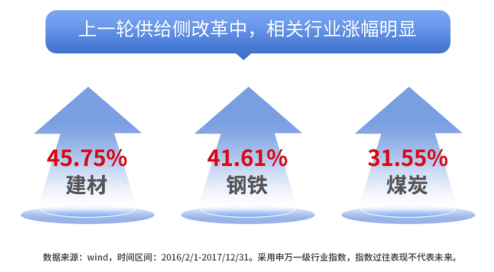
Core Viewpoint - The "anti-involution" concept is experiencing a temporary pullback, but this does not fundamentally change the valuation logic driven by policies aimed at regulating industry competition and promoting technological upgrades [1][3]. Market Performance - Coal ETF (515220) fell over 3%, Steel ETF (515210) dropped over 2%, while Building Materials ETF (159745) and Photovoltaic 50 ETF (159864) decreased nearly 1.5% [1]. - The market's pullback is seen as a release of high market sentiment rather than a reversal of underlying valuation logic [1]. Policy Implications - The core of the "anti-involution" policy focuses on standardizing industry competition, eliminating inefficient capacity, and reshaping the profit model of cyclical industries [1]. - Historical data shows that during the last supply-side reform from February 2016 to the end of 2017, the building materials industry rose by 45.75%, steel by 41.61%, and coal by 31.55% [1]. Investment Opportunities - Coal ETF (515220) has a market size exceeding 7 billion, tracking the China Coal Index [4]. - Steel ETF (515210) has surpassed 3 billion in size, tracking the China Steel Index [4]. - Building Materials ETF (159745) is the largest in its category with a size of 1.49 billion, tracking the China Building Materials Index [4]. - Photovoltaic 50 ETF (159864) has seen a net inflow exceeding 200 million for five consecutive days, tracking the China Photovoltaic Industry Index [4]. Economic Outlook - Citic Securities indicates that "anti-involution" may help stabilize the decline in PPI, and with demand-side expansion policies, a low-price state may be overcome [3]. - Huatai Securities suggests maintaining flexibility in trading strategies due to various events in August, while focusing on the effectiveness of "anti-involution" policies in the medium term [3].
“反内卷” :市场可能误解了什么?
2025-07-22 14:36
Summary of Conference Call Notes Industry Overview - The current economic transition period is characterized by a slowdown in industrial enterprise profit growth, similar to the supply-side reform in 2016, but this "anti-involution" primarily targets excess production in areas with good demand rather than directly stimulating demand to avoid intensifying competition [1][4][5]. Key Points and Arguments - External demand industries are experiencing historically low asset turnover rates, indicating significant supply issues and competitive pressure despite better performance compared to internal demand industries [1][6]. - Unlike 2015, where poor profitability led to reduced manufacturing investment, current conditions show that despite low profits, manufacturing investment has surged as companies proactively increase supply to address competition [1][7]. - Low capacity utilization is concentrated in downstream sectors, contrasting with the upstream raw materials overcapacity seen in 2016, with private enterprises facing greater challenges compared to state-owned enterprises [1][9]. - High energy-consuming industries are seeing a slowdown in electricity consumption growth despite strong industrial production, attributed to energy-saving equipment updates, with future impacts of eliminating outdated capacity expected to diminish [1][12][13]. - Upstream price increases are squeezing downstream profitability, with rising costs in the mid and downstream sectors outpacing raw material price increases, indicating excessive investment leading to additional rigid costs [1][15]. Misconceptions about Anti-Involution - There are three main misconceptions about anti-involution: it is not synonymous with overcapacity, it does not imply a comprehensive contraction of upstream supply, and it involves more hidden policy tools than just self-discipline and market-based measures [3]. Comparison with 2016 Supply-Side Reform - While both anti-involution and the 2016 supply-side reform occur during economic transitions with weakened industrial profits, they differ significantly in their demand issues: the former involves proactive supply increases in good demand areas, while the latter dealt with passive overcapacity due to declining investment demand [4]. Policy Measures and Their Impacts - The implementation of a new equipment replacement policy is expected to boost the Producer Price Index (PPI) by approximately 0.5 percentage points and enhance industrial enterprise profits by about 1 percentage point [2][17]. - The management of accounts receivable is crucial for addressing overdue payments to small enterprises, with a recent government directive aiming to clear over 7 trillion yuan in overdue payments [18][19]. Future Adjustments in Supply - The coal and pig farming industries may face supply adjustments due to high production levels and declining electricity demand, leading to potential supply control policies [14]. Focus Areas for Anti-Involution Policies - Current anti-involution policies are primarily focused on downstream sectors rather than upstream, with expectations that the supply contraction in the upstream sector will not be significant in the near term [20].
金十图示:2025年07月18日(周五)富时中国A50指数成分股今日收盘行情一览:银行、保险、酿酒等多数板块全天保持强劲,消费电子板块表现不佳
news flash· 2025-07-18 07:03
Market Overview - The FTSE China A50 Index components showed strong performance in sectors such as banking, insurance, and liquor, while the consumer electronics sector underperformed [1][6]. Banking Sector - Everbright Bank had a market capitalization of 254.068 billion with a trading volume of 609 million, closing at 4.30, up by 0.03 (+0.70%) [3]. Insurance Sector - China Ping An and China Life Insurance had market capitalizations of 1,039.258 billion and 356.818 billion respectively, with trading volumes of 24.93 billion and 6.12 billion. Their stock prices increased by 0.42 (+1.15%) and 0.03 (+0.36%) [3]. Liquor Industry - Kweichow Moutai, Shanxi Fenjiu, and Wuliangye had market capitalizations of 1,805.156 billion, 220.936 billion, and 480.465 billion respectively. Their trading volumes were 59.85 billion, 25.98 billion, and 30.62 billion, with stock price increases of 5.03 (+2.86%), 20.65 (+1.46%), and 1.13 (+0.92%) [3]. Semiconductor Sector - Northern Huachuang, Cambricon Technologies, and Hygon had market capitalizations of 234.658 billion, 243.739 billion, and 318.365 billion respectively. Their trading volumes were 26.40 billion, 29.85 billion, and 16.55 billion, with stock price changes of +6.59 (+2.07%), -1.03 (-0.75%), and +0.22 (+0.04%) [3]. Oil Industry - Sinopec and PetroChina had market capitalizations of 271.538 billion and 705.647 billion respectively, with trading volumes of 8.53 billion and 6.48 billion. Their stock prices increased by 0.09 (+1.57%) and remained unchanged [3]. Coal Industry - China Shenhua and Shaanxi Coal and Chemical Industry had market capitalizations of 743.083 billion and 185.562 billion respectively, with trading volumes of 7.78 billion and 9.61 billion, with stock price increases of 0.27 (+0.73%) and 0.17 (+0.90%) [3]. Automotive Sector - BYD had a market capitalization of 1,808.349 billion with a trading volume of 44.82 billion, closing at 329.11, up by 1.09 (+0.33%) [3]. Shipping and Port Sector - No specific data provided for this sector in the document [4]. Power Industry - No specific data provided for this sector in the document [4]. Securities Sector - CITIC Securities had a market capitalization of 420.014 billion with a trading volume of 18.87 billion, closing at 28.34, up by 0.09 (+0.32%) [4]. Battery Sector - CATL had a market capitalization of 1,236.485 billion with a trading volume of 59.82 billion, closing at 271.20, up by 5.70 (+2.15%) [4]. Consumer Electronics - Industrial Fulian and Luxshare Precision had market capitalizations of 538.390 billion and 280.871 billion respectively, with trading volumes of 35.27 billion and 53.15 billion, with stock price decreases of -0.39 (-1.42%) and -0.67 (-1.70%) [4]. Home Appliances - Haidilao and Gree Electric Appliances had market capitalizations of 268.195 billion and 241.985 billion respectively, with trading volumes of 10.06 billion and 8.44 billion, with stock price changes of +0.32 (+0.67%) and -0.02 (-0.08%) [4]. Chemical and Pharmaceutical Sector - Hengrui Medicine had a market capitalization of 251.506 billion with a trading volume of 38.81 billion, closing at 47.71, up by 1.35 (+2.91%) [4]. Logistics Sector - SF Holding had a market capitalization of 241.541 billion with a trading volume of 11.63 billion, closing at 46.04, up by 0.76 (+1.68%) [4]. Non-ferrous Metals - Mindray Medical had a market capitalization of 273.187 billion with a trading volume of 25.08 billion, closing at 225.32, up by 8.14 (+3.75%) [4].







反内卷主题下有色、煤炭、钢铁、石油石化等行业领涨,自由现金流ETF基金一键重配相关行业
Xin Lang Cai Jing· 2025-07-18 04:09
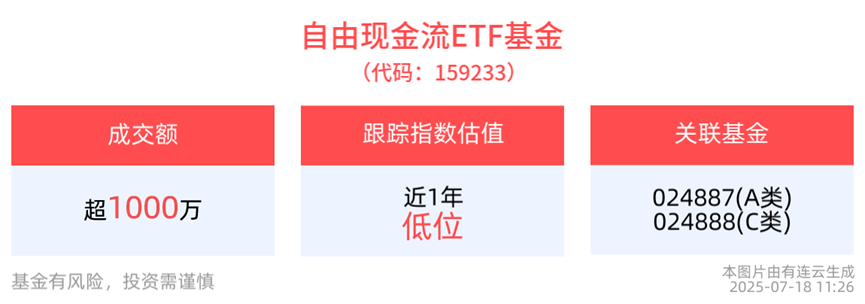
Core Insights - The China Securities Index Free Cash Flow Index (932365) has shown a positive performance, with a 0.72% increase as of July 18, 2025, and notable gains in constituent stocks such as Sumida (600710) up 5.28% and Luzhou Laojiao (000568) up 3.61% [1][4] Performance Summary - The Free Cash Flow ETF (159233) has increased by 0.98%, with a latest price of 1.03 yuan, and has accumulated a 0.59% increase over the past two weeks as of July 17, 2025 [1][3] - The ETF recorded a turnover rate of 6.88% during the trading session, with a total transaction volume of 13.52 million yuan, and an average daily transaction volume of 35.07 million yuan over the past year [3] Profitability and Drawdown - Since its inception, the Free Cash Flow ETF has maintained a monthly profit percentage of 100.00% and a monthly profit probability of 78.95% [3] - The maximum drawdown since inception is 2.14%, with a relative benchmark drawdown of 0.16%, and it has the fastest recovery time of 8 days among comparable funds [3] Fee Structure and Tracking Accuracy - The management fee for the Free Cash Flow ETF is 0.50%, and the custody fee is 0.10% [3] - The tracking error over the past month is 0.176%, indicating a high level of tracking accuracy [3] Valuation Metrics - The latest price-to-earnings ratio (PE-TTM) for the Free Cash Flow Index is 10.46, which is in the 13.38th percentile over the past year, suggesting it is undervalued compared to 86.62% of the time in the last year [3] Top Holdings - As of June 30, 2025, the top ten weighted stocks in the Free Cash Flow Index account for 57.48% of the index, including China National Offshore Oil Corporation (600938) and China Merchants Energy (601919) [4][6]
大摩闭门会-供给侧改革反内卷,是新瓶装旧酒吗?- 纪要
2025-07-15 01:58
Summary of Key Points from Conference Call Industry and Company Involved - The conference call primarily discusses the **Chinese economy** and the **supply-side reform** initiatives, particularly focusing on the **steel**, **cement**, and **photovoltaic glass** industries. Core Insights and Arguments 1. **Impact of Tariffs on U.S. Economy**: Despite the U.S. imposing tariffs on multiple countries, the market's reaction has been muted. However, the long-term effects on U.S. corporate profits and inflation are expected to be significant post-Q3 2023, necessitating vigilance from companies regarding potential risks [1][3][21]. 2. **Differences in Supply-Side Reform 2.0**: The current supply-side reform differs from the 2015-2018 reforms in its broader scope, complexity due to international factors, and emphasis on institutional adjustments for long-term stability [1][4][5][17]. 3. **Economic Performance in H1 2025**: China's economy showed resilience with a GDP growth exceeding 5%, driven by export activities and policy support. However, challenges are anticipated in H2 2025 due to supply-demand imbalances and deepening deflation [1][8][9]. 4. **Sector-Specific Production Cuts**: The steel industry plans to cut production by approximately 30 million tons, while the cement industry has a reduction plan set to begin in November 2024. The coal industry is unlikely to be involved in this round of reforms due to electricity safety concerns [1][10][11][12]. 5. **Challenges in the Photovoltaic Industry**: The photovoltaic glass sector is currently facing losses, with leading companies beginning to reduce production. The industry struggles with low concentration and weak demand, making comprehensive supply-side reform a lengthy process [1][13][30][31]. 6. **External Demand Pressures**: China faces external demand pressures from high tariffs, potential declines in exports to the U.S., and a global trade cycle downturn, which could impact economic growth and inflation [1][18][19]. 7. **Stock Market Outlook**: The Chinese stock market has entered a volatile phase since June, with recommendations to focus on A-shares while maintaining caution towards Hong Kong stocks. The long-term impact of supply-side reforms is expected to be positive for the overall stock market [2][20][25][27][28]. 8. **Future Economic Predictions**: The macroeconomic outlook for 2025 and 2026 suggests a potential deflationary environment, but successful supply-side reforms could lead to upward risks in economic growth [1][29]. Other Important but Possibly Overlooked Content 1. **Institutional Adjustments Needed**: The current reform emphasizes the need for institutional changes, including local government fiscal systems and social security frameworks, to achieve sustainable development [1][5][36]. 2. **Market Reaction to Policy Changes**: The market's response to new tariff policies has been characterized by investor fatigue, indicating a desire for clarity and stability in trade relations [1][22]. 3. **Long-Term Investment Strategies**: The call suggests a cautious approach to investments in the short term, with a focus on individual A-share opportunities, while the overall market is expected to improve in terms of investment returns over the next 6 to 12 months [1][24][28].
金十图示:2025年07月10日(周四)富时中国A50指数成分股午盘收盘行情一览:保险、石油、证券板块全线走高,银行板块多数飘红
news flash· 2025-07-10 03:45
Group 1: Market Overview - The FTSE China A50 Index components showed a positive trend with insurance, oil, and securities sectors rising significantly, while the banking sector also performed well [1][6]. Group 2: Sector Performance - The insurance sector, including companies like China Life and Ping An, saw increases in market capitalization, with China Life at 1,387.12 billion and Ping An at 1,036.22 billion, reflecting gains of 2.05% and 2.04% respectively [3]. - The oil sector, represented by Sinopec and PetroChina, also experienced growth, with Sinopec's market cap at 698.73 billion and PetroChina at 1,588.62 billion, both showing positive changes of 1.17% and 1.41% respectively [3]. - The semiconductor industry, including Northern Huachuang and Cambrian, faced slight declines, with Northern Huachuang down by 1.43% [3]. - The beverage sector, particularly Kweichow Moutai, reported a market cap of 1,780.16 billion, with a minor decrease of 0.13% [3]. Group 3: Trading Volume - Trading volumes varied across sectors, with the insurance sector leading with a total trading volume of 24.01 billion for Ping An, while the semiconductor sector had lower volumes, with Northern Huachuang at 9.73 billion [3][4]. - The automotive sector, represented by BYD, had a significant trading volume of 47.62 billion, indicating strong investor interest [3].

宏观金融数据日报-20250703
Guo Mao Qi Huo· 2025-07-03 08:20
Report Summary 1. Report Industry Investment Rating - Not provided in the given content 2. Core View of the Report - In the short - term, the stock index may present a volatile pattern due to gradually shrinking trading volume and lack of significant domestic and foreign positive factors. It will depend on macro - incremental information for direction. In the medium - to - long - term, the Politburo meeting in late July will set the policy tone for the second half of the year. With potential deterioration in real estate sales and investment and weak overall consumption, policies are expected to further support domestic demand. Meanwhile, the uncertain US tariff policy, approaching Fed rate - cut time, and changes in overseas liquidity and geopolitical situation will bring trading opportunities for the stock index [4] 3. Summary by Relevant Content Interest Rates and Bond Market - DR001 closed at 1.51 with a 14.09bp increase, DR007 at 1.91 with a 20.92bp increase; GC001 at 1.35 with an 11.00bp decrease, GC007 at 1.50 with an 8.00bp decrease; SHBOR 3M at 1.62 with a 0.85bp decrease, LPR 5 - year at 3.50 with no change; 1 - year treasury at 1.34 with a 0.50bp decrease, 5 - year treasury at 1.49 with a 0.50bp increase, 10 - year treasury at 1.65 with a 0.10bp increase, 10 - year US treasury at 4.26 with a 2.00bp increase [3] - The central bank conducted 3315 billion yuan of 7 - day reverse repurchase operations yesterday, with 2205 billion yuan of reverse repurchases maturing, resulting in a net injection of 1110 billion yuan. This week, 20275 billion yuan of reverse repurchases will mature in the central bank's open market, with 5093 billion and 5259 billion maturing on Thursday and Friday respectively. At the beginning of the month, the capital market is loose, with the overnight pledged - repo rate of deposit - taking institutions slightly down to 1.36%, and the 7 - day pledged - repo rate down 4bp to 1.51% [3] Stock Index and Futures Market - The CSI 300 closed at 3944 with a 0.02% increase, the SSE 50 at 2723 with a 0.18% increase, the CSI 500 at 5893 with a 0.7% decrease, and the CSI 1000 at 6309.5 with a 1.01% decrease. The trading volume of the two stock exchanges was 13770 billion yuan, a reduction of 891 billion yuan from the previous day [3][4] - The steel, photovoltaic equipment, cement building materials, and coal industries led the gains, while the communication equipment, aerospace, semiconductor, and other sectors led the losses [4] - The trading volume of IC was 218885 with a 4.7% decrease, and the position was down 0.9%; the trading volume of IM was 165735 with an 8.9% decrease, and the position was down 2.7%; the trading volume of IF was 37246 with a 1.1% increase, and the position was up 0.3%; the trading volume of IH was 70804 with a 16.0% increase, and the position was down 0.8% [4][6] - The IF premium/discount rates for the current - month, next - month, current - quarter, and next - quarter contracts were 13.12%, 8.52%, 5.80%, and 4.76% respectively; the IH premium/discount rates were 16.38%, 7.60%, 4.37%, and 2.17% respectively; the IC premium/discount rates were 14.07%, 12.21%, 10.69%, and 9.54% respectively; the IM premium/discount rates were 14.10%, 17.10%, 12.67% [4]
高层会议上的两个线索
Hu Xiu· 2025-07-01 11:31
Group 1 - The central theme of the article revolves around the insights from a high-level meeting and the market sentiment in July, particularly in the technology sector [1][3]. - The sixth meeting of the Central Financial Committee focused on advancing the construction of a unified national market, emphasizing the need to address challenges such as low-price disorderly competition and to guide companies towards improving product quality [3][4]. - The policy direction for the second half of the year is expected to focus on reducing overcapacity and eliminating vicious competition, which has been highlighted in recent discussions and articles [3][4]. Group 2 - Specific industries that may benefit from the policy shift towards reducing internal competition and overcapacity include the new energy sector, automotive industry, traditional energy sectors like coal, and traditional manufacturing industries such as steel [4]. - The anticipated policy changes could lead to a reduction in supply while maintaining demand, potentially allowing prices to recover and improving financial performance for companies within these sectors [4].