铜产业

Search documents
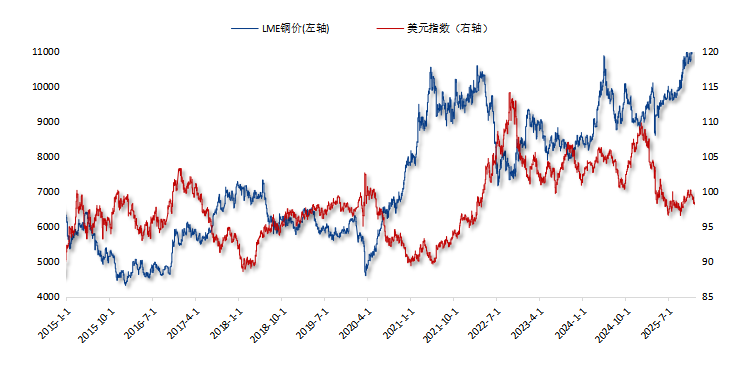
伦铜库存增至八个月新高 沪铜库存刷新九个半月最高位
Wen Hua Cai Jing· 2026-01-26 03:21
Group 1 - The London Metal Exchange (LME) reported a significant increase in copper inventory, reaching 171,700 tons, the highest level in eight months [2] - The Shanghai Futures Exchange indicated that copper inventory rose by 5.82% to 225,937 tons, marking a nine-and-a-half-month high [2] - International copper inventory decreased by 70 tons to 15,895 tons [2] Group 2 - The latest copper inventory levels for major exchanges as of January 23, 2026, are as follows: COMEX at 562,605 tons, LME at 171,700 tons, and SHIP at 225,937 tons [5] - A comparison of copper inventory levels since January 2026 shows a consistent upward trend in LME and SHIP inventories, while COMEX inventory also increased [5] - The copper industry in China faces three main challenges: rising dependence on foreign resources, overcapacity in the midstream processing sector, and suppressed downstream demand due to high copper prices [6]

《有色》日报-20260126
Guang Fa Qi Huo· 2026-01-26 03:04
1. Report Industry Investment Rating No information provided regarding the industry investment rating in the given documents. 2. Report Core Views Copper - Short - term: Copper prices may gradually return to fundamental pricing. Pay attention to CL premium changes and LME inventory changes. The main contract is supported at 99000 - 100000 yuan/ton. [1] - Medium - to long - term: Bullish on the upward shift of the price bottom center due to capital expenditure constraints on the supply side. [1] Zinc - Short - term: The downside space of zinc prices may be limited. The support comes from the tightening of domestic zinc mines, and the pressure comes from the negative feedback on the demand side. Pay attention to zinc ore TC and refined zinc inventory changes. The main contract is supported at around 24000 yuan/ton. [5] Aluminum - Alumina: Expected to continue wide - range fluctuations around the industry cash cost line, with the main contract reference range of 2600 - 2900 yuan/ton. [7] - Aluminum: Expected to maintain a high - level wide - range shock in the short term, with the main contract reference operating range of 23000 - 25000 yuan/ton. [7] Aluminum Alloy Expected to continue the high - level range shock in the short term, with the main contract reference range of 22000 - 24000 yuan/ton. Pay attention to the actual circulation of scrap aluminum, import window changes, and the final strength and rhythm of downstream inventory replenishment before the Spring Festival. [8] Nickel Expected to show a relatively strong shock in the short term, with the main contract reference range of 140000 - 150000 yuan/ton. [9] Stainless Steel Expected to have an oscillatory adjustment in the short term, with the main contract reference range of 14000 - 15000 yuan/ton. Pay attention to the news on the ore end and the improvement in demand. [13] Tin - Short - term: Prices are highly volatile due to market sentiment. Hold existing long positions with caution. - Medium - to long - term: Adopt a low - buying strategy considering the low elasticity of the supply side and the long - term narrative of the AI arms race. [16] Industrial Silicon Expected to maintain price fluctuations, with the main price range of 8200 - 9200 yuan/ton. Pay attention to the changes in demand - side production. [18] Polysilicon In the current weak demand situation, polysilicon faces the choice between production cuts or price cuts. The price may be supported at 48000 yuan/ton, and 45000 yuan/ton may also have support. Adopt a wait - and - see approach during the cooling - off period, and pay attention to future production cuts and downstream demand recovery. [19] Lithium Carbonate Expected to be relatively strong in the short term. Be cautious in short - term operations, and be aware of high - valuation and liquidity risks when chasing up prices. [21] 3. Summary by Relevant Catalogs Copper - **Price and Basis**: SMM 1 electrolytic copper price is 100830 yuan/ton, up 0.76% from the previous day. The refined - scrap price difference is 2865 yuan/ton, up 5.22%. [1] - **Fundamental Data**: In December, electrolytic copper production was 117.81 million tons, up 6.80% month - on - month; imports were 26.02 million tons, down 4.02% month - on - month. [1] Zinc - **Price and Spread**: SMM 0 zinc ingot price is 24620 yuan/ton, up 1.28%. The import loss is - 2052 yuan/ton. [5] - **Fundamental Data**: In December, refined zinc production was 55.21 million tons, down 7.24% month - on - month; imports were 0.88 million tons, down 51.94% month - on - month. [5] Aluminum - **Price and Spread**: SMM A00 aluminum price is 24110 yuan/ton, up 1.56%. The import loss of electrolytic aluminum is - 1919 yuan/ton. [7] - **Fundamental Data**: In December, domestic electrolytic aluminum production was 378.10 million tons, up 3.97% month - on - month; imports were 18.92 million tons, up 28.77% month - on - month. [7] Aluminum Alloy - **Price and Spread**: SMM aluminum alloy ADC12 price is 24000 yuan/ton, up 0.63%. The refined - scrap price difference in Foshan for broken primary aluminum is 2919 yuan/ton, up 14.97%. [8] - **Fundamental Data**: In December, the production of recycled aluminum alloy ingots was 64.00 million tons, down 6.16% month - on - month; the import of unforged aluminum alloy ingots was 9.31 million tons, up 27.19% month - on - month. [8] Nickel - **Price and Basis**: SMM 1 electrolytic nickel price is 148550 yuan/ton, up 1.92%. The cost of integrated MHP to produce electrolytic nickel is 112237 yuan/ton, up 1.09% month - on - month. [9] - **Supply, Demand and Inventory**: China's refined nickel production in December was 31400 tons, up 26.10% month - on - month; imports were 23394 tons, up 84.63% month - on - month. [9] Stainless Steel - **Price and Spread**: The price of 304/2B (Wuxi Hongwang 2.0 coil) is 14300 yuan/ton, unchanged. The price of 8 - 12% high - nickel pig iron (ex - factory price) is 1043 yuan/nickel point, up 0.87%. [13] - **Fundamental Data**: In December, the production of 300 - series stainless steel crude steel in China (43 companies) was 176.32 million tons, up 0.92% month - on - month; exports were 40.53 million tons, up 13.18% month - on - month. [13] Tin - **Spot Price and Basis**: SMM 1 tin price is 420300 yuan/ton, up 4.23%. The import loss is - 6632.02 yuan/ton, up 13.60%. [16] - **Fundamental Data**: In December, tin ore imports were 17637 tons, up 16.81%; SMM refined tin production was 15950 tons, down 0.06%. [16] Industrial Silicon - **Spot Price and Main Contract Basis**: The price of East China oxygen - permeable SI5530 industrial silicon is 9250 yuan/ton, unchanged. [18] - **Fundamental Data**: In December, the national industrial silicon product output was 39.71 million tons, down 1.15% month - on - month. [18] Polysilicon - **Spot Price and Basis**: The average price of N - type re -投料 is 54000 yuan/kg, unchanged. The N - type silicon wafer - 210mm average price is 1.63 yuan/piece, down 1.21%. [19] - **Fundamental Data**: Weekly polysilicon production is 2.05 million tons, down 4.65%. Monthly polysilicon imports are 0.19 million tons, up 77.50%. [19] Lithium Carbonate - **Price and Basis**: The average price of SMM battery - grade lithium carbonate is 171000 yuan/ton, up 3.95%. The average price of lithium spodumene concentrate CIF is 2214 US dollars/ton, up 3.94%. [21] - **Fundamental Data**: In December, lithium carbonate production was 99200 tons, up 4.04% month - on - month; demand was 130118 tons, down 2.50% month - on - month. [21]
刚果民主共和国2025年10月铜产量为327136吨
Wen Hua Cai Jing· 2026-01-21 10:53
Group 1 - The Democratic Republic of Congo's central bank reported that copper production in October 2025 reached 327,136 tons, with a cumulative total of 2,860,657 tons from January to October 2025 [2] - China, as the world's largest copper consumer, faces three major challenges: increasing dependence on foreign upstream resources, overcapacity in the midstream processing sector, and suppressed downstream demand due to high copper prices [2] - To assist the industry in navigating these challenges, Shanghai Nonferrous Metals Network has collaborated with copper industry enterprises to compile the "2026 China Copper Industry Chain Distribution Map," available in both Chinese and English [2]
《有色》日报-20260120
Guang Fa Qi Huo· 2026-01-20 05:32
Report Industry Investment Ratings No relevant content provided. Core Views of the Report Tin - Short - term tin prices fluctuate significantly due to market sentiment. After the sentiment stabilizes, considering the long - term narrative of the AI arms race, a low - buying strategy can be attempted [1]. Copper - In the short term, copper prices may gradually return to fundamental pricing. Pay attention to changes in CL premium and LME inventory, with the main support level at 97,500 - 98,500 [4]. Zinc - Zinc prices will be mainly volatile in the short term. The support comes from the tightening of domestic zinc mines, and the pressure comes from the expected supply of imported mines and negative feedback from the demand side [9]. Industrial Silicon - The price of industrial silicon is expected to fluctuate, with the main price range between 8,200 - 9,200 yuan/ton. Pay attention to changes in production and demand [12]. Polysilicon - The price of polysilicon is supported at 48,000 yuan/ton. In the cooling cycle, it is recommended to wait and see. Downstream enterprises can consider hedging according to orders [13]. Nickel - The nickel market is expected to be in a wide - range oscillation, with the main reference range at 138,000 - 148,000 [14]. Stainless Steel - Stainless steel is expected to oscillate in the short term, with the main reference range at 13,800 - 14,500. Pay attention to mine - end news and downstream stocking [16]. Aluminum - Aluminum prices are expected to oscillate widely around the industry's cash cost line. The main contract reference range is 23,000 - 25,000 yuan/ton [18]. Lithium Carbonate - The short - term lithium carbonate price may be adjusted widely, with the main reference range at 140,000 - 150,000 yuan/ton. Short - term unilateral trading within the range is recommended [19]. Aluminum Alloy - The price of aluminum alloy ADC12 is expected to maintain a high - level oscillation in the short term, with the main reference range at 22,000 - 24,000 yuan/ton [21]. Summary by Relevant Catalogs Tin - **Price and Basis**: SMM 1 tin price decreased by 5.86% to 389,800 yuan/ton; SMM 1 tin premium increased by 33.33% to 200 yuan/ton [1]. - **Fundamentals**: In November, the import of tin ore increased by 29.81% month - on - month; in December, the production of SMM refined tin decreased by 0.06% [1]. - **Inventory**: SHEF inventory increased by 37.69% week - on - week; social inventory increased by 36.07% [1]. Copper - **Price and Basis**: SMM 1 electrolytic copper price decreased by 0.90% to 100,940 yuan/ton; the refined - scrap price difference increased by 1.58% [3]. - **Fundamentals**: In December, the production of electrolytic copper increased by 6.80% month - on - month; in November, the import volume decreased by 3.90% [3]. - **Inventory**: Domestic social inventory increased by 12.27% week - on - week; LME inventory increased by 2.68% day - on - day [4][6]. Zinc - **Price and Basis**: SMM 0 zinc ingot price decreased by 1.53% to 24,420 yuan/ton; the premium increased by 10 yuan/ton [9]. - **Fundamentals**: In December, the production of refined zinc decreased by 7.24% month - on - month; in November, the export volume increased by 402.59% [9]. - **Inventory**: China's seven - region social inventory of zinc ingots increased by 3.13% week - on - week; LME inventory decreased by 1.38% day - on - day [9]. Industrial Silicon - **Price and Basis**: The price of East China oxygen - passing SI5530 industrial silicon remained unchanged at 9,250 yuan/ton; the basis decreased by 37.21% [12]. - **Fundamentals**: In December, the national production of industrial silicon decreased by 1.15% month - on - month; Xinjiang's production increased by 6.46% [12]. - **Inventory**: Xinjiang's inventory increased by 2.91% month - on - month; social inventory increased by 0.54% week - on - week [12]. Polysilicon - **Price and Basis**: The average price of N - type polysilicon increased by 0.27% to 55,000 yuan/ton; the basis decreased by 3.33% [13]. - **Fundamentals**: In December, the production of polysilicon increased by 0.79% month - on - month; the import volume decreased by 27.05% [13]. - **Inventory**: Polysilicon inventory increased by 6.29% week - on - week; silicon wafer inventory decreased by 5.53% [13]. Nickel - **Price and Basis**: The price of SMM 1 electrolytic nickel decreased by 2.31% to 145,900 yuan/ton; the premium of 1 Jinchuan nickel increased by 20.77% [14]. - **Fundamentals**: In December, China's refined nickel production decreased by 9.38% month - on - month; the import volume increased by 30.08% [14]. - **Inventory**: SHFE inventory increased by 3.28% week - on - week; social inventory increased by 4.04% [14]. Stainless Steel - **Price and Basis**: The price of 304/2B (Wuxi Hongwang 2.0 coil) decreased by 0.35% to 14,300 yuan/ton; the premium decreased by 32.65% [16]. - **Fundamentals**: In December, China's 300 - series stainless steel crude steel production decreased by 2.50% month - on - month; the export volume increased by 13.18% [16]. - **Inventory**: The 300 - series social inventory (Wuxi + Foshan) decreased by 1.47% week - on - week; SHFE warehouse receipts remained unchanged [16]. Aluminum - **Price and Basis**: The price of SMM A00 aluminum decreased by 0.67% to 23,870 yuan/ton; the premium increased by 20 yuan/ton [18]. - **Fundamentals**: In December, the production of alumina increased by 1.08% month - on - month; the import volume of electrolytic aluminum decreased by 40.83% in November [18]. - **Inventory**: China's electrolytic aluminum social inventory increased by 2.60% week - on - week; LME inventory decreased by 0.61% day - on - day [18]. Lithium Carbonate - **Price and Basis**: The average price of SMM battery - grade lithium carbonate decreased by 4.43% to 151,000 yuan/ton; the basis decreased by 68.31% [19]. - **Fundamentals**: In December, the production of lithium carbonate increased by 4.04% month - on - month; the demand decreased by 2.50% [19]. - **Inventory**: In December, the total inventory of lithium carbonate decreased by 12.23% month - on - month; the downstream inventory decreased by 7.21% [19]. Aluminum Alloy - **Price and Basis**: The price of SMM aluminum alloy ADC12 remained unchanged at 23,900 yuan/ton; the refined - scrap price difference in Foshan decreased by 6.12% [21]. - **Fundamentals**: In December, the production of recycled aluminum alloy ingots decreased by 6.16% month - on - month; the production of primary aluminum alloy ingots increased by 0.46% [21]. - **Inventory**: The social inventory of recycled aluminum alloy ingots decreased by 1.41% week - on - week; the daily inventory in Foshan decreased by 0.76% [21].
沪铜周报:冠通期货研究报告-20260119
Guan Tong Qi Huo· 2026-01-19 11:54
1. Report Industry Investment Rating - No information provided regarding the industry investment rating in the given report. 2. Core Viewpoints of the Report - The copper market has experienced a short - term adjustment. The dollar index has strengthened recently, cooling the sentiment in the non - ferrous metals market, and the copper futures market has also corrected. The market's expectation of a copper supply shortage outside the US has eased, and the demand forecast has been significantly revised downwards, resulting in a temporary lack of growth momentum for copper. However, the copper fundamentals remain tight. Short - term weak demand does not represent the overall strong demand, and there is a downward trend in the mining and smelting sectors. With the continuous implementation of domestic growth - stabilizing policies, copper is mainly in a phased correction [2]. 3. Summary by Relevant Catalogs 3.1 Market Analysis - **Macro - aspect**: In December, the US CPI rose 0.3% month - on - month as expected, and the core CPI rose 0.2% month - on - month, lower than expected, increasing the market's expectation of an interest rate cut in April. The Fed is expected to keep interest rates unchanged in the short term, and the dollar has strengthened recently. The domestic central bank has lowered the re - lending rate for supporting agriculture and small businesses by 0.25 percentage points since January 19. The annual RMB loans increased by 16.27 trillion yuan, and M2 increased by 8.5% year - on - year [2]. - **Supply - aspect**: Trump decided not to impose tariffs on rare earths, lithium, and other key minerals. Since 2026, the sulfuric acid price has slightly corrected, narrowing smelter profits and weakening spot processing fees. Smelters plan to cut production this year. The production of refined copper is expected to decline in January, with 5 smelters planning to stop production and 1 planned smelter delaying its commissioning. Due to the shortage of copper concentrates and increased losses of smelters, scrap copper has gradually become the main source of smelting copper, but both upstream and downstream are cautious, and raw material procurement volume is poor [2]. - **Demand - aspect**: Downstream copper buyers have low enthusiasm, leading to a significant increase in copper inventory. The terminal new - energy market performs poorly, with retail sales of new - energy vehicles from January 1 to 11 being 117,000 units, a 38% year - on - year decrease compared to the same period in 2025 and a 67% decline compared to the same period in December 2025. However, short - term decline does not mean a long - term trend. Policy subsidies and the upcoming New Year small peak season are expected to improve production and sales. As the Spring Festival approaches, downstream enterprises are on holiday, and copper product buyers are cautious [2]. 3.2 Shanghai Copper Price Trend - This week, Shanghai copper fluctuated weakly. The weekly high was 105,650 yuan/ton, the low was 100,060 yuan/ton, the weekly amplitude was 5.51%, and the range increase/decrease was - 0.63% [4]. 3.3 Shanghai Copper Spot Market - As of January 19, the average spot premium/discount in East China was - 100 yuan/ton, and in South China it was - 85 yuan/ton. Domestic copper inventory continues to accumulate, and the spot remains at a discount. With downstream enterprises about to enter the holiday period, procurement demand slows down, and it is expected to continue trading at a discount [9]. 3.4 London Copper Spread Structure - As of January 16, LME copper fell 0.5% during the week, closing at $12,925/ton, with a spot premium of $75/ton [14]. 3.5 Copper Concentrate Supply - In November 2025, China imported 2.526 million tons of copper ore and concentrates; from January to November, the import volume was 27.614 million tons, a year - on - year increase of 8.0%. It is expected that in December 2025, China will import 2.6 million physical tons of copper ore and concentrates, with an annual import volume of 30.26 million physical tons, a year - on - year increase of 7.43% and an expected increase of 2.094 million physical tons. The new collective - agreement negotiation at the Mantoverde copper - gold mine in Chile is at a standstill, and the strike continues to affect copper production [19]. 3.6 Scrap Copper Supply - In November 2025, the scrap - copper import volume was 208,100 tons, a year - on - year increase of 19.92%; from January to November, the cumulative scrap - copper import volume was 2.104 million tons, a cumulative year - on - year increase of 3.51%. According to SMM data, the operating rate of recycled copper rods this week was 13.52%, an increase of 0.53% from last week. After the Shanghai copper price corrected last week, recycled - copper enterprises made low - price purchases to fulfill historical orders. With the shortage of copper concentrates and increased losses of smelters, scrap copper has gradually become the main source of smelting copper, but both upstream and downstream are cautious, and raw material procurement volume is poor [24]. 3.7 Smelter Fees - As of January 16, the domestic spot rough - smelting fee (TC) was - 46.6 dollars/dry ton, and the RC fee was - 4.84 cents/pound, with TC/RC fees remaining weakly stable. Since 2026, the sulfuric acid price has slightly corrected, narrowing smelter profits. The China Smelters Purchase Team (CSPT) announced that its members will jointly cut production by more than 10% in 2026. On December 19, Chinese copper - smelter representatives and international mining giant Antofagasta finalized the 2026 copper - concentrate long - term processing fee (Benchmark) at $0/ton and $0 cents/pound, a historic "zero" compared to $21.25/ton and 2.125 cents/pound in 2025 [28]. 3.8 Refined Copper Supply - In December, SMM's Chinese electrolytic - copper production increased by 75,000 tons month - on - month, an increase of 6.8% and a year - on - year increase of 7.54%. From January to December, the cumulative production increased by 1.372 million tons year - on - year, an increase of 11.38%. After some smelters stopped production earlier, they gradually resumed production this month. The production of refined copper is expected to decline in January, with 5 smelters planning to stop production and 1 planned smelter delaying its commissioning. According to customs data, in November 2025, China imported 427,000 tons of unwrought copper and copper products; from January to November, the import volume was 4.883 million tons, a year - on - year decrease of 4.7% [32]. 3.9 Apparent Demand - As of November 2025, the apparent copper consumption was 1.2681 million tons, a 4.06% decrease from the previous month [36]. 3.10 Sub - industry Production Forecast - Mysteel predicts that in January 2026, the开工 rate of sample copper - tube enterprises will slightly increase, with a production of about 147,500 tons and a capacity utilization rate of 63.66%, a month - on - month increase of 2.07%. The expected production of domestic electrolytic copper foil is 108,000 tons, a month - on - month decrease of 0.83%. The expected copper - rod 开工 rate will drop to 51.31%, a month - on - month decrease of 1.43 percentage points and a year - on - year increase of 9.62 percentage points [40]. 3.11 Power Grid Project Data - As of the end of November 2025, the national cumulative power - generation installed capacity was 3.79 billion kilowatts, a year - on - year increase of 17.1%. Among them, the solar - power installed capacity was 1.16 billion kilowatts, a year - on - year increase of 41.9%; the wind - power installed capacity was 600 million kilowatts, a year - on - year increase of 22.4%; the hydropower installed capacity was 440 million kilowatts, a year - on - year increase of 3%; and the nuclear - power installed capacity was 60 million kilowatts, a year - on - year increase of 7.6% [44]. 3.12 Real - Estate and Infrastructure Data - According to National Bureau of Statistics data, in December, the sales area of newly built commercial housing was 93.99 million square meters, a month - on - month increase of 39.87% and a year - on - year decrease of 16.58%; the sales volume of newly built commercial housing was 880.7 billion yuan, a month - on - month increase of 44.07% and a year - on - year decrease of 24.24% [50]. 3.13 Automobile/New - Energy Automobile Industry Data - In the new - energy passenger - vehicle sector, from January 1 to 11, retail sales were 117,000 units, a 38% year - on - year decrease compared to the same period in 2025 and a significant 67% decline compared to the same period in December 2025. However, short - term decline does not mean a long - term trend. Policy subsidies and the upcoming New Year small peak season are expected to improve production and sales. Since January 1, 2026, the vehicle purchase tax has changed from exemption to half - collection. On December 30, the "Notice on Implementing the Policy of Large - Scale Equipment Upgrades and Consumer Goods Trade - ins in 2026" was issued, stating that the "trade - in" subsidies for heavy trucks and buses will continue, with the subsidy scope and standards remaining the same as in 2025. The subsidy for passenger cars has changed from a fixed - amount subsidy to a proportional subsidy, with the subsidy ceiling unchanged, and the subsidy amount for low - price cars has decreased, which will offset part of the decline caused by the increase in purchase tax [56]. 3.14 Global Copper Inventories in Major Exchanges - As of January 16, LME copper inventory increased by 4,600 tons to 143,600 tons, a week - on - week increase of 3.31% and a year - on - year decrease of 44.83%. COMEX copper inventory was 542,900 tons, a week - on - week increase of 0.78% and a year - on - year increase of 465.67%. Trump's statement last week that he will temporarily not impose tariffs on other key minerals has postponed the collection of refined - copper tariffs, weakening the siphon effect on US copper, but COMEX copper inventory still increased. On January 15, the cumulative spot copper inventory in the bonded areas of Shanghai and Guangdong was 117,500 tons, and the bonded - area inventory decreased as some warehouse goods left the port for export and a few enterprises imported through processing manuals. As of January 16, the Shanghai Futures copper inventory was 160,400 tons, a week - on - week decrease of 1.41%; the cathode - copper inventory was 213,500 tons, a week - on - week increase of 18.26%, showing a significant inventory - accumulation trend [61][66].
《有色》日报-20260119
Guang Fa Qi Huo· 2026-01-19 11:48
1. Report Industry Investment Ratings No information provided in the reports regarding industry investment ratings. 2. Core Views Tin - Short - term price is highly volatile due to market sentiment. After a sharp decline on Friday night, it's advisable to be cautious in the short - term. Consider a low - buying strategy after the sentiment stabilizes [1]. Copper - In the long - term, the price bottom center is expected to rise due to capital expenditure constraints on the supply side. In the short - term, the price is strong because of global inventory structural imbalance and supply concerns. However, real terminal demand is weak. With the cooling of speculative sentiment and easing of tariff expectations, the price may return to fundamental pricing. Pay attention to CL premium and LME inventory changes, with the main contract supported at 97500 - 98500 [3]. Nickel - Recent trading is centered around macro and Indonesian ore RKAB quota. Short - term ore news has limited further driving force. The market is expected to fluctuate widely, with the main contract reference range of 135000 - 145000 [5]. Zinc - The price is supported by domestic ore shortage and pressured by expected imported ore supply and negative demand feedback. It is expected to fluctuate in the short - term. Focus on zinc ore TC and refined zinc inventory changes, with the main contract supported around 23800 [8]. Lithium Carbonate - The fundamentals show some resilience in the off - season. With a loose macro environment and strengthened supervision, there is resistance to further price increases. The market has intensified long - short divergence. The short - term market may adjust widely, with the main contract running between 140,000 - 150,000. Use short - term range trading [11]. Aluminum - Alumina prices lack upward momentum due to loose supply, weakening demand, and high inventory. It is expected to fluctuate widely around the industry cash cost line, with the main contract in the range of 2600 - 2950 yuan/ton. Aluminum prices are expected to maintain a high - level wide - range oscillation in the short - term, with the main contract in the range of 23000 - 25000 yuan/ton. Pay attention to domestic inventory accumulation speed, downstream consumption resilience, and overseas monetary policies and geopolitical events [13]. Aluminum Alloy - The short - term price range is limited. The ADC12 price is expected to continue high - level oscillation, with the main contract in the range of 22000 - 24000 yuan/ton. Focus on raw material price changes, actual inflow of imported goods, and downstream pre - holiday inventory building [15]. Stainless Steel - Raw material news drives sentiment and strengthens cost support. Social inventory is steadily digested, but downstream demand in the off - season is weak. It is expected to oscillate in the short - term, with the main contract in the range of 13800 - 14500. Pay attention to ore news and downstream inventory building [18]. Polysilicon - The demand outlook has improved due to export - grabbing demand, and there is an expectation of supply reduction. The price is supported at 48,000 yuan/ton. Component production may increase, which is beneficial for inventory digestion. In the cooling period, it's advisable to wait and see, and focus on later production cuts and downstream demand recovery [20]. Industrial Silicon - The market remains in a state of weak supply and demand, with low - level oscillation. The price is expected to fluctuate between 8000 - 9000 yuan/ton. Pay attention to supply - side production changes and potential further polysilicon production cuts [21]. 3. Summaries by Relevant Catalogs Tin - **Price and Basis**: SMM 1 tin price decreased by 2.81% to 414050 yuan/ton, and SMM 1 tin premium decreased by 78.57% [1]. - **Fundamentals**: In November, tin ore imports increased by 29.81%, and refined tin imports increased by 127.19%. In December, SMM refined tin production decreased slightly by 0.06% [1]. - **Inventory**: SHEF inventory increased by 37.69% to 9549 tons, and social inventory increased by 36.07% to 10175 tons [1]. Copper - **Price and Basis**: SMM 1 electrolytic copper price decreased by 0.70% to 101855 yuan/ton, and the premium decreased significantly [3]. - **Fundamentals**: In December, electrolytic copper production increased by 6.80% to 117.81 million tons. In November, imports decreased by 3.90% [3]. - **Inventory**: Domestic social inventory increased by 17.20% to 32.09 million tons, and SHFE inventory increased by 18.26% to 21.35 million tons [3]. Nickel - **Price and Basis**: SMM 1 electrolytic nickel price decreased by 0.47% to 149350 yuan/ton, and the import profit and loss decreased by 74.48% [5]. - **Cost**: The cost of integrated MHP to produce electrolytic nickel increased by 1.09% to 112237 yuan/ton [5]. - **Inventory**: SHFE inventory increased by 3.28% to 48180 tons, and LME inventory increased by 0.16% to 285732 tons [5]. Zinc - **Price and Basis**: SMM 0 zinc ingot price decreased by 2.40% to 24800 yuan/ton, and the premium decreased [8]. - **Fundamentals**: In December, refined zinc production decreased by 7.24% to 55.21 million tons. In November, exports increased by 402.59% [8]. - **Inventory**: Global visible inventory decreased slightly, and domestic social inventory decreased slightly by 0.08% to 11.84 million tons [8]. Lithium Carbonate - **Price and Basis**: SMM battery - grade lithium carbonate average price decreased by 0.63% to 158000 yuan/ton, and the basis increased significantly [11]. - **Fundamentals**: In December, lithium carbonate production increased by 4.04% to 99200 tons, and demand decreased by 2.50% [11]. - **Inventory**: Total lithium carbonate inventory decreased by 12.23% to 56664 tons in December [11]. Aluminum - **Price and Basis**: SMM A00 aluminum price decreased by 0.66% to 24030 yuan/ton, and the premium decreased [13]. - **Fundamentals**: In December, alumina production increased by 1.08% to 751.96 million tons, and domestic electrolytic aluminum production increased by 3.97% [13]. - **Inventory**: Chinese electrolytic aluminum social inventory increased by 3.08% to 73.60 million tons, and LME inventory decreased by 0.41% to 48.8 million tons [13]. Aluminum Alloy - **Price and Basis**: SMM aluminum alloy ADC12 price decreased by 0.42% to 23900 yuan/ton, and the scrap - to - refined price difference decreased [15]. - **Fundamentals**: In December, regenerated aluminum alloy ingot production decreased by 6.16% to 64 million tons [15]. - **Inventory**: Social inventory of regenerated aluminum alloy ingots decreased slightly to 4.89 million tons [15]. Stainless Steel - **Price and Basis**: 304/2B (Wuxi Hongwang 2.0 coil) price decreased by 0.35% to 14350 yuan/ton, and the spot - futures price difference increased [18]. - **Fundamentals**: In December, Chinese 300 - series stainless steel crude steel production decreased by 2.50% to 171.93 million tons [18]. - **Inventory**: 300 - series social inventory (Wuxi + Foshan) decreased by 1.47% to 45.07 million tons [18]. Polysilicon - **Price and Basis**: N - type polysilicon average price increased slightly, and the basis of N - type material decreased by 23.52% [20]. - **Fundamentals**: Weekly polysilicon production decreased by 9.66% to 2.15 million tons, and monthly net exports increased significantly [20]. - **Inventory**: Polysilicon inventory increased by 6.29% to 32.1 million tons [20]. Industrial Silicon - **Price and Basis**: East China oxygen - passing SI5530 industrial silicon price remained unchanged, and the basis increased [21]. - **Fundamentals**: In December, national industrial silicon production decreased by 1.15% to 39.71 million tons, and exports increased by 21.78% [21]. - **Inventory**: Social inventory increased by 0.54% to 55.50 million tons [21].
别只盯着铜,铝时代可能要来了
阿尔法工场研究院· 2026-01-19 02:02
Core Viewpoint - The shift from copper to aluminum is not merely a cost-cutting tactic but a strategic response to global resource changes, geopolitical tensions, and technological advancements, fundamentally altering the supply-demand dynamics and long-term pricing logic of copper and aluminum [4][24]. Group 1: Supply Chain and Market Dynamics - Recent months have seen a dramatic surge in copper prices driven by a global supply chain crisis, with a current supply-demand gap of 500,000 tons in the copper market [5]. - The copper industry faces significant challenges, including a high dependency on foreign resources, with over 80% of copper ore being imported, which poses risks to supply chain security [9][10]. - In contrast, China dominates the aluminum sector, with projected electrolytic aluminum production reaching 44.0046 million tons in 2024, accounting for 58% of global output [12]. Group 2: Strategic Shift to Aluminum - The transition to aluminum from copper has evolved into a national strategy aimed at ensuring industrial security, as highlighted by government initiatives promoting aluminum consumption in various applications [13]. - The copper-aluminum price ratio has reached a 20-year high, with the current ratio at 4.21, significantly exceeding the traditional economic threshold of 3.5, making aluminum a more attractive alternative [17][20]. - The cost advantages of using aluminum over copper are substantial, with potential savings of 20%-25% in air conditioning and 30%-40% in electric vehicles [20][34]. Group 3: Technological Advancements - The evolution of aluminum as a substitute for copper has progressed through four key phases: from early exploration (2015-2018) to technological breakthroughs (2019-2022), followed by large-scale validation (2023-2025), and finally to widespread adoption in the future [25][28][30]. - Innovations in aluminum processing, such as the introduction of silicon-sulfur neutralization technology, are expected to significantly reduce China's reliance on imported bauxite from 90% to below 50% [21][22]. Group 4: Capital Market Implications - The disparity in price movements between copper and aluminum suggests that the aluminum sector is poised for growth, while copper may face a demand ceiling due to the rise of aluminum as a substitute [35][37]. - The shift towards aluminum is expected to attract more global capital, as the supply-demand balance for aluminum transitions from loose to tight, enhancing its financial attributes [38]. Group 5: Future Outlook - The transition from copper to aluminum reflects broader changes in global resource dynamics and energy transitions, with aluminum's lightweight and recyclable properties making it essential in green industries [39]. - The future landscape will likely see copper and aluminum coexisting, each serving distinct roles in high-performance and cost-sensitive applications, thereby reshaping the competitive dynamics of the manufacturing sector [39][40].

南华期货铜产业周报:铜价跟踪逻辑从“资金面”回归到“节前供需”-20260118
Nan Hua Qi Huo· 2026-01-18 13:30
1. Report Industry Investment Rating No relevant information provided. 2. Core Viewpoints of the Report - The tracking logic of copper prices has shifted from "fundamentals" back to "pre - holiday supply - demand". The US CPI growth remained stable in December, with core CPI slightly lower than expected, reducing the probability of interest rate cuts in January and March. Global copper speculative net - long funds in the three major exchanges significantly reduced their positions, and the market's fear of high prices became more evident. On the fundamental side, the spot smelting income of refined copper continued to rise week - on - week, and smelting enterprises had a high willingness to purchase. The Yangshan copper premium declined, and the sellers' shipping sentiment decreased. The "mismatch" between supply and demand due to the lack of downstream consumption growth and short - term copper inflows led to passive inventory replenishment, resulting in a significant increase in domestic copper inventories [2]. - In the short - term, the market may be calm before the Fed's interest rate decision at the end of the month. Futures prices will more likely follow the spot trading situation, with limited price fluctuations, and funds will still compete around the 100,000 yuan mark. It is recommended to pay attention to volume - price fluctuations [3]. - Cathode copper is in the middle of an upward trend, with a medium - risk - return ratio for going long (1%), suggesting moderate participation; LME copper is also in the middle of an upward trend, with a low - risk - return ratio for going long (0.93%), suggesting cautious participation [3]. 3. Summary by Relevant Catalogs 3.1 Chapter 1: Core Contradictions and Strategy Recommendations 3.1.1 Core Contradictions - **Macro - factors**: US CPI growth was stable in December, with core CPI slightly lower than expected, reducing the probability of interest rate cuts in January and March. The Fed's probability of a 25 - basis - point rate cut in January is 5%, and the probability of keeping rates unchanged is 95%. By March, the probability of a cumulative 25 - basis - point rate cut is 20.8%, the probability of keeping rates unchanged is 78.4%, and the probability of a cumulative 50 - basis - point rate cut is 0.9% [2]. - **Fundamental factors**: The spot smelting income of refined copper continued to rise week - on - week, and smelting enterprises had a high willingness to purchase. The Yangshan copper premium declined, and the sellers' shipping sentiment decreased. The "mismatch" between supply and demand due to the lack of downstream consumption growth and short - term copper inflows led to passive inventory replenishment, resulting in a significant increase in domestic copper inventories [2]. - **Market factors**: When prices were fluctuating at high levels during the week, both long and short funds reduced their positions to adjust portfolios. The market may be calm next week before the Fed's interest rate decision, and futures prices will more likely follow the spot trading situation [3]. 3.1.2 Trading - type Strategy Suggestions - **Trend Judgment**: Cathode copper is in the middle of an upward trend, with a medium - risk - return ratio for going long (1%); LME copper is also in the middle of an upward trend, with a low - risk - return ratio for going long (0.93%) [3]. - **Strategy Recommendations**: Do not recommend opening new positions above 100,000 yuan; continue to hold long positions established in the 90,000 - 95,000 yuan range, and flexibly adjust long positions established in the 95,000 - 100,000 yuan range; aggressive investors can consider combination strategies; enterprises needing to purchase spot copper can make batch purchases at appropriate prices considering capital pressure, or consider over - the - counter option hedging plans suitable for range - bound markets without considering capital pressure [3]. - **Base - spread, Month - spread, and Cross - border Spread Strategies**: The base - spread strategy is bearish, with a 3% probability of expansion in the next 1 - 2 weeks. The month - spread strategy is neutral, with a 55% probability of expansion. The cross - border spread is within the normal range, and it is recommended to wait and see [11]. 3.1.3 Enterprise Hedging Strategy Suggestions - For enterprises with low raw material inventories worried about price increases, they can consider buying the main futures contract when prices fall to support levels (the first support level is around 99,000 yuan, and the second is around 96,000 yuan), buying up - and - out accumulator options in the 96,000 - 105,650 yuan range, or using a combination of selling put options and buying call options in the 95,000 - 100,000 yuan range [15]. 3.1.4 Review of Trading and Hedging Strategies - Due to the roll - over of the February contract and reduced liquidity, the hedging strategy of buying this contract was closed, waiting for an opportunity to re - establish positions. The risk - reversal synthetic long strategy had a small profit when the call option became in - the - money during the sharp rise in futures prices last week, and then entered a range - bound period [16][17]. 3.2 Chapter 2: This Week's Important Information and Next Week's Key Event Interpretations 3.2.1 This Week's Important Information - **Positive Information**: The US December CPI was stable at 2.7% year - on - year, and core CPI was 2.6%, indicating controllable inflation with resilience. State Grid announced that its fixed - asset investment during the 14th Five - Year Plan period is expected to reach 4 trillion yuan, a 40% increase from the 13th Five - Year Plan period, which will drive the development of the new power system industry chain. In 2025, the cumulative production of cathode copper by 24 sample enterprises was 12.3389 million tons, a year - on - year increase of 11.38%. In 2026, the copper production of Chile is expected to be between 550,000 and 570,000 tons, higher than last year's estimate of 540,000 tons [19]. - **Negative Information**: The probability of a Fed rate cut in January and March decreased. Nvidia corrected the copper demand data for data centers, significantly reducing the expected copper demand. Domestic copper inventories continued to accumulate, with Shanghai and Jiangsu markets increasing and the Guangdong market decreasing. The copper production of Kamoa - Kakula's smelter is expected to reach an annualized 500,000 tons by the end of 2026. Luoyang Molybdenum's 2026 copper production guidance is between 760,000 and 820,000 tons [20][21][22]. - **Exchange Information**: The Shanghai Futures Exchange adjusted the trading margin, trading limit, and opening quantity of silver, tin, and nickel futures contracts to prompt investors to manage risks and maintain market stability [24]. 3.2.2 Next Week's Key Event Interpretations Next week, important macro - economic indicators will be released, including China's fixed - asset investment, industrial added - value, GDP, and the US GDP deflator, initial jobless claims, PCE price index, etc. [27] 3.3 Chapter 3: Interpretation of Disk Price - Volume and Funds - **Domestic Market Interpretation**: Affected by exchange regulatory measures, US tariff policies, and Nvidia's report, funds flowed out, and futures prices fell from high levels. The trading volume and open interest of the Shanghai copper weighted index decreased week - on - week, and market speculation fluctuated around the median [29]. - **International Market Interpretation**: LME copper and Comex copper reached new highs and then declined. The LC spread narrowed to within - 60 US dollars per ton, which may slow down the inventory accumulation of Comex copper. However, the open interest of the active Comex copper contract remained at a high level, and speculators reduced their net - long positions [31]. 3.4 Chapter 4: Analysis of Spot Prices and Profits 3.4.1 Spot Prices and Smelting Profits - The spot smelting income of refined copper continued to rise week - on - week, and smelting enterprises had a high willingness to purchase. The Yangshan copper premium declined, and the sellers' shipping sentiment decreased. After the holiday, the trading sentiment in the spot market improved slightly, with the purchase intensity index of electrolytic copper higher than the sales sentiment. The downstream industries of copper tubes and copper strips are expected to see a continued week - on - week increase in their weekly operating rates [38][39]. 3.4.2 Import Profits and Import Volumes - The copper import profit "first declined and then rebounded", and the import profit of recycled copper increased significantly. The Shanghai - London ratio declined, the LC spread narrowed, and the shipping willingness in the bonded area was strong, putting pressure on the Yangshan copper premium. In December 2025, China's imports of copper ore and concentrates increased month - on - month and year - on - year, while the imports of unwrought copper and copper products decreased year - on - year. The volume of copper concentrates arriving in China in January will decrease month - on - month [41]. 3.4.3 Inventory Analysis - Global visible copper inventories continued to rise. Comex copper continued to accumulate inventory, with a total of over 540,000 tons. China's copper inventories increased significantly month - on - month, and LME copper inventories also increased. The increase in domestic copper inventories was mainly due to the "mismatch" between supply and demand, resulting in passive inventory replenishment [44]. 3.5 Chapter 5: Supply - Demand Deduction and Price Expectations 3.5.1 Supply Deduction - In 2025, the global copper concentrate production was expected to be 19.871 million metal tons, and the supply - demand balance was - 166,000 metal tons. In 2026, the global copper concentrate production is expected to be 20.316 million metal tons, and the supply - demand balance is - 456,000 metal tons. In December 2025, China's electrolytic copper production was 1.159 million tons, higher than expected. In January 2026, China's electrolytic copper production is expected to be 1.1636 million tons, a month - on - month decrease of 1.45 tons, mainly due to smelter maintenance, statistical cycle issues, and tight copper concentrate supply [49][50]. 3.5.2 Demand Expectations - In January, the operating rates of most copper - related industries are expected to continue to increase slightly month - on - month. The copper foil industry has the highest prosperity, followed by the electrolytic copper rod industry, copper rod industry, copper strip industry, and recycled copper rod industry. The operating rate of the electrolytic copper rod industry increased the most, mainly due to post - holiday restocking by downstream enterprises and pre - holiday inventory building by enterprises [52]. 3.5.3 Price Expectations - Affected by multiple events, domestic and international copper prices first rose and then fell. The market sentiment fluctuated. Futures prices may be calm next week before the Fed's interest rate decision, following the spot trading situation, with limited price fluctuations, and funds will still compete around the 100,000 yuan mark. It is recommended to pay attention to volume - price fluctuations [55].
沪铜产业日报-20260114
Rui Da Qi Huo· 2026-01-14 08:54
1. Report Industry Investment Rating - Not provided in the content 2. Core View of the Report - The Shanghai copper main contract fluctuates at a high level, with increasing open interest, spot discount, and weakening basis. Fundamentally, on the raw material side, the spot TC processing index of copper concentrate runs at a low level, and the domestic copper ore supply remains tight, providing strong cost support for copper prices. On the supply side, due to the high prices of copper and smelting by - products such as sulfuric acid, smelters are still actively producing, and the production schedule in January is expected to maintain a slight growth trend. On the demand side, the downstream purchasing sentiment is still cautious due to high copper prices, and the growth of new orders in the downstream is limited due to the off - season, so the trading volume in the spot market is still light, and industrial inventories are accumulating. Overall, the fundamentals of Shanghai copper may be in a stage of slight supply increase and cautious demand, with social inventories accumulating. In terms of options, the call - put ratio of at - the - money option positions is 1.54, a month - on - month decrease of 0.0044, indicating a bullish sentiment in the options market, and the implied volatility slightly decreases. Technically, for the 60 - minute MACD, the double lines are above the 0 - axis, and the red bars are converging. The view is to conduct light - position oscillating trading, paying attention to controlling the rhythm and trading risks [2]. 3. Summary According to Relevant Catalogs 3.1 Futures Market - The closing price of the Shanghai copper futures main contract is 104,120 yuan/ton, up 1,830 yuan; the price of LME 3 - month copper is 13,176 dollars/ton, up 12 dollars. The spread between the main contract and the next - month contract is - 250 yuan/ton, down 60 yuan. The open interest of the Shanghai copper main contract is 241,222 lots, up 68,262 lots. The net position of the top 20 futures holders of Shanghai copper is - 75,925 lots, down 8,758 lots. The LME copper inventory is 141,550 tons, up 4,325 tons; the Shanghai Futures Exchange inventory of cathode copper is 180,543 tons, up 35,201 tons; the LME copper cancelled warrants are 51,825 tons, up 29,750 tons; the Shanghai Futures Exchange warehouse receipts of cathode copper are 149,339 tons, down 2,856 tons [2]. 3.2 Spot Market - The price of SMM 1 copper spot is 103,915 yuan/ton, up 1,405 yuan; the price of Yangtze River Non - ferrous Market 1 copper spot is 104,115 yuan/ton, up 1,800 yuan. The CIF (bill of lading) price of Shanghai electrolytic copper is 43 dollars/ton, unchanged; the average premium of Yangshan copper is 37 dollars/ton, down 1.5 dollars. The basis of the CU main contract is - 205 yuan/ton, down 425 yuan; the LME copper cash - to - 3 - month spread is 90.23 dollars/ton, up 25.92 dollars [2]. 3.3 Upstream Situation - The import volume of copper ore and concentrates is 252.62 million tons, up 7.47 million tons. The TC of domestic copper smelters is - 45.41 dollars/thousand tons, down 0.43 dollars. The price of copper concentrate in Jiangxi is 94,400 yuan/metal ton, up 1,820 yuan; the price of copper concentrate in Yunnan is 95,100 yuan/metal ton, up 1,820 yuan. The processing fee for blister copper in the south is 2,000 yuan/ton, unchanged; the processing fee for blister copper in the north is 1,200 yuan/ton, unchanged. The output of refined copper is 123.60 million tons, up 3.20 million tons; the import volume of unwrought copper and copper products is 437,000 tons, up 7,000 tons [2]. 3.4 Industry Situation - The social inventory of copper is 41.82 million tons, up 0.43 million tons. The price of 1 bright copper wire scrap in Shanghai is 68,800 yuan/ton, down 690 yuan; the price of 2 copper scrap (94 - 96%) in Shanghai is 84,100 yuan/ton, down 550 yuan. The ex - factory price of 98% sulfuric acid of Jiangxi Copper is 1,030 yuan/ton, unchanged [2]. 3.5 Downstream and Application - The output of copper products is 222.60 million tons, up 22.20 million tons. The cumulative completed investment in power grid infrastructure is 560.39 billion yuan, up 77.956 billion yuan. The cumulative completed investment in real estate development is 7,859.09 billion yuan, up 502.82 billion yuan. The monthly output of integrated circuits is 4,392 million pieces, up 215 million pieces [2]. 3.6 Option Situation - The 20 - day historical volatility of Shanghai copper is 26.23%, down 0.93%; the 40 - day historical volatility of Shanghai copper is 22.38%, up 0.13%. The implied volatility of at - the - money options in the current month is 32.34%, down 0.0151%; the call - put ratio of at - the - money options is 1.54, down 0.0044 [2]. 3.7 Industry News - In December 2025, the US CPI rose 2.7% year - on - year, and the core CPI rose 2.6%, both unchanged from the previous value. Affected by the long - term "shutdown" of the US federal government, the reference value of this data for the market to predict the future policy path of the Federal Reserve may be weakened. The CME FedWatch shows that the market expects the Federal Reserve to keep the policy rate unchanged in January 2026 with a probability as high as 95%. The Ministry of Industry and Information Technology held the 18th symposium for manufacturing enterprises, with 12 enterprise leaders from key industries participating. The meeting emphasized actively participating in industry rule - making and self - regulatory mechanism construction and consciously resisting "involution". The President of the St. Louis Fed said that there is currently little reason to further ease monetary policy in the short term because the Fed's policy rate is at a "near - neutral" level. Shanghai introduced 28 measures to promote the quality improvement and efficiency increase of the service industry and the expansion of consumption. The China Automobile Dealers Association data shows that in 2025, the trading volume of the Chinese used - car market exceeded 20 million vehicles for the first time, reaching 20.108 million vehicles, a year - on - year increase of 2.52%, and the trading volume of new - energy used cars reached 1.6 million vehicles, accounting for 7.9% [2].
高铜价加速铜产业发展出现阶段性分化
Xin Lang Cai Jing· 2026-01-13 11:54
Core Viewpoint - The recent surge in copper prices on the London Metal Exchange and the Shanghai Futures Exchange reflects a fundamental transformation in the global copper industry, driven by long-term supply constraints and structural demand growth from new economic sectors such as electric vehicles, photovoltaic energy storage, and AI data centers [1][20]. Group 1: Copper Price Trends - From 2015 to 2025, copper prices transitioned from a bear market to a structural bull market, influenced by macroeconomic cycles and global monetary policy adjustments [2][21]. - The year 2021 marked a turning point for copper prices, as the global economy shifted from recovery to growth, supported by new technologies and expansive monetary policies [2][22]. - The current price increase is characterized by a dual support of macroeconomic conditions and structural industry changes, with significant demand growth from new sectors [3][22]. Group 2: Supply Constraints - The global copper supply system is facing a long-term dilemma of declining stock and limited incremental supply, exacerbated by deteriorating resource quality, extended development cycles, and increased geopolitical risks [5][24]. - The average grade of global copper mines is declining, leading to higher extraction costs, while new resource discoveries have significantly decreased [7][26]. - Geopolitical risks, such as nationalization discussions in Chile and labor strikes in Peru, have increased supply disruptions, contributing to a long-term unstable supply situation [8][27]. Group 3: Demand Growth from Emerging Sectors - The demand for copper is increasingly driven by the electric vehicle industry, with each electric vehicle requiring 80-100 kg of copper, significantly more than traditional vehicles [10][28]. - Renewable energy and energy storage sectors are forming a second growth curve for copper demand, with wind and solar energy applications expanding rapidly [11][29]. - The AI data center revolution is expected to significantly increase copper demand, with projections indicating a substantial rise in copper usage in clean energy sectors by 2030 [11][29]. Group 4: Industry Chain Differentiation and Value Reconstruction - The high copper prices are reshaping the value distribution logic within the copper industry, concentrating value towards resource-rich and high-value segments [12][30]. - Upstream mining companies are benefiting the most, with firms like Glencore and Freeport-McMoRan seeing profit increases of over 50% [12][30]. - The midstream smelting sector is facing challenges, with some companies forced to reduce production due to tight copper concentrate supplies and low processing fees [12][30]. Group 5: Future Trends in the Copper Industry - The structural transformation of the copper industry is irreversible, with copper evolving from a traditional industrial metal to a critical resource for energy transition [14][32]. - Future trends will focus on optimizing existing resources, increasing industry concentration, and emphasizing green transformation and technological innovation as core competitive advantages [14][32].