证券业

Search documents
防范涉虚拟货币等非法活动!七协会联合发文提醒
Guan Cha Zhe Wang· 2025-12-05 11:31
Core Viewpoint - The joint announcement by seven associations in China emphasizes the risks associated with virtual currencies and related activities, urging the public and financial institutions to remain vigilant against illegal activities and scams [1][2]. Group 1: Nature of Virtual Currencies - Virtual currencies are not issued by monetary authorities and do not hold the same legal status as fiat currencies, making them unsuitable for circulation within China [2]. - Certain virtual currencies, such as π coin, lack substantial technological innovation and clear commercial applications, leading to significant fraud and market manipulation risks [2]. - Stablecoins currently do not meet customer identification and anti-money laundering requirements, posing risks of being used for money laundering and fraudulent fundraising [2]. - The tokenization of real-world assets carries multiple risks, including false asset risks and speculative trading risks, with no approval from Chinese financial authorities for such activities [2]. Group 2: Prohibitions on Financial Institutions - Financial institutions are prohibited from engaging in activities related to the issuance and trading of virtual currencies and real-world asset tokens within China [4]. - Banks and payment institutions must not provide any form of financial services or credit support to virtual currency mining projects [4]. - Securities, fund, and futures institutions are also barred from offering services related to virtual currencies and real-world asset tokens [4]. - Internet platform companies must refrain from marketing or providing technical services for virtual currency-related activities and should ensure compliance in information dissemination [4]. Group 3: Public Awareness and Caution - The public is urged to be highly alert to various forms of virtual currency and real-world asset token activities, which are often associated with speculation and fraud [5]. - Individuals should enhance their risk awareness and avoid participating in virtual currency-related activities, including illegal fundraising under the guise of mining [5]. - It is advised to report any suspicious activities related to virtual currencies to regulatory authorities and law enforcement [5].
东方金诚债市早报-20251205
Dong Fang Jin Cheng· 2025-12-05 08:21
Core Insights - The report highlights a continuation of a loose monetary policy in China, with the People's Bank of China (PBOC) conducting a 3-month reverse repurchase agreement to maintain liquidity in the banking system [4][5] - The bond market is experiencing a downward trend, with yields on major government bonds rising across the board, indicating market panic and selling pressure [12][13] - Several companies, including Vanke and Country Garden, are facing significant challenges, with Vanke's bonds experiencing steep declines and Country Garden's restructuring plans being approved [15][16] Domestic News - The PBOC announced a fixed amount of 1 trillion yuan for a 3-month reverse repurchase operation to ensure ample liquidity in the banking system, effectively rolling over the same amount that is maturing [4] - PBOC Governor Pan Gongsheng emphasized the need to enhance the role of policy interest rates and improve the transmission mechanism of interest rates in the economy [5][6] - Foreign institutions, including OECD and Goldman Sachs, have raised their GDP growth forecasts for China, with projections for 2025 increased from 4.9% to 5.0% [6] International News - In the U.S., planned layoffs in November decreased significantly, but the total number of layoffs for the year remains at a high level, indicating a cautious labor market [7] - The global economic environment is characterized by uncertainty, affecting hiring intentions among employers [7] Bond Market Dynamics - The bond market has seen a significant sell-off, with the yield on the 10-year government bond rising to 1.8500%, reflecting market fears [13] - The report notes that several bonds from Vanke have seen drastic price declines, with some bonds dropping over 82% [15][16] Credit Bond Events - Country Garden's bond restructuring proposal was approved, allowing for a debt reduction of approximately $1.17 billion [16] - Other companies, such as Peng Bo Shi, have reported difficulties in meeting debt obligations, with outstanding bonds totaling around $218.54 million [16] Convertible Bonds - The convertible bond market is also experiencing a downturn, with major indices declining and a significant number of individual bonds falling in value [16][17] - The report mentions specific convertible bonds that have seen notable price movements, with some increasing by over 9% while others have decreased significantly [18][19]
马云预言说对了?2026年手中有存款的人,或面临2大挑战?
Sou Hu Cai Jing· 2025-12-05 02:37
面对当前存款利率越来越低,就有不少储户把钱拿出来投资股票、基金、银行理财产品等高收益品种。但实际上,现在投资理财的风险是越来越大。股民投 资A股很难不亏钱。数据显示,2025年11月权威披露,1-8月A股散户盈利比例仅18.9%,81.1%的人都在亏损,人均亏损约2.1万元。从目前情况看,与其投 资炒股还不如老老实实把钱存在银行里面。 此外,由于投资环境不佳,导致去年公募基金平均亏损在20-30%,这让基民们损失惨重。值得一提提是,银行理财产品在打破刚兑之后,现在也出现了亏 损的情况,这主要原因是货币市场收益下降,以及债券市场的风险在上升。事实上,2026年手里有存款的人将要面临,手里存款利率越来越低,利息收入越 来越少,但又不敢贸然投资的现实问题。 众所周知,马云不仅是国内电商领域的大佬,也是全球知名的企业家。其在国内的影响力之所以这么大,主要是之前马云曾公开发表过一些对未来趋势的看 法,而这些预言刚开始并没有大家所关注,但最终结果却被证实还是有较强的预见性。之后,马云所讲的每句话,就开始逐步被社会各界所重视。 近期,网上有不少人频繁拿马云的"预言"作为噱头,编造出"马云预测2026年手里有存款的人,或将面 ...


日债汇率异动引关注 加息预期成核心推手
Jin Tou Wang· 2025-12-05 02:27
12月5日回溯,昨日(周四)欧洲交易时段,日本金融市场成为全球焦点,美元兑日元与日本国债市场同 步上演剧烈波动。汇率端,美元兑日元在155关口附近震荡承压,240分钟周期图表显示,汇价持续运行 于关键均线下方,截至当时报154.889;国债市场层面,多空博弈尤为激烈,十年期日本国债收益率一 度飙升至1.935%,创下2007年7月以来的新高,最终收于该高点位置,全日累计上行4.5个基点。市场此 番异动的核心驱动力,源于一则聚焦日本央行与政府关系的深度报道——该报道基本锁定了日本央行12 月加息的议程,同时也将政策制定者长期面临的市场沟通困境推向台前。 在明确的加息预期冲击下,日本国债市场遭遇大幅抛售压力,经典的"卖事实"行情正式上演。具体来 看,十年期国债期货日内下跌0.34点,收于134.11,盘中最低触及134.08;现货市场表现更为强劲,十 年期基准国债收益率轻松突破1.90%这一重要心理关口,稳步向2.00%关键水平逼近,短期上行势头显 著。 盘中交易细节清晰勾勒出市场情绪的演变轨迹。早盘时段,国债收益率曲线呈现陡峭化走势,各期限收 益率普遍上行,市场提前为当日晚些时候的三十年期国债续发拍卖做足准备。 ...
券继续下跌;惠誉将万科、万科香港“CCC-”主体评级列入负面观察名单,下调万科香港票据
Dong Fang Jin Cheng· 2025-12-05 00:05
1. Report Industry Investment Rating - No relevant content provided 2. Core Viewpoints of the Report - On December 3, the central bank continued to conduct net withdrawals in the open - market operations, but the liquidity remained stable with a slight easing trend. The bond market fluctuated narrowly, and most yields of interest - rate bonds increased. Some bonds of Vanke continued to decline, and Fitch placed Vanke and Vanke Hong Kong's "CCC -" issuer ratings on negative watch, downgrading Vanke Hong Kong's note rating to "CC". The convertible bond market followed the stock market and continued to decline. Overseas, the US ADP employment in November unexpectedly declined, and yields of major US Treasury bonds decreased across the board, while the yields of 10 - year government bonds in major European economies showed a divergent trend [1] 3. Summary by Relevant Catalogs 3.1 Bond Market News 3.1.1 Domestic News - On December 3, Premier Li Qiang emphasized during the 17th special study of the State Council that the huge potential of domestic demand in urban - rural integrated development should be fully unleashed. The Ministry of Finance will issue 7 billion yuan of RMB government bonds in Hong Kong on December 10 [3] - The China Federation of Logistics and Purchasing released data on December 3, showing that the China Logistics Prosperity Index in November was 50.9%, up 0.2 percentage points from the previous month. On the same day, the Ministry of Culture and Tourism and the Civil Aviation Administration of China jointly issued an action plan to promote the integration of culture, tourism, and the civil aviation industry [4] 3.1.2 International News - In November, the US private - sector employment decreased by 32,000, the largest decline since March 2023, far worse than the market expectation of an increase of 40,000 jobs. Small - scale enterprises were the hardest - hit area for layoffs. Futures traders expect the probability of the Fed cutting interest rates by 25 basis points to be close to 90% [6] - The US ISM Services PMI in November rose to 52.6, a nine - month high. The price - payment index dropped to a seven - month low, indicating that inflationary pressures have eased. The employment index rose to a six - month high, showing that the rate of employment decline has slowed down [7] 3.1.3 Commodities - On December 3, international crude oil futures prices turned up, with WTI January crude oil futures rising 0.53% to $58.95 per barrel and Brent February crude oil futures rising 0.35% to $62.67 per barrel. COMEX gold futures rose 0.44% to $4,239.30 per ounce, and NYMEX natural gas prices rose 3.83% to $5.010 per ounce [8] 3.2 Liquidity 3.2.1 Open - Market Operations - On December 3, the central bank conducted 79.3 billion yuan of 7 - day reverse repurchase operations at a fixed - rate and quantity - tender method, with an operating rate of 1.40%. With 213.3 billion yuan of reverse repurchases maturing on the same day, the net withdrawal was 134 billion yuan [10] 3.2.2 Funding Rates - On December 3, the liquidity at the beginning of the month remained stable with a slight easing trend. DR001 rose 0.19 basis points to 1.299%, and DR007 fell 0.01 basis points to 1.441%. Other major funding rates showed different degrees of changes [11][12] 3.3 Bond Market Dynamics 3.3.1 Interest - Rate Bonds - **Spot - Bond Yield Trends**: On December 3, the bond market fluctuated narrowly, and most yields of interest - rate bonds increased. The 30 - year ultra - long bonds were notably weak. For example, the yield of the 10 - year Treasury bond active bond 250016 rose 0.15 basis points to 1.8375%, and the yield of the 10 - year China Development Bank bond active bond 250215 rose 1.00 basis point to 1.9180% [15] - **Bond Tendering Situations**: Information on the tendering of several bonds such as 25 Discount Treasury Bond 75, 25 Discount Treasury Bond 76, 25 Agricultural Development Bond 31 (Increment 16), and 25 Agricultural Development Bond 30 (Increment 3) was provided, including their terms, issuance scales, winning yields, overall multiples, and marginal multiples [17][19] 3.3.2 Credit Bonds - **Secondary - Market Transaction Anomalies**: On December 3, the trading prices of 5 bonds deviated by more than 10%. Bonds such as "H0 Zhongnan 02" and "22 Vanke MTN005" declined significantly, while "23 Vanke 01" rose by more than 12% [19] - **Credit - Bond Events**: Rongqiao Group's subsidiary failed to repay a 40 - million - yuan debt to China Everbright Bank on schedule, and Rongqiao Group provided joint and several liability guarantee. Youa Co., Ltd. adjusted the redemption time of "20 Xiangyouyiapollo ZR001" again, with the remaining principal of 459 million yuan to be redeemed on December 26 [20][21] 3.3.3 Convertible Bonds - **Equity and Convertible - Bond Indexes**: On December 3, the three major A - share indexes closed down. The convertible - bond market followed the equity market and continued to decline. The CSI Convertible Bond Index, Shanghai Stock Exchange Convertible Bond Index, and Shenzhen Stock Exchange Convertible Bond Index fell 0.21%, 0.16%, and 0.27% respectively. The trading volume of the convertible - bond market was 54.11 billion yuan, an increase of 7.254 billion yuan from the previous trading day [22] - **Convertible - Bond Tracking**: Some companies made announcements, such as Jinlun Tian Di Holdings extending the deadline for its debt - restructuring plan to June 30 next year, and several convertible bonds having events such as approaching the trigger of the conversion - price downward - revision clause, early redemption announcements, etc. [24][30] 3.3.4 Overseas Bond Markets - **US Treasury Market**: On December 3, yields of US Treasury bonds of other maturities generally declined. The 2 - year US Treasury yield fell 2 basis points to 3.49%, and the 10 - year US Treasury yield fell 3 basis points to 4.06%. The yield spread between the 2 - year and 10 - year US Treasury bonds narrowed by 1 basis point to 57 basis points, and the yield spread between the 5 - year and 30 - year US Treasury bonds widened by 3 basis points to 111 basis points [26][27] - **European Bond Market**: On December 3, the yields of 10 - year government bonds in major European economies showed a divergent trend. The yield of the 10 - year German government bond remained unchanged at 2.75%, while the yields of 10 - year government bonds in Italy and the UK fell 2 basis points and 1 basis point respectively [29] - **Price Changes of Chinese - Issued US - Dollar Bonds**: As of the close on December 3, price changes of some Chinese - issued US - dollar bonds were provided, including companies such as Trip.com Group, Weibo, and Ideal Auto [31]

多重因素协同助推 人民币短期“破7”概率大
Sou Hu Cai Jing· 2025-12-04 16:52
Core Viewpoint - The recent acceleration of the Chinese yuan's appreciation against the US dollar has sparked market interest, with increasing discussions about whether the exchange rate can break the 7.0 mark. Group 1: Exchange Rate Trends - As of December 4, the yuan's central parity against the US dollar was adjusted up by 21 basis points to 7.0733, the highest level since October 14, 2024. The onshore yuan closed at 7.069, down 29 basis points from the previous trading day [1][2] - Since November, the yuan has entered a rapid appreciation phase, with significant increases of 506 basis points and 595 basis points against the US dollar for onshore and offshore rates, respectively, since November 20 [2] - The central parity has shown a narrow upward trend, with fluctuations observed in early December, indicating a potential for further appreciation [2][3] Group 2: Factors Supporting Appreciation - Market expectations for a Federal Reserve rate cut in December have been a direct driver of the yuan's appreciation, contributing to a decline in the US dollar index below 100 [5] - The approaching year-end has led to a surge in corporate foreign exchange settlement demand, which has further supported the yuan's exchange rate. In September, banks reported a settlement surplus of $51 billion, and this trend is expected to continue into the fourth quarter [6][7] - The overall export performance has been strong, with a 5.3% year-on-year increase in dollar-denominated exports in the first ten months of the year, contributing to concentrated settlement demand from enterprises [7] Group 3: Market Predictions - Experts predict a high probability of the yuan breaking the 7.0 mark in the short term, supported by seasonal settlement demand and a weaker dollar index due to anticipated Fed rate cuts [8] - Attention is drawn to the upcoming Federal Reserve meeting on December 11, which may influence the dollar's performance and the yuan's central parity adjustments [8] - Despite the potential for short-term appreciation, uncertainties remain regarding the yuan's ability to maintain levels below 7.0 in the long term, influenced by various factors including US tariffs and global trade dynamics [9]
每日投行/机构观点梳理(2025-12-04)
Jin Shi Shu Ju· 2025-12-04 10:16
Group 1: Market Outlook - Morgan Stanley has raised its target for the CSI 300 index to 4840 points by December 2026, indicating a renewed interest in Chinese assets as a growth market [1] - Barclays Bank remains optimistic about global and European stock markets, forecasting an 8% increase in earnings per share in Europe next year, supported by robust fundamentals and anticipated monetary easing [3] - Nomura Securities predicts that the MSCI Asia (excluding Japan) index will achieve returns in the double digits by 2026, driven by strong earnings forecasts and supportive macro trends [8] Group 2: Commodity Price Predictions - Goldman Sachs expresses caution regarding copper prices, stating that the recent surge above $11,000 per ton lacks fundamental support and is primarily based on future supply tightness expectations [2] - Fitch Ratings has downgraded short- to medium-term oil price forecasts due to significant supply surplus, while raising European natural gas price predictions to $9 per cubic meter for 2026 [4] Group 3: Sector-Specific Insights - Deutsche Bank highlights that the global AI investment theme is favorable for Asia, although ongoing debates about valuation and ownership may increase market volatility [6] - Citic Securities emphasizes the ongoing growth of the AI industry, noting that overseas markets are ahead of domestic ones in terms of technological progress and market space [9] - Citic Securities also expects mainstream storage and niche storage prices to continue rising in the first half of 2026 due to high visibility of shortages [10] Group 4: Consumer Trends - Huatai Securities identifies four key investment themes for 2026, including the rise of domestic brands, AI-enabled technology consumption, emotional consumption trends, and undervalued high-dividend blue-chip stocks [11][14] - Open Source Securities points out the changing dynamics in the gold and jewelry industry, suggesting a focus on high-end and fashionable gold brands due to the rise of emotional consumption [12] Group 5: Industry Developments - Open Source Securities notes that the wind power industry is expected to see profit recovery due to stable domestic demand and improved bidding rules, with a projected increase in prices for wind turbine components [13] - Citic Securities reports that MDI and TDI prices are on the rise due to supply tightening, benefiting leading companies with strong cost control and technology advantages [15] - Galaxy Securities anticipates that leading companies in the express delivery sector will see their market share stabilize and performance potential increase due to the optimization of industry competition [16]




DLS MARKETS:美国11月就业数据下滑,美联储降息预期升温?
Sou Hu Cai Jing· 2025-12-04 10:00
Economic and Market Dynamics - The November Challenger Job Cuts and Hiring Report will be released today, providing timely labor market data ahead of the Federal Reserve's meeting next week, despite typically being a secondary data point [1] - The Bank of Japan's Governor, Kazuo Ueda, indicated uncertainty regarding the level to which interest rates can be raised, with a potential increase to 0.75% later this month [3] - In China, government advisors expect the GDP growth target to remain at 5% for 2026, amid deflationary pressures and weak consumer demand, with continued fiscal and monetary stimulus measures anticipated [3] Market Performance - The ADP employment report showed a decrease of 32,000 jobs in November, contrary to expectations of an increase, primarily driven by losses in manufacturing jobs, while service sector employment remained stable [4] - The Eurozone's November composite PMI was revised up to 52.8, indicating robust service sector growth, which supports expectations for the European Central Bank to maintain current policy rates [5] - The UK PMI fell to 51.2 but still exceeded market expectations, indicating continued expansion in the private sector for the seventh consecutive month [5] Fixed Income and Forex Market - The British pound performed well due to the strong PMI data, while the Swiss CPI was below expectations but had little impact on the Swiss franc [8] - The euro strengthened against the US dollar, reaching 1.1670, supported by weak US economic data, while US Treasury and swap rates declined by 2-3 basis points [8]

指南针:12月4日召开董事会会议
Mei Ri Jing Ji Xin Wen· 2025-12-04 09:35
Group 1 - The core point of the article is that the company, Guiding Compass, announced a board meeting to discuss a capital increase for its wholly-owned subsidiary, Maigao Securities [1] - For the year 2024, the revenue composition of Guiding Compass is as follows: Internet financial services account for 79.22%, securities business for 20.76%, and other businesses for 0.02% [1] - As of the report date, the market capitalization of Guiding Compass is 74.1 billion yuan [1] Group 2 - The article also highlights developments in China's commercial aerospace sector, focusing on cost reduction and reuse strategies, indicating a competitive environment with multiple companies involved [1]

欧美日股市齐涨,央行加息几成定局,日本长债收益率一度创新高,金银高位回落
Hua Er Jie Jian Wen· 2025-12-04 08:32
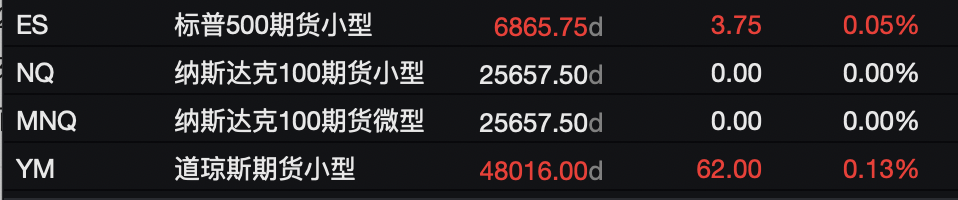
Core Insights - Recent US economic data has underperformed expectations, reinforcing market expectations for a Federal Reserve interest rate cut, which has boosted global risk appetite [1] - The focus is shifting towards the Bank of Japan, with expectations of a rate hike in December due to hawkish signals from Governor Kazuo Ueda [1][11] Market Performance - US stock index futures rose collectively, with the S&P 500 futures up 0.05%, Nasdaq 100 futures flat, and Dow Jones futures up 0.13% [2][3] - European stock indices opened higher, with the Euro Stoxx 50 up 0.6%, DAX up 0.7%, and FTSE 100 up 0.2% [3] - The Nikkei 225 index closed up 2.3%, driven by gains in technology and semiconductor stocks [2] Bond Market Dynamics - US 10-year Treasury yield rose by 2 basis points to 4.08%, while Japan's 30-year bond yield reached a historic high of 3.445% [3][6] - The demand for Japan's 30-year bonds was strong, with a bid-to-cover ratio of 4.04, the highest since 2019, indicating robust investor interest despite fiscal concerns [6] Currency Movements - The Japanese yen strengthened against the US dollar amid expectations of a rate hike [11] - The Indian rupee weakened, hitting a historical low of 90.4175 against the dollar, as market sentiment remains subdued due to stalled trade agreement processes with the US [14] Commodity Trends - Gold prices fell by 0.2% to $4194.37 per ounce, while silver dropped over 1.7% to $57.46 per ounce [3][17] - WTI crude oil prices increased by over 0.3% to $59.33 per barrel [3]