半导体

Search documents
汽车芯片从业者,必看
半导体行业观察· 2026-03-20 00:56
Core Viewpoint - Bosch has introduced an integrated Failure and Threat Mode and Effect Analysis (FTMEA) framework to address the increasing challenges in functional safety and cybersecurity within the automotive industry, emphasizing the need for a unified approach to analyze interdependencies between safety-related failures and cybersecurity threats [4][46]. Group 1: Background and Problem Statement - The automotive industry faces growing complexity in semiconductor devices, necessitating a paradigm shift in reliability engineering to ensure functional safety (FuSa) and cybersecurity [7]. - Traditional analysis methods, such as Failure Mode and Effects Analysis (FMEA), often treat functional safety and cybersecurity independently, leading to fragmented analyses and potential oversight of vulnerabilities [7][8]. - There is a significant gap in providing a quantitative, traceable mechanism to model the interdependencies between functional failures and cybersecurity threats [8]. Group 2: Key Contributions - The FTMEA framework introduces a novel set of Cross-Domain Correlation Factors (CDCF) to quantitatively assess the interdependencies between functional safety failure modes and cybersecurity threat modes [10]. - An enhanced Risk Priority Number (RPN) calculation method is proposed, integrating CDCF into the assessment of occurrence and detection rates, resulting in more accurate risk prioritization [10][11]. - The framework provides a clear operational methodology for integrating safety and cybersecurity considerations throughout the analysis lifecycle, from hazard identification to mitigation strategy evaluation [11]. Group 3: Case Study and Practical Application - A detailed case study on an automotive-specific Application-Specific Integrated Circuit (ASIC) configuration register demonstrates the practical application of the FTMEA framework, revealing previously obscured cross-domain risks and improving the effectiveness of mitigation strategies [11][37]. - The case study highlights the importance of quantifying CDCF values and provides a comparative analysis with benchmark FMEA/TARA, showcasing the framework's ability to enhance risk assessment and resource allocation [11][43]. Group 4: Future Directions - Future work will focus on applying the FTMEA framework to complex use cases, improving the measurement of correlation factors, and exploring the integration of machine learning and artificial intelligence to automate the derivation of relevant factors [47].


MEMS光开关,迎来替代者
半导体行业观察· 2026-03-20 00:56
Core Viewpoint - The article discusses the potential applications of optical cloaking technology in enhancing data center bandwidth and accelerating artificial intelligence operations, highlighting the advancements made by two startups, Neurophos and Lumotive, in utilizing optical metamaterials for these purposes [2][6]. Group 1: Optical Cloaking Technology - Optical cloaking technology, developed around 20 years ago, allows light to bend around objects, effectively hiding them using optical metamaterials [2]. - Current optical cloaks are limited as they typically only work for a single color of light, which restricts their practical applications [2]. Group 2: Lumotive's Innovations - Lumotive has developed a new microchip that features adjustable properties using liquid crystal elements embedded between copper structures, allowing for programmable optical characteristics [3]. - The new chip can handle industry-standard 256×256 ports and is scalable up to 10,000×10,000 ports, which Lumotive believes will significantly change the data center landscape [4]. Group 3: Neurophos's Approach - Neurophos aims to revolutionize artificial intelligence by developing optical processors that use light instead of electrons, significantly reducing power consumption [6]. - The company claims its optical modulators can achieve a size that is one ten-thousandth of current standard chip designs, allowing for a much higher density of computation [6]. - Neurophos asserts that its microchip will provide 50 times the computational density and energy efficiency compared to NVIDIA's Blackwell series GPUs, with plans to launch its first systems in early 2028 [6].

全球大公司要闻 | 阿里净利润大幅下滑,三星豪掷110万亿押注AI芯片
Wind万得· 2026-03-20 00:44
Group 1 - Alibaba reported Q3 FY2026 revenue of 284.84 billion yuan, a 2% year-on-year increase, but adjusted net profit decreased by 67% to 16.71 billion yuan, slightly below market expectations. Alibaba Cloud revenue grew by 36%, with AI-related product revenue showing triple-digit growth for the tenth consecutive quarter. The term "AI" was mentioned 85 times in the report, and the cloud intelligence group's revenue also increased by 36% [3] - Samsung Electronics plans to invest over 110 trillion won in R&D and facilities by 2026, focusing on AI chip development and creating an integrated industry system for storage, foundry, and advanced packaging. The company will supply HBM4 chips to OpenAI for its self-developed AI processors [4] - Qatar Energy estimates a revenue loss of approximately 20 billion dollars due to damage to two LNG production lines and one GTL facility from recent attacks, with repairs expected to take up to five years [4] Group 2 - TSMC is accelerating its 2nm process capacity expansion in response to the growing demand for high-end chips driven by AI applications, anticipating that AI-related chip demand will be a core driver of its performance over the next three years [7] - Ant Group launched the "Ant Tianjian 2.0 - Lobster Guardian" AI security protection system, offering free services to the first 100 partner companies [7] - China National Offshore Oil Corporation (CNOOC) reported a 6.14% year-on-year decrease in revenue to 219.50 billion yuan for 2025, with net profit down 37.13% due to adjustments in the global container shipping market [7] Group 3 - Apple saw a 23% year-on-year increase in sales in the Chinese market in the first nine weeks of 2026, with the new iPhone 17e selling 23,000 units in the first five days, outperforming previous models [10] - Amazon launched its AI voice assistant Alexa+ in the UK, with a free trial period, and plans to invest 42 billion yuan in logistics and technology in Poland over the next three years [10] - Nvidia announced a long-term partnership with Qnity Electronics to develop advanced semiconductor manufacturing materials and packaging technologies for AI and high-performance computing [11] Group 4 - Toyota's GAC Toyota will launch the pure electric model Platinum 7 on March 29, with a starting price of 156,800 yuan and a maximum range of 710 km [15] - SK Hynix's stock price fell due to the Samsung strike and overall semiconductor market volatility, as the company advances AI chip factory construction [15] - LG Group will adjust production capacity at its joint battery factory with General Motors, shifting from automotive batteries to energy storage LFP batteries [15]



员工曝宇树对外标榜弹性双休,内部却是另一套规则,非常卷;永辉喊话山姆不要让供应商二选一,业内人士称他们在躲永辉;傅盛开撕周鸿祎
雷峰网· 2026-03-20 00:38
Group 1 - Yushun Technology, a leading player in the robotics sector, is facing internal criticism for promoting a flexible work schedule while enforcing long working hours, with employees reporting an average of 12 hours a day and frequent all-nighters during project periods [4][5] - Yonghui Supermarket has publicly urged Sam's Club not to force suppliers into exclusive agreements, claiming that suppliers are avoiding Yonghui due to its declining performance and ongoing losses, with a projected net loss of 2.14 billion yuan for 2025, a 45.6% increase year-on-year [7] - A woman lost 300,000 yuan after pre-ordering a Ferrari from a dealer that went bankrupt, with the new dealer refusing to honor the previous agreement and selling the car to someone else [9][10] Group 2 - Lei Jun announced the launch of the new Xiaomi SU7, which has seen a cost increase of approximately 20,000 yuan compared to the first generation, but the price for consumers has only risen by 4,000 yuan, with the new model featuring over 100 upgrades [14][15] - The Coconut Group is seeking to procure 50 humanoid robots capable of processing over 360 coconuts per hour for its automated production line, emphasizing efficiency and quality in the coconut processing industry [17] - Xia Zhongpu, the former head of end-to-end driving at Li Auto, is set to join a prominent startup in the embodied intelligence sector, marking a significant shift in the autonomous driving landscape [19][20] Group 3 - Alibaba reported a revenue of 284.84 billion yuan for Q3 of the 2026 fiscal year, with a 9% year-on-year growth, driven by strong performance in its cloud services and AI-related products [22] - Meituan clarified that a rider claiming to be a Peking University graduate had only completed five deliveries, highlighting the ease of registration for riders without mandatory educational verification [23][24] - NIO's self-developed chips have surpassed 550,000 units in production, with the company addressing challenges in the automotive semiconductor industry through self-research and standardization efforts [32] Group 4 - Tesla's CEO Elon Musk stated that the AI6 chip is expected to complete its tape-out by December, aiming to match the performance of dual AI5 chips, with significant advancements anticipated in AI applications [45][46] - Nikon is facing a projected loss of 85 billion yen for the 2025 fiscal year, primarily due to its failing lithography business, which has seen a drastic decline in market share and competitiveness [51][52] - Lantu Automotive has officially listed on the Hong Kong Stock Exchange, becoming the first high-end new energy vehicle stock from a central state-owned enterprise, with its stock price experiencing a significant drop on debut [54][55]






美国的“阳谋”:让英伟达充当AI基建的“小发改委”
Guan Cha Zhe Wang· 2026-03-20 00:31
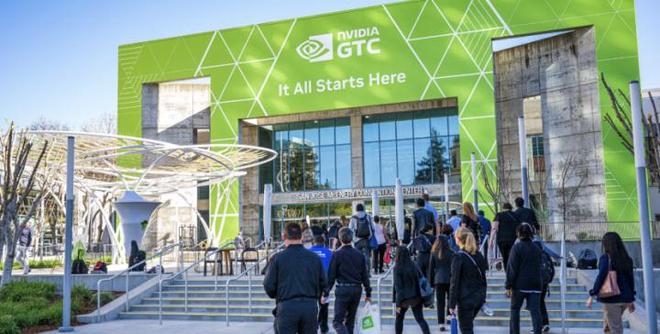
Core Insights - The article discusses NVIDIA's significant role in shaping the AI industry, particularly highlighted during the GTC 2026 event, where CEO Jensen Huang emphasized the company's vision of AI as a multi-layered "five-layer cake" with energy as the foundational element [3][9][19] Group 1: Product and Technology Developments - NVIDIA introduced several new products at GTC 2026, including the Vera CPU, Rubin GPU, and Groq LPU, which collectively represent a new system architecture philosophy aimed at optimizing both high throughput and low latency [4][5] - The Vera CPU, designed for high single-core performance, signifies NVIDIA's ambition to move beyond being just a GPU company to becoming a complete machine provider [5] - The introduction of the Nemotron alliance aims to ensure that AI models from various companies are optimized for NVIDIA hardware, reinforcing the company's ecosystem [7] Group 2: Infrastructure and Energy Considerations - Huang highlighted that energy is the "absolute constraint" determining how much intelligence a system can produce, indicating NVIDIA's focus on energy efficiency and planning for future power needs [9][19] - The company is developing the "Vera Rubin Space-1" space data center system, addressing potential future limitations of terrestrial power and cooling for AI computing [9] - NVIDIA's infrastructure strategy includes a comprehensive approach that encompasses not just chips but also land, power delivery, cooling systems, and network architecture, which Huang refers to as "AI factories" [6] Group 3: Market Position and Strategic Influence - NVIDIA's influence extends to the AI infrastructure investment landscape, with Huang predicting a demand of at least $1 trillion by 2027, comparable to national infrastructure spending [11] - The company controls GPU supply allocation, which significantly impacts the AI capabilities of major cloud service providers like AWS and Azure, effectively determining their business limits [12] - Huang's remarks suggest that NVIDIA is not just a company but acts as a "market coordinator" for the AI industry, aligning its commercial interests with broader national strategic goals [14][19]
华尔街分析师力挺长牛!纷纷上调美光目标价!
美股IPO· 2026-03-20 00:24
Core Viewpoint - Micron Technology's stock price fell after earnings release, despite analysts praising its performance guidance, indicating a cautious investor sentiment following significant capital expenditure plans [3][4]. Group 1: Earnings and Stock Performance - Micron's earnings and guidance exceeded expectations, leading to a nearly 7% drop in pre-market trading after a historic rise of over 350% in the past 12 months [3]. - The company anticipates capital expenditures exceeding $25 billion for the current fiscal year, up from a previous market expectation of $22.4 billion, with further increases expected by fiscal year 2027 [3]. Group 2: Analyst Opinions - Wells Fargo analyst Aaron Rakers raised the target price for Micron from $470 to $550, citing strong structural growth prospects in the memory market [3]. - Bank of America analyst Vivek Arya also increased the target price from $400 to $500, highlighting that memory prices may remain elevated due to several factors, including the importance of memory in the token economy and limited cleanroom availability until fiscal year 2027-2028 [5]. - Canadian Imperial Bank of Commerce analyst Srini Pajjuri noted that concerns over peak gross margins and rising capital expenditures contributed to the stock's decline, but the long-term outlook remains very positive [6]. Group 3: Market Dynamics - The demand for artificial intelligence remains strong, with structural drivers such as the increasing share of direct current solid-state drives (eSSD) and high bandwidth memory (HBM) playing a significant role in the current upcycle [6]. - Analysts expect prices to remain healthy until 2027, with significant potential for earnings multiple expansion as sustainability becomes evident [6].

中原证券晨会聚焦-20260320
Zhongyuan Securities· 2026-03-20 00:17
Core Insights - The report highlights the current market conditions in China, indicating a mixed performance across various sectors, with energy and power industries leading the gains while others like precious metals and chemicals are underperforming [5][8][21] - The macroeconomic environment is influenced by geopolitical tensions in the Middle East, which have led to rising oil prices and concerns about inflation, impacting investor sentiment [8][12][21] - The report suggests that the average price-to-earnings ratios for the Shanghai Composite Index and the ChiNext Index are above their three-year median levels, indicating a potential for medium to long-term investment opportunities [8][12] Domestic Market Performance - The Shanghai Composite Index closed at 4,006.55, down 1.39%, while the Shenzhen Component Index closed at 13,901.57, down 2.02% [3] - The A-share market has shown volatility, with significant trading volumes, indicating active investor participation despite the market's fluctuations [8][12] International Market Performance - Major international indices such as the Dow Jones and S&P 500 have also experienced declines, reflecting a global trend of market uncertainty [4] Industry Analysis - The semiconductor industry is experiencing a recovery, with domestic sales and prices showing positive trends, particularly in memory chips, driven by strong demand from AI applications [15][16][17] - The food and beverage sector is facing challenges, with a decline in fixed asset investments and production volumes, particularly in alcoholic beverages and dairy products [25][29] - The photovoltaic industry is undergoing a significant adjustment phase, with expectations of a market rebound after a period of contraction, driven by policy changes and technological advancements [31][33] Investment Recommendations - The report recommends focusing on sectors such as energy, coal, and gas for short-term investment opportunities due to their current performance [8][12] - In the semiconductor space, domestic manufacturers are expected to benefit from rising demand and price increases, making them attractive investment targets [15][16][17] - The food and beverage sector may present opportunities in specific sub-segments like prepared foods and health products, despite overall market challenges [20][27]
美股三大股指跌破关键均线,金银大跌
第一财经· 2026-03-20 00:11
Market Overview - The U.S. stock market closed lower amid escalating tensions in the Middle East and significant fluctuations in oil prices, leading to a renewed rise in inflation expectations and a cautious outlook on future interest rate cuts by the Federal Reserve [3][11] - The Dow Jones Industrial Average fell by 203.72 points to close at 46,021.43, a decline of 0.44%, while the S&P 500 and Nasdaq Composite also experienced declines of 0.27% and 0.28%, respectively, with all three major indices breaking below their 200-day moving averages, indicating a weakening mid-term trend [3][11] Sector Performance - Among the 11 major sectors in the S&P 500, 8 sectors declined, with the materials sector leading the drop at 1.55%, and the consumer discretionary sector falling by 0.87% [8] - Precious metals saw a significant pullback, leading to notable sell-offs in mining stocks, with Newmont down 6.9% and Freeport-McMoRan down 3.3% [8] Technology Stocks - Major tech companies faced pressure, with Nvidia down 1.02%, Microsoft down 0.71%, Apple down 0.39%, Meta down 1.46%, and Google-A down 0.18%. Tesla saw a more significant decline of 3.18% due to safety concerns regarding its fully autonomous driving system [5][8] Chinese Stocks - The Nasdaq Golden Dragon China Index fell by 1%, with Alibaba dropping 7.09% after reporting a 66.7% year-on-year decline in non-GAAP net profit for the quarter ending December 2025, despite a 2% increase in revenue [9] Economic Indicators - The U.S. labor market remains stagnant, with initial jobless claims decreasing to 205,000, below market expectations, indicating a tight labor market [12] - The yield on the two-year U.S. Treasury rose to 3.96%, the highest since August of the previous year, reflecting market adjustments to policy expectations [12] Commodity Prices - Brent crude oil prices briefly reached $119 per barrel due to attacks on Middle Eastern energy targets, while light crude oil futures closed at $96.14 per barrel, down 0.19% [13] - Precious metals experienced a significant decline, with spot gold dropping 4.3% to $4,612, marking a new low since early February, and silver down 5.3% to $71.39 [14]

光力科技(300480) - 300480光力科技投资者关系管理信息20260319
2026-03-19 16:36
Group 1: Business Overview - The company benefits from the semiconductor industry's upward trend and the application of domestic cutting equipment in the packaging sector since July 2025, leading to rapid growth in its semiconductor business [2] - The IoT business has maintained stable development over the years, providing high-quality products and services to support clients in smart mining construction [2] Group 2: Project Development - The second phase of the airport factory project is expected to be fully completed and operational by Q1 2027, with a strategy of simultaneous construction and production to meet customer delivery needs [3] - The company will dynamically adjust the capacity enhancement pace based on market demand changes [3] Group 3: Product Development and Market Position - The laser dicing machine and mechanical dicing machine serve different cutting processes and applications, complementing each other rather than one replacing the other [3] - The company has developed laser slotting and laser stealth cutting machines, which are currently undergoing client validation [3] - The grinding machine is being validated with clients for 8-inch and 12-inch wafer back grinding, with positive feedback received [3] Group 4: Domestic Equipment Progress - The company has achieved batch sales of domestic mechanical dicing machines, which are recognized for their cutting quality and efficiency, comparable to international counterparts [4] - The revenue share from customized equipment is gradually increasing, with over twenty models of mechanical dicing equipment available, tailored to different customer application needs [4]

美国特别竞争研究项目:《中美技术竞争中谁领先、谁落后及未来走向》
欧米伽未来研究所2025· 2026-03-19 15:40
Core Viewpoint - The SCSP report highlights the competitive landscape between the U.S. and China in key technology sectors, indicating a complex, fluid, and uncertain multi-dimensional competition rather than a clear-cut dominance by either side [2]. Group 1: China's Strengths - China leads in four strategic technology areas: advanced batteries, advanced manufacturing, commercial drones, and 5G infrastructure, with high confidence ratings [4]. - In the battery sector, China's manufacturing capacity reached 1,705 GWh in 2023, compared to the U.S. at 93 GWh, marking an 18-fold difference. China controls 80% of global lithium-ion battery component shipments and holds about 60% of the global electric vehicle battery market [4]. - China accounts for approximately 35% of global manufacturing output, while the U.S. is at about 12%. The number of industrial robots deployed by Chinese companies in 2023 matches the total of all other countries combined [5]. - China has deployed over 4 million 5G base stations, averaging 206 per 100,000 people, compared to the U.S. with about 100,000 base stations or 77 per 100,000 people. By 2024, China is expected to have over 1 billion 5G users, covering 88% of its mobile users [5]. Group 2: U.S. Strengths - The U.S. maintains a lead in artificial intelligence, quantum computing, semiconductors, fusion energy, and internet platforms, relying on foundational research breakthroughs and private sector innovation [6]. - In AI, U.S. private investment reached $67.2 billion in 2023, compared to China's $7.76 billion, a nearly 9-fold difference. Most foundational AI models have originated from U.S. private companies [6]. - The semiconductor sector is rated as "U.S. leading, high confidence," with the CHIPS Act expected to drive over $400 billion in private investment, projecting that the U.S. will hold 28% of global advanced logic chip capacity by 2032 [7]. Group 3: Structural Weaknesses - A recurring structural pattern is observed: U.S. innovation versus Chinese commercialization. The U.S. holds 39% of global biotechnology patents but has seen a shift in the production side, with Chinese companies supplying about 17% of U.S. active pharmaceutical ingredients (APIs) [9]. - In synthetic biology, the U.S. market is valued at $16.3 billion compared to China's $1.05 billion, yet China controls 70% of global fermentation capacity, highlighting a significant production bottleneck for U.S. firms [10]. - DJI dominates the global consumer drone market with over 90% share, raising national security concerns for the U.S. as it lacks comparable domestic alternatives [10]. Group 4: Strategic Recommendations - The report suggests establishing a "Technology Competition Council" to unify strategic direction and coordinate responses across departments, addressing the misalignment between private sector focus and government priorities [11]. - The trajectory of fusion energy illustrates the competitive dynamics, with the U.S. currently leading but facing significant investment from China, which may narrow the gap in the coming years [12].