TMT

Search documents
早盘直击 | 今日行情关注
申万宏源证券上海北京西路营业部· 2025-06-25 01:29
Group 1 - The recent tensions in the Middle East have led to a temporary impact on A-share market sentiment, but the market has rebounded, with the Shanghai Composite Index reaching a new high in nearly a month [1] - The market is expected to maintain a slow upward trend as it approaches the policy window period at the end of June, with potential for new policies aimed at stabilizing employment and promoting high-quality development [1] - Popular sectors such as banking and innovative pharmaceuticals may experience short-term fluctuations due to accumulated gains, while TMT and technology growth sectors are anticipated to see a rebound after sufficient adjustments [1] Group 2 - The outlook for July suggests a theme-driven market with high-low sector rotation, as popular sectors like innovative pharmaceuticals and banking have shown signs of correction, while TMT and advanced manufacturing sectors are beginning to rebound [2] - Key focus areas for 2025 include expanding domestic demand and consumption, with expectations for policies to support sectors like dairy products, IP consumption, leisure tourism, and medical aesthetics [2] - The trend towards domestic production of robotics is expected to continue, with opportunities arising in sensors, controllers, and functional robots [2] - The semiconductor industry is projected to see continued domestic growth, with attention on semiconductor equipment, wafer manufacturing, materials, and IC design [2] - The military industry is anticipated to experience a rebound in orders by 2025, with signs of recovery already visible in various sub-sectors [2] - The innovative pharmaceutical sector is expected to reach a turning point in fundamentals by 2025, following a period of adjustment [2] - The AI sector is poised for new catalysts, with significant updates expected from companies like MiniMax, indicating a resurgence in AI-related investments [2] Group 3 - The A-share market has ended a month-long period of consolidation, with the Shanghai Composite Index reaching a new high, supported by a broad-based rally among individual stocks [3] - The market saw a significant increase in the number of rising stocks, with over 4,700 stocks gaining, while only a few sectors like oil and coal experienced declines due to falling international oil prices [3] - Leading sectors included electric power equipment, non-bank financials, retail, automotive, and machinery [3]

早盘直击 | 今日行情关注
申万宏源证券上海北京西路营业部· 2025-06-23 02:20
Group 1 - The geopolitical events in the Middle East, particularly the military conflict between Israel and Iran, are significant variables affecting market sentiment [1] - The domestic market faces uncertainties primarily due to fluctuations in oil prices and the operational stability of the shipping market [1] - The A-share market shows resilience with pressure from above and support from below, exhibiting a box-like fluctuation pattern [1] Group 2 - The recent market performance indicates a decline in average daily trading volume, with the Shanghai Composite Index facing resistance from the five-day moving average and closing below the 30-day moving average [1] - The Shenzhen Component Index has struggled around the 60-day moving average, ultimately breaking down and closing below all short- to medium-term moving averages [1] - Last week's market focus was on TMT and banking sectors, with smaller-cap and technology stocks experiencing larger declines compared to large-cap blue-chip stocks [1]
廖市无双:4月以来的反弹结束了吗?
2025-06-23 02:09
除了新消费和创新药,上周我们还对券商进行了分析。券商存在两种走势:一 种是直接调整;另一种是由于 618 陆家嘴金融会议可能出台重磅金融政策,有 资金提前布局博弈题材,因此券商有可能继续上涨。如果券商上涨,将带动上 证指数挑战 5 月 14 日高点 3,417 点。这两种情况分别标识为橙色和蓝色走势。 如果券商打不起来,再加上医药和新消费走弱,大盘可能直接进入调整。 廖市无双:4 月以来的反弹结束了吗?20250622 美国介入以色列与伊朗冲突对全球资本市场有什么影响? 摘要 新消费板块前期涨幅较大后显疲态,已形成五浪结构,面临调整压力。 黄金饰品等龙头股走弱,港股相关标的也出现回调,建议投资者保持谨 慎。 创新药板块技术指标显示调整信号,中证创新药指数和港股创新药指数 均出现顶背离迹象,预示日线级别四浪整理需求。短期内不宜盲目追高。 券商板块存在两种走势可能:直接调整或受陆家嘴金融会议政策预期影 响上涨,带动上证指数挑战 3,417 点。券商表现将影响大盘走向,值得 密切关注。 近期市场受中东地缘政治冲突影响,风险偏好下降,上证 50 和沪深 300 小幅下跌,其他指数跌幅较大。银行板块表现较强,对市场起到 ...
2025年Alpha半年度行情展望:Alpha策略半年度回顾及展望
Guo Tai Jun An Qi Huo· 2025-06-22 12:09
Group 1 - The A-share market in the first half of 2025 experienced a rebound despite facing mid-term tariff shocks, with significant trading volume and volatility providing a favorable environment for quantitative strategies [3][6][14] - The return of small-cap stocks has set the tone for quantitative strategy performance, with the ChiNext and CSI 2000 indices outperforming larger indices like the CSI 300 [6][10][18] - The overall A-share environment has been friendly to quantitative strategies, characterized by significant volatility and trading volume exceeding one trillion, which supports high-frequency trading strategies [14][15] Group 2 - Alpha products and managers performed well in the first half of 2025, with most long products achieving positive returns, particularly in quantitative stock selection [16][17] - The average return for quantitative stock selection products exceeded 12%, benefiting from the favorable small-cap market environment [17][19] - New quantitative strategies are emerging, with the CSI 2000 index showing strong performance due to its small-cap focus and lower competition compared to traditional indices [28][29] Group 3 - The risk associated with small-cap stocks needs close attention, as they have shown extreme trading heat and significant divergence from larger indices, indicating potential for a market correction [32][39] - The macroeconomic environment, policy support, liquidity conditions, and technological advancements are driving the performance of small-cap stocks, but caution is warranted due to high valuations and the presence of loss-making companies [34][36][37] - The correlation between quantitative products and small-cap stocks suggests that while there are benefits, there is also a need for careful risk management to avoid potential downturns similar to past market events [40][41]
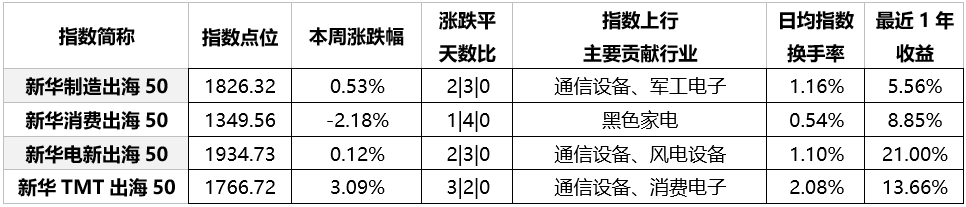
“猫党”“狗党”举大旗,年内股价上涨66%,新华出海消费指数成份股走势强劲
Xin Hua Cai Jing· 2025-06-20 10:40
Core Insights - The pet consumption market is becoming a significant pillar for Chinese companies going global, with pet product sales during the "618" shopping festival showing that cat product sales are twice that of dog products [1] - The global pet market is projected to exceed $300 billion by 2025 and reach $500 billion by 2030, with China transitioning from a manufacturing hub to a brand-exporting nation [1][3] - Chinese pet food exports have shown robust growth, with a 16.17% increase in quantity and a 6.06% increase in value in the first four months of 2025 compared to the previous year [3] Industry Trends - Over 30,000 pet businesses participated in cross-border sales during the "618" event, with over 1,000 businesses seeing their sales double year-on-year [1] - The demand for smart pet products and eco-friendly toys is driving innovation and growth in the pet industry, with leading companies expanding their overseas operations [1][3] - The consensus in the pet industry is that companies must expand internationally to tap into the more mature overseas markets [2] Company Performance - Zhongchong Co., a leading player in the pet economy, has seen its stock price increase by nearly 66% this year, with revenue growing from 648 million yuan to 4.465 billion yuan from 2015 to 2024, representing a 589.04% increase [4] - In Q1 2025, Zhongchong Co. reported a revenue of 1.101 billion yuan, a 25.41% year-on-year increase, and a net profit of 91 million yuan, a 62.13% increase [4] - The company has established production facilities in multiple countries, including the U.S., Canada, and Thailand, to enhance its overseas capacity and mitigate risks [3]

渤海证券研究所晨会纪要(2025.06.20)-20250620
BOHAI SECURITIES· 2025-06-20 02:58
编辑人 崔健 022-28451618 SAC NO:S1150511010016 cuijian@bhzq.com 渤海证券研究所晨会纪要(2025.06.20) 宏观及策略研究 科创板改革获推进,市场延续窄幅震荡——A 股市场投资策略周报 晨会纪要(2025/06/20) 证 券 研 究 报 告 晨 会 纪 要 请务必阅读正文之后的声明 渤海证券股份有限公司具备证券投资咨询业务资格 1 of 4 晨会纪要(2025/06/20) 宏观及策略研究 科创板改革获推进,市场延续窄幅震荡——A 股市场投资策略周报 严佩佩(证券分析师,SAC NO:S1150520110001) 宋亦威(证券分析师,SAC NO:S1150514080001) 靳沛芃(研究助理,SAC NO:S1150124030005) 1、市场回顾 近 5 个交易日(6 月 13 日-6 月 19 日),重要指数纷纷收跌;其中,上证综指收跌 1.19%,创业板指收跌 1.95%; 风格层面,沪深 300 收跌 1.26%,中证 500 收跌 2.12%。成交量方面小幅缩量,两市统计区间内成交 6.33 万亿元,日均成交额达到 1.27 万亿元 ...
德勤:上半年港交所IPO融资额升至全球第一,新股强劲势头将持续至2025年底
IPO早知道· 2025-06-20 01:45
Core Viewpoint - The article discusses the performance and outlook of the IPO market in Hong Kong and A-shares, highlighting significant growth in new listings and financing amounts in 2025 compared to the previous year [2][4]. Hong Kong IPO Market - In the first half of 2025, Hong Kong's IPO market is expected to see 40 new listings, raising HKD 1,021 billion, which represents a 33% increase in the number of new listings and a 673% increase in financing compared to the same period last year [2]. - The strong performance is attributed to the encouragement of mainland leading companies to list in Hong Kong, improved approval processes for new listings, and enhanced market liquidity [2]. - Approximately 75% of the financing in the first half of 2025 will come from four large A+H new listings and one H-share listing [2]. - The healthcare and pharmaceutical sectors have dominated the number of new economy listings, while the manufacturing sector leads in financing amounts [3]. A-share Market - As of June 30, 2025, there will be 50 new A-share listings raising CNY 371 billion, marking a 14% increase in both the number of new listings and total financing compared to the first half of 2024 [4]. - The Shanghai Stock Exchange will see 19 new listings raising CNY 202 billion, while the Shenzhen Stock Exchange will have 26 new listings raising CNY 150 billion, and the Beijing Stock Exchange will have 5 new listings raising CNY 19 billion [4]. - The ChiNext board is the most active in terms of the number of new listings, while the Shanghai main board leads in financing amounts [4]. Future Outlook - There are over 170 IPO applications currently being processed in Hong Kong, with more than five companies potentially raising at least USD 1 billion each [4]. - Deloitte projects that the Hong Kong IPO market will see 80 new listings raising HKD 2,000 billion in total for the year 2025, with significant contributions expected from the TMT and consumer sectors [4]. - The sentiment towards Hong Kong's IPO market remains cautiously optimistic, contingent on the absence of major geopolitical or macroeconomic disruptions [5].

德勤:上半年A股新股数量和融资总额将迎双升
Guo Ji Jin Rong Bao· 2025-06-19 16:28
Core Viewpoint - Deloitte's report indicates a cautious recovery in the A-share market for the second half of 2025, driven by regulatory support and an increase in new listings, particularly in high-tech sectors [1][2]. Group 1: A-Share Market Performance - In the first half of 2025, the A-share market saw 50 new listings raising 37.1 billion yuan, a 14% increase in both the number of new stocks and total financing compared to the same period in 2024 [2]. - The Shanghai Stock Exchange recorded 19 new listings raising 20.2 billion yuan, while the Shenzhen Stock Exchange had 26 new listings raising 15 billion yuan [2]. - The introduction of the "1+6" policy and the third set of standards for the ChiNext board is expected to enhance market activity, particularly for high-tech companies [1]. Group 2: Hong Kong Market Outlook - The Hong Kong market is projected to end the first half of 2025 with 40 new listings raising 10.21 billion HKD, marking a 33% increase in new listings and a 673% increase in total financing compared to the same period in 2024 [2]. - Nearly three-quarters of the financing in Hong Kong's first half of 2025 came from four large A+H listings and one H-share listing [2]. - Deloitte anticipates that the Hong Kong market will regain its position as the top destination for new stock financing globally, with over 170 listing applications currently in process, including several expected to raise at least 1 billion USD each [3].
业绩仓位同步走高 私募多线布局“确定性”资产
Zhong Guo Zheng Quan Bao· 2025-06-18 20:27
● 本报记者王辉 证券私募行业近期业绩与仓位"双线走高"。来自第三方机构的监测数据显示,今年以来证券私募行业整 体业绩表现亮眼。与此同时,随着投资信心的增强,百亿级股票私募持续加仓,平均仓位水平已悄然攀 升至接近80%的年内高位。这一举措的背后,既反映出机构对政策面和经济预期的积极研判,也体现了 私募对当前A股估值吸引力的普遍认可。从重点投资方向来看,科技、新消费、贵金属等板块以及红利 资产,成为不少私募机构的加仓重点。从核心逻辑来看,私募机构普遍关注投资的"确定性"。 股票策略产品前五个月平均盈利近5% 来自第三方机构私募排排网的最新监测数据显示,截至5月31日,有业绩记录的12843只私募证券产品, 今年前五个月的平均收益率为4.34%;其中9608只产品实现正收益,占比为74.81%。 与此同时,在私募五大投资策略(股票策略、多资产策略、期货及衍生品策略、组合基金策略、债券策 略)产品中,股票策略产品今年前五个月的业绩领跑。有业绩记录的8487只股票策略私募产品,今年以 来平均收益率为4.81%,在五大策略中排名第一。其中,6238只产品在今年前五个月实现正收益,占比 为73.50%。 从今年前五个月私 ...
早盘直击 | 今日行情关注
申万宏源证券上海北京西路营业部· 2025-06-17 01:36
Group 1 - The external environment is complex and variable, but the A-share market shows resilience. Recent geopolitical events in the Middle East have caused market fluctuations, yet A-shares managed a partial recovery, indicating strength. Domestic economic data for May is being released, and investors are focused on future policy directions and execution effects. Overall, the complex external environment and sufficient domestic policy reserves support the market [1] - The two markets experienced a rebound with decreased trading volume. On Monday, the markets opened lower but gradually rebounded, with the Shanghai Composite Index closing near its daily high, although it did not surpass the five-day moving average. The Shenzhen Component Index's short-term moving averages are converging, waiting for a breakout direction. The trading volume was around 1.2 trillion yuan, a decrease from the previous week, with more stocks rising than falling, particularly in the TMT and real estate sectors. Small and mid-cap stocks led the gains [1] Group 2 - From a market operation perspective, the Shanghai Composite Index is challenging the mid-May high, but technical resistance remains significant. After a downward adjustment in mid-May, the index found support at the 60-day moving average and began to rebound. However, it faced resistance near the mid-May high, indicating strong technical resistance in the trading volume area from last year's fourth quarter and this year's first quarter [2]