乳制品

Search documents
中国乳业「老三」要IPO了,年营收近200亿,负债率77%
Sou Hu Cai Jing· 2026-01-25 13:48
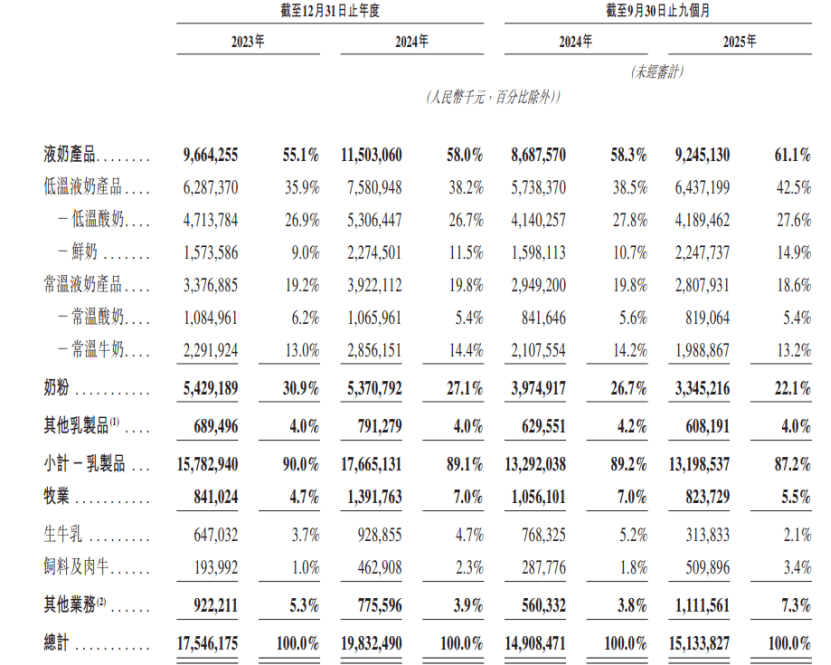
Core Viewpoint - Junlebao Dairy Group has submitted an application for a mainboard listing on the Hong Kong Stock Exchange, shifting focus from A-share listing to overseas market expansion [1] Group 1: Company Overview - Junlebao was founded in 1995 by Wei Lihua in Shijiazhuang, Hebei, initially having a tripartite shareholding structure with Wei holding 33%, Hongqi Dairy holding 33%, and Sanlu Group holding 34% [3] - After Sanlu's bankruptcy, Wei repurchased shares in 2009, increasing his stake to 83.53% [3] - In December 2010, Junlebao introduced strategic investor Mengniu, transferring 51% control for 469.2 million yuan [3] - Junlebao regained independence in 2019 when Mengniu divested its shares, leading to new investments from various institutions including Sequoia China and Ping An Capital [3] Group 2: Shareholding Structure - Prior to the IPO, Wei Lihua held 37.54% of shares, while management controlled 59.26% through various employee incentive platforms [4] - Sequoia China is the largest external institutional shareholder with an 8.59% stake, followed by Springhua Capital at 7.68% and Ping An Capital at 4.84% [4] Group 3: Financial Performance - Junlebao's revenue for 2023, 2024, and the first nine months of 2025 was approximately 17.546 billion yuan, 19.832 billion yuan, and 15.134 billion yuan, respectively, with net profits of 5.58 million yuan, 1.115 billion yuan, and 902 million yuan [10] - The company has a high debt level, with total liabilities reaching 17.57 billion yuan and a debt-to-asset ratio of 77.1%, significantly above the industry average of 50%-60% [10] - Junlebao has paid out approximately 1.625 billion yuan in dividends from 2023 to the first nine months of 2025, with a total of over 2.6 billion yuan in dividends over three years [10] Group 4: Product Portfolio - Junlebao's main revenue comes from dairy products, including low-temperature yogurt, fresh milk, and milk powder, with brands such as Junlebao and Yuxianhuo [6] - As of the first nine months of 2025, low-temperature dairy products contributed 15.134 billion yuan in revenue, accounting for 42.5% of total revenue [7] - The company holds a 5% market share in the infant formula market, ranking fifth among competitors [7] Group 5: Market Trends and Challenges - The overall dairy product market in China is experiencing a decline, with a projected market size of 659 billion yuan in 2024, down 3.1% year-on-year [14] - Junlebao has been actively pursuing mergers and acquisitions to explore new growth opportunities, completing eight investments since 2021 [15] - Despite the potential in cheese and yogurt markets, Junlebao faces challenges due to low consumer demand for dairy products in traditional diets [15][16]

什么是企业护城河,常见的企业护城河有哪些呢?|投资小知识
银行螺丝钉· 2026-01-25 13:42
Core Insights - The article discusses various types of competitive advantages, referred to as "moats," that companies can possess to maintain their market position and profitability [3][9][13]. Group 1: Types of Competitive Advantages - **Scale Advantage**: Companies like BlackRock, Vanguard, and State Street dominate the index fund market, collectively holding over 80% of the global market share. Larger funds can lower management fees, attracting more investors and creating a positive feedback loop [3]. - **Network Effect**: Industries such as stock exchanges and e-commerce benefit from network effects, where the value of the network increases with the number of users. For instance, the Hong Kong Stock Exchange has a significant market share, making it difficult for new entrants to compete [6][7]. - **Brand Advantage**: In sectors like consumer goods and pharmaceuticals, brand recognition plays a crucial role. Consumers often remember only a few brands, such as Moutai in liquor or Yili in dairy products, which illustrates the power of brand loyalty [9]. - **Switching Costs**: Companies that create ecosystems, like Apple with its product matrix, increase switching costs for users. Once consumers are accustomed to a particular ecosystem, it becomes challenging to switch to competitors [10][12]. - **Resource Advantage**: Industries such as mining and energy benefit from unique resources that are difficult to replicate. Companies with low extraction costs can maintain profitability and market dominance [13]. Group 2: Financial Characteristics of Companies with Moats - Companies with established moats typically exhibit strong financial metrics, indicating their ability to sustain profits over time [13].

全方位规范生产流程 新疆发布国内首个奶啤团体标准
Xin Lang Cai Jing· 2026-01-25 13:04
Core Viewpoint - The release of the "Milk Beer" group standard marks a significant step in defining and regulating the production of milk beer in China, addressing industry challenges such as product definition ambiguity and quality inconsistency [1][2] Group 1: Industry Standards - The newly published standard is the first of its kind in China, establishing "natural fermentation" as the core production process and prohibiting the addition of carbon dioxide and ethanol [1] - A minimum protein content of ≥0.7g/100g has been set as a quality baseline, aiming to standardize production processes from the source [1] Group 2: Market Impact - The implementation of this standard is expected to lead the milk beer industry into a new phase characterized by standard-driven innovation and cultural empowerment [2] - The standard aims to guide the market towards high-quality products based on fermentation processes, protecting consumer rights and creating a fair competitive environment for quality-focused companies [2] Group 3: Technological Advancements - Xinjiang dairy companies, in collaboration with research institutions, have made significant technological advancements in strains, processes, and stability, transitioning milk beer from a regional specialty to a national market product [1] - Xinjiang Tianrun Dairy, as a core drafting unit, has integrated its practical experience in strain selection and process innovation into the standard formulation [1]

妙可蓝多创始人遭免职!
Shen Zhen Shang Bao· 2026-01-25 12:30
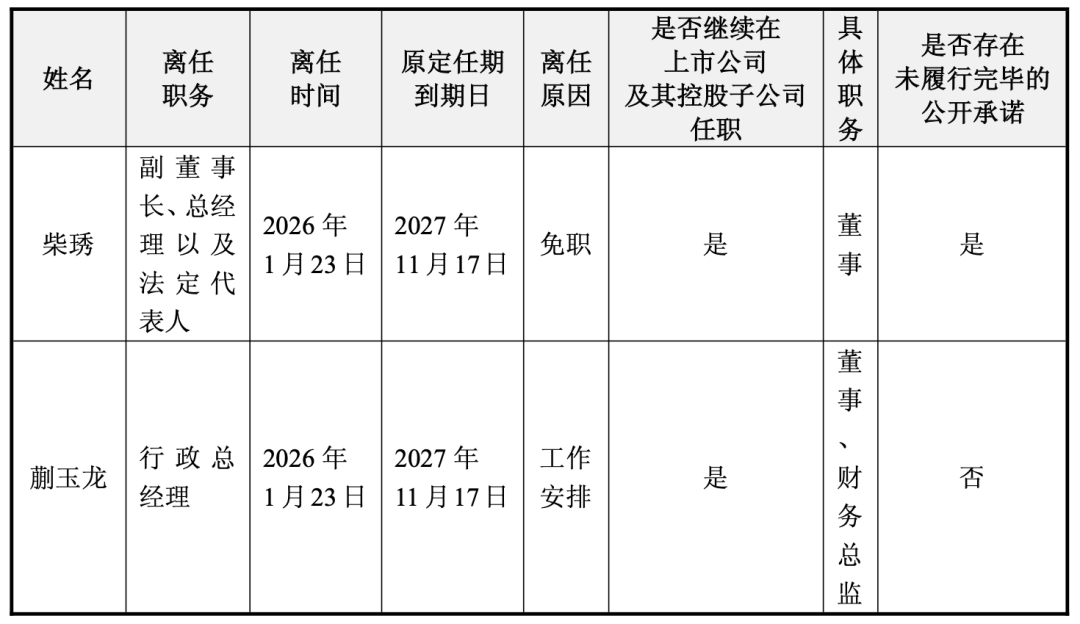
Core Viewpoint - The resignation of the Vice Chairman and General Manager of Miaokelan Duo, Chai Xiu, is attributed to "dismissal" rather than voluntary resignation, and it is linked to unfulfilled public commitments related to a merger fund [1][3][5]. Group 1: Management Changes - Chai Xiu has resigned from her positions as Vice Chairman, General Manager, and legal representative, but will continue to serve as a director [1][2]. - Kuai Yulong has been appointed as the new General Manager, and the legal representative has been changed to him as well [1][2]. Group 2: Legal and Financial Implications - The company has initiated arbitration against Chai Xiu due to issues related to a merger fund, specifically concerning debts owed by a company associated with the fund [3][5]. - Chai Xiu had previously committed to compensating the company for any losses arising from the merger fund but has not fulfilled this commitment as of the announcement date [4][5]. - The company expects significant impacts on its net profit due to fair value changes related to the merger fund investments, estimating a loss of 129 million yuan [6][8]. Group 3: Financial Estimates - The book value of the non-current financial assets related to the merger fund is projected to be 129 million yuan as of December 31, 2024, with expected fair value losses [7]. - The estimated fair value loss for a 10% stake in Jilin Zhiran Dairy Technology Co., Ltd. is projected to be between 30.09 million yuan and 40.09 million yuan [7]. - The anticipated fair value loss is expected to reduce the company's net profit attributable to shareholders by 119 million to 127 million yuan for the fiscal year 2025 [8][9].

湖北和广东调研反馈、周观点:啤酒推新蓄力,烘焙旺季稳健-20260125
GOLDEN SUN SECURITIES· 2026-01-25 11:22
Investment Rating - The report maintains an "Accumulate" rating for the food and beverage industry [5] Core Insights - The upcoming Spring Festival is expected to boost sales in the liquor sector, with Moutai leading the industry towards an unexpected improvement. Short-term focus should be on the demand for the Spring Festival, while medium-term investments should target leading brands across various price segments [1] - In the beer segment, new product launches are being prepared, with a focus on high-growth channels and consumer trends towards personalized and diversified consumption [2] - The baking sector is showing stable performance, with companies like Lihigh Foods preparing for the sales peak and benefiting from favorable policies regarding cream products [3] Summary by Relevant Sections Liquor Sector - The Spring Festival is driving demand, with Moutai expected to lead the market. Key short-term stocks include Guizhou Moutai, Guo Jiu Gong Jiu, and others, while medium-term focus should be on Wuliangye and Shanxi Fenjiu [1] Beer Sector - Current beer sales are in a low season, but new product launches and high growth in instant retail channels are promising. Companies like Chongqing Beer are launching new 1L cans to meet consumer preferences [2] Food Sector - Lihigh Foods is preparing for the sales peak with a focus on quality over quantity, while Anqi Yeast is benefiting from declining sugarcane prices, enhancing profit margins [3] - Yizhi Konjac is experiencing rapid demand growth, with a stable supply chain and product innovation driving its market position [4]




行业周报:春节旺季备货催化,大众品迎来布局窗口-20260125
KAIYUAN SECURITIES· 2026-01-25 08:42
Investment Rating - The industry investment rating is "Positive" (maintained) [1] Core Viewpoints - The food and beverage sector is currently at a low position in terms of fundamentals and valuations, presenting significant investment opportunities as the peak season approaches [4][12] - The food and beverage index experienced a decline of 1.4% from January 19 to January 23, ranking 25th among 28 sectors, underperforming the CSI 300 by approximately 0.8 percentage points [12][13] - The Consumer Price Index (CPI) rose by 0.8% year-on-year in December 2025, indicating a mild recovery trend, and has returned to relatively high levels compared to recent years [4][12] - The upcoming Spring Festival is expected to catalyze performance in the sector, with strong demand for consumer goods, particularly in the snack segment, which continues to show upward momentum [4][12] Summary by Sections Weekly Insights - The food and beverage sector is positioned for a recovery as it approaches the peak season, with a notable increase in demand expected during the Spring Festival [4][12] - The sector's current valuation aligns with policy support aimed at boosting consumption, providing a safety margin for investments [4][12] Market Performance - The food and beverage index's performance was weaker than the broader market, with specific sub-sectors like snacks (+6.1%), processed foods (+4.9%), and baked goods (+4.3%) showing relative strength [12][13] Upstream Data - Recent data indicates a decline in some upstream raw material prices, with whole milk powder prices down 13.5% year-on-year as of January 20, 2026 [19][21] - The price of fresh milk was reported at 3.03 CNY per kilogram, reflecting a year-on-year decrease of 2.6% [19][21] Alcohol Industry Data - In December 2025, the production of liquor (65-degree equivalent) decreased by 12.1% year-on-year, with a total production of 354.9 million liters for the year [42][43] Recommended Investment Targets - Key investment opportunities identified include raw milk/dairy products, the snack sector, and the restaurant supply chain, with specific companies highlighted for their growth potential [4][5][12]


解码人文经济新动能|寻味!老字号做出“新”味道
Xin Hua She· 2026-01-25 04:53
Group 1: Harbin's Ma Die Er Ice Cream - Ma Die Er ice cream, known for its unique taste and historical significance, has become a popular winter treat in Harbin, attracting many tourists despite the cold weather [1][4][21] - The ice cream was first introduced in 1914 and is made from milk and eggs, evolving into a local delicacy with over 30 different flavors and styles [4][5][21] - The traditional flavor remains milk-based, while innovative flavors include cranberry, bamboo, mango, and vanilla maple, appealing to modern consumers [5][21] Group 2: Tianjin's Haihe Milk - Haihe Milk, a well-known brand in Tianjin, has expanded its product line to include over 30 new flavors, such as avocado and pancake, catering to the preferences of younger consumers [9][11] - The brand has introduced a "fresh milk" self-service machine, allowing customers to enjoy freshly produced milk, enhancing the shopping experience [11] - Haihe Milk aims to connect traditional flavors with modern market demands, focusing on both taste and emotional value for consumers [11][21] Group 3: Cultural Integration in Food Industry - Traditional brands like Tong Hanchun Tang are innovating by introducing health-oriented beverages that resonate with younger audiences, blending ancient wisdom with modern tastes [13][15] - Guangzhou Restaurant is exploring the integration of dining and cultural experiences, aiming to create a comprehensive cultural output through its culinary offerings [17][19] - The emphasis on innovation and cultural connection is seen as essential for maintaining the relevance and vitality of traditional brands in the modern market [21]

解码人文经济新动能丨寻味!老字号做出“新”味道
Xin Hua Wang· 2026-01-25 04:37
Group 1 - The article highlights the unique experience of consuming ice cream in winter, particularly focusing on the famous Ma Die Er ice cream in Harbin, which has become a local specialty and a must-try for visitors [1][5] - Ma Die Er ice cream, introduced in 1914, is made from milk and eggs, and has evolved to include over 30 different flavors and styles, catering to modern consumer preferences [5][10] - The ice cream's popularity is attributed to its appealing taste and affordability, making it a trendy choice among tourists in Harbin's Central Street [1][9] Group 2 - The article also discusses the innovation in dairy products from Tianjin's Haihe Milk, which has developed over 30 new flavors, including unique options like pancake and fried dough flavors, appealing particularly to younger consumers [10][11] - Haihe Milk has introduced a "fresh milk" self-service machine, enhancing customer experience by allowing immediate access to fresh products [11][12] - The brand aims to connect traditional flavors with modern market demands, ensuring that their offerings not only satisfy taste but also provide emotional value to consumers [10][11] Group 3 - The article mentions the efforts of Tong Hanchun Tang, a 243-year-old traditional Chinese medicine brand, to engage younger audiences through innovative health-focused beverages that incorporate ancient wisdom [14][15] - Guangzhou Restaurant, a well-known Cantonese dining establishment, is exploring cultural integration with its culinary offerings, aiming to create a comprehensive experience that reflects Lingnan culture [18][20] - The overall trend among these traditional brands is to innovate and adapt to contemporary consumer preferences while maintaining their cultural heritage, thereby enhancing their market presence and relevance [22][24]

君乐宝递交港股上市申请,加速全国渠道拓展与国际化布局
Sou Hu Cai Jing· 2026-01-25 02:28
Core Viewpoint - Junlebao Dairy Group has submitted its application for a mainboard listing on the Hong Kong Stock Exchange, highlighting its strong market position and comprehensive competitive edge in the dairy industry after 30 years of operation [1]. Financial Performance - Junlebao's total revenue is projected to grow from RMB 17.5 billion in 2023 to RMB 19.8 billion in 2024, with RMB 15.1 billion achieved in the first nine months of 2025, indicating steady revenue growth [3]. - Adjusted net profit is expected to rise from RMB 600 million in 2023 to RMB 1.16 billion in 2024, reaching RMB 940 million in the first nine months of 2025, with adjusted net profit margin increasing from 3.4% in 2023 to 5.9% in 2024 and further to 6.2% in 2025 [3]. Market Presence - Junlebao's sales network covers all 31 provincial-level administrative regions in China, penetrating approximately 2,200 districts and counties, which accounts for about 77% of the total county-level administrative regions [4]. - The company has established partnerships with over 5,500 distributors and has successfully entered the Hong Kong and Macau markets, with plans to expand into Southeast Asia [4]. Product Focus - The low-temperature liquid milk segment, including fresh milk and low-temperature yogurt, is the fastest-growing area in China's dairy market, with Junlebao leading this growth [6]. - Junlebao's "Yuexianhuo" brand has achieved a 24.0% market share in the high-end fresh milk market, while the "Jianchun" brand has become the leading brand in the low-temperature yogurt category [6]. Operational Strength - Junlebao operates 33 modern self-owned farms and 20 dairy production facilities, with a dairy cow inventory of 192,000, ranking third in the country [7]. - The company has a self-sufficiency rate of 66% for milk sources, the highest among large comprehensive dairy enterprises in China, ensuring product quality and safety [7]. Industry Outlook - The Chinese dairy market is projected to reach RMB 653.5 billion in 2024, with per capita consumption significantly below the global average, indicating substantial growth potential [8]. - Junlebao's upcoming IPO aims to raise funds for factory upgrades, channel expansion, R&D innovation, and digital transformation, which will strengthen its competitive advantage in the industry [8].
中国食药安全促进会赴新疆开展驼乳产业溯源调研纪实
Zhong Guo Jing Ji Wang· 2026-01-24 09:11
Core Viewpoint - The report highlights the importance of the camel milk industry in Xinjiang, emphasizing quality assurance and consumer trust through transparency and collaboration among stakeholders [1][8]. Group 1: Industry Development - The camel milk industry is positioned as a key component of rural revitalization, transforming local resources into tangible benefits for the community [3]. - The company has established a modern, transparent factory in the region, showcasing advanced technology and a commitment to quality throughout the production process [5]. - A cooperative model involving "enterprise + cooperative + herders" has been implemented, ensuring stable partnerships with local herders and providing them with technical support and guaranteed income [6]. Group 2: Quality Assurance and Consumer Trust - The company has taken proactive steps to enhance consumer trust by inviting third-party verification and establishing a "Transparency Quality Committee" for ongoing oversight [8]. - The commitment to quality and safety is emphasized as a fundamental principle, with the belief that transparency from farm to table is essential for consumer confidence [8]. - The industry is seen as a model for development in border areas, advocating for government guidance, enterprise leadership, standard support, and shared benefits [8]. Group 3: Community Impact - The camel milk from Xinjiang is portrayed as a product of natural resources and technological innovation, reflecting the dedication of many individuals in the industry [10]. - The report underscores the positive impact of the camel milk industry on local livelihoods, contributing to a brighter future for the community [10].