
期货

Search documents
集运指数(欧线)期货周报-20260320
Rui Da Qi Huo· 2026-03-20 08:51
1. Report Industry Investment Rating - Not provided in the content 2. Core View of the Report - This week, the futures price of the Container Shipping Index (European Line) declined slightly. The main contract EC2604 fell 3.78%, and the far - month contracts had declines ranging from - 6% to - 2%. The latest SCFIS European Line settlement freight rate index was 1556.49, up 11.03 points from last week, a 0.7% increase. Although the geopolitical situation has deteriorated, the detour expectation has been gradually realized. Coupled with the unchanged fundamental pattern of the shipping industry and the limited upward space in March and April, it is difficult for shipping companies to implement price increases. The support from news is the main logic. Investors are advised to be cautious, pay attention to operation rhythm and risk control, and track airline quotes, cargo volume data, and the sustainability of the US - Iran conflict and the progress of the subsequent Iranian regime transition [6][35] 3. Summary According to the Catalog 3.1. Market Review - The main contract price of the Container Shipping Index (European Line) futures this week saw a retracement of gains after the detour expectation through the Strait of Hormuz was realized. The trading volume and open interest of the EC2604 contract declined. The week - on - week changes of different contracts were as follows: EC2604 fell 3.78% (- 76.30), EC2605 fell 2.78% (- 62.60), EC2606 fell 1.16% (- 28.40), EC2607 rose 2.20% (55.40), EC2608 fell 0.92% (- 22.10), EC2609 fell 0.73% (- 12.80), EC2610 fell 1.78% (- 28.40), and EC2612 fell 5.98% (- 111.80). The SCFIS index rose 0.7% (11.03) to 1556.49 [9][11][13] 3.2. News Review and Analysis - US President Trump said he was "unaware" of Israel's attacks on Iranian oil and gas facilities and told Israel not to attack Iranian energy facilities. The US Treasury Secretary said the US might lift sanctions on Iranian oil at sea in the coming days and release strategic oil reserves again. The White House said the US would not impose an oil export ban, which is bearish for the market. The Fed raised inflation and economic growth expectations, and Fed Chairman Powell denied that the US economy was in stagflation, emphasizing that the policy stance was appropriate and that interest rate cuts required sustained progress in inflation. The probability of a future interest rate hike was mentioned, which is neutral for the market. Middle - East energy facilities were at a sharply increased risk of being attacked. Iran's largest gas field and some petrochemical facilities were attacked. Iran announced it would strike US - related oil facilities and listed the energy facilities of Saudi Arabia, the UAE, and Qatar as legitimate targets, which is slightly bullish for the market. China and the US held economic and trade consultations in Paris, reaching some new consensuses and agreeing to study the establishment of a cooperation mechanism to promote bilateral trade and investment. China will take necessary measures to safeguard its legitimate rights and interests, which is neutral for the market [16] 3.3. Weekly Market Data - The basis and spread of the Container Shipping Index (European Line) futures contracts contracted this week. The export container freight rate index was lifted by the geopolitical situation. Global container shipping capacity continued to grow, and the European - line capacity fluctuated and rebounded. The BDI and BPI dropped rapidly this week, and the freight rate fluctuated slightly. The charter price of Capesize ships dropped significantly, and the spread between the offshore and on - shore RMB against the US dollar contracted rapidly [22][23][27] 3.4. Market Outlook and Strategy - The futures price of the Container Shipping Index (European Line) declined slightly this week. The main contract EC2604 fell 3.78%, and the far - month contracts had declines ranging from - 6% to - 2%. The latest SCFIS European Line settlement freight rate index was 1556.49, up 11.03 points from last week, a 0.7% increase. Although the US - Israel - Iran conflict continued to escalate, the market's expectation of detouring through the Strait of Hormuz had been fully realized, and the freight rate still had some support. The shipping company quotes in early April mostly remained unchanged, with an average of about $2370 per large container, equivalent to 1720 points of the underlying index, remaining stable. The euro - zone unemployment rate in January unexpectedly dropped to 6.1%, a record low, and inflation accelerated unexpectedly, with the CPI in February rising 1.9% year - on - year, higher than market expectations. The ECB kept interest rates unchanged as expected, but concerns about imported inflation led to an increase in the expectation of a tighter ECB policy. The market fully priced in the ECB's resumption of interest rate hikes in July. Investors are advised to be cautious, pay attention to operation rhythm and risk control, and track airline quotes, cargo volume data, and the sustainability of the US - Iran conflict and the progress of the subsequent Iranian regime transition [6][35]

股指期货周报-20260320
Rui Da Qi Huo· 2026-03-20 08:51
瑞达期货研究院 「2026.3.20」 股指期货周报 作者:廖宏斌 期货从业资格号F30825507 期货投资咨询证号:Z0020723 联系电话:4008-8787-66 添加客服 关 注 我 们 获 取 更 多 资 讯 业务咨询 目录 1、行情回顾 2、消息面概览 3、周度市场数据 4、行情展望与策略 2020.06.30 厦门 「行情回顾」 「摘要」 • 周度观点:A股主要指数本周普遍下跌,除创业板指涨超1%外,其余指数均有不同幅度下跌。 四期指集体走弱,中小盘股弱于大盘蓝筹股。本周,受到海外地缘冲突持续不断和美联储3 月议息会议释放鹰派货币政策信号的影响,A股跟随国际股市走弱。但本周公布的国内1-2月 经济数据表现良好,已公布年报的上市公司业绩同样可观。国内宏观层面和上市公司经营状 况均保持稳定,为A股提供长期向好的内核。本周,市场成交活跃度较上周进一步回落。 3 来源:瑞达期货研究院 1、行情回顾 | 期货 | 合约名称 | 周涨跌幅% | 周五涨跌幅% | 收盘价 | | --- | --- | --- | --- | --- | | | IF2606 | -2.12 | -0.28 | 4486 ...
国债期货周报:通胀主导市场,利率长短分化-20260320
Rui Da Qi Huo· 2026-03-20 08:50
瑞达期货研究院 「2026.3.20」 国债期货周报 通胀主导市场,利率长短分化 研究员 廖宏斌 期货从业资格号 F30825507 期货投资咨询从业证号 Z0020723 关 注 我 们 获取更多资讯 目录 1、行情回顾 2、消息回顾与分析 3、图表分析 4、行情展望与策略 周度要点总结 政策及监管:1、中美在法国巴黎举行经贸磋商,双方围绕关税安排、促进双边贸易投资、维护已有磋商共识等彼此关心的经贸议题,进行了坦 诚、深入、建设性的交流磋商,形成了一些新的共识,并将继续保持磋商。双方同意,研究建立促进双边贸易投资的合作机制;2、国家发改委 正会同相关部门组织开展国家层面标志性重大应用场景项目申报,项目将以清单形式向社会发布,符合条件的项目将在现有资金渠道中优先支 持。国家发改委将在全国确定100个左右具有引领带动作用的标志性场景项目,涉及打造多省联动清洁能源走廊场景、建设全空间无人体系场景 等;3、财政部表示,2026年继续实施更加积极的财政政策,重点做好七方面工作:支持建设强大国内市场;支持加紧培育壮大新动能;加快高 水平科技自立自强;加大保障和改善民生力度;推动新型城镇化和区域协调发展;加快推进全面绿色 ...
瑞达期货农业气象周报-20260320
Rui Da Qi Huo· 2026-03-20 08:43
Report Industry Investment Rating - Not provided in the report Core Viewpoints - The report provides a comprehensive analysis of the agricultural meteorological conditions for various crops, including soybeans, rapeseed, palm oil, corn, cotton, apples, dates, sugarcane, beets, peanuts, wheat, and rice. It assesses the current growth stages, precipitation, and temperature conditions in different regions, and analyzes the potential impacts on crop production [6][7]. Summary by Directory 1. Weekly Key Meteorological Conditions - ENSO forecast: The probability of La Nina is 96% from February to April, 90% from March to May, and 65% from April to June [6]. - Domestic: South China's early rice is in the sowing and seedling - raising stage, and some have entered the three - leaf stage; Hainan's southern part is in the jointing stage. Southwest China's single - season rice, spring corn, and potatoes are in the sowing and emergence stage. Gansu and Ningxia's spring wheat is in the sowing and emergence stage. In Ningxia, the sowing progress of spring wheat is 71.48%, in Chongqing, the rice seedling - raising progress is 36.2%, and the spring corn sowing progress is 6.5%. Jianghuai, Jianghan, most of the Jiangnan region, Sichuan Basin, Chongqing, and Guizhou have frequent rainy weather, which is unfavorable for rapeseed flowering and pod - setting and spring plowing and sowing, with a high risk of waterlogging in some low - lying areas [7]. - International: US soybeans have not started sowing. Brazil is in the soybean harvesting period, and Argentina is in the soybean growing period. As of March 14, Brazil's soybean harvesting rate is 59.2%, compared with 50.6% last week, 69.8% in the same period last year, and a five - year average of 58.4%. In the next 15 days, the southern part of the central - western soybean - producing area in Brazil will have less rainfall than normal, while the central and northern parts will have more rainfall; the temperature will be normal or higher than normal, which is conducive to crop harvesting. In the next 15 days, most areas in Argentina's soybean - producing areas will have more rainfall than normal, and the temperature will be normal or higher than normal, which is beneficial for improving soil moisture. European rapeseed is in the growing period. In the next 15 days, most of the key producing areas in Europe will have less rainfall than normal, and the temperature will be normal or higher than normal. Indonesia and Malaysia have rainfall, but less than normal, with limited impact on palm fruit picking [7]. 2. Meteorological Conditions in Each Crop - Producing Area Soybeans - Chinese domestic: Northeast China (including Inner Mongolia) accounts for over 60% of the total soybean output, and the Huanghuaihai region accounts for over 15%. Both regions have not started sowing [11][16]. - US: The main soybean - producing areas are concentrated in the central part, including Iowa, Illinois, Minnesota, Nebraska, Indiana, etc. New - season soybeans usually start to be planted in mid - April. The 2025/26 US soybean harvest is over. The USDA supply - demand report shows that the 2025/26 US soybean output is 115.75 million tons, lower than the previous year's 119.05 million tons. In the next 6 - 10 days, the temperature in the US soybean - producing areas will be higher than normal, and the rainfall will be lower than normal. As of September 23, about 37% (+1) of the soybean - producing areas are in a drought state, with an increase in the severely - drought - affected area compared to last week and last year [26][29][35]. - Brazil: The main soybean - producing areas are concentrated in the central - western part, including Mato Grosso (28%), Paraná (13%), Rio Grande do Sul (11%), Goiás (11%), and Mato Grosso do Sul (9%). As of March 14, the soybean harvesting rate is 59.2%. The USDA report estimates the 2025/26 Brazilian soybean output to be 180 million tons. In the next 15 days, the southern part of the central - western soybean - producing area will have less rainfall than normal, while the central and northern parts will have more rainfall; the temperature will be normal or higher than normal, which is conducive to crop harvesting [39][40][47]. - Argentina: The main soybean - producing areas are concentrated in the central part, including Buenos Aires (31%), Córdoba (28%), Santa Fe (19%), and Santiago del Estero (9%), accounting for about 12% of the world's output. The soybeans are in the growing period. The USDA expects the 2025/26 output to be 48.5 million tons, a year - on - year decrease of 5.11%. In the next 15 days, most areas in the soybean - producing areas will have more rainfall than normal, and the temperature will be normal or higher than normal, which is beneficial for improving soil moisture [51][52][58]. Rapeseed - Chinese domestic: Northwest and North China plant spring rapeseed, accounting for about 10% of the total output, and the harvest is over. The Yangtze River中下游 region and Southwest China plant winter rapeseed, accounting for about 50% and over 35% of the total output respectively, and are in the full - bloom stage. Some areas in these two regions have more rainfall, which affects rapeseed flowering and pod - setting. The temperature conditions are suitable [63][68][73]. - Canada: Canada is the world's largest rapeseed producer, accounting for about 22% of the global output. Rapeseed is concentrated in the Prairie Provinces (Alberta, Saskatchewan, Manitoba), and the harvest is over. Statistics Canada estimates that the rapeseed sown area in 2025 will be 21.6 million acres, a 1.7% decrease from 2024. In the next 15 days, the key rapeseed - producing areas in the three provinces will have less rainfall than normal, and the temperature will be higher than normal, which is unfavorable for soil moisture [77][82]. - EU: The EU is the world's second - largest rapeseed producer, accounting for about 20% of the global output. The rapeseed - growing areas are mainly distributed in France (21%), Germany (21%), Poland (18%), Romania (6%), etc. Rapeseed is in the growing period. The consulting firm Strategic Grains estimates that the 2025/26 rapeseed output of the 27 EU countries will be 19 million tons, an increase of 2.2 million tons compared to the 2024/25 period. In the next 15 days, most of the key producing areas in Europe will have less rainfall than normal, and the temperature will be normal or higher than normal [86][87][93]. Palm Oil - Indonesia: The main palm - oil - producing areas are Sumatra and Kalimantan. - Malaysia: The main palm - oil - producing areas are concentrated in Sarawak, Sabah, Pahang, Johor, and Perak, with Sabah and Sarawak accounting for over 45% of the total output. Indonesia and Malaysia have rainfall, but less than normal, with limited impact on palm fruit picking. The probability of La Nina is 96% from February to April, 90% from March to May, and 65% from April to June [97][100][106]. Corn - Northeast China (including Inner Mongolia) grows spring corn, accounting for over 40% of the total output, and the harvest is over. The Huanghuaihai region grows summer corn, accounting for over 30% of the total output, with spring corn about to be sown and summer corn harvest over. In Southwest China, corn accounts for about 10% of the total output, and spring corn is in the sowing and emergence stage. Some areas in Southwest China have more rainfall, which is unfavorable for spring plowing and sowing. The temperature conditions are suitable [117][118][123]. Cotton - Xinjiang accounts for about 90% of the total cotton output, and the harvest is over. The Huanghuaihai region accounts for about 6% of the total output, and the harvest is also over. The precipitation and temperature conditions are suitable [132][133][137]. Apples - The Bohai Bay region (Shandong, Liaoning, Hebei, Beijing, Tianjin) accounts for about 33% of the total apple output, and the apples are in the budding stage. The Northwest Loess Plateau region (Weibei area in Shaanxi, southern and central Shanxi, Sanmenxia area in Henan, eastern Gansu, and Xinjiang) accounts for about 60% of the total output, and the apples are also in the budding stage. The precipitation and temperature conditions are suitable [146][147][152]. Dates - Xinjiang accounts for about 50% of the total date output, and the harvest is over. The Loess Plateau region (Shanxi, Shaanxi) and the Huanghuaihai region (Shandong, Hebei, Henan, Jiangsu, Anhui) each account for over 20% of the total output, and the harvest is over. The precipitation and temperature conditions are suitable [161][165][167]. Sugarcane - Guangxi, Yunnan, and Guangdong account for 68.6%, 14.8%, and 12.6% of the total sugarcane output respectively, and are in the sowing stage. The precipitation and temperature conditions are suitable [173][177][181]. Beets - Xinjiang accounts for about 39% of the total beet output, and most are spring - sown, with the harvest over. North China accounts for about 57% of the total output, and most are also spring - sown, with the harvest over. The precipitation and temperature conditions are suitable [186][191][195]. Peanuts - Northeast China accounts for about 10% of the total peanut output, and the harvest is over. The Huanghuaihai region accounts for over 60% of the total output, with both spring and summer peanuts' harvest over. The South China region accounts for over 10% of the total output, and spring peanuts are in the sowing stage. The precipitation and temperature conditions are suitable [200][201][207]. Wheat - Northwest China accounts for over 10% of the total wheat output, mainly growing spring wheat, which is in the over - wintering to standing - up stage. The Huanghuaihai region accounts for over 80% of the total output, mainly growing winter wheat, which is in the standing - up to jointing stage. The precipitation and temperature conditions are suitable [216][221][225]. Rice - Northeast China grows japonica rice, with one crop a year, accounting for about 20% of the total output, and the single - season rice harvest is over. The Yangtze River中下游 region has both single - and double - cropping rice, accounting for over 40% of the total output, with early rice in the sowing stage, single - season rice in the sowing and emergence stage, and late rice harvest over. Southwest China mainly has single - season double - cropping rice, with indica and japonica rice coexisting, accounting for about 14% of the total output, and single - season rice is in the sowing and emergence stage. South China grows double - cropping indica rice, with multiple crops a year, accounting for about 12.5% of the total output, with early rice in the sowing stage and late rice harvest over. The precipitation and temperature conditions are suitable [230][234][236].
中原期货晨会纪要-20260320
Zhong Yuan Qi Huo· 2026-03-20 08:23
Report Industry Investment Rating No relevant content provided. Core Viewpoints of the Report - The conflict between the US, Israel, and Iran is having an unprecedented impact on global energy supply, with a significant drop in Middle - East oil exports. The Fed maintains the federal funds rate, shows a conservative stance on future rate cuts, and raises inflation and economic growth expectations. The A - share market is affected by external factors and is in a volatile pattern, with investors advised to be cautious and wait for opportunities [6][7][19]. Summary by Relevant Catalogs 1. Market Quotes - **Chemical Industry**: On March 20, 2026, compared with March 19, 2026, the prices of most chemical products decreased. For example, crude oil dropped by 7.093% to 757.10, and fuel oil fell by 4.091% to 4,806.00. However, LPG rose by 4.193% to 6,660.00, and PVC increased by 0.802% to 5,907.00 [4]. - **Agricultural Products**: On March 20, 2026, compared with March 19, 2026, the prices of most agricultural products also showed fluctuations. For instance, yellow soybean No. 1 decreased by 0.334% to 4,780.00, while cotton yarn rose by 0.493% to 21,390.00 [4]. 2. Macro - news - **Geopolitical Tensions**: The energy facilities in the Middle - East, including Iran's South Pars gas field and some petrochemical facilities in Asaluyeh, were attacked. Iran retaliated, targeting energy facilities in the US, Saudi Arabia, and Qatar. This has led to a sharp decline in Middle - East oil exports, with a 61% - 71% drop in daily exports compared to the February average [6]. - **Fed's Monetary Policy**: The Fed kept the federal funds rate target range at 3.50% - 3.75%, with a 11 - 1 vote. One member opposed and advocated a 25 - basis - point rate cut. The Fed raised inflation and economic growth expectations, and the dot - plot shows a more conservative rate - cut path [7]. - **China's Policies**: China will continue to communicate on President Trump's visit to China. It also launched a second - round pilot program to extend land contracts for another 30 years, emphasizing the protection of collective ownership and preventing "non - agricultural" and "non - grain" use of land [8]. 3. Morning Meeting Views on Main Varieties Agricultural Products - **Sugar**: On March 19, the sugar price rose 1.38%, with a bullish bias. Supply pressure coexists with policy support. It is expected to maintain a strong - biased oscillation in the short term, and investors can consider going long at support levels [11]. - **Corn**: On March 19, the corn price rose slightly, with high - level oscillation. Supply concerns exist due to possible concentrated grain sales, while demand provides support. Investors are advised to be cautious about chasing highs [11]. - **Peanut**: On March 19, the peanut price was stable, with high - level oscillation. Supply is ample, but oil - mill profits support the price. It is recommended to trade within the 8000 - 8300 yuan range [11]. - **Pig**: The national average pig price decreased. Supply is high, and demand is weak, with the market seeking new support [11]. - **Egg**: The egg price rose. Spot price increases support the near - term contracts and suppress the far - term contracts. The market is expected to be short - term bullish with limited upside [12]. - **Jujube**: The jujube price is under pressure due to oversupply after the post - holiday restocking. The price is expected to continue to seek a bottom [12]. - **Cotton**: On March 19, the cotton price fell. Supply and demand are in a complex situation. It is expected to oscillate in the short term, and investors can consider going long on dips [12]. Energy and Chemicals - **Caustic Soda**: The caustic soda price is expected to strengthen in exports due to the Middle - East situation, but there is a risk of a near - term contract correction [12]. - **Coking Coal and Coke**: The coking coal and coke market is expected to oscillate in the short term, with support from steel - mill复产. The recommended trading range for coking coal is 1000 - 1200, and for coke is 1600 - 1800 [13]. - **Double - offset Paper**: The double - offset paper market has a loose supply - demand relationship. The price is under pressure at the upper limit of the range, and investors can consider short - selling near the pressure level [13]. - **Urea**: The urea market price is weak and stable. There is a risk of a high - level correction, and attention should be paid to macro factors and demand [13]. Non - ferrous Metals - **Gold and Silver**: Gold and silver prices are under pressure due to the Fed's hawkish stance, high US bond yields, and a strong US dollar. They are expected to oscillate at high levels with high volatility [13]. - **Copper and Aluminum**: Copper and aluminum prices are under pressure due to the Fed's rate - cut expectation shift and high oil prices. Investors are advised to wait for the price to stabilize [14]. - **Alumina**: The alumina market has stable supply and demand. There are concerns about bauxite supply from Guinea, and investors can consider going long on dips [15]. - **Rebar and Hot - rolled Coil**: Rebar and hot - rolled coil prices are under pressure, but the decline is expected to be limited. The recommended trading range for rebar is 3000 - 3200, and for hot - rolled coil is 3200 - 3350 [15]. - **Ferroalloys**: Ferroalloys are affected by the energy premium from geopolitical conflicts but face supply - demand challenges. They are expected to oscillate, and investors should avoid chasing highs [15]. - **Lithium Carbonate**: The lithium carbonate price dropped significantly. Supply is expected to be more abundant, and demand has both positive and negative factors. It is recommended to be bearish in the short term [15]. 4. Options and Finance - **Stock Index Options**: On March 19, A - share indexes declined, and the options market showed different trends. Trend investors can focus on arbitrage opportunities, and volatility investors can sell wide - straddles to short volatility [19]. - **Stock Index**: The A - share market is in a volatile pattern due to the Middle - East conflict. Investors are advised to be cautious, control positions, and wait for short - term risks to be fully released [21].
聚酯:冲突延续,市场波动加剧
Hong Ye Qi Huo· 2026-03-20 07:34
1. Report Industry Investment Rating No information provided. 2. Core Views of the Report - The current market is highly volatile, and the Middle East situation affects market sentiment. It is recommended to participate in the short - term, closely monitor the development of the Middle East situation, and pay attention to risks [4]. - PTA's de - stocking rhythm in March is delayed. Under the continued tense situation in the Middle East, the processing fee is poor. The market may be in a situation of cost increase, refinery load reduction, forced production cuts in the industrial chain, and a game between weak demand and high costs. The price center depends on the cost side and remains strong before the conflict eases [4]. - MEG's coal - chemical plants are under normal maintenance, integrated plants are reducing production, and imports may be significantly reduced. There is an expectation of improved supply - demand. From March to May, the de - stocking amplitude may increase, and the price center fluctuates with oil prices. It remains strong before the conflict improves, but the coal - based supply can relieve some pressure [4]. - Short - fiber and bottle - chip have good self - supply - demand and inventory conditions. In the Middle East situation, the polyester market is mainly worried about the risk of rising raw material costs. Hedge short - fiber and bottle - chip processing fees when prices are high [4]. 3. Summary by Relevant Catalogs PX Raw Material - Due to the continuous impact of the Middle East situation, the prices of crude oil and polyester products continue to rise. PX suppliers plan to reduce the supply of PX contracts in March and April by 10% - 30%, and some up to over 50%. The short - and long - process benefits of PX have declined significantly, and there is an expectation of further supply reduction [6]. PTA - The actual impact of the US - Iran conflict on the polyester industry chain is gradually emerging. The开工 rate of polyester raw materials has decreased significantly, and if the raw materials continue to shrink, the load of PTA plants will be further reduced. For example, Yisheng New Materials reduced its load, and Fuhai Chuang and Fujian Baihong also adjusted their loads [7]. Downstream Pressure - In January - February 2026, the export of textile and clothing increased rapidly, and the retail sales also increased. However, the post - holiday downstream resumption of work is slow. The开机 rates of the texturing and weaving links are lower than last year. The polyester load is lower than last year. If the Middle East situation cannot be alleviated in the short term, raw material prices remain high, and downstream price transmission lags, terminal enterprises may face losses, and polyester and downstream enterprises may reduce their loads [8][11]. MEG - Affected by raw material supply, the开工 rate of domestic ethylene - cracking ethylene glycol enterprises has decreased. The overall load of MEG plants has dropped to 66.5%. The import of ethylene glycol from the Middle East will be significantly reduced in April. The cash flow of ethylene - based and naphtha - based MEG has declined, while coal - chemical and ethane - based MEG have cost advantages [9][10]. Short - fiber - The price of polyester short - fiber is mainly driven by cost. The export price is expected to rise due to increased raw material and logistics costs. The short - fiber spot processing fee has narrowed. The inventory has increased but the pressure is acceptable. Terminal orders are not well connected, and the willingness to purchase at high prices is low [14]. Bottle - chip - The price of polyester bottle - chip is mainly driven by raw materials. The export price is expected to rise. The spot circulation is tight, and the inventory of bottle - chip manufacturers has declined. The price fluctuates sharply, and it is necessary to hedge processing fees at high prices and pay attention to risks [15]. Important Data - On March 19, the PX - N spread was 211 US dollars/ton, and the PTA spot processing fee was 177 yuan/ton [22]. - On March 19, the ethylene glycol port inventory in Jiangsu and Zhejiang was 93.3 tons. At the end of February, the MEG factory inventory was 38.8 tons. In mid - March, the MEG raw material inventory of polyester factories was 14.8 days [28]. - In the domestic MEG production process, naphtha and externally purchased ethylene account for about 52%, syngas accounts for 36%, and ethane - based accounts for 6%. With the extension of the Strait blockade, the import of ethylene glycol in April - May will drop to a low level [33][39]. - In January - February 2026, the cumulative export of textile and clothing was 504.5 billion US dollars, a year - on - year increase of 17.6%. The cumulative retail sales of textile, clothing, shoes, hats, and knitted products in China were 283.1 billion yuan, a year - on - year increase of 10.4% [54].
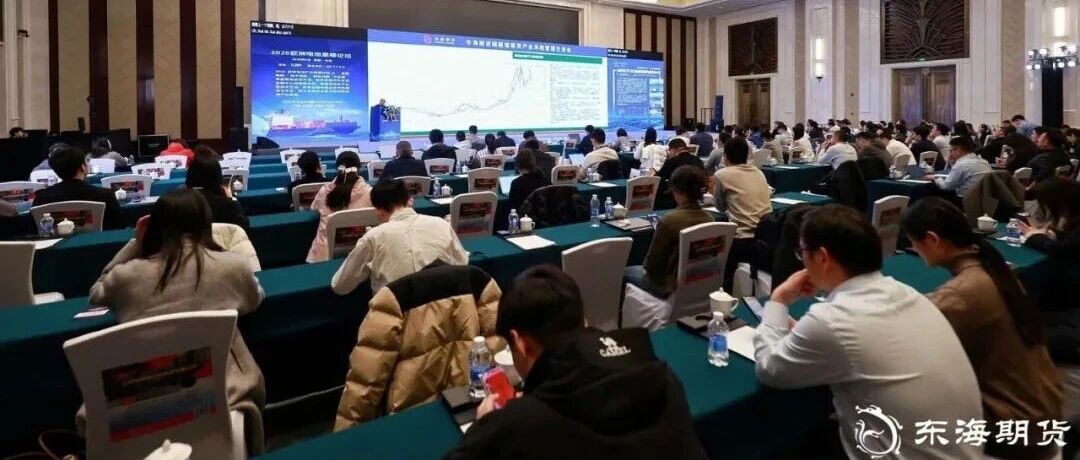
海·担当|东海期货成功举办碳酸锂期货产业风险管理交流会,助力新能源产业链稳健前行
鑫椤锂电· 2026-03-20 06:59
Core Viewpoint - The article discusses the importance of risk management in the lithium carbonate industry, emphasizing the role of futures markets as a tool for stabilizing operations amid price volatility [3][6]. Group 1: Event Overview - The "Donghai Longchenghui - Lithium Carbonate Futures Industry Risk Management Exchange Conference" was held on March 20, attracting over 200 representatives from various sectors of the lithium carbonate industry [1][3]. - The conference aimed to provide a platform for discussing new risk management strategies and enhancing the quality of development in the new energy sector [1][3]. Group 2: Industry Insights - The rapid development of the new energy industry has made lithium carbonate a critical raw material, with its price fluctuations directly impacting the stability of businesses across the supply chain [3]. - The introduction of lithium carbonate futures by the Guangxi Futures Exchange offers an essential risk management tool for companies in the industry [3]. Group 3: Expert Contributions - Several industry experts shared insights during the conference, including: - Xue Jiaming from Donghai Capital, who discussed the supply-demand balance for lithium carbonate in 2026 and the role of futures in supporting real enterprises [6][8]. - Zhang Haiyuan from Longpan Technology, who provided strategies for business operations amid significant price fluctuations [6][10]. - Mao Mao from Hangzhou Guozhu Liancheng, who analyzed the global spodumene market [6][11]. - Pan Chao from Xiamen Guomao, who projected the lithium carbonate market for 2026 and offered response strategies [6][12]. - Xu Yulin from Xinluo Information, who provided a fundamental analysis and price forecast for the year [6][14]. Group 4: Industry Participation - The conference received widespread participation from the entire lithium carbonate supply chain, including lithium resource extraction, lithium salt smelting, cathode materials, battery manufacturing, new energy vehicles, and financial investment [15]. - This broad engagement highlights the industry's increasing focus on risk management and the conference's significance within the sector [15]. Group 5: Future Commitment - Donghai Futures aims to continue enhancing its services to the industry, leveraging its expertise in risk management and financial services to support the sustainable development of the new energy sector [3][15].

光大期货股指期货日度数据跟踪-20260320
Guang Da Qi Huo· 2026-03-20 05:33
Group 1: Index Trends - On March 19th, the Shanghai Composite Index fell 1.39% to close at 4006.55 points, with a trading volume of 935.265 billion yuan. The Shenzhen Component Index fell 2.02% to close at 13901.57 points, with a trading volume of 1175.704 billion yuan [1]. - The CSI 1000 Index fell 2.31% with a trading volume of 443.807 billion yuan. The opening price was 7988.87, the closing price was 7909.23, the highest price was 8008.39, and the lowest price was 7874.26 [1]. - The CSI 500 Index fell 2.71% with a trading volume of 394.855 billion yuan. The opening price was 7975.85, the closing price was 7877.09, the highest price was 8000.43, and the lowest price was 7844.15 [1]. - The SSE 300 Index fell 1.61% with a trading volume of 547.85 billion yuan. The opening price was 4611.44, the closing price was 4583.25, the highest price was 4634.55, and the lowest price was 4570.39 [1]. - The SSE 50 Index fell 1.53% with a trading volume of 136.419 billion yuan. The opening price was 2933.58, the closing price was 2916.23, the highest price was 2942.46, and the lowest price was 2908.44 [1]. Group 2: Impact of Sector Movements on Indexes - The CSI 1000 Index dropped 187.36 points from the previous closing price. Sectors such as basic chemicals, power equipment, and non - ferrous metals significantly pulled the index down [2]. - The CSI 500 Index dropped 219.34 points from the previous closing price. Sectors like power equipment, non - ferrous metals, and electronics significantly pulled the index down [2]. - The SSE 300 Index dropped 75.08 points from the previous closing price. Sectors including electronics and non - ferrous metals significantly pulled the index down [2]. - The SSE 50 Index dropped 45.2 points from the previous closing price. Sectors such as electronics, non - bank finance, and non - ferrous metals significantly pulled the index down [2]. Group 3: Stock Index Futures Basis and Annualized Opening Costs - For IM contracts, the average daily basis for IM00 was - 7.07, IM01 was - 75.58, IM02 was - 250.28, and IM03 was - 475.35 [11]. - For IC contracts, the average daily basis for IC00 was - 9.36, IC01 was - 72.47, IC02 was - 224.49, and IC03 was - 405.4 [11]. - For IF contracts, the average daily basis for IF00 was - 2.97, IF01 was - 26.74, IF02 was - 85.73, and IF03 was - 172.32 [11]. - For IH contracts, the average daily basis for IH00 was - 0.02, IH01 was - 6.15, IH02 was - 22.16, and IH03 was - 58.55 [11].
宝城期货橡胶早报-2026-03-20-20260320
Bao Cheng Qi Huo· 2026-03-20 05:18
Group 1: Report Industry Investment Rating - No relevant content Group 2: Core Viewpoints of the Report - The short - term, medium - term, and intraday views of Shanghai rubber (RU) 2605 are "oscillation", "oscillation", and "oscillation and weakening" respectively, with a reference view of "oscillation and weakening" [1][5] - The short - term, medium - term, and intraday views of synthetic rubber (BR) 2605 are "oscillation and strengthening", "oscillation and strengthening", and "oscillation and weakening" respectively, with a reference view of "oscillation and weakening" [1][7] Group 3: Summary According to Related Catalogs Shanghai Rubber (RU) - **Core Logic**: The US has increased military pressure on Iran, escalating the US - Iran conflict and keeping international crude oil futures prices strong, which boosts domestic energy - chemical commodity futures prices. Trump's remarks have cooled geopolitical sentiment. With the new tapping season approaching, the supply of natural rubber is expected to increase. The 2605 contract of domestic Shanghai rubber futures showed an oscillating and weakening trend on Thursday night, and it is expected to maintain this trend on Friday [5] Synthetic Rubber (BR) - **Core Logic**: The US - Iran conflict has further escalated, and the Middle East geopolitical risk remains. Drone attacks and counter - attacks have occurred. Trump's warning has cooled geopolitical sentiment. The domestic synthetic rubber futures maintained an oscillating and weakening trend on Thursday night and are expected to maintain this trend on Friday [7]
贵金属期权早报-20260320
Wu Kuang Qi Huo· 2026-03-20 05:11
Report Summary 1. Report Industry Investment Rating No information provided. 2. Core Views - For silver options, the ag2606 contract closed at 17,984 yuan yesterday, down 2076 yuan or 10.34% from the previous day. The trading volume was 774,107 lots, an increase of 221,245 lots, and the open interest was 227,107 lots, an increase of 1,799 lots. The implied volatility of AG (silver options) fluctuated above the mean of 0.4588. The AG option open interest PCR was reported at 0.7805, at the 0.41% level in the past year. The pressure level of the AG option underlying is 37,600, and the support level is 15,000 [6]. - For gold options, the au2604 contract closed at 1,062 yuan yesterday, down 51.68 yuan or 4.64% from the previous day. The trading volume was 244,568 lots, an increase of 114,037 lots, and the open interest was 78,537 lots, a decrease of 7,295 lots. The implied volatility of AU (gold options) fluctuated above the mean of 0.2677. The AU option open interest PCR was reported at 0.6595, at the 25.71% level in the past year. The pressure level of the AU option underlying is 1,200, and the support level is 1,000 [17]. 3. Summary by Relevant Catalogs 3.1. Silver Options - **Futures Market Data**: The ag2606 contract of AG (silver options) had a closing price of 17,984, a decline of 2076, a decline rate of -10.34%, a trading volume of 774,107 lots, and an open interest of 227,107 lots with an increase of 1,799 lots [3]. - **Option Factor - Volume and Open Interest PCR**: The trading volume of AG (silver call options) was 218,503 lots with an increase of 46,315 lots, and the open interest was 147,211 lots with an increase of 10,742 lots. The trading volume of AG (silver put options) was 335,582 lots with an increase of 115,431 lots, and the open interest was 114,891 lots with a decrease of 2,650 lots. The trading volume PCR was 1.54 with an increase of 0.26, and the open interest PCR was 0.78 with a decrease of 0.1 [4]. - **Option Factor - Pressure and Support**: For the aa2604 contract of AG (silver options), the at - the - money strike price was 18,000, the pressure level was 37,600, the support level was 15,000, the weighted implied volatility was 89.79% with an increase of 11.83%, the annual average implied volatility was 45.88%, and HISV20 was 74.62% [5]. - **Option Strategy Suggestions**: For directional strategies, construct a bear put spread strategy to obtain directional returns, such as B_AG2604P18500, S_AG2604P17500. There is no volatility strategy [7]. 3.2. Gold Options - **Futures Market Data**: The au2604 contract of AU (gold options) had a closing price of 1,062, a decline of 51.68, a decline rate of -4.64%, a trading volume of 244,568 lots, and an open interest of 78,537 lots with a decrease of 7,295 lots [14]. - **Option Factor - Volume and Open Interest PCR**: The trading volume of AU (gold call options) was 96,785 lots with an increase of 53,259 lots, and the open interest was 65,625 lots with an increase of 4,759 lots. The trading volume of AU (gold put options) was 101,359 lots with an increase of 63,311 lots, and the open interest was 43,278 lots with a decrease of 2,288 lots. The trading volume PCR was 1.05 with an increase of 0.17, and the open interest PCR was 0.66 with a decrease of 0.09 [15]. - **Option Factor - Pressure and Support**: For the au2604 contract of AU (gold options), the pressure level was 1,200, the support level was 1,000, the weighted implied volatility was 40.54% with an increase of 8.47%, the annual average implied volatility was 26.77%, and HISV20 was 23.90% [16]. - **Option Strategy Suggestions**: There is no directional strategy. For volatility strategies, construct a short call + put option combination strategy to obtain option time - value returns, and dynamically adjust the positions to keep the position delta neutral, such as S_AU2604P1096, S_AU2604C1152 [18].