
造船

Search documents
全球数字化投资加速 8月新华出海系列指数强势上扬
Xin Hua Cai Jing· 2025-09-05 06:42
Group 1: Overall Market Performance - The Xinhua Overseas Index series showed strong performance in August 2025, with the Manufacturing Overseas Index, TMT Overseas Index, and Electric New Overseas Index rising by 33.22%, 29.94%, and 29.17% respectively [1][8][10] Group 2: Digital Investment and Technology Output - The acceleration of global digital investment has enhanced the technical output capabilities and cost advantages in sectors such as communication equipment, optical modules, engineering machinery, and passenger vehicles [1][4][15] - The rapid development of AI technology has led to a surge in computing power demand, significantly increasing the power requirements for data centers, which in turn has driven explosive growth in the AI server power market [4][13] Group 3: Industry Trends and Strategic Shifts - The merger between China Shipbuilding and China Heavy Industry marks a significant restructuring in the global shipbuilding industry, aiming to enhance international pricing power and strengthen high-end manufacturing and digital transformation [5] - The 27th Asia Pet Expo showcased the acceleration of globalization and innovation upgrades among Chinese pet enterprises, highlighting a shift from "OEM export" to "brand export" strategies [6][7] Group 4: Investment Focus and Sector Contributions - Investment preferences in August continued to favor communication equipment, with a notable shift in TMT sector funding towards more certain areas, while non-TMT sectors experienced capital withdrawal due to a lack of policy catalysts [10][21] - The upward movement of indices in August was driven by three main lines: semiconductors (AI computing power + domestic substitution), photovoltaic/battery (energy transition), and components (high-end manufacturing) [23]


利比里亚与荷兰造船巨头洽谈合作,推动渔业现代化
Shang Wu Bu Wang Zhan· 2025-09-05 05:50
Core Insights - Liberia's National Fisheries and Aquaculture Authority (NaFAA) is collaborating with the Dutch Damen Shipyards Group to enhance the country's fisheries infrastructure and develop the blue economy [1] Group 1: Strategic Initiatives - The partnership aims to construct an industrial fishing port in Monrovia and two artisanal fishing ports in Maryland and Grand Kru counties to promote fisheries transformation, improve livelihoods, and foster sustainable development [1] - Damen's regional head for Africa expressed the company's willingness to support the modernization of Liberia's fisheries beyond shipbuilding [1] Group 2: Future Collaboration - Ongoing technical consultations will be held between NaFAA and Damen to establish a comprehensive cooperation framework that includes funding and technology [1] - The ultimate goal is to assist Liberia in achieving its modernization objectives within the fisheries sector [1]

中国船舶(600150):造船利润弹性持续验证,关注集团解决剩余同业竞争进展
Shenwan Hongyuan Securities· 2025-08-31 06:16
Investment Rating - The investment rating for the company is "Buy" (maintained) [1] Core Views - The report highlights that the shipbuilding profit elasticity continues to be validated, with a focus on the group's efforts to resolve remaining industry competition [1] - The company reported a significant increase in net profit for the first half of 2025, reaching 2.9 billion yuan, a year-on-year increase of 109% [6] - The merger with China Shipbuilding Industry Corporation has been approved by the China Securities Regulatory Commission and is in the implementation stage [6] Financial Data and Profit Forecast - Total revenue for 2025 is projected to be 81.617 billion yuan, with a year-on-year growth rate of 3.9% [5] - The net profit attributable to the parent company is expected to be 7.029 billion yuan in 2025, reflecting a year-on-year growth of 94.5% [5] - The earnings per share (EPS) for 2025 is estimated at 1.57 yuan, with a projected price-to-earnings (PE) ratio of 24 [5] - The gross profit margin is expected to improve to 15.5% in 2025, up from 12.2% in 2024 [5] Business Performance - The company achieved a revenue of 38.7 billion yuan from shipbuilding and marine engineering in the first half of 2025, with a gross margin of 11.7% [6] - The company has a backlog of 333 ships with a total weight of 26.49 million DWT, amounting to 233.5 billion yuan, which is an 8% increase compared to the end of 2024 [6] - The report notes a recovery in new ship prices and order volumes, indicating a potential release of pent-up demand in the shipbuilding market [6] Merger and Capacity - Post-merger, the combined capacity of the company and China Shipbuilding Industry Corporation is expected to reach 33% of global capacity in DWT terms and 18% in CGT terms [6] - The company is focused on resolving competition issues with its subsidiaries, with commitments to divest non-core assets within specified timeframes [6]

2025年第9期:“申万宏源十大金股组合”
Shenwan Hongyuan Securities· 2025-08-29 14:13
Group 1 - The report indicates that the market is in a bullish atmosphere, with conditions for a bull market gradually being established due to cyclical improvements in fundamentals and the potential initiation of incremental capital circulation [6][14]. - The previous gold stock combination from August 1 to August 29, 2025, achieved a return of 12.33%, outperforming the Shanghai Composite Index and the CSI 300 Index by 5.23 and 2.87 percentage points, respectively [6][15]. - The report highlights a cumulative increase of 374.99% for the gold stock combination since its inception on March 28, 2017, with the A-share combination rising by 297.73% [6][15]. Group 2 - The recommended investment strategy focuses on breakthroughs in domestic technology chains and advanced manufacturing, emphasizing sectors with high global market share and the "anti-involution" trend [6][14]. - The report suggests that the "iron triangle" stocks, which include Zhuhai Guanyu, Luxi Chemical, and Tianzhun Technology, are key picks due to their strong growth prospects and market positioning [6][17]. - Other recommended stocks include Anfu Technology, Changjiu Logistics, China Shipbuilding, Zhongshan Public Utilities, Alibaba-W (Hong Kong), Greentown China (Hong Kong), and Fourth Paradigm (Hong Kong) [6][17][18]. Group 3 - Zhuhai Guanyu is noted for its high growth in consumer battery sales and technological advantages in steel shell and silicon-carbon batteries, with significant revenue and profit improvements expected [6][17][20]. - Luxi Chemical is benefiting from a recovery in market conditions and improvements in supply-demand dynamics for caprolactam and organosilicon, with ongoing project developments enhancing long-term growth potential [6][17][20]. - Tianzhun Technology is recognized as a partner of NVIDIA's Jetson Thor platform, with growth in humanoid robot controller business and deep collaborations with leading humanoid robot clients [6][17][20].


创新高!寒武纪收盘价逼近1600元,“茅台魔咒”要被打破了吗?
Sou Hu Cai Jing· 2025-08-29 03:20
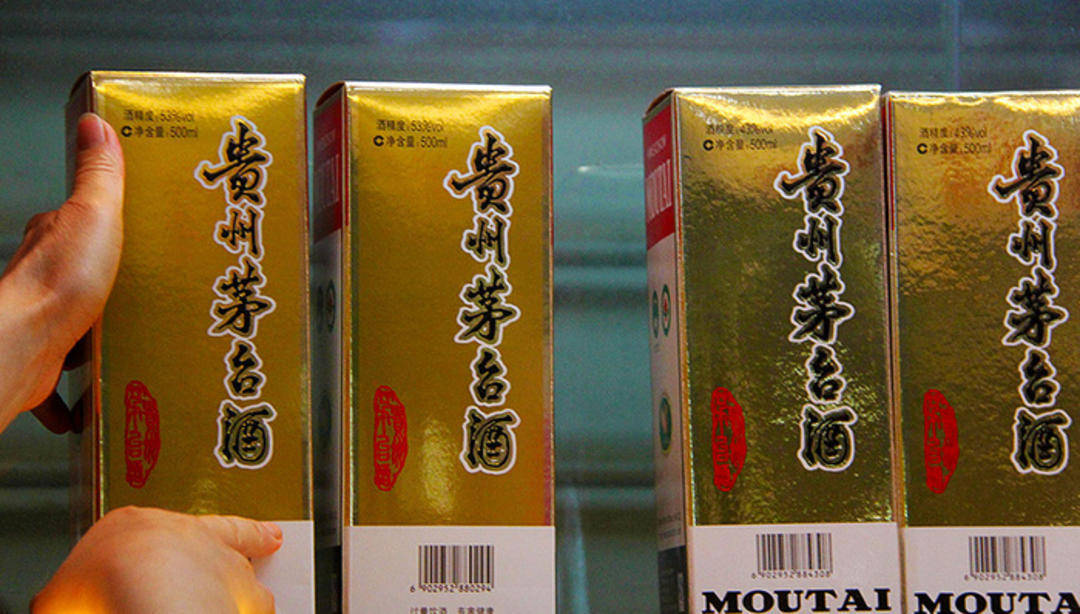
Core Viewpoint - The article discusses the phenomenon known as the "Moutai Curse," where stocks that surpass the price of Kweichow Moutai often experience significant declines thereafter, highlighting the historical performance of various companies that have faced similar fates [3][14]. Group 1: Historical Stock Performance - China Shipbuilding's stock price exceeded Kweichow Moutai in May 2007, reaching 111.62 yuan, and later peaked at over 300 yuan in October 2007, driven by a booming shipping industry [4]. - However, following the 2008 financial crisis, China Shipbuilding's net profit plummeted from 4.16 billion yuan in 2008 to 170 million yuan in 2012, resulting in a 90% drop in stock price [5]. - As of August 28, 2025, China Shipbuilding's stock price is 36.82 yuan, reflecting a long-term decline [4][5]. Group 2: Company-Specific Downfalls - Haipru's stock debuted at 148 yuan in May 2010, peaking at 188.88 yuan shortly after, but by the second year, its revenue and net profit fell by 35.26% and 48.57%, respectively, leading to a current stock price of 12.88 yuan [7][8]. - Oriental Garden's stock reached 229 yuan in 2010, but due to aggressive bidding and high debt, it faced significant losses, with a current stock price of 2.35 yuan [9][10]. - Baofeng Group's stock peaked at 327.01 yuan in May 2015 but faced severe operational issues, leading to its delisting in 2020 with a final trading price of 0.28 yuan [11][12]. - Stone Technology's stock reached 1494.99 yuan in 2021, but due to management distractions and increased competition, it has since dropped to 211.15 yuan [12][13]. Group 3: Thematic Analysis - The article emphasizes that the "Moutai Curse" serves as a cautionary tale for investors, illustrating that high valuations without sustainable profitability are often unsustainable [14]. - The historical examples of companies like China Shipbuilding, Haipru, Oriental Garden, Baofeng Group, and Stone Technology demonstrate the risks associated with high-flying stocks that fail to convert growth narratives into cash flow [14].

Associated Banc-p(ASB) - 2025 Q4 - Earnings Call Transcript
2025-08-29 00:32
Financial Data and Key Metrics Changes - The company reported a doubling of EBIT from FY 2024 to $113,400,000 for FY 2025, indicating strong business performance [7][14] - Revenue increased by 24.1% year on year, driven by new programs transitioning from design to construction [15][8] - The order book reached $13,000,000,000, securing revenue for years to come [8][6] Business Line Data and Key Metrics Changes - U.S. Shipbuilding revenue increased by 28%, primarily due to revenue from OPC, CATs, and submarine contracts [15][16] - Australasia Shipbuilding experienced a 60% growth, attributed to the appointment as the Commonwealth of Australia's sovereign shipbuilder [16][18] - U.S. Support revenue contracted by 9% due to changes in the deployment of LCS vessels [15][16] Market Data and Key Metrics Changes - The defense sector continues to dominate, accounting for 97% of the company's revenue [20] - The company is seeing a return of commercial orders post-COVID, with a ramp-up in production expected [12][13] Company Strategy and Development Direction - The strategic shipbuilding agreement positions the company as the prime contractor for surface combatant vessels in Australia, enhancing sovereign shipbuilding capabilities [25][24] - The company is focusing on capitalizing on increased defense expenditure in both the U.S. and Australia, with significant CapEx investments planned [26][27] - The company aims to leverage the AUKUS agreement for growth in submarine modules and technological capabilities [27][26] Management's Comments on Operating Environment and Future Outlook - Management expressed confidence in the outlook for both the U.S. and Australian markets, highlighting a transformational year for the company [3][28] - The company anticipates continued growth in revenue and earnings, supported by a near-record EBIT and a robust order book [26][28] - Management acknowledged the challenges in U.S. shipbuilding margins but expects improvements as contracts transition [35][34] Other Important Information - The company has a strong cash position of $583,000,000, enabling it to invest in growth projects [22][21] - The workforce is growing, with nearly 4,500 employees globally, and recruitment strategies are in place to support future growth [5][60] Q&A Session Summary Question: Outlook for 2026 and margin expectations in U.S. segments - Management indicated that while there may be some volatility in margins, they expect revenue and profitability to increase as contracts transition [35][34] Question: Details on the strategic shipbuilding agreement and revenue ramp-up - Management confirmed that they are working on the landing craft medium program and expect to finalize contracts for both medium and heavy landing crafts soon, potentially adding $5,000,000,000 to the order book [38][37] Question: Opportunities for collaboration with other prime contractors in the U.S. - Management stated that they are open to working with partners to utilize their capacity and capabilities, particularly in submarine modules and other programs [42][41] Question: Performance expectations for Australasia in FY 2026 - Management expressed optimism for steady growth in profits as new programs come online, although they do not expect to double EBIT again [50][51] Question: Update on REAs and cash flow implications - Management indicated that they expect to finalize REAs soon, which will provide a significant cash injection [72][71] Question: Government involvement and potential partners for landing crafts - Management noted that the government has a strategic interest in the company, and they are working closely with them to ensure successful project execution [81][80]

*ST松发上半年盈利达6.47亿元 造船订单已排期至2029年
Zheng Quan Shi Bao Wang· 2025-08-28 13:08
Core Viewpoint - *ST Songfa's transformation into the shipbuilding industry has led to significant performance improvements, with a remarkable increase in revenue and profit in the first half of 2025 [1][2]. Financial Performance - The company reported a revenue of 6.68 billion yuan, representing a year-on-year increase of 315.49% [1]. - Profit before tax reached 878 million yuan, showing a year-on-year growth of 16,156.55% [1]. - The net profit attributable to shareholders was 647 million yuan, marking a substantial turnaround from losses in the previous year [1]. Business Transformation - The company has shifted its main business from ceramic manufacturing to the research, production, and sales of ships and high-end equipment following the acquisition of 100% equity in Hengli Heavy Industry [2]. - Hengli Heavy Industry specializes in shipbuilding and has established a world-class manufacturing base in Dalian Changxing Island [2]. Production Capacity and Orders - Hengli Heavy Industry has a strong order backlog and new order intake, ranking among the top global manufacturers of large ocean-going vessels, with production schedules extending to 2029 [3]. - The order structure is diverse, covering bulk carriers, container ships, and oil tankers, indicating a comprehensive development strategy [3]. Future Outlook - The company anticipates a significant enhancement in profitability with the full production of Hengli Heavy Industry's investment projects and continuous optimization of order types [3]. - The budget for the "green high-end equipment manufacturing project" is set at 16.7 billion yuan, with an expected annual revenue of 14.09 billion yuan and a net profit of 1.76 billion yuan upon reaching full capacity [3]. - The company aims to leverage the strategic transformation opportunity to strengthen its technological barriers and establish itself as a benchmark in global high-end equipment manufacturing [3].

环球市场动态:反内卷对利润率的影响初步显现
citic securities· 2025-08-28 08:34
Market Overview - The Asia-Pacific stock markets showed mixed results, with the Philippines index rising by 2.1% to 6,273 points, while the A-share and Hong Kong markets experienced declines of over 1%[3][21]. - U.S. stock indices reached new highs, with the Dow Jones up 0.3% to 45,565.2 points and the S&P 500 rising 0.2% to 6,481.4 points[8][9]. Economic Indicators - From January to July, China's industrial enterprises reported total profits of CNY 40,203.5 billion, a year-on-year decrease of 1.7%, while total revenue increased by 2.3% to CNY 78.07 trillion[6]. - In July, industrial profits fell by 1.5% year-on-year, indicating that the effects of anti-involution policies on corporate profitability may take time to materialize[17]. Commodity and Currency Markets - International oil prices rose over 1% due to a decline in U.S. crude and fuel inventories, with NYMEX crude oil increasing by 1.42% to $64.15 per barrel[4][27]. - Gold prices also saw a slight increase of 0.5%, closing at $3,404.6 per ounce, amid expectations of two rate cuts by the Federal Reserve by year-end[4][27]. Corporate Performance - Nvidia's Q2 earnings exceeded expectations by 7%, with a revenue growth of 56% year-on-year, although guidance for the next quarter was slightly below market expectations[9]. - Meituan reported disappointing Q2 results, with total revenue of CNY 918 billion, a year-on-year increase of only 11.7%, and an adjusted EBITDA down 86.8% to CNY 18 billion[15]. Sector Performance - In the U.S., the energy sector led gains with a rise of 1.15%, driven by a larger-than-expected reduction in oil inventories[9]. - In Hong Kong, the Hang Seng Index fell by 1.27% to 25,201 points, with significant pressure on technology and property stocks[11].



美国财政部长:英伟达不需要政府的财政支持,不考虑入股!
Sou Hu Cai Jing· 2025-08-28 05:29
Group 1 - The U.S. government is unlikely to invest in Nvidia, as stated by Treasury Secretary Scott Bessent, who emphasized that Nvidia does not require financial support from the government at this time [2][3] - Bessent indicated that the government may consider equity interventions in industries that need restructuring, such as the shipbuilding industry, reflecting a shift in government policy towards direct equity participation to strengthen critical supply chains [3][4] - The recent acquisition of nearly 10% of Intel by the Trump administration highlights the government's focus on maintaining domestic control and competitiveness in the semiconductor industry [3][4] Group 2 - The U.S. government's exploration of diverse tools for industry support is driven by geopolitical changes and global supply chain challenges, indicating a deeper and broader intervention in the economy [4] - Although Nvidia is not currently on the government's investment list, the emphasis on restructuring specific industries suggests future interventions may be more selective and flexible [4]


英特尔之后特朗普瞄准谁?高官暗示军工、造船业,洛克希德·马丁被点名
Hua Er Jie Jian Wen· 2025-08-27 19:19
Core Viewpoint - The Trump administration is considering applying the government equity acquisition model used in the Intel deal to other key industries, including defense contractors like Lockheed Martin and shipbuilding companies [1][2][3]. Group 1: Government Equity Acquisition - The Trump administration recently acquired approximately 10% of Intel's shares for about $11 billion, funded through the CHIPS Act [2]. - Following the Intel acquisition, the administration is exploring potential investments in other critical industries, emphasizing the need for self-sufficiency in sectors like shipbuilding [2][3]. - The Secretary of the Treasury indicated that the government is not considering acquiring shares in Nvidia, stating that it does not require financial support [2]. Group 2: Defense Industry Focus - The Department of Defense is actively discussing the possibility of acquiring shares in major defense contractors, particularly Lockheed Martin, which derives 97% of its revenue from the U.S. government [3]. - The administration is reassessing how the government funds military and defense capabilities, suggesting a shift from previous funding practices [3]. Group 3: Political Reactions - There is a divide among Republican lawmakers regarding the government's acquisition of Intel shares, with some expressing opposition to government ownership of companies [6]. - Critics warn that government ownership could lead to corporate decisions being influenced more by political considerations than by business interests [6].
