
超市

Search documents
关店200家的“胖东来学徒”,交了份反面教材
商业洞察· 2025-09-03 09:35
Core Viewpoint - Yonghui Supermarket has faced significant challenges after attempting to adopt the "Fat Donglai" model, resulting in a 20.73% decline in revenue and a net loss of 241 million yuan, marking a continuation of its four-year losing streak with total losses exceeding 9.5 billion yuan [9][11][17]. Group 1 - Yonghui Supermarket's stock price surged over 250% in late 2022 after announcing its intention to learn from Fat Donglai [6]. - The company has rapidly transformed its stores, with 162 locations undergoing modifications by August 21, 2023, and a goal of 200 stores for the year [13][15]. - Despite the initial excitement and high customer traffic, the transformation has not led to improved financial performance, as the company continues to struggle with losses [28]. Group 2 - The transformation process, referred to as "Fat Reform," has been costly, with each modified store requiring an average investment of approximately 8 million yuan [40]. - Yonghui's reliance on the "Fat Donglai" brand for customer attraction has proven unsustainable, as the novelty wore off quickly and customers found no compelling reason to choose Yonghui over competitors [35]. - The company has not developed a competitive self-owned brand, which has hindered its ability to recover financially [37]. Group 3 - Employee compensation at Yonghui is significantly lower than that at Fat Donglai, with store managers earning up to 22,000 yuan compared to Fat Donglai's 78,000 yuan [38]. - The high costs associated with the transformation and the company's existing debt level of 88.73% pose significant financial risks [42]. - The cultural and operational aspects of the transformation need to align more closely with the successful practices of Fat Donglai, focusing on employee welfare and customer service [61].



8点1氪丨宇树科技将在四季度提交IPO申请;雀巢CEO因与下属恋爱被解雇;微信客服回应“去世后朋友圈是否会消失”
3 6 Ke· 2025-09-03 00:10
Group 1 - Good Products' acquisition case has entered the acceptance stage, with Wuhan Yangtze International Trade Group acquiring 29.99% of Good Products' shares [6][7] - Bawang Tea has officially entered the Philippine market, opening three stores in key business districts and selling over 23,000 cups in the first three days [8] - Nestlé's CEO was dismissed due to a romantic relationship with a subordinate, which violated the company's code of conduct [3] Group 2 - Yushun Technology plans to submit an IPO application to the Chinese stock exchange between October and December 2025, with quadruped and humanoid robots expected to account for 65% and 30% of sales in 2024, respectively [2] - Tencent responded to a lawsuit from miHoYo, stating it will comply with legal regulations regarding user data requests [6] - The fast delivery industry is experiencing a price increase in core areas, driven by a national "anti-involution" policy aimed at improving profitability [11] Group 3 - The current spot gold price has surpassed $3,500 per ounce, marking a historical high with a year-to-date increase of over 33% [11] - The U.S. stock market saw all three major indices decline, while many Chinese concept stocks experienced gains [12] - Google was ruled not to divest its Chrome and Android systems in an antitrust case, but must share data with competitors [13] Group 4 - The Chinese Ministry of Foreign Affairs announced a visa-free policy for Russian passport holders from September 15, 2025, to September 14, 2026 [5] - WeChat's customer service clarified that inactive accounts may be reclaimed by the system after one year of inactivity, leading to the loss of all associated data [4] - The company "Sina" announced the resignation of its CEO due to an investigation into the purchase of illegal health products [16] Group 5 - Companies such as Jiadou Technology and XGIMI Technology are planning to issue H-shares and list on the Hong Kong Stock Exchange to enhance competitiveness and international presence [17][19] - "Si Ai Ran Medical" completed a financing round exceeding 100 million yuan to advance its ophthalmic medical device product line [22] - "Lai Mu Technology" secured several million yuan in Series A financing to enhance its smart lawnmower product development and market expansion [24]





京城“胖东来”的蜕变之路
Sou Hu Cai Jing· 2025-09-02 16:30
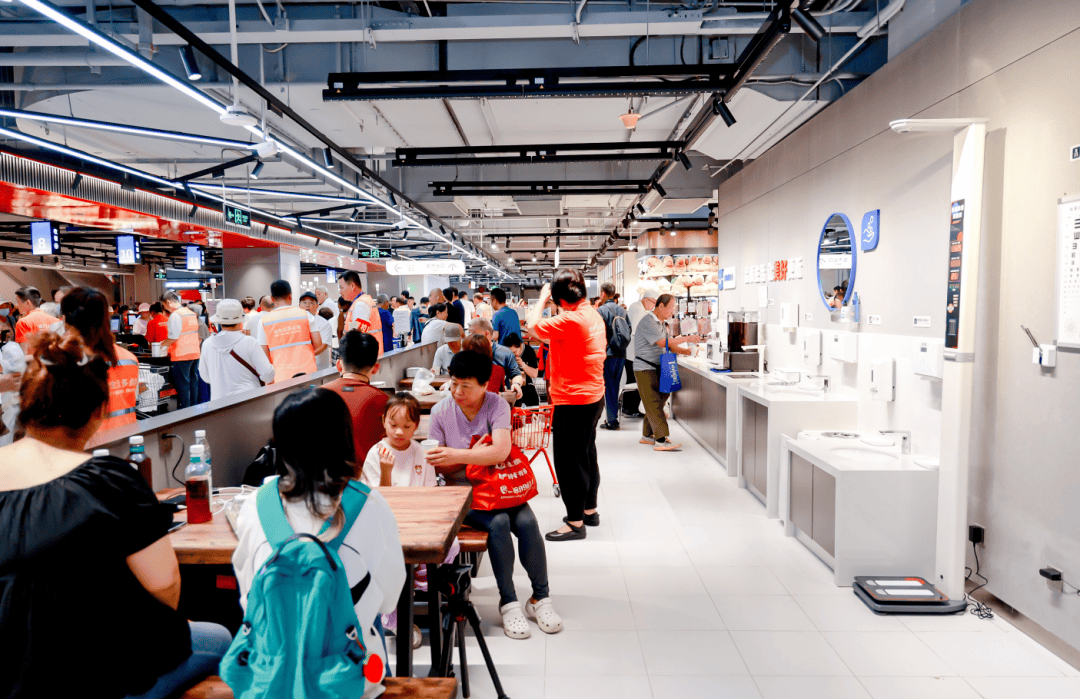
Core Insights - The article discusses the trend of supermarkets in Beijing adopting the "learning from Pang Donglai" model, leading to significant transformations in their operations and customer experiences [3][5]. Group 1: Supermarket Transformations - Several supermarkets, including Yonghui and Wumart, have undergone renovations to align their product offerings and services with the successful model of Pang Donglai [4][9]. - After renovations, Wumart's new store achieved a product structure that closely resembles 80% of Pang Donglai's offerings, while Yonghui's Xilongduo store removed 79% of its original products to reach over 90% alignment with Pang Donglai's structure [5][7]. Group 2: Product and Quality Enhancements - The renovated supermarkets have expanded their product variety while enhancing quality control measures, such as implementing "bright kitchen" practices for transparency in food preparation [9]. - Yonghui's Xilongduo store has strict freshness management policies, offering discounts on freshly cut fruits based on their age, and removing items that exceed freshness limits [9][10]. Group 3: Service Improvements - The renovations have focused on improving the comfort of shopping spaces, with wider aisles and the introduction of multi-functional service areas, including self-service tea machines and emergency medical kits [12][14]. - Some stores have added pet storage services, enhancing the overall shopping experience for customers [15]. Group 4: Performance Outcomes - Post-renovation, the "Pang Yonghui" and "Pang Wumart" stores have reported significant increases in daily sales and customer traffic, with some stores experiencing sales growth of 50% to 300% compared to pre-renovation levels [17][19]. - Yonghui's Xilongduo store achieved nearly three times its pre-renovation daily sales, with a customer traffic increase of over 65% [19]. Group 5: Policy Support - The transformation of supermarkets is supported by government policies that encourage the upgrade of chain stores, providing financial assistance for renovations and digital upgrades [21].
供应链差异化突围:Olé精品超市的高端业态进阶之路
Sou Hu Cai Jing· 2025-09-02 15:17
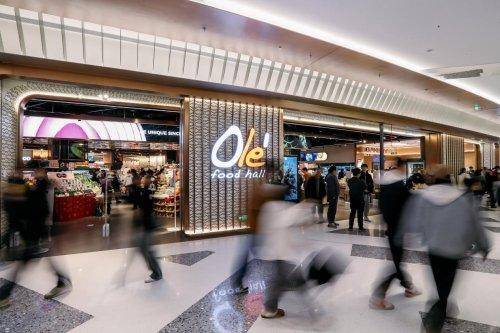
Core Insights - The article highlights the strategic evolution of Olé, a high-end supermarket brand under China Resources, as it prepares for its 20th anniversary in 2024, focusing on three product lines: Olé Lifestyle, Olé Food Hall, and Olé Supermarket [2][3] - The shift in consumer expectations from price competition to quality experience is emphasized, with a need for agile supply chains becoming a core competitive advantage for retail businesses [2][7] Product Line Matrix and Supply Chain Challenges - Olé's three product lines are designed to cater to different consumer needs, with Olé Lifestyle targeting premium experiences in first-tier cities, Olé Food Hall focusing on health and convenience, and Olé Supermarket providing quality ready-to-eat meals [3][4] - The expansion strategy includes opening new stores in key regions such as Nanjing, Hohhot, and Zhengzhou by mid-2025, indicating a focus on high-line cities and landmark projects [3][4] Supply Chain Strategy - Olé's supply chain strategy is characterized by a "global + local" approach, requiring capabilities in global sourcing, national coordination, and local integration to meet diverse consumer demands [4][8] - The company has established over 10 high-standard fresh produce bases across China, enhancing its short-chain system from production to retail [9] Own Brand Development and Green Supply Chain - Olé is actively developing its private label products, with over 500 items launched, focusing on health and quality, particularly through the Original series [16] - The company is also committed to a green supply chain, with over 2,000 eco-friendly products available, responding to the increasing consumer demand for sustainable and organic options [17][20] Digital Transformation and Organizational Efficiency - Olé is enhancing its supply chain efficiency through digital upgrades, including a traceability system for fresh products, which improves food safety and inventory management [20] - The organizational structure is being optimized to support a unified supply chain system, allowing for rapid decision-making and execution in response to market demands [22][24] Industry Perspective - Olé's approach illustrates a broader trend in the retail industry, where physical stores are evolving into experiential spaces rather than mere sales points, emphasizing the importance of supply chain strength in delivering quality lifestyle experiences [23][24]

家家悦(603708):Q2经营改善,门店提质增效
Shenwan Hongyuan Securities· 2025-09-02 14:54
Investment Rating - The report maintains a "Buy" rating for the company [1] Core Insights - The company reported its 2025 semi-annual results, which met expectations. In Q2 2025, it achieved operating revenue of 4.066 billion yuan, a year-on-year decrease of 2.57%, while the net profit attributable to the parent company was 41.021 million yuan, an increase of 82.56% year-on-year [4] - For the first half of 2025, the company recorded operating revenue of 9.007 billion yuan, down 3.79% year-on-year, and a net profit attributable to the parent company of 183 million yuan, up 7.82% year-on-year [4] Financial Data and Profit Forecast - The company’s total revenue for 2025 is estimated at 18.601 billion yuan, with a year-on-year growth rate of 1.9% [5] - The net profit attributable to the parent company for 2025 is projected to be 201 million yuan, reflecting a significant year-on-year increase of 52.2% [5] - The earnings per share (EPS) for 2025 is expected to be 0.31 yuan [5] - The company’s gross margin is forecasted to be 23.6% for 2025 [5] Operational Highlights - The company opened 29 new stores in the first half of 2025, including 16 direct-operated and 13 franchised stores, while closing underperforming locations [7] - As of Q2 2025, the total number of stores reached 1,084, with 928 direct-operated and 156 franchised stores [7] - Online sales for the first half of 2025 amounted to 630 million yuan, representing a year-on-year growth of 23% [7] - The company has focused on enhancing store quality and customer experience, completing upgrades for 30 stores [7] Profitability Metrics - The gross margin for direct-operated stores in H1 2025 was 20.74% for comprehensive supermarkets, 19.32% for community fresh food supermarkets, and 19.71% for rural supermarkets, showing improvements compared to the previous year [7] - The net profit margin for Q2 2025 was 1.01%, an increase of 0.47 percentage points year-on-year [7]

盒马NB升级为“超盒算NB”,如何做到长期稳定“好货不贵”?
Sou Hu Cai Jing· 2025-09-02 10:02
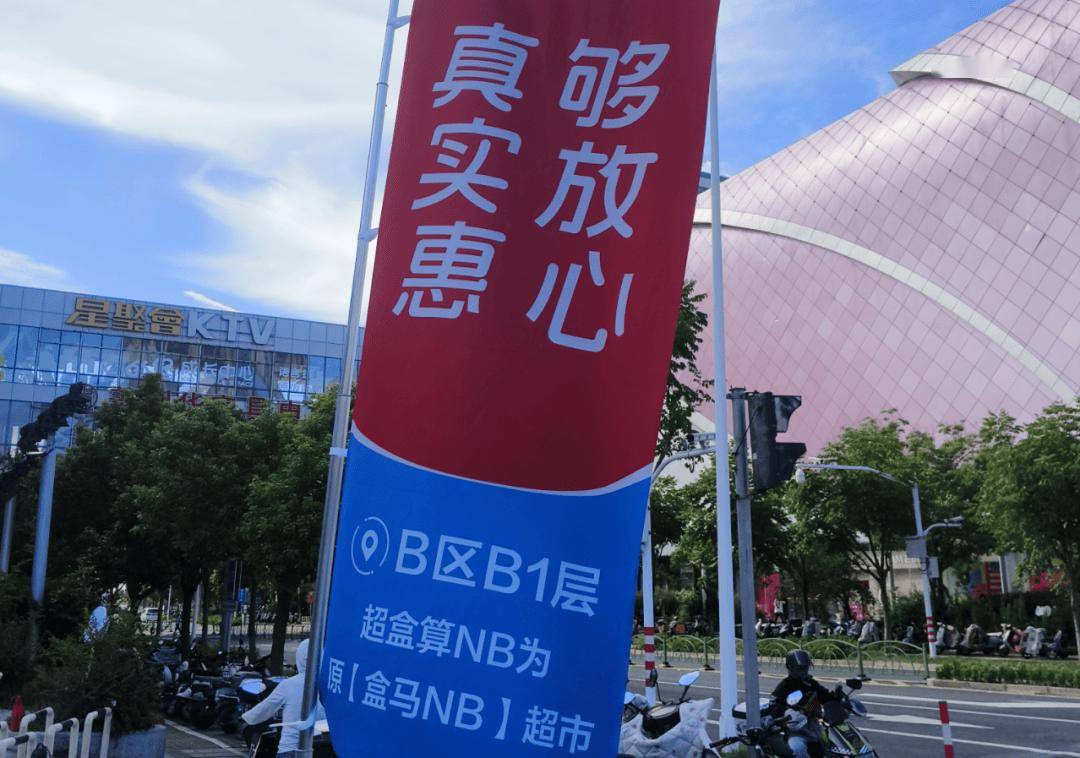
据上述盒马人士透露,目前超盒算NB(含正在陆续更名中的盒马NB门店)在华东市场累计已布局近300家门店,其中仅上海市场便多达160多家,实现了 高密度覆盖。而在2025年初由上海走向华东市场后,仅半年时间门店数量翻番,主要集中在华东核心城市市区和郊区。 横向对比,如单计算超盒算NB的销售体量,大致位于CCFA统计的2024年中国连锁百强中间位置,而排名靠后位置的绝大多数企业发展年限远超超盒算 NB,多数为发展十余年以上的企业。而成立于2022年的超盒算NB,发展至今仅3年左右时间。 短短3年时间开店300家,是什么支撑着超盒算NB实现如此迅猛的发展?此次品牌升级,是不是意味着超盒算NB模式跑通,开始进入批量复制的快速发展 阶段?而又是什么,让它能在短时间内实现独立"打拼"? 通过对其新开的上海青浦万达茂店的实地走访,以及与多位采购的深入交流,龙商网&超市周刊认为背后核心还在于其商品端体现出来的丰富、优质与低 价,同时起到一定引领作用。尽管定位服务于社区,门店面积和单品数有限,但超盒算NB不仅实现了涵盖生鲜的基础品类全覆盖,还通过消费洞察与数 据分析在用户需求旺盛的品类上做深度挖掘,尤其在烘焙、乳饮、休食等板块 ...
会员制退潮,硬折扣却上岸了?
Hu Xiu· 2025-09-02 00:00
Core Insights - The article discusses the shift in consumer behavior from "paying to enter" to "saving upon entry," indicating a growing skepticism towards traditional membership models in retail [1] - Hema, once expected to become "China's Sam's Club," has announced the closure of all its membership stores, highlighting a significant change in the retail landscape [1] - The rise of hard discount supermarkets is noted as a response to the decline of membership-based supermarkets, suggesting a transformation in retail strategies [1] Company Analysis - Hema's membership store closures reflect a broader trend in the retail industry, where consumer preferences are shifting away from membership fees towards immediate savings [1] - The expansion of Hema's hard discount formats, such as Hema Fresh and Hema NB community stores, indicates a strategic pivot to meet changing consumer demands [1] Industry Trends - The decline of membership-based supermarkets is contrasted with the rapid growth of hard discount supermarkets, suggesting a significant shift in market dynamics [1] - The article implies that the retail sector is undergoing a transformation, with hard discount models gaining traction as consumers seek more value [1]
德国中产家庭的困窘,让我震惊
虎嗅APP· 2025-09-01 10:12
Core Viewpoint - The article highlights the rising cost of living in Germany, illustrating how even middle-class families are struggling to adjust their spending habits due to inflation and economic challenges [6][40]. Group 1: Public Transport Costs - The cost of a single bus ticket from a small town to Munich is 10.2 euros (approximately 85 RMB), which is perceived as excessively high for a 35-minute journey [10][12]. - The author notes that commuting costs can exceed 100 RMB for a round trip, leading to concerns about affordability for daily work [13][12]. - A bus driver empathizes with the high fare and offers a reduced fare option, reflecting a sense of community support among ordinary people facing financial difficulties [19][18]. Group 2: Changes in Consumer Behavior - Conversations with neighbors reveal a shift in shopping habits, with families now opting for discount supermarkets like ALDI due to rising prices [22][26]. - A middle-class family that previously preferred premium brands is now calculating costs more carefully, switching to cheaper alternatives for everyday items [27][28]. - The article emphasizes the stark contrast in consumer behavior, where even middle-class households are now price-sensitive and reconsidering their purchasing decisions [26][28]. Group 3: Personal Financial Struggles - A 75-year-old woman faces financial difficulties after her partner leaves her, highlighting the challenges of managing a mortgage and living expenses on a single retirement income [36][39]. - The woman’s situation illustrates the broader issue of financial insecurity among older adults in Germany, who may not have sufficient savings to cope with unexpected life changes [39][38]. - The article discusses how economic downturns and rising living costs have led to increased financial strain on individuals and families, even those who were previously stable [40][41].

“胖东来超市”出品一款燕麦脆被指无生产日期 售卖超市:已下架
Xin Jing Bao· 2025-09-01 07:36
Group 1 - A consumer reported that a food product purchased at Yonghui Supermarket in Zhengzhou, Henan, lacked a production date [1] - The product in question was an oatmeal crisp with branding from "Pang Donglai Supermarket" and "Donglai Quality," indicating it was commissioned by Xuchang Pang Donglai Supermarket Co., Ltd [1] - Yonghui Supermarket has removed the product from shelves and is conducting further investigations [1] Group 2 - The incident highlights a violation of the Food Safety Law of the People's Republic of China, which mandates that pre-packaged foods must display production dates and other legal information [1]
步步高涨2.19%,成交额15.53亿元,主力资金净流出3801.05万元
Xin Lang Cai Jing· 2025-09-01 06:25
Group 1 - The core stock price of Bubugao increased by 2.19% on September 1, reaching 6.06 yuan per share, with a total market capitalization of 16.294 billion yuan [1] - Year-to-date, Bubugao's stock price has risen by 53.42%, with a 21.44% increase over the last five trading days and a 30.89% increase over the last 20 days [2] - As of June 30, 2025, Bubugao's revenue was 2.133 billion yuan, representing a year-on-year growth of 24.39%, while net profit attributable to shareholders was 201 million yuan, up 357.71% year-on-year [2] Group 2 - Bubugao's main business revenue composition includes supermarkets (64.34%), other (27.44%), department stores (6.01%), and logistics and advertising (2.21%) [2] - The company has not distributed any dividends in the last three years, with a total payout of 1.677 billion yuan since its A-share listing [3] - As of June 30, 2025, the number of shareholders increased by 96.50% to 88,500, while the average circulating shares per person decreased by 49.11% to 17,105 shares [2]
