
农产品

Search documents
福建省政协委员郑泽新:推动福建省农产品登陆交易场所 以金融赋能农业产业高质量发展
Zhong Guo Jing Ying Bao· 2026-02-02 09:48
Core Viewpoint - The article emphasizes the importance of financial development in China, advocating for a financial system that serves the real economy and supports agricultural growth in Fujian Province, aligning with President Xi Jinping's vision for a strong financial nation [1][7]. Group 1: Financial Development Strategy - Financial work should focus on serving the real economy and deepen supply-side structural reforms in finance, including promoting inclusive finance [1]. - The article highlights the need for a modern financial system tailored to China's unique characteristics, which includes enhancing financial services for agriculture [1]. Group 2: Agricultural Growth in Fujian - Fujian Province is positioned as a key player in agricultural cooperation, with significant growth projected in major agricultural products by 2025, including a 1.3% increase in grain and a 4.4% increase in aquatic products [1]. - The agricultural industry is identified as a crucial support for the real economy and a core engine for rural revitalization in Fujian [1]. Group 3: Recommendations for Financial Empowerment - Suggestions include expanding trading venues for Fujian's unique agricultural products and leveraging financial tools to facilitate industry upgrades, addressing challenges like financing difficulties and price volatility [2][3]. - A comprehensive financial service system should be established, utilizing successful models like "insurance + futures" to enhance risk management across various agricultural sectors [3]. Group 4: Standardization and Infrastructure - The establishment of a standardized system for agricultural products is recommended to improve quality and market recognition, with a focus on creating demonstration bases for over 50 products [4]. - Infrastructure improvements are necessary to enhance accessibility to financial services, including upgrading existing trading markets and developing a digital platform for agricultural transactions [5][6]. Group 5: Policy Coordination and Ecosystem Development - A collaborative mechanism involving government, trading venues, financial institutions, and agricultural operators is essential for fostering a healthy development ecosystem [6]. - Financial incentives, such as fee reductions and increased insurance subsidies, are proposed to encourage participation in trading activities and enhance the financial literacy of agricultural stakeholders [6]. Group 6: Conclusion on Financial Empowerment - The push for Fujian's agricultural products to enter trading venues is seen as a local practice of China's financial development strategy, crucial for rural revitalization and cross-strait integration [7].

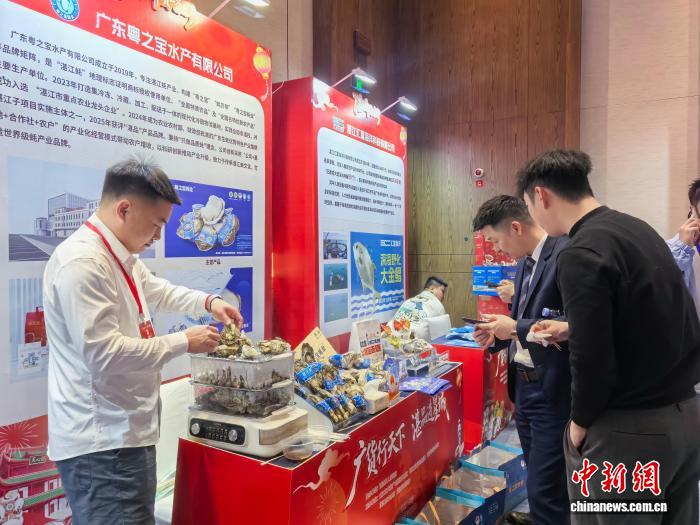
湛江好物抢“鲜”长沙 粤湘共拓消费新通道
Zhong Guo Xin Wen Wang· 2026-02-02 09:25
Core Viewpoint - The event "Guang Goods Go Global, Zhan Products Enter Star City" aims to enhance cooperation between Guangdong's Zhanjiang and Hunan's Changsha, promoting Zhanjiang's quality products and coastal culture to the Changsha market [1][2]. Group 1: Event Overview - The event took place on February 2 in Changsha, showcasing various Zhanjiang products such as golden pomfret, shrimp, Zhanjiang chicken, volcanic sweet potatoes, and small appliances [1][2][3]. - The "Zhan Products Fresh Corridor" attracted large crowds, with local residents enjoying the unique flavors of Zhanjiang's agricultural products, receiving positive feedback for their taste [2]. Group 2: Activities and Initiatives - The event included cultural tourism promotion, cooperation signing, and chef demonstrations, facilitating a platform for agricultural, fishery, and food industry representatives from both regions to engage in production and sales agreements [4]. - The event also featured a cultural exchange through sports, with football associations from Zhanjiang and Changsha exchanging jerseys and footballs to deepen cultural ties [4]. Group 3: Government Support and Future Prospects - Officials from both cities expressed their commitment to fostering economic and cultural exchanges, with Changsha's Vice Mayor welcoming Zhanjiang entrepreneurs to tap into the local consumer market [4]. - Zhanjiang's Vice Mayor emphasized the importance of this event as a catalyst for mutual benefits and a prosperous future through collaborative efforts [4].

“红超”盛宴燃动粤湘 兰香广货激活消费新动能
Nan Fang Ri Bao Wang Luo Ban· 2026-02-02 09:17
Core Viewpoint - The inaugural "Yingdong Cup" football league in the "Red Triangle" region of Guangdong, Hunan, and Jiangxi successfully integrated sports with local commerce and tourism, enhancing regional collaboration and consumer engagement [1][2] Group 1: Event Highlights - The match between Shaoguan and Chenzhou ended with a score of 2-1, attracting over 20,000 spectators, including more than 8,000 fans from Chenzhou [1] - The event featured cultural performances such as dragon dances and local rap, creating a vibrant atmosphere and promoting local traditions [1] - During halftime, fans from both regions sang together, showcasing the event as a platform for cross-regional interaction [1] Group 2: Economic Impact - Shaoguan implemented several initiatives to maximize the event's economic impact, including fan trains, shuttle buses, and free parking, enhancing the overall spectator experience [1] - The "One Ticket, Explore Shaoguan" initiative allowed ticket holders to visit local attractions for free, promoting the "ticket root economy" [1] - The New Year goods festival featured 170 booths, with 28 dedicated to orchids, attracting significant consumer interest and driving sales of local products [2] Group 3: Regional Collaboration - The event and festival highlighted the synergy between sports, culture, and commerce, aiming to convert event traffic into economic growth [2] - Local products, including specialty mushrooms and citrus fruits, were showcased, with promotional offers boosting sales and enhancing the visibility of regional goods [2] - The collaboration demonstrated the potential for the "Red Triangle" region to leverage sports events for broader economic development and market expansion [2]
“广货行天下·中山百货进上海”活动启幕 两地签约逾百项目 总金额超60亿元
Nan Fang Ri Bao Wang Luo Ban· 2026-02-02 09:17
Core Insights - The "Guanghuo Goes Global: Zhongshan Department Store Enters Shanghai" event showcases Zhongshan's manufacturing achievements and urban development in the Yangtze River Delta region [1] - The event features six thematic exhibition areas with nearly 300 Zhongshan enterprises presenting over 800 unique products, utilizing a dual venue and multi-platform sales model [1][2] - The event resulted in significant sales, with Zhongshan Anboer Electric achieving over 300,000 yuan in sales within half a day, and various agricultural products selling out quickly [2][3] Group 1: Sales Performance - Zhongshan Anboer Electric's sales exceeded 300,000 yuan, with over 3,000 products sold on the first day [2] - Agricultural products, including traditional almond cakes and red guava, experienced rapid sales, with many items selling out before the event concluded [2] - The online sales conversion rate for Anboer Electric improved by over 100% due to the event's promotional support [3] Group 2: Economic Cooperation - The event facilitated over 100 cooperative agreements between Zhongshan and Shanghai enterprises, totaling over 6 billion yuan, with nearly half attributed to product sales [4] - Key agreements included over 55 million yuan in lighting product sales between major companies and Shanghai distributors, highlighting the competitive strength of Zhongshan's lighting industry [4] - The event promoted collaboration beyond product sales, focusing on brand building, channel sharing, and technological cooperation [4][5] Group 3: Industry Development - Zhongshan has evolved into a manufacturing hub with multiple billion-dollar industry clusters, including lighting, hardware, and smart home appliances [6] - The event reflects a historical continuity of Zhongshan's commercial influence in Shanghai, dating back to the early 20th century [6][7] - The transition from "Zhongshan Manufacturing" to "Zhongshan Intelligent Manufacturing" and "Zhongshan Creation" is accelerating, emphasizing a complete industrial chain [6]
粕类周报:南美因素扰动,关注巴西卖压-20260202
Guo Mao Qi Huo· 2026-02-02 08:53
Report Industry Investment Rating - The investment view of the report is "oscillating weakly" [3] Core View of the Report - The supply of Brazilian soybeans is sufficient, and the congestion in logistics is expected to shift the selling pressure of Brazilian discounts. The domestic purchase and shipping profit is at a high level. The unilateral short - term rebound is expected to be limited, and it will maintain an oscillating and weak trend later. The domestic supply - demand in the first quarter is expected to be loose, the spot basis is expected to weaken, and M3 - M5 is biased towards reverse arbitrage [3] Summary According to Relevant Catalogs 1. Main Views and Strategy Overview Supply - Brazilian soybeans are in the harvesting period. As of January 24, the harvest progress of Brazilian soybeans in the 25/26 season was 6.6%, faster than the same period last year. However, there is a shipping delay due to a shortage of trucks. The pre - sale progress of new crops is about 31%, slower than the same period last year. The USDA estimates the Brazilian soybean output in the 25/26 season to reach 178 million tons, and the expected discount will face selling pressure [3] - Recently, the soybean - producing areas in Argentina have been dry, and the crop quality rate has declined. As of January 21, the proportion of good - rated soybean crops in Argentina in the 2025/26 season was 53%. There is an expectation of rainfall recovery in the next two weeks [3] - According to domestic purchase and shipping situations, the expected arrival volume in February is 4.84 million tons, and in March is 4.7 million tons. The global rapeseed output in 2025/26 is expected to increase, and attention should be paid to the actual implementation of China - Canada trade policies [3] Demand - Recently, the feed demand for soybean meal is expected to decline seasonally. The self - breeding and self - raising pig farming profit has turned positive, the pig inventory is at a high level, and the capacity reduction is not obvious. Under the expectation of capacity adjustment and policy control, the feed demand in the far - month is expected to shrink [3] - The pre - festival stocking of soybean meal is over, the far - month trading volume has increased, and the pick - up performance is good. The trading and pick - up performance of rapeseed meal downstream is average [3] Inventory - The domestic soybean and soybean meal inventories are seasonally decreasing, but are still at a high level. The inventory days of soybean meal in feed enterprises have increased, and the domestic rapeseed meal inventory is being depleted [3] Basis/Spread - The basis is neutral [3] Profit - The purchase and crushing profit of new domestic soybean crops is good, and the crushing profit of Canadian rapeseed is also good [3] Valuation - From the perspective of crushing profit, the soybean meal futures price is at a relatively high valuation; from the perspective of absolute price, it is at a relatively low valuation [3] Investment View - The investment view is "oscillating weakly". The domestic supply - demand in the first quarter is expected to be loose, the spot basis is expected to weaken, and M3 - M5 is biased towards reverse arbitrage [3] Trading Strategy - Unilateral: Oscillating weakly; Arbitrage: M3 - M5 reverse arbitrage. Attention should be paid to policies and weather [3] 2. Fundamental Data on Supply and Demand of Meal Products Inventory - Consumption Ratio - In January, the inventory - consumption ratios of US soybeans and global soybeans in the 25/26 season were raised [27] - In January, the global rapeseed inventory - consumption ratio was lowered [33] Production and Sales - The domestic soybean and soybean meal inventories are at a high level, and the inventory of feed enterprises has increased [71] - The US soybean export sales progress is slow [51] - The Brazilian soybean harvest rate is presented in the report [58] Price and Profit - The US soybean domestic crushing profit has increased [43] - The Canadian rapeseed CFR price and the import crushing profit are presented in the report [63] Other Data - Data such as the soybean CNF premium, the import soybean futures margin, the US dollar - Brazilian real exchange rate, and the import volume of soybeans, rapeseed, and rapeseed meal in different months are presented in the report [60][65][67] - Data on the opening rate, crushing volume, trading volume, pick - up volume, and apparent consumption of major domestic oil mills are presented in the report [79][82][83] - Data on the inventory of domestic imported rapeseed and rapeseed meal in major regions, the trading volume and pick - up volume of oil - mill rapeseed meal are presented in the report [86][94] - The cost - performance of soybean meal has declined [97] - Data on the feed monthly output, pig farming profit, pig price, chicken farming profit, egg - laying hen farming profit, etc. are presented in the report [100][102][110]
节前上冲动力不足,盘面震荡回调
Guo Mao Qi Huo· 2026-02-02 07:59
节前上冲动力不足,盘面震荡回调 国贸期货 农产品研究中心 2026-02-02 国贸期货研究院 农产品研究中心:黄向岚 从业资格证号:F03110419 投资咨询证号:Z0021658 本报告非期货交易咨询业务项下服务,其中的观点和信息仅供参考,不构成任何投资建议;期市有风险,投资需谨慎 投资咨询业务资格:证监许可【2012】31号 【玉米周报】 02 PART TWO 期货及现货行情回顾 行情回顾:基差走强 玉米主力合约基差走势 -400 -200 0 200 400 03/21 04/21 05/22 06/22 07/23 08/23 09/23 10/24 11/24 12/25 01/25 02/25 2021/22 2022/23 2023/24 2024/25 2025/26 01 PART ONE 主要观点及策略概述 玉米:节前上冲动力不足,盘面震荡回调 | 影响因素 | 驱动 | 主要逻辑 | | --- | --- | --- | | 供给 | 中性 | (1)目前东北基层售粮进度已达六成,同比偏快,春节前后或有一定卖压,但今年粮质偏干,中下游补库需求支撑下,卖压体现预期有限;(2)25/ ...
出口高频维持景气——每周经济观察第57期
一瑜中的· 2026-02-02 07:13
Group 1: Economic Indicators - The Huachuang Macro WEI index has rebounded to 10.75% as of January 25, 2026, up 2.60% from January 11, 2026 [9] - The land premium rate has increased to 3.6% as of January 25, 2026, with a four-week average of 1.7% [4][13] - Container throughput at ports has shown a year-on-year increase of 7.7% as of January 26, 2026, despite a week-on-week decrease of 4.4% [4][22] Group 2: Real Estate and Construction - The sales of commercial residential properties remain below last year's Lunar New Year levels, with a year-on-year decrease of 20% in the week ending January 31, 2026 [4][13] - The construction industry shows weak performance, with the operating rate lower than last year's Lunar New Year period [4][20] Group 3: Trade and Prices - Agricultural products and oil prices have risen, with egg prices increasing by 3.1% and crude oil prices reaching $65.2 per barrel, up 6.8% [4][36] - The Baltic Dry Index (BDI) has surged by 21.9%, indicating a significant increase in shipping costs [37] Group 4: Financial Markets - The stock-bond Sharpe ratio difference remains high at 3.91, indicating better relative value in stocks compared to bonds [11] - The DR007 rate has slightly increased to 1.5926% as of January 30, 2026, reflecting changes in liquidity conditions [45]

美联储暂停降息,国内PMI指数小幅回落
Guo Mao Qi Huo· 2026-02-02 06:54
1. Report Industry Investment Rating - No information provided in the report 2. Core Viewpoints of the Report - This week, domestic commodities in China first rose and then fell. Industrial products slightly declined after the rise, while agricultural products slightly increased. At the beginning of the week, supported by multiple positive factors, precious metals and non - ferrous metals rose significantly, driving the collective rise of commodities. However, with the confirmation of the nominee for the Fed Chair (the final candidate is more hawkish than expected), the market adjusted significantly, with precious metals crashing and non - ferrous metals falling sharply [3]. - The Fed suspended rate cuts as scheduled on January 28, maintaining the federal funds rate in the 3.50% - 3.75% range. The market expects a more than 60% probability of two 25 - basis - point rate cuts by the end of 2026. The new Fed Chair nominee may affect future rate - cut expectations. Trump nominated Kevin Warsh as the next Fed Chair, whose "hawkish" background may support the US dollar and put pressure on stocks, bonds, and precious metals [4]. - Japan's Prime Minister warned against currency speculation, and the yen continued to rise. The market speculated about US - Japan joint intervention in the foreign exchange market, and the Japanese bond market also fluctuated [4]. - In January, China's manufacturing and non - manufacturing PMIs both declined, and economic activities slowed down compared with the previous month. However, production remained in expansion, and positive demand - side policies provided a foundation for the economy in the first quarter. In 2025, the total profit of industrial enterprises above a designated size increased by 0.6% year - on - year, reversing the three - year decline. The 2026 tax reform aims to balance the central - local fiscal relationship and optimize the tax structure, which may relieve local debt risks [5]. - Commodity volatility is rising, and the strength of different sectors may change. The confirmation of the Fed Chair nominee may lead to a rebound in the US dollar index, suppressing precious metals and non - ferrous metals. China's policies to expand domestic demand may benefit some commodities, and geopolitical and weather factors may support energy prices [6]. 3. Summary by Relevant Catalogs PART ONE: Main Views - **Market Performance**: This week, domestic commodities first rose and then fell. Industrial products slightly declined, and agricultural products slightly increased. The market adjusted after the confirmation of the Fed Chair nominee [3]. - **Overseas Factors**: The Fed suspended rate cuts, and the market expects rate cuts by the end of 2026. Trump nominated Kevin Warsh as the next Fed Chair, and Japan's currency and bond markets fluctuated [4]. - **Domestic Factors**: In January, China's manufacturing and non - manufacturing PMIs declined. In 2025, industrial profits increased, and the 2026 tax reform may relieve local debt risks [5]. - **Commodity Views**: Commodity volatility is rising, and sector strength may change due to factors such as the Fed Chair nominee, China's policies, and geopolitical and weather factors [6] PART TWO: Overseas Situation Analysis - **US Fed Policy**: The Fed suspended rate cuts on January 28, maintaining the federal funds rate in the 3.50% - 3.75% range. The market expects a more than 60% probability of two 25 - basis - point rate cuts by the end of 2026 [4]. - **Nominee for Fed Chair**: Trump nominated Kevin Warsh as the next Fed Chair. Warsh has a "hawkish" background, and his policies may support the US dollar and put pressure on stocks, bonds, and precious metals [4]. - **Japan's Situation**: Japan's Prime Minister warned against currency speculation, and the yen continued to rise. The market speculated about US - Japan joint intervention in the foreign exchange market, and the Japanese bond market also fluctuated [4] PART THREE: Domestic Situation Analysis - **PMI Data**: In January, China's manufacturing PMI was 49.3%, a 0.8 - percentage - point decrease from the previous month, and the non - manufacturing PMI was 49.4%, also a 0.8 - percentage - point decrease. Economic activities slowed down, but production remained in expansion [5][26]. - **Industrial Profits**: In 2025, the total profit of industrial enterprises above a designated size was 73982 billion yuan, a 0.6% year - on - year increase, reversing the three - year decline [5][29]. - **Tax Reform**: The 2026 tax reform aims to balance the central - local fiscal relationship and optimize the tax structure, which may relieve local debt risks [5] PART FOUR: High - Frequency Data Tracking - **Industrial开工率**: The report shows the开工率 data of the polyester industry chain and the blast furnace开工率 in China, but specific trends and analyses are not detailed in the summary [36]. - **Commodity Prices**: The report shows the price data of fruits, agricultural products, and pork, but specific trends and analyses are not detailed in the summary [49]
全国农产品批发市场猪肉平均价格为18.44元/公斤
Xin Hua Cai Jing· 2026-02-02 06:50
据农业农村部监测,截至2月2日14:00时,全国农产品批发市场猪肉平均价格为18.44元/公斤,较上周五 下降0.9%;鸡蛋平均价格为8.69元/公斤,较上周五上升0.8%。 (文章来源:新华财经) ...
蛋白数据日报-20260202
Guo Mao Qi Huo· 2026-02-02 06:33
Report Summary 1. Report Industry Investment Rating No information provided. 2. Core Viewpoints - The supply of Brazilian soybeans is expected to be sufficient, but logistics congestion may cause the selling pressure on Brazilian soybean discounts to be postponed. The production of Argentine soybeans may be affected by dry conditions, but rainfall is expected to recover in the next two weeks. [10] - The demand for soymeal shows a seasonal decline. The profit of self - breeding and self - raising in the pig industry has turned positive, with high pig inventory and slow capacity reduction. The far - month demand for soymeal is expected to shrink under the influence of capacity adjustment and policy control. [10] - Domestic soybeans and soymeal are in a seasonal de - stocking period, and the current inventory is still at a high level. The number of days of soymeal inventory in feed enterprises has increased. [10] - In the short term, the unilateral price of soymeal is expected to have limited rebound and will maintain a weak and volatile trend later. The domestic supply - demand situation in the first quarter is expected to be loose, the spot basis is expected to weaken, and M3 - M5 is expected to show a reverse spread. [10] 3. Summary by Relevant Catalogs a. Spot Basis Data - On January 30th, the basis of 43% soymeal spot in Dalian was 453, up 15; in Rizhao and Zhangjiagang it was 373, up 15; in Tianjin it was 413, up 35; in Dongguan it was 353, up 35; in Zhanjiang it was 383, up 35; in Fangcheng it was 373. The basis of rapeseed meal spot in Guangdong was 105, down 42. [4] - M3 - M2 was 294, unchanged; RM5 - 9 was - 19, down 11. [4] b. Inventory Data - Domestic soybeans and soymeal are in a seasonal de - stocking period, but the current inventory is still at a high level, and the number of days of soymeal inventory in feed enterprises has increased. [10] c. International Supply Data - As of January 24th, the harvesting progress of Brazilian soybeans in the 2025/26 season was 6.6%, up 2.3% from last week and 3.2% faster than the same period last year. The pre - sale progress of new Brazilian soybeans is about 31%, slower than the same period last year. The USDA estimates the Brazilian soybean output in the 2025/26 season to reach 178 million tons. [10] - As of January 21st, the proportion of good - rated soybeans in Argentina in the 2025/26 season was 38% (last week's value was 61%, last year's same - period value was 26%), and rainfall is expected to recover in the next two weeks. [10] d. Domestic Demand Data - The profit of self - breeding and self - raising in the pig industry has turned positive, with high pig inventory and slow capacity reduction. Under the influence of capacity adjustment and policy control, the far - month demand for soymeal is expected to shrink. The pre - holiday procurement of soymeal is over, the far - month trading volume has increased, and the delivery performance is good. [10]