汽车

Search documents
2026年1-2月进出口点评:出口会持续超预期吗?
Changjiang Securities· 2026-03-12 09:22
Group 1: Report Industry Investment Rating - Not provided in the content Group 2: Core Viewpoints of the Report - In January - February 2026, the Spring Festival misalignment factor significantly drove exports, and attention should be paid to the pressure of export decline in March. There is a structural recovery in external demand, with strong exports in the AI/semiconductor chain and automobiles, and a rebound in exports of traditional labor - intensive products. Exports to the US improved, with a year - on - year increase of 9.7% in February. The EU and ASEAN together contributed nearly 9 percentage points to the export growth rate. The export boom is generally neutral for the bond market, and the short - term expectation of double - rate cuts may cool down. However, the global stagflation expectation caused by the US - Iran conflict may disrupt external demand, and the sustainability of export growth remains to be observed. Recently, the view of maintaining a stable short - to - medium - term carry strategy and a weakening long - term oscillation for ultra - long - term bonds is maintained [2][10] - The Spring Festival misalignment effect is estimated to contribute more than two - thirds of the export growth rate. From January to February, China's export year - on - year growth rate increased by 15.2 percentage points compared to December 2025 to 21.8%, and the month - on - month growth also significantly exceeded the seasonal level. The main support comes from the Spring Festival misalignment and low - base effect. This year's Spring Festival was in late February, and the effective production and shipping time for traders before the festival was longer than the same period last year. In January - February last year, the cumulative year - on - year export was only 2.3%. It is estimated that this year's Spring Festival misalignment effect drove the January - February export year - on - year growth rate by about 14.9 percentage points. Looking back at "late Spring Festival" years such as 2015 and 2018, the export growth rates in January - February were 15% and 24% respectively, and then usually declined significantly in March, indicating that attention should be paid to whether the export data in March will decline [10] - Exports to the US improved marginally, ASEAN and the EU remained the main drivers of exports, and exports to South Korea increased significantly. From the perspective of the year - on - year export growth rate from January to February, except for a slight decline in exports to India (20.0%), the export growth rates to most major countries and regions increased. Among them, the export growth rates to ASEAN (29.5%), Africa (49.9%), the US (- 11.0%), and the "Belt and Road" region (29.9%) improved significantly, all increasing by more than 18 percentage points. In terms of the contribution to the growth rate, the contribution of major trading partners to China's export growth rate all rebounded to varying degrees. Among them, ASEAN, the EU, and Japan + South Korea + Hong Kong, China + Taiwan, China performed prominently, with their contributions to exports increasing by 2.76, 2.49, and 2.16 percentage points respectively to 4.76 percentage points, 4.08 percentage points, and 5.11 percentage points [10] Group 3: Summary by Relevant Catalogs Event Description - In January - February 2026, imports and exports exceeded expectations, and the trade surplus remained at a high level. In US dollar terms, the year - on - year growth rates of China's export and import values from January to February were 21.8% and 19.8% respectively, and the cumulative trade surplus from January to February reached $213.62 billion. Month - on - month, both exports and imports were stronger than the seasonal level. From January to February, the month - on - month export and import growth rates decreased by 16.6 and 20.5 percentage points respectively to - 8.2% and - 9.1%, both higher than the same period in previous years [5] Event Comment - The prosperity of the AI/semiconductor chain boosted the export of electronic products, and high - tech categories such as mechanical equipment had sufficient growth momentum, with a significant increase in exports of traditional categories. In terms of volume - price analysis, in the export growth rates of representative commodities from January to February, the driving effects of both price and quantity increased. The quantity - driven growth of electronics and electromechanical products increased, the price drag of labor - intensive products weakened, and the contribution of labor - intensive products to exports rebounded by 3.7 percentage points to 2.3 percentage points. The contributions of raw materials, electronics, and machinery to exports all increased. In the industrial chain, in the transportation industry, the year - on - year growth rates of automobiles including chassis (67.1%) and ships (52.8%) changed by - 4.5 and + 27.7 percentage points respectively compared to the previous value; in the machinery industry, general machinery (19.2%) and medical devices (20.8%) continued to grow at a high rate; in the electronics industry, only the year - on - year growth rate of mobile phones (- 8.3%) declined, and the year - on - year growth rate of integrated circuits (72.6%) increased by 24.9 percentage points; among raw materials, the year - on - year growth rates of grain (13.2%) and rare earths (- 15.9%) declined significantly; the year - on - year growth rates of exports of labor - intensive products all rebounded by more than 20 percentage points [7] - Import performance was also higher than the seasonal level, with imports from Japan, South Korea, and resource - rich countries contributing significantly. Industrial raw materials and electronic products were the main commodities with high import growth. From January to February, China's import year - on - year growth rate was 19.8%, an increase of 14.1 percentage points compared to the previous value. In terms of specific countries, among the main import trading partners, except for a slight decline in imports from the EU compared to the previous value, imports from other regions increased, and the year - on - year increase in imports from Japan and South Korea exceeded 25 percentage points to 31.7%. In terms of volume - price analysis, in the year - on - year growth rates of representative imported commodities, both price and quantity contributions increased [7]
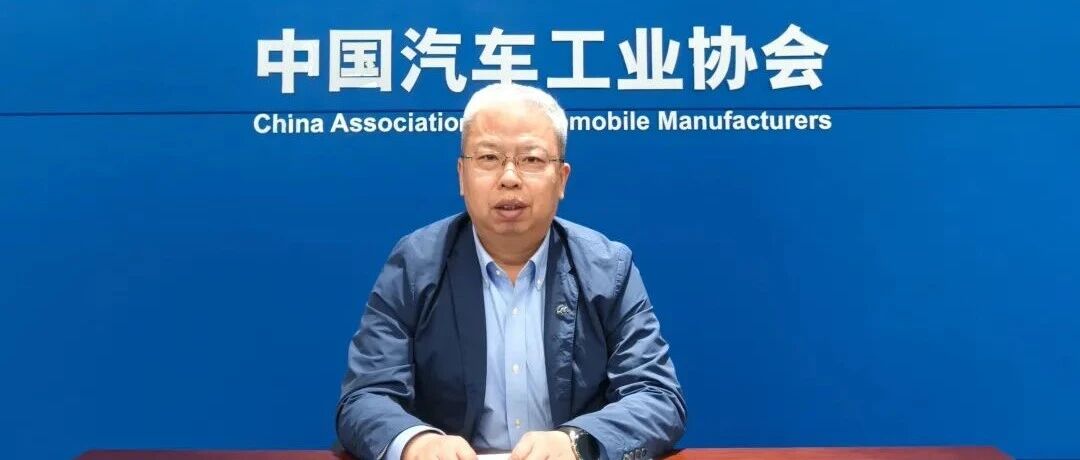
中国汽车工业协会2026年3月信息发布会在北京召开
中汽协会数据· 2026-03-12 08:22
Core Insights - The automotive industry in China is experiencing a decline in production and sales due to multiple factors including policy adjustments, demand pre-release, and insufficient consumer willingness [3] Group 1: Production and Sales Data - In February 2026, the automotive market faced challenges with only 16 effective working days due to the extended Spring Festival holiday, leading to a decrease in market activity [3] - Year-on-year comparisons show a decline in both the passenger vehicle market and new energy vehicles, while the commercial vehicle market continues to perform well [3] Group 2: Government Policies and Market Outlook - The government work report emphasizes the need to stimulate internal consumer motivation and implement consumption-promoting policies, aiming to create a favorable market environment [3] - The anticipated rollout of local subsidy details post-holiday, along with spring auto show promotions and new vehicle launches, is expected to boost consumer confidence and invigorate the automotive market [3]

本田突发暴雷
第一财经· 2026-03-12 08:11
Core Viewpoint - Honda Motor Co. is expected to report an operating loss of 270 billion to 570 billion yen for the fiscal year 2025 (April 2025 - March 2026), a significant change from the previously anticipated profit of 550 billion yen [1] - The company also forecasts a net loss of 420 billion to 690 billion yen (approximately 11.6 billion to 24.7 billion RMB), compared to a prior profit expectation of 300 billion yen [1] - Honda has canceled certain research and launch plans for electric vehicles manufactured in the United States, leading to a total estimated cost and loss of up to 2.5 trillion yen (approximately 108.2 billion RMB) due to a reassessment of its electrification strategy [1] Summary by Sections - **Financial Performance**: Honda is projecting its first annual loss since going public, with significant revisions to both operating and net profit expectations [2] - **Strategic Changes**: The cancellation of electric vehicle plans in the U.S. reflects a strategic shift, with substantial financial implications due to the reassessment of the company's electrification strategy [1]


本田2025财年最多将亏损6900亿日元
日经中文网· 2026-03-12 07:40
Core Viewpoint - Honda is expected to report a maximum loss of 690 billion yen for the fiscal year 2025, marking its first final loss since going public, a significant drop from a profit of 835.8 billion yen in the previous fiscal year [2] Group 1 - Honda's revised forecast indicates a downward adjustment of 990 billion yen from an earlier profit estimate of 300 billion yen, representing a 64% decrease compared to the previous fiscal year [2] - The anticipated losses are attributed to investment losses related to the slowdown in electric vehicle (EV) adoption [2] - Honda estimates that additional expenses or losses may be incurred in the following fiscal years due to adjustments in its EV strategy, potentially totaling up to 2.5 trillion yen when combined with the losses from fiscal year 2025 [4] Group 2 - In response to the financial forecast and losses, Honda announced that some executives will voluntarily return a portion of their compensation for the fiscal year 2026, with the president and vice president returning 30% of their monthly salaries for three months [4]

特朗普称将对包括中国在内的贸易伙伴启动新的贸易调查,中方回应
财联社· 2026-03-12 07:35
Core Viewpoint - The Chinese government opposes unilateral tariff measures and emphasizes the need for negotiations based on equality, respect, and mutual benefit in addressing trade issues with the United States [1][2]. Group 1: Trade Investigations - The U.S. government has initiated two new trade investigations concerning "excess industrial capacity" affecting 16 major trading partners, including China, which may lead to new tariffs [1]. - The Chinese Ministry of Foreign Affairs has consistently maintained its stance against various forms of unilateral tariff measures, asserting that trade wars do not benefit either party [1]. Group 2: Response to Accusations - The Chinese government characterizes the notion of "excess capacity" as a false narrative and opposes its use as a pretext for political manipulation [2].

我国自主研发,世界最强超高强度碳纤维首发;亚马逊将斥资7.5亿澳元在澳大利亚新建机器人物流中心丨智能制造日报
创业邦· 2026-03-12 06:04
Group 1 - China's T1200-grade ultra-high-strength carbon fiber has been globally launched, marking a significant breakthrough in the production field, with the capability of mass production at a scale of hundreds of tons [2] - The T1200-grade carbon fiber has a diameter less than one-tenth of a human hair, yet its tensile strength is ten times that of ordinary steel, with a density only one-fourth that of steel, making it suitable for applications in aerospace, low-altitude economy, and humanoid robotics [2] Group 2 - Amazon plans to invest over 750 million AUD to build a new robotic logistics center in Brisbane, Australia, with an annual processing capacity exceeding 125 million packages, expected to be completed by 2028 [2] Group 3 - Researchers from the Chinese Academy of Sciences have achieved a significant breakthrough in industrial-grade TOPCon solar cell technology, collaborating with Jinko Solar and other institutions, with results published in the journal Nature Energy [2] Group 4 - NIO's founder Li Bin expressed hopes that the self-developed Shenji high-performance inference chip could be supplied to more partners across various industries, while stating that there are currently no plans for further business spin-offs [2]

特斯拉第三代机器人亮相
新华网财经· 2026-03-12 06:04
Group 1 - Tesla showcased the Cybertruck and the third-generation humanoid robot (Tesla Bot) at AWE 2026 [2] - The humanoid robot is set to be Tesla's first mass-produced robot, with production planned to start by the end of 2026 and a long-term production capacity target of 1 million units [2]


中国宏观经济月度分析报告202602:暴力无意于拯救,兵燹背后存哲学-20260312
Zhong Guo Ren Min Yin Hang· 2026-03-12 05:35
Economic Overview - The manufacturing PMI for February 2026 is reported at 49%, a decrease of 0.3 percentage points from the previous month, indicating ongoing economic pressure[5] - The non-manufacturing business activity index slightly increased to 49.5, reflecting seasonal effects from the Spring Festival, but still indicates contraction[8] Inflation and Prices - The CPI for February 2026 rose to 1.3% year-on-year, driven by seasonal factors and a low base from the previous year[18] - The PPI decreased by 0.9% year-on-year, with the decline narrowing by 0.5 percentage points, indicating some stabilization in production prices[20] Trade and Exports - In February 2026, total imports and exports amounted to $508.78 billion, with exports increasing by 39.6% and imports by 13.8% year-on-year[24] - The export growth is attributed to seasonal factors and strong foreign demand, despite a projected slowdown in export growth for the year[26] Sector Performance - The construction sector is experiencing significant weakness, with new orders at a historic low, primarily due to the Spring Festival and ongoing real estate downturn[41] - Consumer services, particularly in hospitality and entertainment, showed strong performance due to increased demand during the Spring Festival, marking a significant recovery in this sector[44] Monetary Policy and Credit - M1 growth rate increased to 4.9%, while M2 grew by 9%, indicating a slight recovery in liquidity despite seasonal pressures on credit demand[51] - The government is expected to increase public investment to stimulate demand and support economic recovery[5]
申万期货品种策略日报——股指-20260312
Shen Yin Wan Guo Qi Huo· 2026-03-12 05:21
Report Industry Investment Rating - Not provided in the report Core Viewpoints of the Report - The previous trading day saw the stock index mostly rising, with the coal sector leading the gains and the comprehensive sector leading the losses. The market turnover reached 2.53 trillion yuan. Starting from March, as listed companies gradually disclose their annual and first - quarter reports, industry leaders with strong performance certainty will attract funds, driving the market from "expectation - driven" to "profit - driven". The market will shift from "across - the - board rise" to "selective alpha" stage, where pure concept stocks without performance support and small - and medium - cap stocks may continue to be weak, while policy - beneficiary and performance - improving sectors may have sustainable opportunities. In the long run, the stock index trend will still depend on domestic fundamentals and policies, and it is expected to return to an oscillating upward trend after the geopolitical risks ease [2] Summary by Relevant Catalogs 1. Stock Index Futures Market - **IF Contracts**: The closing prices of IF contracts for the current month, next month, next quarter, and the quarter after next were 4687.00, 4668.00, 4621.20, and 4546.60 respectively. The price increases were 21.80, 20.40, 21.00, and 16.00, with corresponding increases of 0.47, 0.44, 0.46, and 0.35. The trading volumes were 51049.00, 3793.00, 19147.00, and 6823.00, and the open interests were 107580.00, 12759.00, 102302.00, and 44564.00. The changes in open interests were - 6906.00, 275.00, 1775.00, and 203.00 [1] - **IH Contracts**: The closing prices of IH contracts for the current month, next month, next quarter, and the quarter after next were 2983.80, 2983.40, 2977.00, and 2938.20 respectively. The price increases were 1.40, 4.20, 3.00, and 2.20, with corresponding increases of 0.05, 0.14, 0.10, and 0.07. The trading volumes were 19995.00, 2585.00, 8117.00, and 2524.00, and the open interests were 48141.00, 6417.00, 33041.00, and 16683.00. The changes in open interests were - 2450.00, 78.00, 6.00, and 321.00 [1] - **IC Contracts**: The closing prices of IC contracts for the current month, next month, next quarter, and the quarter after next were 8360.00, 8316.80, 8199.40, and 8038.40 respectively. The price decreases were - 25.00, - 26.80, - 28.40, and - 28.20, with corresponding decreases of - 0.30, - 0.32, - 0.35, and - 0.35. The trading volumes were 60985.00, 7743.00, 35019.00, and 13821.00, and the open interests were 97524.00, 17751.00, 116727.00, and 58423.00. The changes in open interests were - 9850.00, 343.00, 2907.00, and 2011.00 [1] - **IM Contracts**: The closing prices of IM contracts for the current month, next month, next quarter, and the quarter after next were 8313.00, 8245.00, 8089.20, and 7886.20 respectively. The price changes were 4.60, - 8.20, - 11.00, and - 13.00, with corresponding changes of 0.06, - 0.10, - 0.14, and - 0.16. The trading volumes were 89616.00, 12166.00, 38657.00, and 15285.00, and the open interests were 133840.00, 27430.00, 129804.00, and 76690.00. The changes in open interests were - 6381.00, 4785.00, 854.00, and 126.00 [1] - **Inter - month Spreads**: The current inter - month spreads of IF next month - IF current month, IH next month - IH current month, IC next month - IC current month, and IM next month - IM current month were - 19.00, - 0.40, - 43.20, and - 68.00 respectively, compared with the previous values of - 17.60, - 1.00, - 38.60, and - 54.00 [1] 2. Stock Index Spot Market - **Major Indexes**: The previous values of the Shanghai and Shenzhen 300 Index, Shanghai 50 Index, China Securities 500 Index, and China Securities 1000 Index were 4704.50, 2985.34, 8403.33, and 8363.53 respectively, with increases of 0.64, 0.12, - 0.08, and 0.16. The trading volumes (in billions of hands) were 270.18, 56.03, 264.49, and 321.74, and the total trading amounts (in billions of yuan) were 5795.64, 1224.47, 4957.52, and 5492.67 [1] - **Industry Indexes**: Among industries, energy, raw materials, industry, and optional consumption had increases of 1.98%, 0.60%, 1.89%, and 1.04% respectively; major consumption, medical and health, real - estate finance, and information technology had increases of 0.19%, - 0.36%, 0.66%, and - 0.52% respectively; telecommunications services and public utilities had increases of 0.09% and 1.44% respectively [1] 3. Futures - Spot Basis - The previous values of IF current month - Shanghai and Shenzhen 300, IF next month - Shanghai and Shenzhen 300, IF next quarter - Shanghai and Shenzhen 300, and IF the quarter after next - Shanghai and Shenzhen 300 were - 17.50, - 36.50, - 83.30, and - 157.90 respectively; the previous values of IH current month - Shanghai 50, IH next month - Shanghai 50, IH next quarter - Shanghai 50, and IH the quarter after next - Shanghai 50 were - 1.54, - 1.94, - 8.34, and - 47.14 respectively; the previous values of IC current month - China Securities 500, IC next month - China Securities 500, IC next quarter - China Securities 500, and IC the quarter after next - China Securities 500 were - 43.33, - 86.53, - 203.93, and - 364.93 respectively; the previous values of IM current month - China Securities 1000, IM next month - China Securities 1000, IM next quarter - China Securities 1000, and IM the quarter after next - China Securities 1000 were - 50.53, - 118.53, - 274.33, and - 477.33 respectively [1] 4. Other Major Domestic and Overseas Indexes - **Domestic Indexes**: The previous values of the Shanghai Composite Index, Shenzhen Component Index, Small and Medium - sized Board Index, and ChiNext Index were 4133.43, 14465.41, 8836.69, and 3349.53 respectively, with increases of 0.25%, 0.78%, 0.73%, and 1.31% [1] - **Overseas Indexes**: The previous values of the Hang Seng Index, Nikkei 225, S&P Index, and DAX Index were 25898.76, 55025.37, 6775.80, and 23640.03 respectively, with changes of - 0.24%, 1.43%, - 0.08%, and - 1.37% [1] 5. Macroeconomic Information - The Fourth Session of the 14th National Committee of the Chinese People's Political Consultative Conference concluded on the morning of March 11th, and the closing meeting of the Fourth Session of the 14th National People's Congress will be held at 3 pm on March 12th, with several resolutions to be voted on [2] - Wind upgraded Alice 27, launching an intelligent financial operating system, allowing financial practitioners to have "multiple roles" and "unlimited clones" [2] - US - Iran military situation: Trump said the US military action against Iran was "about to end", but US and Israeli officials said no internal order to stop the action had been received. The US Central Command warned of possible attacks on Iranian civilian ports, and Iran threatened to retaliate [2] - Energy reserves: The International Energy Agency (IEA) agreed to release 4 billion barrels of strategic oil reserves, the G7 energy ministers supported using reserves to stabilize the energy market, the US would "slightly" cut its reserves, Japan would release about 80 million barrels starting from March 16th, and Germany would release 2.4 million tons of reserves [2] - Security risk of OpenClaw: The Ministry of Industry and Information Technology issued "six do's and six don'ts" suggestions, at least 20 securities firms issued internal compliance reminders, domestic universities warned of risks, and the Suzhou Artificial Intelligence Association issued an initiative for rational use [2] 6. Industry Information - National Supercomputer Internet will distribute 10 million Tokens for free to each OpenClaw user for a limited period of 2 weeks, with a Token renewal price of 0.1 yuan per million Tokens, lower than the market average [2] - The semiconductor market is expected to reach a scale of one trillion US dollars in 2026, and China's share in mainstream semiconductor manufacturing capacity will reach 42% by 2028 [2] - In February, China's automobile sales were 1.805 million, a year - on - year decrease of 15.2%, including new - energy vehicle sales of 765,000, a year - on - year decrease of 14.2%. Automobile exports were 672,000, a year - on - year increase of 52.4% [2] - The Iran war caused international oil prices to fluctuate sharply, leading Asian airlines to raise ticket prices. Qantas raised international ticket prices by about 5%, and several airlines including Air India and Hong Kong Airlines adjusted fuel surcharges [2]
特斯拉第三代机器人亮相
财联社· 2026-03-12 04:48
Group 1 - Tesla showcased the Cybertruck and the third-generation humanoid robot (Tesla Bot) at AWE 2026 [1] - The humanoid robot is set to be Tesla's first mass-produced robot, with production planned to start by the end of 2026 [1] - The long-term production capacity for the humanoid robot is projected to reach 1 million units [1]