
贵金属

Search documents
20260207周报:宏观情绪冲击,金属价格波动剧烈-20260207
Huafu Securities· 2026-02-07 09:29
Investment Rating - The report maintains a rating of "Outperform" for the industry [7] Core Views - Precious metals are experiencing significant price volatility, with silver prices retreating from highs due to profit-taking and macroeconomic factors [3][14] - Industrial metals, particularly copper and aluminum, are undergoing price corrections influenced by macroeconomic conditions, with copper prices showing signs of recovery despite inventory accumulation [4][20] - In the new energy metals sector, lithium carbonate prices have sharply declined, but strong demand signals from downstream industries may support a rebound in prices post-holiday [22][27] - Other minor metals, such as rare earths, are showing mixed price movements, with some products experiencing upward pressure due to supply constraints [24][27] Summary by Sections Precious Metals - Silver prices have seen a significant drop, with fluctuations driven by market sentiment and macroeconomic news, including the nomination of Kevin Warsh as the next Federal Reserve Chair [3][14] - Key stocks to watch include Zijin Mining, Zhongjin Lingnan, and others in the gold sector [15] Industrial Metals - Copper prices have corrected, but market activity has increased, with strong buying sentiment noted despite the holiday season affecting production schedules [4][20] - Aluminum prices have experienced volatility, with a notable drop followed by a brief recovery, although the overall supply-demand structure remains weak [20][21] New Energy Metals - Lithium carbonate prices have decreased significantly, but robust demand from downstream sectors indicates potential for price recovery in the near future [22][27] - Key stocks in the lithium sector include Ganfeng Lithium and others [23] Other Minor Metals - The rare earth market has shown mixed price trends, with some products like praseodymium-neodymium oxide experiencing upward price movements due to supply constraints [24][27] - Stocks to monitor include Hunan Gold and others in the minor metals sector [27]
2026年2月6日,黄金比特币美股一夜全崩,超过43万人一夜爆仓,爆掉近21亿美元
Sou Hu Cai Jing· 2026-02-07 04:19
Core Viewpoint - The financial markets experienced a significant crash on February 6, 2026, driven by a sudden shift in monetary policy expectations, high leverage trading, and a retreat of risk aversion, leading to widespread sell-offs across various asset classes [1][8]. Group 1: Precious Metals - Silver prices plummeted over 19% in a single day, marking the most severe drop in five years, with domestic futures contracts hitting the limit down [1] - Gold prices fell below the critical psychological level of $4,800 per ounce, reaching a low of $4,780, with a daily decline of 4.08% [3] Group 2: Energy Markets - WTI crude oil futures dropped over 2%, falling below $64 per barrel, while Brent crude also declined over 2%, losing the $68 mark [3] Group 3: Stock Markets - The Dow Jones index fell nearly 600 points, a decrease of approximately 0.97%, while the Nasdaq composite index saw a deeper drop of 1.39% [3] - Major tech companies, including Apple, Microsoft, Alphabet, and Nvidia, all experienced declines, exacerbated by disappointing earnings reports [3] Group 4: Cryptocurrency Market - Bitcoin's price fell below the critical support level of $70,000, dropping to $67,000 with a maximum decline of over 12% within 24 hours [4] - Over 430,000 investors were liquidated, with total losses amounting to $2.069 billion [4] Group 5: Key Negative Factors - The first factor was a 180-degree shift in expectations regarding the Federal Reserve, with potential hawkish leadership signaling a faster reduction of the balance sheet and prolonged high interest rates [5] - The second factor involved high leverage among investors, particularly in precious metals and cryptocurrencies, which led to forced liquidations as margin requirements were raised [6] - The third factor was a retreat of risk aversion and tightening liquidity, as geopolitical tensions eased and investors sold off positions in gold and silver to cover losses in other markets [6] Group 6: Market Dynamics - The market exhibited characteristics of liquidity drying up, with a lack of buying depth leading to significant sell orders being executed at lower prices [7] - Uncertainty in U.S. economic data, including a delay in the non-farm payroll report and rising layoff announcements, contributed to market apprehension [7] - The overall environment indicated a tightening of global liquidity, with major central banks signaling a shift away from ultra-loose monetary policies [7]

黄金白银强势反弹!中国黄金宣布:调整贵金属回购业务规则
Sou Hu Cai Jing· 2026-02-07 03:49
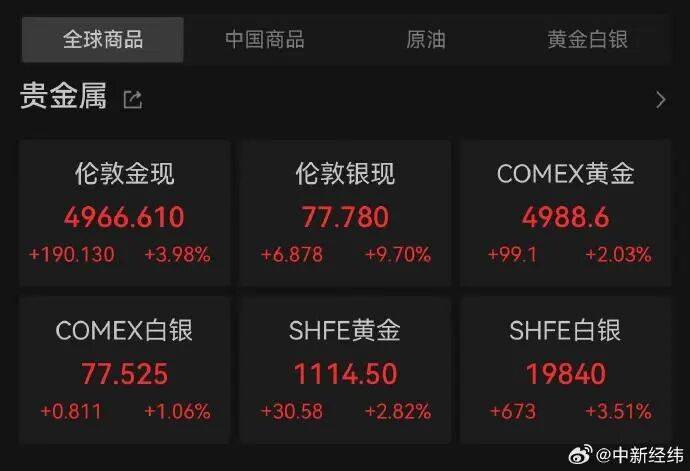
Core Viewpoint - Precious metals experienced a strong rebound on February 6, with significant price increases in gold and silver [1][2]. Group 1: Precious Metals Price Movement - Spot gold rose by 3.98%, reaching $4966.61 per ounce [1][2]. - COMEX gold increased by 2.03%, priced at $4988.6 per ounce [1][2]. - Spot silver surged nearly 10%, now at $77.78 per ounce [1][2]. Group 2: China Gold's Announcement - China Gold announced adjustments to its precious metal repurchase business rules due to increased price volatility and uncertainty in the market [2][6]. - The company urged consumers to approach the precious metals market with caution and to enhance their risk awareness [6]. Group 3: Adjustments to Repurchase Business Rules - Starting February 7, 2026, the repurchase business will be suspended on weekends and public holidays when the Shanghai Gold Exchange is closed [3]. - There will be limits on repurchase transactions, including daily limits for individual customers and total limits per transaction, with a reservation system implemented [3].

金银震荡144小时:大爷大妈排队“抄底”
3 6 Ke· 2026-02-07 03:14
Core Viewpoint - The precious metals market experienced a dramatic crash on January 30, 2026, with gold prices dropping by up to 16%, marking the largest single-day decline in nearly 40 years, while silver plummeted nearly 36%, erasing almost all gains from the previous month [1][9]. Group 1: Market Reaction - Following the crash, a significant number of older investors flocked to gold stores, particularly in Beijing, to take advantage of lower prices, with reports of over 200 people queuing at the Cai Bai store [2][3]. - The buying frenzy began immediately after the price drop, with many customers arriving before store opening hours, indicating a strong demand despite the volatility [2][3]. - The price of gold fluctuated significantly during the day, with a drop of over 20 yuan per gram within an hour, leading to potential cost differences for buyers depending on their wait time [3]. Group 2: Investor Behavior - Older investors displayed a calm demeanor, actively purchasing gold in large quantities, while younger investors faced panic selling and losses due to their recent entry into the market [7][8]. - Many young investors, who had entered the market during the previous gold surge, found themselves in a precarious position, struggling with the decision to sell at a loss or hold their positions [7][8]. - The market sentiment among younger investors was characterized by fear and uncertainty, with some opting to sell their holdings at a loss as prices continued to decline [8]. Group 3: Market Dynamics - The recent crash was attributed to a combination of factors, including a significant increase in gold and silver prices throughout 2025, which set the stage for a technical correction [9][10]. - Institutional investors showed limited enthusiasm for further price increases, leading to profit-taking and a chain reaction of sell-offs that exacerbated the market decline [10]. - The Chicago Mercantile Exchange's decision to raise margin requirements for metal futures also contributed to forced liquidations among leveraged investors, further intensifying the market downturn [11]. Group 4: Future Outlook - Despite the current volatility, some institutions remain optimistic about the long-term prospects for gold and silver, with predictions of gold prices reaching $6,000 per ounce by 2026 and silver prices around $105 per ounce [11][12]. - However, there are warnings about potential shifts in monetary policy that could impact the ongoing bull market for gold, suggesting that investors should remain cautious [11][12].
白银价格一周巨震33%!芝商所本轮七调保证金,是否见顶信号?
Sou Hu Cai Jing· 2026-02-07 03:03
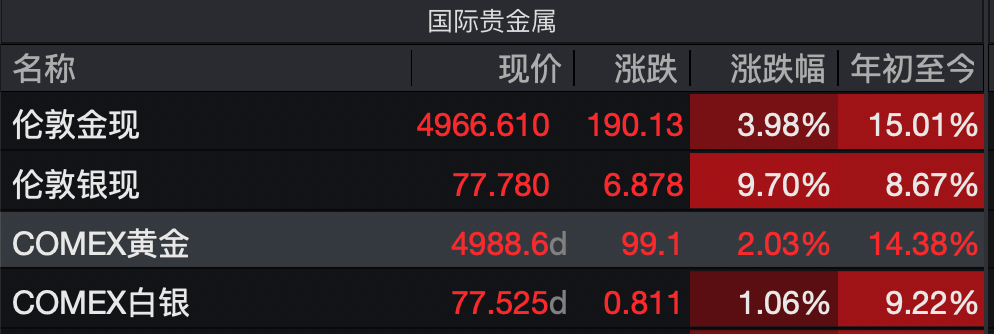
Core Viewpoint - Silver prices experienced a significant V-shaped reversal, with the Chicago Mercantile Exchange (CME) raising the initial margin requirement for COMEX silver futures from 15% to 18%, marking the seventh adjustment since December 2022. This led to a sharp decline in spot silver prices, which fell by 10% before rebounding nearly 20% to close up 9.7% [1][4]. Group 1: Silver Market Dynamics - Silver prices reached a historical high of $121 per ounce on January 29, followed by a dramatic drop of 26% on January 30, resulting in a weekly decline of 17.5% and a total weekly volatility of 45.84% [1]. - The recent volatility in the silver market has been extreme, with 11 instances of price fluctuations exceeding 5% within seven trading days, and a monthly volatility surpassing 100% [4]. - The CME's frequent adjustments to margin requirements are historically associated with market tops in silver prices, indicating a potential peak in the current silver market [2][4]. Group 2: Price Movements and Comparisons - As of February 6, spot silver closed at $77.78 per ounce, reflecting a year-to-date increase of 8.67%, while spot gold rose to $4,966.61 per ounce, with a year-to-date increase of 15.01% [2][1]. - The volatility in silver prices has been attributed to a combination of speculative trading and external factors, including the nomination of Kevin Walsh as the next Federal Reserve Chair, which has heightened tightening expectations and strengthened the dollar [4][6]. Group 3: Long-term Outlook for Silver - UBS forecasts a structural supply deficit in silver, estimating a shortfall of nearly 300 million ounces by 2026, with investment demand expected to exceed 400 million ounces [6][8]. - Despite recent price drops driven by risk aversion, the long-term fundamentals for silver remain intact, supported by low nominal and real interest rates, global debt concerns, and expectations of economic recovery [6][8]. - Analysts suggest that while silver may experience further short-term volatility, its mixed asset characteristics and fundamental drivers could support a rebound in the future [7][8].
黄金、白银强势反弹,现货黄金涨3.98%,现货白银涨近10%
2 1 Shi Ji Jing Ji Bao Dao· 2026-02-07 02:09
美东时间2月6日,贵金属强势反弹,现货黄金涨3.98%,报4966美元/盎司;现货白银涨近10%,报77.78 美元/盎司。 0:00 ...
当商品交易变成“故事会”:谁在主导价格?
对冲研投· 2026-02-07 02:07
Core Viewpoint - The commodity market is experiencing extreme volatility, indicating a potential structural shift in its driving logic and volatility paradigm [1][2]. Group 1: Market Dynamics - In January 2026, precious metals surged nearly 50%, with silver reaching historical highs, igniting market enthusiasm [1]. - However, a dramatic drop occurred at the end of January, with Comex silver prices plummeting over 30%, causing significant turmoil in domestic markets [1]. - Traditional price ratios like gold-silver, gold-copper, and gold-oil have shown erratic behavior, suggesting a breakdown in their historical signaling capabilities [1][3]. Group 2: Traditional Analysis Framework Failure - The gold-copper ratio, typically indicating economic health, has risen to historical highs without corresponding signs of economic recession, signaling potential underlying issues [3]. - The gold-silver ratio is converging to a near-decade low, which traditionally suggests increased risk appetite, but current conditions indicate a more complex narrative [3]. - The gold-oil ratio is at extreme levels, reflecting divergent supply-demand stories for these commodities, further complicating traditional analysis [4]. Group 3: Structural Changes in Market Drivers - The traditional pricing logic based on total demand and monetary cycles is being replaced by new structural forces [5]. - Gold is transitioning from a "rate indicator" to a "credit anchor," influenced by factors such as central bank gold purchases and concerns over dollar credit [6][7]. - Silver's demand is bolstered by the global expansion of the photovoltaic industry, while copper is driven by new energy and technology sectors [8][9]. Group 4: Silver as a Market Indicator - Silver has emerged as a key player in the commodity market, reflecting both industrial demand and speculative trading [10]. - The "virtual-to-physical ratio" for silver has reached historical lows, indicating extreme speculation and potential "short squeeze" risks [10]. - Silver's dual nature makes it a sensitive barometer for market liquidity and risk sentiment, amplifying both bullish and bearish trends [11][12]. Group 5: Market Narratives and Trading Mechanisms - The market is increasingly driven by compelling narratives that spread rapidly through modern communication channels, influencing investor behavior [13][14]. - Programmatic trading and leverage have become significant amplifiers of market movements, leading to rapid price changes in response to emerging stories [15][16]. - New capital from other sectors, such as cryptocurrencies, is entering the commodity market, further intensifying volatility [17]. Group 6: Future Outlook - High volatility is expected to persist in the commodity market, necessitating a shift in observation frameworks and expectations [18]. - Monitoring silver's performance will be crucial for gauging overall market sentiment and risk appetite [18]. - A potential signal for a healthy market rally could be a simultaneous decline in the gold-silver and gold-oil ratios, indicating a return to economic growth narratives [19].

“油进金退”--对冲基金的新“选择”
Sou Hu Cai Jing· 2026-02-07 01:49
Group 1 - The core viewpoint of the articles indicates a shift in market sentiment, with fund managers increasing net long positions in Brent crude oil to a near 10-month high while reducing net long positions in gold to a 15-week low, reflecting a subtle change in risk appetite [1][4][7] Group 2 - In the week ending February 3, fund managers increased net long positions in Brent crude oil by 31,332 contracts to 278,249 contracts, marking the highest level in nearly 10 months [4][5] - The ongoing tensions between the US and Iran have driven investors to increase long bets on oil for four consecutive weeks, as they hedge against potential supply disruptions [4][5][6] - In contrast, hedge funds and other large speculators reduced their net long positions in gold by 23% to 93,438 contracts, the lowest level since October of the previous year [7][8] Group 3 - Gold prices have experienced a significant decline, dropping over 11% from historical highs in January, while oil prices have risen more than 13% from their lows earlier in the year [2] - The oil options market has shown a deeper bullish sentiment, with the premium of WTI call options over put options reaching the highest level since 2022 [4] - The sharp correction in gold prices, including the largest single-day drop since 2013 on January 30, has led fund managers to quickly adjust their positions, significantly reducing bullish bets on precious metals [8]
2026年2月私募月度市场研报
私募排排网· 2026-02-07 01:40
Investment Rating - The report indicates a positive investment sentiment towards the A-share market, particularly favoring small-cap and technology sectors, with a focus on structural rotation and high volatility [1][30]. Core Insights - The A-share market experienced a strong start in January 2026, with significant gains in various indices, particularly the ChiNext and small-cap indices, reflecting a robust market environment [1]. - The precious metals sector showed strong performance driven by both safe-haven demand and capital allocation needs, while the banking sector faced a decline, breaking a long-standing trend of outperformance [2][12]. - The overall market saw a high number of stocks achieving positive returns, with 3,631 stocks recording monthly gains, and 16 stocks doubling in price during January [2]. Market Review and Outlook - The A-share market indices recorded substantial monthly gains, with the ChiNext Index rising by 12.29% and the CSI 500 Index by 12.12%, indicating a strong performance in small-cap stocks [1]. - The average daily trading volume reached 30,147.10 billion yuan, reflecting increased trading enthusiasm among retail investors [1]. - The report anticipates continued structural rotation in February, with a focus on precious metals and certain new energy sectors due to supply constraints and capital allocation needs [30]. Futures Market - The commodity futures market showed an overall upward trend in January, with the precious metals sector leading the gains, while agricultural products like live pigs and soybean meal faced declines [11][12]. - The report highlights that the macroeconomic environment is characterized by weak recovery and strong differentiation, impacting demand for cyclical commodities [12]. Private Fund Strategies - In January, the average return for private funds was 5.71%, with equity and commodity long strategies showing significant profitability [22]. - The report notes that January was a month of systematic recovery, with many strategies achieving returns in the 7%-10% range, particularly those focused on equities and high elasticity [24]. - The report emphasizes the importance of diversified strategies and risk management in the current market environment, suggesting that private fund strategies can provide opportunities for excess returns while managing risks effectively [33].
海外市场分析:金银:“历史性”下跌之后?
Guolian Minsheng Securities· 2026-02-07 01:37
Market Analysis - Recent historic declines in gold and silver prices raise the question of whether the bull market for these metals has ended[4] - The conditions for a market termination are not yet mature, as evidenced by historical bull markets in the 1970s and early 21st century[4] - Current market volatility appears localized, with limited spillover effects into broader equity and bond markets[4] Economic Indicators - The Chicago Mercantile Exchange has raised margin requirements for gold and silver, indicating potential regulatory tightening[4] - Despite speculation about a shift in monetary policy with the nomination of Walsh, the overall direction remains accommodative, contrasting with past tightening periods in 1980 and 2011[4] Commodity Cycle Perspective - The current commodity cycle may still be in its early stages, with many energy and agricultural products showing insufficient price increases since 2020[4] - If the belief in a long-term commodity bull market persists, gold and silver may participate in future rallies, albeit with limited price elasticity[4] Investment Strategy - Following the recent significant drop in gold and silver prices, the market narrative may not be substantially affected in the short term[4] - Investors should monitor where capital flows from precious metals, potentially into undervalued commodities or shifts in stock market styles[4] - Short-term, the safe-haven appeal of gold and silver may diminish, prompting a focus on other assets like oil and bonds[4]