
农牧业

Search documents
辞职去种草
Xin Lang Cai Jing· 2025-12-20 22:07
Core Viewpoint - The company is focusing on modern agricultural development through a circular economy model, enhancing efficiency and productivity in forage production and livestock farming [1][2]. Group 1: Agricultural Practices and Innovations - The company has implemented advanced techniques such as water and fertilizer integration, leading to increased yields of forage crops like silage corn and alfalfa [1]. - The introduction of wrapped silage technology has significantly improved forage quality and reduced drying time from 6-7 days to 18-24 hours, while production loss rates decreased from 20% to 3% [3]. - A new cropping model combining "small black wheat + corn silage" has resulted in a 40% increase in yield compared to traditional methods, with an additional income of 800 yuan per mu [4]. Group 2: Business Expansion and Community Engagement - The company has expanded its operations to include a beef cattle farm with over 4,000 head of cattle, allowing for better control over market fluctuations and cost management [3]. - By promoting contract farming, the company provides seeds, fertilizers, and technical guidance to local farmers, helping them save labor costs and stabilize income [4]. - The company has leased 61,000 mu of land, paying over 30 million yuan to local farmers, and has encouraged 60 households to engage in forage transportation [4]. Group 3: Recognition and Future Goals - The company and its leader have received multiple accolades, including the National Rural Revitalization Youth Pioneer and the 27th China Youth May Fourth Medal, highlighting their contributions to modern agriculture [5]. - The company aims to achieve industrialization in agriculture by focusing on product standardization, precision management, and continuous innovation [5].
从“门票经济”到“体验经济”
Xin Lang Cai Jing· 2025-12-19 09:12
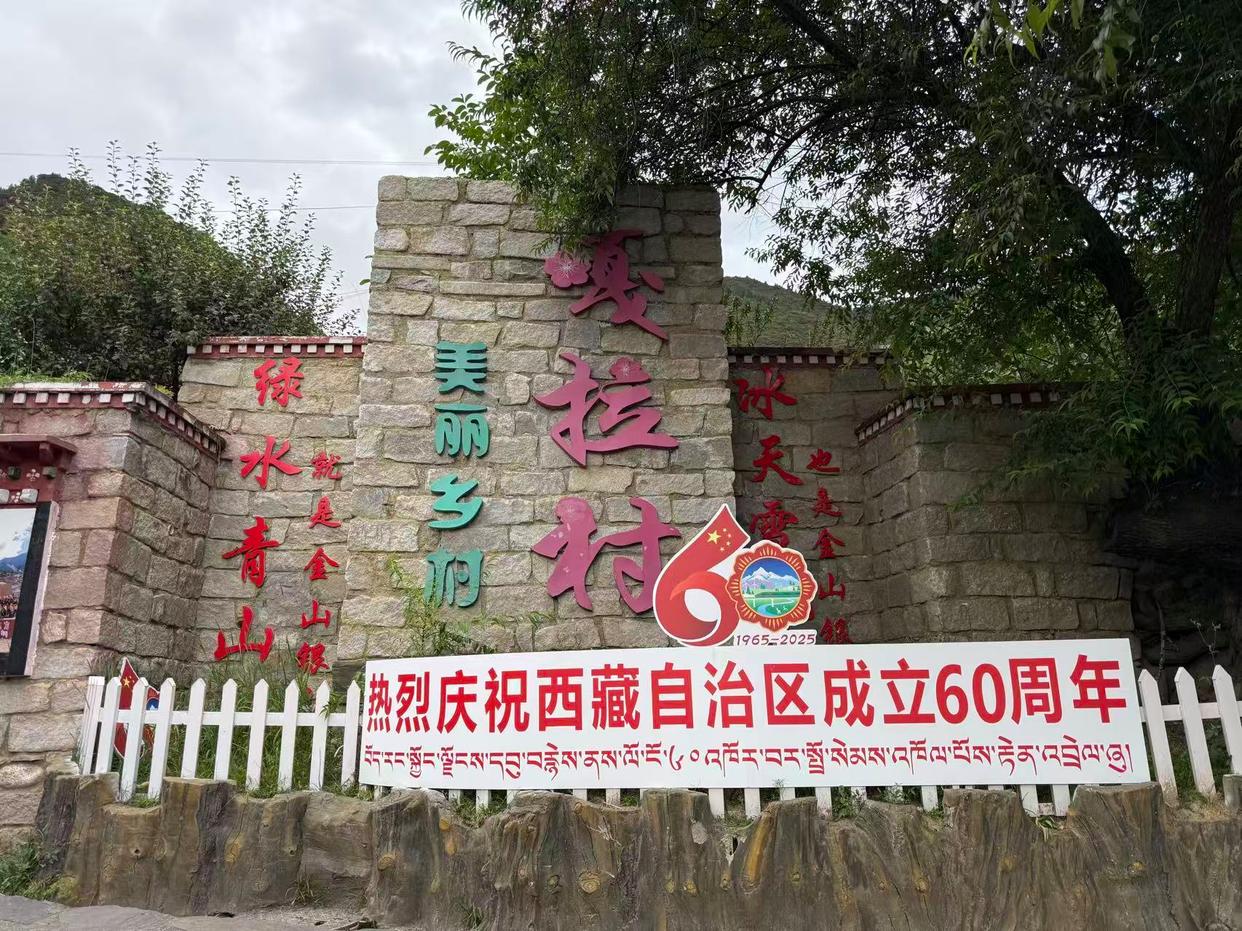
Core Insights - The article highlights the transformation of Gala Village in Tibet, which has successfully leveraged its natural resources, particularly wild peach trees, to boost local economy and tourism, showcasing a model of rural revitalization and poverty alleviation [1][2]. Group 1: Economic Development - Gala Village has 1,253 wild peach trees and a collective economic income projected to exceed 7 million yuan in 2024, with per capita disposable income reaching 41,200 yuan, an increase of over 6,000 yuan since 2021 [1][2]. - The village's "Peach Blossom Economy" has evolved through various stages, from a basic scenic area to a AAA-rated tourist attraction, significantly increasing tourism revenue [5][6]. - In 2024, the income from the Peach Blossom Festival is expected to be 3.7 million yuan, with ticket sales contributing 3.22 million yuan and stall rentals adding 480,000 yuan [6]. Group 2: Tourism and Infrastructure - The village is upgrading its tourism offerings by enhancing infrastructure, such as expanding pathways and adding facilities like public restrooms to improve visitor experience [5][10]. - Gala Village is focusing on developing an "experience economy" to extend visitor stays, introducing activities like archery and horseback riding to encourage longer visits and increased spending [10][19]. Group 3: Environmental Sustainability - The village has shifted from deforestation to conservation, recognizing that ecological health is essential for sustainable economic development [11][13]. - Initiatives include forming a dedicated team of forest rangers and planting suitable peach tree varieties to enhance the ecological landscape [13][15]. Group 4: Community Engagement and Governance - The success of Gala Village is attributed to strong community involvement and effective governance, with local leaders and residents working collaboratively to address challenges and improve living conditions [19][20]. - The "Double Link Household" system fosters mutual support among villagers, facilitating tasks like maintaining cleanliness in tourist areas [19][20]. Group 5: Future Prospects - The village is optimistic about future growth, with plans to expand its tourism offerings and enhance community facilities, while also emphasizing the importance of professional guidance and support for continued development [10][20][23].

德康农牧12月18日斥资127.19万港元回购1.78万股
Zhi Tong Cai Jing· 2025-12-18 10:05
德康农牧(02419)发布公告,于2025年12月18日该公司斥资127.19万港元回购1.78万股,回购价格为每股 70.60-72.12港元。 ...
准格尔“一路生花”:黄土高原长出矿山绿洲,生态与经济并进
Xin Lang Cai Jing· 2025-12-17 11:23
Core Viewpoint - The transformation of the resource-dependent city of Zhugeer Banner into a sustainable and green economy showcases a successful model of ecological restoration and economic development, emphasizing the integration of environmental protection with industrial growth [1][3][20]. Group 1: Economic and Industrial Development - Zhugeer Banner, with a population of less than 400,000, is a significant coal-producing region with 58.2 billion tons of coal reserves, supplying energy to 25 provinces in China [1]. - The region ranked 29th in the 2024 China Top 100 County Rankings, highlighting its strong economic performance and serving as a benchmark for economic development in the western region [1]. - The local government has invested 1.19 billion yuan in ecological restoration funds, achieving a reclamation and greening of 5,000 hectares and establishing 19 green mines at the autonomous region level [7]. Group 2: Ecological Restoration and Sustainability - Zhugeer Banner has adopted the concept of "lucid waters and lush mountains are invaluable assets," implementing large-scale ecological restoration projects that have transformed former mining areas into green landscapes [3][6]. - The "zero-carbon innovation space" features a 1,000-square-meter lake formed through natural rainwater collection, and a solar panel installation that generates 300 kilowatts of electricity annually [4]. - The area has seen a 36% increase in forest coverage and a 73% improvement in soil erosion control, with over 60% of the arsenic slate land effectively managed [20]. Group 3: Innovative Agricultural Practices - The "board on top for power generation, board below for planting, and board in between for breeding" model has been developed, integrating solar power projects with modern agriculture and livestock farming [9][7]. - The Dafenpu Coal Mine has planted 200,000 trees, achieving a 100% greening rate in its reclamation area, and has established a 1,100-acre orchard and a 550-acre vineyard, generating significant agricultural output [12][14]. - The local apple industry has thrived, with 2,300 acres of apple trees cultivated, leading to an annual income exceeding 1 million yuan for the village, showcasing the economic benefits of ecological restoration [19][20].

巴西政府批准新版国家气候计划
中国能源报· 2025-12-17 11:04
Core Viewpoint - The Brazilian government has approved a new national climate plan to implement the goals of the Paris Agreement and promote a low-carbon transition, providing a clear roadmap for action [1]. Group 1: Emission Reduction Targets - The new plan sets specific emission reduction targets across eight sectors, aiming to reduce greenhouse gas emissions from 2.04 billion tons of CO2 equivalent in 2022 to 1.2 billion tons by 2030, and further down to between 850 million and 1.05 billion tons by 2035 [2]. - The overall goal is to achieve net-zero emissions by 2050, while also emphasizing the need to enhance resilience to climate change [2]. Group 2: Adaptation and Action Plans - The plan includes 16 sectors and thematic action plans for adapting to climate change, covering areas such as public health, tourism, energy, transportation, disaster risk reduction, water resources, food security, and biodiversity, with over 800 specific actions proposed [2]. - The Brazilian government will continuously improve the national climate plan through biennial assessments and systematic revisions every four years to ensure alignment with climate science advancements and international commitments [2].

中国经济圆桌会·新华全媒头条丨打造引领我国新时代对外开放的重要门户——“中国经济圆桌会”聚焦海南自贸港正式启动全岛封关
Xin Hua She· 2025-12-17 03:53
Core Viewpoint - The official launch of the Hainan Free Trade Port's full customs closure on December 18 marks a significant step in China's commitment to high-level opening-up and the construction of an open world economy [1][2]. Group 1: Policy and Infrastructure Readiness - The Hainan Free Trade Port will implement a customs supervision model characterized by "opening up the first line, controlling the second line, and allowing free movement within the island" [2]. - A comprehensive policy system for customs closure has been established, including import tax item lists, tax policies for goods flow, and customs supervision methods [3]. - All necessary hardware and facilities for customs operations have been completed, including eight open ports and ten "second-line ports" [2][3]. Group 2: Economic Opportunities for Enterprises - The full customs closure will create a more open trade environment and improve resource allocation efficiency, presenting significant growth opportunities for businesses [5]. - For example, the zero-tariff policy on raw materials will reduce costs for companies like Charoen Pokphand Group, which can benefit from lower import duties on coffee beans [5]. - The implementation of zero-tariff policies and optimized processing rules will significantly lower operational costs for industries such as pharmaceuticals and high-end manufacturing [5][6]. Group 3: Consumer Benefits and Market Expansion - The expansion of duty-free goods and optimized shopping policies for residents will stimulate local consumption and enhance the appeal of Hainan's unique brands in healthcare and education [6]. - New policies allowing for broader international access and simplified entry for foreign tourists will enhance the local economy and provide residents with more opportunities for international engagement [6]. Group 4: Institutional and Regulatory Advancements - The Hainan Free Trade Port will serve as a model for advancing institutional openness in China, focusing on aligning with international trade rules and enhancing the business environment [7][8]. - The establishment of a multi-functional free trade account system will facilitate cross-border investment and financing, benefiting both foreign and domestic enterprises [8]. Group 5: Regional Economic Integration - The customs closure will help break down regional barriers, promoting collaborative development between Hainan and surrounding areas, such as the Guangdong-Hong Kong-Macao Greater Bay Area [9]. - This integration will streamline processes for high-end products and talent mobility, fostering a more efficient regional economic cycle [9]. Group 6: Future Prospects - The construction of the Hainan Free Trade Port is positioned as a benchmark for higher levels of openness, signaling China's ongoing commitment to global trade and economic cooperation [10]. - The strategic goal is to develop Hainan into a pivotal gateway for China's new era of opening-up, with a focus on creating a more sophisticated policy framework and a high-quality business environment [10].
从输血式帮扶到造血式发展——内蒙古巩固拓展脱贫攻坚成果调查
Jing Ji Ri Bao· 2025-12-15 22:34
Core Viewpoint - The article discusses the effective transition from poverty alleviation to rural revitalization in Inner Mongolia, emphasizing the importance of continuous support and innovative practices to prevent large-scale poverty recurrence after the five-year transition period. Group 1: Poverty Alleviation Strategies - Inner Mongolia has adopted a dual approach of industrial and employment assistance to ensure no large-scale poverty recurrence, focusing on key agricultural sectors such as dairy, corn, and meat production [1][2]. - The region has implemented "hardcore" policies to develop facility agriculture and deep processing, which have significantly increased the income of impoverished populations [2][5]. - The establishment of cooperatives and the development of new industries, such as skiing and solar energy, have diversified income sources for villagers, leading to increased annual incomes [3][4]. Group 2: Employment and Skills Training - Employment assistance has become a direct and effective means for increasing income among the impoverished, with over 23.9 million people employed in Inner Mongolia by October 2025 [7][8]. - The region has developed labor brands and conducted extensive skills training, benefiting over 5.3 million individuals, including a significant portion of impoverished laborers [7][8]. - The "Naiman Qinglong Sweet Potato" labor brand has successfully connected over 100,000 farmers to employment opportunities, generating an additional income of 18 million yuan [6][7]. Group 3: Monitoring and Risk Prevention - A dynamic monitoring mechanism has been established to prevent poverty recurrence, identifying over 73,500 households at risk and implementing targeted support measures [12][14]. - The income threshold for monitoring has been adjusted to 8,800 yuan, with a focus on addressing health-related poverty risks, which account for 82% of identified cases [14][15]. - The government is enhancing its support for impoverished households through various projects, including livestock breeding and solar energy initiatives, to ensure sustainable income growth [15][16]. Group 4: Collaborative Efforts - The Beijing-Inner Mongolia cooperation has played a crucial role in enhancing local industries, particularly in meat production, with significant financial investments leading to improved livestock quality and farmer incomes [9][10]. - The collaboration has resulted in the establishment of technology service stations and a stable profit-sharing mechanism for impoverished households, contributing to an average annual income increase of 4,200 yuan per household [10][11].
推动全会精神转化为企业发展实效动能
Si Chuan Ri Bao· 2025-12-12 22:03
Group 1 - The Sichuan provincial government is promoting the implementation of the spirit of the 20th Central Committee, focusing on high-quality development and the reform of state-owned enterprises [1][2] - The "1+8" key area reform initiative has been launched, with new entities like the Sichuan Energy Development Group and Sichuan Urban Renewal Group established to enhance state-owned enterprise reform [2] - Companies are encouraged to leverage technology and innovation to drive growth and improve operational efficiency, aligning with the national strategy for a modern industrial system [2][3] Group 2 - Sichuan Energy Development Group aims to build a multi-energy system and enhance the quality and efficiency of the energy industry through technological innovation [1][2] - The Sichuan Urban Renewal Group is focusing on sustainable urban development, aiming to create replicable models for urban renewal [2] - Sichuan Airlines Group is set to enhance asset scale and profitability while fostering technological and industrial innovation [2][3] Group 3 - The Sichuan Provincial Investment Company is committed to breaking traditional operational barriers and enhancing core competitiveness through strategic planning [3] - The Sichuan Port Investment Group is focused on supporting transportation infrastructure and modern industrial layout along rivers [3][4] - The Sichuan Biopharmaceutical Group is prioritizing innovation and collaboration to create a comprehensive innovation ecosystem [3][5]
多措并举激活县域金融“一池春水” 中国人民银行兴安盟分行着力推动金融资源流向实体经济
Jin Rong Shi Bao· 2025-12-11 03:42
Core Viewpoint - The People's Bank of China (PBOC) in the Xingan League is actively enhancing financial services in rural areas by implementing innovative policies and practical measures to better align financial resources with local development needs [1][2][3]. Group 1: Policy Implementation - The PBOC Xingan League branch emphasizes the importance of policy transmission as a means to improve financial services, holding meetings to promote stable and symmetrical reductions in interest rates [2]. - A comprehensive work list was established, detailing 27 core responsibilities and 51 specific measures to optimize county-level financial management and services [2][3]. - The branch has engaged directly with enterprises, addressing financing needs for 18 key companies, totaling 27.8 million yuan, and facilitating cooperation between financial institutions and local businesses [3]. Group 2: Service Innovation - The PBOC Xingan League branch has allocated 159 million yuan in re-loans to support 1,621 agricultural households, ensuring effective funding for agricultural production [4]. - A "financial + industry chain" service model has been implemented, covering 182 agricultural entities with a total financing demand of 235 million yuan [4]. - Innovative financial products such as "Entrepreneur Loans" and "Technology Loans" have been introduced to support key demographics and technology-driven enterprises, enhancing service efficiency through digitalization [5]. Group 3: Future Directions - The PBOC Xingan League branch aims to continue optimizing the financial ecosystem, improving the quality of financial supply, and enhancing policy coordination mechanisms as part of its ongoing efforts [6].
宁夏百万移民扎根新家园
Ren Min Ri Bao· 2025-12-06 23:52
Core Viewpoint - The article highlights the successful resettlement and economic improvement of over 1.23 million migrants in Ningxia, China, through various government initiatives aimed at enhancing living conditions and promoting sustainable livelihoods [1][2][7]. Group 1: Economic Improvement - The average disposable income for migrants in Ningxia is projected to reach 16,481 yuan in 2024, indicating a positive trend in financial stability [1]. - In Ganchengzi Village, apple farming has become a significant source of income, with farmers earning nearly 20,000 yuan per acre [2]. - The collective income for Ganchengzi Village is expected to exceed 1.5 million yuan this year, showcasing the economic benefits of agricultural development [2]. Group 2: Infrastructure Development - Ningxia has improved essential infrastructure in migrant areas, including roads, water supply, and electricity, with 89% coverage for 5G networks and express delivery services [5]. - All migrant villages now have access to paved roads, running water, and electricity for production, enhancing overall living conditions [5]. Group 3: Cultural and Social Development - The establishment of over 2,200 rural libraries and nearly 600 cultural centers has improved access to cultural resources for the migrant population [6]. - Initiatives to reduce traditional practices such as high bride prices have led to over 60% of new marriages in Ningxia being registered with zero or low bride prices [6]. Group 4: Government Initiatives - The Ningxia government is committed to implementing the "Million Migrants' Wealth Enhancement Action" to ensure sustainable development and prevent poverty [7]. - Continuous efforts are being made to enhance public services in migrant areas to match the average level across the region [6].