
货币

Search documents
李家超:协助内地科技企业来港融资 加速建立国际黄金交易市场
Xin Hua Cai Jing· 2025-09-17 07:05
Economic Growth and Financial System - Hong Kong's economy is expected to grow by 2% to 3% this year, marking a positive turnaround since the current administration took office [1] - The government aims to strengthen Hong Kong's financial system, regaining its position as the third global financial center according to the Global Financial Centers Index [1] Stock Market Enhancement - The Hang Seng Index has risen over 20% since the beginning of the year, with average daily trading volume nearing 250 billion HKD, almost doubling from last year [2] - New stock fundraising has reached over 130 billion HKD by the end of August, representing a nearly sixfold year-on-year increase, making Hong Kong the top global market for new listings [2] - Initiatives include assisting mainland tech companies in financing through a "Tech Enterprise Line," optimizing the main board listing mechanism, and exploring a T+1 settlement cycle [2] Bond Market Development - The government plans to solidify Hong Kong's status as a bond center by enhancing financial infrastructure and creating a centralized platform for managing various assets [3] - Collaboration with international markets, including Switzerland and the UAE, is being pursued to expand the bond market [3] - The Securities and Futures Commission is exploring the feasibility of an electronic bond trading platform and promoting a commercial repo market [3] Currency Market Growth - Hong Kong is the largest offshore RMB business hub, with plans to enhance liquidity and global reach through new RMB financing arrangements [5] - The government will issue more RMB bonds and explore using RMB for government expenditures [5] Gold Market Expansion - The government has accepted recommendations to develop Hong Kong into a regional gold storage hub, aiming to exceed 2,000 tons in three years [6] - Initiatives include establishing a central clearing system for gold transactions and promoting the issuance of gold investment products [7] Insurance and Asset Management - The government will revise regulations to lower capital requirements for infrastructure investments, promoting insurance participation in financing [8] - Hong Kong is expected to become the largest cross-border wealth management center, with significant growth in investment accounts from mainland investors [9] Financial Technology Advancement - The Monetary Authority is advancing the Ensemble project to support the development of tokenized markets and improve risk management [10] - Legislative proposals are being developed for digital asset trading and custody services [10] Sustainable Finance Initiatives - The Hong Kong Stock Exchange launched an international carbon trading platform, aiming to enhance cooperation with the Greater Bay Area on carbon market development [11] International Trade and Infrastructure - The government is focused on enhancing international trade networks and infrastructure connectivity, including cross-border railway projects to improve regional integration [12]
人民币国际化:这次会不同吗?Asia Economics Analyst_ China’s RMB Internationalization_ Could This Time Be Different_ (Shan_Song)
2025-09-08 04:11
Summary of Key Points on RMB Internationalization Industry Overview - The report discusses the internationalization of China's Renminbi (RMB) and its current status in global finance, highlighting the contrast between China's economic significance and the RMB's limited global use [3][4][8]. Core Insights and Arguments 1. **Current Status of RMB**: Despite China's growing economic power, the RMB's share in global finance remains low, at just 2.6 in an index of international currency usage compared to 66.6 for the USD [4][36]. 2. **Internationalization Process**: The typical steps for currency internationalization include increased trade settlement, broader use in trade financing, and higher central bank reserve allocations. The RMB is seeing growth in trade invoicing and financing, but its overall financial market presence remains limited [3][17][30]. 3. **Geopolitical Influences**: Recent geopolitical shifts, such as the sanctions on Russia, have increased the desire among emerging market (EM) central banks to diversify away from the USD, potentially accelerating RMB internationalization [13][49]. 4. **Challenges to RMB Internationalization**: Major challenges include balancing government control with the need for openness in financial markets, as well as the impact of innovations like stablecoins on traditional currency systems [78][79]. 5. **Unique Features of RMB Internationalization**: The Chinese government may focus on expanding the offshore CNH market while maintaining the onshore CNY market, and foreign direct investment (FDI) may play a more significant role compared to portfolio investment due to strict capital controls [69][70]. Additional Important Insights 1. **China's Economic Growth**: China's GDP share in the global economy has increased significantly, from 6% to 19% since 2000, while the US and Euro area shares have declined [8][12]. 2. **Trade Dynamics**: China has become the largest contributor to global goods trade, with 33% of global manufacturing value-added, indicating a strong position for RMB in trade [8][12]. 3. **Historical Context**: The transition to a dominant currency is rare and typically takes a long time, as seen in the historical shift from the British Pound to the USD [53][54]. 4. **Central Bank Reserve Management**: Central banks prioritize factors like economic size, market depth, and geopolitical stability when allocating reserves, which currently favors the USD [36][49]. 5. **Future Outlook**: If China can continue to grow its economy and promote RMB use in trade, there is potential for the RMB's share in official reserves to increase significantly from its current level [60][61].
“黑天鹅”突袭!刚刚,直线跳水!
券商中国· 2025-09-08 01:53
Core Viewpoint - The resignation of Japanese Prime Minister and Liberal Democratic Party (LDP) President Shigeru Ishiba has led to increased political instability in Japan, causing fluctuations in the yen and impacting market volatility [2][4][6]. Political Developments - Ishiba announced his resignation during an emergency press conference, stating he would take responsibility until a new president is elected, expressing regret over not meeting public expectations and addressing issues like the "black money" scandal [6][7]. - The LDP is expected to hold a presidential election soon, with candidates having 1-2 weeks for campaigning. If no candidate secures a majority in the first round, a second round will be held [7][8]. - Key contenders for the new LDP president include Sanae Takaichi and Minister of Agriculture, Forestry and Fisheries, Shinjiro Koizumi, with Takaichi currently leading in polls [7]. Market Reactions - Following Ishiba's resignation, the yen depreciated sharply, with the USD/JPY exchange rate rising by 0.79% [4][6]. - The Nikkei 225 index rose by 1.81%, indicating a positive market response despite political uncertainty [6]. US-Japan Trade Agreement - The details of a significant trade agreement between the US and Japan, involving a $550 billion strategic investment, have been revealed, with the US retaining final decision-making authority over investment projects [10][11]. - Japan faces the risk of new tariffs from the US if it refuses to fund selected projects, highlighting the power dynamics in the agreement [10]. - The profit-sharing structure of the investment is notable, with Japan receiving 10% of profits after recovering its initial investment, while the US retains 90% thereafter, resembling a debt-like investment rather than traditional equity [11][12]. Strategic Investment Focus - The $550 billion investment will target key strategic sectors identified by Washington, including semiconductors, pharmaceuticals, critical minerals, shipbuilding, energy, artificial intelligence, and quantum computing [12].


财政部与央行联合工作组 召开第二次组长会议
Zheng Quan Shi Bao· 2025-09-03 19:31
Core Viewpoint - The collaboration between the Ministry of Finance and the People's Bank of China aims to enhance the coordination of fiscal and monetary policies to support economic recovery in a complex market environment [1] Group 1: Policy Coordination - The joint working group emphasizes the importance of fiscal and monetary policy synergy as a strong guarantee for economic recovery [1] - The next steps include deepening cooperation and enhancing collaboration to ensure effective implementation of fiscal and monetary policies [1] Group 2: Market Operations - The People's Bank of China has introduced new monetary policy tools, including the buying and selling of government bonds, to improve liquidity management [1] - The first official meeting of the joint working group highlighted the significance of these operations in enriching the monetary policy toolkit [1] Group 3: Debt Issuance - The Ministry of Finance reported a record high in the issuance scale of government bonds in the first half of 2025, supported by collaboration with relevant departments and the underwriting team [1] - The Ministry plans to complete the issuance of 1.3 trillion yuan in ultra-long-term special government bonds as scheduled to support key projects [1]
连平:特朗普美元政策面临“两难”
Di Yi Cai Jing· 2025-08-31 12:22
Core Viewpoint - The "Trump Dilemma" is pushing the global economy towards a new monetary paradigm, with the Trump administration facing conflicting goals regarding the U.S. dollar's strength and its implications for trade and manufacturing [1][23]. Group 1: Dollar Policy and Economic Impact - Since Trump's second term began, the U.S. dollar index has dropped by 10.7%, falling below the 97 mark, reflecting a potential shift in U.S. monetary policy [1]. - The Trump administration is caught between weakening the dollar to reduce trade deficits and attract manufacturing back to the U.S., versus maintaining the dollar's global dominance [1][23]. - A weaker dollar could benefit U.S. exports and manufacturing, aligning with Trump's policy goals of reducing trade deficits and revitalizing domestic industries [8][9]. Group 2: Historical Context of Dollar Policies - Historically, U.S. administrations have favored a strong dollar policy, viewing it as essential for maintaining the country's global status and credibility [3]. - The Clinton administration established a strong dollar policy in the 1990s to combat inflation and attract foreign investment, a stance that has been echoed by subsequent administrations [3][6]. - Trump's approach marks a significant departure, as he has openly criticized the strong dollar, arguing that a weaker dollar would benefit U.S. businesses [3][8]. Group 3: Economic Conditions and Challenges - The U.S. economy is currently experiencing a transition period, with high interest rates and tariffs negatively impacting manufacturing and consumer purchasing power [10][11]. - The Federal Reserve is in a rate-cutting cycle, which could further influence the dollar's strength and the overall economic landscape [11]. - The U.S. federal debt has ballooned from $4 trillion to $37 trillion over 30 years, raising concerns about fiscal sustainability and the implications for dollar policy [12]. Group 4: Global Dollar Dynamics - The dollar's share in global reserves has decreased from approximately 72% in 2000 to 57.74% in early 2025, indicating a trend towards diversification in the international monetary system [20]. - Various countries are exploring alternatives to the dollar for trade settlements, including bilateral agreements for local currency transactions and the use of gold [20][21]. - The Trump administration is attempting to reinforce the dollar's dominance through policies that promote the "petrodollar" system and threaten tariffs on countries that pursue de-dollarization [21][22]. Group 5: Future Implications - The conflicting goals of the Trump administration may accelerate the "de-dollarization" process, as trade protectionism could disrupt the traditional flow of dollars to emerging economies [24][25]. - As the U.S. reduces its dollar output while maintaining a strong stance against alternatives, countries may increasingly seek to use non-dollar currencies, undermining the dollar's global status [25]. - The erosion of dollar dominance could have profound implications for the U.S. economy, potentially leading to a decline in its global economic influence and stability [25].
人民币在国外,竟然不叫“人民币”?原来人民币还有个“大名”
Sou Hu Cai Jing· 2025-08-24 08:42
Core Viewpoint - The evolution of the Renminbi (RMB) from an obscure currency to a globally recognized one reflects China's rise in economic power and influence [1][30]. Historical Context - Decades ago, the RMB had little presence internationally, with China playing a minor role in global trade [4][10]. - In the past, Chinese travelers had to exchange RMB for more widely accepted currencies like USD or HKD, highlighting its limited international usability [6][10]. - The RMB was not recognized as a significant currency due to China's weaker economic status at the time [11][10]. Currency Recognition - The name of a currency signifies international recognition, which the RMB lacked in earlier decades [8][10]. - The RMB's absence from the global financial system meant it could not function as a hard currency in international trade [10][24]. Economic Transformation - With China's economic growth, the RMB's status has significantly improved, becoming more accepted in international transactions [13][24]. - The RMB's international standard name is "CNY," which is recognized globally, while "RMB" is more of a domestic abbreviation [16][18]. Offshore Market - The offshore version of the RMB, known as "CNH," emerged to facilitate international transactions, particularly in markets like Hong Kong [18][20]. - The distinction between CNY and CNH reflects different regulatory environments and trading conditions for the RMB [20]. Global Financial Integration - The RMB's inclusion in the International Monetary Fund's Special Drawing Rights (SDR) basket marks a significant milestone in its internationalization [24]. - More countries are incorporating RMB into their foreign exchange reserves, indicating its growing acceptance as a store of value [24][26]. Future Prospects - The trend shows an increasing willingness among countries to accept RMB, with more platforms for RMB transactions being established [28]. - The potential for RMB to become a global currency is evident, as it may one day allow Chinese travelers to use it directly abroad without needing to exchange for other currencies [28][30].
【会员观市】近期美元指数走势观察
Sou Hu Cai Jing· 2025-08-20 10:01
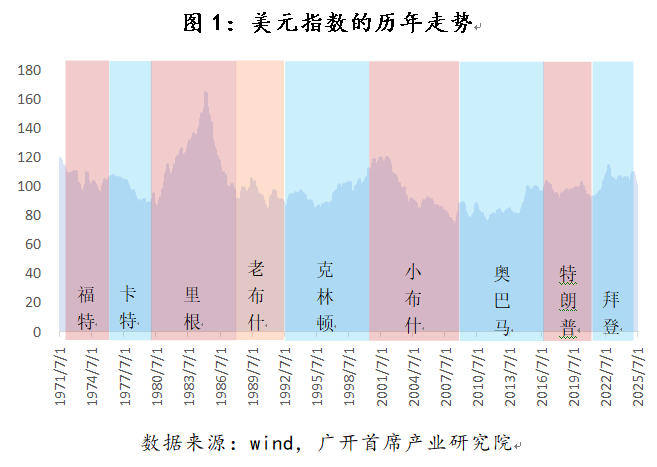
Group 1: Market Trends and Economic Indicators - The dollar index experienced a significant decline of over 10% in the first half of the year due to a series of unpredictable policies from the Trump administration, but rebounded in July with a monthly increase of over 3% [2][3] - Positive economic data in July, including a robust labor market, stable inflation, and a 3% increase in Q2 GDP, contributed to the dollar's rebound despite the actual economic situation being less optimistic [3] - The Federal Reserve's hawkish stance, as indicated by Powell's refusal to yield to pressure for rate cuts, has led to a decrease in market expectations for future rate cuts [4] Group 2: Tariff Policies and Fiscal Impact - The U.S. tariff revenue surged to $16 billion in April, marking a 130% year-on-year increase, with subsequent months also showing record high revenues [6] - Despite the increase in tariff revenue, the overall fiscal improvement in June was primarily due to a reduction in expenditures rather than increased revenue, highlighting the limitations of tariff policies [7] - The trade deficit did not show substantial improvement, as the reduction in imports was not due to a manufacturing rebound but rather a decrease in consumer and business demand [7][8] Group 3: Employment Data and Economic Outlook - The release of disappointing non-farm payroll data in August, with only 73,000 new jobs added, raised concerns about the labor market and led to speculation about potential rate cuts by the Federal Reserve [9][10] - The accuracy of the non-farm payroll data has been questioned due to a significant drop in survey response rates, which may have contributed to frequent revisions of employment figures [9][10] - The outlook for the dollar index suggests continued volatility below the 100 mark, with potential support from large-scale fiscal stimulus measures planned by the Trump administration [11][12]
在岸人民币对美元开盘上涨 报7.1722
Sou Hu Cai Jing· 2025-08-14 02:10
Core Viewpoint - The article discusses the recent fluctuations in the RMB to USD exchange rate and highlights concerns regarding the structural changes in demand for USD assets as a safe haven, influenced by rising political risks and uncertainties in fiscal outlooks [1]. Exchange Rate Summary - On August 14, the onshore RMB opened at 7.1722 against the USD, up from the previous day's closing of 7.1755 [1] - As of 9:30 AM, the offshore RMB was reported at 7.1760 against the USD [1] - The RMB's central parity rate against the USD was set at 7.1337, an increase of 13 points from the previous trading day [1] Dollar Index and Economic Insights - The USD index showed a downward trend, reported at 97.6432 as of 9:30 AM [1] - Gabriela Chimienti, an economist at the Asian Development Bank, noted that changes in monetary policy expectations are the main drivers of short-term fluctuations in the USD [1] - There is a concerning structural shift indicating a weakening demand for USD assets as a safe haven, attributed to rising political risks and doubts about institutional independence [1] - If this trend continues, it may reduce global demand for USD assets, exerting downward pressure on the USD and potentially increasing long-term borrowing costs in the U.S. [1]
美国贸易逆差收窄至860亿 美元资产吸引力增强
Jin Tou Wang· 2025-08-12 03:04
Core Viewpoint - The article highlights a significant reduction in the U.S. trade deficit, which has narrowed by 10.8% to $86 billion, the lowest level since September 2023, primarily due to a 4.2% decrease in imports, indicating a cooling domestic demand [1] Economic Indicators - The narrowing trade deficit is expected to lessen the drag of net exports on economic growth, contributing to a more optimistic outlook for the U.S. economy [1] - Economists have raised their GDP growth forecast for the second quarter from 2.4% to 2.9% following the positive trade data [1] Market Implications - The positive economic outlook is providing strong support for the U.S. dollar, enhancing investor confidence in dollar-denominated assets [1] - Analysts suggest that the dollar index is likely to maintain a relatively strong performance in light of improving economic fundamentals [1] Technical Analysis - Short-term resistance levels for the dollar index are identified at 98.75-98.80 and 99.00-99.05, while support levels are at 98.40-98.45 and 98.15-98.20 [1] - A trading strategy is proposed to buy within the range of 99.05-98.15, with a stop loss of 30 points and a target at the upper limit of the range [1]
聚焦下半年经济工作——多部门密集部署,传递哪些信号?
Ren Min Ri Bao Hai Wai Ban· 2025-08-05 23:48
Macro Policy - The macro policy focus for the second half of the year is "sustained efforts and timely enhancements" to stabilize employment and expand domestic demand [2] - The National Development and Reform Commission emphasizes solid execution of development reform work, focusing on major changes, important indicators, and significant issues [2] Fiscal Policy - The Ministry of Finance aims to utilize a more proactive fiscal policy and increase counter-cyclical adjustments, including accelerating the issuance of long-term special bonds and local government bonds [3] - The fiscal strategy includes improving the microeconomic cycle through tax and financial support for enterprises, and managing local government debt risks [3] Domestic Demand Expansion - Domestic demand contributed 68.8% to economic growth in the first half of the year, highlighting its role as a growth driver [4] - The National Development and Reform Commission plans to enhance investment and consumption, stimulate private investment, and support new consumption models [4] Consumer Policy - The Ministry of Finance is working on improving policies to support service consumption in areas like elderly care, childcare, culture, and tourism [5] - There is a focus on developing a healthy retail environment for duty-free goods and enhancing financial support for personal consumption loans [5] Employment and Livelihood - Employment remains a priority, with initiatives to expand job opportunities in sectors like digital economy and green economy [7] - The Ministry of Agriculture aims to ensure food security and complete the annual grain production target of approximately 1.4 trillion jin [7][8] Safety and Stability - The National Development and Reform Commission emphasizes the importance of maintaining safety in key sectors, including food, energy, and supply chains [8] - There is a commitment to enhance disaster prevention and safety production measures while supporting basic livelihood services [8]