
交通运输

Search documents
【数据发布】2025年1—11月份全国固定资产投资基本情况
中汽协会数据· 2025-12-16 09:04
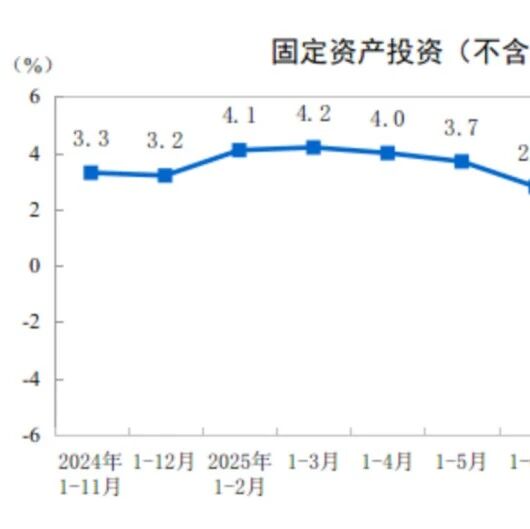
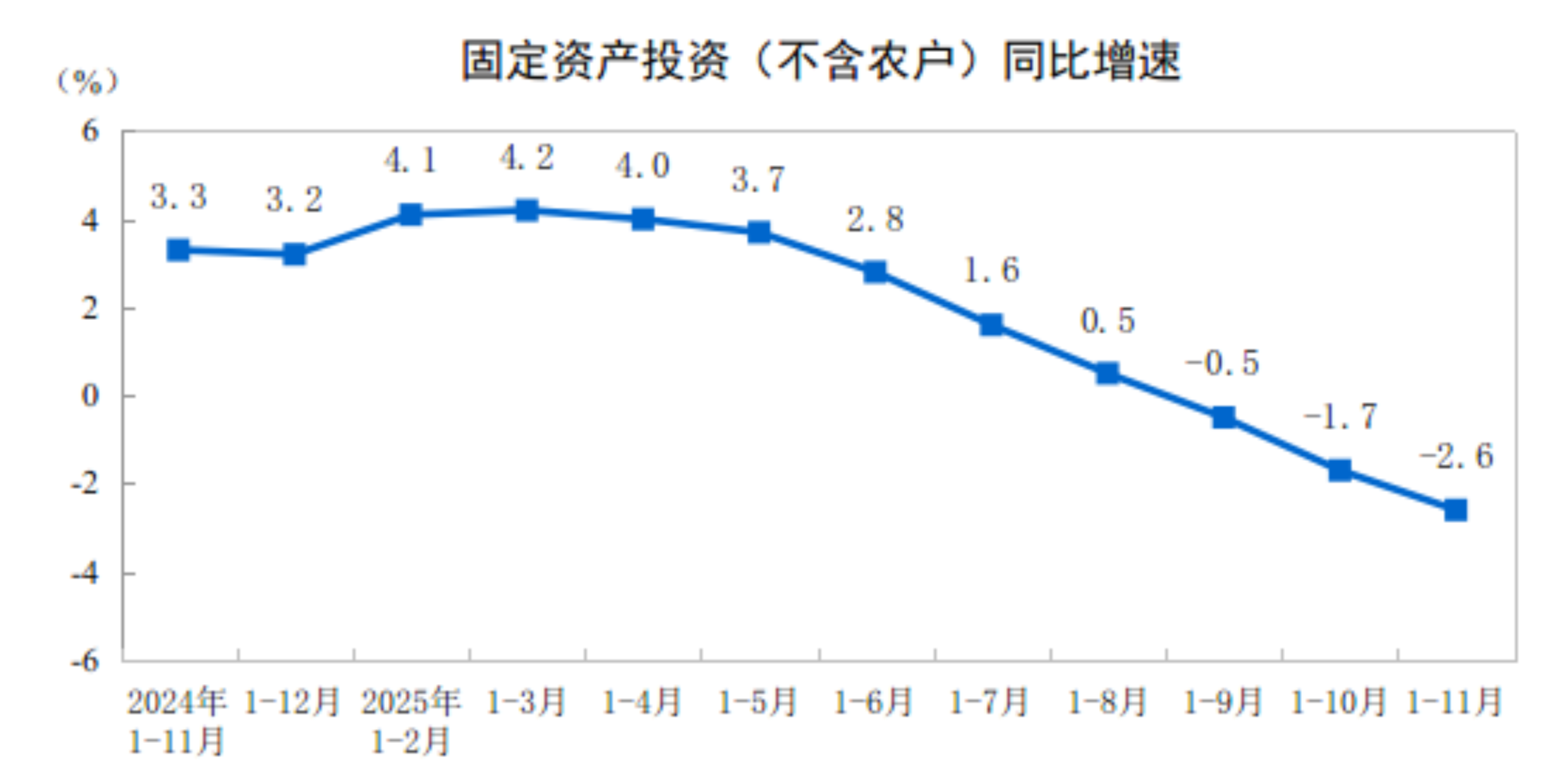
Core Viewpoint - The fixed asset investment in China (excluding rural households) for January to November 2025 is 444,035 billion yuan, showing a year-on-year decline of 2.6% [1][4]. Investment by Industry - Investment in the primary industry reached 8,770 billion yuan, with a year-on-year growth of 2.7% [3][4]. - The secondary industry saw an investment of 162,243 billion yuan, growing by 3.9% year-on-year, with industrial investment specifically increasing by 4.0% [3][4]. - The tertiary industry experienced a decline in investment to 273,022 billion yuan, down 6.3% year-on-year [3][4]. Secondary Industry Breakdown - Mining investment grew by 4.0%, while manufacturing investment increased by 1.9% [3][4]. - Notable growth was observed in the electricity, heat, gas, and water production and supply industry, which saw a 10.7% increase [3][4]. Tertiary Industry Breakdown - Infrastructure investment (excluding electricity, heat, gas, and water production and supply) decreased by 1.1% [3][4]. - Specific sectors such as pipeline transportation and water transportation saw increases of 16.8% and 8.9%, respectively [3][4]. Regional Investment Analysis - Eastern regions experienced a significant decline in investment by 6.6%, while central and western regions saw decreases of 1.7% and 0.2%, respectively [3][4]. - The northeastern region faced the largest drop at 14.0% [3][4]. Investment by Registration Type - Domestic enterprises' fixed asset investment fell by 2.6%, while investment from Hong Kong, Macau, and Taiwan enterprises decreased by 2.2% [3][4]. - Foreign enterprises experienced a substantial decline in investment by 14.1% [3][4].

转运关税难挡中国出海大势
Zheng Quan Shi Bao Wang· 2025-12-16 07:25
Core Viewpoint - The article discusses the resilience of China's export growth despite concerns over declining demand from the U.S. market, attributing this to China's diversified export strategy and strong demand from countries involved in the Belt and Road Initiative (BRI) [1][2]. Group 1: Export Diversification - China's export structure is diversifying, reducing reliance on the U.S. market, with the share of U.S. imports from China dropping to the lowest level since 2017, at only 9.4% in the first half of 2025 [2]. - The share of exports to BRI countries is increasing, with the second quarter of 2025 seeing a historical high of 16.1% in export share, indicating a structural shift in China's export dynamics [2][4]. Group 2: Global Demand and Investment - Non-U.S. countries are expected to maintain strong import demand, driven by their own industrialization and infrastructure needs, which supports China's export growth [3][4]. - The "Tariff 2.0" policy has catalyzed a new wave of global industrial migration, with Chinese capital goods exports increasing significantly to BRI regions, reflecting robust investment demand [3][5]. Group 3: Resilience Against U.S. Market Fluctuations - Historical patterns show that non-U.S. countries can experience independent import growth, even when U.S. demand is weak, as seen in 2017-2018, providing a stable foundation for China's exports [4]. - The ongoing industrial investments in BRI countries are not affected by U.S. consumer market fluctuations, enhancing the resilience of China's export performance [4][8]. Group 4: Consumer Market Growth - China's manufacturing sector is gaining traction in consumer markets of BRI countries, with exports to Africa showing significant growth, such as a 54.8% increase in motor vehicle exports by September 2025 [5]. - The shift from a focus on cost advantages to technological advantages in Chinese manufacturing is aligning with the upgrading consumer demands in BRI countries, fostering a dual-driven export model of capital and consumer goods [5][6]. Group 5: Long-term Strategic Outlook - China's long-term commitment to the BRI has strengthened its ties with global supply chains, making it less vulnerable to U.S. trade policies and enhancing its export resilience [6][7]. - The gradual easing of global trade uncertainties is expected to further boost investment demand in BRI countries, solidifying China's export growth momentum [8].
伊通社编译版:伊朗与白俄罗斯深化交通和物流合作
Shang Wu Bu Wang Zhan· 2025-12-16 05:04
伊通社12月8日报道,伊朗道路与城市发展部部长萨迪克与到访的白俄罗斯工业部长库兹涅佐夫会谈。 萨迪克表示,愿向白俄罗斯分配其南部港口及阿普林陆港的部分区域运力,并计划增加进口白俄罗斯车 辆,承诺以高效、具竞争力的价格承接过境货物。双方正积极推动签署一份多式联运谅解备忘录。在航 空领域,两国已就每周开通四班直航达成共识,旨在进一步促进贸易往来。目前,两国间公路运输的通 行证制度已取消,为车队往来扫清了障碍。(驻伊朗使馆经商处) ...
关注红利港股ETF(159331)投资机会,港股通高股息具备较强配置价值
Mei Ri Jing Ji Xin Wen· 2025-12-16 03:23
Group 1 - The core viewpoint is that the Hong Kong Stock Connect high dividend sectors currently possess strong allocation value due to improved liquidity and foreign capital inflow, with a projected net inflow of 1.3 trillion yuan by 2025 [1] - High dividend stocks generally exhibit robust cash flow and sustainable dividend capabilities, with major tech companies like Tencent and Alibaba offering shareholder returns exceeding 5% through dividends and buybacks, while some companies have dividend yields supported by free cash flow reaching 4%-6% [1] - The internet healthcare and OTA sectors maintain growth rates above 15%, with ongoing policy benefits such as the opening of online medical insurance payments in 18 cities and an increase in online drug sales, currently at 16% [1] Group 2 - The Hong Kong Dividend ETF (159331) tracks the Hong Kong Stock Connect high dividend index (930914), which selects 30 high dividend yield securities from listed companies that meet Stock Connect criteria, focusing on those with good liquidity and consistent dividends [1] - The index's constituent stocks are primarily distributed across banking, transportation, coal, and public utilities sectors, showcasing stable returns and low volatility characteristics [1] - The Hong Kong Dividend ETF has consistently distributed dividends for 16 months, making it noteworthy for investors [2]
红利国企ETF(510720)近20日净流入超8.6亿元,红利作为“避险锚”受益
Sou Hu Cai Jing· 2025-12-16 02:50
Group 1 - The core viewpoint of the news is that the Dividend State-Owned Enterprise ETF (510720) has seen a net inflow of over 860 million yuan in the past 20 days, benefiting from its role as a "safe haven" amid increased market volatility [1] - Recent market fluctuations have led investors to adopt a more cautious approach, with some funds shifting from aggressive to defensive strategies, resulting in a marginal increase in demand for dividend stocks [1] - The high resource weight in the dividend index makes it sensitive to sectoral leaders in coal and oil and gas, indicating a potential for significant returns in these areas [1] Group 2 - Regulatory adjustments have lowered stock risk factors and ongoing policies for long-term capital entering the market have expanded the allocation space for insurance funds, enhancing the marginal demand for dividend assets [1] - The acceleration of insurance capital acquisitions is expected between 2024 and 2025, with a high proportion of Hong Kong stocks and high-dividend targets reflecting a preference for low-volatility, high-dividend assets [1] - The new national policies reinforce cash dividend regulations and incentives, coupled with state-owned enterprise market value management requirements, strengthening the logic for long-term valuation restructuring [1] Group 3 - The Dividend State-Owned Enterprise ETF (510720) tracks the Shangguo Dividend Index (000151), which selects high-dividend capable and stable dividend record companies across industries such as banking, coal, and transportation, focusing on traditional high-dividend sectors [1] - The index employs a strict assessment of constituent stocks' dividend yields and sustainability, utilizing a cross-industry diversification strategy to effectively control investment risks and reflect the overall market performance of high-dividend companies [1] - The fund has consistently distributed dividends monthly since its listing, achieving 20 consecutive months of dividends [1]
A股低波红利指数及产品的投资价值与发展趋势
Shang Hai Zheng Quan Bao· 2025-12-15 19:19
Core Insights - The low-volatility dividend index demonstrates strong risk resistance, leading to increased market demand for related index products, particularly from long-term investors and financial institutions [2][8][9] Group 1: Characteristics of Low-Volatility Dividend Index - The low-volatility dividend index is based on high dividend and low volatility factors, with its first iteration launched in China in December 2013 [3] - The number of indices and related products has increased significantly, with 11 pure stock low-volatility dividend indices launched by the China Securities Index Company by Q1 2025 [4] - Investment scale in related products has surged, with passive index fund investments in major low-volatility dividend indices reaching 47.09 billion yuan in 2024, a 20-fold increase from 2022 [5] Group 2: Performance and Stability - The low-volatility dividend index has outperformed broad market indices and government bonds over the past three years, with a total return index nearly doubling in five years [5][6] - The index's volatility is lower than that of major market indices, with a significantly higher Sharpe ratio, indicating better risk-adjusted returns [6] - In extreme market conditions, the low-volatility dividend index has consistently outperformed the CSI 300 index, demonstrating its defensive characteristics [6] Group 3: Institutional Investor Engagement - Institutional investors hold a significant portion of low-volatility dividend products, with 85.53% of holdings attributed to them by the end of 2024 [7] - The introduction of new financial accounting standards has made it easier for insurance and brokerage firms to invest in low-volatility dividend equities [7] Group 4: Market Demand and Future Outlook - There is an anticipated increase in market demand for low-volatility dividend indices as long-term capital seeks stable investment options amid a low-interest-rate environment [9][10] - Financial institutions are increasingly viewing low-volatility dividend indices as a means to optimize asset allocation and enhance risk-adjusted returns [10] - Ordinary investors are also shifting towards more stable and long-term value investments, aligning with the characteristics of low-volatility dividend indices [10] Group 5: Limitations and Challenges - The sustainability of dividend yields and future performance is under scrutiny, particularly due to reliance on traditional cyclical industries [11] - There is a notable disparity in fund product performance, with smaller funds facing operational challenges and potential liquidation risks [12] - The index's reliance on short historical data may hinder its ability to adapt to market changes, affecting its long-term performance [12] Group 6: Recommendations for Development - It is recommended to encourage the creation and investment in low-volatility dividend indices and products, enhancing their market presence [13] - Increasing investor education and transparency regarding the benefits of low-volatility dividend indices is essential for broader adoption [14] - Optimizing the index compilation methodology to better reflect market trends and enhance its attractiveness is advised [15] - Improving the quality and governance of listed companies to ensure sustainable dividend practices is crucial for the long-term success of low-volatility dividend strategies [16]
2026年宏观经济与政策展望:势启新章处:破局与再平衡-西南证券
Sou Hu Cai Jing· 2025-12-15 16:12
Group 1 - The economic growth target for 2026 is expected to remain around 5%, with an actual growth rate of approximately 4.9% and a nominal GDP growth rate rising to about 4.2% [1][12][49] - Investment in the manufacturing sector is projected to grow by 5.2% driven by high-end and intelligent upgrades, while infrastructure investment is expected to increase by 6% due to major projects [1][30] - Real estate investment is anticipated to see a narrowing decline to -10%, with a focus on stabilizing new housing supply under the "good housing" standard [33][37] Group 2 - The consumer market is expected to grow significantly, with an optimistic forecast of a 5% increase in retail sales, particularly in county-level consumption and services such as healthcare and education [1][43][51] - The CPI and PPI are projected to rebound to 0.5% and a range of -1% to 0, respectively, indicating a focus on price stability [1][12] - The policy environment will continue to be supportive, with fiscal policies maintaining a loose stance, including a budget deficit rate potentially exceeding 4% and an expansion of special bond issuance [1][2][30] Group 3 - Global capital flows are shifting towards a geopolitical orientation, with China transitioning from a recipient of foreign investment to an exporter, particularly in future industries and critical metals [2][30] - The domestic development model is shifting from "investment in things" to "investment in people," aiming for a dynamic balance between efficiency and equity, with a projected increase of nearly 8 trillion yuan in consumer scale during the "14th Five-Year Plan" [2][30] - The economic landscape is showing structural differentiation, with the U.S. experiencing a cooling job market and Europe showing varied economic strength, while emerging markets face slowing growth [2][30]


红利国企ETF(510720)收涨超0.8%,市场关注红利资产防御属性
Sou Hu Cai Jing· 2025-12-15 10:26
Core Viewpoint - Dividend assets are attractive to risk-averse investors due to their stable high dividends and low valuation in a low-interest-rate environment, highlighting their defensive investment characteristics [1]. Group 1: Dividend Assets - Dividend assets provide stable cash flow and high dividend yields, making them a good defensive choice for investors [1]. - The Dividend State-Owned Enterprise ETF (510720) tracks the State-Owned Dividend Index (000151), which selects high-dividend capable and stable dividend record companies across various sectors such as banking, coal, and transportation [1]. - The index employs a rigorous assessment of constituent stocks' dividend yield and sustainability, utilizing a cross-industry diversification strategy to effectively control investment risks [1]. Group 2: Fund Performance - The Dividend State-Owned Enterprise ETF has consistently distributed dividends monthly since its listing, achieving 20 consecutive months of dividends [1].
2025年1-11月份全国固定资产投资基本情况
Guo Jia Tong Ji Ju· 2025-12-15 09:07
Core Insights - National fixed asset investment (excluding rural households) reached 444,035 billion yuan from January to November 2025, showing a year-on-year decline of 2.6% (on a comparable basis) [1] - Private fixed asset investment decreased by 5.3% year-on-year [1] Investment by Industry - Investment in the primary industry was 8,770 billion yuan, with a year-on-year growth of 2.7% [3] - Investment in the secondary industry totaled 162,243 billion yuan, growing by 3.9% [3] - Investment in the tertiary industry was 273,022 billion yuan, reflecting a decline of 6.3% [3] Secondary Industry Breakdown - Industrial investment in the secondary industry grew by 4.0% year-on-year [4] - Mining investment increased by 4.0%, while manufacturing investment grew by 1.9% [4] - Investment in the electricity, heat, gas, and water production and supply industry surged by 10.7% [4] Tertiary Industry Insights - Infrastructure investment (excluding electricity, heat, gas, and water production and supply) in the tertiary industry fell by 1.1% [4] - Notable growth in pipeline transportation investment at 16.8%, water transportation at 8.9%, and railway transportation at 2.7% [4] Regional Investment Trends - Eastern region investment declined by 6.6%, central region by 1.7%, western region by 0.2%, and northeastern region by 14.0% [4] Investment by Registration Type - Domestic enterprise fixed asset investment decreased by 2.6% [5] - Investment from Hong Kong, Macau, and Taiwan enterprises fell by 2.2% [5] - Foreign enterprise fixed asset investment saw a significant decline of 14.1% [5]
2025并购狂飙:全球交易额冲高4.5万亿美元,AI与监管政策成引擎
智通财经网· 2025-12-15 07:05
智通财经APP获悉,交易撮合者们正带着一个价值千亿美元的悬念步入2025年的最后几周。派拉蒙天舞 公司(PSKY.US)从奈飞公司(NFLX.US)眼皮底下抢购华纳兄弟探索公司(WBD.US)的收购要约,概括了定 义这个并购大年的几个主题:对变革性联姻重燃的渴望、来自华尔街的大笔支票、中东资金的涌入,以 及美国总统唐纳德·特朗普作为颠覆者和交易促成者的双重角色。 "这些股市回报确实来自人工智能,而人工智能的支出是不可持续的,"摩根大通全球投行业务主席查理 ·杜普雷表示。"如果这方面出现退潮,那么你会看到一个更广泛的市场实际上并没有在进步。" 人工智能热潮促成了今年一些引人注目的交易。萨姆·奥特曼的OpenAI接受了来自软银集团、英伟达公 司(NVDA.US)和华特迪士尼公司(DIS.US)等的主要投资;由贝莱德旗下全球基础设施合作伙伴牵头的财 团同意支付400亿美元收购Aligned数据中心。三月,谷歌母公司Alphabet将其以320亿美元收购网络安全 初创公司Wiz Inc.的交易描述为在人工智能时代为客户提供新保障的一种方式。 "现在每个人都需要成为人工智能银行家,"摩根士丹利全球科技并购主管Wally ...

