饮料

Search documents
东鹏饮料(605499):首次覆盖报告:能量饮料龙头迈向综合平台型公司
Shanghai Aijian Securities· 2025-12-26 08:58
Investment Rating - The report assigns a "Buy" rating for Dongpeng Beverage (605499.SH) as a first-time coverage [2]. Core Views - Dongpeng Beverage is transitioning from a leading energy drink company to a comprehensive platform company, with strong growth prospects. The projected revenues for 2025, 2026, and 2027 are estimated at 210.2 billion, 260.8 billion, and 314.8 billion yuan, respectively, representing year-on-year growth of 32.7%, 24.1%, and 20.7%. The net profits attributable to the parent company are expected to be 45.2 billion, 58.1 billion, and 70.9 billion yuan, with growth rates of 35.8%, 28.5%, and 22.0% respectively, corresponding to PE ratios of 31.3X, 24.4X, and 20.0X [5][6]. Summary by Sections Market Data - As of December 25, 2025, the closing price is 272.11 yuan, with a one-year high of 336.50 yuan and a low of 208.8 yuan. The price-to-book ratio is 16.1, and the dividend yield is 1.84%. The circulating A-share market value is 141,501 million yuan [2]. Financial Data and Profit Forecast - The total revenue for 2023 is 11,263 million yuan, with a year-on-year growth rate of 32.4%. The net profit for the same year is projected at 2,040 million yuan, reflecting a growth of 41.6%. The expected revenues for 2025, 2026, and 2027 are 21,020 million, 26,080 million, and 31,481 million yuan, with corresponding net profits of 4,518 million, 5,807 million, and 7,088 million yuan [7][24]. Industry and Company Analysis - The energy drink market in China is expected to grow steadily, with a market size of approximately 1,114 billion yuan in 2024 and a compound annual growth rate of about 7.7% from 2019 to 2024. Dongpeng Beverage has maintained the top sales position in the energy drink market for four consecutive years from 2021 to 2024, increasing its market share from 15.0% to 26.3% during this period [5][6]. Growth Drivers - The company is benefiting from the competitive landscape improvement due to the Red Bull trademark dispute, which has allowed for a more favorable market environment. The revenue from energy drinks is projected to be 159.6 billion, 183.6 billion, and 209.3 billion yuan for 2025, 2026, and 2027, with growth rates of 20.0%, 15.0%, and 14.0% respectively [5][8]. Product Diversification - Dongpeng Beverage is expanding its product matrix beyond energy drinks to include electrolyte drinks and other beverages, with significant growth in the electrolyte drink segment, which has seen a revenue increase of 134.7% year-on-year [5][6]. The revenue from other beverages is also expected to grow significantly, indicating a successful diversification strategy [5][8]. Market Positioning - The company has successfully transitioned from a regional brand to a national brand, with over 70% of its revenue coming from non-Guangdong markets. The number of distributors has reached 3,271, indicating deep coverage in major regions across the country [5][6]. Catalysts for Stock Price - Key catalysts for stock price growth include the successful launch of new products like "Buli" and the ongoing Red Bull trademark dispute, which is reshaping the industry landscape. The company is also expanding its production capacity to support nationwide distribution [8]

研报掘金丨东吴证券:维持东鹏饮料“买入”评级,坚定平台化战略,多品类稳步加力
Ge Long Hui A P P· 2025-12-26 06:09
Group 1 - The core viewpoint of the article emphasizes Dongpeng Beverage's commitment to a platform strategy and its steady expansion across multiple product categories [1] - Dongpeng plans to fully implement its "1+6" multi-category strategy by 2026, aiming to establish itself as a leading beverage group in China [1] - The "1" in the strategy refers to Dongpeng Special Drink, while the "6" includes various beverages such as electrolyte drink "Bushi La," large-pack drink "Guo Zhi Cha," coconut drink "Hai Dao Ye," ready-to-drink milk tea "Gang Shi Nai Cha," sugar-free tea drink "Shang Cha," and coffee drink "Da Ka" [1] Group 2 - The company is leveraging its latecomer advantage and deep insights into the beverage market to position itself in promising segments [1] - Dongpeng is optimistic about its platform potential in the medium to long term, with diversification and accelerated overseas expansion towards becoming a beverage giant [1] - Current forecasts for net profit attributable to the parent company for 2025-2027 are 4.601 billion, 5.847 billion, and 7.051 billion yuan, with corresponding PE ratios of 31, 24, and 20 times [1]

面包市场分化:桃李下滑,宾堡扩张丨消费参考
2 1 Shi Ji Jing Ji Bao Dao· 2025-12-26 02:36
Group 1: Company Performance - Tao Li Bread reported a revenue decline of 12.88% year-on-year to 4.049 billion yuan for the first three quarters of 2025, with a net profit attributable to shareholders down 31.49% to 298 million yuan [1] - In Q3, Tao Li's revenue fell by 11.64% year-on-year to 1.437 billion yuan, and net profit dropped by 35.05% to 94 million yuan [1] - The company experienced a nationwide sales decline, with revenues in the North, Northeast, and East China regions decreasing by 10.14%, 14.24%, and 8.25% respectively, while the Central region saw a revenue increase of 7.78% to 60 million yuan [1] Group 2: Competitive Landscape - Bimbo Group is in an expansion phase in China, with a significant increase in effective sales points compared to the previous year, and is likely experiencing revenue growth [2] - Bimbo's growth is driven by B2B channels, including long-term supply agreements with well-known fast-food chains and airlines, and a recent strategic agreement with Dingdong Maicai for overseas business expansion [3] - Bimbo's B2B operations benefit from higher gross margins due to reduced channel costs and marketing expenses, with brand recognition aiding market entry [3] Group 3: Market Strategy - Bimbo's strategy of controlling scale while expanding B2B markets is seen as a viable path for survival in the current market environment [6] - Despite Bimbo's growth, it still has a distance to cover to match Tao Li's overall national scale, but focusing on key urban areas is considered beneficial for stable performance [5]


海通国际:首予中国旺旺(00151)“优大于市”评级 目标价5.76港元
Zhi Tong Cai Jing· 2025-12-26 02:13
Core Viewpoint - Haitong International projects that China Wangwang (00151) will achieve revenues of 24.05 billion, 24.65 billion, and 25.27 billion yuan for FY2025-2027, with year-on-year growth rates of 2.3%, 2.5%, and 2.5% respectively. The net profit attributable to the parent company is expected to be 4.17 billion, 4.41 billion, and 4.61 billion yuan, with changes of -3.8%, +5.7%, and +4.6% respectively, corresponding to EPS of 0.35, 0.37, and 0.39 yuan. The company is given a target price of 5.76 HKD based on a 15x PE for FY2025, indicating a 15% upside potential [1][2]. Group 1 - The food and beverage industry has a multi-track layout, with comprehensive marketing enhancing brand strength. China Wangwang has developed into a well-known leader in the food and beverage sector over more than sixty years, covering various segments such as rice snacks, dairy beverages, and leisure foods. The company has a concentrated shareholding structure and stable internal governance, with most executives possessing rich industry experience. Wangwang actively engages in multi-faceted marketing, significantly enhancing brand awareness and becoming a household name [2]. Group 2 - The core business of dairy beverages is steadily expanding, while new products and channels drive the recovery of rice snacks. The dairy beverage category contributes over half of the revenue, with a projected CAGR of approximately 3.7% from FY18-24. The company expects revenue growth for dairy beverages of 0.5%, 2%, and 2% for FY25-27. The rice snack business has seen new products account for a double-digit percentage of revenue in FY25H1, and is expected to recover growth with projected revenue increases of 3.5%, 2%, and 2% for FY25-27. The leisure food segment, particularly candy, is expected to grow at rates of 5%, 4%, and 4% for FY25-27. The company is actively seeking breakthroughs through organizational changes, expanding emerging channels, and focusing on overseas markets, with non-traditional channel revenue increasing from less than 10% to about 35% from 21H1 to 25H1 [3]. Group 3 - Raw material costs are controllable, and operational efficiency is continuously optimized, with profitability expected to rebound after short-term pressure. The company's gross margin is improving due to declining costs, and it plans to address rising imported milk powder prices through domestic alternatives. The company has strengthened control over channel expenses and optimized warehousing and logistics investments. Although the expense ratio may be temporarily pressured due to organizational restructuring in FY24H2, overall EBIT margin is projected to be 23.8%, 23.9%, and 24.1% for FY25-27 [4].

盘一盘2025:AI营销黑榜,谁在降本增“笑”?
3 6 Ke· 2025-12-26 00:23
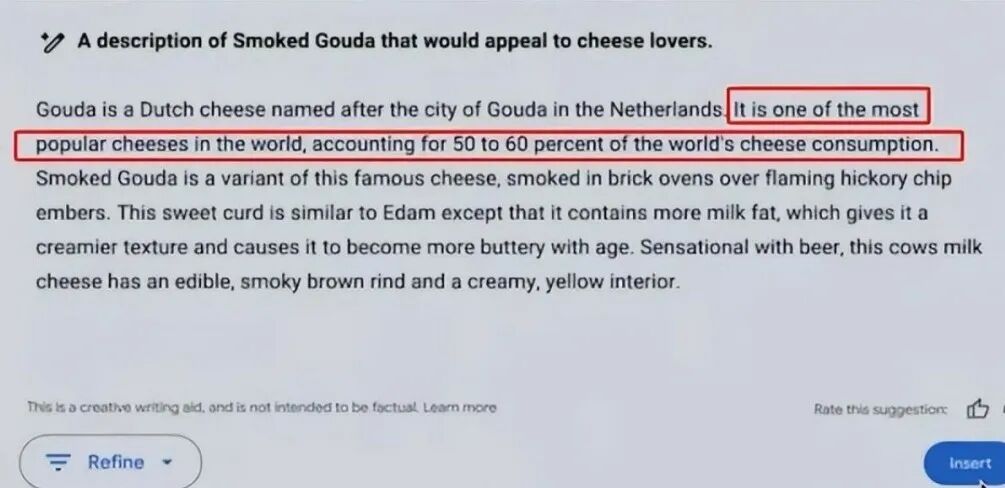
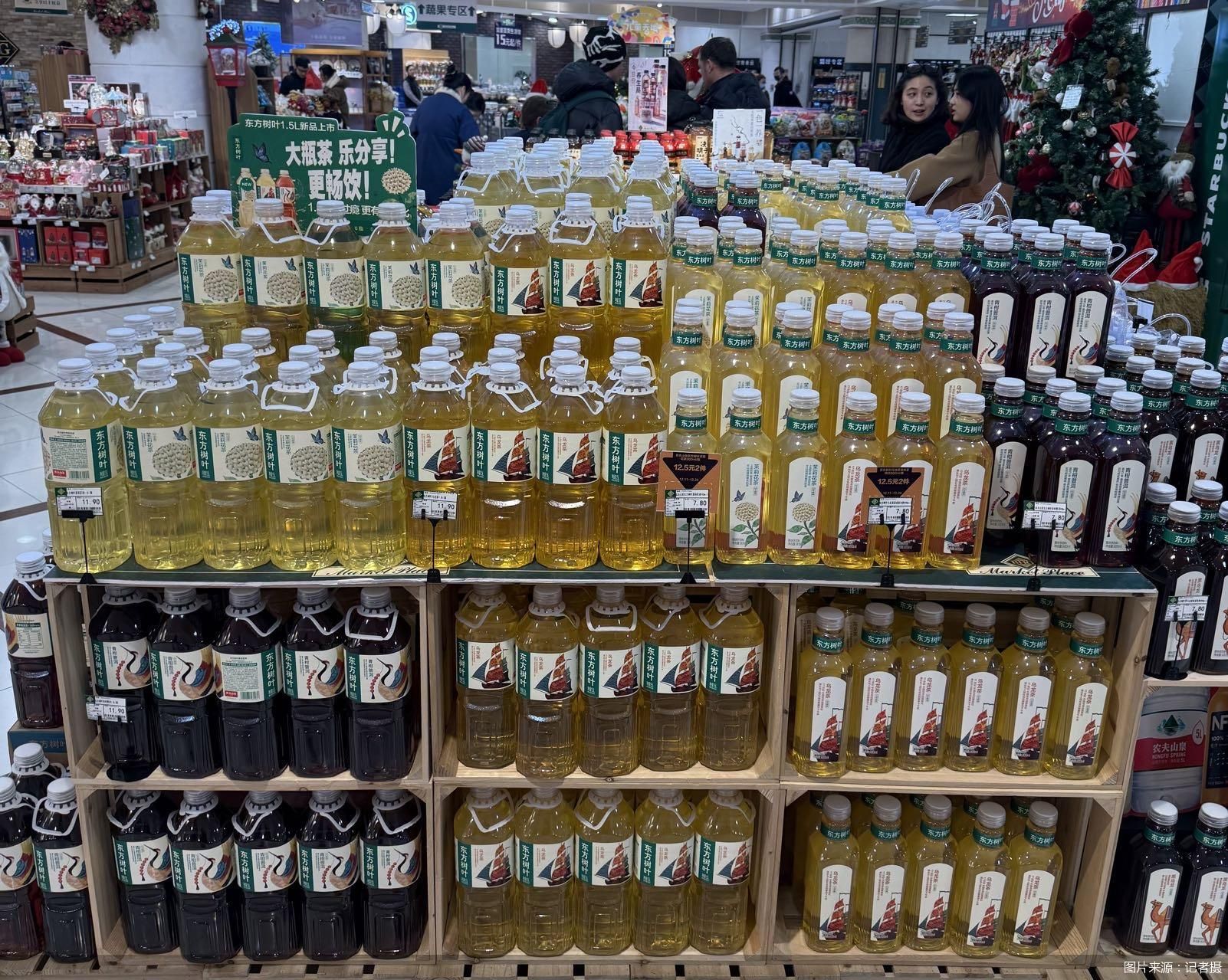
Core Insights - The advertising industry is at the forefront of utilizing AI for cost reduction and efficiency, but it faces significant challenges and failures in execution [1] Group 1: Major Failures in AI Advertising - Google's Super Bowl AI advertisement faced backlash due to a misleading claim about cheese consumption, which was generated by its Gemini AI [1] - Asiaray's advertisement featuring a girl with six fingers sparked public discomfort and criticism, highlighting the potential pitfalls of AI-generated content [3] - Oriental Tree Leaf's outdoor advertisement was criticized for its lack of authenticity, with models displaying unnatural expressions and proportions, raising concerns about the quality of AI-generated visuals [5] - A promotional image from Liangpinpuzi incorrectly depicted peanuts hanging from trees, leading to a public apology and a commitment to review all promotional materials for accuracy [7] - Coca-Cola's AI-generated Christmas advertisement was criticized for lacking creativity and failing to evoke the intended festive spirit, as it merely paid homage to previous ads without innovation [9] - McDonald's AI-generated Christmas advertisement was deemed negative and unsettling, leading to its removal after public backlash [10] Group 2: Industry Insights and Recommendations - The failures in AI advertising underscore the necessity for rigorous human oversight in content creation, emphasizing that factual accuracy and common sense are non-negotiable standards [11] - Industry professionals are encouraged to enhance their aesthetic judgment and not overly rely on AI for creative processes, ensuring that the quality of advertising materials is maintained [12] - Brands must prioritize trust and be cautious of the "hidden costs" associated with using subpar AI-generated content, as it can damage brand perception and customer relationships [12]



剥离、坚守、卷上游:新势力的“三盘棋”
Xin Lang Cai Jing· 2025-12-25 17:24
Core Insights - The Chinese food and beverage industry is undergoing significant transformation in 2025, with traditional companies facing challenges such as channel restructuring and product upgrades, while emerging brands leverage differentiated positioning and digital marketing to rise rapidly [1] Group 1: Yuanqi Forest - Yuanqi Forest has completed a strategic "slimming" by spinning off its dairy brand Beihai Pasture to focus on its core beverage categories, including sparkling water and herbal tea, thus avoiding competition in the low-temperature yogurt segment [3][4] - In 2025, Yuanqi Forest reported a 26% year-on-year increase in overall performance, maintaining double-digit growth for three consecutive years, significantly outperforming the industry average growth rate of 4.8% [4] - The company has invested heavily in production capabilities, establishing six major factories with a total investment of 7.25 billion yuan, achieving an annual production capacity of 6.5 billion bottles [5] Group 2: Guozi Shule - Guozi Shule has announced its commitment to the sugar-free tea segment, focusing resources on this area despite a slowdown in growth, with market share reaching third place in the domestic market [7][8] - The brand's strategy involves leveraging existing channels and brand strength to capture market share from underperforming competitors, as the sugar-free tea market enters a phase of consolidation [8][9] - Guozi Shule has diversified its product offerings, including electrolyte water, and has adopted a multi-brand strategy to adapt to market changes [8][9] Group 3: Rely on a Cow - Rely on a Cow is innovating in the dairy sector by launching differentiated products aimed at children and families, including A2 milk and flavored fermented milk, while maintaining a focus on quality through its proprietary breeding system [10][11] - The company has established a robust supply chain with over 100,000 dairy cows and a self-sufficiency rate of 95%, ensuring stable milk supply and quality [11] - The dairy industry is experiencing a slowdown in growth, with a 7.5% decline in liquid milk sales from January to May 2025, highlighting the need for continuous product innovation to meet evolving consumer demands [12]
乳饮2025 | 剥离、坚守、卷上游 新势力的“三盘棋”
Bei Jing Shang Bao· 2025-12-25 14:10
Core Insights - The Chinese food and beverage industry is undergoing significant transformation in 2025, with traditional companies facing challenges such as channel restructuring, product upgrades, and public opinion crises, while emerging brands are rapidly rising through differentiated positioning, digital marketing, and supply chain strategies [1] Group 1: Yuanqi Forest - Yuanqi Forest has completed a strategic "slimming" by spinning off its dairy brand Beihai Pasture to focus on its core beverage categories, including sparkling water, electrolyte water, health water, iced tea, and milk tea [2] - In 2025, Yuanqi Forest achieved a 26% year-on-year growth in overall performance, significantly outpacing the fast-moving consumer goods (FMCG) industry average growth rate of 4.8% [3] - The company has invested 7.25 billion yuan in building six major factories, achieving an annual production capacity of 6.5 billion bottles of beverages by the end of 2024 [3] Group 2: Guozi Shule - Guozi Shule has announced its commitment to focus on the no-sugar tea segment and electrolyte water, despite a slowdown in the growth of the no-sugar tea market [5] - The brand has achieved a market share of approximately 3rd place in the no-sugar tea segment in China as of the first half of the year [6] - Guozi Shule has launched a new electrolyte water product line, which has quickly gained market share, reaching about 1.25% in September [7] Group 3: Renyang Yitou Niu - Renyang Yitou Niu is leveraging product innovation and deep market penetration to create a multi-tiered product matrix targeting children, families, and young consumers [9] - The company has established ten modern dairy farms and has a self-sufficiency rate of over 95% for its milk supply, ensuring stable quality and availability [10] - The overall liquid milk sales in China have seen a decline of 7.5% year-on-year from January to May 2025, with a further drop to 9.6% in June, indicating a challenging market environment [10]
乳饮2025|剥离、坚守、卷上游,新势力的“三盘棋”
Bei Jing Shang Bao· 2025-12-25 13:37
Core Insights - The Chinese food and beverage industry is undergoing significant transformation in 2025, with traditional companies facing challenges such as channel restructuring, product upgrades, and public opinion crises, while emerging brands are rapidly rising through differentiated positioning and digital marketing [1] Group 1: Yuanqi Forest - Yuanqi Forest has completed a strategic "slimming" by spinning off its dairy brand Beihai Pasture to focus on its core beverage categories, including sparkling water, electrolyte water, health water, iced tea, and milk tea [3][4] - In 2025, Yuanqi Forest achieved a 26% year-on-year growth in overall performance, significantly exceeding the fast-moving consumer goods (FMCG) industry average growth rate of 4.8% [4] - The company has invested 7.25 billion yuan in building six large factories, achieving an annual production capacity of 6.5 billion bottles of beverages by the end of 2024 [6] Group 2: Guozi Shule - Guozi Shule has maintained "resilient growth" in the competitive no-sugar tea market and plans to focus on this segment while also promoting electrolyte water starting in 2026 [9][10] - The no-sugar tea market has shown a slowdown in growth, with sales growth rates declining compared to the previous year, indicating a shift towards a more mature market phase [9][10] - Guozi Shule has diversified its product offerings, including no-sugar tea, electrolyte drinks, and various other beverage categories, supported by its self-built factories [11] Group 3: Renyang Yitou Niu - Renyang Yitou Niu is leveraging product innovation and deep market penetration to build a multi-layered product matrix targeting children, families, and young consumers [13] - The company has launched differentiated products, including lychee-flavored fermented milk and A2-type children's milk, while maintaining a high self-sufficiency rate of 95% for its milk sources [14] - The dairy industry is experiencing a structural adjustment, with a decline in liquid milk sales, highlighting the need for continuous product innovation to meet evolving consumer demands [15]
成本不到3元,溢价超300%!网红抗炎神器爆火,收割了谁
2 1 Shi Ji Jing Ji Bao Dao· 2025-12-25 12:54
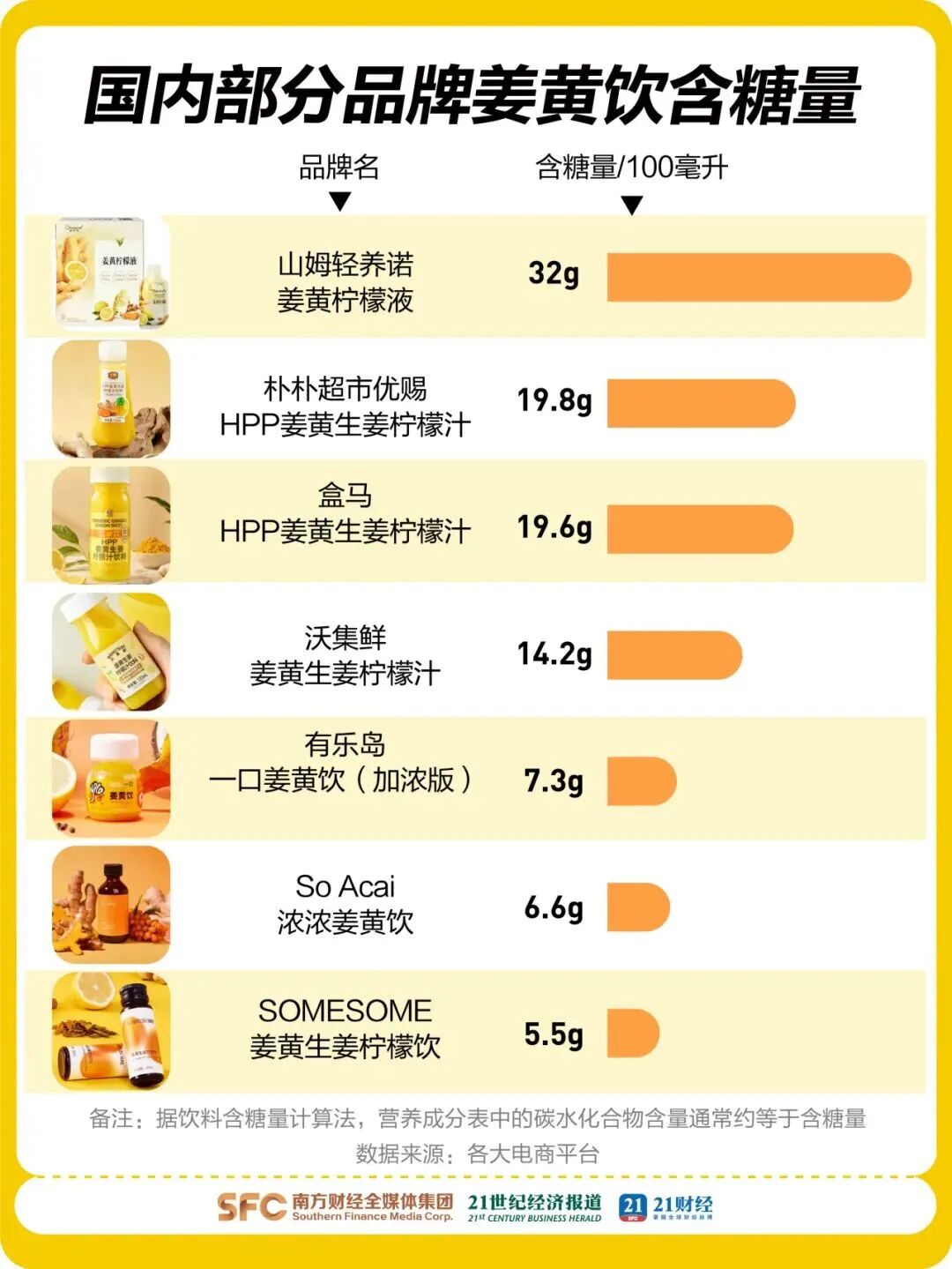
Core Insights - The rise of turmeric drinks as a health trend is driven by consumer demand for wellness, but there are significant gaps between marketing claims and actual health benefits [1][5][6] - Turmeric's active ingredient, curcumin, shows potential anti-inflammatory properties in laboratory settings, but the effectiveness in humans is questionable due to absorption issues [2][3] - Many turmeric drinks on the market contain insufficient curcumin levels to achieve the claimed health benefits, leading to consumer misconceptions [3][7] Market Dynamics - The surge in turmeric drink popularity reflects a broader trend of consumers seeking quick and easy health solutions amid modern lifestyle pressures [5][6] - Marketing strategies often emphasize the exotic nature of turmeric combined with Western health trends, creating a high demand for these products [6][7] - The cost of turmeric drinks is significantly inflated, with production costs being low compared to retail prices, leading to high profit margins for companies [7] Consumer Awareness - Consumers often confuse turmeric drinks with health supplements, not recognizing that these products are essentially regular foods without proven health claims [5][8] - There is a need for consumers to critically evaluate product labels, focusing on curcumin content and sugar levels to avoid misleading marketing [8] - The emphasis on high sugar content in many turmeric drinks contradicts their purported health benefits, potentially leading to adverse health effects [4][8]
消费热潮来袭!政策加码,股市资金涌入,机构密集调研揭示哪些新机遇?
Sou Hu Cai Jing· 2025-12-25 03:59
Group 1 - The core viewpoint of the articles highlights the proactive measures taken by various regions in China to stimulate consumer spending ahead of the traditional consumption peak season, with a focus on integrating business and finance to enhance consumer demand [1][3] - During the "14th Five-Year Plan" period, China's total retail sales of consumer goods are projected to increase from 39.1 trillion yuan in 2020 to 48.3 trillion yuan by 2024, representing an average annual growth rate of 5.5% [1] - The Ministry of Commerce, the People's Bank of China, and the financial regulatory authority have issued a notice to strengthen collaboration between local departments and financial institutions to promote consumer spending [1] Group 2 - In the capital market, over 22 billion yuan has flowed into more than 20 ETFs focused on consumption themes, including tourism and food and beverage, since December 1 [3] - The Wande Consumer Index and Wande Domestic Demand Upgrade Index consist of 87 stocks primarily in the pharmaceutical, automotive, electronics, and food and beverage sectors, with a total financing balance of nearly 320 billion yuan, reflecting a growth of over 45% since the end of last year [3] - Several companies, such as Huichuan Technology and Mindray Medical, have attracted significant institutional interest, with Huichuan receiving over 1,600 institutional visits and Mindray hosting around 1,000 [3]