
酒类

Search documents
小劲酒单品冲百亿,白酒的未来是“不做白酒”?
阿尔法工场研究院· 2025-08-05 00:06
Core Viewpoint - The rise of the small Jinjiao brand reflects a shift in the white liquor industry towards younger consumers, emphasizing the need for brands to adapt without losing their core values [2][39] Group 1: Sales Performance and Market Dynamics - The claim of "100 billion sales" for small Jinjiao is based on a linear extrapolation from a sales increase of 42.45% in the first half of 2024, with actual sales of 31.1 billion yuan in the same period [10][11] - The sales of small Jinjiao have been influenced by social media trends, leading to increased attention and temporary spikes in sales, but sustainability remains uncertain [9][12] - The company has not surpassed its historical sales peak of 80 billion yuan since 2017, indicating fluctuations in growth rather than a consistent upward trajectory [11] Group 2: Consumer Trends and Product Innovation - The creative mixing of small Jinjiao with childhood beverages like AD calcium milk reflects a new consumption logic that resonates with younger consumers seeking both enjoyment and health [15][20] - The company has adjusted its product offerings, including lowering the alcohol content from 35% to 28% and introducing sugar-free versions to align with health trends [21][22] - The marketing strategy has shifted to target younger demographics, including women and high-net-worth individuals, moving away from traditional male-centric marketing [25][26] Group 3: Marketing and Channel Strategies - The establishment of a dedicated content marketing team has allowed the company to effectively engage with younger audiences through social media platforms [26] - The sales model has transitioned from a focus on inventory pressure to creating value for end-users, enhancing the authenticity of sales data [27][28] - The brand's differentiation from traditional high-end liquor is a key factor in attracting younger consumers, as it emphasizes social enjoyment over formal occasions [23][24] Group 4: Industry Challenges and Future Outlook - The competition in the health-oriented liquor segment is intensifying, with established brands launching similar products, posing a threat to small Jinjiao's market share [36][38] - The inherent conflict between new consumption trends and the traditional aging process of liquor presents a challenge for brands to innovate while maintaining quality [34][35] - The ability of small Jinjiao to maintain its current popularity will depend on continuous innovation and the preservation of its brand identity amidst changing consumer preferences [32][39]

对等关税伤美民众钱包,涨价潮席卷电脑手表衣鞋酒类
Sou Hu Cai Jing· 2025-08-04 21:22
Group 1 - The latest tariffs announced by Trump will take effect on August 7, impacting a wide range of imported goods, including computers, electronics, watches, clothing, shoes, and alcoholic beverages, potentially leading to price increases for consumers [1][3]. - Goldman Sachs estimates that consumers will start feeling the impact of these tariffs within eight months [1][7]. - The new tariffs will impose rates ranging from 10% to 41% on nearly 70 countries, affecting the prices of various consumer goods [3]. Group 2 - Yale University's budget laboratory estimates that if the new tariffs are implemented indefinitely, prices for computers and other electronic products could rise by 18.2% in the short term (2 to 3 years) and by 7.7% in the long term (3 to 10 years) [4]. - Clothing, being one of the most imported goods in the U.S., is expected to see a short-term price increase of 37.5% and a long-term increase of 17.4% due to tariffs imposed on major exporting countries like China, Vietnam, Bangladesh, India, and Indonesia [4]. - Swiss watches, a significant export to the U.S. with over $4 billion in sales last year, will face a 39% tariff, likely affecting their prices [5]. Group 3 - Vietnam and Indonesia, major producers of footwear, will see tariffs of at least 19% starting next week, which could lead to increased prices for shoes [6]. - The U.S. wine and spirits market, where imported products account for 35% of total sales, will face a 15% tariff on imports from the EU, impacting prices for alcoholic beverages [6]. - Furniture and toys, primarily imported from Vietnam and China, are also expected to see price increases due to the looming tariffs, with manufacturers already warning of potential hikes [7].
天佑德酒股价微跌0.10%,公司新聘副总经理引发关注
Jin Rong Jie· 2025-08-04 19:20
Group 1 - The stock price of Tianyoude Liquor is reported at 9.94 yuan as of August 4, 2025, with a slight decrease of 0.01 yuan from the previous trading day [1] - The trading volume on the same day was 52,219 hands, with a transaction amount of 0.52 billion yuan and a turnover rate of 1.10% [1] - Tianyoude Liquor primarily engages in the production and sales of alcoholic beverages, which account for 86.13% of the company's revenue [1] Group 2 - The company is also involved in e-commerce platform operations and other wholesale and retail businesses [1] - On August 1, the company announced the appointment of Lu Shuilong as the vice general manager, following a nomination by the general manager and approval by the board [1] - On August 4, there was a net outflow of 1.6758 million yuan in main funds, with a cumulative net outflow of 31.0557 million yuan over the past five trading days [1]

茅台又出手了!已回购超53亿元
2 1 Shi Ji Jing Ji Bao Dao· 2025-08-04 14:47
Group 1 - Guizhou Moutai announced a share buyback of 69,600 shares in July, totaling a payment of 99.93 million yuan, with a cumulative buyback of 3.4517 million shares and a total payment of 5.301 billion yuan by the end of July [1][2] - The buyback program was initiated to protect the interests of shareholders and enhance investor confidence, with a planned buyback amount between 3 billion and 6 billion yuan [2] - The company emphasized a shift from "channel-oriented" to "consumer-oriented" strategies to improve service quality and meet consumer demand for high-quality products [3] Group 2 - The price of Moutai products has seen significant declines, with the price of the 25-year Flying Moutai dropping to 1,860 yuan per bottle, a decrease of 16.22% from its peak [4] - The wholesale price of the Moutai Zodiac Snake wine fell to 1,995 yuan per bottle, marking a 47.5% drop from its initial high [3][4] - The overall market for Moutai products is experiencing a downturn, with various products seeing price reductions, indicating a broader trend affecting the brand [4] Group 3 - The A-share market showed a reversal with all three major indices rising, indicating a high level of market activity despite short-term fluctuations [5] - The market's liquidity remains robust, with an increase in financing balance and participation from public and private funds, suggesting a positive outlook for future investments [6] - The focus on "anti-involution" policies and the growth potential in the consumer services sector are highlighted as key themes for future market trends [6]

食品饮料:酒类周报:酒企布局即时零售,加大新渠道拓展-20250804
Ping An Securities· 2025-08-04 06:56
Investment Rating - Industry investment rating is "Outperform the Market" (expected to outperform the market index by more than 5% in the next 6 months) [18] Core Viewpoints - The report highlights that liquor companies are expanding into instant retail and increasing new channel development. The launch of "Moutai Sauce Fragrance·Shared by Thousands of Families" on Meituan Flash Purchase is a significant step, with Moutai's authorized stores entering this channel in bulk, which is expected to enhance downstream sales and support healthy industry development [8][14] - The report identifies three main investment lines: high-end liquor with relatively strong demand, mid-range liquor with ongoing national expansion, and real estate liquor products positioned in expanding price ranges [8] Summary by Sections Price Data Tracking - As of August 1, 2025, the wholesale price of Moutai (2022) is 2020 CNY per box, down 30 CNY from the previous week, while the price of the 2022 loose bottle remains stable at 1940 CNY per bottle [9] - The price of Wuliangye (Baijiu) is 900 CNY per bottle, unchanged from the previous week [9] Production Data Tracking - In June 2025, China's liquor production was 330,000 kiloliters, down 6.5% year-on-year; beer production was 4.12 million kiloliters, down 0.2%; soft drink production was 18.43 million kiloliters, up 3.2%; and wine production was 9000 kiloliters, down 18.2% [12] Company Announcements and Events Summary - In the first half of 2025, the liquor, beverage, and refined tea manufacturing industry saw a revenue of 814.69 billion CNY, a year-on-year increase of 1.9%, but profits fell by 2.1% [14] - Qingdao Beer expects its transaction volume on Meituan Flash Purchase to exceed 1.5 billion CNY for the year, with sales up nearly 60% year-on-year in the first half of 2025 [14]
汾酒老作坊酒馆:以文化为桥,撬动酒类消费新市场
Sou Hu Cai Jing· 2025-08-04 05:59
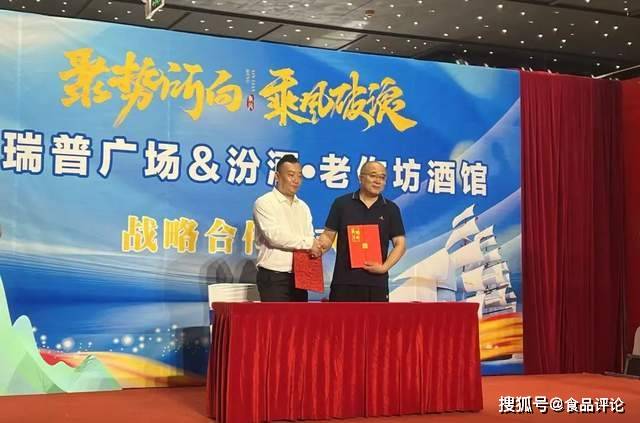
2025 年 7 月 21 日,山西杏花村酒家连锁管理有限公司与山西雅阁瑞普家居广场有限公司的战略合作签 约仪式,为汾酒文化传播与酒类体验式营销写下了浓墨重彩的一笔。双方携手打造的汾酒老作坊酒馆项 目,不仅是一次商业资源的整合,更是汾酒以"老文化"对接 "新消费"的创新尝试,是杏花村酒家品牌 矩阵的重要延续与补充,更是汾酒集团年轻化战略与千年文化具象化的生动实践。 酒家连锁公司长期深耕汾酒文化推广,旗下拥有杏花村酒家、汾酒老作坊酒馆、杏花村小酒馆等多个项 目。其中,汾酒老作坊酒馆与杏花村小酒馆作为杏花村酒家品牌的延续与丰富,共同构成了适应当前消 费结构调整的新型消费场景集群,将汾酒的历史底蕴与现代消费场景巧妙融为一体。 01 小酒馆热潮下的"文化+体验"破局 近年来,随着新经济形态的发展与消费者群体的变化,"餐+酒" 的组合在年轻群体中日益受到青睐,他 们更追求轻松环境中的"微醺"体验,已从单纯的"饮酒"开始转向"饮酒+体验+文化感知",小酒馆已逐渐 成为年轻消费者社交与消费的重要场景。 汾酒老作坊酒馆正是当下与年轻消费者精准契合的具象化表达,同时也是汾酒集团适应消费结构调整的 重要举措。它以"鲜活载体"为定 ...

美股,重大警告!
Mei Ri Jing Ji Xin Wen· 2025-08-03 02:44
Group 1 - The average effective tariff rate imposed by the U.S. on imported goods has reached 18.3%, the highest level since 1934 [1][2] - The tariff policy is projected to reduce the U.S. GDP growth rate by 0.5 percentage points annually in 2025 and 2026 [1][2] - By the end of 2025, the unemployment rate in the U.S. is expected to rise by 0.3 percentage points, and by 0.7 percentage points by the end of 2026 [1][2] Group 2 - The average household expenditure in the U.S. is anticipated to increase by $2,400 due to the tariff policy, with significant impacts on clothing and footwear prices [2] - Short-term price increases for shoes and clothing are projected at 40% and 38%, respectively, while long-term increases are estimated at 19% and 17% [2] - The tariffs on Swiss watches could lead to a short-term price increase of 39.7% due to a proposed 39% tariff [2] Group 3 - The U.S. stock market has experienced a significant decline, with a total market value loss exceeding $1 trillion, attributed to the tariff policy and weak employment conditions [3] - The recent weak employment report has intensified pressure on the Federal Reserve to consider interest rate cuts [3][4] - Analysts are closely monitoring upcoming economic data to assess the likelihood of the Federal Reserve's rate cuts in September [4]
食品饮料-食品饮料行业深度:新消费研究之三:即时零售应需而生,酒类品牌或
Sou Hu Cai Jing· 2025-08-02 12:27
Core Viewpoints - The liquor instant retail market is entering a rapid development phase, with significant room for channel penetration. Instant retail is defined as a "supply revolution" driven by consumer lifestyles, transitioning from "selling products" to "selling scenarios" [6][8] - The transformation of liquor channel models is accelerating, making the rapid development of instant retail a necessity. As the competition landscape for liquor stabilizes, consumers are increasingly pursuing price-performance ratios through diversified channels, leading to a contraction in traditional channel profits [7][10] - Liquor companies are actively embracing channel changes and expanding into instant retail and online channels. Instant retail is not just a sales channel but a way for liquor brands to integrate into residents' lifestyles, enhancing consumer engagement [7][10] Market Overview - The liquor instant retail market is projected to reach a scale of 36 billion yuan in 2024, with a penetration rate of approximately 1.8%. The growth potential remains vast, with estimates suggesting the market could reach 60-90 billion yuan by 2030 [6][20] - Instant retail channels are categorized into two main models: platform models that integrate resources (e.g., Meituan Flash Purchase) and self-operated models that maintain strong supply chain control [8][21] - The rapid growth of instant retail channels is driven by changing consumer lifestyles and the need for efficiency, with a focus on enhancing consumer experiences and meeting demand in lower-tier markets [10][20] Industry Opportunities - Instant retail creates opportunities for the liquor industry, such as serving as a trial ground for younger products and facilitating collaboration between liquor companies and platforms to co-create products [8][10] - The traditional profit margins in liquor channels are shrinking, prompting companies to adopt digital management and consumer-centric strategies to enhance efficiency [7][10] - The beer segment, with non-immediate consumption channels accounting for 60%, is also seeing a shift towards instant retail, which helps capture market share in lower-tier cities [10][20] Company Strategies - Major liquor brands are actively recruiting operators on multiple platforms, with companies like Moutai and Qingdao Beer launching new products and innovative sales models [7][10] - Companies are leveraging instant retail to enhance operational efficiency and product innovation, with a focus on high-end product offerings and consumer engagement [8][10] - The collaboration between liquor companies and platforms is expected to foster a more efficient and consumer-oriented sales environment, driving growth in the sector [7][10]



酒类即时零售调查:市场规模突破360亿元,低价产品占比较高,倒逼厂商变革,经销商呼吁不跟风价格战丨酒业电商系列专题
Sou Hu Cai Jing· 2025-08-02 06:09
Core Insights - The article discusses the transformation of the liquor industry through the rise of e-commerce and instant retail, highlighting the shift from traditional sales methods to digital platforms and consumer-driven demand [2][6][10] Industry Trends - Instant retail in the liquor sector is experiencing explosive growth, with the market size expected to reach approximately 1 trillion yuan by 2027, up from around 200 billion yuan in 2023 [8][10] - The penetration rate of instant retail in the liquor market is projected to increase from 1% in 2023 to 6% by 2027, indicating a significant shift in consumer purchasing behavior [8] Consumer Behavior - Consumers are increasingly favoring instant retail for its convenience, particularly for low-cost, high-frequency products like beer, which constitutes a significant portion of sales in this segment [12][13] - The demand for customized and scenario-based purchasing experiences is rising, as consumers seek quality assurance from official channels [8][10] Company Strategies - Major liquor companies are rapidly adapting to the instant retail model, with brands like Moutai and Luzhou Laojiao launching initiatives to integrate with platforms like Meituan and Douyin [4][9] - Companies are encouraged to refine their supply chain and product offerings to meet the demands of both online and offline channels, ensuring a balanced pricing strategy [21][22] Market Dynamics - The competition in instant retail is intensifying, with concerns about profitability due to price wars and the influx of low-cost products [16][18] - Traditional liquor retailers are facing pressure to transition from wholesale to service-oriented retail models, as consumer preferences shift towards online purchasing [10][11] Operational Challenges - The need for diverse product offerings and effective operational strategies is critical for success in the instant retail space, as companies must avoid price wars and focus on sustainable profit models [17][22] - The integration of high-margin products alongside popular low-cost items is essential for maintaining profitability in the instant retail environment [18][22]
青海互助天佑德青稞酒股份有限公司 2025年第一次临时股东大会决议公告
Zhong Guo Zheng Quan Bao - Zhong Zheng Wang· 2025-08-01 23:16
Group 1 - The company held its first extraordinary general meeting of shareholders in 2025 on August 1, with a total of 172 shareholders present, representing 194,248,871 shares, which accounts for 40.3003% of the total voting shares [8][12] - The meeting was conducted both in-person and via online voting, with specific time slots allocated for each method [5][10] - The meeting was legally convened and complied with relevant laws and regulations, as confirmed by the legal opinions provided by Beijing Guofeng Law Firm [7][17] Group 2 - The shareholders unanimously approved the election of independent directors Wang Yancai and Chen Bin for the fifth board of directors, with 99.6943% and 99.6911% of the votes in favor, respectively [12][14] - The total votes from minority shareholders also showed strong support for the independent directors, with 91.2226% and 91.1319% in favor [13][14] Group 3 - The company announced adjustments to its organizational structure to enhance decision-making efficiency and adapt to business development needs, including renaming its Tibet company and establishing a corporate culture department [27] - The board also approved the appointment of Lu Shuilong as the vice president, responsible for strategic planning and business development in specific domestic markets [28][31]