家电

Search documents
家电及数码和智能产品补贴政策全面落地,1月补贴超1500万台
Xin Lang Cai Jing· 2026-02-03 12:35
Group 1 - The Ministry of Commerce is implementing policies to promote the replacement of old home appliances and the purchase of new digital and smart products, with effects gradually becoming evident [1][2] - In January, sales of six categories of home appliances and four categories of digital and smart products exceeded 15 million units, generating nearly 59 billion yuan in sales [1] - The old-for-new appliance program saw 6.813 million units replaced, driving sales of 29.71 billion yuan, while 9.115 million new digital and smart products were purchased, generating 29.21 billion yuan in sales [1] Group 2 - The subsidy standards for the old-for-new appliance program have been raised to first-level energy efficiency, leading to significant growth in high-performance appliances, with online sales of first-level energy-efficient water heaters and televisions increasing by 35.7% and 28.9% year-on-year, respectively [2] - Mid-to-high-end smartphone models now account for over 70% of sales, and smart glasses have been included in the subsidy program for the first time, achieving sales of 7.197 million yuan [2] - The Ministry of Commerce will continue to support the implementation of the old-for-new and new purchase subsidy policies, focusing on enhancing support for offline retail and promoting the replacement of old products with new ones [2]
家电及数码和智能产品补贴政策全面落地 1月补贴超1500万台
Jing Ji Guan Cha Wang· 2026-02-03 12:21
Group 1 - The core viewpoint of the article highlights the implementation of the appliance trade-in and digital product subsidy policies, which are showing positive effects on sales and supporting offline retail development [1] - In January, sales of six categories of home appliances and four categories of digital and smart products exceeded 15 million units, generating nearly 59 billion yuan in sales [1] - The appliance trade-in program saw 6.813 million units exchanged, driving sales of 29.71 billion yuan, while 9.115 million digital and smart products were purchased, leading to sales of 29.21 billion yuan [1] Group 2 - The offline sales of the trade-in and new purchase programs accounted for nearly 80% of total sales in January, reflecting a year-on-year growth of approximately 20% [1] - The subsidy standards for energy-efficient appliances have been raised, resulting in significant sales growth for high-performance products, with online sales of energy-efficient water heaters and televisions increasing by 35.7% and 28.9% respectively [1] - The Ministry of Commerce plans to continue supporting the implementation of these policies, focusing on enhancing offline retail support and promoting new products and production capabilities [2]
春节消费“暖”意浓折射提质升级新趋势
Xin Hua Cai Jing· 2026-02-03 12:18
Group 1 - The core theme of the article is the rise of a "warm economy" in consumer spending as the Spring Festival approaches, highlighting various sectors such as smart home appliances, travel, and home ambiance enhancement [1][2] - Smart home appliances with features like intelligent preheating and remote control are becoming popular, with consumers appreciating the convenience of warming their homes before arriving [1] - Travel to warmer destinations has become a popular choice for the Spring Festival, with significant growth in ticket and hotel transactions during the New Year shopping festival, particularly to locations like Sanya and Bangkok [1][2] Group 2 - Consumers are increasingly focused on upgrading their home environments to create cozy spaces, with products like scented candles and electric sofas gaining popularity [1] - The dining sector is also experiencing a surge, with restaurants seeing full occupancy and new warm beverage products being well-received, such as a sweet potato dessert that sold nearly 800,000 units in three days [2] - The "warm economy" reflects a broader trend of consumers seeking comfort and quality in their holiday spending, indicating an upgrade in the festive consumption market [2]
补贴送实惠 场景有新意 郓城让消费潜力持续释放
Qi Lu Wan Bao· 2026-02-03 11:43
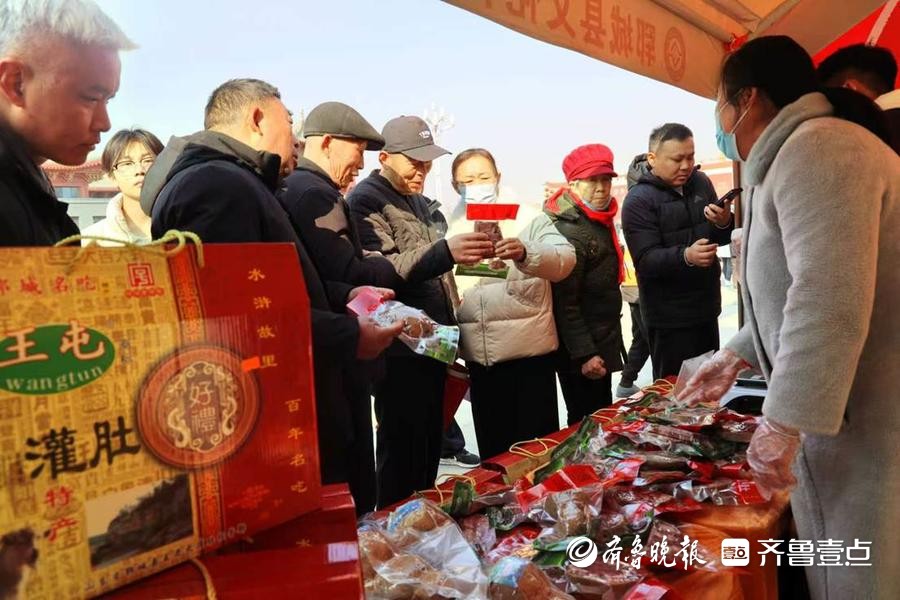
齐鲁晚报.齐鲁壹点周千清通讯员崔如坤 去年以来,郓城县锚定省市提振消费部署,以"政策+活动+场景"三轮驱动,精准打出促消费"组合拳",实现消费规模稳步扩 大、结构持续优化,核心消费数据亮眼,为县域经济高质量发展注入强劲动能。新的一年,郓城将聚焦"商文旅农体"深度融 合,推动消费提质升级、再上新台阶。 政策赋能添底气消费回暖显实效 民生兜底强根基新型消费拓空间 郓城县将民生保障融入促消费全过程,发放中度及以上失能老年人养老服务消费补贴63.58万元、"孝老优惠券"10万元,惠及老 年群体;举办线上线下招聘活动169场,提供岗位6.5万余个,达成就业意向7665人,以稳定就业筑牢消费基础。 活动搭台聚人气场景创新增活力 2025年,郓城县围绕促消费主题,全年开展各类活动170余场,覆盖商贸、文旅等多领域,实现"月月有活动、季季有亮点",吸 引超2000家次商户参与、超百万人次客流。 节假日节点精准发力,五一黄金周南湖广场商贸博览会联动乡镇分会场,70余家企业参展,实现销售额3000万元;"迎春购物 季""黄河大集"等系列活动,既让消费者得实惠,也帮企业拓市场。"来菏游好郓.百花迎牡丹"好汉文化节等17场大型文旅活 ...

家电及数码和智能产品补贴全面落地 1月补贴超1500万台
Sou Hu Cai Jing· 2026-02-03 11:28
Core Insights - The Ministry of Commerce is implementing a subsidy policy for replacing old home appliances and purchasing new digital and smart products, which is expected to support offline retail development and promote green smart products by 2026 [1] Group 1: Sales Performance - In January, sales of six categories of home appliances and four categories of digital and smart products exceeded 15 million units, generating nearly 59 billion yuan in sales [1] - The old-for-new appliance program saw 6.813 million units replaced, driving sales of 29.71 billion yuan, while 9.115 million digital and smart products were purchased, leading to sales of 29.21 billion yuan [1] - Offline sales of the old-for-new program and new digital and smart products accounted for nearly 80% of total sales in January, with a year-on-year growth of approximately 20% [1] Group 2: Policy Impact - The subsidy policy for replacing old appliances and purchasing new products has been fully implemented across 32 regions, with 19 regions issuing detailed implementation rules [1] - The policy is positively impacting offline retail, with some stores experiencing increased performance and customer traffic, contributing to a healthy consumption pattern across various sectors [1] Group 3: Product Trends - The subsidy standards for the old-for-new program have been raised to first-level energy efficiency, leading to a rapid increase in high-performance appliance sales [1] - Online sales of first-level energy-efficient water heaters and televisions grew by 35.7% and 28.9% year-on-year, respectively [1] - Mid-to-high-end smartphone models accounted for over 70% of sales, and smart glasses were included in the subsidy program for the first time, achieving sales of 7.197 million yuan [1] Group 4: Future Directions - The Ministry of Commerce plans to continue enhancing the implementation of the old-for-new and new product purchase subsidy policies, focusing on supporting offline retail and promoting new products and production capabilities [2]
整个社会都在喊没钱了,为什么这些公司反而年赚百亿?
创业家· 2026-02-03 10:39
Core Insights - The article emphasizes that despite the prevailing narrative of economic hardship, certain industries are thriving and generating substantial profits, particularly in Japan and China [3][4]. - It identifies eight key sectors that are capitalizing on changing consumer behaviors and preferences, presenting significant business opportunities [5]. Group 1: Key Industries - **Second-Hand Economy**: The second-hand luxury market in Japan, exemplified by companies like Daikokuya, has seen explosive revenue growth. In China, platforms like Hongbulin and Panghu are experiencing similar success, indicating a shift in consumer spending from new luxury goods to second-hand items [6][7][8]. - **Pet Economy**: With declining birth rates, young consumers are increasingly spending on pet products. Companies like Inaba in Japan and Guobao in China are witnessing strong stock performance due to rising demand for pet food and healthcare products [12][13][15]. - **Adult Care**: The adult diaper market in Japan has surpassed $10 billion, highlighting the economic potential of the aging population. This sector is viewed as a significant opportunity rather than a burden [17][18][19]. Group 2: Health and Wellness - **Health Food and Beverages**: The rise in health consciousness and demographic changes have led to increased demand for sugar-free beverages and functional foods. Brands like Suntory and various Chinese counterparts are experiencing significant growth in this area [21][22]. - **Beauty and Aesthetics**: The demand for beauty products, including collagen supplements and at-home beauty devices, remains strong. Companies like Jinbo Biological and U like are achieving substantial sales, indicating that consumers prioritize beauty even in economic downturns [23][24][26]. Group 3: Outdoor and Leisure - **Outdoor Recreation**: Companies in the outdoor equipment sector, such as Snow Peak in Japan and various Chinese brands, are benefiting from a growing interest in outdoor activities and camping, with significant sales increases reported [29][31]. - **Convenience Economy**: The trend towards convenience is driving growth in frozen food and smart home appliances. Brands like Anjijia and various AI-driven home devices are gaining traction as consumers seek to save time [39][40][42]. Group 4: Market Dynamics - The article posits that the current low-desire economic environment presents unique opportunities for businesses that can identify and invest in counter-cyclical trends. Companies that adapt to changing consumer needs and preferences are likely to emerge as winners in this landscape [44].

天际股份:全资子公司为母公司提供3000万元连带责任保证
Xin Lang Cai Jing· 2026-02-03 08:39
天际股份公告称,公司分别于2025年3月21日、4月10日审议通过向银行申请不超40亿元综合授信额度议 案。近日,其全资子公司汕头市天际电器实业有限公司与厦门国际银行珠海分行签署《保证合同》,为 母公司自2026年2月至2029年2月期间全部债权提供连带责任保证,最高债权限额3000万元。截至2026年 2月3日,公司及下属公司累计担保余额5.72亿元,占2024年末经审计的归母净资产的17.97%,无逾期对 外担保。 ...

家电板块低估值凸显配置价值,家电ETF(159996)收涨超1%
Mei Ri Jing Ji Xin Wen· 2026-02-03 08:31
Group 1 - The core viewpoint highlights that the home appliance sector is currently undervalued, presenting significant investment opportunities, as evidenced by the home appliance ETF (159996) rising over 1% on February 3 [1] - Recent fluctuations in the prices of commodities such as copper and aluminum have complicated cost predictions for the home appliance industry, leading to increased cost pressures [1] - The industry is shifting from incremental competition to stock integration, with a focus on efficiency optimization, product innovation, and technological upgrades, as the benefits of subsidies have largely diminished and demand appears weak [1] Group 2 - The home appliance ETF (159996) tracks the home appliance index (930697), which includes publicly listed companies involved in the production and sales of home appliances like refrigerators, air conditioners, and washing machines [1] - The current high market valuation levels make the relatively low valuation percentiles of the home appliance industry stand out, enhancing its investment cost-effectiveness [1]
探究海信的“信”循环:质量将信仰转化为信任
Zhong Guo Zhi Liang Xin Wen Wang· 2026-02-03 07:59
Core Viewpoint - Quality is not only the lifeline of manufacturing but also a crucial support for companies to gain an advantage in global competition and secure their future. The transformation of quality from a mere management target to a core belief driving sustainable growth is essential for long-term success in the industry [1]. Group 1: The Concept of "Trust" in Quality - The essence of quality at Hisense is rooted in the concept of "trust," which embodies honesty, user-centric commitment, and a moral imperative integrated into the company's culture [3][4]. - Hisense's commitment to quality is reflected in its historical lessons, particularly a significant quality issue in 1977 that shaped its understanding that "quality is the life of the enterprise" [4]. - The company established the "Quality Seven Military Regulations" in 2002, elevating quality principles to a high-level management mandate, making quality a critical performance metric for executives [5]. Group 2: Quality Management System - Hisense has developed a comprehensive global quality management system that spans research and development, supply chain, manufacturing, sales, and service, ensuring consistent quality across all operations [6]. - The introduction of the AI-driven "AI+SPACE management model" enhances quality management efficiency and effectiveness through intelligent, precise, and real-time quality control [7]. - Hisense actively participates in setting international standards, having led the development of 78 international standards and over 660 national and industry standards, using the strictest benchmarks to drive internal improvements [8]. Group 3: User Trust and Feedback Mechanisms - The company emphasizes that user trust can only be earned through reliable product delivery and exceptional experiences, which are integral to its quality management approach [6][9]. - Hisense has implemented the "VOC User Voice Insight Platform," which utilizes AI to analyze millions of user feedbacks, transforming user insights into actionable improvements across departments [11]. - The company's sponsorship of major global events, such as the FIFA World Cup, reflects its confidence in the quality of its products, which has led to increased brand loyalty and market share [11]. Group 4: The "Trust-Quality" Cycle - The interplay between "trust" and "quality" creates a positive feedback loop, where user trust reinforces the company's internal beliefs, driving continuous innovation and improvement [10][12]. - Hisense's commitment to quality has earned it numerous accolades, including nominations for the China Quality Award and the Asia Quality Excellence Award, showcasing its leadership in high-quality standards [12].


在喧嚣中守住良心
Zhong Guo Zhi Liang Xin Wen Wang· 2026-02-03 07:59
Core Viewpoint - The article emphasizes the importance of quality in business, highlighting how Hisense has built a comprehensive quality assurance system and digital management platform to ensure continuous improvement and customer trust [4][5]. Group 1: Historical Context and Evolution - Hisense's commitment to quality began after a significant setback in 1977 when a product failure led to the realization that "quality is the life of the enterprise" [5]. - The company strategically introduced advanced television production lines post-reform, allowing it to stabilize during industry upheavals [5]. - In the mid-1990s, amidst fierce price wars, Hisense chose to maintain quality over short-term profits, which ultimately became a pivotal decision for its growth [5][6]. Group 2: Quality Philosophy and Recognition - Hisense has ingrained its quality philosophy into its corporate culture, defining it as "quality is character" and establishing "seven quality rules" to guide employees [6]. - The company has received multiple accolades, including nominations for the China Quality Award and recognition as a high-level quality management enterprise by the Ministry of Industry and Information Technology [6]. Group 3: Global Strategy and Market Presence - Hisense began its international expansion in 1996, establishing a strong presence in South Africa through local sales companies and production facilities, which has led to significant market leadership [6]. - The company's approach in South Africa has been recognized as a model for practical cooperation between China and South Africa, showcasing the global reach of Chinese quality standards [6]. Group 4: Technological Advancements in Quality Management - In the AI era, Hisense has transformed its quality management by implementing AI visual recognition systems, drastically reducing inspection times from 10 minutes to 0.2 milliseconds [7]. - The company has increased automation rates in production lines from 30% to 71%, shifting quality control from reactive to proactive measures [7]. - Hisense has established itself as a "lighthouse factory" in the global television industry, leading in digital transformation with a user-centered and AI-driven manufacturing approach [7].