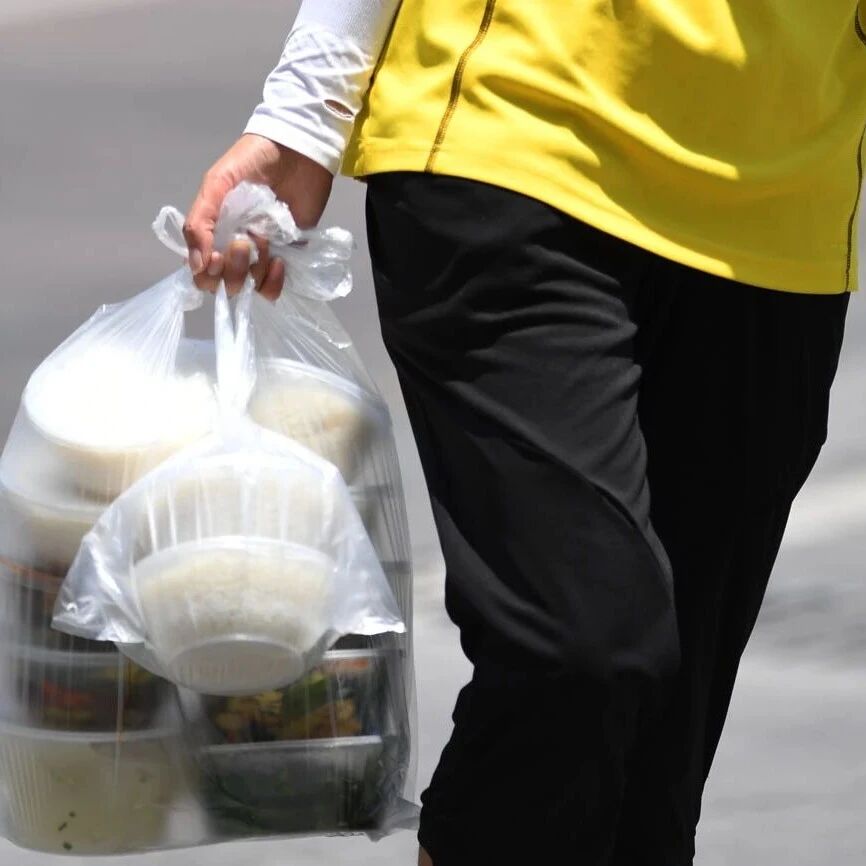
外卖

Search documents
市监总局治理“幽灵外卖”
Jing Ji Guan Cha Bao· 2025-10-17 01:48
Core Viewpoint - The State Administration for Market Regulation is seeking public feedback on a draft regulation aimed at enhancing food safety responsibilities for third-party online food delivery platforms and their partnered restaurants, with a feedback deadline of November 16 [1] Group 1: Regulatory Framework - The draft regulation aims to clarify the responsibilities and rights of platforms, third-party institutions, and restaurants regarding food safety, addressing issues like "ghost kitchens" [1] - It requires platforms to establish comprehensive food safety management systems and mechanisms, ensuring proper monitoring and inspection of partnered restaurants [1] Group 2: Operational Requirements - The regulation stipulates a "one certificate, one store" model, prohibiting restaurants from using the same operating license to open multiple online stores on the same platform [1] - Platforms must continuously publicize their operating qualifications, ensuring that the names of online stores match those of their physical counterparts, and that the pickup addresses align with the registered business locations [1] Group 3: Special Identifications - The regulation mandates special identification for "no dine-in" businesses and sets guidelines for their display positions and pages on the platform [1]
雷军:汽车安全是基础,共同抵制网络水军和黑公关;巨头宣布将裁员1.6万人;蔚来回应被指控收入虚增;曹德旺辞去福耀玻璃董事长职务
Sou Hu Cai Jing· 2025-10-17 00:57
Group 1 - The article discusses the proposed regulations by the State Administration for Market Regulation regarding food safety responsibilities for online food delivery platforms and providers [3] - The regulations include a requirement for platforms to establish food safety management systems and clarify responsibilities among all parties involved [3] - It emphasizes the "one certificate, one store" operating model, prohibiting providers from using the same business license to open multiple online stores on the same platform [3] Group 2 - JD.com has announced a trial in 25 cities to eliminate penalties for delivery riders who exceed order delivery times, replacing it with a "service score" management system [4] - Ele.me is also testing a similar service score system to replace the penalty for late deliveries, with plans to expand to more cities [4] - Meituan has stated that it will fully eliminate penalties for late deliveries by the end of 2025, having already implemented a trial in 22 cities [4] Group 3 - Xiaomi's CEO Lei Jun emphasized the importance of safety and quality in the automotive industry during a conference, highlighting the company's commitment to innovation and collaboration [5] - NIO responded to a lawsuit from Singapore's sovereign wealth fund, stating that the claims are based on false accusations from a short-seller report [5] - The article mentions that the lawsuit is not related to NIO's recent business performance and that an independent investigation found no basis for the accusations [5] Group 4 - Nestlé announced plans to cut approximately 16,000 jobs over the next two years, which represents about 6% of its total workforce [7] - The layoffs will affect 12,000 white-collar jobs and 4,000 positions in manufacturing and supply chain [7] - This announcement comes despite the company exceeding sales expectations in the third quarter [7] Group 5 - The article reports on the successful launch of 12 low-orbit satellites for satellite internet by China, marking the 600th launch of the Long March series rockets [26] - The launch was part of a broader strategy to enhance satellite internet capabilities [26] - The satellites were successfully placed into their designated orbits [26]




8点1氪:三大外卖平台试点取消骑手超时罚款;雷军在小米汽车成都事故后首次公开露面演讲;星链3个月内成缅甸最大互联网提供商
36氪· 2025-10-17 00:21
Group 1 - Three major food delivery platforms have announced trials to cancel penalties for delivery riders exceeding time limits, shifting management from punitive measures to positive incentives [3][4] - JD Delivery has initiated trials in 25 cities including Shenzhen and Nanjing, replacing cash penalties with a "service score" system [4] - Ele.me and Meituan are also implementing similar changes, with Meituan planning to eliminate penalties by the end of 2025 [4] Group 2 - Xiaomi's founder Lei Jun emphasized the importance of unity in the smart connected vehicle industry to resist online misinformation and promote a positive development environment [6] - He called for collaboration in technology innovation and research, focusing on safety, quality, and innovation as foundational elements [6] Group 3 - The State Administration for Market Regulation is seeking public opinion on a draft regulation requiring food delivery platforms to label "no dine-in" merchants [10][11] - The regulation aims to enhance food safety responsibilities and prevent "ghost restaurants" by ensuring that each business operates under a single license [11] Group 4 - Good Products announced the termination of a control transfer, confirming that the controlling shareholder remains unchanged [5] - A large gold mine has been discovered in China, adding over 40 tons of gold resources [5] Group 5 - NIO's executives responded to allegations of securities fraud, stating that the claims stem from previous unfounded accusations and that an independent investigation found no basis for the allegations [15] - The company reported a stock price drop of 8.99% following the news [15] Group 6 - TSMC reported third-quarter earnings that exceeded market expectations, with revenue of NT$989.92 billion (approximately US$331 billion), a year-on-year increase of 30.3% [24] - The net profit reached NT$452.3 billion, marking a record high and a 39.1% increase year-on-year [24] Group 7 - Nestlé announced plans to cut approximately 16,000 jobs over the next two years, representing 6% of its workforce, while aiming to save CHF 3 billion (approximately US$3.77 billion) by the end of 2027 [17] - The layoffs will affect both white-collar and manufacturing positions [17] Group 8 - The first climate tipping point has been reached, with significant coral reef die-offs marking a new climate reality, as reported by a collaborative study from 87 institutions [18][19] - Scientists warn that the world is approaching other critical climate thresholds, including the degradation of the Amazon rainforest and the collapse of major ocean currents [19]

外卖平台和经营者监管新规拟出台 让外卖吃得更放心
Xin Hua She· 2025-10-16 17:19
Core Insights - The peak daily order volume for food delivery services has surpassed 200 million, serving over 550 million users, highlighting the critical role of food delivery in daily life and the ongoing concerns regarding food safety [1] Regulatory Developments - The State Administration for Market Regulation has released a draft regulation focusing on the responsibilities of third-party platforms and food service providers in ensuring food safety, addressing issues such as unclear platform responsibilities and lack of transparency in food safety information [1][2] - Since September, multiple measures have been introduced to regulate the food delivery sector, including a draft for basic service management requirements and a meeting aimed at promoting healthy industry development [1] Focus on Food Safety - The draft regulation emphasizes the need for clear food safety responsibilities among platforms and merchants, detailing management requirements for platforms regarding the qualifications of food service providers [1][2] - A significant concern is the prevalence of "ghost kitchens," where businesses operate without a physical storefront, leading to regulatory blind spots. The draft proposes a "one certificate, one store" model to prevent multiple online stores from using the same operating license [2] Transparency and Consumer Trust - In response to consumer concerns about food safety, some restaurants are adopting live kitchen broadcasts and online transparency initiatives. The draft regulation mandates the implementation of "Internet + visible kitchen" practices, enhancing consumer access to information [3] - The regulation also aims to clarify jurisdictional issues and outline legal responsibilities for violations, addressing challenges in monitoring cross-regional operations [3] Industry Implications - The proposed regulations are expected to enhance the safety and transparency of food delivery services, ensuring that platforms fulfill their obligations in vetting service providers and maintaining food safety standards [3]
剑指“幽灵外卖” 无堂食商家拟被标记
Bei Jing Shang Bao· 2025-10-16 16:17
Core Viewpoint - The new regulations aim to address food safety issues in the online food delivery sector, particularly targeting the "ghost kitchen" phenomenon, by clarifying responsibilities and enhancing regulatory measures [1][6][7]. Summary by Sections Regulatory Framework - The draft regulation, titled "Regulations on the Supervision and Management of Food Safety Responsibilities of Third-Party Platforms and Online Food Service Providers," is open for public feedback until November 16 [3]. - It emphasizes the need for clear delineation of responsibilities among platforms, third-party agencies, and food service providers to prevent "ghost kitchens" [3][4]. Food Safety Measures - The regulation mandates that platforms must verify the "Internet + Bright Kitchen" compliance of food service providers, prohibiting those who do not comply from operating on the platform [3][4]. - Platforms are required to provide technical support for the "Internet + Bright Kitchen" video uploads and ensure that these videos are retained for at least 14 days [3]. Business Operations - The regulation prohibits food service providers from operating multiple online stores under the same business license on the same platform, ensuring that each provider has a physical store and operates within the scope of their license [4]. - It also requires that the names of online stores match their physical store names and that the pickup addresses correspond to the licensed locations [4]. Industry Impact - The new regulations are seen as a significant step towards enhancing food safety and transparency in the food delivery industry, with experts noting that they will help build consumer trust [7][8]. - The implementation of these regulations may increase operational costs for platforms and businesses in the short term, but is expected to foster a fair competitive environment and promote sustainable growth in the long run [8][9]. Technological Integration - Platforms are encouraged to leverage technologies such as big data and AI for efficient monitoring and verification processes, including automatic license verification and real-time monitoring of kitchen practices [8][9]. - The integration of "Bright Kitchen" live streaming in food service operations is becoming a standard, with significant adoption already noted in platforms like Meituan [6].
多家外卖平台试点取消骑手超时罚款
Zheng Quan Ri Bao· 2025-10-16 16:11
Core Insights - JD.com has initiated a pilot program in 25 cities to replace the penalty system for delivery riders with a "service points" management mechanism, aiming to shift from punitive measures to positive incentives [1] - Meituan plans to eliminate the penalty for delivery delays by the end of 2025, having already tested a points-based system in 22 cities [1] - Ele.me is also testing a new service points system to replace the penalty for late deliveries, with plans to expand this initiative to more cities in October [2] Industry Trends - The simultaneous adjustments by multiple platforms indicate a shift towards balancing commercial efficiency with labor rights, reflecting a trend towards more refined governance in the platform economy [2][3] - The recent draft regulations from the State Administration for Market Regulation emphasize the need for platforms to ensure fair labor practices and protect delivery workers' rights [2] Management Strategies - The new management approach focuses on a "reward-based" system rather than a punitive one, which is seen as a proactive response to regulatory requirements and a strategy to enhance rider loyalty [3] - The transition from a focus on speed to a focus on value and fairness in the delivery industry is highlighted as a significant governance upgrade [3] Challenges and Collaboration - The main challenge in implementing these changes lies in balancing consumer expectations for delivery speed with the complexities of riders' working conditions [3] - Successful implementation requires collaboration among platforms, riders, consumers, and government to optimize algorithms, enhance transparency, and improve communication [3]
美团外卖总经理薛冰谈外卖大战:新增订单75%客单价15元以下
2 1 Shi Ji Jing Ji Bao Dao· 2025-10-16 16:08
Core Insights - The takeaway from the discussion is that the current price war in the food delivery industry, driven by subsidies, is creating a bubble rather than sustainable growth, and the industry must move away from low-price competition for long-term stability [2][4] Group 1: Market Dynamics - The food delivery market has seen a 45% increase in order volume attributed to beverages, with 75% of orders priced below 15 yuan, while only 25% of incremental orders exceed this price point [2] - The price war initiated in May has led to a surge in order volume but a significant drop in average order value, indicating unhealthy market dynamics [2] Group 2: Company Performance - According to recent surveys, 70% of food delivery consumers prefer Meituan, highlighting its strong market position post-price war [4] - Meituan's delivery speed is reported to be 13% faster than the industry average, showcasing its operational efficiency [4]

剑指“幽灵外卖” 网络餐饮新规公开征集意见
Bei Jing Shang Bao· 2025-10-16 14:53
Core Viewpoint - The new regulations aim to address food safety issues in the online food delivery sector, particularly targeting the "ghost kitchen" phenomenon, by clarifying responsibilities and enhancing regulatory requirements [1][2][5]. Group 1: Regulatory Framework - The draft regulation outlines the responsibilities of third-party platforms and food service providers regarding food safety, emphasizing the need for rigorous qualification checks and monitoring [2][4]. - Platforms must implement "Internet + Bright Kitchen" initiatives, ensuring that food service providers display live kitchen footage and maintain transparency [4][6]. - The regulation prohibits the use of the same business license for multiple online stores on the same platform, ensuring that each provider has a physical location and operates within their licensed scope [4][7]. Group 2: Industry Impact - The introduction of these regulations is seen as a significant step towards improving the health of the food delivery industry, enhancing consumer trust and safety [7][8]. - Platforms are expected to strengthen their monitoring capabilities and ensure compliance with the new rules, which may initially increase operational costs but will promote long-term sustainable growth [8][9]. - The collaboration among government, platforms, and consumers is crucial for creating a safe and orderly food delivery ecosystem, with an emphasis on shared responsibility and active consumer participation in oversight [9].
市场监管总局:外卖无堂食商家需加专属标识
2 1 Shi Ji Jing Ji Bao Dao· 2025-10-16 14:28
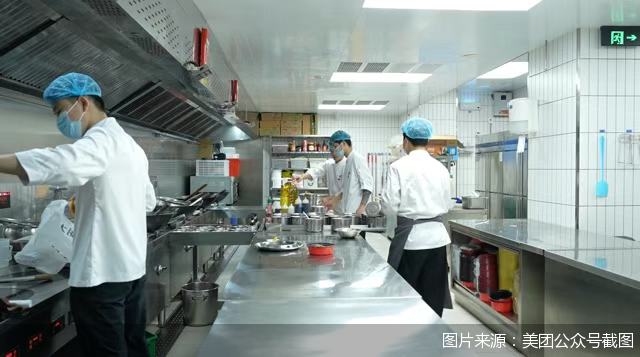
Core Points - The latest draft regulation from the State Administration for Market Regulation focuses on enhancing food safety responsibilities in the online food delivery industry [1][2] - The draft includes 45 articles that clarify the responsibilities of online food providers, platform providers, and delivery personnel, covering the entire process from pre-audit to post-publication [2] Group 1: Regulatory Changes - The new draft emphasizes transparency in food preparation by requiring merchants to provide monitoring footage of key food processing stages [1] - Platforms must implement "Internet + Bright Kitchen" video uploads and display them prominently on their pages [1] - The draft addresses the issue of "ghost kitchens" by enforcing a "one certificate, one store" policy, preventing multiple stores from operating under the same business license on a single platform [1] Group 2: Industry Context - The new regulations come amid intense competition in the food delivery sector, marked by significant subsidy wars among major players like JD, Ele.me, and Meituan [4] - Increased traffic has brought merchant qualification reviews and food safety issues back into the spotlight, with platforms facing warnings and penalties for inadequate merchant audits [5] Group 3: Penalties and Compliance - Specific penalties are outlined in the draft, including fines ranging from 5,000 to 50,000 yuan for platforms failing to conduct on-site audits of merchant qualifications [6] - Platforms that approve merchants not adhering to the "one certificate, one store" rule may face fines between 5,000 and 30,000 yuan [6] Group 4: Public Feedback - The draft regulation is currently open for public feedback, with a deadline set for November 16 [7]
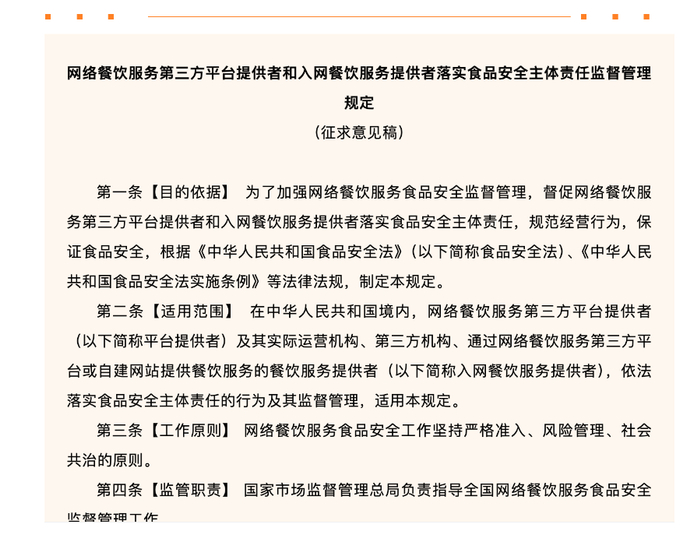
市场监管总局:外卖无堂食商家需加专属标识
21世纪经济报道· 2025-10-16 14:08
Core Viewpoint - The latest draft regulation from the State Administration for Market Regulation focuses on enhancing food safety responsibilities in the online food delivery industry, addressing issues such as platform accountability, merchant management, and transparency in food safety information [1][2]. Group 1: Regulatory Changes - The new draft regulation includes 45 articles that clarify the responsibilities of three main entities: online food providers, platform providers, and delivery personnel, covering the entire chain from pre-audit to post-publication [2]. - A significant change is the requirement for merchants to provide monitoring footage of key food processing stages, while platforms must upload and display "Internet + Bright Kitchen" video information prominently [1][2]. Group 2: Industry Context - The new regulations come amid intense competition in the food delivery sector, marked by a large-scale subsidy war initiated by major players like JD, Ele.me, and Meituan since April [4]. - The surge in traffic has brought merchant qualification audits and food safety issues back into the spotlight, with platforms facing warnings and penalties for inadequate merchant audits [5]. Group 3: Enforcement and Penalties - Specific penalties are outlined in the draft, including fines ranging from 5,000 to 50,000 yuan for platforms failing to conduct on-site audits of merchant qualifications, and fines from 5,000 to 30,000 yuan for approving non-compliant merchants [6]. - The draft is currently open for public feedback, with a deadline set for November 16 [6].