农产品

Search documents
增长4.5%!2025年山东进出口总值3.53万亿元
Da Zhong Ri Bao· 2026-01-21 01:01
Core Insights - In 2025, Shandong's total foreign trade import and export value reached 3.53 trillion yuan, marking a year-on-year growth of 4.5%, and accounting for 7.8% of the national total, contributing 9.1% to the national foreign trade growth [2][3] Trade Performance - Exports amounted to 2.16 trillion yuan, increasing by 4%, while imports reached 1.37 trillion yuan, growing by 5.1% [2] - Monthly trade values remained stable, with 10 months showing year-on-year growth; December's trade value hit a record high of 340.78 billion yuan, up 3.1% year-on-year and 13.6% month-on-month [2] Trade Composition - General trade accounted for 2.29 trillion yuan, growing by 4.4% and representing 64.8% of total trade; bonded logistics trade reached 599.32 billion yuan, up 5.6%; processing trade was 546.16 billion yuan, increasing by 5.3% [2] - Cross-border e-commerce saw significant growth, with B2B direct exports reaching 113.34 billion yuan, up 7.6%, and overseas warehouse exports skyrocketing to 5.59 billion yuan, a tenfold increase [2] Market Participants - Shandong had 80,500 enterprises engaged in import and export activities, a 9.7% increase from the previous year; private enterprises accounted for 74,800 of these, contributing 76.3% of the total import and export value [3] - Private enterprises' import and export value reached 2.69 trillion yuan, growing by 6.3%, while state-owned enterprises reported 302.22 billion yuan, a 2.1% increase [3] Export Dynamics - In 2025, private enterprises contributed 92.9% of market participants, 76.3% of the total import and export value, and 105.9% of the foreign trade increment [3] - Major export products included electromechanical products, which reached 1.06 trillion yuan, growing by 8.7% and accounting for 48.9% of total exports; this marked the first time exports surpassed the trillion yuan mark [3][4] - Key export items such as automobiles, electronic components, and gaming consoles saw growth rates of 22.4%, 23.2%, and 25.7% respectively [3] Trade Markets - Shandong's trade with the EU, Russia, and Brazil grew by 5.1%, 4.4%, and 7.1% respectively; trade with Belt and Road countries reached 2.26 trillion yuan, up 7.6%, making up 64.1% of total trade [3] - Notable growth in trade with Africa, the Middle East, and Central Asian countries was recorded at 38.6%, 18.5%, and 55.2% respectively [3] Manufacturing Strength - Shandong has established itself as a global manufacturing hub, with 105 categories of electromechanical products leading the nation in export value; specific products like diesel trucks and concrete mixers account for over 10% of global exports in their categories [4]
2025年“甘味”农产品销售额达412亿元
Xin Lang Cai Jing· 2026-01-21 01:01
Core Insights - The "Guanwei" agricultural products achieved a sales revenue of 41.2 billion yuan in the previous year, marking a year-on-year growth of 33.3% [1] - The brand has established a comprehensive marketing network that integrates online and offline channels, with 100 authorized stores and 30 online sales platforms [1] - "Guanwei" has been recognized as the top brand in China's regional agricultural industry brand influence index for five consecutive years, benefiting over one million farmers [2] Summary by Sections - **Sales Performance** - "Guanwei" agricultural products reached a sales figure of 41.2 billion yuan, surpassing the 40 billion yuan mark, with a growth rate of 33.3% year-on-year [1] - **Brand Development** - The brand has developed a robust brand matrix consisting of one provincial brand, 55 regional public brands, and 750 enterprise trademarks, creating a clear and structured branding system [1] - The total number of green, organic, and geographical indication agricultural products in the province has reached 2,655 [1] - **Marketing Strategy** - The marketing strategy focuses on "expanding markets and promoting consumption," with a network that includes 100 offline stores and 30 online platforms, including flagship stores on Douyin [1] - "Guanwei" has established five overseas warehouses in Singapore and Thailand, exporting products to over 90 countries and regions [1] - **Impact on Farmers** - The brand has been a significant driver of income for farmers, recognized as a "golden key" for wealth generation, benefiting over one million farming households [2]

中金:当极端天气按下大宗商品“波动键”
中金点睛· 2026-01-20 23:37
Core Viewpoint - The article discusses the impact of the La Niña phenomenon on global commodity markets, highlighting the increasing uncertainty in pricing due to climate changes and geopolitical factors. It emphasizes the historical correlation between extreme weather events and commodity price fluctuations, indicating that the current weak La Niña may still disrupt supply chains and affect prices across various sectors [3][4][10]. Weather Outlook - A weak La Niña has been established, expected to transition to neutral conditions by spring 2026. The current La Niña is not anticipated to cause widespread cold winters due to global warming trends, but it may still influence global circulation patterns and lead to unusual precipitation anomalies [5][11][16]. - The probability of transitioning to El Niño conditions by the third quarter of 2026 has risen to over 60%, which could increase the frequency of extreme weather events [5][12][22]. Commodity Impact - Weather disturbances are expected to affect different commodity sectors in varied ways, with energy, metals, and agricultural products each responding differently to temperature and precipitation changes [6][35]. Energy Sector - In North America, natural gas prices are expected to rise due to increased heating demand, with NYMEX prices projected to range between $4-5 per million British thermal units (MMBtu) during the off-season [6][36][37]. - European natural gas prices are anticipated to decrease due to low inventory levels despite a warm winter, with TTF prices expected to drop to $9-10 per MMBtu [6][40][42]. Metals Sector - Heavy rainfall may disrupt production and transportation in key mining regions, particularly in Indonesia and South America, leading to increased costs and production interruptions [7][49][50]. - The impact of La Niña on aluminum prices may arise from increased electricity costs due to reduced hydropower generation in affected regions [7][53]. Agricultural Sector - The La Niña phenomenon is expected to have a limited impact on South American soybean production, with Brazil's soybean yield projected to reach 178 million tons, a 4% increase from the previous year [8][66][67]. - Palm oil production in Southeast Asia is also expected to remain stable, with short-term bullish expectations despite some localized weather disturbances [8][72].


农林牧渔行业周报(20260112-20260116):猪价短期持续回升,行业能繁产能仍处高位-20260120
Hua Yuan Zheng Quan· 2026-01-20 14:04
Investment Rating - The industry investment rating is "Positive" (maintained) [3] Core Viewpoints - Short-term recovery in pig prices is expected, while the breeding capacity remains high [3] - The industry is undergoing a significant policy transformation, focusing on protecting farmers' rights and encouraging innovation [6][17] - The high-quality development of the industry is essential, with cost-leading and farmer-inclusive companies likely to enjoy excess profits and valuation premiums [6][17] Summary by Sections 1. Swine Industry - The swine breeding sector saw a decline of 4.9%, primarily due to market sentiment and concerns over capacity reduction [5][16] - In 2025, the national pig output reached 71.973 million heads, an increase of 2.4% year-on-year, while the breeding sow inventory decreased by 2.9% [5][16] - As of January 18, 2026, pig prices rose to 13.25 CNY/kg, indicating a recovery in the industry [5][16] 2. Poultry Industry - The poultry sector is experiencing a contradiction of "high capacity, weak consumption," with the price of broiler chickens at 3.65 CNY/kg, down 3.18% week-on-week [7][18] - The impact of avian influenza in France may lead to reduced imports of breeding chickens, potentially increasing prices for parent stock [7][18] - The industry is expected to see a continued advantage for leading companies due to integrated operations and contract farming [7][18] 3. Feed Industry - The prices of various aquatic products have shown recovery, with significant year-on-year increases for certain species [19][20] - Hai Da Group is recommended for its clear long-term growth path and plans to increase its dividend payout ratio [20] 4. Pet Industry - The competitive landscape in the pet food sector is becoming more concentrated, with leading brands outperforming mid-tier brands [10][21] - Despite concerns over Q4 2025 performance, the growth outlook for the pet industry remains strong, with domestic sales expected to continue growing [10][21] - Recommended companies include Zhongchong Co., which is positioned for growth in both domestic and international markets [11][21] 5. Agricultural Products - Domestic soybean meal prices fell by 2.1%, while corn prices increased by 0.8% due to declining inventories [26] - The egg market is showing strength, with prices rising by 1.4% [26] - The agricultural sector is viewed as having significant investment value due to its historical low valuations and the need to protect farmers' incomes [26]

风雪无阻守民生 精准巡查稳物价 ——市发展改革委全力保障低温雨雪天气市场价格稳定
Sou Hu Cai Jing· 2026-01-20 13:10
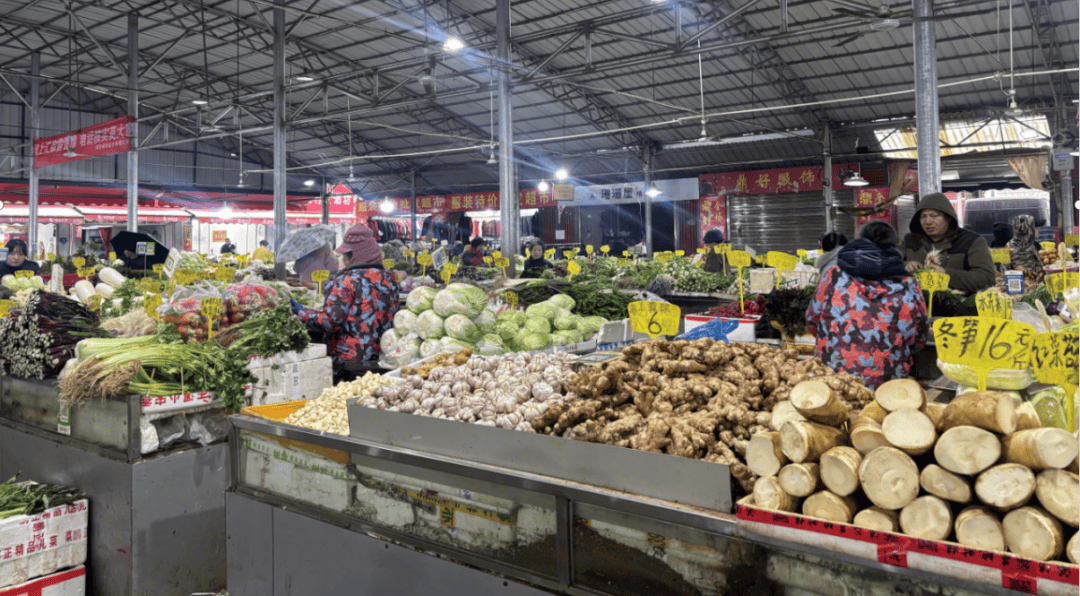
Core Viewpoint - The local government is actively monitoring and ensuring the supply and price stability of essential goods in response to adverse weather conditions, specifically low-temperature rain and snow [1][3]. Group 1: Market Supply and Demand - Due to the rain and snow weather, there has been a decrease in foot traffic in supermarkets and markets, but the supply of essential goods remains sufficient and prices are generally stable [3]. - Major wholesale markets have organized sufficient supplies in advance, with daily transaction volumes for vegetables exceeding 14 million kilograms on January 20, reflecting a 12.07% increase compared to the previous week [3]. Group 2: Price Monitoring - Monitoring data indicates that the retail prices of essential goods are mostly stable, with the average prices of ten categories of essential goods showing five increases, no decreases, and five remaining stable as of January 20 [4]. - Specific price changes include a 0.37% increase in meat, 0.74% in eggs, 1.18% in aquatic products, 0.55% in vegetables, and 0.06% in fruits, while prices for staple grains, boxed milk (250ml), salt, frozen dumplings, and cooking oil remained unchanged [4].
1月19日青岛重要民生商品储备充足,价格运行平稳
Zhong Guo Fa Zhan Wang· 2026-01-20 11:08
Core Viewpoint - The overall price of essential goods in Qingdao remains stable, with sufficient reserves and no significant price fluctuations reported [1] Group 1: Grain and Oil Prices - Grain prices are stable, with the average retail price of long-grain rice at 3.21 yuan per 500 grams, and flour at 2.37 yuan [1] - Peanut oil (5-liter) is priced at 133.20 yuan, unchanged from the previous day [1] Group 2: Meat Prices - Meat prices show slight fluctuations, with pork belly at 14.25 yuan (down 0.14%) and lean pork at 14.71 yuan (up 0.55%) [1] - Beef remains at 37.70 yuan and lamb at 41.40 yuan, both stable compared to the previous day [1] Group 3: Egg and Vegetable Prices - Egg prices are stable, with an average price of 3.92 yuan [1] - Vegetable prices have increased, with wholesale prices rising to 2.62 yuan, a 2.75% increase from the previous day, and transaction volume up by 12.30% [1] Group 4: Seafood Prices - Seafood prices are stable, with mackerel at 11 yuan, oysters at 7.5 yuan, hairtail at 15 yuan, and shrimp at 34 yuan, all unchanged from the previous day [1]
“广货行天下”春季行动取得开门红 一批批广东好物成为消费市场的“流量担当”
Guang Zhou Ri Bao· 2026-01-20 09:57
Core Insights - The "Guangdong Goods Going Global" spring campaign has significantly boosted market consumption potential, with notable increases in both recognition and sales of Guangdong products domestically and internationally [2][4]. Group 1: Sales Performance - The first event of the spring campaign in Foshan on January 15 led to a sales surge, with 29 out of 32 participating live-streaming companies reporting increased sales compared to the previous day, and overall sales up by 110% [2]. - Specific product sales saw remarkable growth, with the sales of a tea kettle reaching five times the usual volume, and a multi-functional electric cooker increasing by 254% [2]. - The sales of a boiled egg cooker reached 1,300 units in one day, marking a 197% increase from the previous day [2]. Group 2: Promotional Strategies - The campaign employs a "government platform, platform support, enterprise participation" model, with various departments collaborating to create a comprehensive promotional system [3]. - The provincial industrial and information technology department initiated the campaign by organizing a home appliance promotion event, collaborating with major e-commerce platforms to establish a dedicated promotional zone [3]. - The provincial commerce department is focusing on integrated development of domestic and foreign trade, promoting a "global, national, and southern Guangdong" marketing system [3]. Group 3: Economic Impact - The campaign is expected to generate over 200 billion yuan in sales from the "old for new" program throughout the year, significantly enhancing agricultural product sales and injecting vitality into the Spring Festival consumption market [4]. - Many Guangdong enterprises have expanded their sales channels and enhanced brand influence through participation in the campaign, with leading companies solidifying their market positions [4]. - The brand image of "Guangdong Goods" is evolving from "Made in Guangdong" to "Intelligent Manufacturing in Guangdong," with cultural connotations and quality values gaining widespread market recognition [4]. Group 4: Future Initiatives - The provincial industrial and information technology department plans to continue the momentum with 12 online promotional events leading up to the Spring Festival, focusing on various product categories [5]. - The provincial commerce department aims to implement three major actions to ensure the campaign's effectiveness, including a large-scale exhibition to support 1,500 enterprises [5]. - The provincial agricultural and rural affairs department will launch a series of promotional activities throughout the year, focusing on seasonal products and enhancing the storytelling of Guangdong agricultural brands [5]. Group 5: Cultural Integration - The provincial culture and tourism department is organizing events to promote the integration of culture and tourism with Guangdong goods, enhancing their cultural appeal and market competitiveness [6]. - The campaign is driving Guangdong's quality products into broader markets, from home appliances to agricultural products and cultural creations [6].
软商品日报-20260120
Dong Ya Qi Huo· 2026-01-20 09:53
Group 1: Report Core Views - The domestic sugar market is expected to fluctuate in the short term, and the supply pressure may increase and suppress the market in the future, affected by the production progress in Thailand and India [3]. - Cotton prices face upward pressure due to squeezed downstream profits and a significant strengthening of the internal - external price spread. However, the stable load of spinning mills, expanded spinning capacity, and relatively low downstream inventory support the market. Short - term prices may fluctuate and adjust, and attention should be paid to downstream imports and orders [14]. - In the short term, the fundamental logic is expected to continue to influence the apple futures market. The logic of a shortage of delivery products is temporarily put on hold, and it remains to be seen when it will return. Attention should be paid to the Spring Festival stocking situation, and if there is no significant improvement, the market may continue to decline [20]. - Short - term jujube prices may remain in a low - level fluctuation. Attention should be paid to pre - Chinese New Year downstream purchases. In the long - term, the overall supply - demand of new - season jujubes in China is loose, and prices will continue to face downward pressure [27]. Group 2: Sugar Market Futures Prices and Spreads - On January 20, 2026, SR01 closed at 5290 yuan/ton with a daily decline of 0.94% and a weekly increase of 0.04%. Other contracts also showed different degrees of decline [4]. - The price differences between different sugar futures contracts, such as SR01 - 05, SR05 - 09, etc., also had corresponding changes [4]. Basis - The basis of different regions (Nanning and Kunming) and different sugar futures contracts had different daily and weekly changes on January 19, 2026 [9]. Import Prices - On January 20, 2026, the quota - within and quota - outside import prices of Brazilian and Thai sugar decreased compared with the previous period, and the price differences between different regions and import sources also changed [12]. Group 3: Cotton Market Futures Prices and Spreads - On January 20, 2026, cotton 01 closed at 15145 yuan/ton with a daily increase of 5 yuan and a growth rate of 0.03%. Cotton 05 and 09 declined slightly. Some cotton yarn contracts had significant changes [15]. - The price differences between different cotton futures contracts, such as cotton 01 - 05, cotton 05 - 09, etc., and the differences between cotton and cotton yarn also had corresponding changes [15]. Group 4: Apple Market Futures and Spot Prices - On January 20, 2026, AP01 closed at 8144 yuan/ton with a daily increase of 1.34% and a weekly decline of 100%. Other apple futures contracts also showed different price changes. Spot prices of different apple varieties remained stable [21]. - The price differences between different apple futures contracts, such as AP01 - 05, AP05 - 10, etc., also had corresponding changes [21][22]. Group 5: Jujube Market Futures Month - to - Month Spreads - The month - to - month spreads of jujube futures, such as 01 - 05, 05 - 09, and 09 - 01, showed different trends in different time periods [28][30].
农产品日报-20260120
Guang Da Qi Huo· 2026-01-20 07:32
1. Report Industry Investment Rating - Not provided in the content 2. Core Views of the Report - Corn: On Monday, corn futures prices were pressured downwards due to the decline of surrounding commodities. The prices in Northeast China remained stable, while those in North China were relatively strong. The overall view is that the corn market is in a weak and volatile state [2]. - Soybean Meal: The domestic protein meal market was weak, with rapeseed meal falling by more than 2%. The market is closely watching the pace of the resumption of Canadian rapeseed imports. The soybean meal market is expected to be volatile, with a bearish bias. The recommended strategy is a double - selling strategy [2]. - Oils: The BMD palm oil was almost unchanged. The domestic oil market showed a differentiated trend, with soybean oil and palm oil rising slightly and rapeseed oil falling by nearly 1%. The total inventory of the three major oils decreased month - on - month, and the market is expected to be volatile. The recommended strategy is to sell put options [2]. - Eggs: On Monday, egg futures prices pulled back. The spot price was relatively stable, but there was a risk of a short - term callback. The narrowing of breeding losses in the medium - to - long - term is not conducive to effective capacity reduction. The market is expected to be volatile [2]. - Pigs: On Monday, pig futures prices fell rapidly in the afternoon and then stabilized. The spot price rose. The market is expected to be volatile, and attention should be paid to the impact of the sentiment of breeders on supply and the impact of funds and market sentiment on the futures market [2][3]. 3. Summary by Relevant Catalogs 2. Market Information - Imported soybean arrivals in January decreased, and the weekly soybean crushing volume of oil mills was below 2 million tons. The estimated monthly soybean crushing volume in January was about 80 billion tons, an increase of about 7 billion tons year - on - year and about 9 billion tons more than the average of the past three years [4]. - On January 16, the CNF quotes for US soybeans for February and March shipments were $473/ton, $25 - 29/ton higher than Brazilian soybeans. The landed duty - paid cost in South China was 4,183 yuan/ton, $558 - 589/ton higher than Brazilian soybeans [4]. - In December 2025, the crude steel output was 68.18 million tons, a year - on - year decrease of 10.3% and a month - on - month decrease of 2.4%. The annual output was 960.81 million tons, a year - on - year decrease of 4.4%. The steel output in December was 115.31 million tons, a year - on - year decrease of 3.8% and a month - on - month decrease of 0.5%. The annual output was 1,446.12 million tons, a year - on - year increase of 3.1% [4]. - The national grain output in 2025 was 714.88 million tons, an increase of 8.38 million tons or 1.2% year - on - year. Wheat output was basically flat, corn output increased by 2.1%, and soybean output increased by 1.3% [5]. - The GDP in 2025 was 14,018.79 billion yuan, a year - on - year increase of 5.0%. The added value of the primary, secondary, and tertiary industries increased by 3.9%, 4.5%, and 5.4% respectively [5]. 3. Variety Spreads - 3.1 Contract Spreads: The report presents contract spreads such as corn 5 - 9, corn starch 5 - 9, soybeans 5 - 9, etc., but no specific data or analysis is provided [6][7][9] - 3.2 Contract Basis: The report shows the contract basis of various agricultural products, including corn, corn starch, soybeans, etc., but no specific data or analysis is provided [16][17][20]
望岳谈|全球贸易承压,山东外贸何以突破3.53万亿
Sou Hu Cai Jing· 2026-01-20 07:08
Core Insights - Shandong's foreign trade achieved a total import and export value of 3.53 trillion yuan in 2025, marking a year-on-year growth of 4.5%, contributing 9.1% to the national foreign trade growth [2] Group 1: Export Performance - Shandong's export of electromechanical products surpassed 1 trillion yuan for the first time in 2025, with 105 electromechanical products ranking first in national exports [3] - Key products such as diesel trucks, containers, concrete mixers, and shuttleless looms accounted for over 10% of the global export value in their categories, highlighting Shandong's emergence as a significant manufacturing hub [3] - The annual growth rate of electromechanical product exports during the 14th Five-Year Plan period is projected at 13.6%, with certain categories like ships and electric vehicles exceeding 30% [3] Group 2: Market Diversification - Shandong engaged in trade with over 250 countries and regions, with nine foreign trade markets exceeding 100 billion yuan in scale [5] - The province's exports to countries involved in the Belt and Road Initiative accounted for 64.1% of total imports and 57.3% of total exports, indicating a strategic focus on diversified markets [5][7] - Exports to Africa represented 58.5% of Shandong's automotive exports, showcasing the province's growing influence in emerging markets [5] Group 3: Business Environment and Growth - The number of foreign trade enterprises in Shandong reached 80,500 in 2025, reflecting a year-on-year increase of 9.7% [8] - Private enterprises contributed 92.9% of market entities and 76.3% of export values, playing a crucial role in stabilizing foreign trade [8] - Shandong's government implemented various measures to optimize the business environment, addressing over 3,100 enterprise requests with a high resolution rate of 99.7% [10]