
潮玩

Search documents
WAKUKU获评2025年度最具商业价值潮玩IP
Zhong Guo Jing Ji Wang· 2025-12-30 02:00
Core Insights - HERE Qimeng Island's WAKUKU was awarded "2025 Most Commercially Valuable Trendy Toy IP" at the "Crossing Cycles, IP as Core" event, highlighting the industry's recognition of its IP commercialization capabilities [1][2] - The company focuses on the incubation and value enhancement of trendy toy IPs, utilizing an original IP matrix and integrating online and offline channels to maximize commercial value [1] Financial Performance - WAKUKU contributed over 89 million yuan in revenue during the first quarter of the 2026 fiscal year, accounting for over 70% of total revenue, demonstrating strong market validation of its hit-making ability [1] Strategic Initiatives - HERE Qimeng Island is committed to deepening its "IP commercialization platform" strategy, aiming to strengthen the influence of leading IPs while incubating new IPs with cultural significance and market potential [2] - The company is actively engaging in cross-industry collaborations with sectors such as sports, fashion, and cultural tourism to extend the commercial scenarios and longevity of its IPs [1] Industry Recognition - The "Half-Month Award," initiated by Lei Bao, aims to recognize companies, IPs, and cases with outstanding commercialization achievements in the IP sector, showcasing industry pioneers and exploring pathways for China's IP industry [2]

2025,中产都抛弃了哪些消费品牌?
阿尔法工场研究院· 2025-12-30 00:02
Core Viewpoint - The article discusses the stark contrast in China's consumer market in 2025, highlighting a significant divide between thriving companies and those that have collapsed, marking a shift from a "growth at all costs" mentality to a focus on efficiency and sustainability in business models [5][6][11]. Group 1: Market Dynamics - In 2025, the consumer market experienced a "violent clearing," with many once-prominent unicorns collapsing, signaling the end of an era characterized by unsustainable growth strategies [6][8]. - The year 2025 is described as a "tombstone" for new consumption, as the last illusions surrounding high prices and influencer-driven brands were shattered, exemplified by the downfall of brands like Zhong Xuegao [8][9]. - The collapse of established giants like Christine and Xu Li Shan reflects a failure to adapt to changing consumer preferences and market conditions, leading to their eventual exit from the market [9][10]. Group 2: Survivors and New Trends - Despite the failures, a new wave of companies thrived in 2025, particularly in the new tea beverage sector, with brands like Mixue Ice City and Tea Baidao successfully going public [15][16]. - The success of these companies is attributed to their focus on supply chain efficiency and cost control, moving away from traditional notions of craftsmanship to a more industrialized approach [16][17]. - The "lipstick effect" emerged as consumers shifted spending from large purchases to small, affordable pleasures, benefiting brands like Bubble Mart and new tea beverage companies [18]. Group 3: Investment Landscape - The investment landscape in 2025 saw a dramatic reduction in financing activities, with only 74 rounds of funding compared to 133 in the previous year, indicating a shift away from reckless spending [23][24]. - The restaurant sector remained a focal point for investment, accounting for 45 out of the 74 financing rounds, as capital sought safety in high-frequency, essential consumer needs [24][26]. - Brands that demonstrated strong supply chain control and technological integration, such as those in the coffee sector, began to attract significant investment, reflecting a new focus on efficiency and innovation [27][28]. Group 4: Future Outlook - The article suggests that the consumer market in 2026 will prioritize global distribution over domestic expansion, as companies seek to leverage their efficiencies in international markets [31][32]. - The survival of brands in the coming years will depend on their ability to adapt to changing consumer behaviors and market conditions, emphasizing the importance of supply chain management and genuine consumer engagement [33][34].

2025文化气象:遗产新生 文艺破圈 青年弄潮
Zhong Guo Qing Nian Bao· 2025-12-30 00:02
Group 1: Cultural Heritage and Events - The successful application of the "Western Xia Tombs" for UNESCO World Heritage status highlights the multi-ethnic unity of the Chinese nation, bringing the total number of World Heritage sites in China to 60 [2] - The "Palace Museum" celebrated its centenary in 2025, showcasing its role as a witness to the continuity and innovation of Chinese civilization through a major exhibition featuring 200 artifacts [5][6] - The year 2025 marks the 80th anniversary of the victory in the Chinese People's War of Resistance against Japanese Aggression, with a series of films that resonate with contemporary audiences and reflect on historical events [8][9] Group 2: New Cultural Trends - The concept of "New Public Literature" emerged, allowing ordinary individuals to participate in literary creation, thus reshaping the cultural landscape [10][11][12] - The protection of intangible cultural heritage (ICH) has seen significant achievements, with over 325 new national-level ICH projects and 942 new inheritors recognized during the "14th Five-Year Plan" period [14][16] - The rise of AI as a creative partner in cultural production has transformed the landscape, with AI tools becoming integral to various creative processes, while also raising concerns about originality and ethical implications [18][19] Group 3: Animation and Entertainment - Domestic animation achieved record box office success in 2025, with total earnings surpassing 25 billion yuan, showcasing a mature artistic expression and emotional connection with audiences [20][21][22] - Comedy programs have gained popularity, reflecting real-life experiences and providing emotional relief for young audiences, thus redefining the value of comedy in contemporary culture [27][28][30] Group 4: Cultural Consumption and Tourism - The "Su Super" amateur football league has significantly impacted cultural tourism in Jiangsu province, generating substantial economic activity and reshaping youth engagement with local culture [23][24][26] - The trend of experiential cultural consumption has emerged, with events and activities becoming central to tourism, as people seek unique cultural memories through participation [25][26] Group 5: Emotional Connection through Cultural Products - The rise of "trendy toys" has captured the attention of young consumers, with products like Labubu becoming emotional symbols and reflecting a shift towards emotional consumption [31][32][34] - The integration of traditional culture into trendy toys has resonated with young people, creating a unique blend of cultural appreciation and emotional fulfillment [33][34]
泡泡玛特开始五折甩卖,二手平台上Labubu部分款式跌破原价
Xin Hua Ri Bao· 2025-12-29 23:19
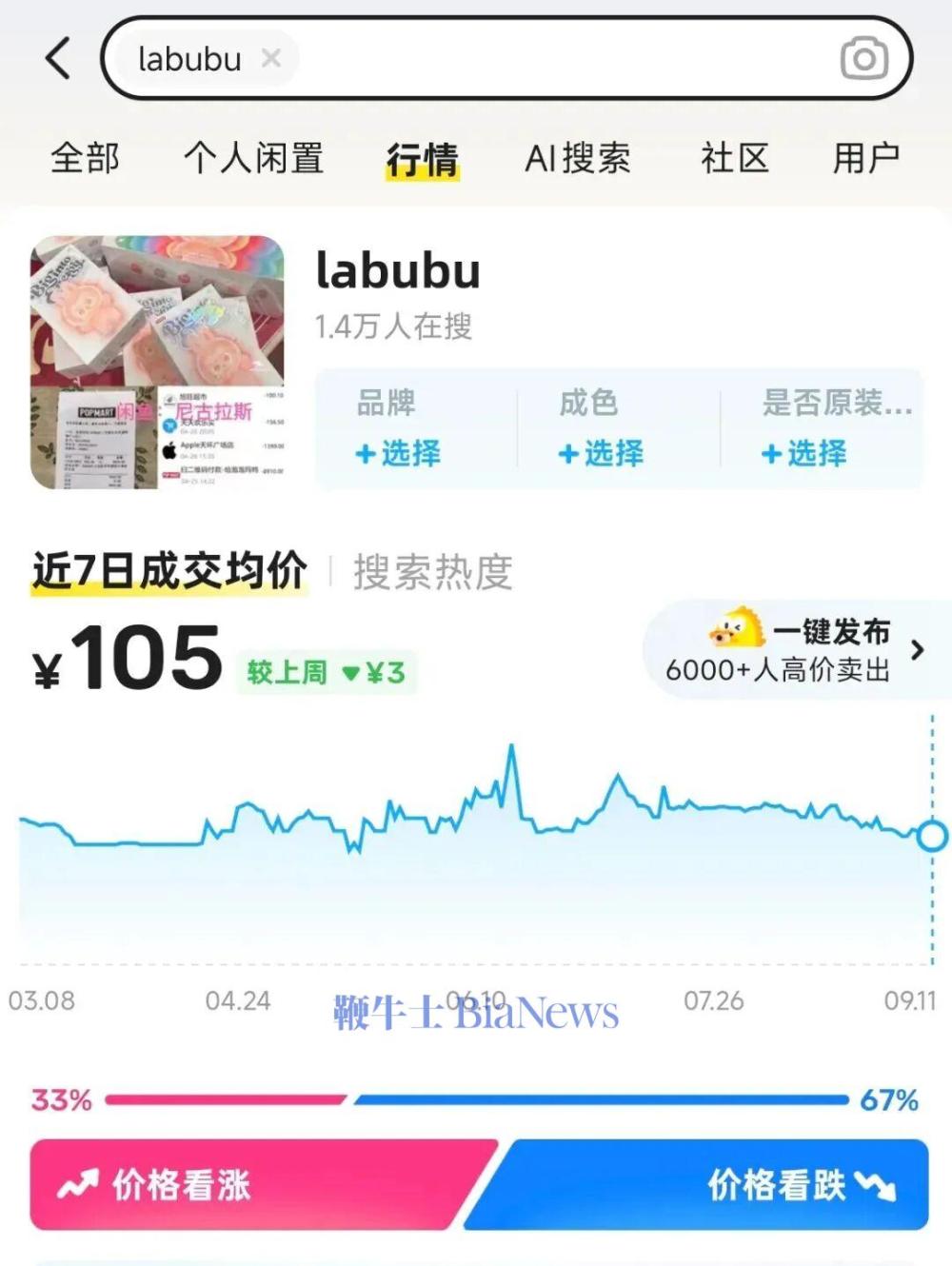
Group 1 - The average resale price of Labubu's products has significantly decreased, with the price of a box dropping from 1,478 yuan to around 632 yuan, and some single items even falling below their original price of 99 yuan to as low as 82 yuan [1][4] - The number of Labubu listings on second-hand platforms has increased, while transaction prices are simultaneously declining, indicating a shift in market dynamics [1][4] - The stock price of Pop Mart, the parent company of Labubu, has also seen a decline, dropping over 40% from a peak of 339.8 HKD to approximately 189 HKD, resulting in a market capitalization loss of over 200 billion HKD [3][7] Group 2 - The rapid change in prices has altered consumer expectations, leading to comments on social media about purchasing preferences shifting away from blind box purchases to directly buying desired items [4][6] - The decline in market confidence is evident, as the demand for new products has diminished, and the urgency to purchase has lessened, indicating a broader cooling trend in the collectible toy market [6][7]

情绪经济引爆潮玩新赛道 国产IP用“共鸣”打开全球市场
Shang Hai Zheng Quan Bao· 2025-12-29 19:06
Core Insights - The article discusses the rise of the emotional economy in China, with a market size projected to reach 2.3 trillion yuan in 2024 and expected to exceed 4.5 trillion yuan by 2029 [2] - The trend of emotional consumption is reflected in the popularity of trendy toys, particularly those associated with emotional expression, such as Crybaby and LABUBU [3][4] - The toy industry is on the verge of surpassing 100 billion yuan, with companies like Pop Mart experiencing significant revenue growth [4][6] Company Performance - Pop Mart reported a revenue of 13.88 billion yuan for the first half of 2025, a year-on-year increase of 204.4%, and an adjusted net profit of 4.71 billion yuan, up 362.8% [4] - The company aims to achieve a revenue target of 30 billion yuan for the year [4] - Other companies in the sector, such as TOP TOY, are also experiencing rapid growth, with a compound annual growth rate of 67.7% from 2022 to 2024 [6] Market Trends - The global trendy toy market is projected to grow from $20.3 billion in 2020 to $52 billion in 2025, with a compound annual growth rate of 19.8% [6] - The number of registered trendy toy companies in China has surged, with 9,787 new registrations in 2025 alone, surpassing the total for 2024 [6] - The emotional economy is becoming a shared consumer preference among young people globally, influencing the design and marketing of products [8] International Expansion - Pop Mart is actively expanding its presence in international markets, as evidenced by its participation in the Macy's Thanksgiving Day Parade in New York, marking a significant milestone for the brand [10] - The company is focusing on establishing stores in iconic global shopping centers and enhancing product quality and store design to accelerate growth [10] - The emotional connection consumers seek through trendy toys is driving the company's strategy to create a diverse range of consumption scenarios [10]
年度榜单|2025 少年们最想让全世界知道的新闻!
声动活泼· 2025-12-29 15:12
Group 1 - The article invites young listeners to share three news stories they would like to tell the world in 2025, reflecting their perspectives and hopes for the future [2][3] - A popular plush toy named Labubu from Pop Mart has gained significant attention globally, leading to intense demand and even altercations among customers in stores [4] - The success of Labubu is attributed to its unique design and the emotional connection it fosters among its fans, prompting curiosity about its origin and development [4][5] Group 2 - The British TV series "Chaos Youth" has become a global sensation, with the UK Prime Minister endorsing it as educational material for schools, highlighting concerns about youth smartphone usage [6] - The series has sparked discussions among young listeners about the appropriateness of smartphone access for students, with varying opinions on parental control and usage limits [6] Group 3 - A marketing agency announced the upcoming release of bags made from Tyrannosaurus rex skin, developed in collaboration with genetic engineering and biomaterials companies [8] - This innovative concept raises ethical questions about animal protection and the potential for using similar methods for other endangered species [9] Group 4 - A significant case in Beijing involved the poisoning of a pet dog, leading to the first criminal case of its kind in the city, which may set a precedent for future cases [11] - The incident has sparked discussions about animal rights and the need for better protection of pets from harm [12] Group 5 - Recent improvements in public restroom facilities have been noted, particularly in addressing the long queues for women's restrooms, with legislative measures being implemented in some regions [14] - The article highlights the ongoing challenges and societal awareness regarding gender-specific restroom access [15] Group 6 - A high-profile theft at the Louvre Museum involved the loss of nine priceless jewels, raising concerns about security measures in cultural institutions [17] - The incident has prompted discussions about the importance of protecting cultural heritage and the responsibilities associated with it [18] Group 7 - A report indicates that nearly half of China's cities are experiencing gradual land subsidence, a phenomenon linked to global warming and urban development [19] - This issue is not isolated to China, as it is recognized as a global problem, prompting calls for environmental awareness and action [19] Group 8 - The Shenzhou 21 spacecraft recently delivered supplies to the Tiangong space station, including a baking machine and four mice for scientific research, highlighting advancements in space exploration [20] - The inclusion of mice in space missions is seen as a step towards understanding the effects of space travel on living organisms [20]

DeepSeek一夜爆火、Labubu引爆全球抢购潮、“史诗级”外卖大战……2025年中国十大商业事件全盘点
硬AI· 2025-12-29 14:24
Core Viewpoint - The year 2025 marks a transformative period for Chinese business, driven by technological advancements and strategic market maneuvers, including DeepSeek's cost paradigm shift in AI, the establishment of a "stabilization fund" by state-owned enterprises, and fierce competition in various sectors like food delivery and consumer products [2][3][4]. Group 1: AI and Technology - DeepSeek's R1 model demonstrated a significant cost advantage, achieving comparable performance to OpenAI's models at a fraction of the cost, leading to a reevaluation of AI asset values globally [10]. - The Chinese stock market reacted positively to the implications of DeepSeek's success, with the Nasdaq China Golden Dragon Index rising over 4% shortly after [10]. - The launch of L3 autonomous driving vehicles in China signifies a major milestone in the commercialization of advanced driving technologies, with expectations of a market size exceeding 1 trillion yuan by 2030 [49][51]. Group 2: Market Stability Measures - In response to external economic pressures, the "national team" intervened in the stock market by establishing a "stabilization fund," which included significant investments from state-owned enterprises to restore market confidence [12][14][18]. - The People's Bank of China supported these efforts by promising sufficient liquidity to stabilize the market, reinforcing the government's commitment to maintaining financial security [14][18]. Group 3: Consumer and Service Sector Developments - JD.com entered the food delivery market, intensifying competition with Alibaba and Meituan, leading to aggressive pricing strategies and significant order volume growth [26][30]. - Pop Mart's Labubu character achieved global popularity, resulting in a revenue surge of 170%-175% in Q1 2025, with notable growth in international markets [20][22]. - The competition in the food delivery sector is characterized by substantial subsidies and promotional offers, indicating a shift towards efficiency and market share acquisition among major players [28][30]. Group 4: Capital Market Movements - The collective IPO efforts of China's "four little dragons" in the GPU sector highlight a significant moment for domestic chip manufacturers, with substantial market valuations and growth expectations [52][54]. - The stock prices of Pop Mart surged over 200% in the first half of 2025, reflecting strong market interest and future growth potential, despite a subsequent correction [22][25]. Group 5: Breakthroughs in Energy and Aerospace - China achieved significant milestones in nuclear fusion research, with advancements in plasma physics and the development of the next-generation fusion energy experimental device [58][59]. - The successful test flights of reusable rockets by both private and state-owned enterprises mark a new era in China's commercial space industry, aiming for cost reductions and increased launch frequency [60][63].



Labubu盲盒二手价大“跳水”
Sou Hu Cai Jing· 2025-12-29 13:36
Group 1 - The Labubu blind box prices have significantly declined in the secondary market after initially soaring to high levels shortly after their release [2] - The Labubu series saw a drastic price drop from over 4600 yuan to around 260 yuan, with the fourth generation mini Labubu following a similar trend [2] - Recent data from the Dewu APP indicates that the average transaction price for the Labubu blind box has been on a downward trend, with a recent average of 117.17 yuan [2] Group 2 - Morgan Stanley reports that Pop Mart is transitioning from a phase of explosive growth to a phase of sustainable growth, predicting a slowdown in revenue growth for Labubu by 2026 [3] - Pop Mart's recent performance has been strong, with a reported revenue increase of 245% year-on-year for Q3 2025, including a 185%-190% increase in China and a 365%-370% increase overseas [3] - The company's stock reached a historical high of 339.8 HKD, with a market capitalization exceeding 420 billion HKD, but has since declined to 199.90 HKD per share [3]
2025,中产都抛弃了哪些消费品牌?
虎嗅APP· 2025-12-29 13:33
Core Viewpoint - The article discusses the contrasting dynamics of the Chinese consumer market in 2025, highlighting both the rise of successful brands and the collapse of previously celebrated companies, marking a significant shift in consumer behavior and business models [4][5][7]. Group 1: Market Dynamics - In 2025, the Chinese consumer market experienced a "violent cleansing," with many once-celebrated "unicorns" collapsing, signaling the end of an era characterized by "losses for scale" and "storytelling through valuation" [5][7]. - The downfall of brands like "Chongxuegao" and "Kristin" illustrates a collective failure of business models that relied heavily on marketing rather than product value, as consumers returned to rational purchasing behaviors [7][8]. - The year 2025 is described as a turning point, where the market bid farewell to high-priced, trendy brands that lacked a solid product foundation, leading to a significant shift in consumer expectations [7][8]. Group 2: Successful Brands - Despite the market downturn, certain brands thrived, such as "Mizhu Ice City" and "Bubble Mart," which capitalized on efficiency and emotional value, demonstrating resilience in a challenging environment [12][13]. - The success of these brands is attributed to their ability to adapt to consumer needs for affordable pleasure, with "new tea drinks" becoming a form of "cheap social currency" [16]. - The article highlights the importance of supply chain efficiency, with brands like "Mizhu Ice City" leveraging agricultural technology and logistics to maintain competitive pricing [14][15]. Group 3: Investment Trends - In 2025, the investment landscape saw a dramatic reduction in funding rounds, with only 74 financing events compared to 133 in the previous year, indicating a shift away from reckless spending [20][21]. - The restaurant sector remained a focal point for investment, accounting for over 60% of financing events, as capital sought safety in high-frequency consumer needs [22]. - Brands that demonstrated strong supply chain control and product differentiation, such as "Fulaiwei" and "Guifenghuang," began to attract investment, reflecting a new focus on sustainable business practices [22][23]. Group 4: Future Outlook - The article suggests that the future of consumer brands will hinge on their ability to integrate technology and maintain strong supply chains, with a shift towards global distribution becoming essential [25][26]. - The emergence of sectors like the silver economy and pet care indicates evolving consumer demographics and preferences, highlighting new opportunities for growth [25]. - The narrative concludes that the market will favor brands that respect consumer needs and focus on operational efficiency, marking a departure from the previous era of superficial marketing [27][28].

Labubu盲盒二手价大幅“跳水”,曾被炒至数千元
Xin Lang Cai Jing· 2025-12-29 12:30
Group 1 - The resale prices of Labubu blind boxes have significantly declined after initially soaring to high levels, with prices dropping from over 4600 yuan to around 260 yuan [1] - The fourth generation mini Labubu followed a similar trend, with initial resale prices reaching 1600 yuan and hidden variants nearing 800 yuan, but later falling to an average of 264 yuan for hidden variants and 1077 yuan for whole boxes by late December [1] - Recent data from the Dewu APP indicates that the average transaction price for the Labubu blind box over the past 30 days was 117.17 yuan, with a peak of 130.76 yuan on December 16, followed by a downward trend [1] Group 2 - Morgan Stanley's report indicates that Pop Mart is transitioning from a phase of explosive growth to a phase of sustainable growth, predicting a significant slowdown in revenue growth for Labubu by 2026, shifting from a single blockbuster to diversified drivers beyond Labubu IP [2] - Pop Mart reported strong performance, with a 245% year-on-year revenue increase in Q3 2025, including a 185%-190% increase in China and a 365%-370% increase overseas [2] - The company's stock reached a historical high of 339.8 HKD, with a market capitalization exceeding 420 billion HKD, but has since declined to 199.90 HKD per share as of December 29, reflecting a decrease of 0.15% [2]