
商贸零售

Search documents
博时市场点评6月24日:沪指站上3400点,创业板涨超2%
Xin Lang Ji Jin· 2025-06-24 08:23
Market Overview - The three major indices in the A-share market rose over 1%, with the Shanghai Composite Index surpassing 3400 points and the ChiNext Index increasing by over 2% [1][3] - The trading volume in the A-share market exceeded 1.4 trillion yuan, indicating a significant increase in market activity [1][3] Geopolitical Impact - The announcement of a ceasefire between Iran and Israel has reduced expectations for further escalation of conflict, leading to an increase in global risk appetite [1][3] - The upcoming 80th anniversary military parade in China on September 3 is expected to showcase domestically produced military equipment, highlighting advancements in national defense and technology autonomy [2][3] Economic Indicators - China's economic growth remains stable, with strong consumer growth despite a slowdown in investment and industrial production [1][2] - The market is expected to experience fluctuations, with a preference for technology and dividend stocks in investment strategies [1][3] Market Performance - On June 24, the A-share market saw significant gains, with the Shanghai Composite Index closing at 3420.57 points, up 1.15%, and the ChiNext Index closing at 2064.13 points, up 2.30% [4] - Among the sectors, power equipment, non-bank financials, and retail saw the highest gains, while oil and coal sectors experienced declines [4] Fund Flow - The market turnover reached 14,483.99 billion yuan, showing an increase from the previous trading day [5] - The margin trading balance reported at 18,169.01 billion yuan, also reflecting an upward trend [5]

【盘中播报】沪指涨1.07% 非银金融行业涨幅最大
Zheng Quan Shi Bao Wang· 2025-06-24 06:35
Market Overview - The Shanghai Composite Index increased by 1.07% with a trading volume of 920.72 million shares and a transaction value of 1,161.24 billion yuan, representing a 31.32% increase compared to the previous trading day [1]. Industry Performance - The top-performing sectors included: - Non-bank Financials: +2.69%, transaction value of 622.93 billion yuan, led by Xiangcai Co. with a gain of 10.05% [1]. - Electric Equipment: +2.58%, transaction value of 1,116.33 billion yuan, led by Xinde New Materials with a gain of 20.01% [1]. - Retail: +2.53%, transaction value of 151.10 billion yuan, led by Zhejiang Dongri with a gain of 10.02% [1]. - The sectors with the largest declines included: - Oil and Petrochemicals: -1.50%, transaction value of 180.21 billion yuan, led by Tongyuan Petroleum with a loss of 18.73% [2]. - National Defense and Military Industry: -0.31%, transaction value of 485.29 billion yuan, led by Jieqiang Equipment with a loss of 16.52% [2]. - Coal: -0.26%, transaction value of 52.03 billion yuan, led by Yunmei Energy with a loss of 2.51% [2]. Notable Stocks - Leading gainers included: - Xiangcai Co. in Non-bank Financials with a gain of 10.05% [1]. - Xinde New Materials in Electric Equipment with a gain of 20.01% [1]. - Zhejiang Dongri in Retail with a gain of 10.02% [1]. - Notable decliners included: - Tongyuan Petroleum in Oil and Petrochemicals with a loss of 18.73% [2]. - Jieqiang Equipment in National Defense and Military Industry with a loss of 16.52% [2].


A股平均股价11.48元 51股股价不足2元
Zheng Quan Shi Bao Wang· 2025-06-23 10:23
Group 1 - The average stock price of A-shares is 11.48 yuan, with 51 stocks priced below 2 yuan, the lowest being退市鹏博 at 0.18 yuan [1] - Among the low-priced stocks, 37 have increased in price today, with 工智退, 人乐退, and 退市鹏博 showing gains of 9.09%, 8.57%, and 5.88% respectively [1] - There are 16 ST stocks among the low-priced stocks, accounting for 31.37% of the total [1] Group 2 - The closing prices of several low-priced stocks include: 退市鹏博 at 0.18 yuan, 工智退 at 0.24 yuan, and 人乐退 at 0.38 yuan [1][2] - The stock market performance shows that 4 stocks declined, with *ST星光, ST中珠, and ST晨鸣 experiencing declines of 1.64%, 1.16%, and 0.53% respectively [1] - The data indicates that the majority of low-priced stocks are in various sectors, including communication, machinery, retail, and pharmaceuticals [1][2]


主动量化周报:等待许久的配置时机:地缘催化-20250622
ZHESHANG SECURITIES· 2025-06-22 11:28
Quantitative Models and Construction Methods 1. Model Name: Price Segmentation System - **Model Construction Idea**: The model analyzes the price movement of the Shanghai Composite Index (SSE) to identify marginal trends and align daily and weekly price patterns[15] - **Model Construction Process**: The model segments the price data of the SSE index into daily and weekly trends. It observes the marginal upward movement in daily data and compares it with weekly data to confirm alignment[15] - **Model Evaluation**: The model provides a straightforward approach to track marginal price movements and assess consistency across timeframes[15] 2. Model Name: Micro-Market Structure Timing - **Model Construction Idea**: This model evaluates the activity level of informed traders to gauge market sentiment and timing opportunities[16] - **Model Construction Process**: The model uses an "informed trader activity index," which tracks the marginal changes in informed trading activity. The index is observed near the zero line, indicating cautious market sentiment[16] - **Model Evaluation**: The model effectively reflects the cautious stance of informed traders during market volatility, providing insights into market timing[16] 3. Model Name: Institutional Positioning Estimation - **Model Construction Idea**: This model estimates institutional holdings in the TMT sector to assess the sector's positioning and potential rebound opportunities[14] - **Model Construction Process**: The model calculates the institutional holding ratio in the TMT sector. As of June 20, the institutional holding ratio was 24.7%, corresponding to the 54.2% percentile over the past three years. This indicates a relatively cleared position structure, suggesting potential for early recovery[14] - **Model Evaluation**: The model provides a quantitative basis for assessing sectoral positioning and rebound potential, particularly in high-risk sectors like TMT[14] --- Model Backtesting Results 1. Price Segmentation System - **Weekly SSE Index Change**: -0.51% during the period from June 16 to June 20, 2025[15] 2. Micro-Market Structure Timing - **Informed Trader Activity Index**: The index remained near zero, reflecting cautious market sentiment[16] 3. Institutional Positioning Estimation - **Institutional Holding Ratio in TMT**: 24.7%, corresponding to the 54.2% percentile over the past three years[14] --- Quantitative Factors and Construction Methods 1. Factor Name: BARRA Style Factors - **Factor Construction Idea**: The factors analyze the performance of fundamental and trading-related attributes to identify market preferences and style shifts[25] - **Factor Construction Process**: - **Fundamental Factors**: Valuation factors, such as earnings-to-price (EP), are analyzed for their contribution to high-dividend asset returns - **Trading-Related Factors**: Momentum and volatility factors are assessed for their performance during market corrections - **Size Factors**: Both linear and non-linear size factors are evaluated to track shifts from small-cap to large-cap preferences[25] - **Factor Evaluation**: The factors effectively capture the dynamic shifts in market preferences, including the transition from small-cap to large-cap styles and the performance of high-dividend assets[25] --- Factor Backtesting Results 1. BARRA Style Factors - **Valuation Factors**: High EP value assets demonstrated strong returns[25] - **Trading-Related Factors**: Momentum and high-volatility assets experienced drawdowns[25] - **Size Factors**: Positive excess returns for size factors, with reduced drawdowns in non-linear size factors, indicating a shift toward large-cap preferences[25]
兴业期货日度策略-20250620
Xing Ye Qi Huo· 2025-06-20 11:42
1. Report Industry Investment Ratings - **Equity Index Futures**: Neutral, expecting a sideways trend [1] - **Treasury Bond Futures**: Neutral, with a range - bound outlook [1] - **Precious Metals (Gold and Silver)**: Neutral, with a long - term upward potential for gold [1][4] - **Non - ferrous Metals (Copper, Aluminum, Nickel)**: Copper - Neutral, Aluminum - Slightly Bullish, Nickel - Neutral [4] - **Carbonate Lithium**: Bearish, with a downward trend [4][6] - **Silicon Energy**: Neutral, with limited price fluctuations [6] - **Steel and Ore (Rebar, Hot - Rolled Coil, Iron Ore)**: Neutral, with a narrow - range sideways movement [6] - **Coking Coal and Coke**: Bearish [8] - **Soda Ash and Glass**: Soda Ash - Bearish, Glass - Bearish [8] - **Crude Oil**: Slightly Bullish [8][10] - **Methanol**: Bullish [10] - **Polyolefins**: Bullish [10] - **Cotton**: Slightly Bullish [10] - **Rubber**: Bearish [10] 2. Core Views - A - share market shows cautious sentiment in the short - term, lacking upward momentum and continuing the sideways pattern. However, with increasing capital volume and clear policy support, the long - term upward trend remains unchanged [1] - The Treasury bond market is affected by overseas geopolitical issues to a limited extent. With the central bank's net injection in the open market, the bond market is running at a high level, but the trend is uncertain [1] - Precious metals are affected by geopolitical factors, with gold prices oscillating at a high level and a potential long - term upward movement. Silver is more volatile than gold [1][4] - Non - ferrous metals face supply - demand imbalances. Copper has supply constraints but weak demand; aluminum has supply concerns and low inventory support; nickel has an oversupply situation [4] - Carbonate lithium has an increasing supply and weak demand, with a downward price trend [4][6] - Silicon energy has sufficient supply and demand uncertainty, with limited price fluctuations [6] - Steel and ore markets have limited contradictions, and the pressure of raw material valuation adjustment has eased, with prices in a narrow - range sideways movement [6] - Coking coal and coke markets are bearish due to factors such as inventory accumulation and production reduction [8] - Soda ash has a high inventory and weak demand, while glass has a relatively loose supply and weak demand, both with a bearish outlook [8] - Crude oil prices are supported by geopolitical factors, and the future trend depends on the development of the Middle - East situation [8][10] - Methanol production is increasing, but downstream losses are expanding. If domestic coal - chemical plants start centralized maintenance, prices will rise further [10] - Polyolefins have stable production, and prices are supported by rising crude oil prices [10] - Cotton has a strengthening expectation of tight supply and demand, and it is recommended to maintain a long - position strategy [10] - Rubber has an increasing supply and weakening demand, with limited potential for a trend - reversal [10] 3. Summary by Relevant Catalogs 3.1 Equity Index Futures - Market sentiment is cautious, with limited short - term upward momentum. A - shares continue the sideways pattern, but the long - term upward trend remains unchanged. Attention should be paid to the opportunity of low - level long - position layout [1] 3.2 Treasury Bond Futures - Overseas geopolitical issues have a limited impact on the domestic bond market. The central bank's net injection in the open market supports the bond market at a high level, but the trend is uncertain [1] 3.3 Precious Metals - Gold prices are oscillating at a high level, with a potential long - term upward movement. It is recommended to buy on dips or hold short - put options. Silver is more volatile than gold, and attention should be paid to stop - loss [1][4] 3.4 Non - ferrous Metals 3.4.1 Copper - Supply is tight, but demand is weak due to macro uncertainties. Prices are affected by market sentiment and funds, with a sideways trend [4] 3.4.2 Aluminum - Alumina has an oversupply pressure, but the downward drive may slow down.沪铝 has low inventory support, with a slightly bullish outlook [4] 3.4.3 Nickel - The supply is in an oversupply situation, but the downward momentum weakens at low prices. It is recommended to hold short - option strategies [4] 3.5 Carbonate Lithium - Supply is increasing, and demand is weak. The price trend is downward [4][6] 3.6 Silicon Energy - Supply is sufficient, and demand is uncertain. Price fluctuations are limited, and it is recommended to hold short - put options [6] 3.7 Steel and Ore 3.7.1 Rebar - Supply is increasing, demand is stable, and inventory is decreasing at a slower pace. Prices are expected to move in a narrow range in the short - term, with a weak long - term trend. It is recommended to hold short - call options [6] 3.7.2 Hot - Rolled Coil - Supply and demand are both increasing, with a slight inventory reduction. Prices are expected to move in a narrow range in the short - term. It is recommended to hold short - position contracts [6] 3.7.3 Iron Ore - Supply and demand are expected to shift from tight to balanced and slightly loose. Prices are expected to follow steel prices and move in a narrow range. It is recommended to hold short - position contracts [6] 3.8 Coking Coal and Coke - Coking coal production is decreasing, but inventory is increasing, with a bearish outlook. Coke production is decreasing, and prices are under downward pressure [8] 3.9 Soda Ash and Glass 3.9.1 Soda Ash - Supply is decreasing in the short - term, but inventory is high, and demand is weak. It is recommended to hold short - position contracts or long - glass short - soda ash strategies [8] 3.9.2 Glass - Supply is relatively loose, and demand is weak. It is recommended to hold short - position contracts or long - glass short - soda ash strategies [8] 3.10 Crude Oil - Prices are supported by geopolitical factors, and the future trend depends on the development of the Middle - East situation. It is recommended to hold long - call options [8][10] 3.11 Methanol - Production is increasing, but downstream losses are expanding. If domestic coal - chemical plants start centralized maintenance, prices will rise further [10] 3.12 Polyolefins - Production is stable, and prices are supported by rising crude oil prices [10] 3.13 Cotton - Supply - demand is expected to be tight, and it is recommended to maintain a long - position strategy [10] 3.14 Rubber - Supply is increasing, demand is decreasing, and the potential for a trend - reversal is limited. Attention should be paid to the tire inventory cycle and demand improvement [10]
【盘中播报】沪指跌0.43% 商贸零售行业跌幅最大
Zheng Quan Shi Bao Wang· 2025-06-18 03:11
证券时报·数据宝统计,截至上午10:28,今日沪指跌0.43%,A股成交量473.17亿股,成交金额5628.74亿 元,比上一个交易日减少6.70%。个股方面,998只个股上涨,其中涨停25只,4333只个股下跌,其中 跌停2只。从申万行业来看,国防军工、电子、银行等涨幅最大,涨幅分别为2.09%、0.39%、0.21%; 商贸零售、综合、非银金融等跌幅最大,跌幅分别为1.87%、1.69%、1.68%。(数据宝) 今日各行业表现(截至上午10:28) | 申万行业 | 行业涨跌(%) | 成交额(亿元) | 比上日(%) | 领涨(跌)股 | 涨跌幅(%) | | --- | --- | --- | --- | --- | --- | | 国防军工 | 2.09 | 327.81 | 56.89 | 北方长龙 | 20.00 | | 电子 | 0.39 | 573.55 | -5.25 | 逸豪新材 | 20.01 | | 银行 | 0.21 | 107.63 | -0.85 | 上海银行 | 1.54 | | 食品饮料 | 0.10 | 172.09 | 37.76 | 莫高股份 | 10.05 | | ...
早盘直击 | 今日行情关注
申万宏源证券上海北京西路营业部· 2025-06-18 03:04
Core Viewpoint - The A-share market remains stable despite tensions in the Middle East, continuing a pattern of slow upward movement amidst trade conflict concerns [1][2]. Market Outlook - The window for tariff events is closing, with a new policy window opening in late June, which may lead to a break in the current consolidation pattern if effective policies are implemented [2]. - The market is currently focused on tariff-related expectations, including U.S. court rulings and potential trade negotiations between China and the U.S. [2]. Hot Sectors - Consumption and healthcare sectors are expected to be key areas of focus, with an emphasis on domestic demand expansion as a priority for 2025 [3]. - The robotics sector is anticipated to grow, with advancements in various types of robots and related technologies [3]. - The semiconductor industry is on a path toward domestic production, with attention on equipment, wafer manufacturing, and IC design [3]. - The military industry is expected to see a rebound in orders by 2025, with signs of recovery in various sub-sectors [3]. - The innovative pharmaceutical sector is entering a growth phase after several years of adjustment, with positive profit growth expected [3]. - The AI sector is poised for new catalysts, particularly with updates from emerging models that are competitive with leading international models [3]. Market Review - The A-share market experienced narrow fluctuations, with previous leaders like innovative pharmaceuticals and banking showing signs of adjustment [4]. - Defensive sectors such as coal, utilities, and oil & gas led the market, indicating a shift in investor preference [4]. - Overall, the market maintained a positive earning effect, with over 2200 stocks rising despite some sectors facing declines [4].


这一板块,盘中拉升!
Zhong Guo Ji Jin Bao· 2025-06-18 02:58
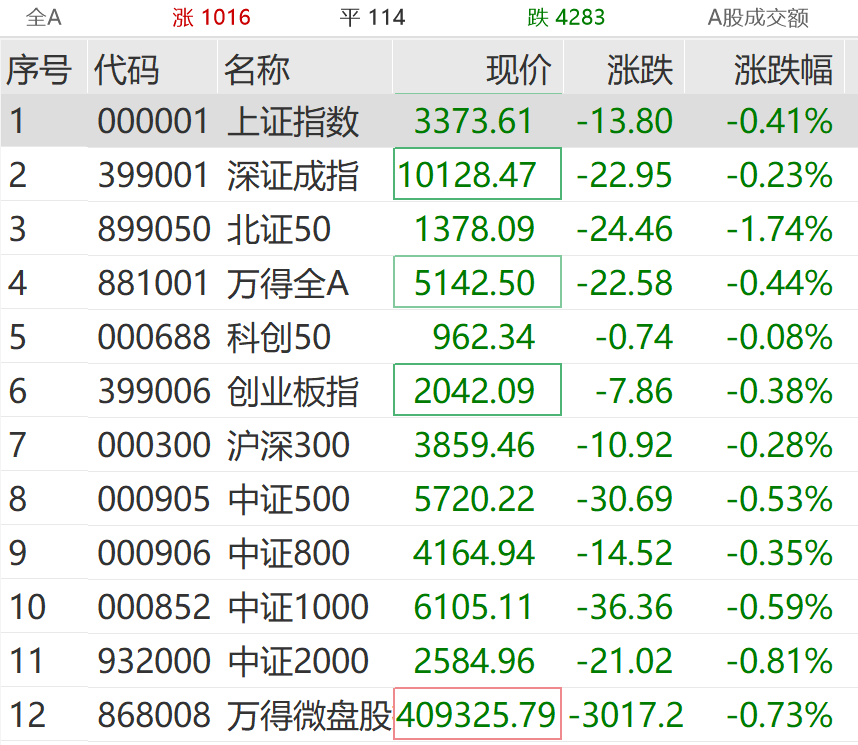
Market Overview - A-shares opened slightly lower on June 18, with all major indices in the red and over 4200 stocks declining [1] - The Shanghai Composite Index fell by 0.41% to 3373.61, while the Shenzhen Component decreased by 0.23% to 10128.47 [2] Sector Performance - The food and beverage sector showed initial strength, particularly in liquor stocks, with notable gains from companies like Mogaos, Huangtai Wine, and Jinzhongzi Wine, all hitting the daily limit [5][6] - The photovoltaic inverter, liquor, military, and digital currency sectors experienced localized rallies, while rare earth permanent magnet stocks saw significant pullbacks [3][11] Liquor Industry Insights - During the "618" shopping festival, several e-commerce platforms initiated aggressive price cuts on liquor, with high-end products like Feitian Moutai seeing price drops, which has become a key market variable [7] - Specific liquor stocks such as Mogaos, Huangtai Wine, and Jinzhongzi Wine reported increases of approximately 10% [6] Oil and Gas Sector Activity - The oil and gas sector was notably active, with companies like Zhun Oil and Beiken Energy experiencing substantial gains, attributed to rising international oil prices amid escalating geopolitical tensions in the Middle East [8][9] Defense and Military Sector - The defense and military sector saw significant upward movement, with stocks like Changcheng Military Industry hitting the daily limit and others like Beifang Longzhong and Jiekang Equipment rising over 10% [10] Consumer Sector Weakness - The broader consumer sector faced challenges, with retail stocks declining, particularly in the small commodity market, where Xiaoshangpin City dropped over 9% [11][12] - The beauty and personal care sector also experienced declines, with several companies reporting drops exceeding 5% [13] Rare Earth Sector Decline - Rare earth permanent magnet stocks faced notable declines, with companies like Beikong Technology nearing the daily limit down, and others like Zhongke Magnetic and Keheng shares dropping over 9% [15][16]






商贸零售点评报告:5月社零数据如何?
China Post Securities· 2025-06-18 02:41
Industry Investment Rating - The industry investment rating is "Outperform the Market" and is maintained [1] Core Viewpoints - The report highlights that the retail sector is experiencing a recovery, with May's retail sales data showing a year-on-year growth of 6.4%, surpassing the consensus forecast of 4.85% [5][9] - The growth in retail sales is attributed to the "old-for-new" policy and the "618" e-commerce promotional activities, which have stimulated consumer spending [5][9] - The report indicates that the best-performing categories include home appliances and communication equipment, with sales growth of 53% and 33% respectively, driven by government subsidies [6][9] Summary by Relevant Sections Industry Basic Situation - The closing index level is 2128.1, with a 52-week high of 2501.51 and a low of 1442.73 [1] Recent Retail Data - In May, the total retail sales of consumer goods reached 41,326 billion, with a 6.4% year-on-year increase. Excluding automobiles, the retail sales amounted to 37,316 billion, growing by 7.0% [4][5] - For the first five months of the year, the total retail sales reached 203,171 billion, reflecting a 5.0% increase [4][5] Investment Suggestions and Focused Targets - The report suggests that the consumption recovery process is gradual, with a focus on new consumption opportunities such as trendy toys, gold and jewelry, and new tea drinks [10] - Recommended stocks include Pop Mart, Bluko, Miniso, and others in the new consumption space [10] - For cyclical recovery, companies in the liquor and hospitality sectors are highlighted as potential investment opportunities [10]
商贸零售行业5月社零报告专题:5月社零同比亮眼,国补叠加大促助发展
Donghai Securities· 2025-06-17 09:43
Investment Rating - The industry investment rating is "Overweight" [1] Core Viewpoints - In May 2025, the total retail sales of consumer goods reached 41,326 billion yuan, with a year-on-year growth of 6.4%, exceeding the consensus expectation of 4.85% [10][12] - Urban retail sales growth has outpaced rural markets for three consecutive months, with urban sales increasing by 6.5% and rural sales by 5.4% in May [12] - Offline retail performance is stronger than online, with offline retail sales growing by 10.50% year-on-year in May, while online sales saw a decline of 4.25% [15][24] Summary by Sections Overall Retail Sales - The total retail sales in May 2025 grew by 6.4% year-on-year, reaching 41,326 billion yuan, which is higher than the expected growth rate [10][12] Regional Performance - Urban retail sales amounted to 36,057 billion yuan, growing by 6.5%, while rural retail sales were 5,269 billion yuan, with a growth of 5.4% [12] Channel Performance - Offline retail sales increased by 10.50% year-on-year, while online retail sales decreased by 4.25% in May [15] Category Performance - The restaurant sector saw stable growth, with a total revenue of 4,578 billion yuan, up 5.9% year-on-year. The total retail sales of goods reached 36,748 billion yuan, growing by 6.5% [24] - Essential and discretionary categories showed strong performance, with year-on-year growth rates of 11.38% for essentials and 7.87% for discretionary items in May [30][31] Price Trends - Both CPI and PPI showed a year-on-year decline, with CPI at -0.1% and PPI at -3.3% in May [37][39] Employment Situation - The urban unemployment rate in May 2025 was 5.0%, marking a continuous decline for three months [46][48] Investment Recommendations - The report suggests focusing on high-end liquor and regional leaders in the liquor industry due to competitive dynamics. It also recommends attention to the restaurant supply chain as consumer spending in dining is expected to recover [54]