石油开采

Search documents
扩内需促消费政策持续显效 8月核心CPI同比上涨0.9%
Shang Hai Zheng Quan Bao· 2025-09-10 18:48
Group 1 - The core CPI has shown a continuous increase for four months, with a year-on-year rise of 0.9% in August, reflecting the effectiveness of policies aimed at expanding domestic demand and promoting consumption [1] - Prices of gold and platinum jewelry increased by 36.7% and 29.8% year-on-year in August, contributing approximately 0.22 percentage points to the CPI increase [1] - Service prices have gradually increased since March, with a year-on-year rise of 0.6% in August, contributing about 0.23 percentage points to the CPI [1] Group 2 - The PPI decreased by 2.9% year-on-year in August, but the decline has narrowed by 0.7 percentage points compared to July, marking the first narrowing since March [2] - The prices in key industries such as coal processing and black metal smelting have seen a reduction in year-on-year decline, indicating a positive change in some sectors [2] - Experts suggest that the year-on-year decline in PPI is expected to continue to narrow in the fourth quarter due to factors such as last year's base effect and the implementation of capacity governance in key industries [2] Group 3 - The PPI may enter a recovery phase supported by the optimization of export structure, global economic recovery, and deepening trade cooperation with non-US partners [3]
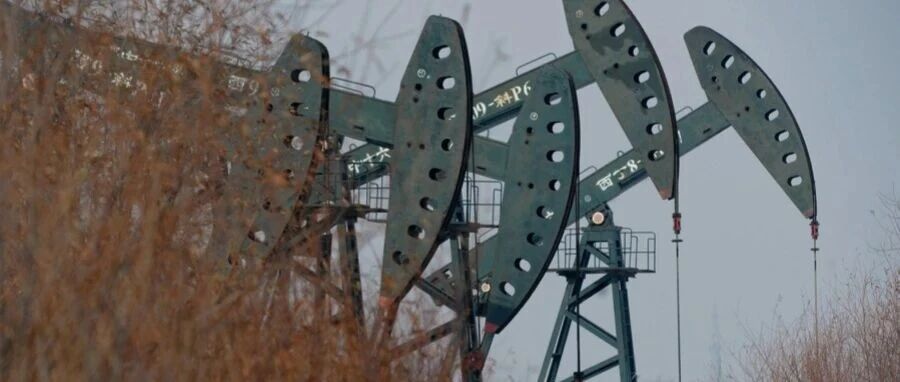
我国新发现10个大型油田、19个大型气田,还有1500吨大金矿和延绵2800公里的“亚洲锂腰带”!自然资源部重磅公布
Mei Ri Jing Ji Xin Wen· 2025-09-10 16:09
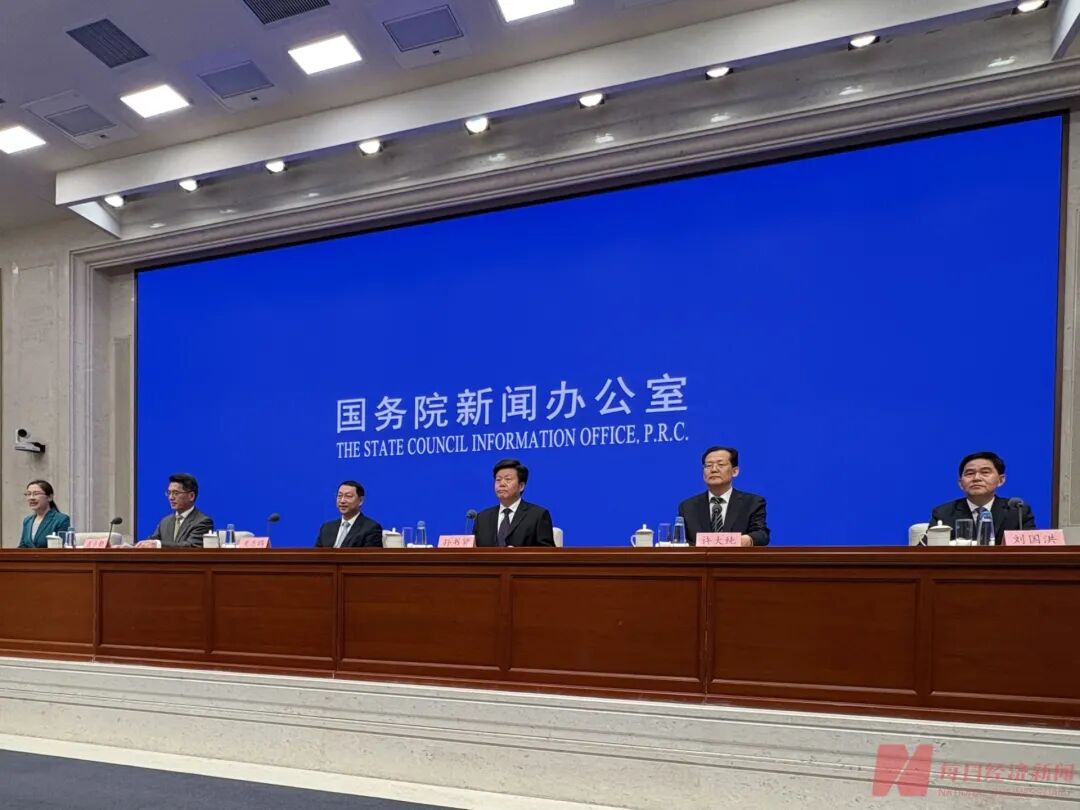
Core Insights - The press conference highlighted the achievements in high-quality development of natural resources during the "14th Five-Year Plan" period, showcasing significant increases in land and water resources, as well as improvements in forest coverage and ecological protection efforts [1][4]. Group 1: Land and Water Resources - By the end of 2024, the total arable land area in China is expected to reach 1.94 billion acres, an increase of 28 million acres compared to 2020 [1]. - The total water resources in the country amount to 31.1 trillion cubic meters, with groundwater resources accounting for 867.92 billion cubic meters [1]. - The national forest coverage rate has reached 25.09%, an increase of approximately 2 percentage points since 2020, making China the fastest-growing country in terms of greening [1]. Group 2: Urban and Spatial Planning - The Ministry of Natural Resources has deepened the "multi-planning integration" reform, optimizing the land spatial layout and implementing a national land spatial planning framework [3]. - The strategic urbanization framework includes a "two horizontal and three vertical" urbanization strategy and a "seven zones and twenty-three belts" agricultural development pattern [3]. - Strict land use controls have been established to protect arable land and ecological spaces, effectively curbing urban sprawl [3]. Group 3: Ecological Protection and Restoration - The Ministry has implemented significant ecological system protection and restoration initiatives, completing over 10 million acres of land rehabilitation [4]. - Major achievements include the restoration of 240,000 acres of abandoned mines and the improvement of marine ecosystems, with coral reef health rates exceeding 60% [4]. - The "Three North" project has completed construction tasks covering 164 million acres, reinforcing ecological safety barriers [4]. Group 4: Mineral Resource Exploration - A new round of mineral exploration has been launched, with nearly 450 billion yuan invested, leading to significant breakthroughs in energy resources, including the discovery of 10 large oil fields and 19 large gas fields [5][6]. - The newly discovered geological reserves of coalbed methane in the Ordos Basin exceed 300 billion cubic meters, approaching the total added over the past decade [5]. - Major breakthroughs in uranium mining have been achieved, particularly in Gansu and Heilongjiang, establishing a solid resource base for uranium security [5]. Group 5: Strategic Mineral Resources - The discovery of a significant "Asian lithium belt" spanning 2,800 kilometers across four provinces has positioned China as a leader in lithium resource exploration [7]. - Technological advancements have enabled the extraction of helium from natural gas, marking a significant shift from reliance on imports to domestic production [7]. - New resource bases are emerging, such as the Dandong gold mine in Liaoning, which is expected to become a world-class gold mine [6].

数据点评 | 为何大宗涨价拉不起PPI?(申万宏观·赵伟团队)
赵伟宏观探索· 2025-09-10 16:04
Core Viewpoints - The transmission effect of upstream price increases to downstream is weakening, with PPI showing marginal improvement in August due to significant recovery in commodity prices [2][10][70] - The overall PPI remained at 0% month-on-month, primarily due to low capacity utilization in downstream sectors, which hindered the reflection of upstream price increases [2][10][70] PPI Analysis - In August, PPI year-on-year decreased by 2.9%, an improvement of 0.7 percentage points from the previous month, aligning with market expectations [2][10][70] - Major commodities like coal and steel continued to rise, contributing positively to PPI, while international oil price declines negatively impacted domestic oil prices [2][10][70] - Downstream sectors are experiencing significant price reductions, with PPI declines in industries such as food and automobiles, which saw respective month-on-month decreases of 0.3% [2][10][70] CPI Analysis - CPI year-on-year fell to -0.4% in August, influenced by a high base from the previous year and weak food prices, with food CPI dropping by 4.3% [3][23][50] - The core CPI is expanding, with core goods CPI rising by 0.1 percentage points to 0.9%, driven by high gold prices and demand from the third batch of national subsidies [3][29][71] - Service CPI showed slight growth, supported by summer travel and healthcare service reforms, while rental prices remained weak due to high youth unemployment [4][33][62] Future Outlook - Commodity prices are expected to continue rising, but excess supply in downstream sectors may limit the transmission of price increases from upstream [4][72] - Year-end PPI is projected to recover to a maximum of -2.1%, while CPI may remain negative in Q3 but could turn positive in Q4 due to policy support for service consumption [4][72]
2025年,塞内加尔石油预测产量从3053万桶上调至3450万桶
Shang Wu Bu Wang Zhan· 2025-09-10 15:23
Core Insights - Senegal's oil production forecast for 2025 has been revised upward from 30.53 million barrels to 34.50 million barrels, reflecting the robustness of the extraction industry and the good performance of oil wells [2] Oil Production - In August, three batches of crude oil were shipped to international markets, totaling 2.90 million barrels [2] - Since the start of production, the cumulative output has exceeded 40 million barrels, with 37.35 million barrels already sold in the market [2] Economic Impact - Oil extraction has generated an economic value of 1.536 trillion West African francs, contributing approximately 67 billion West African francs to the Senegalese government [2] Natural Gas Developments - Two batches of liquefied natural gas have been shipped this month, totaling 337,966 cubic meters [2] - Ongoing commissioning work on the floating production storage and offloading facilities aims to gradually increase capacity [2] Export Markets - Senegal's main oil export customers include China, the Netherlands, Italy, Spain, the United States, and Oman [2]
核心CPI涨幅连续4个月扩大 “反内卷”推动行业价格改善
Di Yi Cai Jing· 2025-09-10 13:36
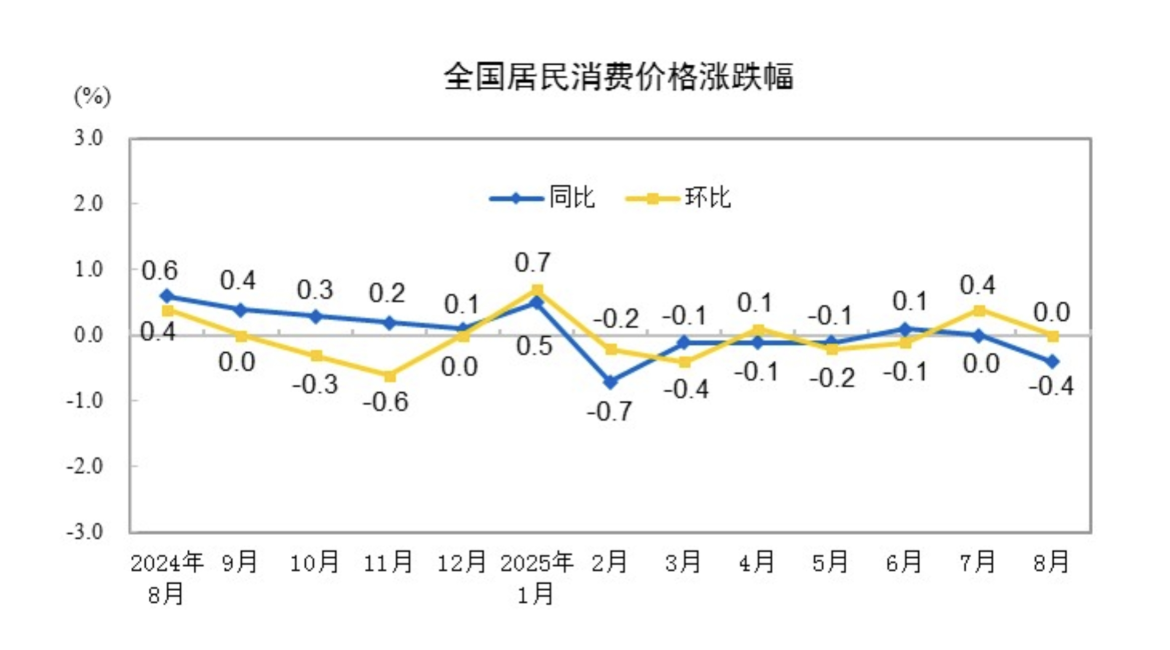
Group 1: CPI and PPI Overview - In August, the Consumer Price Index (CPI) decreased by 0.4% year-on-year, while the Producer Price Index (PPI) showed signs of improvement, remaining flat month-on-month after a decline in July [1][4] - The core CPI, excluding food and energy prices, increased by 0.9% year-on-year, marking the fourth consecutive month of growth [4][12] - The PPI year-on-year decline narrowed to 2.9%, a reduction of 0.7 percentage points compared to July, marking the first contraction since March [6][10] Group 2: Factors Influencing CPI and PPI - The decline in CPI was primarily influenced by a high base from the previous year and lower food prices, which fell by 4.3% year-on-year, with significant drops in pork, fresh vegetables, and eggs [12][13] - The PPI's month-on-month stability was attributed to improved supply-demand relationships and the impact of international commodity prices, particularly in the energy and raw materials sectors [5][9] - The government's proactive macroeconomic policies and the ongoing construction of a unified national market have contributed to a narrowing of the year-on-year decline in PPI [9][10] Group 3: Industry and Market Dynamics - The industrial sector is experiencing a positive shift, with prices in coal processing, black metal smelting, and photovoltaic equipment manufacturing showing reduced year-on-year declines [9][10] - The Ministry of Industry and Information Technology emphasized the importance of industry governance to combat irrational competition, which has shown initial success [11] - Analysts predict that the PPI's year-on-year decline may further narrow to around -2.3% in September, with expectations of a gradual recovery in the fourth quarter [10][14]
核心CPI涨幅连续4个月扩大,“反内卷”推动行业价格改善
Di Yi Cai Jing· 2025-09-10 13:10
Group 1: CPI and PPI Trends - In August, the Consumer Price Index (CPI) remained flat month-on-month and decreased by 0.4% year-on-year, influenced by a high base from the previous year and a continuous decline in food prices [1][10] - The Producer Price Index (PPI) ended an eight-month downward trend, remaining flat month-on-month and decreasing by 2.9% year-on-year, with the decline narrowing by 0.7 percentage points compared to July [4][5] Group 2: Core CPI and Industrial Prices - The core CPI, excluding food and energy prices, increased by 0.9% year-on-year in August, marking the fourth consecutive month of growth [3][11] - Industrial prices showed positive changes, with certain sectors like coal processing and black metal smelting experiencing a narrowing of year-on-year price declines, contributing to the overall stabilization of PPI [7][8] Group 3: Policy Impact and Market Dynamics - The "anti-involution" policy has led to improvements in the supply-demand relationship, positively affecting industrial product prices and reducing disorderly competition in various sectors [3][9] - The implementation of more proactive macro policies is expected to support a gradual recovery in prices, with forecasts indicating a potential narrowing of PPI year-on-year declines in the coming months [8][12]
数据点评 | 为何大宗涨价拉不起PPI?(申万宏观·赵伟团队)
申万宏源宏观· 2025-09-10 13:06
Core Viewpoints - The upstream price increase has a positive contribution to PPI month-on-month, but the low capacity utilization in the mid and downstream sectors continues to drag down PPI significantly [2][10][70] - In August, PPI showed marginal improvement, primarily driven by a notable rebound in commodity prices, with PPI month-on-month remaining at 0% [2][10][70] - The overall PPI month-on-month is 0%, mainly due to low capacity utilization in the mid and downstream sectors, which prevents the full transmission of upstream price increases [2][10][70] PPI Analysis - In August, coal and steel prices continued to rise, with coal mining (2.8%), black mining (2.1%), and black rolling (1.9%) showing month-on-month increases [2][10][70] - The international oil price decline negatively impacted domestic oil prices, with copper prices also contributing negatively to PPI [2][10][70] - The mid and downstream sectors are experiencing significant price reductions, with PPI declines in food and automotive sectors both at -0.3% [2][10][70] CPI Analysis - In August, CPI year-on-year dropped to -0.4%, influenced by a high base and weak food prices, with food CPI down 4.3% [3][23][50] - The core CPI continues to expand, with core goods CPI rising 0.1 percentage points to 0.9%, driven by high gold prices and demand from the third batch of national subsidies [3][29][71] - Core service CPI increased slightly, supported by summer travel and medical service reforms, while rental CPI remains weak due to high youth unemployment [4][33][62] Future Outlook - Commodity prices may continue to rise, but the oversupply in the mid and downstream sectors may constrain the transmission of upstream price increases, leading to weak inflation throughout the year [4][41][72] - It is expected that by the end of the year, PPI year-on-year may recover to a maximum of -2.1% [4][41][72] - CPI is anticipated to remain negative in the third quarter, with a potential turnaround in the fourth quarter due to ongoing policies supporting service consumption and demand recovery [4][41][72]
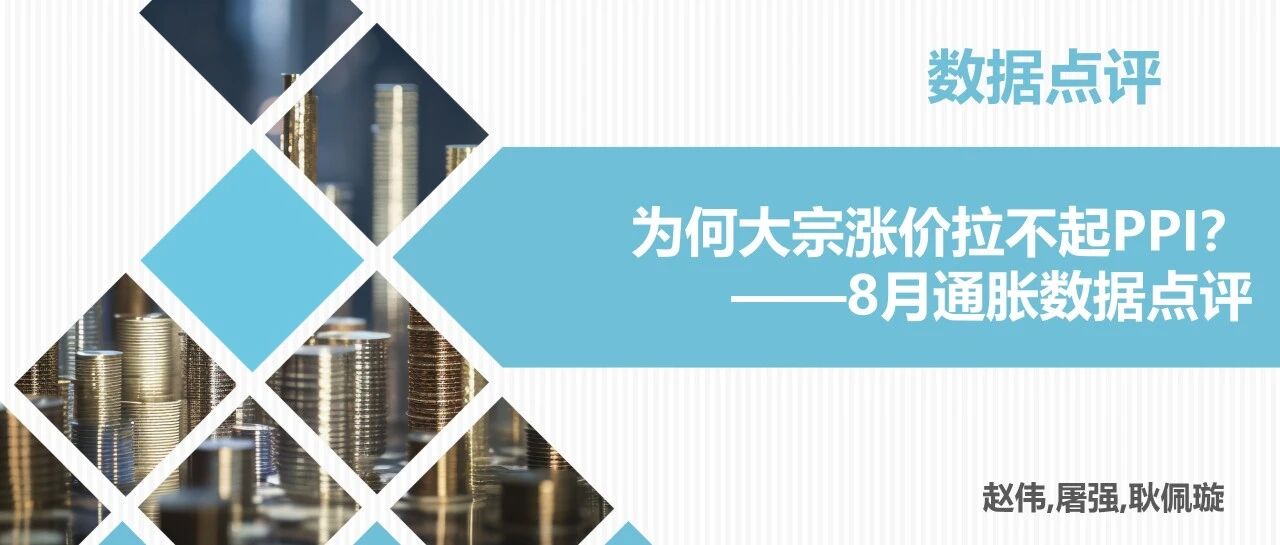
8月CPI核心指标持续改善 PPI环比止跌持平
Zhong Guo Jing Ying Bao· 2025-09-10 12:18
Group 1 - In August, the Consumer Price Index (CPI) remained stable month-on-month but decreased by 0.4% year-on-year, while the core CPI, excluding food and energy, increased by 0.9% year-on-year, marking the fourth consecutive month of growth [1][2] - The Producer Price Index (PPI) showed a month-on-month stabilization after a 0.2% decline in July, with a year-on-year decrease of 2.9%, which is a narrowing of the decline by 0.7 percentage points compared to July [1][2] - The improvement in core CPI signals a positive consumption recovery, supported by policies aimed at expanding domestic demand and promoting consumption [1][4] Group 2 - The PPI's month-on-month stabilization and narrowing year-on-year decline are attributed to improved supply-demand structures and the effects of policy measures [2][4] - Certain industries, such as coal processing and black metal smelting, experienced price increases, contributing to the stabilization of the PPI [2][3] - The overall positive changes in price dynamics are expected to lay a solid foundation for future economic recovery, with ongoing effects from policies aimed at expanding domestic demand [4]
我国新发现大中型油气田和矿产地534处,A股石油板块多股涨超10%
2 1 Shi Ji Jing Ji Bao Dao· 2025-09-10 09:08
Core Insights - The recent press conference highlighted significant advancements in the exploration and development of mineral resources, with 534 new large and medium-sized oil and gas fields and mineral sites discovered, supporting high-quality economic development during the "14th Five-Year Plan" period [1][2][3] Industry Developments - The Ministry of Natural Resources has completed the goals set for the "14th Five-Year Plan," effectively supporting high-quality economic and social development [1][6] - A total investment of nearly 450 billion yuan has been made in the new round of mineral exploration, leading to major breakthroughs in energy resource security and optimization of resource structure [3] - Major discoveries in the energy sector include 10 large oil fields and 19 large gas fields, with significant geological reserves of coalbed methane added, particularly in the Ordos Basin, which saw over 300 billion cubic meters of newly proven reserves [3][4] Strategic Mineral Resources - The exploration of strategic minerals such as oil, gas, copper, and lithium has achieved major breakthroughs, with the discovery of a significant lithium mineral belt across four provinces, covering 2,800 kilometers [4] - New resource bases are emerging alongside revitalization of old ones, with notable discoveries in various provinces, including a potential world-class gold mine in Liaoning [4] Future Plans - The Ministry of Natural Resources plans to continue promoting the new round of mineral exploration and development efforts to ensure energy resource security [5]




我国新发现大中型油气田和矿产地534处,A股石油板块多股涨超10%
21世纪经济报道· 2025-09-10 09:06
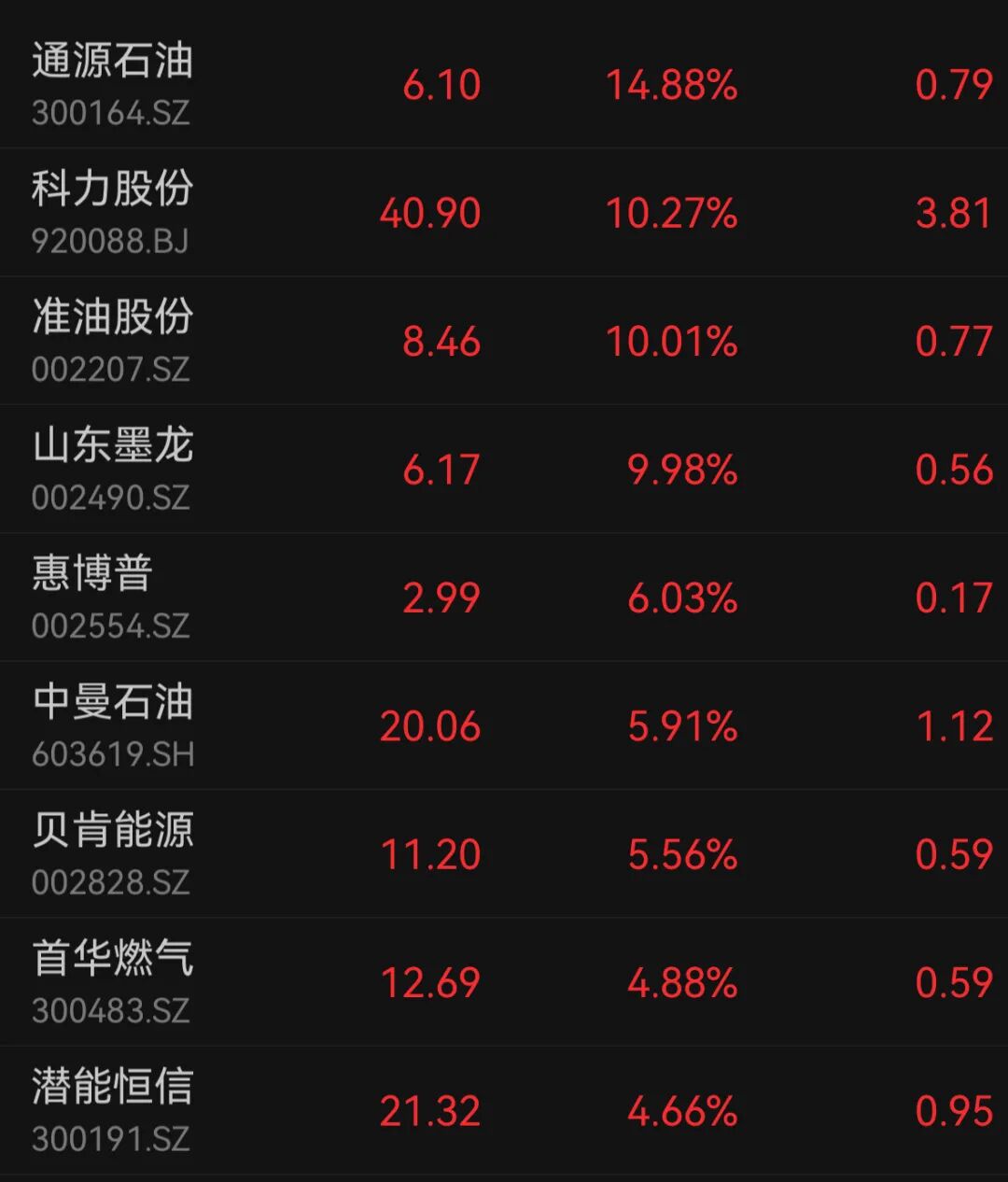
Core Viewpoint - The article highlights significant advancements in mineral resource exploration and development in China, particularly in oil and gas, which have positively impacted the stock market, especially in the oil extraction sector [1][4]. Group 1: Mineral Resource Discoveries - A total of 534 new large and medium-sized oil and gas fields and mineral sites have been discovered, marking a major breakthrough in the exploration and development of strategic mineral resources [4]. - The Ministry of Natural Resources has completed the goals set in the "14th Five-Year Plan," effectively supporting high-quality economic and social development [4]. Group 2: Investment Impact - Following the announcement, the A-share oil extraction sector saw a significant surge, with companies like Tongyuan Petroleum rising over 14%, Keli Co. increasing by over 10%, and several others hitting the daily limit [1][2]. Group 3: Financial Commitment and Achievements - Nearly 450 billion yuan has been invested in the new round of mineral exploration, leading to substantial breakthroughs in energy resource security and optimization of resource structure [4]. - Major discoveries include 10 large oil fields and 19 large gas fields, with significant geological reserves added in the Ordos Basin, totaling over 300 billion cubic meters [4]. Group 4: Emerging Resource Bases - New resource bases are emerging alongside revitalization of old ones, with notable discoveries in various provinces, including a potential world-class gold mine in Liaoning [5]. - The lithium mining sector has seen the discovery of a significant "Asian lithium belt," spanning 2,800 kilometers across multiple provinces, indicating a strong future for lithium resources [5]. Group 5: Future Plans - The Ministry of Natural Resources plans to continue promoting the new round of exploration strategies, enhancing exploration and development efforts to secure energy resources [6].