石化

Search documents
工业和信息化部部长李乐成会见沙特工业和矿产资源大臣班达尔·胡莱夫
Shang Hai Zheng Quan Bao· 2025-09-24 10:46
Core Viewpoint - The meeting between China's Minister of Industry and Information Technology, Li Lecheng, and Saudi Arabia's Minister of Industry and Mineral Resources, Bandar Al-Hokail, emphasizes the strengthening of industrial cooperation between the two countries, highlighting achievements in various sectors and the potential for future collaboration [1]. Group 1: Industrial Cooperation - The two countries have deepened cooperation in the industrial sector under the strategic guidance of their leaders, achieving significant results in petrochemicals, automotive, and new energy sectors [1]. - There is a commitment to enhance policy exchanges and strategic alignment to stabilize and streamline industrial supply chains [1]. Group 2: Investment Opportunities - Saudi Arabia welcomes more Chinese enterprises to invest in the country and is committed to providing a better business environment for these companies [1]. - Areas of potential collaboration include advanced manufacturing, petrochemicals, electric vehicles, artificial intelligence, biopharmaceuticals, and additive manufacturing [1].
一周内两次!乌再次袭击俄石化工厂
中国能源报· 2025-09-24 10:23
Group 1 - Ukrainian special forces conducted a second drone attack on a petrochemical company in the Republic of Bashkortostan, Russia, within a week [1] - The targeted company, "Gas Industry Oil Chemistry Salavat," is one of Russia's largest refining and petrochemical enterprises, capable of producing over 150 products including gasoline, diesel, and fuel oil [1] - The attack occurred approximately 1,400 kilometers from Ukrainian territory, resulting in a fire and significant smoke at the facility [1] Group 2 - Local authorities are currently investigating the damage caused by the attack, while there has been no response from Russian officials regarding the incident [1] - Prior to this attack, the company's facilities were reported to have been targeted by two drones, but no casualties were reported, as security personnel managed to shoot down the incoming drones [1]

反内卷:政策密集,多维度梳理化工子行业“反内卷”突破口
2025-09-24 09:35
Summary of Conference Call Notes Industry Overview - The conference call discusses the chemical industry, particularly the petrochemical sector, which is facing challenges such as overcapacity and declining profitability [1][6][15]. Key Points and Arguments 1. **Government Policies**: The National Development and Reform Commission (NDRC) has revised the Price Law and implemented measures to address excessive investment and price competition below cost, aiming to restore fair competition [1][2][4]. 2. **Challenges in the Petrochemical Industry**: The industry is experiencing significant overcapacity, with production capacity increasing by over 50% from 2020 to 2024, yet overall output value has not increased, leading to declining profitability [6][15]. 3. **Investment Opportunities**: The chemical industry is currently undervalued, with low price-to-book (PB) ratios and low holding ratios, presenting a good investment opportunity. The prices of chemical products are elastic and can transmit inflation, making it a favorable time to invest [2][16]. 4. **Focus on Specific Sub-industries**: Attention should be given to sub-industries with high loss levels, old equipment ratios, and high energy consumption, such as spandex, titanium dioxide, organic silicon, nylon, coal chemical, and soda ash [17][18]. 5. **Regulatory Changes**: The revised Price Law emphasizes cost monitoring to combat disorderly price competition, including low-cost dumping, and aims to transition to a more market-oriented pricing mechanism [7][15]. 6. **Environmental Regulations**: New policies, such as the Fixed Asset Investment Energy Saving Review and Carbon Emission Evaluation Measures, aim to control new capacity and promote the orderly exit of outdated production capacity [8][10][11]. 7. **Supply-side Reform**: The current policies reflect lessons learned from previous supply-side reforms, focusing on eliminating outdated capacity and ensuring compliance with national standards [19][20]. Additional Important Content - **Market Dynamics**: The chemical industry is characterized by low valuations and significant potential for recovery, with the government promoting a unified national market to stabilize growth [2][20]. - **Future Trends**: The industry is expected to enter a new upward cycle, driven by government policies aimed at stabilizing growth and addressing overcapacity issues [20]. - **Investment Strategy**: Investors are encouraged to focus on leading companies in high-loss sub-industries that meet specific criteria, as these companies are likely to benefit from the current policy environment [18][20].
2024年山东压减焦化产能450万吨、炼油产能200万吨,粗钢产能沿海占比突破53%
Zhong Guo Xin Wen Wang· 2025-09-24 00:56
Core Viewpoint - Shandong province is implementing the "Green Water and Green Mountain is Gold and Silver Mountain" concept to promote high-quality development through ecological protection and green transformation, marking the 20th anniversary of this philosophy [1][4]. Group 1: Ecological Practices - The city of Leiling is a model for the "Two Mountains" concept, with over 14,000 ancient jujube trees and initiatives to protect this area through various ecological measures [2]. - Shandong has established 32 national ecological civilization demonstration zones and 11 innovation bases for the "Green Water and Green Mountain" concept, showcasing its commitment to ecological preservation [2]. - The Yellow River Delta National Nature Reserve has implemented comprehensive wetland restoration, returning 72,500 acres to nature, benefiting endangered bird species [2]. Group 2: Energy and Industry Transformation - Shandong is focusing on green, intelligent, and high-end development in key industries like petrochemicals and steel, aiming for a significant reduction in carbon emissions [3]. - The province plans to cut coking capacity by 4.5 million tons and refining capacity by 2 million tons by 2024, with over 40% of advanced production capacity in key industries [3]. - Renewable energy sources are being prioritized, with solar power installations leading the nation for eight consecutive years, and a target of 115 million kilowatts of renewable energy capacity by 2024 [3]. Group 3: Economic Value from Ecological Resources - Shandong is exploring mechanisms to convert ecological value into economic benefits, such as the issuance of "forest tickets" in villages to stimulate local economies [5]. - The village of Baihuayu has leveraged its ecological resources to develop tourism and hospitality services, significantly increasing local income [5]. - Qingzhou is developing eco-friendly products and services, creating jobs and enhancing the economic value of its forest resources [5]. Group 4: Future Recommendations - Experts suggest that Shandong should deepen ecological reforms and establish a market mechanism for ecological product valuation to continuously convert ecological advantages into economic growth [6].
【行业ESG周报】我国首个碳捕集领域国际标准发布,世界气象组织报告警示全球水循环日益紊乱-20250923
GUOTAI HAITONG SECURITIES· 2025-09-23 12:01
Investment Rating - The report does not explicitly provide an investment rating for the industry Core Insights - The report highlights significant developments in carbon capture technology and the establishment of international standards, indicating a shift towards more structured and regulated practices in the industry [16] - The continuous release of the "China Carbon Neutral Development Index" over five years reflects the ongoing transformation in the economy and society under the dual carbon strategy, providing a reference for future planning [21] - The establishment of a carbon footprint management system in Jilin Province aims to enhance product competitiveness and align with international carbon trade policies [12] Policy Developments - The National Development and Reform Commission and the National Energy Administration issued the "New Energy Storage Scale Construction Action Plan (2025-2027)", aiming for a new energy storage capacity of 180 million kilowatts by 2027, with an investment of approximately 250 billion yuan [7][8] - Jilin Province's plan includes establishing carbon footprint accounting rules for key products by 2027, promoting carbon footprint certification and management [12] Industry Trends - The first international standard for carbon capture in China has been published, providing a unified technical guideline for the development and application of carbon capture materials [16] - The "2025 China Carbon Neutral Development Index" indicates a shift from single emission reduction to a more integrated approach, emphasizing environmental governance and green finance [21][22] International Events - The World Meteorological Organization warns of increasing disruptions in global water cycles, highlighting the urgency of addressing climate change [24] - The United Nations' Marine Biodiversity Agreement will come into effect in 2026, aiming to protect marine biodiversity in international waters [25] Corporate Developments - Industrial Bank's Xiamen branch has launched the first ESG-linked financing lease loan in Fujian Province, promoting sustainable development in the financial sector [28][29] - Rongsheng Petrochemical has been recognized as an ESG demonstration case, reflecting its commitment to sustainable practices and significant achievements in environmental, social, and governance areas [30][31]


“只此青绿”成“美丽山东”鲜明底色
Zhong Guo Xin Wen Wang· 2025-09-23 08:56
Group 1 - The core idea of the article emphasizes Shandong's commitment to the "Green Water and Green Mountains are Golden Mountains and Silver Mountains" philosophy, showcasing its efforts in ecological protection and high-quality development over the past 20 years [1][4] - Shandong has established 32 national ecological civilization construction demonstration zones and 11 innovation bases for the "Green Water and Green Mountains" practice, reflecting its extensive commitment to ecological initiatives [4] - The province is focusing on green transformation in key industries such as petrochemicals and steel, aiming for a low-carbon and high-quality development model [6][7] Group 2 - Shandong's energy structure is increasingly green, with plans to reduce coal power and enhance renewable energy sources, including a target of 115 million kilowatts of installed capacity for new energy and renewable energy by 2024 [6][7] - The average PM2.5 concentration in Shandong is projected to reach 35.5 micrograms per cubic meter in 2024, marking the best level since monitoring began, while the GDP is expected to grow by 5.7% [7] - The province is implementing innovative mechanisms to convert ecological value into economic benefits, such as the issuance of "forest tickets" in villages to stimulate local economies through eco-tourism and related industries [9][11]

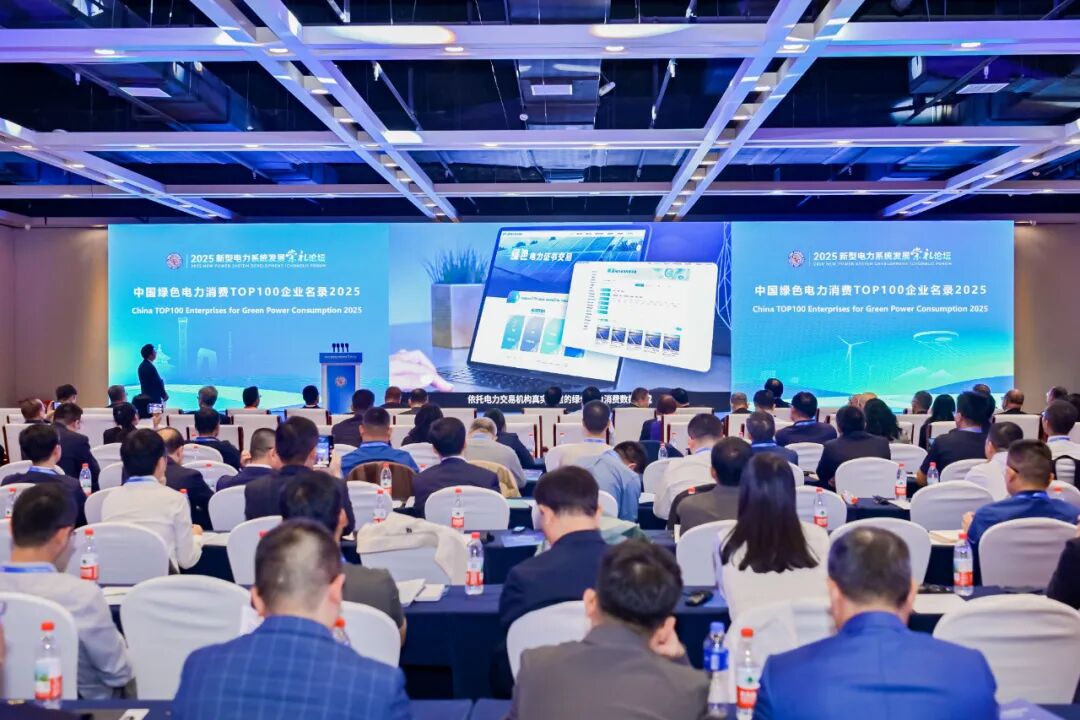
2024年度中国绿色电力(绿证)消费TOP100企业名录发布
Zhong Guo Dian Li Bao· 2025-09-23 08:45
Core Insights - The release of the "2024 Annual China Green Power (Green Certificate) Consumption TOP100 Enterprises List" highlights the increasing commitment of energy companies in China towards green power consumption, with nearly 20 energy firms making the list [1][3]. Group 1: TOP100 Enterprises Overview - The top four positions in the list are dominated by energy companies, with the top two being China Energy Investment Group and State Power Investment Corporation, maintaining their rankings from 2023 [3]. - Local energy companies, Zhejiang Energy Group and Shenzhen Energy Group, have risen to the third and fourth positions respectively [3]. - Other notable companies include China Petroleum and Chemical Corporation and China National Petroleum Corporation, ranking eighth and ninth [3]. Group 2: Green Power Consumption Growth - From January to July 2025, China's total green power consumption reached 5,977 billion kilowatt-hours, marking a year-on-year increase of 42.69% [3]. - Green power trading volume was 1,817 billion kilowatt-hours, also reflecting a growth of 42.10% year-on-year [3]. - The number of green certificates traded reached 416 million, corresponding to an electricity volume of 4,160 billion kilowatt-hours, with a year-on-year increase of 42.96% [3]. Group 3: Industry Impact and Future Directions - The publication of the TOP100 list demonstrates the significant contributions of various industries towards the green energy transition, enhancing market vitality for green consumption [4]. - The joint publishing entities plan to refine the standards and formats for green power consumption reporting, aiming to establish the list as a recognized international brand for green consumption [4].



石化稳增长方案落地在即,聚焦石化ETF(159731)低位布局机会
Mei Ri Jing Ji Xin Wen· 2025-09-23 04:38
Group 1 - The A-share market experienced a downward trend on September 23, with the China Securities Petrochemical Industry Index falling approximately 1.2%. Major stocks such as Jinhua Technology, Baofeng Energy, Yara International, and Tongcheng New Materials led the gains [1] - In 2023, to maintain reasonable industrial growth supporting the overall economy, the Ministry of Industry and Information Technology, along with multiple departments, launched a new round of ten key industries growth stabilization plan. The petrochemical industry is one of these key sectors, with a target of an average industrial added value growth rate of around 5% for 2023-2024 [1] - By 2024, the petrochemical and chemical industry (excluding oil and gas extraction) is expected to achieve a main business revenue of 15 trillion yuan, with ethylene production exceeding 50 million tons and fertilizer production (pure quantity) stabilizing around 5.5 million tons [1] Group 2 - The petrochemical ETF (159731) and its linked funds (017855/017856) closely track the China Securities Petrochemical Industry Index. According to the Shenwan secondary industry classification, the top three sectors in the index are refining and trading (27.12%), chemical products (23.87%), and agricultural chemical products (19.75%), which are expected to benefit from policies aimed at reducing competition, restructuring, and eliminating outdated production capacity [2]
永安合成橡胶早报-20250923
Yong An Qi Huo· 2025-09-23 01:00
Report Information - Report Title: Yongan Synthetic Rubber Morning Report [2] - Research Team: Energy and Chemicals Team of the Research Center [2] - Report Date: September 23, 2025 [2] Core Data Summary BR (Butadiene Rubber) - **Futures Data**: On September 22, the closing price of the main contract was 11,505, up 60 from the previous day and down 200 week - on - week; the open interest was 70,306, down 4,953 from the previous day and up 51,521 week - on - week; the trading volume was 95,866, up 1,305 from the previous day and up 59,284 week - on - week; the warrant quantity was 9,190, down 1,040 from the previous day and down 4,480 week - on - week; the virtual - to - real ratio was 38.25; the butadiene rubber basis was 45, down 110 from the previous day and up 50 week - on - week; the butadiene rubber basis (two major oil companies) was 195, down 60 from the previous day and unchanged week - on - week [3]. - **Spot Data**: The Shandong market price was 11,550, down 50 from the previous day and down 150 week - on - week; the Transfar market price was 11,450, unchanged from the previous day and down 100 week - on - week; the Qilu ex - factory price was 11,700, unchanged from the previous day and down 200 week - on - week; CFR Northeast Asia was 1,525, unchanged from the previous day and unchanged week - on - week; CFR Southeast Asia was 1,700, unchanged from the previous day and unchanged week - on - week [3]. - **Profit Data**: The spot processing profit was - 238, up 52 from the previous day and down 150 week - on - week; the futures processing profit was - 283, up 162 from the previous day and down 200 week - on - week; the import profit was - 83,031, down 54 from the previous day and up 1,520 week - on - week; the export profit was 155, up 44 from the previous day and up 124 week - on - week [3]. BD (Butadiene) - **Price Data**: The Shandong market price was 9,400, down 100 from the previous day and unchanged week - on - week; the Jiangsu market price was 9,200, unchanged from the previous day and down 50 week - on - week; the Yangzi ex - factory price was 9,150, down 100 from the previous day and down 100 week - on - week; CFR China was 1,060, down 10 from the previous day and down 30 week - on - week [3]. - **Profit Data**: The carbon four extraction profit was N/A; the butene oxidative dehydrogenation profit was 196, up 90 from the previous day and up 110 week - on - week; the import profit was 527, up 80 from the previous day and up 197 week - on - week; the export profit was - 896, unchanged from the previous day and up 110 week - on - week [3]. Downstream Products - The butadiene rubber production profit was - 283, up 162 from the previous day and down 200 week - on - week; the styrene - butadiene rubber production profit was 1,063, up 100 from the previous day and down 50 week - on - week; the ABS production profit was N/A; the SBS production profit (791 - H) was 955, up 70 from the previous day and up 130 week - on - week [3]. Price Spreads - **Inter - variety Spreads**: RU - BR was - 54,691, up 5,033 from the previous day and down 51,901 week - on - week; NR - BR was - 57,881, up 5,078 from the previous day and down 51,806 week - on - week; Thai mixed - butadiene rubber was 3,300, up 170 from the previous day and down 150 week - on - week; 3L - styrene - butadiene rubber was 3,100, up 50 from the previous day and unchanged week - on - week [3]. - **Intra - variety Spreads**: The butadiene rubber standard - non - standard price spread was 150, down 50 from the previous day and down 50 week - on - week; the styrene - butadiene 1502 - 1712 spread was 1,000, unchanged from the previous day and unchanged week - on - week [3].

美国关税冲击显现 韩国9月早期出口同比下降近11%
贝塔投资智库· 2025-09-22 04:00
Core Viewpoint - The article highlights the significant decline in South Korea's exports in September due to the impact of U.S. tariffs, raising concerns for the trade-dependent South Korean economy [2][4]. Export Performance - South Korea's exports for the first 20 days of September fell by 10.6% year-on-year, while the adjusted export figure for August showed a growth of 6% [2]. - Unadjusted export figures for September indicated a growth of 13.5%, with total imports increasing by 9.9%, resulting in a trade surplus of $1.89 billion [2]. Sector Analysis - Semiconductor exports, a key driver for this year's exports, grew by 27%, continuing the 30% increase seen in August, while automotive exports rose by approximately 15% [4]. - However, petrochemical products are facing challenges due to tariffs and weak global demand [4]. Tariff Impact - The implementation of a 15% general tariff by the U.S. on South Korean goods has created difficulties for exporters, despite smartphones and laptops remaining unaffected [4]. - There is a looming threat of expanded tariffs on semiconductors, as indicated by warnings from former President Trump [4]. Market Sentiment - The uncertainty surrounding trade relations has dampened market sentiment, exacerbated by recent immigration enforcement actions that led to the detention of over 300 South Korean workers in Georgia [4].