航空

Search documents
港股2025年收官:恒指累计涨近28% 恒生科技指数累涨超23% 黄金板块年内涨幅亮眼
Xin Lang Cai Jing· 2025-12-31 04:04
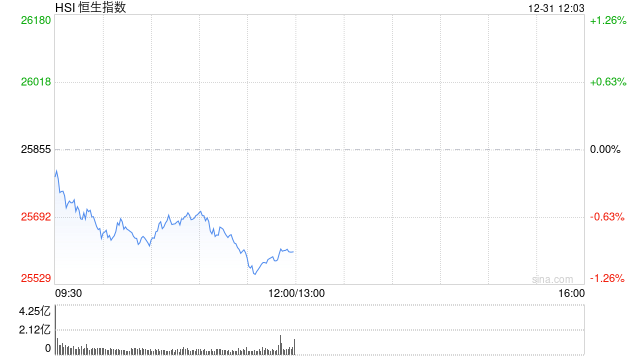
12月31日消息,港股2025年最后半个交易日,三大指数低开低走,截至收盘,恒生指数跌0.96%,报 25606.37点,恒生科技指数跌1.24%,国企指数跌0.95%。今日港股盘面上,科网股跌多涨少,百度涨超 1%,网易跌超3%,京东、美团、阿里巴巴、快手跌超1%;汽车股高开低走,零跑汽车跌超2%;半导 体板块回调,中芯国际跌超1%;航空股涨幅居前,南方航空涨超4%;影视股活跃,大麦娱乐涨超5%。 | 初始 代码 | | 名称 | . | 最新 | 涨幅% ↓ | 年初至今涨幅% | | --- | --- | --- | --- | --- | --- | --- | | 1 | HSCEI | 恒生国企指数 | | 8905.74 | -0.95 | 22.17 | | 2 | મંદા | 恒生指数 | 1 | 25606.37 | -0.96 | 27.65 | | 3 | HSTECH | 恒生科技指数 | | 5509.26 | -1.24 | 23.30 | 从年线看,恒指全年涨27.65%,恒生科技指数全年涨23.30%,国企指数涨22.17%。年内黄金及有色金 属板块涨幅亮眼,珠峰黄金全年 ...

A股盘前市场要闻速递(2025-12-31)
Jin Shi Shu Ju· 2025-12-31 03:01
Group 1 - The Ministry of Finance announced that individuals selling residential properties purchased for more than two years will be exempt from value-added tax starting January 1, 2026 [1] - The National Development and Reform Commission (NDRC) released a plan to optimize the "Two New" policy for 2026, expanding support to various sectors including old community elevator installations and consumer goods replacement [2] - A special bond issuance of 625 billion yuan has been approved to support the "Two New" policy, aimed at boosting consumer demand during peak seasons [2] Group 2 - The Ministry of Commerce and eight other departments issued detailed guidelines for the 2026 vehicle replacement subsidy program, offering significant financial incentives for scrapping older vehicles [2] - China National Airlines announced a purchase agreement for 60 Airbus A320NEO aircraft, with a total catalog price of approximately 9.53 billion USD, to be delivered between 2028 and 2032 [4] - Zijin Mining expects a net profit increase of approximately 59%-62% for 2025, projecting a profit of around 51-52 billion yuan [4] Group 3 - Tianpu Co. announced a stock suspension for verification after a significant price increase of 718.39% from August 22 to December 30 [5] - Guotou Zhonglu plans to acquire 100% of China Electronic Engineering Design Institute for 6.026 billion yuan, with a premium of 147.4% over the asset's book value [6] - Shengxin Lithium Energy intends to acquire a 30% stake in Qicheng Mining for 2.08 billion yuan, which is developing a lithium mine with a production capacity of 3 million tons per year [6] Group 4 - Haoshi Electromechanical reported small-scale applications of its products in leading commercial aerospace companies, indicating potential for increased orders in the growing market [7] - Jinpan Technology signed a contract for an overseas data center project worth approximately 696 million yuan, which is expected to positively impact the company's long-term performance [8] - Salt Lake Co. plans to acquire a 51% stake in Wenkang Salt Lake for 4.605 billion yuan, aiming to enhance its competitive position in the lithium and potassium resource market [9] Group 5 - Zhaofeng Co. announced a 1.53 billion yuan investment in the industrialization of intelligent robots and high-end precision components for automotive smart driving [10] - Baiwei Storage's subsidiary plans to acquire shares in Niu Xin Semiconductor, focusing on high-speed interconnect technology and related solutions [10]






开盘:三大指数集体高开 教育板块涨幅居前
Xin Lang Cai Jing· 2025-12-31 02:11
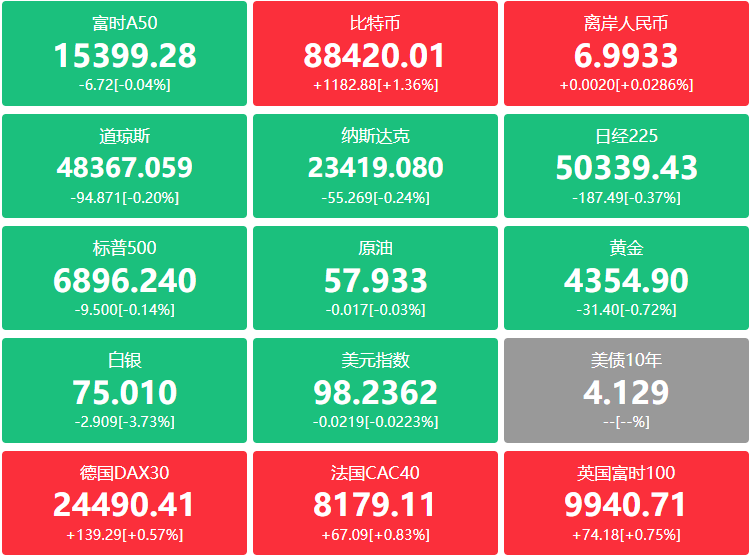
Market Overview - The three major indices opened higher, with the education sector leading the gains. As of the market opening, the Shanghai Composite Index was at 3968.73, up 0.09%; the Shenzhen Component Index was at 13627.26, up 0.17%; and the ChiNext Index was at 3247.74, up 0.15% [1]. Policy Announcements - The National Development and Reform Commission and the Ministry of Finance have allocated 625 billion yuan in special long-term bonds to support the consumption of old goods in the first batch for 2026 [1]. - The Ministry of Finance and the State Taxation Administration announced a new policy on the value-added tax for individuals selling homes, with a 3% tax rate for properties held for less than two years and exemption for those held for two years or more [1]. - The Ministry of Industry and Information Technology, along with three other departments, issued a plan for the digital transformation of the automotive industry, promoting the large-scale application of intelligent robots in various manufacturing processes [1]. - The Ministry of Commerce and eight other departments released the implementation details for the 2026 vehicle trade-in subsidy, offering up to 20,000 yuan for scrapping eligible old vehicles and purchasing new energy vehicles [1][2]. Industry Developments - The National Development and Reform Commission and the Ministry of Finance announced a large-scale equipment update and trade-in policy for consumer goods, providing a 15% subsidy for energy-efficient home appliances and a maximum of 1,500 yuan per item [2]. - The Ministry of Education plans to advance artificial intelligence in education, with policies expected to be released next year to enhance AI education and applications [2]. Corporate Announcements - Aoyuan Ceiling announced a change in its actual controller to Shi Qiming, and its stock has resumed trading. Dongjie Intelligent has terminated its major asset restructuring plan, and its stock has also resumed trading [4]. - Salt Lake Co. plans to acquire a 51% stake in Minmetals Salt Lake for 4.605 billion yuan to accelerate the development of a world-class salt lake industry base. Shengxin Lithium Energy intends to acquire a 30% stake in Qicheng Mining for 2.08 billion yuan [4]. - China National Airlines plans to purchase 60 Airbus A320NEO aircraft, with a total catalog price of approximately 9.53 billion USD [6]. - Guotou Zhonglu intends to issue shares at a premium of 147.4% to acquire 100% of China Electronics Engineering Design Institute for 6.026 billion yuan [6]. Market Sentiment - Citic Securities reported an increase in expectations for the appreciation of the RMB, which is favorable for the performance of RMB-denominated equity assets. The central bank is expected to adopt more flexible policy tools, focusing on domestic demand [10].
意铂奢华邮轮发布首个环球旅程,埃尔奥拉艺术节启幕 | 一周旅行指南
Xin Lang Cai Jing· 2025-12-31 01:35
Group 1 - Wenzhou Dongtou Radisson Hotel recently opened, marking the first project of Radisson's ultra-luxury brand in Wenzhou, located along the coastline of Dongtou District, offering a unique vacation experience that integrates local culture [1] - The hotel features 90 sea-view rooms with panoramic floor-to-ceiling windows, and dining options include a 24-hour restaurant, a lobby bar, and an outdoor rock bar, catering to various dining and social needs [1] Group 2 - Andaz One Bangkok, the second Andaz brand hotel in Thailand, has opened in the largest mixed-use development in central Bangkok, featuring 244 rooms and three dining venues, including a Mediterranean restaurant led by Michelin-starred chef Marc Vasseur [2][3] - Tokyo Park Hyatt has reopened after a 19-month renovation, marking the most comprehensive upgrade in 30 years, with redesigned guest rooms and a new restaurant by chef Alain Ducasse [5] Group 3 - The 10th Annual Charity Night hosted by Marriott International and the Yao Foundation took place in Shanghai, gathering over 500 guests to support sports education initiatives in rural China [7] - Banyan Tree has launched a sustainable consulting service, expanding its sustainable business to include destination management and eco-tourism planning, while announcing five new member hotels from North America, Europe, and Southeast Asia [9] Group 4 - The Mandarin Oriental Hotel in Beijing has introduced a new cocktail menu titled "Parallel Time and Space," featuring local ingredients and international mixology techniques [11] - Aman China is celebrating the holiday season with unique cultural experiences at its three hotels, offering festive activities and local cuisine [13] Group 5 - The St. Regis Tianjin has partnered with Chow Sang Sang to launch a limited-time afternoon tea set, available until January 31, 2026, which includes various sweet and savory items [15] - The 2026 AlUla Arts Festival will return from January 16 to February 14, featuring innovative exhibitions and immersive experiences [17] Group 6 - Delta Air Lines has expanded its exclusive check-in areas for its premium business class across all U.S. hub airports, enhancing the travel experience for its customers [22] - Malaysia Airlines has released its long-term business plan 3.0, aiming to double its total revenue to over 24 billion ringgit and improve its service offerings by 60% by 2030 [26]

金融界财经早餐:2026年“国补”政策出炉!房产业再迎催化,个人卖房满2年免征增值税;长鑫科技科创板IPO获受理;MiniMax今日启动招股(12月31日)
Jin Rong Jie· 2025-12-31 00:38
Economic Policies - The Central Rural Work Conference emphasized the importance of modernizing agriculture and rural areas, with a focus on food production and policies to support farmers' income stability [1] - The 2026 national subsidy plan was released, allocating 62.5 billion yuan for consumer goods replacement and updates, with new categories including smart glasses and smart home products [1] - A new tax policy was announced, reducing the VAT on the sale of homes held for less than two years from 5% to 3%, which is expected to increase the activity in the second-hand housing market [2] Capital Market Developments - The A-share market saw significant growth in 2025, with the Shanghai Composite Index reaching over 4000 points and total market capitalization hitting 119.04 trillion yuan, driven by increased capital inflow [4] - Hong Kong's IPO market is set for a strong start in the new year, with three Chinese tech companies planning to raise over $1 billion through IPOs [5] - Tesla's delivery expectations for Q4 have been revised downwards, with analysts predicting a 15% year-on-year decline in vehicle deliveries [5] Industry Highlights - The automotive industry is undergoing a digital transformation, with goals set for 2027 to enhance manufacturing capabilities and digital integration across various enterprises [2] - China's automotive sales are projected to grow by 17% in 2025, positioning the country as the largest global automotive market, surpassing Japan [6] - The price of copper has reached historical highs due to increased demand from energy transition and AI infrastructure developments [8] Company Updates - Guizhou Moutai announced adjustments to its product lineup for 2026, focusing on various series of its liquor products [10] - Tianpu Co. has seen its stock price surge by 718.39% since August 2025, leading to a suspension for verification due to significant deviation from its fundamentals [10] - Ningde Times plans to build over 3,000 battery swap stations by next year, enhancing its network for electric vehicle charging [10] - Xiaomi is expanding its automotive product matrix, planning to launch at least four new models in 2026, including both electric and range-extended vehicles [11] - China National Airlines intends to purchase 60 Airbus A320NEO aircraft, totaling approximately $9.53 billion, to enhance its fleet capacity [10]
投资心语∣十连阳≠普涨,春季行情这样布局
Sou Hu Cai Jing· 2025-12-31 00:11
Core Viewpoint - The recent "ten consecutive days of gains" in the Shanghai Composite Index does not indicate a broad market rally but rather reflects a structural and localized market trend, driven by specific sectors and supported by monetary policy and foreign capital dynamics [1][2]. Group 1: Market Dynamics - The index's rise is supported by three main factors: the central bank's signals to stabilize the market, continuous liquidity provision, and the appreciation of the RMB which alleviates foreign capital outflow pressures [1]. - Despite the index's performance, over 3,400 stocks have quietly declined, indicating a divergence where only a few sectors are experiencing significant gains while many small and mid-cap stocks are adjusting [2]. Group 2: Spring Market Outlook - The spring market is anticipated to have potential, but it is unlikely to be a straightforward profit-making scenario for all investors, as the path forward is expected to be bumpy [3]. - Key supporting factors for the market include the government's commitment to proactive fiscal policies and moderately loose monetary policies, alongside a continuous improvement in liquidity with net inflows observed over recent weeks [3]. Group 3: Investment Strategies - For existing investors, it is advisable to optimize their portfolios by reducing exposure to high-flying stocks lacking fundamental support and maintaining positions in sectors aligned with industry trends, such as commercial aerospace and AI hardware [4]. - Investors looking to enter the market should consider a balanced "barbell" strategy, focusing on high-growth sectors while also including stable value stocks to mitigate volatility risks [5]. Group 4: Conclusion - The "ten consecutive days of gains" serves as a reflection of market resilience under policy support but also highlights the challenges of a differentiated market environment [6]. - Investors are encouraged to focus on the intrinsic value and growth logic of their holdings rather than fixating on index performance, maintaining a rational approach to investment decisions [6].
操盘必读:影响股市利好或利空消息_2025年12月31日_财经新闻
Xin Lang Cai Jing· 2025-12-30 23:26
Industry News - The Ministry of Finance and the State Administration of Taxation announced a new policy on the value-added tax for personal housing sales, effective from January 1, 2026. Homes sold within two years of purchase will incur a 3% VAT, while those sold after two years will be exempt from VAT [3]. - The Ministry of Education plans to continue promoting artificial intelligence in education, with related policy documents expected to be released next year [3]. - The Ministry of Industry and Information Technology and other departments issued a digital transformation implementation plan for the automotive industry, aiming for significant improvements in manufacturing capabilities and digital levels by 2027 [3]. - In November 2025, global automobile sales reached 8.59 million units, a year-on-year increase of 1%, with China's global market share rising to 40%, up 1 percentage point from the previous year [3]. - A new generation of the Honghu HH-200 commercial drone developed by Aviation Industry Corporation of China was unveiled, marking a breakthrough in low-altitude logistics transportation technology [4]. - In 2026, China will accelerate the construction of a digital economy, implementing the "East Data West Computing" project and fostering a national integrated data market [4]. - The Beijing Municipal Health Commission issued measures to support the innovation and development of the artificial intelligence industry in the healthcare sector for 2026-2027 [4]. Company News - Tianpu Co., Ltd. announced a cumulative stock price increase of 718.39% from August 22 to December 30, leading to a suspension for verification [5]. - Zijin Mining announced a projected net profit increase of 59%-62% for 2025, driven by rising sales prices of gold, copper, and silver [5]. - Wuzhou New Spring reported a recent reduction of 2.73% in total share capital by its controlling shareholder [5]. - Superjet Co., Ltd. announced the completion of its controlling shareholder's reduction plan [5]. - Jinpan Technology signed a contract for an overseas data center project worth approximately 696 million yuan [5]. - Shengxin Lithium Energy plans to acquire a 30% stake in Qicheng Mining for 2.08 billion yuan, with the latter's lithium mine under development [5]. - Mindray Bio-Medical Electronics announced a cash acquisition of 100% of Wuhan Bikaier Rescue Supplies Co., Ltd., expected to constitute a major asset restructuring [5]. - China National Airlines plans to purchase 60 Airbus A320NEO aircraft at a total catalog price of approximately 9.53 billion USD, with deliveries scheduled between 2028 and 2032 [5].




航空行业专题报告:2025 年或行业扭亏,2026 年迎盈利上行
国泰海通· 2025-12-30 12:29
Investment Rating - The report assigns an "Overweight" rating for the aviation industry [6]. Core Insights - The Chinese civil aviation industry is expected to continue its recovery in supply and demand in 2025, with a forecasted industry-wide turnaround from losses to profitability [3][6]. - Demand is projected to grow steadily, with an estimated 5-6% increase in passenger traffic in 2025, including a 4% rise in domestic routes and over 20% in international routes [6][10]. - The supply side is entering a low growth phase, with a projected 3.7% increase in the fleet size of seven A-share airlines by November 2025 compared to the end of 2024 [6][19]. - The passenger load factor is expected to reach a historical high of 85%, an increase of 1.8 percentage points year-on-year [6][22]. - Ticket prices remain at historically low levels, with domestic ticket prices estimated to decrease by 2-3% year-on-year in 2025 [6][25]. - The industry is anticipated to significantly reduce losses and turn profitable in 2025, with quarterly performance showing improvements in profitability [6]. Summary by Sections Demand and Supply - Passenger traffic is expected to grow by 5-6% in 2025, with domestic routes increasing by 4% and international routes by over 20% [6][10]. - The industry is entering a low growth phase, with a projected 6% increase in available seat kilometers (ASK) [6][19]. Load Factor and Pricing - The passenger load factor is projected to increase by 1.8 percentage points to 85% [6][22]. - Domestic ticket prices are estimated to decrease by 2-3% year-on-year, while international ticket prices may see significant increases in the latter half of the year due to strong inbound demand [6][25]. Profitability Outlook - The industry is expected to turn profitable in 2025, with significant reductions in losses anticipated throughout the year [6]. - Quarterly performance indicates that the first quarter may see limited profit improvement due to high base effects, while the second quarter is expected to show substantial recovery [6].



联合飞机田刚印:自主研制攻克倾转旋翼系统的技术壁垒
Jing Ji Wang· 2025-12-30 09:55
Core Viewpoint - The successful maiden flight of the R6000 tilt-rotor aircraft marks China's entry into the global forefront of this technology, enhancing its influence in high-end equipment manufacturing and contributing to the development of an independent aviation technology system [1][7]. Group 1: Technological Breakthroughs - The R6000 was developed under the leadership of Tian Gangyin, who guided the team through key technological challenges and system integration, achieving full autonomy in the tilt-rotor aircraft's development [2][3]. - The aircraft features an innovative design that allows seamless transition between vertical takeoff and high-speed flight, combining the advantages of helicopters and fixed-wing aircraft [4]. - The design incorporates a unique tilt-rotor axis rather than a complete engine nacelle, significantly reducing system complexity and enhancing safety [5]. Group 2: Performance and Capabilities - The R6000 achieved a cruising speed of 550 km/h, a maximum range of 4000 km, and a maximum payload of 2000 kg, surpassing traditional helicopters and reaching international advanced levels [7]. - The aircraft's capabilities will provide revolutionary solutions for civil applications such as emergency rescue, maritime patrol, and air transport, indicating a broad market potential [7]. Group 3: Strategic Implications - The successful flight of the R6000 signifies a strong assertion of China's independent research and development capabilities in high-end equipment, breaking long-standing technological monopolies [7]. - The project reflects the spirit of Chinese engineers and collective wisdom, emphasizing the importance of mastering core technologies for national needs [9]. - Future plans include the development of the next generation of products aimed at achieving greater levels of intelligence, automation, and safety [9].
交通运输行业2026年投资策略:周期拐点渐显
Dongguan Securities· 2025-12-30 09:08
Investment Strategy Overview - The transportation industry is closely linked to the macroeconomic environment, with a weak overall performance in 2025, underperforming the CSI 300 index. Key segments like railways and highways have weakened due to style shifts, while logistics, aviation, and shipping have seen some support in the second half of the year from anti-involution and external demand factors, but still lag behind the market index. Looking ahead to 2026, domestic demand is expected to improve driven by anti-involution and major infrastructure projects, with recommendations to focus on (1) improved domestic express delivery competition and benefiting bulk supply chains from upstream price recovery, (2) growth in business and leisure demand potentially returning aviation airports to profitability, and (3) the high prosperity cycle of oil transportation [5][72]. 2025 Review - The transportation industry index showed a stable performance, with a cumulative increase of 1.55% as of December 29, 2025, but underperformed the CSI 300 index. The performance of sub-sectors varied, with aviation airports, shipping ports, railways, and logistics showing cumulative changes of 9.74%, 6.56%, -12.86%, and 6.34% respectively, all underperforming the CSI 300 index [13][14]. Aviation Sector - The aviation supply-demand landscape continues to improve, with aircraft utilization recovering to high levels. Domestic civil aviation demand has been steadily increasing, with passenger volume reaching new highs in the second half of 2025. The average daily utilization of aircraft in China was 8.7 hours as of November 2025, nearing pre-pandemic levels [18][21]. - The average ticket price has stabilized, with a peak passenger load factor of 87.5% in August 2025. The market supply-demand situation is tight, and further tightening could boost ticket prices [23][24]. - The supply side faces challenges with aircraft manufacturers struggling to restore production capacity, with Boeing and Airbus delivering significantly fewer aircraft than pre-pandemic levels. As of 2024, Boeing delivered 348 commercial aircraft, while Airbus delivered 766, both below their respective 2019 levels [25][26]. - The demand side is supported by policy initiatives that have revitalized business activities, with business line passenger volume increasing year-on-year in the first eight months of 2025 [34][36]. - Cost pressures are alleviated by declining oil prices, with WTI futures at $56.74 per barrel as of December 26, 2025, down 54.13% from peak levels. The strengthening of the RMB also reduces dollar-denominated debt burdens for airlines [40][43]. Oil Transportation Sector - The oil transportation industry is currently in a high prosperity cycle, with oil prices influenced by demand fluctuations and unexpected events. The BDTI index has seen an uptick, indicating potential for improved industry conditions [46][47]. - Short-term demand is driven by significant U.S. strategic petroleum reserve replenishment needs, while long-term demand is expected to stabilize globally. The IEA forecasts a growth of 2.5 million barrels per day in global oil demand from 2024 to 2030 [49][51]. - The supply side is characterized by tight compliance capacity, with sanctions on shadow fleets leading to a reduction in compliant shipping capacity. This is expected to gradually elevate oil transportation rates [56][57]. Bulk Supply Chain Sector - The bulk supply chain sector is transitioning from traditional trading and logistics models to integrated service provider models, enhancing resource control and operational efficiency. Leading companies are learning from international experiences to improve their market positions [60][63]. - The sector is currently fragmented, with a low market share for leading firms (CR5 at around 5%). As domestic companies consolidate, there is potential for increased market share and profitability [63][64]. - The anti-involution trend is expected to stabilize the PPI, benefiting bulk supply chains as they recover from price declines. The sector is poised to benefit from price rebounds and improved demand conditions [65][66]. Investment Recommendations - Maintain a market-weight rating for the transportation industry, with a focus on improving domestic demand and sector recovery in 2026. Recommended stocks include China National Aviation (601111), Southern Airlines (600029), and Xiamen Xiangyu (600057) [72][74].