
服务业

Search documents
【环球财经】英国8月PMI数据超预期 英国央行或延长政策持稳周期
Xin Hua Cai Jing· 2025-08-21 14:20
Group 1 - The UK’s August PMI data exceeded expectations, with the composite PMI rising to 53.0, the highest level since August 2024, driven by a strong rebound in the services sector [1] - The services PMI increased from 51.8 in July to 53.6, indicating a robust outlook for business activity over the next year, the most optimistic since October 2024 [1] - Despite positive overall data, the manufacturing PMI fell to 47.3, marking a three-month low and remaining below the neutral 50 mark for the fifth consecutive month, reflecting the impact of the global trade environment [1] Group 2 - The CBI reported a worsening in industrial orders, with the balance dropping from -30 in July to -33, the lowest level since early 2025, indicating a continued decline in demand [2] - The output expectations index for the next three months fell sharply from -6 to -13, the lowest since May, highlighting pervasive pessimism in the manufacturing sector [2] - Rising costs are squeezing profit margins for manufacturers, leading to a decline in pricing power, with the sales price expectations index dropping from 21 to 9, the lowest since October 2024 [2]
欧元区商业活动创15个月新高,制造业结束三年收缩态势,德国制造业强势复苏
Hua Er Jie Jian Wen· 2025-08-21 11:15
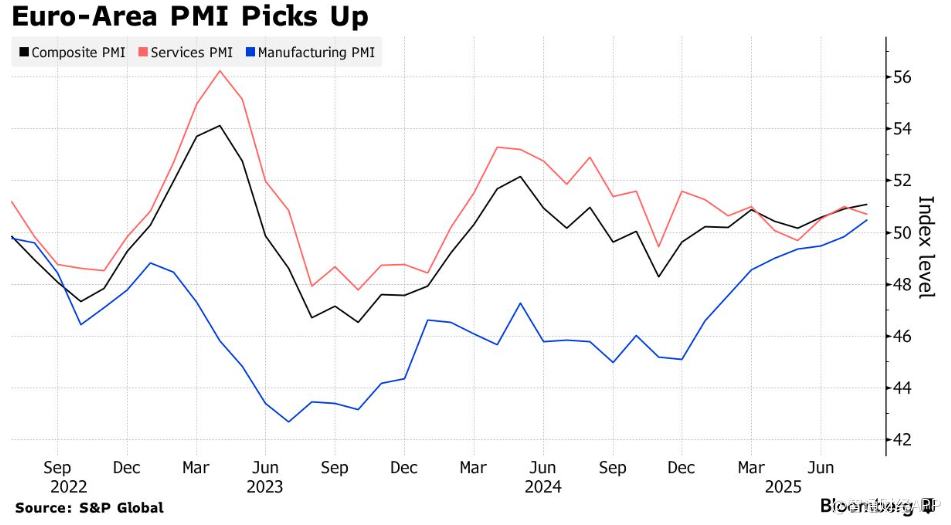
Core Insights - Despite higher tariffs on exports to the U.S. due to the EU-U.S. trade agreement, the Eurozone private sector grew at its fastest pace in 15 months, with manufacturing ending a three-year contraction [1][2] Economic Indicators - The Eurozone Composite Purchasing Managers' Index (PMI) rose from 50.9 in July to 51.1 in August, surpassing analysts' expectations of 50.6 [1] - The Eurozone Manufacturing PMI increased from 49.8 to 50.5, marking the first time since June 2022 that it has crossed above the growth threshold [2] - The Services PMI slightly decreased to 50.7 but remained above the growth line [2] Country-Specific Performance - Germany's Composite PMI rose to 50.9, exceeding market expectations of 50.2, while the Manufacturing PMI jumped from 46.9 to 49.9, nearing expansion territory for the first time since June 2022 [4] - The Manufacturing Output Index climbed to 52.6, a 41-month high, with new orders growing at the fastest rate since March 2022 [4] - France's Composite PMI unexpectedly increased from 47.4 to 49.8, although it still remains below the growth threshold [6] Trade and External Factors - Eurozone manufacturing foreign orders declined for the second consecutive month, reflecting the impact of U.S. tariffs [7] - The European Central Bank (ECB) President noted that the new tariffs are slightly higher than previous forecasts but still below more severe scenarios [7] Monetary Policy Outlook - Strong PMI data provides evidence of the Eurozone's resilience against various challenges, supporting the view that the ECB may not need to rush into further rate cuts [8] - Market expectations suggest that the ECB will maintain the key deposit rate at 2% in September [8]

扛住美国关税冲击 欧元区PMI以15个月最快速度扩张
Zhi Tong Cai Jing· 2025-08-21 10:17
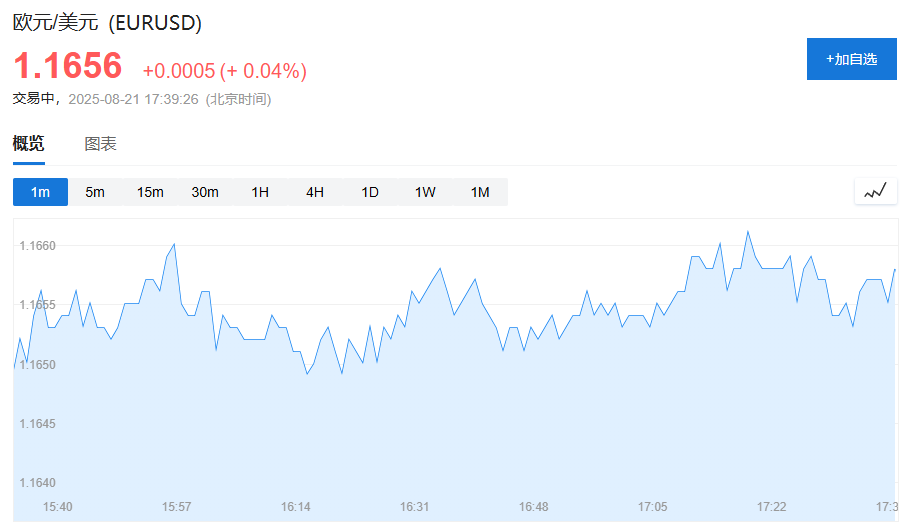
Group 1 - The Eurozone private sector expanded at the fastest pace in 15 months, with the composite Purchasing Managers' Index (PMI) rising from 50.9 in July to 51.1 in August, exceeding analysts' expectations of 50.6 [1][4] - The manufacturing PMI increased to 50.5, marking the first expansion since June 2022, while the service sector showed slight weakening but remained in line with expectations [1][4] - Germany's manufacturing sector is nearing the end of a three-year downturn, indicating a potential recovery in the Eurozone economy [1][4] Group 2 - Despite challenges such as US tariffs and general uncertainty, businesses across the Eurozone are performing relatively well, as noted by economists [4] - The Euro to US dollar exchange rate stabilized at 1.1654, while German 10-year bond yields rose by 2 basis points to 2.73%, reflecting market confidence [4] - The Eurozone's economy unexpectedly grew by 0.1% in the second quarter, although this was significantly lower than the previous quarter's growth of 0.6% [4] Group 3 - The European Central Bank (ECB) is expected to maintain the deposit rate at 2% during the September meeting, following a pause in rate changes after eight consecutive cuts [5] - The UK composite PMI rose to 53 in August, outperforming market expectations, while the US composite PMI data is anticipated to remain above 50 [5]
日本8月制造业活动连续第二个月萎缩 出口订单创17个月最快下滑
Xin Hua Cai Jing· 2025-08-21 05:19
Group 1 - Japan's manufacturing activity has contracted for the second consecutive month in August, primarily due to the impact of U.S. tariff policies and weak overseas demand [1] - The preliminary manufacturing Purchasing Managers' Index (PMI) for August is reported at 49.9, an increase from July's final value of 48.9, but still below the neutral level of 50.0, indicating ongoing contraction in manufacturing activity [1] - Despite a brief rebound in manufacturing output, indicated by an increase in the output index, the continuous decline in new orders casts a shadow over the recovery outlook [1] Group 2 - New orders in August continued to decline, with overseas new orders dropping at the fastest rate in 17 months, highlighting the vulnerability of Japan's export-oriented manufacturing sector [1] - In contrast to the manufacturing sector, Japan's services sector continued to expand in August, although at a slower pace, with the services PMI preliminary value decreasing from 53.6 in July to 52.7 [2] - The composite PMI output index rose from 51.6 in July to 51.9 in August, indicating the fastest expansion in six months, suggesting that domestic service demand is supporting overall economic activity despite manufacturing pressures [2]
下半年“财政退坡”值得担心吗?——7月财政数据点评
一瑜中的· 2025-08-20 14:33
Group 1 - The core viewpoint of the article discusses the potential concerns regarding "fiscal retreat" in the second half of the year, highlighting the implications for economic performance and the need for extraordinary policy measures to counteract any downturn [3][4][5]. - "Fiscal retreat" refers to a significant drop in fiscal expenditure growth in the latter half of the year compared to the first half, particularly in years where the fiscal budget is not adjusted post-implementation [3][12]. - There is a possibility of a fiscal retreat this year, with projections indicating a potential decline in fiscal expenditure growth to between -0.4% and 2.1%, marking the lowest growth rate since 2022 [4][13]. Group 2 - Despite the potential for fiscal retreat, the actual risk of it negatively impacting the economy may be limited, as adjusted fiscal expenditure growth is estimated to remain robust, between 4.1% and 6.7% [5][15]. - The article emphasizes that even without extraordinary policy measures, the fiscal support for the economy in the second half may not be less than that in the first half, aligning with economic growth targets of approximately 4.7% to 4.8% [5][15]. - The analysis includes a breakdown of fiscal expenditure adjustments, excluding non-economic driving components and incorporating new policy financial tools to enhance fiscal capacity [16][19]. Group 3 - The July fiscal data indicates a significant rebound in public fiscal revenue, with a year-on-year increase of 2.6%, marking the highest monthly growth rate of the year [20][21]. - Tax revenue has shown consistent positive growth for four consecutive months, with notable increases in sectors such as equipment manufacturing, where tax revenue grew by over 33% [20][21]. - On the expenditure side, public fiscal spending increased by 3% in July, ending a two-month decline, with a notable focus on social welfare and infrastructure spending [33][34]. Group 4 - The article notes a narrowing of land sales revenue growth, which has implications for broader fiscal revenue, while special bonds and new special debts have supported high growth in fiscal expenditure [42][43]. - Government fund income growth has slowed to 8.9% in July, primarily due to reduced land sales revenue growth of 7.2% [42][43]. - The article highlights the importance of monitoring future policies aimed at stabilizing the real estate market, which could impact fiscal revenue positively [42][43].

7月税收收入同比增长5%
21世纪经济报道· 2025-08-19 12:13
Core Viewpoint - The fiscal revenue in China showed a slight year-on-year growth of 0.1% in the first seven months of 2023, marking the first positive growth this year, driven by improved economic conditions and various policy measures [1][7]. Revenue Breakdown - Total public budget revenue reached 13.58 trillion yuan, with tax revenue at 11.09 trillion yuan, down 0.3%, and non-tax revenue at 2.49 trillion yuan, up 2% [1]. - Domestic value-added tax revenue was approximately 4.26 trillion yuan, up 3%, indicating stable growth in industrial and service sectors [2]. - Corporate income tax revenue was about 3.06 trillion yuan, down 0.4%, reflecting pressure on corporate profits [2]. - Import goods value-added tax and consumption tax totaled 1.03 trillion yuan, down 6.1%, consistent with weak import trends [2]. - Personal income tax revenue was 927.9 billion yuan, up 8.8%, linked to stable growth in resident income and improved tax administration [2]. Monthly Trends - From April onwards, monthly tax revenue has shown continuous positive growth for four months, with July seeing a significant increase of 5% [4][6]. - The cumulative decline in tax revenue narrowed from 1.2% in the first half to 0.3% in the first seven months [6]. Sector Performance - Key sectors such as equipment manufacturing and modern services showed positive tax revenue growth, with specific increases of 33% in railway and aerospace equipment, 10.1% in computer and communication equipment, and 12.7% in scientific research services [6]. Government Expenditure - Total public budget expenditure reached 16.07 trillion yuan, up 3.4%, with significant increases in social security (9.8%) and education (5.7%) spending [10]. - The overall fiscal expenditure, including government bonds, grew by 8.9% compared to the previous year, indicating strong fiscal support for economic growth [10].

58位民营企业家的想与盼
经济观察报· 2025-08-18 11:08
Core Viewpoint - In the current situation, some enterprises are adopting a cautious approach or even retracting their strategies, while others are actively promoting strategic upgrades, focusing on technological innovation, digital transformation, international expansion, new business development, and green low-carbon initiatives [1][29]. Group 1: Current Development of Private Enterprises - A survey conducted by Beijing Dacheng Enterprise Research Institute involved 58 private entrepreneurs from 13 provinces, focusing on the development environment, international influences, operational conditions, challenges, and strategic responses of private enterprises [2]. - The introduction of the Private Economy Promotion Law and the convening of private enterprise forums reflect the government's commitment to enhancing the development environment for private enterprises, significantly boosting their confidence [3][5]. - The legal framework for private enterprises has seen historic progress, establishing a system that promotes fair competition, investment, financing, and innovation, thereby reducing uncertainties in long-term strategic planning [5][6]. Group 2: Improvement in Business Environment - The efficiency of government services has improved, with streamlined approval processes and enhanced support for intellectual property protection, benefiting enterprises significantly [6][7]. - Market access restrictions have been reduced, allowing more private enterprises to participate in major infrastructure projects, and financing support has increased, with broader access to funding and lower costs [7][8]. - Despite improvements, challenges remain in policy implementation, with some local governments exhibiting inaction and inconsistencies in administrative enforcement [9][10]. Group 3: Industry Performance and Challenges - There is a notable divergence in the performance of different industries, with traditional sectors like manufacturing and real estate facing significant challenges, while emerging sectors such as innovative pharmaceuticals and AI are experiencing growth [13][14]. - Approximately 20% of surveyed enterprises reported growth in both revenue and profit, while nearly 30% experienced declines, particularly in real estate and traditional consumer sectors [14]. - Issues such as weak domestic demand, intense competition, and cash flow pressures continue to hinder enterprise development, particularly in the real estate sector [16]. Group 4: International Environment and Its Impact - The uncertain international environment poses challenges for trade, investment, and supply chain security, but it also drives Chinese enterprises to innovate and enhance their competitive capabilities [17][18]. - Trade tensions and tariffs have compressed profit margins for exporters, leading to increased costs and logistical risks [18]. Group 5: Strategic Recommendations from Entrepreneurs - Entrepreneurs suggest accelerating the implementation of the Private Economy Promotion Law and enhancing legal protections for private enterprises [20][21]. - There is a call for improved fair competition mechanisms and equal treatment for private enterprises in mixed-ownership economies [22]. - Recommendations include optimizing the financing environment to alleviate cash flow pressures and enhancing labor relations to mitigate disputes [23][24]. Group 6: New Strategic Directions for Private Enterprises - Enterprises are focusing on innovation-driven growth, increasing R&D investments, and developing high-value products to enhance market competitiveness [30][31]. - Expanding into international markets and diversifying risks by targeting regions with lower geopolitical risks is a priority for many enterprises [33]. - Digital transformation is being accelerated to improve management efficiency and operational capabilities, with a focus on creating innovative ecosystems [35][36].

国家统计局新闻发言人就2025年7月份国民经济运行情况答记者问
中汽协会数据· 2025-08-18 08:02
Core Viewpoint - The economic performance in July 2025 demonstrates resilience and vitality despite external pressures and adverse weather conditions, with steady growth in production, consumption, and investment, alongside stable employment and prices [7][10][20]. Economic Performance Overview - The industrial output in July showed a year-on-year increase of 5.7%, with the equipment manufacturing sector growing by 8.4%, indicating strong industrial growth [7][51]. - The service sector also performed well, with a production index growth of 5.8% in July, driven by increased tourism and related services [7][15]. - Social retail sales increased by 3.7% year-on-year in July, with a notable 4% growth in goods retail [8][14]. - Fixed asset investment grew by 1.6% from January to July, with significant contributions from equipment updates and manufacturing investments [8][45]. Trade and Employment - The total import and export volume increased by 6.7% year-on-year in July, reflecting the resilience of foreign trade despite a complex international environment [8][31]. - The urban unemployment rate remained stable at 5.2%, indicating a steady employment situation [9][20]. New Growth Drivers - High-tech manufacturing saw a 9.3% increase in output, with significant growth in sectors like integrated circuits and new energy vehicles [10][38]. - The digital economy is rapidly developing, with a 8.4% increase in digital product manufacturing in July [10][38]. Consumer Trends - Consumer demand is being stimulated by policies such as the "old for new" consumption initiative, leading to increased sales in home appliances and cultural products [8][14]. - The service sector is experiencing growth, particularly in tourism and digital services, with a notable increase in transportation and cultural service indices [15][56]. Investment Landscape - Investment in manufacturing is growing, with a 6.2% increase in manufacturing investment from January to July, particularly in textiles and automotive sectors [45][46]. - Infrastructure investment is also on the rise, with water management and information transmission sectors seeing significant growth [46][47]. Policy Impact - The implementation of proactive macroeconomic policies is supporting production and investment growth, with a focus on stabilizing employment and market expectations [10][23]. - The government's commitment to deepening reform and opening up is enhancing the resilience and vitality of the economy [21][32].
【环球财经】日经225指数涨0.77%
Xin Hua Cai Jing· 2025-08-18 07:23
Core Points - The Tokyo stock market indices experienced a significant rise, with the Nikkei 225 index closing up by 0.77% and the Tokyo Stock Exchange Price Index up by 0.43%, both reaching historical highs [1][2] - The market opened slightly higher and showed a trend of fluctuating upward movement, driven by profit-taking from some investors and increased participation from others attracted by relatively undervalued blue-chip stocks [1] - The depreciation of the yen against the dollar positively impacted export-oriented stocks, particularly in the automotive sector, with shares of Toyota, Honda, and Nissan rising [1] - Semiconductor equipment manufacturers like Tokyo Electron and Lasertec faced downward pressure due to investor concerns over potential tariffs on semiconductors proposed by Trump [1] Sector Performance - The Nikkei index rose by 336.00 points, closing at 43714.31 points, while the Tokyo Stock Exchange index increased by 13.28 points to 3120.96 points [2] - Most of the 33 industry sectors on the Tokyo Stock Exchange saw gains, with service, transportation machinery, and precision machinery sectors leading the increases [2] - Conversely, nine sectors, including banking, marine transportation, and electric and gas utilities, experienced declines on the same day [2]
中国2025年7月经济数据图景:7月经济稳中有进,地产投资承压
Hua Tai Qi Huo· 2025-08-18 05:20
Report Title - 7-month economic progress with real estate investment under pressure - A panorama of China's economic data in July 2025 [1] Report Industry Investment Rating No relevant content provided. Core Views - In the first half of the year, the economy grew steadily. In July, industrial growth continued, with the added value of large-scale industries increasing by 5.7% year-on-year and 0.38% month-on-month. From January to July, it increased by 6.3% year-on-year. The PPI decreased by 3.6% year-on-year in July (unchanged from the previous month) and 0.2% month-on-month (narrowed by 0.2% compared to the previous month). The CPI remained flat year-on-year in July (0.1% in June) and increased by 0.4% month-on-month ( -0.1% in June), ending the consecutive month-on-month decline [2]. - Domestic demand still needs improvement, and external uncertainties are increasing. In July, the economy advanced steadily. The "anti-involution" optimized the supply chain and accelerated industrial upgrading. Service consumption supported the overall consumer market. Externally, trade protectionism and geopolitical risks intertwined, and continuous vigilance was needed for the impact of commodity supply chain disruptions and new US tariff policies on the second half of the year [4]. Summary by Directory Macro Events - On August 15, National Bureau of Statistics data showed that in July, the national economy maintained a steady and progressive development trend, with production and demand continuing [6]. Growth: Steady Growth - In July, industrial growth continued. The added value of large-scale industries increased by 5.7% year-on-year and 0.38% month-on-month. From January to July, it increased by 6.3% year-on-year. By category, the mining industry increased by 5.0% year-on-year, manufacturing by 6.2%, and the production and supply of electricity, heat, gas, and water by 3.3%. The added value of the equipment manufacturing industry increased by 8.4% year-on-year, and the high-tech manufacturing industry by 9.3%, 2.7 and 3.6 percentage points faster than the overall large-scale industries respectively [10]. Inflation: Month-on-Month Improvement - In July 2025, the PPI decreased by 3.6% year-on-year (unchanged from the previous month) and 0.2% month-on-month (narrowed by 0.2% compared to the previous month). The purchase price decreased by 4.5% year-on-year and 0.3% month-on-month. From January to July, the PPI decreased by 2.9% cumulatively. The CPI remained flat year-on-year in July (0.1% in June) and increased by 0.4% month-on-month ( -0.1% in June), ending the consecutive month-on-month decline. The core CPI increased by 0.8% year-on-year, with the increase expanding for three consecutive months, reaching a new high since March 2024 [19][39]. Investment: Marginal Slowdown - From January to July 2025, fixed - asset investment increased by 1.6% year-on-year (2.8% previously), and the month-on-month decline continued ( -0.63% in July). The investment growth rate of the secondary industry slowed down to 8.9% (manufacturing investment +6.2%), and the investment in the tertiary industry decreased by 2.3% (more affected by real estate) [53]. Production: Downstream Improvement - In the first half of 2025, the added value of large-scale industries increased by 6.4% year-on-year. The manufacturing industry increased by 7.0%. The downstream demand improved significantly, but the weakness of upstream raw material industries and export pressure were constraints [59]. Consumption: Structural Differentiation - In July 2025, the growth rate of the consumer market slowed down. From January to July, the total retail sales of consumer goods increased by 4.5% year-on-year (5.0% previously). The single - month retail sales in July increased by only 3.7% year-on-year, reaching a new low for the year. Service consumption showed resilience, while the growth of online channels slowed down [69]. Real Estate: Investment Under Pressure - From January to July, the national real estate development investment decreased by 12.0% year-on-year, with the decline expanding by 0.8% compared to January - June. The sales side remained weak, but policy - driven structural optimization accelerated inventory reduction [78].