
油气

Search documents
亚太股市集体飘绿,金价跌破3930美元关口,国内金饰跌破1200元
2 1 Shi Ji Jing Ji Bao Dao· 2025-10-28 08:29
Market Overview - The A-share market experienced a high and then a pullback, with the Shanghai Composite Index briefly surpassing 4000 points, reaching a ten-year high, while the ChiNext Index rose over 1% at one point. By the end of the trading day, all three major indices closed lower. The total trading volume in the Shanghai and Shenzhen markets was 2.17 trillion yuan, a decrease of 191.3 billion yuan from the previous trading day [1] Sector Performance - The market saw rapid rotation of hotspots, with the Fujian sector experiencing a surge, leading to over ten stocks hitting the daily limit. Pingtan Development achieved six consecutive limit-ups in eight days, while Xiamen Port and Xiamen Airport also saw limit-ups. The nuclear power sector was active, with Dongfang Tantalum achieving three limit-ups in four days, and Antai Technology achieving two consecutive limit-ups. The robotics sector also performed well, with Qingdao Double Star and Yashihua both achieving three consecutive limit-ups, and several other stocks hitting the daily limit. The military industry sector saw a sharp rise, with Jianglong Shipbuilding hitting the daily limit with a 20% increase [1] Declining Sectors - The non-ferrous metals sector collectively declined, with Tongling Nonferrous Metals hitting the daily limit down. Other sectors that saw significant declines included wind power equipment and oil and gas [2] Gold Market Dynamics - International gold prices experienced a sharp drop, with spot gold briefly falling below $3921 per ounce, and both spot and COMEX gold prices declining over 1% [4] - Domestic gold jewelry prices were significantly reduced, with some brands' prices falling below 1200 yuan per gram. Notable price changes included Lao Miao Gold at 1192 yuan per gram (down 28 yuan), Chow Sang Sang at 1199 yuan per gram (down 24 yuan), and Chow Tai Fook at 1198 yuan per gram (down 25 yuan) [5] Factors Influencing Gold Prices - The recent gold price correction is attributed to three main factors: changes in the macro environment, including the easing of the U.S. government shutdown crisis and reduced expectations of trade friction and geopolitical conflicts, which have weakened gold's safe-haven demand; technical selling pressure due to an overbought condition; and changes in the U.S. dollar and Treasury yields, with a slight increase in the 10-year U.S. Treasury yield reflecting enhanced market risk appetite [6]

亚太股市集体飘绿,金价跌破3940美元关口,国内金饰跌破1200元
2 1 Shi Ji Jing Ji Bao Dao· 2025-10-28 07:45
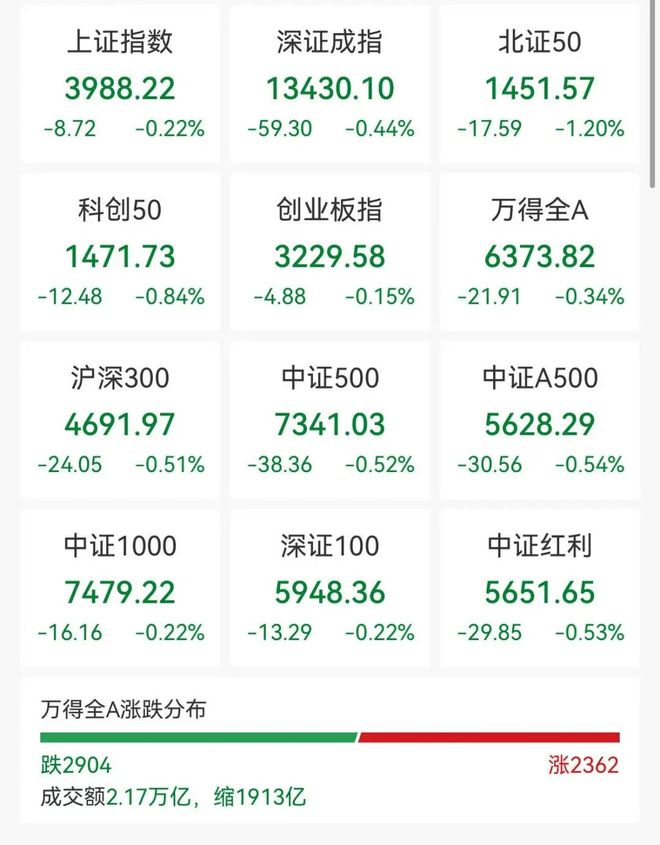
Market Overview - On October 28, the A-share market experienced a high and then a pullback, with the Shanghai Composite Index briefly surpassing the 4000-point mark, reaching a ten-year high [1] - By the market close, all three major indices ended lower, with the Shanghai and Shenzhen stock exchanges recording a total trading volume of 2.17 trillion yuan, a decrease of 191.3 billion yuan from the previous trading day [1][2] Index Performance - Shanghai Composite Index: 3988.22, down 8.72 points (-0.22%) - Shenzhen Component Index: 13430.10, down 59.30 points (-0.44%) - ChiNext Index: 3229.58, down 4.88 points (-0.15%) [2] Sector Highlights - The market saw rapid rotation of hot sectors, with the Fujian sector experiencing a surge, leading to over ten stocks hitting the daily limit [2] - Notable performers included Pingtan Development, which achieved six consecutive limit-ups in eight days, and several stocks in the nuclear power sector, such as Dongfang Tantalum, which had three limit-ups in four days [2][3] Declining Sectors - The non-ferrous metals sector faced collective declines, with Tongling Nonferrous Metals hitting the daily limit down [5] - Other sectors that saw significant declines included wind power equipment and oil and gas [5] International Market Insights - Asian markets, including Japan, closed lower, with experts warning of potential bubble risks in the Japanese stock market due to a lack of economic fundamentals and over-reliance on monetary easing [7][9] - The Nikkei 225 index had previously surpassed the 50,000-point mark, but concerns about structural resistance and policy uncertainties may limit further upward movement [9] Gold Market Update - International gold prices saw a sharp decline, with spot gold dropping below $3940 per ounce, reflecting a nearly 1% decrease [12] - Domestic gold jewelry prices also saw significant reductions, with some brands reporting prices below 1200 yuan per gram [14] - Analysts attribute the gold price correction to three main factors: changes in the macro environment, technical selling pressure due to overbought conditions, and fluctuations in the U.S. dollar and Treasury yields [15][16]
麦肯锡对能源系统认知发生大转变
Zhong Guo Hua Gong Bao· 2025-10-28 03:09
Core Insights - McKinsey's latest report indicates that fossil fuels will still account for nearly half of global energy consumption by 2050, marking a significant shift in understanding energy systems over the past decade [2][3] - The report emphasizes that new low-carbon technologies face challenges in cost competitiveness and financing, hindering their large-scale adoption [2] - Geopolitical uncertainties, policy changes, and rising electricity demand are reshaping the energy landscape, leading to an extended use of fossil fuels beyond 2050 [2] Summary by Categories Energy Consumption - By 2050, oil, gas, and coal are projected to account for 41% to 55% of global energy consumption, which is lower than current levels but higher than previous expectations [2] - Natural gas is expected to see the strongest demand growth in power generation and end-use consumption, primarily as a substitute for high-emission fuels [2] Low-Carbon Technologies - Key alternative fuels, such as green hydrogen, are unlikely to be widely adopted before 2040 due to cost issues, making it difficult for sustainable fuels to compete with traditional fuels in the short term [3] - The report acknowledges that energy security and reliability have taken precedence over sustainability amid geopolitical turmoil and the lack of competitive low-carbon technologies [3] Investment and Policy Implications - The findings lend more realism to calls from OPEC for continued investment in oil and gas, contrasting with previous expectations that focused on net-zero goals rather than affordability, security, and reliability [3]
油气体制改革再进一步 ——专家解读《油气管网设施公平开放监管办法》
Zhong Guo Hua Gong Bao· 2025-10-28 03:07
Core Viewpoint - The introduction of the new "Regulatory Measures for Fair Access to Oil and Gas Pipeline Facilities" aims to enhance the regulatory framework in the oil and gas sector, ensuring fair access and improving operational efficiency in the industry [1][2][3]. Regulatory Framework - The new regulatory measures adapt to the evolving regulatory requirements and industry needs, building on the previous framework established in 2014 and refined in 2019 [2][3]. - The new measures specifically address past regulatory challenges, enhancing the ability to serve market demands for fair access to oil and gas pipeline facilities [2][3]. Key Changes - The new regulations elevate the status of the regulatory framework, increasing its authority and deterrent effect, and introduce specific penalties for violations to standardize enforcement actions [4][5]. - The measures outline clear penalties for various violations, reducing discretionary enforcement and potential disputes [4][5]. Market Impact - The new regulations are expected to facilitate a more competitive environment by clarifying rights and obligations among market participants and enhancing the legal framework for enforcement [3][6]. - The measures aim to break down monopolistic barriers in the pipeline sector, promoting a fair and transparent competitive landscape [7][8]. High-Quality Development - The new regulatory framework is seen as crucial for the high-quality development of the oil and gas industry, supporting the establishment of a multi-level regulatory mechanism and promoting regional market prosperity [7][8]. - The measures align with the broader goals of creating a unified national market, enhancing the efficiency of energy resource allocation [7][8].
帮主郑重:A股近4000点的两个反常,藏着中长线的真机会
Sou Hu Cai Jing· 2025-10-27 16:49
Core Viewpoint - The current market fluctuations around the 4000-point mark present significant investment opportunities despite apparent volatility [1][3]. Group 1: Market Dynamics - There is a notable divergence in market performance, with technology stocks like storage chips and CPOs experiencing gains, while oil and gas stocks are declining, indicating a search for direction among funds [3]. - The trading volume has increased to 2.34 trillion, up 20% from the previous week, despite the index being "stuck" [3]. - Institutional funds have seen a net inflow of over 70 billion, contrasting with retail investors who are selling off their positions [3]. Group 2: Investment Strategy - A dual investment strategy is emerging, focusing on technology stocks with order support and high-dividend blue-chip stocks for stability [4]. - Investors are advised to avoid stocks that merely ride on concepts or have poor third-quarter reports [4]. - Maintaining current positions is recommended, especially for stocks aligned with favorable policies, as pullbacks without significant volume should be viewed as buying opportunities [4].

一场重磅专题询问,事关国有资产最新“家底”、国企薪酬改革
2 1 Shi Ji Jing Ji Bao Dao· 2025-10-27 12:59
Core Insights - The National People's Congress Standing Committee held a joint meeting to inquire about the management of state-owned assets for 2024, marking the first specialized inquiry into state-owned asset management [2] - The report revealed that by the end of 2024, the total assets of state-owned enterprises (excluding financial enterprises) will reach 401.7 trillion yuan, with state capital equity at 109.4 trillion yuan [2] - State-owned enterprises have maintained stable profits, with total revenue exceeding 80 trillion yuan for the past three years and total profits around 4.5 trillion yuan [2] Group 1: State-Owned Enterprises' Financial Performance - As of 2024, total assets of state-owned enterprises (excluding financial enterprises) are projected to be 401.7 trillion yuan, with state capital equity at 109.4 trillion yuan [2] - State-owned financial enterprises have total assets of 487.9 trillion yuan and capital equity of 33.9 trillion yuan [2] - National state-owned enterprises' total revenue has consistently surpassed 80 trillion yuan for three consecutive years, with stable profits around 4.5 trillion yuan [2] Group 2: Investment in Strategic Emerging Industries - In 2024, central enterprises are expected to invest 2.7 trillion yuan in strategic emerging industries, accounting for over 40% of total investments [3] - In the first three quarters of this year, central enterprises completed investments of 1.5 trillion yuan, showing a year-on-year increase [3] - Central enterprises have established nearly 2,000 smart factories and nurtured over 110 startup companies, significantly advancing key industries [3] Group 3: Reform and Optimization of State-Owned Enterprises - Central enterprises' revenue from sectors critical to national security and the economy exceeds 70% [4] - Strategic restructuring and professional integration of state-owned enterprises have made significant progress, with new entities formed and ongoing restructuring efforts [4] - The average annual growth rate of investments in strategic emerging fields by central enterprises has exceeded 20% [4] Group 4: Governance and Management Reforms - The State-owned Assets Supervision and Administration Commission has improved dynamic management systems for central enterprises, with over 90% of investments focused on core businesses [5] - Governance reforms have activated the development potential of state-owned enterprises, with over 97% of eligible subsidiaries establishing boards of directors [5] - Labor, personnel, and distribution system reforms have been implemented across central enterprises, ensuring comprehensive coverage of management practices [5] Group 5: Salary System Reforms - Significant reforms in the salary system of state-owned enterprises have been undertaken, addressing issues of high salaries despite poor performance [6] - The salary structure has been standardized, ensuring reasonable compensation levels across different management tiers [6] - The proportion of performance-linked variable pay for central enterprise management personnel exceeds 60% [7]
沪指逼近4000点!
Sou Hu Cai Jing· 2025-10-27 08:57
Core Viewpoint - A-shares experienced a strong performance on Monday, reaching a ten-year high with the Shanghai Composite Index peaking at 3999.07 points, closing at 3996.94, up 1.18% [1][2]. Market Performance - The Shanghai Composite Index closed at 3996.94, increasing by 46.63 points or 1.18% - The Shenzhen Component Index rose by 200.22 points, or 1.51%, closing at 13489.40 - The ChiNext Index increased by 62.89 points, or 1.98%, closing at 3234.45 - The CSI 300 Index closed at 4716.02, up 55.34 points or 1.19% - The CSI 500 Index rose by 120.86 points, or 1.67%, closing at 7379.39 - The total number of stocks that rose in the two markets and the Beijing Stock Exchange was 3360, while 1859 stocks fell, and 217 stocks remained flat [2][4]. Sector Performance - The storage chip concept saw a surge in stock prices, with strong performances in consumer electronics, CPO, and circuit board sectors - Active movements were noted in rare earth, nuclear fusion, and coal stocks - Conversely, gaming, Hainan, and oil and gas sectors experienced declines [4].
大摩:下调Diamondback Energy(FANG.US)目标价至184美元 维持“买入” 评级
智通财经网· 2025-10-27 06:35
Core Viewpoint - Morgan Stanley analyst Devin McDermott maintains a "Buy" rating on Diamondback Energy (FANG.US), lowering the target price from $186 to $184, citing expected robust operational reports but weaker cash flows due to declining natural gas and natural gas liquids prices [1] Group 1: Analyst Ratings and Target Prices - Morgan Stanley's target price for Diamondback Energy is adjusted down to $184 from $186 [1] - Susquehanna analyst Charles Minervino also maintains a "Buy" rating but raises the target price from $182 to $188, reflecting updated earnings expectations for the exploration and production segment [1] Group 2: Market Expectations and Price Projections - The company is expected to report a "solid" operational performance in Q3, although cash flows may fall below market expectations due to weaker prices for natural gas and natural gas liquids [1] - The fourth-quarter WTI crude oil price expectation is lowered to $62.5 per barrel, while the 2026 price expectation remains unchanged at $65 per barrel [1] Group 3: Company Overview - Diamondback Energy is an independent oil and gas company focused on exploring, acquiring, and developing unconventional energy resources in the Permian Basin of West Texas [1]

“十五五”,油气行业向更深处钻进,向更难处攻坚
中国能源报· 2025-10-27 04:00
Core Viewpoint - The oil and gas industry is entering a new phase of high-quality development that emphasizes safety, efficiency, greenness, and innovation, while continuing to explore deeper, navigate further, and tackle more challenging tasks [1][3]. Group 1: Achievements in the 14th Five-Year Plan - The oil and gas sector has achieved significant milestones, including the discovery of 10 large oil fields and 19 large gas fields, with crude oil production exceeding 200 million tons and natural gas production reaching 260 billion cubic meters, completing the 14th Five-Year Plan targets two years ahead of schedule [5][6]. - The industry has successfully responded to complex international energy challenges, enhancing domestic supply through "increasing reserves and production," diversifying imports, and improving resource allocation efficiency [3][6]. Group 2: Technological Innovations - Technological innovation and intelligent transformation have become core drivers of high-quality development in the oil and gas sector, with breakthroughs in deep-water and deep-earth exploration [8][10]. - The industry has made significant advancements in deep-water drilling technologies, with the "Deep Sea No. 1" project marking a historic leap in exploration capabilities [9]. Group 3: Future Directions in the 15th Five-Year Plan - The oil and gas industry is set to focus on energy security while adapting to low-carbon transitions, with an emphasis on technological innovation to drive industrial upgrades [12][13]. - Future exploration will increasingly target ultra-deep layers, deep-water areas, and unconventional resources, with a strong emphasis on enhancing gas storage and peak-shaving capabilities [12][13]. Group 4: Green and Low-Carbon Transition - The industry is transitioning from a focus solely on fossil fuel production to a comprehensive energy base that includes renewable energy sources such as solar and wind [12][13]. - Carbon capture, utilization, and storage (CCUS) technologies are expected to see larger-scale commercial applications, supporting the reduction of emissions in high-pollution sectors [10][13].

华联期货成本端偏弱
Hua Lian Qi Huo· 2025-10-26 13:22
Report Title - The report is titled "Hualian Futures LPG Weekly Report - Weak Cost Side" dated October 26, 2025 [2] Report Industry Investment Rating - No industry investment rating is provided in the report Report's Core View - The report analyzes the LPG market from multiple aspects and suggests temporarily waiting and watching or participating in intraday trading, highlighting risks associated with crude oil trends and macro - risks [5] Summary by Relevant Catalogs 1. Weekly View - **Upstream**: Crude oil rebounded from its annual low, driven by improved macro - sentiment and new sanctions on Russia. Previously, trade wars, rising financial risks, poor demand prospects, and weak financial attributes pressured oil prices. OPEC+ continued to increase production, but factors like the strength of gold and complex geopolitical situations may support oil prices [5] - **Supply**: Sino - US tariff issues resurfaced. The US is the largest source of China's LPG imports. China is seeking diversified import sources, and the impact of this tariff issue is expected to be less severe than before. Domestic production has decreased marginally, and the drag from competing LNG prices has weakened. Freight rates have continued to decline [5] - **Inventory**: Inventory decreased significantly on a weekly basis. Port storage capacity utilization dropped to a multi - year low, refinery storage capacity remained near a multi - year low, and gas station storage capacity rebounded. US inventory continued to rise from a high level, and exchange warehouse receipts were cancelled after reaching a record high [5] - **Demand**: Combustion demand is transitioning from the off - season to the peak season. Gasoline consumption is at a four - year low, and catering consumption growth has slowed. Chemical demand has increased week - on - week. PDH capacity utilization rebounded from a multi - year low, but margins are poor; alkylation capacity utilization declined seasonally with low margins; MTBE capacity utilization is high, and losses are narrowing [5] - **Strategy**: It is recommended to wait and watch or participate in intraday trading [5] 2. Spot and Futures Market - **"Gas/Oil" Ratio**: The spot "gas/oil" ratio is slightly above the neutral level. High tariffs previously affected LPG imports, leading to a high premium of LPG over crude oil. Currently, LPG inventory is rising [10] - **Spot Price**: Spot prices have been fluctuating since Q4 2023 and have declined in recent months. Combustion demand is currently in the off - season [12] - **Basis**: The basis has declined on a weekly basis. The basis shows significant fluctuations, seasonality, regional differences, and a large discount in the expiration month of warehouse receipts, indicating that the LPG spot market has some degree of monopoly [15][18] - **Spread between Contracts**: In Q1 this year, the 3 - 4 month spread of LPG futures once strongly shifted to a back structure [22] 3. Related Products - LNG prices have rebounded and are approaching LPG prices. International frozen cargo prices rebounded slightly and then weakened again [26] 4. Inventory - **China's LPG Inventory**: Inventory decreased on a weekly basis. Port storage capacity is at a multi - year median level, refinery storage capacity is near a multi - year low, and gas station storage capacity is neutral. Port inventory decreased after rebounding to a high level. US inventory continued to rise from a high level [31] - **Warehouse Receipts**: Warehouse receipts reached a record high and then were cancelled [39] 5. Supply Side - **Import and Export Volume**: No specific analysis of import and export volume trends is provided in the text, but it is mentioned that China is seeking diversified LPG import sources [5] - **Supply Volume**: LPG supply volume increased on a weekly basis but was lower than in 2023 and 2024. As refinery integration increases, supply may decline. Freight rates rebounded from a low level to a one - and - a - half - year high and then softened, and the Panama Canal is operating well [50][52] - **Import Margin**: No specific analysis of import margin trends is provided in the text [54] 6. Demand Side - **Consumption Demand**: Gasoline additive demand is weak, household combustion demand is declining, and commercial combustion demand growth has slowed. The increasing penetration rate of new energy vehicles is accelerating the substitution of gasoline additive demand [60] - **Capacity Utilization**: MTBE capacity utilization has softened from a high level, alkylation capacity utilization has declined seasonally, and PDH capacity utilization has dropped again and is approaching a multi - year low. In 2024, PDH capacity increased by 425,000 tons to 2.152 million tons, with an increase of nearly 25%, and there may be more than 200,000 tons of new capacity coming online in 2025 [61][64][67] 7. Industrial Chain Structure - The total LPG supply is at the 80 - million - ton level, with 58% from domestic production and 42% from imports. LPG is used for direct and indirect combustion, as well as in the chemical industry, with PDH for polypropylene production accounting for 25% [78]