
高技术制造

Search documents
浙江:11月规模以上工业增加值同比增长6.5%
Di Yi Cai Jing· 2025-12-19 01:34
Core Insights - In November, the industrial added value of large-scale industries in Zhejiang Province increased by 6.5% year-on-year, with 24 out of 37 major industrial sectors showing positive growth [1] Industrial Performance - The industries with significant growth in added value include: - Petroleum processing: 31.4% - Automotive: 23.2% - Railway and shipbuilding: 17.5% - Computer, communication, and electronic products: 15.7% - Chemical fiber: 9.9% - These sectors collectively contributed 4.5 percentage points to the growth of large-scale industrial added value [1] Innovation and New Products - The value rate of new products in large-scale industries reached 44.4%, an increase of 2.1 percentage points year-on-year [1] - The added value of high-tech manufacturing, strategic emerging industries, core digital economy industries, and equipment manufacturing grew by: - High-tech manufacturing: 11.8% - Strategic emerging industries: 11.5% - Core digital economy industries: 11.0% - Equipment manufacturing: 10.2% [1] Year-to-Date Performance - From January to November, the industrial added value of large-scale industries increased by 7.0% [1]
宏观经济总体平稳,全年顺利收官在望|宏观经济
清华金融评论· 2025-12-17 10:41
Core Viewpoint - China's macroeconomic operation continues to show overall stability and progress, with a projected growth rate of around 5% for the year, laying a solid foundation for the 14th Five-Year Plan and 2026 [2][17]. Economic Performance - The industrial added value maintained a stable and relatively fast growth, with a year-on-year increase of 4.8% in November and 6.0% from January to November [4]. - Fixed asset investment is on a downward trend, with a total of 444,035 billion yuan from January to November, a year-on-year decrease of 2.6%. Excluding real estate development investment, fixed asset investment grew by 0.8% [4][6]. - Real estate investment saw a significant decline of 15.9% year-on-year from January to November, with the decline expanding compared to the previous month [12]. Consumption Trends - Social retail sales totaled 43,898 billion yuan in November, with a year-on-year growth of 1.3% and a cumulative growth of 4.0% from January to November [7]. - Consumption patterns show steady growth in basic and some upgraded goods, with significant increases in food, communication equipment, and cultural office supplies [7]. Export Resilience - Exports showed strong resilience, with a year-on-year increase of 5.9% in November, reaching a record high of 330.35 billion USD for the year [9]. - Exports to the US stabilized, while growth rates for exports to ASEAN and the EU remained robust, compensating for the decline in exports to the US [9]. Financial Indicators - Social financing maintained good growth, with a total of 2.49 trillion yuan in November, a year-on-year increase of 1,597 billion yuan [14]. - The Consumer Price Index (CPI) rose to 0.7% year-on-year in November, indicating a steady upward trend in prices [14]. Future Economic Outlook - The central economic work conference indicated that achieving the 5% growth target for 2025 is highly likely, with a focus on stabilizing employment, enterprises, and market expectations for 2026 [17][18]. - Fiscal policy is expected to maintain an expansionary stance, with a projected deficit rate of 4%-4.2% and an increase in special government bond issuance to support key areas [21]. - Monetary policy will remain flexible, with potential small-scale adjustments to interest rates and reserve requirements to ensure liquidity and support economic growth [22].

河南11月份规上工业增加值同比增长8.0%
Zhong Guo Xin Wen Wang· 2025-12-17 08:56
Group 1: Industrial Growth - In November, Henan's industrial added value for enterprises above designated size increased by 8.0% year-on-year, continuing a trend of rapid growth [1] - From January to November, the industrial added value in Henan grew by 8.4%, with November marking the second consecutive month of accelerated growth [1] - Among 41 major industrial sectors, 25 saw an increase in added value growth compared to the previous month, expanding nearly 20% [1] Group 2: Key Industry Contributions - The key industrial chains in Henan showed significant support, with their added value growing by 10.5% in November, contributing 85.0% to the province's industrial growth [1] - The electronic information industry experienced a substantial increase in added value by 24.9%, with a growth rate acceleration of 7 percentage points compared to the previous month [1] - The non-ferrous metal smelting and rolling processing industry also maintained rapid growth, with an added value increase of 11.1% [1] Group 3: Technological and Strategic Growth - The province is accelerating its industrial transformation and upgrading, with high-tech manufacturing added value increasing by 21.9% year-on-year in November [1] - Strategic emerging industries saw an added value growth of 15.9%, with the new generation information technology industry growing by 28.7% [1] Group 4: Consumer and Investment Trends - In November, the total retail sales of consumer goods in Henan reached 269.199 billion yuan, marking a year-on-year growth of 4.4% and a continuous recovery over three months [2] - Upgraded consumption categories saw accelerated growth, with retail sales of wearable smart devices, smartphones, and new energy vehicles increasing by 74.6%, 49.9%, and 16.8% respectively [2] - From January to November, fixed asset investment in Henan grew by 4.3%, with significant investments in key industrial chains such as new energy vehicles and modern pharmaceuticals increasing by 44.9% and 30.0% respectively [2]
数览中国经济稳中有进发展态势 整体运行向“新”向“质”向“未来”
Yang Shi Wang· 2025-12-16 01:47
Economic Performance - In November, China's economy continued to show a stable and progressive development trend, with the overall economic operation remaining steady [1][9] - The industrial added value above designated size grew by 4.8% year-on-year in November, maintaining a similar growth rate compared to the previous month [2] - The service production index increased by 4.2% year-on-year in November, indicating stable growth in the service sector [4] Industrial and Technological Growth - From January to November, the added value of high-tech manufacturing above designated size rose by 9.2% year-on-year, reflecting the growth of emerging industries [5] - The equipment manufacturing industry saw a significant increase, with a year-on-year growth of 7.7% in November, contributing 59.4% to the industrial added value growth [2] Consumer Market Trends - The total retail sales of consumer goods increased by 4% year-on-year from January to November, with a notable rise in service consumption and new consumption patterns [7] - Online retail sales of physical goods grew by 5.7% year-on-year, accounting for 25.9% of total retail sales, indicating a strong influence on consumer behavior [7] Autonomous Driving Development - The Ministry of Industry and Information Technology granted approval for the first batch of L3 autonomous driving models, marking a significant step towards commercial application [11] - The approved models are designed for specific scenarios, with one capable of operating at a maximum speed of 50 km/h in congested traffic and the other at 80 km/h on highways [12][15]
从前11月关键数据信号,看“质”感中国新刻度
2 1 Shi Ji Jing Ji Bao Dao· 2025-12-15 11:25
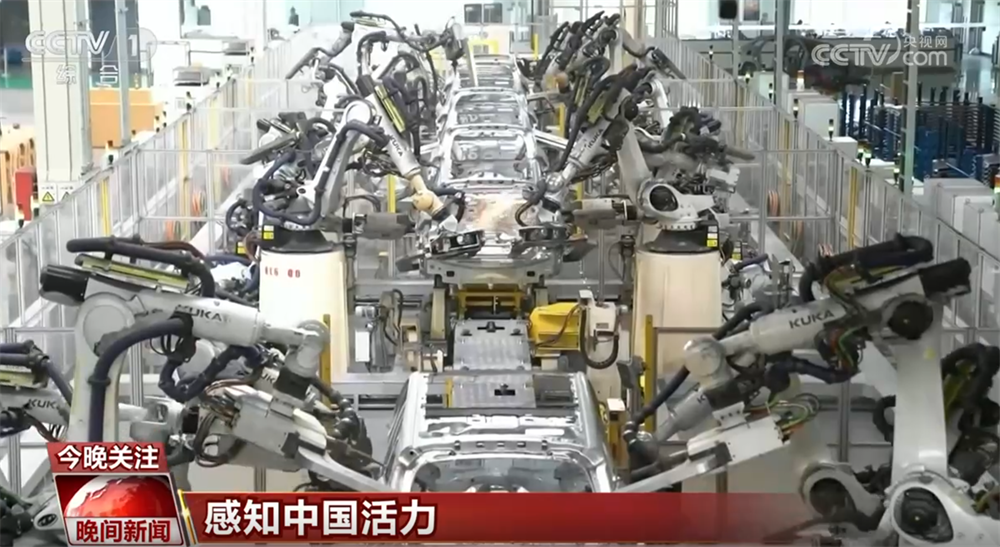
这些数据背后,折射出中国经济在保持量的合理增长下,正持续优化经济结构,为高质量发展注入动力 与温度,让人民群众生活更加美好,不断向"质"而行的升级轨迹。正如中央经济工作会议对2026年"稳 中求进、提质增效"的定调,当增速不再是唯一追求,追"新"求"质"或许才是定义未来的关键。 12月15日,2025年11月经济数据最新发布,全国规模以上工业增加值同比增长4.8%,装备制造业和高 技术制造业增长较快,分别同比增长7.7%,8.4%。3D打印设备、工业机器人、新能源汽车产品产量同 比分别增长100.5%、20.6%、17.0%。消费市场持续活跃,社会消费品零售总额超4.3万亿元,居民消费 价格同比涨幅扩大。经济运行延续总体平稳、稳中有进发展态势。 中国经济巨轮始终在稳健前行,有厚实的底气,有充沛的动力,更有不断汇聚的信心,即使面对风雨, 也能一往无前。 ...
11月中国经济“成绩单”出炉!支持价格合理回升的积极因素继续累积
Qi Huo Ri Bao· 2025-12-15 06:40
Economic Overview - In November, the national economy continued to show a stable and progressive development trend, with a focus on implementing proactive macro policies and promoting high-quality development [2][6] - The total grain production for the year is expected to exceed 1.4 trillion jin, with a year-on-year increase of 1.2% [2] Industrial Production - The industrial added value above designated size increased by 4.8% year-on-year in November, with a month-on-month increase of 0.44% [3] - The equipment manufacturing industry and high-tech manufacturing industry saw significant growth, with increases of 7.7% and 8.4% respectively [3] - The production of 3D printing equipment, industrial robots, and new energy vehicles grew by 100.5%, 20.6%, and 17.0% year-on-year respectively [3] Retail Sales - The total retail sales of consumer goods reached 43,898 billion yuan in November, a year-on-year increase of 1.3% [4] - Online retail sales amounted to 144,582 billion yuan, with a year-on-year growth of 9.1%, and physical goods online retail sales accounted for 25.9% of total retail sales [4] - Service retail sales grew by 5.4% year-on-year, with significant growth in cultural, sports, and travel services [4] Fixed Asset Investment - Fixed asset investment (excluding rural households) decreased by 2.6% year-on-year from January to November, while manufacturing investment increased by 1.9% [5] - Infrastructure investment fell by 1.1%, and real estate development investment dropped by 15.9% [5] - Investment in high-tech industries, such as information services and aerospace manufacturing, saw significant increases of 29.6% and 19.7% respectively [5] Policy Impact - A series of proactive macro policies have effectively supported stable economic operations, leading to expanded consumer demand and increased key investments [7][8] - The implementation of consumption upgrade policies has resulted in significant sales growth in home appliances and communication equipment [8] - The industrial production growth was supported by policies promoting market demand and industrial upgrades [8] Price Trends - The Consumer Price Index (CPI) rose by 0.7% year-on-year in November, marking a continuous recovery trend [9] - The Producer Price Index (PPI) showed a month-on-month increase of 0.1%, indicating a narrowing decline trend since August [10][11] Long-term Economic Outlook - The resilience of the economy remains strong, with macro policies providing robust support and new growth drivers emerging [12][13] - The expansion of market demand and the continuous growth of new economic drivers are expected to positively impact economic development [12][14] - The upcoming economic policies aim to enhance domestic demand and optimize supply, ensuring a solid foundation for future growth [14]
杨德龙:本轮慢牛长牛有望提升居民财产性收入 从而带动消费增长
Xin Lang Cai Jing· 2025-12-15 05:15
Group 1: Economic Overview - The macroeconomic data for November shows a clear characteristic of "strong production, weak demand, rising prices, and improved structure" [1][5] - The industrial added value for large-scale enterprises increased by 4.8% year-on-year, with significant internal structural differentiation; equipment manufacturing and high-tech manufacturing grew by 7.7% and 8.4% respectively, leading the overall industrial growth by 2.9 and 3.6 percentage points [1][5] - The retail sales of consumer goods only increased by 1.3% year-on-year, marking a new low for the year, with online retail sales growing by 5.7% but unable to offset the weakness in offline sales [1][6] Group 2: Consumer Behavior and Investment - The weak consumption is attributed to declining expectations of household income and a rise in "precautionary" savings, with household deposits increasing by over 10 trillion yuan in the first eleven months [6] - There is a significant shift in household assets from savings to investments, with over 25 million new stock accounts opened this year and equity public funds surpassing 500 billion yuan in sales [6][7] - Fixed asset investment decreased by 2.6% year-on-year, but excluding real estate development, it showed a slight increase of 0.8% [6][7] Group 3: Foreign Trade and Price Trends - In November, the total import and export value increased by 4.1% year-on-year, with exports and imports growing by 5.7% and 1.7% respectively, and a historic trade surplus exceeding 1 trillion USD [7] - The Consumer Price Index (CPI) rose by 0.7% year-on-year, while the Producer Price Index (PPI) decreased by 2.2%, indicating a potential for PPI to turn positive by 2026 [7] - The monetary environment shows a widening gap between M1 and M2, with a notable shift of funds towards equity investments as the one-year fixed deposit rate falls below 1% [7] Group 4: Future Outlook - The policy direction for 2026 will focus on "three stabilizations and three expansions," aiming to stabilize employment, enterprises, and expectations while expanding domestic demand, high-end supply, and institutional openness [7] - The current market trend is expected to enhance household financial income, counteract real estate wealth depreciation, and provide financing support for technology innovation enterprises [8]
权威数读丨11月国民经济:延续总体平稳、稳中有进态势
Xin Hua Wang· 2025-12-15 04:40
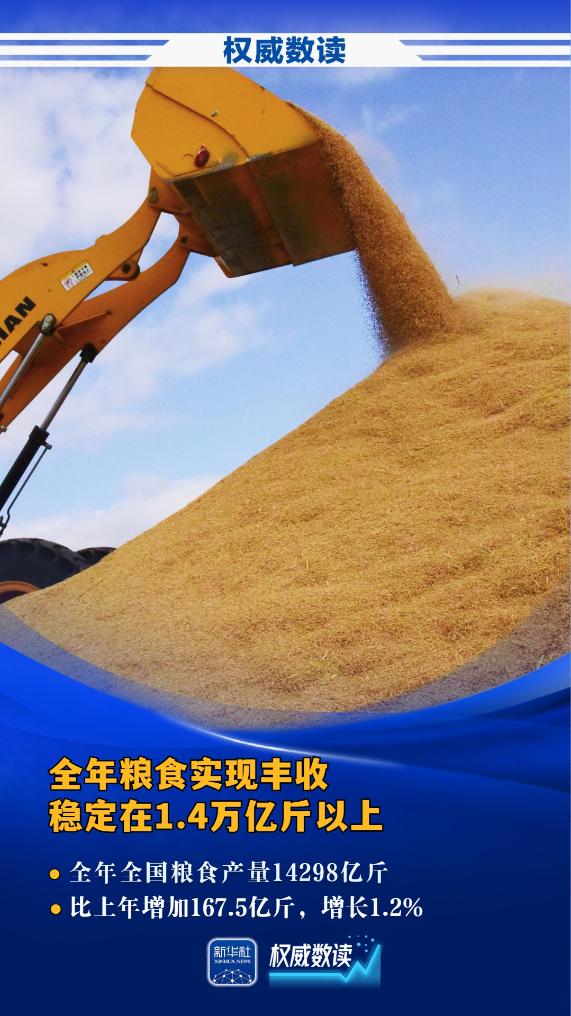
Core Insights - The national economy is showing overall stability and gradual improvement, with production supply remaining stable and market prices continuing to improve [1] Agricultural Sector - The total grain production for the year reached 14.298 billion jin, an increase of 1.2% or 167.5 million jin compared to the previous year [3] Industrial Sector - In November, the industrial added value for large-scale enterprises grew by 4.8% year-on-year and 0.44% month-on-month [6] - The equipment manufacturing sector saw a year-on-year increase of 7.7%, while high-tech manufacturing increased by 8.4% [6] Service Sector - The service production index increased by 4.2% year-on-year in November [9] - Specific sectors such as information transmission, software and IT services, leasing and business services, and finance saw production index growth of 12.9%, 8.4%, and 5.1% respectively [9] Retail Sector - The total retail sales of consumer goods reached 43.898 billion yuan in November, marking a year-on-year growth of 1.3% [14] - From January to November, service retail sales grew by 5.4%, with an acceleration of 0.1 percentage points compared to the previous ten months [14] Investment Sector - From January to November, fixed asset investment excluding real estate development increased by 0.8%, while manufacturing investment rose by 1.9% [16] Trade Sector - In November, the total value of goods imports and exports reached 38.987 billion yuan, reflecting a year-on-year increase of 4.1%, which is an acceleration of 4.0 percentage points compared to the previous month [19] - Exports and imports with countries involved in the "Belt and Road" initiative grew by 6.0%, and private enterprises' imports and exports increased by 7.1% [21]
刚刚,重要经济数据公布
第一财经· 2025-12-15 02:24
Economic Overview - The national economy is operating steadily, with a focus on high-quality development and stable employment [3][14] - The overall economic performance shows a trend of stability and progress [14] Agricultural Production - The total grain production for the year reached 14.298 trillion jin, an increase of 167.5 billion jin or 1.2% from the previous year [4] - The autumn grain production was 10.732 trillion jin, up by 163.6 billion jin or 1.5% [4] Industrial Production - In November, the industrial added value for large-scale enterprises grew by 4.8% year-on-year [5] - The equipment manufacturing and high-tech manufacturing sectors saw significant growth, with increases of 7.7% and 8.4% respectively [5] - The profit of large-scale industrial enterprises from January to October was 59.503 billion yuan, a year-on-year increase of 1.9% [6] Service Sector - The service sector production index increased by 4.2% year-on-year in November [7] - Key industries such as information transmission and financial services showed growth rates of 12.9% and 5.1% respectively [7] Retail Sales - The total retail sales of consumer goods in November reached 43.898 billion yuan, a year-on-year increase of 1.3% [8] - Online retail sales grew by 9.1% year-on-year, with physical goods accounting for 25.9% of total retail sales [8] Fixed Asset Investment - From January to November, fixed asset investment (excluding rural households) was 444.035 billion yuan, a decrease of 2.6% year-on-year [9] - Manufacturing investment increased by 1.9%, while real estate development investment fell by 15.9% [9] Trade and Exports - In November, the total value of goods imports and exports was 38.987 billion yuan, a year-on-year increase of 4.1% [10] - Exports grew by 5.7%, while imports increased by 1.7% [10] Employment - The urban survey unemployment rate was 5.1% in November, remaining stable compared to the previous month [12] Price Trends - The Consumer Price Index (CPI) rose by 0.7% year-on-year in November, with food prices increasing by 0.3% [13] - The Producer Price Index (PPI) for industrial producers decreased by 2.2% year-on-year [13]

冲刺万亿GDP城市,温州胜算最大
Sou Hu Cai Jing· 2025-12-14 01:33
Core Viewpoint - Wenzhou is expected to surpass a GDP of 1 trillion yuan this year, with Xuzhou and Dalian also aiming for this milestone, indicating a trend of ordinary prefecture-level cities joining the ranks of trillion-yuan cities in China [1][3][4]. Group 1: Economic Progress of Cities - Wenzhou's GDP for the first quarter was 240.37 billion yuan, with a growth rate of 6.7%, and it is projected to reach 1 trillion yuan this year [2]. - Xuzhou's GDP for the first three quarters was 729.812 billion yuan, with a growth rate of 6.0% [2]. - Dalian's GDP for the first three quarters was 724.82 billion yuan, with a growth rate of 6.0% [2]. Group 2: Characteristics of Trillion-Yuan Cities - The expansion of trillion-yuan cities includes ordinary prefecture-level cities, with Wenzhou and Xuzhou being notable examples [2][3]. - Cities with GDPs between 700 billion and 800 billion yuan, such as Shaoxing, Yangzhou, Yancheng, and Jiaxing, are expected to be the main drivers for future growth towards the trillion-yuan mark [2][16]. Group 3: Implications for Urban Economic Structure - The trend of expanding trillion-yuan cities reflects a shift in China's urban economic landscape, moving from provincial capitals and sub-provincial cities to ordinary prefecture-level cities [3][17]. - The focus on high-quality urban development emphasizes the need for structural upgrades in industries, income levels, and green development, rather than just quantitative growth [3][18]. Group 4: Wenzhou's Economic Foundation - Wenzhou's economic growth is supported by a robust manufacturing base and a strong private sector, with 83% of its GDP generated by the private economy [7]. - The city aims to establish a dual trillion-yuan industrial cluster by 2025, combining traditional industries with emerging sectors such as digital economy and new materials [7]. Group 5: Future Prospects for Dalian and Xuzhou - Dalian aims to become a trillion-yuan city by 2025, focusing on high-quality development and modernizing its industrial structure [10][12]. - Xuzhou's government has set a target to exceed 1 trillion yuan by 2025, with a focus on becoming a regional hub in Jiangsu province [14][15].
