奢侈品

Search documents
历峰集团:增长主要由珠宝推动。
news flash· 2025-07-16 05:38
Core Insights - The main driver of growth for Richemont Group is jewelry [1] Group 1 - The jewelry segment has significantly contributed to the overall revenue increase [1] - The company has reported strong sales performance in the jewelry category, indicating robust consumer demand [1] - Other segments may not have shown the same level of growth as jewelry, highlighting the importance of this category for the company's financial health [1]

欧盟打出8张关税牌,可以反击特朗普关税战吗?
Hu Xiu· 2025-07-16 03:20
Group 1 - The European Commission President Ursula von der Leyen announced a carefully calculated plan that could be one of the most influential moves in the trade war of this decade [1] - The EU is preparing to impose €21 billion in retaliatory tariffs on U.S. goods but has postponed these measures until early August, giving Washington a three-week respite [2][4] - The conflict between the EU and the U.S. is not just a simple trade dispute but signals a deeper transformation in global economic rules, challenging the established order since World War II [4][6] Group 2 - The potential "10% solution" represents a significant concession from the initial U.S. position of 30% tariffs, allowing both sides to claim victory while avoiding a full-blown trade war [11][15] - The EU is likely to accept a compromise involving a 10% tariff with exemptions for key industries, which would be less damaging than a 30% tariff [11][16] - The EU's strategy includes a list of products that could be exempt from tariffs, focusing on high-value items that are attractive to U.S. consumers [16] Group 3 - The EU has a complex arsenal of eight countermeasures against U.S. tariffs, including retaliatory tariffs, anti-coercion tools, and potential WTO litigation [25][27] - The "carbon border adjustment mechanism" (CBAM) is a strategic tool that targets high-carbon imports, aligning with the EU's climate goals while impacting U.S. industries [35][36] - The EU's approach includes financial buffers to support affected businesses and workers in case of a trade war, ensuring economic stability [38] Group 4 - If a "10% plus industry exemptions" agreement is reached, European automotive parts companies and luxury goods manufacturers are expected to benefit significantly [44][45] - U.S. agricultural producers may also gain from increased exports to the EU, as part of the concessions made during negotiations [48] - The potential for a rebound in the euro is noted, contingent on the resolution of trade tensions and the European Central Bank's monetary policy [50] Group 5 - The ongoing trade conflict is reshaping the global market environment, with companies needing to adapt to new rules and uncertainties [6][7] - The EU's focus on green and digital initiatives will continue to drive investment in renewable energy and digital compliance infrastructure [58] - Companies with strong pricing power or essential goods are positioned to withstand inflationary pressures resulting from tariffs and supply chain disruptions [60]
从表达到共鸣:品牌与消费者的沟通之道
Bei Jing Shang Bao· 2025-07-15 16:01
Group 1: Market Trends - Several luxury brands are adjusting their strategies in the Chinese market, with Gucci closing 6 stores in a year and Burberry's sales in Greater China declining by 21% year-on-year [1] - The Zegna Group reported a 14.5% decrease in revenue in China, and a total of 14 stores were closed by six top luxury brands in mainland China throughout 2024 [1] - Bain & Company forecasts a 2% decline in global personal luxury goods consumption in 2024, marking the first drop in a decade [1] Group 2: Brand Strategy Insights - Zhang Chunyu, a brand management expert, emphasizes the importance of establishing genuine connections with consumers rather than merely focusing on product sales [1][3] - The shift from heavy flavors to lighter, more refreshing tastes in snack foods reflects changing consumer preferences, as seen in the successful launch of Lay's cucumber-flavored chips [4][5] - Cartier's strategy to reposition its wedding rings involved shifting the narrative from traditional luxury to focusing on emotional connections in relationships, leading to increased consumer engagement [6][7] Group 3: Cultural Relevance - International brands are facing challenges in connecting with Chinese consumers, as traditional marketing approaches feel disconnected [9][10] - The collaboration between Coach and the iconic Chinese brand White Rabbit represents a significant cultural crossover, allowing Coach to resonate more deeply with local consumers [10][11] - The success of this collaboration demonstrates the potential for international brands to use local cultural symbols to create emotional connections with consumers [10][11] Group 4: Brand Growth Principles - Zhang Chunyu has developed a "brand growth principles" methodology that emphasizes understanding consumer needs, establishing strategic brand positions, and ensuring consistent brand expression across all touchpoints [12][13] - This approach aims to transition brands from price competition to value-driven engagement, aligning with modern consumer expectations for brand values and experiences [12][13]



上海静安:打造国际一流营商环境“步履不停”
Zhong Guo Jin Rong Xin Xi Wang· 2025-07-15 08:45
Group 1 - The core concept of the news is the opening of the "Louis号" in Shanghai's Jing'an district, which serves as a unique landmark combining exhibition, boutique, and dining experiences, attracting significant foot traffic and enhancing the local business environment [1][2][3] - The establishment of "Louis号" reflects Jing'an's commitment to creating a world-class business environment, with six major actions and twelve innovative measures aimed at supporting enterprises and boosting market confidence [2][4] - The project is seen as a significant step for foreign brands to engage deeply with the Chinese market, particularly in the high-end retail sector concentrated in the Nanjing West Road area, which hosts over 2,000 renowned domestic and international brands [3][4] Group 2 - Jing'an district has implemented a collaborative approach among various departments to support the "Louis号" project, emphasizing efficiency and responsiveness to business needs, which includes optimizing processes and enhancing communication [6][9] - The district's efforts in improving the business environment are exemplified by the introduction of a digital platform that allows for rapid business registration and streamlined processes for opening stores, significantly reducing the time required for businesses to start operations [9][11] - Jing'an is also focusing on supporting local enterprises in their international expansion, providing comprehensive services and policies to address challenges faced by companies looking to enter foreign markets [11][12]

纺织制造台企公布6月营收数据,2024年超市Top100企业销售额微增
Shanxi Securities· 2025-07-15 08:39
Investment Rating - The report maintains an investment rating of "Synchronize with the market - A" for the textile and apparel industry [1]. Core Insights - The textile and apparel industry has shown a steady performance in recent months, with various companies reporting mixed revenue growth. The overall market sentiment remains cautiously optimistic, driven by certain segments like sports and leisure apparel [3][15]. - The report highlights the impact of external factors such as tariff policies and global economic conditions on the industry's performance, particularly for companies with significant exposure to international markets [15][21]. Summary by Sections 1. Recent Revenue Data - In June 2025, several Taiwanese textile manufacturers reported varied revenue performance, with Yu Yuan Group showing a 9.4% year-on-year increase, while Feng Tai Enterprises experienced a 3.07% decline [6][21]. - Vietnam's textile and apparel exports showed a cumulative year-on-year growth of 13.0% for the first half of 2025, indicating a robust demand in international markets [5][21]. 2. Market Performance - The SW textile and apparel sector increased by 1.62% in the week of July 7-11, 2025, outperforming the broader market index [12][23]. - The SW textile manufacturing sub-sector rose by 2.25%, while the apparel and home textile sector increased by 1.71% [12][23]. 3. Valuation Metrics - As of July 11, 2025, the PE-TTM for SW textile manufacturing was 20.53, placing it in the 30.59% percentile over the past three years. The apparel and home textile sector had a PE-TTM of 27.66, in the 98.68% percentile [30][12]. 4. Industry Data Tracking - The report notes that the domestic retail sales in May 2025 reached 4.13 trillion yuan, a year-on-year increase of 6.4%, with online retail channels continuing to outperform traditional retail [53][55]. - The report also tracks raw material prices, indicating a slight increase in cotton prices and a decrease in gold prices as of July 11, 2025 [40][41]. 5. Industry News - The 2024 Top 100 supermarket report indicates a slight increase in sales, with a total sales scale of approximately 900 billion yuan, reflecting a 0.3% year-on-year growth [67][68]. - Armani Group reported a 6% decline in sales for the 2024 fiscal year, highlighting challenges in the luxury goods market due to geopolitical tensions and economic uncertainties [69][70]. 6. Recommendations - The report suggests focusing on companies with high earnings certainty for the mid-year results, recommending brands like Anta Sports and 361 Degrees for their strong market positioning and growth potential [15][13].
小摩预警:下半年美国通胀或飙升至5%,成本转嫁与行业配置成焦点
智通财经网· 2025-07-15 08:24
Group 1: Inflation Dynamics - The report highlights a critical turning point in U.S. inflation dynamics, with actual tariffs rising from 2.3% at the beginning of the year to approximately 13%, potentially approaching 20% for the year if industry-specific tariffs are implemented [1] - Despite the overall CPI remaining low at 2.4% in May, economists warn that the annualized inflation rate could surge to 5% in the second half of the year, closely linked to the delayed market response to tariff policies and oil prices [1] Group 2: Oil Prices and Corporate Strategies - The current inflation is being dulled by the suppression of oil prices, with Brent crude prices declining year-on-year, but this favorable impact is diminishing as oil prices have been rising since April [1] - Companies initially chose to internalize tariff costs due to concerns over consumer acceptance of price increases and the need to maintain market share, but some have begun to pass on costs, particularly in the automotive and luxury goods sectors [1] Group 3: Economic Impact and Currency Trends - The report predicts a short-term rebound in the dollar, but a continued weak trend in the medium term, which historically correlates with rising import inflation [1] - A sustained depreciation of the dollar could lead to increased prices for imported goods, further elevating the CPI and creating a "tariff-exchange rate-inflation" transmission loop [1] Group 4: Industry Strategies - Morgan Stanley holds a cautious view on the energy sector while expressing optimism for mining companies, reiterating a "double upgrade" rating for the mining sector due to weak dollar conditions and low global metal inventories benefiting mining profitability [2] - The industrial sector shows differentiation, with most companies managing to offset tariff costs through price increases, but some may face profit pressure due to limitations on price adjustments [2] Group 5: Corporate Responses - Corporate strategies are characterized by three phases: initially focusing on internal cost absorption, then attempting price adjustments, and finally shifting towards supply chain optimization [3] - Examples include H&M adjusting pricing strategies, Inditex leveraging global procurement to mitigate risks, and ArcelorMittal quantifying tariff costs (approximately $800 million/year, accounting for 10% of EBITDA) while benefiting from rising U.S. steel prices [3] Group 6: Conclusion on Market Dynamics - The core strategy emphasizes that inflation rebound is driven by a combination of factors including oil prices, corporate behavior, and currency fluctuations [4] - The industry allocation recommendations reflect a preference for resource assets while cautioning about short-term pain in the industrial sector, highlighting the need for investors to monitor corporate cost transfer capabilities and supply chain resilience to seize structural opportunities amid rising inflation [4]

美国20多州起诉特朗普政府;事关货币政策!央行重磅回应;湖北延长婚假至15天
第一财经· 2025-07-15 01:16
Monetary Policy - The central bank will maintain a "moderately loose" monetary policy in the second half of the year, focusing on risk balance in bond investments by small and medium-sized banks [2] - There is a commitment to keep the RMB exchange rate stable without seeking competitive advantages through depreciation [2] - Structural monetary policy tools will emphasize support for technological innovation and boosting consumption [2] Financial Data - As of the end of June, M2 (broad money) reached 330.29 trillion yuan, with a year-on-year growth of 8.3%, an increase of 0.4 percentage points from the previous month and 2.1 percentage points from the same period last year [11] Real Estate Market - Reports indicate a slight decrease in vacancy rates for office buildings in Beijing, with technology companies accounting for 30% of the demand [13] Special Government Bonds - The Ministry of Finance successfully issued 123 billion yuan in ultra-long special government bonds, aimed at stabilizing investment and promoting consumption [9] Trade and Customs - China's trade with over 190 countries and regions has seen growth, with 61 partners exceeding a trade scale of 50 billion yuan, despite challenges from tariffs imposed by certain countries [10]

上半年出口同比增长7.2%,年内第四只基金发行失败 | 财经日日评
吴晓波频道· 2025-07-15 00:17
Group 1: Trade and Economic Performance - In the first half of the year, China's goods trade exports increased by 7.2% year-on-year, with total exports reaching 13 trillion yuan and imports at 8.79 trillion yuan, a decline of 2.7% [1] - The trade scale showed stable growth, with a diverse trading network and a shift towards higher-quality exports, particularly in electromechanical products, which accounted for 60% of total exports [1][2] - Domestic demand growth has been slow, and while exports have outperformed imports, this trend may reverse in the second half of the year due to potential impacts from U.S. trade agreements with Southeast Asian countries [2] Group 2: Financial Data and Monetary Policy - The social financing scale increased by 22.83 trillion yuan in the first half of the year, with a notable rise in RMB loans and deposits [3] - The People's Bank of China has emphasized a supportive monetary policy, although the implementation of total monetary policy has been slow, focusing more on structural tools [4] - Market expectations for further interest rate cuts or reserve requirement ratio reductions are low as the financial landscape stabilizes [4] Group 3: Robotics Industry Developments - Shanghai Zhiyuan and Hangzhou Yushu Technology won a significant contract worth 1.24 billion yuan for humanoid robot manufacturing, marking a milestone in the commercialization of humanoid robots in China [7] - The humanoid robot market is projected to reach nearly 38 billion yuan by 2030, with sales expected to grow significantly [7][8] - The large-scale production of humanoid robots is anticipated to reduce unit costs and enhance their capabilities through real-world data feedback [8] Group 4: E-commerce and Delivery Market Competition - A renewed competition in the food delivery market has led to significant promotional activities, with Meituan and JD.com launching aggressive discount campaigns [9] - The market for instant retail is projected to grow substantially, but current investments may be seen as overly aggressive if market expectations are not met [9][10] - The ongoing competition among major internet companies is more about defending existing market shares rather than expanding into new markets [10] Group 5: Luxury Goods Market Trends - Singapore has retained its position as the most expensive city for luxury goods consumption for the third consecutive year, with London and Monaco following [11] - The global luxury market is facing challenges due to economic uncertainties, with a notable decline in high-end consumer confidence [12][13] - Changes in consumer behavior and the impact of tax policies have diminished the appeal of traditional luxury markets like Hong Kong and Shanghai [12][13] Group 6: Fund Market Dynamics - The year has seen the failure of four public fund issuances, with a notable number being bond funds, reflecting challenges faced by smaller fund management companies [14][15] - The bond market has shifted from a booming phase to a more differentiated structure, increasing competition among fund managers [15]

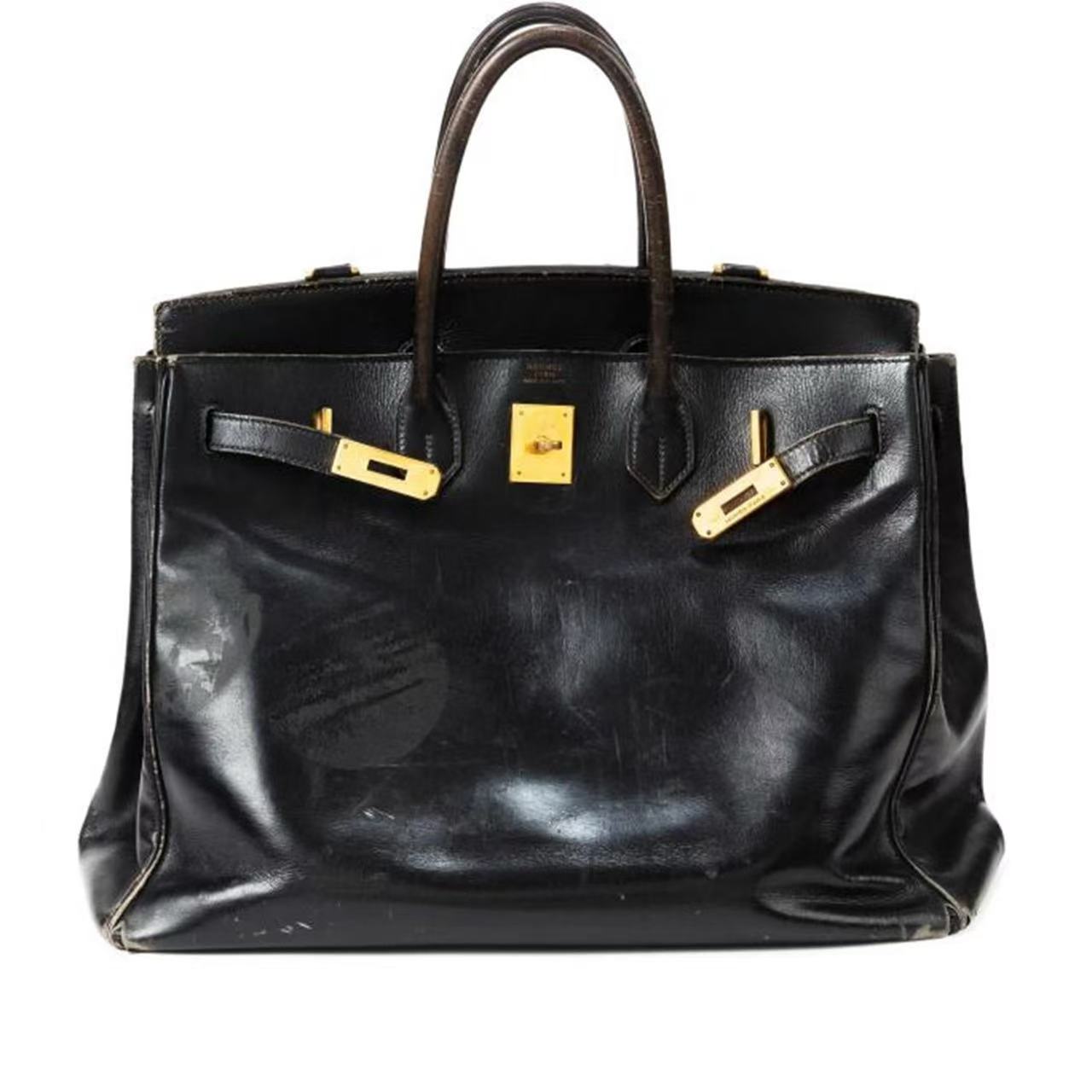
全球包王诞生!爱马仕首款铂金包被神秘买家7000万拍下!
第一财经· 2025-07-14 13:06
Core Viewpoint - The auction of the first prototype of the Hermès Birkin bag reached a record high of 7 million euros, highlighting the increasing value and demand for luxury handbags in the market [1][3]. Auction Highlights - The black leather handbag was custom-made by Hermès in 1984 for the late British singer and actress Jane Birkin, and it was auctioned at Sotheby's in Paris [1][4]. - The bidding started at 1.7 million euros and quickly escalated, with the final bid coming from a private collector in Japan [1][4]. - Including commissions and fees, the total cost for the buyer was approximately 8.58 million euros [1]. Market Trends - Luxury handbags, particularly from brands like Hermès, Chanel, and Louis Vuitton, are frequently auctioned, with rare items often fetching prices several times their original value [5][6]. - The auction market for handbags has shown resilience, driven by the scarcity of limited editions and discontinued items, as well as the cultural significance associated with these brands [6]. Brand Performance - Hermès has a history of annual price increases, with the average price of the Birkin bag rising by 14.2% since its launch, making it a profitable asset [9]. - In the 2024 fiscal year, Hermès reported revenues of 15.2 billion euros, a 15% increase year-over-year, with leather goods being the primary growth driver [10]. - The brand's first-quarter 2025 revenue was 4.13 billion euros, reflecting a 9% growth, with leather goods sales increasing by 10% [10].

全球包王诞生!日本买家豪掷7000万元买下爱马仕首款铂金包
Di Yi Cai Jing· 2025-07-14 11:05
Core Insights - The auction of the first prototype of the Hermès Birkin bag reached a record high of 7 million euros (approximately 58.64 million RMB), showcasing the brand's dominance in the luxury market [1][4] - The Birkin bag was originally designed in 1984 for Jane Birkin by then-CEO Jean-Louis Dumas, highlighting the brand's strong historical and cultural connections [3][5] - Hermès has consistently increased its prices annually, with an average increase of 14.2% for the Birkin bag since its launch, reinforcing its status as a valuable asset [6][7] Auction Highlights - The Birkin bag's auction began at 1.7 million euros and quickly escalated, demonstrating high demand and the bag's rarity [1] - The final bid, including fees, amounted to 8.5825 million euros (approximately 71.88 million RMB), setting a new record for Hermès bags at auction [1][4] - The auction reflects a broader trend where rare Hermès items often sell for multiples of their original prices, indicating strong market performance [4][5] Brand Performance - In the 2024 fiscal year, Hermès reported revenues of 15.2 billion euros, a 15% increase year-over-year, significantly exceeding market expectations [7] - The leather goods and saddlery segment remains Hermès' core business, contributing 6.46 billion euros in sales, with an 18% growth [7] - The first quarter of 2025 showed continued growth, with revenues of 4.13 billion euros, a 9% increase, and a 10% growth in the leather goods segment [7]