能源

Search documents
学习规划建议每日问答丨为什么要加强基础设施统筹规划
Xin Hua She· 2025-11-28 13:06
Core Viewpoint - The article emphasizes the importance of strengthening infrastructure planning and construction in China, focusing on optimizing layout, promoting integration, and enhancing safety resilience and operational sustainability [1] Group 1: Infrastructure Planning and Coordination - The need for coordinated planning and construction of infrastructure across various fields and regions is highlighted, addressing structural issues such as imbalances in development between urban and rural areas, and between different regions [2] - Specific areas of concern include the outdated infrastructure in rural areas, lack of essential facilities, and the disparity in investment between public and commercial infrastructure [2] Group 2: Integration and Sharing of Infrastructure - The article notes significant achievements in infrastructure development, such as the world's largest high-speed rail and highway networks, but points out the persistent challenges in collaborative planning and integration [3] - Issues like increased construction costs and reduced operational efficiency due to fragmented infrastructure development are discussed, emphasizing the need for integrated infrastructure systems [3] Group 3: Safety Resilience and Security - The article discusses the advancements in construction technology leading to enhanced safety in major infrastructure projects, yet it stresses the need for improved resilience against natural disasters and emergencies [4] - Concerns are raised regarding the adequacy of infrastructure in meeting national security requirements and the reliance on imported technology, which affects operational safety [4] Group 4: Sustainability of Infrastructure Operations - The article addresses issues such as excessive forward-looking designs and the overheating of investments in new infrastructure, advocating for sustainable operational practices [5] - It emphasizes the importance of balancing new infrastructure development with efficient utilization and the need for modernization and digital transformation of traditional infrastructure [5]
今夜美股前瞻 | 芝商所交易暂停、黄金波动剧烈,特朗普欲调税收政策,三大股指期货齐涨
Jin Rong Jie· 2025-11-28 13:03
Market Overview - US stock index futures are all up, with Dow futures rising by 0.11%, S&P futures by 0.1%, and Nasdaq futures by 0.18% [1] - Major European stock indices are also up, with the Euro Stoxx 50 rising by 0.1%, FTSE 100 by 0.18%, CAC 40 by 0.23%, and DAX 30 by 0.19% [1] - WTI crude oil is up by 0.73%, priced at $59.08 per barrel, while Brent crude oil is down by 0.1%, priced at $62.81 per barrel [1] Market Events - CME suspended futures and options trading due to cooling issues at its data center, affecting multiple commodities, with analysts expecting significant price volatility upon resumption [1] - Spot gold prices experienced high volatility, with the bid-ask spread exceeding $20, dropping to $4154 per ounce before recovering to $4163.58 per ounce [1] - Trump proposed using tariff revenues to significantly reduce income taxes for low- and middle-income earners, indicating potential disruptive changes to US federal tax policy [1] - The China Smelters Purchase Team (CSPT) reached a consensus to reduce copper concentrate production capacity by over 10% for the 2026 fiscal year to combat unreasonable pricing and malicious competition [1] - Russia has received details of a peace plan agreed upon by the US and Ukraine, which will be discussed next week [1] Company News - The European Commission has received notification from Apple that its advertising and mapping services meet the thresholds of the Digital Markets Act (DMA), with a decision expected within 45 working days [1] - Nanwei Semiconductor (NVTS.US) signed a strategic distribution agreement with WT Microelectronics to integrate their distribution networks in Asia, accelerating the transition to high-power markets such as AI and energy [1] Economic Data - Germany's seasonally adjusted unemployment rate for November is 6.3%, in line with expectations and previous values, with a slight increase in seasonally adjusted unemployment by 0.1 thousand, lower than the expected 0.5 thousand [1] - France's GDP for Q3 grew by 0.9% year-on-year, matching expectations, and increased by 0.5% quarter-on-quarter [1]
南网能源(003035.SZ)子公司拟挂牌转让部分集中供冷项目相关资产
智通财经网· 2025-11-28 09:57
智通财经APP讯,南网能源(003035.SZ)公告,公司下属南方电网综合能源(广州)有限公司拟通过北京产 权交易所转让部分资产,转让价格不低于资产评估机构对标的资产的评估价值。本次拟转让的资产是位 于海南省三沙市永兴岛内的集中供冷项目机器设备和材料。标的资产采用成本法进行评估,于评估基准 日2025年9月4日的评估价值为80.99万元(含增值税)。 ...

贵州习水:工业与能源双轮驱动 谱写高质量发展篇章
Sou Hu Cai Jing· 2025-11-28 08:38
Core Insights - The article highlights the industrial transformation of Xishui County, focusing on the development of the liquor industry as a core driver, supported by green energy transition and technological innovation [1][5][11] Industrial Development - Xishui is advancing its liquor industry with significant upgrades, including major projects like the Xijiu "14th Five-Year" plan and the construction of ten key projects, which will add 20,000 tons of liquor production capacity in 2024 [1][3] - The packaging industry is also thriving, with two major packaging parks attracting 27 enterprises, aiming for a production value of 1.3 billion yuan in 2024 and achieving a local supply rate of 60% [3] Energy Transition - Xishui is leveraging its substantial coal and shale gas resources, with 5.03 billion tons of coal and 205.8 billion cubic meters of shale gas, to transition its energy sector towards green and intelligent practices [5][7] - The "Gasification Xishui" project has achieved an annual shale gas production capacity of 125 million cubic meters, with a gas pipeline network of 218 kilometers enhancing clean energy utilization [7] Technological Innovation and Investment - The county is focusing on technological innovation and optimizing the business environment to drive industrial upgrades, attracting investments from major companies with a total planned investment of 37.621 billion yuan across 61 projects [9][11] - Xishui has successfully cultivated specialized and innovative enterprises, with 8 specialized enterprises, 10 innovative SMEs, and 7 high-tech companies established [11] Infrastructure Development - The electrical grid is being upgraded, with new key projects improving rural power supply reliability to 99.89%, and a robust charging network for electric vehicles has been established [9]

2025 年第四季度市场展望:从贸易战到降息与刺激政策
Sou Hu Cai Jing· 2025-11-28 07:16
Core Insights - The global economy is seeking a new balance amid trade easing and policy stimulus, with significant market rebounds observed in Q3 2025 driven by improved US-China trade relations, optimism in artificial intelligence, and expectations of Federal Reserve rate cuts [1][2][5]. Market Performance - Global stock markets saw a notable rebound in Q3 2025, with emerging markets outperforming developed markets, particularly in Asia, where China (+20.8%), Taiwan (+14.7%), South Korea (+12.8%), and Thailand (+17.6%) led the gains. In contrast, India experienced a decline of 6.6% due to valuation pressures and foreign capital outflows [5][6]. - The fixed income market showed volatility but overall upward movement, with US Treasury yields declining across the board, particularly the 10-year yield which fell by 8 basis points to 4.16%. Emerging market dollar bonds performed strongly, achieving a 4.8% increase [6][11]. - The commodity market saw significant gains in gold (+16.4%) and precious metals (+17.4%), while energy and agricultural sectors lagged [11]. Economic Outlook - Future months may see a slowdown in global economic growth, but policy stimulus is expected to drive a rebound in early 2026. The US economy may weaken due to stagnant job growth and rising tariff costs, although investments in new infrastructure and technology sectors provide some support [2][14]. - China's recent credit growth slowdown indicates a need for stronger domestic demand, but upcoming policy measures may inject new momentum into the economy. The government is expected to set a GDP growth target of at least 4.5% for the next year [15][34]. Monetary Policy - The Federal Reserve is likely to continue cutting rates, with expectations of a 25 basis point cut in October and another in December. Other major central banks are anticipated to follow suit with easing measures [3][20]. - Asian countries are implementing new rounds of stimulus to counter economic pressures, with China expanding credit support, India reforming tax policies, and Indonesia providing cash transfers to households [32][33]. Inflation Trends - Inflation patterns are diverging globally, with the US expected to see a gradual rise in inflation to around 3.1%-3.2% due to tariff effects, while many Asian economies maintain lower inflation levels, allowing for more room for monetary easing [2][16]. - In China, inflation is projected to remain low, while Japan and India are managing inflation within target ranges through policy adjustments [16][34].
冠通期货早盘速递-20251128
Guan Tong Qi Huo· 2025-11-28 05:25
Group 1: Hot News - The US Trade Representative's Office extended the tariff exemptions on China's technology transfer and intellectual property issues until November 10, 2026, which were originally set to expire on November 29, 2025 [2] - The National Development and Reform Commission will continue to address disorderly price competition among enterprises to maintain market price order [2] - From January to October 2025, the total profits of industrial enterprises above designated size in China reached 5950.29 billion yuan, a year - on - year increase of 1.9%, but in October, the profits decreased by 5.5% year - on - year [2] - The State Administration for Market Regulation will strengthen anti - monopoly law enforcement in key areas and fair competition reviews [2] - Russian President Putin said the US peace plan could be the basis for a Ukraine agreement, and the US delegation will visit Moscow next week [3] Group 2: Sector Performance - Key sectors to watch include lithium carbonate, coke, coking coal, Shanghai copper, and Shanghai gold [4] - Night - trading performance shows that different commodity futures sectors had varying degrees of price changes, with precious metals up 30.01%, non - metallic building materials up 3.02%, and so on [4] Group 3: Sector Positions - The chart shows the changes in commodity futures sector positions in the past five days, with different trends for each sector [5] Group 4: Performance of Major Asset Classes - In the equity market, the Shanghai Composite Index had a daily increase of 0.29%, a monthly decrease of 2.01%, and a yearly increase of 15.62%. Other indices also had their respective performance [6] - In the fixed - income market, 10 - year, 5 - year, and 2 - year treasury bond futures all had negative returns to varying degrees [6] - In the commodity market, the CRB commodity index, WTI crude oil, London spot gold, LME copper, and the Wind commodity index had different price changes [6] - Other assets such as the US dollar index and CBOE volatility index also showed their own trends [6]
“科技+港股红利”两手抓!盘中获资金抄底的创业板人工智能ETF华夏(159381)翻红,港股央企红利ETF(513910)四季度以来净流入超10亿
Ge Long Hui· 2025-11-28 03:57
Group 1 - The artificial intelligence ETF from the ChiNext market, managed by Huaxia, rebounded by 0.79% after a previous decline, with a net subscription of 12 million units and an estimated net inflow of 19.968 million yuan [1] - The technology and Hong Kong dividend strategies are seeing increased investment as they decline, with the ChiNext AI ETF experiencing a cumulative pullback of over 12% from October 29 to November 24, yet attracting a net inflow of 349 million yuan during this period [1] - The Hong Kong central enterprise dividend ETF has also seen a cumulative pullback of 4% since November 13, with continuous buying over 11 trading days, resulting in a net inflow of 307 million yuan, and over 1 billion yuan net inflow since the fourth quarter [1] Group 2 - The ChiNext AI ETF has a significant exposure to the Google chain, with 48% of its component stocks linked to it, providing a stable response to fluctuations between the Nvidia and Google chains [1] - The Hong Kong dividend strategy funds are favored due to their lower valuation compared to A-share dividend indices and higher dividend yields, making them attractive to institutional investors looking to secure profits towards year-end [1] - The ChiNext AI ETF has over 50% CPO content and the lowest fee rate among AI indices, with key stocks including Xinyiseng, Zhongji Xuchuang, Tianfu Communication, and Runze Technology [2]

宏观日报:地产下游小幅回暖-20251128
Hua Tai Qi Huo· 2025-11-28 03:14
Report Summary 1) Report Industry Investment Rating No information provided. 2) Core Viewpoints - The downstream real estate sector shows a slight recovery, while the service industry's domestic flight frequency experiences a minor decline [1][3]. - Upstream nickel and egg prices rise, while international crude oil and liquefied natural gas prices fluctuate downward. Mid - stream PX, urea, and PTA prices fall, power plant coal consumption is at a low level, and asphalt construction is in the off - season [3]. 3) Summary by Related Catalogs A. Mid - view Event Overview - **Production Industry**: At the National Development and Reform Commission's November press conference on November 27, the commission responded to market hot - spot issues such as humanoid robots and the expansion of infrastructure REITs project issuance. It aims to prevent high - repetition humanoid robot products from flooding the market and promote the healthy and standardized development of the embodied intelligence industry [1]. - **Service Industry**: Li Qiang chaired an executive meeting of the State Council to deploy the promotion of provincial - level overall planning of basic medical insurance. This is an important measure to improve the universal medical insurance system [1]. B. Industry Data - **Upstream**: - **Non - ferrous Metals**: Nickel prices rise slightly, with the spot price on November 27 at 119,366.7 yuan/ton, a 1.98% year - on - year increase [3][38]. - **Agriculture**: Egg prices recover, with the spot price on November 27 at 6.4 yuan/kg, a 2.74% year - on - year increase [3][38]. - **Energy**: International crude oil and liquefied natural gas prices fluctuate downward. On November 27, the spot price of WTI crude oil is 58.7 dollars/barrel, a 1.33% year - on - year decrease; the spot price of Brent crude oil is 62.5 dollars/barrel, a 1.53% year - on - year decrease; and the spot price of liquefied natural gas is 4,084 yuan/ton, a 2.34% year - on - year decrease [3][38]. - **Mid - stream**: - **Chemical Industry**: PX, urea, and PTA prices fall. On November 27, the spot price of PTA is 4,628.3 yuan/ton, a 0.61% year - on - year decrease; the spot price of polyethylene is 6,980 yuan/ton, a 0.26% year - on - year decrease [3][38]. - **Energy**: Power plant coal consumption is at a low level [3]. - **Infrastructure**: Asphalt construction is in the off - season [3]. - **Downstream**: - **Real Estate**: The sales of commercial housing in first - tier cities rise slightly [3]. - **Service**: The number of domestic flights decreases slightly [3].
债市早报:10月全国规模以上工业企业利润同比下降5.5%;债市延续走弱
Sou Hu Cai Jing· 2025-11-28 03:10
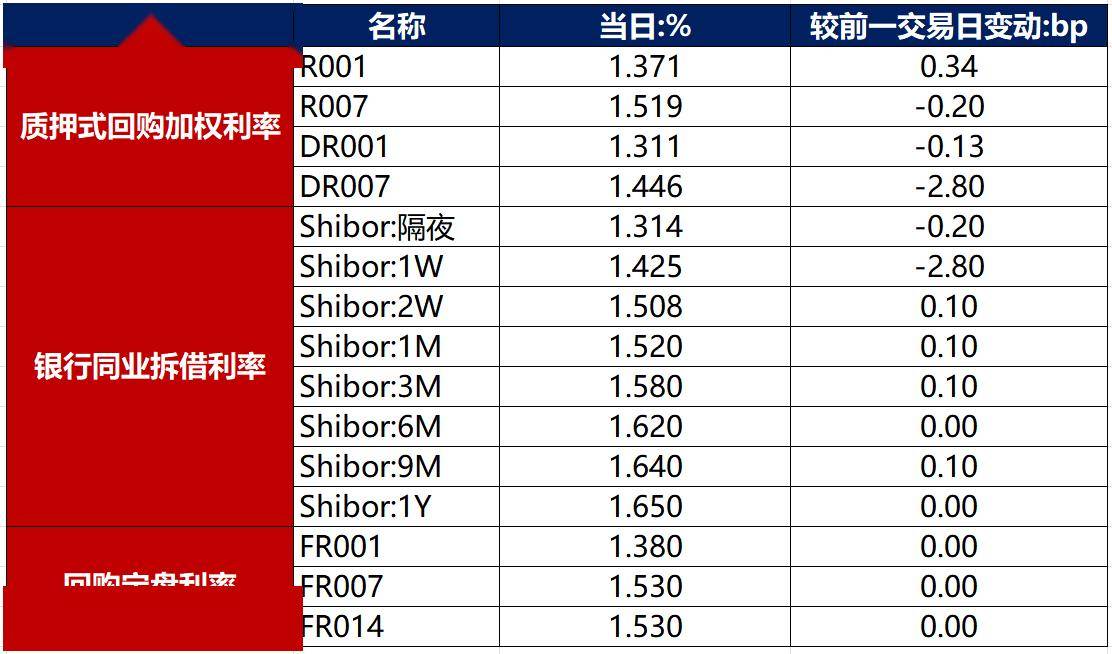
Core Insights - The overall financial environment remains loose, with the bond market continuing to weaken and most convertible bonds experiencing declines. Major European economies have seen a general rise in 10-year government bond yields [1][4]. Group 1: Domestic News - The State Council, led by Premier Li Qiang, held a meeting to discuss high-quality development and healthcare insurance coordination, emphasizing the need to enhance grassroots medical service capabilities [2]. - In October, profits of large-scale industrial enterprises in China fell by 5.5% year-on-year, with total profits from January to October reaching 59,502.9 billion yuan, marking a 1.9% increase [2]. - The National Development and Reform Commission (NDRC) is actively promoting the expansion of infrastructure REITs to include more sectors such as urban renewal, hotels, and commercial office facilities [2]. Group 2: International News - The UK government, under Chancellor Reeves, announced a new budget plan that includes an additional £26 billion in taxes, raising the overall tax burden to a historic high of 38% of GDP by the end of the parliamentary term. This has led to significant political backlash [4]. Group 3: Commodity Market - International crude oil futures prices continued to rise, with Brent crude for January closing up 0.33% at $63.34 per barrel, while NYMEX natural gas prices increased by 0.35% to $4.634 per ounce [5]. Group 4: Financial Market Operations - On November 27, the central bank conducted a 7-day reverse repurchase operation of 356.4 billion yuan at a fixed rate of 1.40%, resulting in a net cash injection of 56.4 billion yuan for the day [6][7]. - The money market showed a downward trend in rates, with DR001 falling by 0.13 basis points to 1.311% and DR007 down by 2.80 basis points to 1.446% [7][8]. Group 5: Bond Market Dynamics - The bond market continued to show weakness, with the yield on the 10-year government bond rising by 1.00 basis point to 1.8440% and the 10-year policy bank bond yield increasing by 1.35 basis points to 1.9175% [9]. - In the secondary market, seven industrial bonds saw price deviations exceeding 10%, with significant declines in several bonds issued by Vanke [11]. Group 6: Convertible Bonds - The convertible bond market experienced a collective decline, with major indices such as the CSI Convertible Bond Index falling by 0.53% and trading volume decreasing significantly [14]. - On November 27, 401 convertible bonds were traded, with 319 declining and only 72 increasing in value, indicating a bearish trend in the market [14][15].

中港IPO全球占比显著提升,工业科技先进制造领跑,500质量成长ETF(560500)盘中涨0.27%
Xin Lang Cai Jing· 2025-11-28 02:42
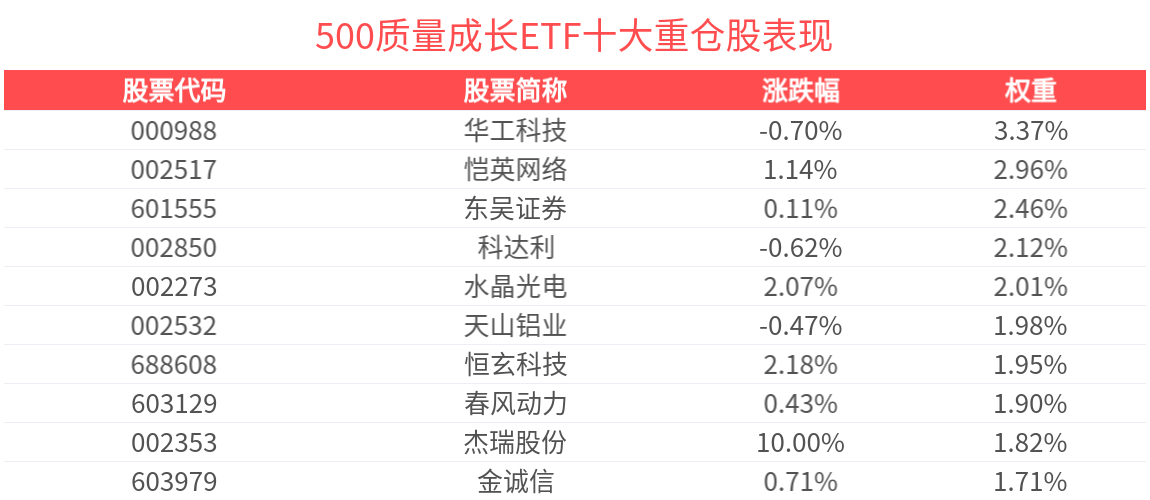
Core Insights - The report by Ernst & Young highlights a growth trend in IPO activities in mainland China and Hong Kong, with A-shares and Hong Kong markets accounting for 16% and 33% of global IPO numbers and fundraising amounts respectively [1] - Chinese companies secured five positions in the global top ten IPOs, with an increase in numbers compared to 2024, primarily in the automotive, mining, energy, and advanced manufacturing sectors [1] - The industrial, technology, and materials sectors are the top three in terms of IPO quantity [1] Market Performance - The A-share market has shown signs of recovery amidst fluctuations, with overall market confidence improving and a strong technical outlook [2] - The "14th Five-Year Plan" policies, capital market developments, and declining interest rates are positively influencing the market, indicating a phase of recovery [2] - Third-quarter reports indicate moderate improvements in fundamentals, which may drive further market recovery [2] Index and ETF Information - The CSI 500 Quality Growth Index selects 100 companies with high profitability, sustainable earnings, and strong cash flow from the CSI 500 Index, providing diverse investment options [2] - As of October 31, 2025, the top ten weighted stocks in the CSI 500 Quality Growth Index accounted for 21.64% of the index [2] - The top ten stocks include Huagong Technology, Kaiying Network, Dongwu Securities, Tianshan Aluminum, Keda Li, Crystal Optoelectronics, Shunluo Electronics, Chuangfeng Power, Changjiang Securities, and Shanghai Electric [2][4]