
家用电器

Search documents
股指低开高走,金融板块表现强势
Hua Tai Qi Huo· 2025-06-04 02:47
FICC日报 | 2025-06-04 股指低开高走,金融板块表现强势 市场分析 特朗普提高关税。国内方面,美方称中方违反日内瓦会谈共识,对此,外交部发言人林剑表示,商务部发言人此 前已就此阐明中方严正立场。日内瓦共识是中美双方在相互尊重、平等协商的原则下达成的。美方在毫无事实根 据的情况下,对中方抹黑指责,出台对华芯片出口管制、暂停对华芯片设计软件销售、宣布撤销中国留学生签证 等极端打压措施,严重破坏日内瓦共识,也损害了中方正当权益。中方对此坚决反对,已提出严正交涉。林剑强 调,施压和胁迫不是同中方打交道的正确方式。我们督促美方尊重事实,停止散布虚假信息,纠正有关错误做法, 以实际行动维护双方达成的共识。海外方面,特朗普宣布将进口钢铁和铝及其衍生制品的关税从25%提高至50%, 该关税政策自美国东部时间2025年6月4日凌晨00时01分起生效。美国从英国进口的钢铝关税仍将维持在25%。 股指上涨。现货市场,A股三大指数低开高走,上证指数涨0.43%收于33631.98点,创业板指涨0.48%。行业方面, 板块指数涨多跌少,美容护理、纺织服饰、银行行业领涨,家用电器、钢铁、煤炭行业跌幅居前。当日沪深两市 成交 ...
6月3日计算机、医药生物、家用电器等行业融资净买入额居前
Zheng Quan Shi Bao Wang· 2025-06-04 01:56
| 纺织服饰 | 65.29 | -0.31 | -0.47 | | --- | --- | --- | --- | | 轻工制造 | 122.71 | -0.32 | -0.26 | | 美容护理 | 56.30 | -0.67 | -1.17 | | 商贸零售 | 209.95 | -0.72 | -0.34 | | 农林牧渔 | 251.04 | -2.30 | -0.91 | | 电子 | 2086.68 | -2.58 | -0.12 | | 银行 | 528.12 | -2.62 | -0.49 | 注:本文系新闻报道,不构成投资建议,股市有风险,投资需谨慎。 (文章来源:证券时报网) 截至6月3日,市场最新融资余额为17926.88亿元,较上个交易日环比增加34.52亿元,分行业统计,申万 所属一级行业有22个行业融资余额增加,计算机行业融资余额增加最多,较上一日增加6.74亿元;融资 余额增加居前的行业还有医药生物、家用电器、公用事业等,融资余额分别增加6.48亿元、5.85亿元、 5.03亿元;融资余额减少的行业有9个,银行、电子、农林牧渔等行业融资余额减少较多,分别减少2.62 亿元、2. ...
11股受融资客青睐,净买入超亿元
Zheng Quan Shi Bao Wang· 2025-06-04 01:34
证券时报·数据宝统计显示,具体到个股,6月3日共有1901只股获融资净买入,净买入金额在千万元以 上的有337只,其中11只融资净买入额超亿元。格力电器融资净买入额居首,当日净买入2.99亿元,其 次是比亚迪、光启技术,融资净买入金额分别为2.76亿元、2.39亿元,融资净买入金额居前的还有美的 集团、五粮液、国电南瑞等。 分行业统计,获融资客净买入超亿元个股中,食品饮料、汽车、家用电器等行业最为集中,分别有2 只、2只、2只个股上榜。板块分布上,大手笔净买入个股中,主板有9只,创业板有2只。 融资客大手笔净买入个股中,从最新融资余额占流通市值比例看,算术平均值为2.87%,融资余额占比 最高的是天阳科技,该股最新融资余额6.61亿元,占流通市值的比例为8.96%,融资余额占比较高的还 有光启技术、赛力斯、比亚迪,占比分别为6.93%、4.34%、3.17%。(数据宝) 6月3日融资客净买入金额排名 截至6月3日,市场融资余额合计1.79万亿元,较前一交易日增加34.52亿元,其中,沪市融资余额 9065.40亿元,较前一交易日增加14.74亿元;深市融资余额8807.56亿元,较前一交易日增加19.81亿元 ...






两融余额小幅上升 较前一交易日增加35.42亿元
Zheng Quan Shi Bao Wang· 2025-06-04 01:26
6月3日沪指上涨0.43%,市场两融余额为18044.88亿元,较前一交易日增加35.42亿元。 证券时报·数据宝统计显示,截至6月3日,沪市两融余额9147.66亿元,较前一交易日增加15.17亿元;深 市两融余额8843.29亿元,较前一交易日增加20.26亿元;北交所两融余额53.94亿元,较前一交易日减少 224.57万元;深沪北两融余额合计18044.88亿元,较前一交易日增加35.42亿元。 | | 份 | | | | | | --- | --- | --- | --- | --- | --- | | 301096 | 百诚医 | 21061.04 | 24.85 | 7.06 | 医药生物 | | | 药 | | | | | | 600350 | 山东高 | 3323.58 | 24.74 | -2.10 | 交通运输 | | | 速 | | | | | | 001326 | 联域股 | 10054.93 | 24.59 | 0.89 | 家用电器 | | | 份 | | | | | | 833943 | 优机股 | 1306.50 | 24.30 | 8.14 | 机械设备 | | | 份 | ...
市场全天震荡反弹,三大指数小幅上涨
Dongguan Securities· 2025-06-04 00:33
Market Overview - The market experienced a slight rebound with all three major indices closing higher, with the Shanghai Composite Index at 3361.98, up 0.43% [1] - The total trading volume in the Shanghai and Shenzhen markets reached 1.14 trillion, an increase of 22.3 billion compared to the previous trading day [4] Sector Performance - The top-performing sectors included Beauty Care (up 3.86%), Textile and Apparel (up 2.53%), and Banking (up 1.98%) [1] - Conversely, the sectors that underperformed were Household Appliances (down 2.10%), Steel (down 1.37%), and Coal (down 0.84%) [1] Concept Indices - Notable concept indices that performed well included the China-South Korea Free Trade Zone (up 4.23%), Cell Immunotherapy (up 3.87%), and Football Concept (up 3.56%) [2] - Underperforming concept indices included Special Steel Concept (down 0.93%) and Medical Waste Treatment (down 0.51%) [2] Future Outlook - The market is expected to maintain a range-bound and consolidating trend, with a focus on sectors such as Finance, Pharmaceutical Biology, TMT (Technology, Media, and Telecommunications), and Non-ferrous Metals [4] - The upcoming mid-year performance expectations are anticipated to drive structural market trends, with fundamentals becoming a key factor [4]
家用电器行业今日净流出资金4.40亿元,美的集团等12股净流出资金超千万元
Zheng Quan Shi Bao Wang· 2025-06-03 10:55
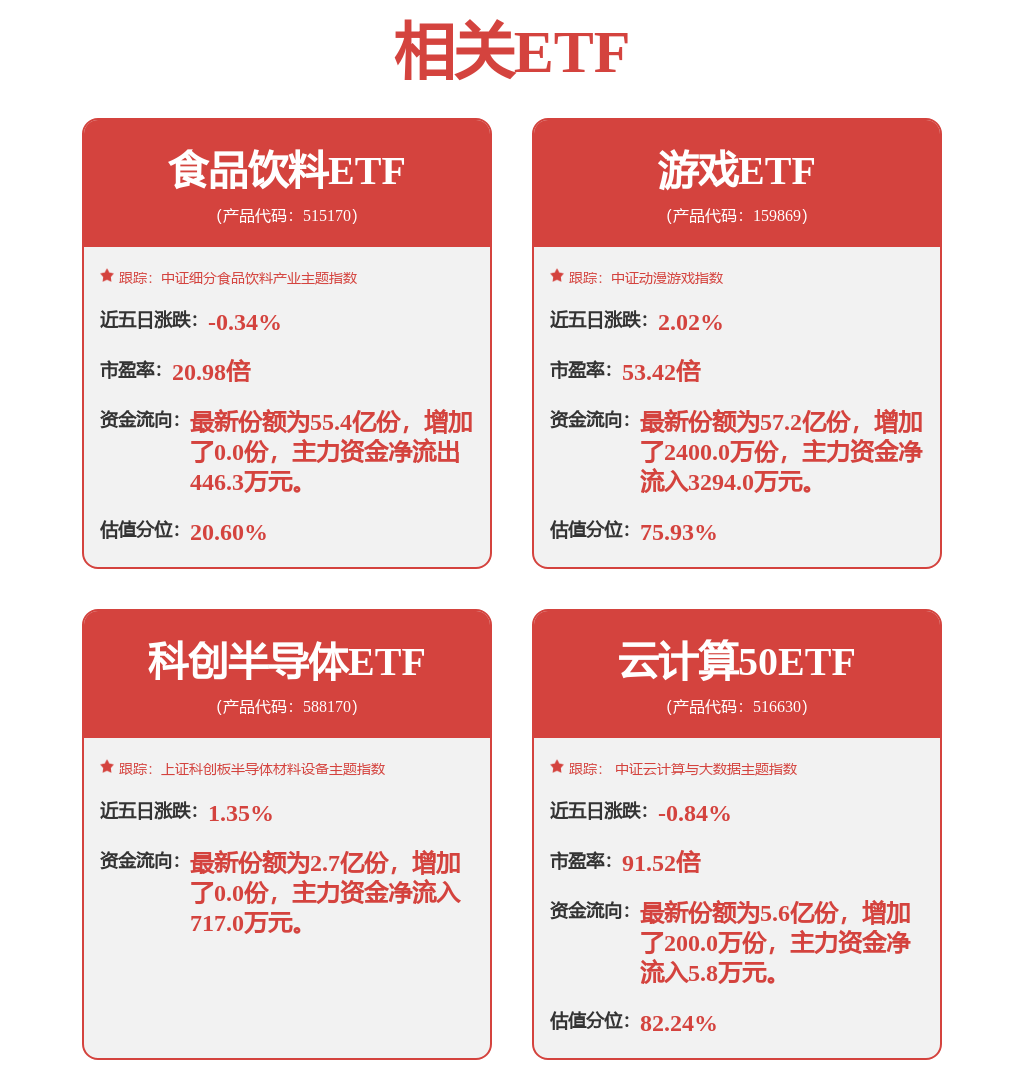
Market Overview - The Shanghai Composite Index rose by 0.43% on June 3, with 20 out of the 28 sectors in the Shenwan classification experiencing gains. The leading sectors were Beauty Care and Textile & Apparel, with increases of 3.86% and 2.53% respectively [1] - The Household Appliances sector had the largest decline, falling by 2.10%, with a net outflow of 440 million yuan in capital [1] Household Appliances Sector Analysis - In the Household Appliances sector, there were 95 stocks, with 44 rising and 43 falling. Two stocks hit the daily limit up [1] - The stocks with the highest net inflow of capital included: - United Precision: 39.76 million yuan - Sichuan Changhong: 28.99 million yuan - *ST Tongzhou: 26.59 million yuan [1] - The stocks with the largest net outflow of capital included: - Midea Group: 108 million yuan - Haier Smart Home: 79.02 million yuan - Gree Electric: 65.44 million yuan [1] Key Stock Performance in Household Appliances - Midea Group: -3.98% with a turnover rate of 0.81% and a net outflow of 107.64 million yuan [1] - Haier Smart Home: -1.24% with a turnover rate of 0.68% and a net outflow of 79.02 million yuan [1] - Gree Electric: -3.10% with a turnover rate of 1.33% and a net outflow of 65.44 million yuan [1] ETF Performance - Food and Beverage ETF (Product Code: 515170): -0.34% over the last five days, with a PE ratio of 20.98 and a net outflow of 4.46 million yuan [4] - Gaming ETF (Product Code: 159869): +2.02% over the last five days, with a PE ratio of 53.42 and a net inflow of 32.94 million yuan [4] - Cloud Computing 50 ETF (Product Code: 516630): -0.84% over the last five days, with a PE ratio of 91.52 and a net inflow of 0.058 million yuan [5]


耐用消费产业行业研究:高低切布局传统核心资产,新消费仍是全年主线
SINOLINK SECURITIES· 2025-06-03 04:40
2025 年 06 月 02 日 耐用消费产业行业研究 买入(维持评级) 行业周报 证券研究报告 国金证券研究所 分析师:赵中平(执业 S1130524050003) zhaozhongping@gjzq.com.cn 分析师:杨欣(执业 S1130522080010) yangxin1@gjzq.com.cn 分析师:王刚(执业 S1130524080001) wang_g@gjzq.com.cn 分析师:张杨桓(执业 S1130522090001) zhangyanghuan@gjzq.com.cn 消费中观策略&投资建议 ①基本面有向好变化的低位传统核心资产,资本市场逻辑是高低切,新消费已经将表观 30-60XPE 的高标估值体 系确立,传统核心资产的估值水位也有望在流动性宽松叠加公募基准欠配背景下向上修复,尤其是在地产高频数 据企稳经济有自发筑底倾向&传统消费 25Q2 开始财报基数下降景气度增速有自发回升趋势背景下,建议关注安踏 体育,雅迪控股,裕同科技等;②坚定持有兑现度较高的新消费龙头,建议关注泡泡玛特,康耐特光学等。预计 消费类资金有望向两个方向切换;③积极拥抱新消费赛道或具备新消费思维的传统 ...




券商金股解析月报(2025年6月)-20250603
KAIYUAN SECURITIES· 2025-06-03 03:33
Quantitative Models and Construction Methods - **Model Name**: "Preferred Gold Stock Portfolio" **Model Construction Idea**: The model leverages the superior performance of newly introduced gold stocks and incorporates the "Surprise Earnings Factor" (SUE factor) to select stocks with outstanding earnings surprises [26] **Model Construction Process**: 1. Use newly introduced gold stocks as the sample pool 2. Select the top 30 stocks with the highest earnings surprises based on the SUE factor 3. Weight the portfolio based on the number of recommendations from brokers **Model Evaluation**: The model demonstrates better performance compared to the overall gold stock portfolio, with higher annualized returns and lower maximum drawdowns [26][28] Model Backtesting Results - **Preferred Gold Stock Portfolio**: - May Return: -1.1% - 2025 YTD Return: 6.5% - Annualized Return: 19.7% - Annualized Volatility: 25.4% - Return-to-Volatility Ratio: 0.78 - Maximum Drawdown: 24.6% [28][29] - **Overall Gold Stock Portfolio**: - May Return: 0.9% - 2025 YTD Return: 5.9% - Annualized Return: 11.0% - Annualized Volatility: 23.5% - Return-to-Volatility Ratio: 0.47 - Maximum Drawdown: 42.6% [24][28] Quantitative Factors and Construction Methods - **Factor Name**: Surprise Earnings Factor (SUE Factor) **Factor Construction Idea**: The factor identifies stocks with earnings significantly exceeding market expectations, which are likely to outperform [26] **Factor Construction Process**: 1. Calculate the earnings surprise for each stock as the difference between actual earnings and consensus estimates 2. Rank stocks based on the magnitude of earnings surprises 3. Select the top-performing stocks with the highest earnings surprises [26] **Factor Evaluation**: The SUE factor shows strong stock selection capabilities, particularly within newly introduced gold stocks [26] Factor Backtesting Results - **SUE Factor**: Integrated into the "Preferred Gold Stock Portfolio," contributing to its superior performance metrics compared to other portfolios [26][28]






【盘中播报】55只A股封板 美容护理行业涨幅最大
Zheng Quan Shi Bao Wang· 2025-06-03 02:55
Market Overview - The Shanghai Composite Index increased by 0.14% as of 10:28 AM, with a trading volume of 470.90 billion shares and a turnover of 564.58 billion yuan, a decrease of 4.56% compared to the previous trading day [1] Industry Performance - The top-performing industries included: - Beauty Care: Increased by 3.21% with a transaction amount of 60.32 billion yuan, up 14.82% from the previous day, led by Beitaini with a rise of 12.83% [1] - Comprehensive: Increased by 1.90% with a transaction amount of 13.55 billion yuan, up 3.98%, led by Zhangzhou Development with a rise of 4.98% [1] - Non-ferrous Metals: Increased by 1.68% with a transaction amount of 203.46 billion yuan, up 42.48%, led by Western Gold with a rise of 10.03% [1] - The worst-performing industries included: - Household Appliances: Decreased by 1.57% with a transaction amount of 86.91 billion yuan, up 13.63%, led by Gree Electric with a decline of 3.02% [2] - Steel: Decreased by 1.55% with a transaction amount of 28.09 billion yuan, up 41.91%, led by Benxi Steel with a decline of 7.23% [2] - Coal: Decreased by 1.17% with a transaction amount of 30.97 billion yuan, up 49.83%, led by China Coal Energy with a decline of 3.27% [2] Stock Performance - A total of 3,065 stocks rose, with 55 hitting the daily limit up, while 2,094 stocks fell, with 5 hitting the daily limit down [1]

港股红利是否存在季节效应
Changjiang Securities· 2025-06-03 01:43
Group 1: Dividend Performance Analysis - Historically, the China Securities Dividend Index significantly underperformed in June and October since 2010, with excess return rates against the CSI 300 and the entire A-share market around 33%[16] - In June 2015 and 2018, dividends showed excess returns relative to the CSI 300 and the entire A-share market, benefiting from high volatility environments[8] - The Hong Kong Stock Connect High Dividend Index has consistently outperformed the CSI 300 Total Return Index and the Hong Kong Stock Connect Index, with monthly winning rates of 30% in January and October, which are the lowest for the year[27] Group 2: Seasonal Effects and Industry Performance - The months of March to May and August to December are favorable periods for the Hong Kong Stock Connect High Dividend Index to outperform the CSI 300 and the Hong Kong Stock Connect Index[28] - Most industries, except for consumer sectors like automobiles and home appliances, showed no excess returns in June and October since 2010, with utilities performing relatively better in June[22] - The banking and transportation sectors, along with high-weight industries like construction materials and real estate, experienced significant drawdowns in June[22] Group 3: Reasons for Seasonal Effects - The low winning rates for dividends in June and October are linked to the completion of annual and semi-annual reports, leading to a rise in market risk appetite post-reporting periods[30] - The phenomenon of "抢权行情" (right grabbing market) occurs around the ex-dividend dates, where stock prices may decline post-ex-dividend due to preemptive buying behavior[31] - The market's risk appetite tends to recover after the financial reporting periods, which negatively impacts the overall performance of dividend stocks[40]