
有色60ETF

Search documents
关注有色60ETF(159881)投资机会,连续5日迎资金净流入,有色行情具备支撑
Sou Hu Cai Jing· 2026-01-30 03:27
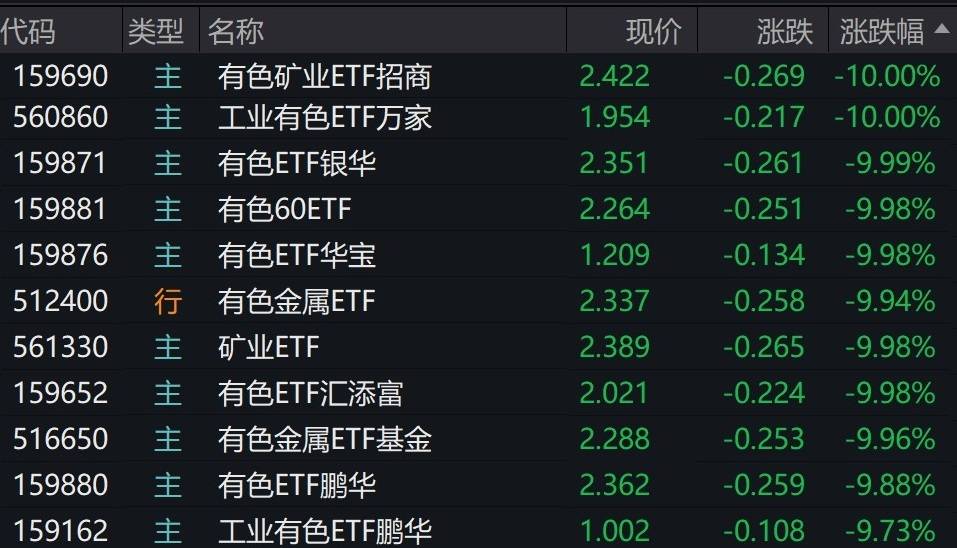
Group 1 - The core viewpoint of the article highlights that the non-ferrous metal market is experiencing a pullback, with the Non-Ferrous 60 ETF (159881) declining over 9% but still seeing net inflows for five consecutive days, indicating potential opportunities during this correction [1] - Huachuang Securities points out that factors such as interest rate cut expectations, the crisis of independence at the Federal Reserve, rising geopolitical tensions, and potential sell-offs of U.S. Treasuries are continuously catalyzing the precious metals market [1] - The demand for gold from central banks is providing strong support for gold prices, with the People's Bank of China having increased its gold holdings for 14 consecutive months, suggesting that both safe-haven and investment demand for gold may persist long-term, leading to a potential upward trend in prices [1] Group 2 - Silver is noted to be more susceptible to inventory squeeze crises and shifts in financial policy, with its price exhibiting greater elasticity due to the resonance of its industrial and financial attributes [1] - The company maintains a positive outlook on the electrolytic aluminum sector, expecting average industry profits to remain high, as companies are likely to have the ability and willingness to enhance shareholder returns due to low future capital expenditure intensity [1] - Although aluminum is entering a seasonal consumption lull, the long-term fundamentals and macro narrative remain unchanged, providing strong support for aluminum prices, with rigid supply expected in the coming years and a slow release of new projects [1]
有色金属概念股走低,多只有色相关ETF跌停
Sou Hu Cai Jing· 2026-01-30 02:36
Group 1 - The core viewpoint of the news is that non-ferrous metal stocks have declined significantly, with companies like Luoyang Molybdenum, Huayou Cobalt, China Aluminum, Shandong Gold, Yun Aluminum, and Zhongjin Gold hitting their daily limit down [1] - Affected by the market trend, many non-ferrous related ETFs also experienced limit down [1] Group 2 - Recent reports indicate that not only precious metals like gold and silver have seen significant increases, but industrial metals such as copper and aluminum, as well as energy metals like cobalt and lithium, have also performed well, with multiple metals reaching historical or phase highs [2] - The reasons for the super cycle in non-ferrous metals are primarily threefold: first, the Federal Reserve's interest rate cut cycle has led to a weakening dollar, which supports the rise in non-ferrous metal prices denominated in dollars; second, there is a supply-demand gap, with industrial metals like copper facing supply pressures due to declining ore grades, rising marginal costs, and previous reductions in mining capital expenditures, while demand is driven by AI, new energy, and infrastructure construction; third, domestic "anti-involution" policies are optimizing excess capacity, which helps promote supply-demand balance [2]

有色60ETF(159881)收涨超7%,金属价格上行与供需格局变化利好
Mei Ri Jing Ji Xin Wen· 2026-01-28 13:34
Core Viewpoint - The non-ferrous metal industry is entering a weak supply cycle, with global mining supply expected to maintain strong rigidity until 2028, benefiting from rising metal prices and changes in supply-demand dynamics [1] Group 1: Supply and Demand Dynamics - The supply side of the metal industry is experiencing a slowdown in growth due to policy controls, while the demand side is driven by the growth of new energy vehicles and robotics, leading to a continuous increase in demand for rare earths [1] - The lithium industry's supply-demand relationship is expected to improve, with the oversupply situation anticipated to ease [1] - The antimony industry is entering a strong prosperity cycle due to supply-demand mismatch, with a growing global supply-demand gap [1] Group 2: Price and Profitability Outlook - The supply-demand balance for magnesium and molybdenum is also tight, which is likely to drive up price levels and facilitate industry profitability recovery [1] - The liquidity cycle shift is expected to enhance the elasticity of metal prices, with the global central bank's balance sheet expansion potentially providing liquidity premiums for small metal varieties that are already in a tight supply-demand state [1] Group 3: ETF and Index Information - The non-ferrous 60 ETF (159881) tracks the CSI Non-Ferrous Metals Index (930708), which selects listed companies involved in the mining, smelting, and processing of non-ferrous metals, covering sub-industries such as copper, gold, aluminum, rare earths, and lithium [1]
1月28日盘后播报
Sou Hu Cai Jing· 2026-01-28 10:40
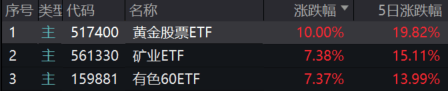
Market Overview - The A-share market showed a strong fluctuation today, with the Shanghai Composite Index rising by 0.27% to 4151.24 points, while the Shenzhen Component Index increased by 0.09%. However, the ChiNext Index and the Sci-Tech Innovation Board Index fell by 0.57% and 0.47% respectively. The total market turnover reached 2.99 trillion yuan, an increase of 70.8 billion yuan compared to the previous trading day [1] Sector Performance - The gold sector led the market, with significant gains in cyclical products such as non-ferrous metals, coal, oil, and chemicals. Conversely, sectors like machinery, photovoltaics, and pharmaceuticals experienced some pullbacks. Overall, the market sentiment was neutral to weak, with over 3600 stocks declining [1] - The gold price surged past the $5200 per ounce mark, driving up gold stocks and the non-ferrous metal sector. The Gold Stock ETF (517400) rose by 10.00%, the Mining ETF (561330) increased by 7.38%, and the Non-Ferrous 60 ETF (159881) gained 7.37%. The recent rise in gold prices is attributed to its safe-haven appeal and a renewed "sell America" trading logic, alongside geopolitical tensions and expectations of interest rate cuts [1] Commodity Market Dynamics - The Coal ETF (515220) rose by 4.75%, supported by soaring gold and silver prices, a bullish atmosphere in the non-ferrous sector, and ongoing price increases in chemicals. The rise in oil and natural gas prices has also led to expectations of higher coal prices. From a fundamental perspective, there is potential for reduced supply, and winter demand for electricity and heating is improving, leading to a gradual depletion of accumulated coal inventories [2] - The Oil ETF (561360) increased by 4.42%, influenced by heightened geopolitical uncertainties and a significant reduction in U.S. crude oil production due to extreme weather conditions, which saw a drop of 2 million barrels per day. This disruption in supply is expected to have a notable impact on short-term supply and demand dynamics [2] Debt Market Insights - The bond market has seen a continued rebound, with the 10-Year Treasury ETF (511260) rising by 0.47% over the past 10 days. The outlook remains for narrow fluctuations due to the K-shaped economic recovery, where old growth drivers are weakening while new ones are emerging. This situation complicates the assessment of the macroeconomic state [3] - The traditional economy's downturn may further support the bond market, as the profitability of long-term bonds has decreased, leading to significant outflows from trading positions. The remaining allocation is likely to focus more on economic realities. The current monetary policy stance is neutral, providing strong guidance for maintaining a reasonable range in the bond market [3]
现货黄金加速上冲站上5200美元/盎司,有色金属集体狂飙,黄金股票ETF10cm涨停
Sou Hu Cai Jing· 2026-01-28 07:22
Core Viewpoint - The recent surge in gold prices, surpassing $5200 per ounce, is driven by a combination of factors including geopolitical tensions, a weakening US dollar, and increased investor interest in precious metals as a safe haven [2][3]. Group 1: Market Performance - As of January 28, 2026, the Gold Stock ETF (517400) reached a limit up of 10%, while the Mining ETF (561330) and Nonferrous 60 ETF (159881) increased by 7.38% and 7.37% respectively [1]. - The implied volatility of gold has reached 33.13%, indicating a high level of market activity and potential overheating in the precious metals sector [3]. Group 2: Factors Driving Gold Prices - The recent comments by former President Trump regarding the dollar's fluctuations have contributed to a decline in the dollar index (DXY), which fell over 50 points, creating a favorable environment for gold prices to rise [2]. - The Bank of Thailand's announcement to prohibit short selling in gold trading has further supported the bullish sentiment in the gold market [2]. Group 3: Silver Market Dynamics - Silver prices are experiencing extraordinary growth, with a recent target price increase from Citigroup for silver set at $150 per ounce, up from $100 [2]. - The trading volume of silver ETFs is at historical highs, indicating strong investor interest and potential volatility in the silver market [10]. Group 4: Future Outlook - The macroeconomic environment suggests a potential supercycle for commodities, driven by increased infrastructure investment in China and expansionary fiscal policies in the US during the midterm election year [9]. - The current market sentiment is characterized by a mix of emotional trading and capital inflow, suggesting both long-term investment opportunities and short-term risks [12].
现货黄金冲破5000美元/盎司,有色板块集体狂飙
Sou Hu Cai Jing· 2026-01-26 12:18
Core Viewpoint - The recent surge in gold prices, surpassing $5100 per ounce, is attributed to geopolitical tensions and a shift towards de-dollarization, leading to significant gains in gold and metal ETFs [1][3]. Group 1: Market Performance - Gold stocks ETF (517400) increased by 6.95% with a year-to-date rise of 37.07% [1] - Mining ETF (561330) rose by 5.37% with a year-to-date increase of 27.46% [1] - Non-ferrous metals ETF (159881) saw a 4.27% rise with a year-to-date increase of 24.80% [1] - Gold stocks ETF recorded a year-to-date increase of 28.16% as of January 23, 2026 [5] Group 2: Reasons for Price Increase - Geopolitical disturbances and accelerated de-dollarization are driving the demand for gold [1] - Canadian Prime Minister Carney's remarks at the World Economic Forum highlighted a shift in global order, contributing to market uncertainty [1] - Several countries, including Denmark and India, have reduced their holdings of U.S. Treasury bonds, indicating a potential shift in reserve strategies [1] Group 3: Central Bank Activities - Poland's central bank approved a plan to purchase 150 tons of gold, emphasizing gold's unique role in reserve structures [2] - The Polish central bank aims to increase its gold holdings from 550 tons to 700 tons, reflecting a broader trend among central banks to bolster gold reserves [2] Group 4: Future Outlook - The long-term logic for gold remains strong, supported by a potential Fed rate cut and increasing global uncertainties [3] - Analysts predict that the average gold price could reach $4741.97 in 2026, a 38% increase from the previous year [4] - Some analysts forecast gold prices could peak at $7150 this year due to geopolitical risks and central bank purchases [4] Group 5: Investment Opportunities - The gold stocks ETF (517400) is seen as having significant recovery potential due to rising gold prices [5] - The mining ETF (561330) is recommended for investors looking to capitalize on the ongoing metal bull market [5] - Investors are encouraged to consider direct investments in physical gold through gold fund ETFs (518800) [6]

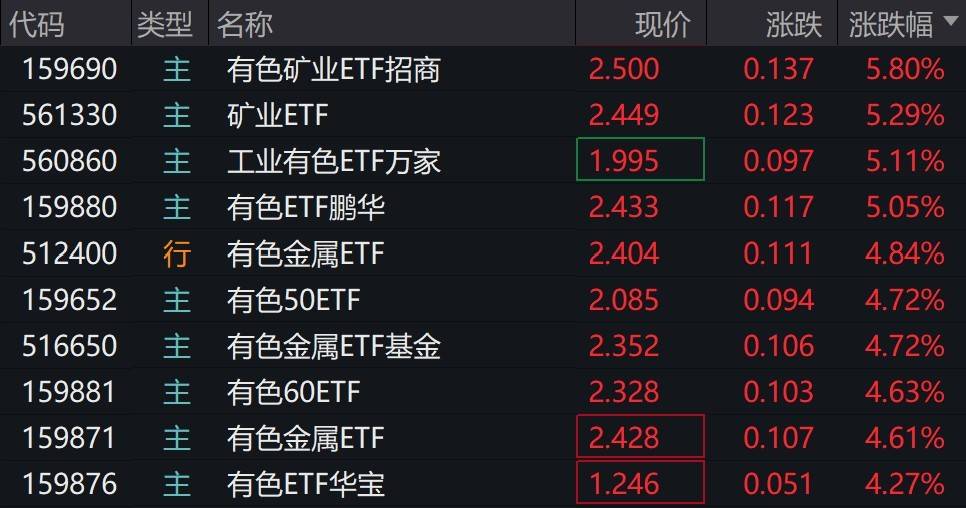
有色金属概念股走强,有色、矿业相关ETF涨约5%
Sou Hu Cai Jing· 2026-01-26 02:31
Group 1 - The core viewpoint of the news is that the non-ferrous metal sector is experiencing significant gains, with major stocks like Zhongjin Gold rising over 9%, and other companies such as Luoyang Molybdenum and Shandong Gold increasing by more than 7% [1] - Non-ferrous and mining-related ETFs have also seen an approximate increase of 5% due to market influences [1] Group 2 - Recent reports indicate that not only precious metals like gold and silver have risen significantly, but also industrial metals such as copper and aluminum, as well as energy metals like cobalt and lithium, have shown good growth, with multiple metals reaching historical or near-historical highs [2] - The super cycle in non-ferrous metals is attributed to three main factors: the weakening trend of the dollar due to the Federal Reserve's interest rate cuts, supply-demand gaps caused by declining ore grades and rising marginal costs in major mines, and domestic policies aimed at optimizing excess capacity [2]




有色60ETF(159881)涨超3.5%,工业金属或迎战略配置时点
Mei Ri Jing Ji Xin Wen· 2026-01-23 07:16
Group 1 - The core viewpoint is that industrial metals are entering a strategic allocation phase, particularly with copper prices approaching the 100,000 yuan mark, indicating a favorable time for investment in this sector [1] - Zinc is highlighted as a fundamental material for "de-globalization," with declining smelting fees indicating ongoing supply tightness, driven by re-industrialization demands in Asia, Africa, and Latin America [1] - The demand for galvanized steel is expected to grow both domestically and internationally, supporting the zinc market [1] Group 2 - The copper sector is anticipated to maintain an upward trend despite short-term price fluctuations, supported by a tight supply situation [1] - Expectations of large copper mines resuming production may improve copper smelting fees, enhancing profit margins for copper smelting companies [1] - In the aluminum sector, global supply chain security demands have strengthened post-geopolitical events, giving China's electrolytic aluminum industry a competitive edge due to improved resource supply capabilities [1] Group 3 - The 60ETF (159881) tracks the CSI Nonferrous Metals Index (930708), which reflects the overall performance of listed companies involved in nonferrous metal mining, smelting, and processing [2] - The index comprises companies with large average market capitalizations and covers various sub-sectors, including copper, gold, aluminum, rare earths, and lithium, indicating a balanced overall structure [2]
有色60ETF(159881)涨超2%,金属价格获多因素支撑
Mei Ri Jing Ji Xin Wen· 2026-01-21 05:56
Group 1 - The core viewpoint of the article highlights that the aluminum market is supported by multiple factors, including rigid supply constraints and new demand in energy storage [1] - The aluminum price is expected to maintain strong support due to low global inventory levels and a historical high copper-aluminum ratio, indicating potential for aluminum price increases [1] - The investment in fixed assets by the State Grid during the 14th Five-Year Plan is projected to reach 4 trillion yuan, providing long-term support for aluminum usage in power grids [1] Group 2 - The Nonferrous 60 ETF (159881) has risen over 2%, reflecting the positive sentiment in the metal prices driven by the aforementioned factors [1] - The index tracked by the Nonferrous 60 ETF includes companies involved in the mining, smelting, and processing of nonferrous metals, covering key sectors such as copper, gold, aluminum, rare earths, and lithium [1] - The average profit in the aluminum industry is expected to rise to around 8,000 yuan per ton, with future profits likely to remain high due to low capital expenditure intensity in the industry [1]
有色60ETF(159881)涨超2.5%,资源品投资机遇凸显
Mei Ri Jing Ji Xin Wen· 2026-01-14 06:33
Group 1 - The core viewpoint is that resource commodities continue to face opportunities, with strategic value enhancement due to factors such as global liquidity boosting prices and increasing demand from technology sectors like AI and high-end manufacturing [1] - In the non-ferrous metals sector, geopolitical disturbances are elevating the strategic importance of key minerals, which is expected to lead to a revaluation of commodity prices [1] - For precious metals, factors like monetary easing, expanding credit cracks in the US dollar, and ongoing high debt levels are contributing to a situation where gold prices are likely to rise but face challenges in declining [1] Group 2 - The Non-Ferrous 60 ETF (159881) tracks the CSI Non-Ferrous Index (930708), which selects listed companies involved in the mining, smelting, and processing of non-ferrous metals, covering sectors such as copper, gold, aluminum, rare earths, and lithium [1] - The constituent stocks of the index have a large average market capitalization, providing good liquidity and representativeness, with a balanced industry distribution [1]