
橡胶轮胎

Search documents
国泰君安期货·能源化工:天然橡胶周度报告-20260322
Guo Tai Jun An Qi Huo· 2026-03-22 07:30
1. Report Industry Investment Rating No relevant content provided. 2. Core View of the Report - The natural rubber market lacks obvious positive drivers as the Thai cup rubber price has declined, weakening overseas cost support, and the sentiment for the domestic rubber tapping season is rising. However, on Friday night, BR prices surged significantly due to continuously rising production costs leading to substantial losses for production enterprises, along with an increase in the mainstream supply price and a strong expectation of short - and medium - term shortage of spot resources. The synthetic rubber is expected to remain relatively stronger than natural rubber in the short term, driving the "rubber series" to oscillate strongly. It is predicted that in the absence of obvious drivers in the natural rubber market, it will follow the overall sentiment of synthetic and energy - chemical products and fluctuate widely [100]. 3. Summary by Relevant Catalogs 3.1 Industry News - In the first 11 months of the 2025 - 2026 fiscal year, Myanmar exported about 350,000 tons of rubber, with export revenue of about $500 million, mainly to China [5]. - In January - February 2026, China's tire outer - tube production decreased by 0.7% year - on - year to 177.526 million pieces, while synthetic rubber production increased by 8.5% year - on - year to 1.542 million tons [6]. - In the first two months of 2026, China's rubber tire export volume reached 1.55 million tons, a year - on - year increase of 12.5%, and the export value was 26.2 billion yuan, a year - on - year increase of 5.8% [6]. - In January 2026, the US imported 23.48 million tires, a year - on - year increase of 2.6% and a month - on - month increase of 2.5%. The number of tires imported from China was 1.66 million, a month - on - month increase of 12% and a year - on - year decrease of 21% [7]. 3.2 Market Trends - This week, domestic and international natural rubber futures generally declined, with RU leading the decline. On March 20, 2026, the closing price of RU2605 was 16,000 yuan/ton, a month - on - month decrease of 4.56% compared to March 13, 2026 [9][11]. 3.3 Basis and Calendar Spread - As of March 20, 2026, the basis of whole - milk rubber to RU05 was - 100 yuan/ton, a month - on - month increase of 39.39% and a year - on - year increase of 77.53%. The 05 - 09 calendar spread was 50 yuan/ton, a month - on - month decrease of 47.37% and a year - on - year increase of 121.74% [12]. 3.4 Other Spreads - Spreads such as RU - NR, RU - BR, RU - JPX RSS3, and NR - SGX TSR20 decreased. For example, on March 20, 2026, the RU05 - NR05 spread was 3,135 yuan/ton, a month - on - month decrease of 9.00% [18][20]. - The spread between whole - milk rubber and Thai mixed rubber decreased, while the spread between 3L rubber and Thai mixed rubber increased. On March 20, 2026, the spread of whole - milk rubber to Thai mixed rubber was 820 yuan/ton, a month - on - month decrease of 21.90% [24][27]. 3.5 Substitute Prices - Due to the continuous intensification of military conflicts in the Middle East, the short - term supply of crude oil and downstream energy - chemical products has not been substantially alleviated. At the same time, Japan and South Korea continue to purchase butadiene resources from China, resulting in high production costs of domestic butadiene rubber [29]. 3.6 Capital Trends - The virtual - to - physical ratio and the settled funds of both RU and NR decreased. On March 20, 2026, the virtual - to - physical ratio of RU was 16.67, a month - on - month decrease of 8.66%, and the settled funds were 7.358 billion yuan, a month - on - month decrease of 9.59% [32][34]. 3.7 Supply - Southeast Asian main producing areas are in the dry season with less rainfall, and the temperature is generally normal, with slightly higher temperatures in Indonesia [37][41]. - Southeast Asian main producing countries are in the off - season, with tight and expensive raw materials. Yunnan in China and its surrounding areas in Laos have started tapping, and the new rubber supply is gradually being realized [43]. - In January 2026, Thailand's rubber exports decreased both year - on - year and month - on - month, but the export of smoked sheets was still relatively high compared to the same period in previous years. The quantity of rubber exported to China also decreased significantly [58][61]. - In February 2026, Indonesia's total natural rubber exports increased month - on - month, with a significant increase in the export of mixed rubber. The quantity exported to China also increased significantly [64]. - In January 2026, Vietnam's natural rubber exports decreased month - on - month but reached a high level in the same period in history, with a significant decline in latex exports. The quantity exported to China also decreased month - on - month [68]. - In February 2026, Cote d'Ivoire's total rubber exports decreased month - on - month, and the quantity exported to China decreased even more [72]. - From January to February 2026, China imported 1.1065 million tons of natural rubber (including mixed and composite rubber), a cumulative year - on - year increase of 1.37%. The import of Vietnamese standard rubber continued to decline, while the import of Indonesian mixed rubber and Cote d'Ivoire standard rubber was at a high level year - on - year [76]. 3.8 Demand - During the period, the capacity utilization rate of sample enterprises increased slightly. The whole - steel tires continued to reduce inventory, while the semi - steel tires started to accumulate inventory. It is expected that the capacity utilization rate of sample enterprises will remain at the current level in the next period [81]. - From January to February 2026, the exports of whole - steel and semi - steel tires were at a high level year - on - year, with year - on - year increases of 13.07% and 8.42% respectively. In February 2026, affected by the Spring Festival holiday, the sales of heavy - duty trucks and passenger cars decreased both year - on - year and month - on - month [82]. - From January to February 2026, the highway freight turnover increased by 5.56% year - on - year, while the passenger turnover decreased by 2.38% year - on - year [87]. 3.9 Inventory - China's natural rubber inventory continued to decline, with both dark and light - colored rubbers decreasing, and the decline of dark - colored rubber inventory was significant. As of March 13, 2026, China's natural rubber social inventory was 1.3649 million tons, a month - on - month decrease of 1.13% [92]. - As of March 20, 2026, the futures inventory of natural rubber at the Shanghai Futures Exchange was 125,400 tons, a week - on - week increase of 3.81%, and the futures and spot inventory was 137,600 tons, a week - on - week increase of 1.16% [95].
成本支撑及减产影响,合成胶表现更强
Guo Xin Qi Huo· 2026-03-08 01:37
1. Report Industry Investment Rating - Not provided in the document 2. Core Viewpoints - In 2026, the global natural rubber market is expected to be in short supply for the sixth consecutive year, with production increasing by 2.4% to 15.2 million tons and demand growing by 1.7% to 15.6 million tons. The prices are likely to remain firm. [35] - The cost support for rubber prices is obvious in the short - term, and the trading atmosphere in the market is gradually warming up after the holiday. However, there are concerns about the weak export market of tires due to unstable trade environment. [83] - The price of butadiene, the upstream raw material of synthetic rubber, is rising, and the cost support for synthetic rubber is strong. The synthetic rubber may continue to outperform natural rubber in the near future. It is recommended to go long on synthetic rubber when there is support during the correction. [83] 3. Summary by Directory 3.1 Market Review - The report presents the weekly - line trends of the main contracts of Shanghai rubber RU, NR, and synthetic rubber, as well as the spot price trends of whole - milk RU, Thai raw material acquisition prices, the spread trends between RU - NR and RU - BR, and the basis of synthetic rubber BR [6][9][11] 3.2 Rubber Fundamentals - **Supply - side**: The total planting area of ANRPC natural rubber has been decreasing since 2017. In 2026, the global natural rubber production is expected to increase by 2.4% to 15.2 million tons, with Thailand's production remaining stable and India's production continuing to decline. In January 2026, Cote d'Ivoire's natural rubber exports decreased by 1.8% year - on - year. In 2025, China's imports of natural and synthetic rubber increased by 16.7% year - on - year, and Thailand's exports to China increased by 24% year - on - year. The natural rubber inventory in Qingdao is increasing. [29][35][38] - **Demand - side**: In 2025, China's rubber tire production increased by 0.9% year - on - year, and the export volume increased by 3.6% year - on - year. In January 2026, China's automobile production and sales decreased month - on - month, with a slight increase in production year - on - year and a decrease in sales year - on - year. The export of automobiles continued to grow. The sales of heavy - duty trucks in January 2026 increased by 38.6% year - on - year. [49][52][60] - **Production and inventory of synthetic rubber**: In 2025, China's synthetic rubber production decreased by 20.3% year - on - year. [77] 3.3 Market Outlook - The overseas natural rubber production areas are in the seasonal supply off - season, and the cost support for rubber prices is obvious. The trading atmosphere in the market is gradually warming up after the holiday, but there are concerns about the weak tire export market. The price of butadiene, the upstream raw material of synthetic rubber, is rising, and the cost support for synthetic rubber is strong. The synthetic rubber may continue to outperform natural rubber in the near future, and it is recommended to go long on synthetic rubber when there is support during the correction. [83]
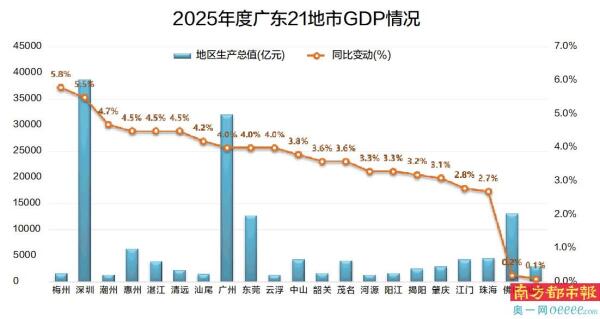
深圳经济总量居首 梅州GDP增速第一
Nan Fang Du Shi Bao· 2026-02-06 06:00
Economic Overview - As of February 5, 2025, all economic data for 21 cities in Guangdong has been released, with Shenzhen leading the province with a GDP of 3.87 trillion yuan [3] - The overall GDP growth rate for Guangdong is 3.9%, with Meizhou leading at 5.8%, followed by Shenzhen at 5.5% and Chaozhou at 4.7% [3] Industrial Growth - Zhanjiang leads the province in industrial added value growth at 10.7%, with Huizhou and Meizhou both at 8.6% [4] - Zhanjiang's industrial sector contributes over 40% to its economic growth, with significant increases in communication equipment and computer manufacturing [4] - Meizhou's industrial added value growth is 8.6%, with notable increases in non-ferrous metal smelting and electronic equipment manufacturing [5] Investment and Consumption - Industrial technological transformation investment in Yangjiang exceeds 60%, with several cities maintaining high investment levels in key and high-tech industries [7] - Guangzhou's retail sales of consumer goods show significant growth, particularly in furniture and communication equipment [8] - The consumption policies, such as trade-in programs, have positively impacted the consumer market across various cities [8] Foreign Trade - Shenzhen's total import and export volume reaches a record high of 4.55 trillion yuan, with exports at 2.74 trillion yuan [9] - Zhaoqing leads the province in export growth at 21.1%, with significant contributions from electromechanical products [10] - Guangzhou's foreign trade also shows strong performance, with a total volume of 1.2 trillion yuan and a 10.4% year-on-year growth [11] Agriculture - Agricultural production remains strong, with cities like Maoming and Zhanjiang exceeding 110 billion yuan in total agricultural output [13] - Zhuhai's agricultural output grows by 6.6%, leading the province, particularly in fisheries [13] - Yangjiang's agricultural output also shows positive growth, with a 6.4% increase [13]

青岛港口库存小幅回升
Hua Tai Qi Huo· 2026-02-03 05:06
1. Report Industry Investment Rating - The investment rating for RU and NR is neutral. The investment rating for BR is also neutral [10] 2. Core Viewpoints of the Report - Entering February, the global natural rubber supply will enter the off - season, and the supply pressure may gradually ease. However, the domestic arrival volume may remain at a high level. After the raw material stocking of downstream tire factories is completed, the domestic inventory will continue to accumulate. The cost - end support of rubber remains strong. The tire start - up rate will decline before the Chinese Spring Festival, showing a pattern of double decline in supply and demand. Rubber mainly fluctuates with the surrounding market atmosphere [10] - The market sentiment has weakened, pushing the price of butadiene rubber to drop significantly, with limited changes in fundamentals. The butadiene rubber production loss pattern continues, and private - owned plants may reduce their loads. The tire start - up rate will decline before the Chinese Spring Festival, showing a pattern of weak supply and demand. The price of butadiene rubber still follows the upstream butadiene raw material. The supply of butadiene has support, but the demand side may have short - term drag, and the price may show high - level fluctuations [10] 3. Summary by Relevant Catalogs Market News and Data - Futures: The closing price of the RU main contract was 15,980 yuan/ton, a change of - 380 yuan/ton from the previous day; the NR main contract was 12,925 yuan/ton, a change of - 310 yuan/ton; the BR main contract was 12,900 yuan/ton, a change of - 490 yuan/ton [1] - Spot: The price of Yunnan - produced whole latex in the Shanghai market was 15,800 yuan/ton, a change of - 350 yuan/ton; the Thai mixed rubber in Qingdao Free Trade Zone was 15,000 yuan/ton, a change of - 230 yuan/ton; the Thai 20 - grade standard rubber in Qingdao Free Trade Zone was 1,925 US dollars/ton, a change of - 35 US dollars/ton; the Indonesian 20 - grade standard rubber in Qingdao Free Trade Zone was 1,865 US dollars/ton, a change of - 40 US dollars/ton; the ex - factory price of BR9000 of Sinopec Qilu Petrochemical was 13,000 yuan/ton, a change of +0 yuan/ton; the market price of BR9000 of Zhejiang Transfar was 12,700 yuan/ton, a change of - 200 yuan/ton [1] Market Information - In December 2025, China's natural rubber imports were 803,400 tons, a month - on - month increase of 24.84% and a year - on - year increase of 25.4%. From January to December 2025, the cumulative import volume was 6.6751 million tons, a cumulative year - on - year increase of 17.94% [2] - In 2025, China's rubber tire export volume reached 9.65 million tons, a year - on - year increase of 3.6%; the export value was 167.7 billion yuan, a year - on - year increase of 2%. The export volume of new pneumatic rubber tires was 9.29 million tons, a year - on - year increase of 3.3%; the export value was 161.1 billion yuan, a year - on - year increase of 1.8%. In terms of the number of tires, the export volume was 7.0162 billion, a year - on - year increase of 3.1% [2] - In December 2025, China's automobile production and sales were 3.296 million and 3.272 million respectively, a month - on - month decrease of 6.7% and 4.6%, and a year - on - year decrease of 2.1% and 6.2% respectively. In 2025, the annual automobile production and sales were 34.531 million and 34.4 million respectively, a year - on - year increase of 10.4% and 9.4% respectively [2] ANRPC Report - The ANRPC's November 2025 report predicted that the global natural rubber production in November would decrease by 2.6% to 1.474 million tons, a decrease of 1.5% from the previous month; the consumption would decrease by 1.4% to 1.248 million tons, a decrease of 0.9% from the previous month. In the first 11 months, the cumulative global natural rubber production was expected to increase by 2% to 13.375 million tons, and the cumulative consumption was expected to decrease by 1.7% to 13.932 million tons [3] Market Analysis - Natural Rubber - Spot and spreads: On February 2, 2026, the RU basis was - 180 yuan/ton (+30), the spread between the RU main contract and the mixed rubber was 980 yuan/ton (- 150), the NR basis was 491.00 yuan/ton (+69.00); the whole latex was 15,800 yuan/ton (- 350), the mixed rubber was 15,000 yuan/ton (- 230), the 3L spot was 16,300 yuan/ton (- 350). The STR20 was quoted at 1,925 US dollars/ton (- 35), the spread between the whole latex and 3L was - 500 yuan/ton (+0); the spread between the mixed rubber and butadiene styrene was 2,000 yuan/ton (- 230) [4] - Raw materials: The price of Thai smoked sheets was 60.40 Thai baht/kg (- 0.50), the price of Thai glue was 59.10 Thai baht/kg (+0.30), the price of Thai cup lump was 53.50 Thai baht/kg (+0.00), and the spread between Thai glue and cup lump was 5.60 Thai baht/kg (+0.30) [5] - Start - up rate: The start - up rate of all - steel tires was 62.47% (- 0.06%), and the start - up rate of semi - steel tires was 74.32% (+0.48%) [6] - Inventory: The social inventory of natural rubber was 591,689 tons (+7,185), the natural rubber inventory at Qingdao Port was 1,271,830 tons (- 2,137), the RU futures inventory was 110,930 tons (+1,060), and the NR futures inventory was 53,625 tons (- 1,714) [6] Market Analysis - Butadiene Rubber - Spot and spreads: On February 2, 2026, the BR basis was - 300 yuan/ton (+190), the ex - factory price of butadiene of Sinopec was 10,500 yuan/ton (- 100), the BR9000 of Qilu Petrochemical was quoted at 13,000 yuan/ton (+0), the BR9000 of Zhejiang Transfar was quoted at 12,700 yuan/ton (- 200), the private - owned butadiene rubber in Shandong was 12,350 yuan/ton (- 150), and the import profit of butadiene rubber in Northeast Asia was - 1,323 yuan/ton (- 740) [7] - Start - up rate: The start - up rate of high - cis butadiene rubber was 76.38% (+0.26%) [8] - Inventory: The inventory of butadiene rubber traders was 6,780 tons (+430), and the inventory of butadiene rubber enterprises was 27,650 tons (- 1,400) [9]
气温下降,泰国东北部逐步停割
Hua Tai Qi Huo· 2026-01-28 05:24
1. Report Industry Investment Rating - The report gives a cautious and bullish rating for both RU, NR, and BR [10] 2. Core Viewpoints of the Report - For natural rubber, the global supply will shift from the peak season to the off - season, reducing supply pressure. However, there is still concentrated arrival in China in late January, so short - term supply is under pressure. With the reduction of global supply pressure and raw material stockpiling by upstream factories, raw material prices are expected to remain firm, providing strong cost support. The tire开工率 has rebounded, especially for semi - steel tires, and pre - holiday inventory building restricts the domestic inventory accumulation. The relatively low price of NR in China compared to Singapore's 20 - grade rubber makes the short - term rubber price run strongly [10] - For cis - butadiene rubber, the strong price of butadiene raw materials has enlarged the production loss. Some private plants in North China may reduce production or switch production, which will relieve short - term supply pressure. Although Maoming Petrochemical has restarted, the supply is still abundant. The tire开工率 has rebounded, but high prices may suppress inventory - building willingness. The demand remains stable. Butadiene prices are expected to remain strong, and cis - butadiene rubber prices will follow a strong oscillation. Attention should be paid to the negative feedback of downstream demand caused by high prices [10] 3. Summary by Relevant Catalogs Market News and Data - Futures: On the previous trading day, the closing price of the RU main contract was 16,205 yuan/ton, a change of - 25 yuan/ton from the previous day; the NR main contract was 13,085 yuan/ton, with no change; the BR main contract was 13,045 yuan/ton, a change of - 220 yuan/ton [1] - Spot: The price of Yunnan - produced full - latex in the Shanghai market was 15,950 yuan/ton, with no change; Qingdao Bonded Area Thai mixed rubber was 15,100 yuan/ton, a change of - 50 yuan/ton; Qingdao Bonded Area Thai 20 - grade standard rubber was 1,940 US dollars/ton, a change of - 5 US dollars/ton; Qingdao Bonded Area Indonesian 20 - grade standard rubber was 1,875 US dollars/ton, with no change; the ex - factory price of BR9000 from PetroChina Qilu Petrochemical was 13,000 yuan/ton, with no change; the market price of BR9000 in Zhejiang Transfar was 12,750 yuan/ton, a change of - 150 yuan/ton [1] Market Information - In December 2025, China's natural rubber imports were 803,400 tons, a month - on - month increase of 24.84% and a year - on - year increase of 25.4%. From January to December 2025, the cumulative import volume was 6,675,100 tons, a cumulative year - on - year increase of 17.94% [2] - In 2025, China's rubber tire exports reached 9.65 million tons, a year - on - year increase of 3.6%; the export value was 167.7 billion yuan, a year - on - year increase of 2%. Among them, the export volume of new pneumatic rubber tires was 9.29 million tons, a year - on - year increase of 3.3%; the export value was 161.1 billion yuan, a year - on - year increase of 1.8%. In terms of the number of tires, the export volume was 7,016.2 million, a year - on - year increase of 3.1% [2] - In December 2025, China's automobile production and sales were 3.296 million and 3.272 million vehicles respectively, a month - on - month decrease of 6.7% and 4.6%, and a year - on - year decrease of 2.1% and 6.2% respectively. In 2025, the annual automobile production and sales were 34.531 million and 34.4 million vehicles respectively, a year - on - year increase of 10.4% and 9.4%, setting a new historical high and ranking first in the world for 17 consecutive years [2] ANRPC Report - ANRPC's November 2025 report predicted that the global natural rubber production in November would decrease by 2.6% to 1.474 million tons, a 1.5% decrease from the previous month; the consumption would decrease by 1.4% to 1.248 million tons, a 0.9% decrease from the previous month. In the first 11 months, the cumulative global natural rubber production was expected to increase by 2% to 13.375 million tons, and the cumulative consumption was expected to decrease by 1.7% to 13.932 million tons [3] Market Analysis Natural Rubber - Spot and spreads: On January 27, 2026, the RU basis was - 255 yuan/ton (+25), the spread between the RU main contract and mixed rubber was 1,105 yuan/ton (+25), the NR basis was 467.00 yuan/ton (-32.00); full - latex was 15,950 yuan/ton (+0), mixed rubber was 15,100 yuan/ton (-50), 3L spot was 16,400 yuan/ton (+0). The STR20 was quoted at 1,940 US dollars/ton (-5), the spread between full - latex and 3L was - 450 yuan/ton (+0); the spread between mixed rubber and styrene - butadiene rubber was 2,300 yuan/ton (-50) [4] - Raw materials: Thai smoked sheets were 60.73 Thai baht/kg (+0.13), Thai glue was 57.90 Thai baht/kg (+0.20), Thai cup lump was 53.20 Thai baht/kg (+0.20), and the difference between Thai glue and cup lump was 4.70 Thai baht/kg (+0.00) [5] -开工率: The full - steel tire开工率 was 62.53% (-0.49%), and the semi - steel tire开工率 was 73.84% (+1.31%) [6] - Inventory: The social inventory of natural rubber was 584,504 tons (-393), the inventory of natural rubber in Qingdao Port was 1,273,967 tons (+17,175), the RU futures inventory was 109,870 tons (+1,480), and the NR futures inventory was 55,339 tons (-1,411) [6] Cis - Butadiene Rubber - Spot and spreads: On January 27, 2026, the BR basis was - 345 yuan/ton (+120), the ex - factory price of butadiene from Sinopec was 10,800 yuan/ton (+0), the price of BR9000 from Qilu Petrochemical was 13,000 yuan/ton (+0), the price of BR9000 in Zhejiang Transfar was 12,750 yuan/ton (-150), the price of private cis - butadiene rubber in Shandong was 12,300 yuan/ton (-300), and the import profit of cis - butadiene rubber in Northeast Asia was - 694 yuan/ton (-233) [7] -开工率: The开工率 of high - cis cis - butadiene rubber was 76.12% (-3.57%) [8] - Inventory: The inventory of cis - butadiene rubber traders was 6,350 tons (-1,690), and the inventory of cis - butadiene rubber enterprises was 29,050 tons (+2,150) [9]
南华期货天然橡胶产业周报:化工板块情绪高,合成胶强势带动天胶抬升-20260126
上海钢联· 2026-01-26 09:04
1. Report Industry Investment Rating There is no information about the industry investment rating in the report. 2. Core Viewpoints of the Report - Affected by macro - sentiment and external geopolitical situations, the energy - chemical sector has been strong recently, and the overall capital participation in rubber has increased. The strong performance of synthetic rubber has boosted the price of natural rubber. - The domestic supply of natural rubber is in a state of complex balance. The domestic is in the off - season, but the high import volume in December has led to high inventory, which suppresses prices. The overseas production areas are in the pre - low - season rush, and the weather has little impact on production. - The downstream demand has both positive and negative factors. The pre - holiday inventory preparation of tires has increased the start - up rate, but the inventory pressure of dry rubber, downstream products, and terminal products still exists. The heavy - truck and engineering machinery industries are boosted by replacement and exports, but the long - term domestic demand growth is under pressure, and export uncertainty remains. - The price of natural rubber is expected to maintain a relatively strong and volatile trend, and resonate more strongly with the chemical sector [1][2]. 3. Summary According to Relevant Catalogs 3.1 Core Contradictions and Strategy Recommendations 3.1.1 Core Contradictions - Macro - sentiment and geopolitical situations have made the energy - chemical sector strong, increasing the capital participation in rubber. The price increase of synthetic rubber has driven up the price of natural rubber. - The domestic supply of natural rubber is affected by the off - season and high imports, while the overseas supply is affected by the pre - low - season rush. - The downstream demand is affected by pre - holiday inventory preparation, but the inventory pressure is still large. The long - term domestic demand growth is under pressure, and export uncertainty remains [1]. 3.1.2 Trading - Type Strategy Recommendations - **Price Range**: The short - term reference oscillation range of the RU main contract is 15,500 - 16,500, with the important pressure point at 16,300; the oscillation range of the NR main contract is 12,400 - 13,500, with the important support point at 13,000. - **Trend Judgment**: The current downstream pre - holiday inventory demand is stable, and the upstream supply is moderately loose. The overall price may remain relatively strong but may need phased consolidation. - **Strategy Suggestions**: - **Unilateral Strategy**: Wait for demand to be realized to relieve inventory pressure. Before the long holiday, liquidity tightens, and there may be a short - term adjustment. Unilateral long positions can consider reducing positions on rallies. - **Hedging Strategy**: It is expected to be highly volatile. Unilateral positions can be combined with protective options or use spread strategies. Selling options are recommended to be deep - out - of - the - money. - **Basis Strategy**: The RU basis is at a high level, and the room for further increase may be limited. The valuation of full - latex may continue the seasonal repair trend, while the futures side should focus on macro - sentiment and the trend of synthetic rubber. - **Calendar Spread Arbitrage Strategy**: The 5 - 9 spread focuses on the valuation level with low warehouse receipts. It can refer to the seasonal reverse - spread market, but it is difficult to say how high the starting point is. The 05 contract may remain relatively strong and can be considered for short - selling on rallies. Later, the fundamentals should focus on the realization of demand, and the supply should also focus on the winter phenology and the tapping situation in the second quarter of next year. - **Variety Arbitrage Strategy**: Wait and see. Pay attention to the phased low point of the NR - BR spread [15][16]. 3.1.3 Industrial Customer Operation Suggestions - **Inventory Management**: For enterprises with high inventory, they can short rubber futures and buy out - of - the - money put options to lock in sales profits and reduce the risk of product price decline. They can also sell call options to increase sales profits. - **Procurement Management**: For enterprises with low standing inventory and future procurement plans, they can buy rubber far - month futures and out - of - the - money call options to lock in procurement costs and reduce the risk of cost increase [30]. 3.2 Important Information and Concerned Events 3.2.1 Last Week's Important Information - **Positive Information**: The central bank will increase liquidity injection, and multiple departments have introduced policies to boost consumption and income expectations. The start - up load of Shandong tire enterprises has increased compared with the same period last year. The industrial added value in December 2025 increased year - on - year. The export volume and amount of Chinese rubber tires in 2025 increased year - on - year. The EU's anti - dumping investigation was suspended, and there is a 6 - month buffer period. Some high - latitude production areas will gradually stop tapping, and there is a certain probability of an El Niño state in the third quarter of 2026 [31][32]. - **Negative Information**: The import volume of natural rubber in December 2025 increased significantly. Geopolitical disputes have increased market risk - aversion sentiment. The inventory in Qingdao has increased. The EU has implemented mandatory import registration for Chinese passenger cars and light - truck tires [33][34][35]. 3.2.2 This Week's Focus - Pay attention to the weather in production areas, the progress of tapping suspension, and the cost support brought by raw material rush - buying. - Pay attention to the further trend of synthetic rubber and the change in the price difference with natural rubber. - Pay attention to the changes in port inventory and social inventory, the registration of full - latex warehouse receipts, and the digestion progress of spot goods. - Pay attention to the pre - holiday inventory preparation and production - sales rhythm of downstream tires, and the holiday shutdown situation. - Pay attention to the overall sentiment of commodities, the Fed's January interest rate decision, and relevant economic data [35]. 3.3 Disk Interpretation 3.3.1 Price - Volume and Capital Interpretation - **Unilateral Trend**: Last week, commodities continued to oscillate strongly. The sharp rise in butadiene rubber drove the synchronous rise of natural rubber, with an increase in positions and trading volume. - **Capital Movement**: Last week, the rubber prices strengthened collectively, and the short positions in Shanghai rubber and 20 - standard rubber decreased significantly [37][43]. 3.3.2 Spot Market and Spread Analysis - **Spot Price Changes**: The prices of various rubber spot products have increased to varying degrees. - **Delivery Product Price Trends**: The price trends of 20 - standard rubber delivery products are shown in the report. - **Term Structure Analysis**: The basis of full - latex is in a regression trend, and the Indonesian standard rubber NR maintains at par. The forward cargo of Thai mixed rubber has a premium. The price of synthetic rubber has boosted the price of natural rubber, but the accumulation of dry rubber suppresses the far - month contracts of RU. - **External Market Quotes**: The unilateral trends and term structures of the external market are presented in the report. The price difference between RU and Japanese smoked - sheet rubber futures 05 contract has slightly declined, and the price difference between NR and Singapore standard rubber has oscillated higher. - **Virtual - to - Physical Ratio and Sentiment Index**: The macro - atmosphere is warm, driving the recent strong and volatile trend of rubber. The strengthening of synthetic rubber has driven up the valuation of natural rubber, but the inventory pressure has increased the divergence between long and short positions, and the virtual - to - physical ratio is higher than the historical average. - **Variety Spread Analysis**: The price difference between dry - rubber spot products has widened. The price difference between natural and synthetic rubber has narrowed [46][64][80]. 3.4 Valuation and Profit Analysis 3.4.1 Industry Chain Profit Tracking - **Raw Material Cost**: The domestic production areas are in the off - season, and the price of Yunnan rubber blocks remains stable. In Thailand, the raw material price has increased due to the rush - buying by processing plants and second - hand dealers. The raw material price in Malaysia has slightly adjusted. - **Processing Profit - Domestic Rubber**: Yunnan and Hainan are currently in the off - season. The selling price of rubber blocks has remained stable recently, and the production profit of tire rubber has increased slightly. - **Processing Profit - Imported Rubber**: Last week, the profit of Thai smoked - sheet rubber was stable, and the processing and import profits of Thai standard rubber and Thai mixed rubber increased significantly [89][103][105]. 3.5 Supply - Demand and Inventory Deduction 3.5.1 Supply Side - **Main Producing Countries' Output**: The global natural rubber output in 2025 is expected to increase by 1.3% year - on - year, with different growth rates in different countries. - **Domestic Import Situation**: In 2025, the import volume of natural and synthetic rubber in China increased significantly. - **Main Producing Countries' Total Demand**: The demand in China in November rebounded month - on - month. Except for Malaysia and Vietnam, the total demand in other overseas main producing countries rebounded overall [107][110][121]. 3.5.2 Demand Side - **Tire Production and Sales Situation**: The start - up rate of downstream tires increased significantly last week, mainly driven by pre - holiday inventory preparation. The inventory of full - steel tires is at a relatively low level in recent years, while the inventory of semi - steel tires has reached a five - year high. The domestic tire production in December rebounded month - on - month, and the export also increased month - on - month, but the semi - steel tire export was lower than that in 2024. - **Replacement Demand**: The domestic logistics industry is stable, and the highway freight rate index has increased recently. However, the slowdown in fixed - asset investment may suppress the growth of replacement demand in the long term. - **Matching Demand - Automobiles**: The domestic matching demand may maintain resilience under the stimulation of government subsidies and enterprise preferential policies. The sales volume of domestic passenger cars and commercial vehicles is strong, and the export of automobiles is also strong. However, the inventory pressure of automobiles is increasing. - **Matching Demand - Heavy - Duty Trucks and Engineering Machinery**: The sales volume of heavy - duty trucks and the production of engineering machinery are at a high level. However, the long - term growth of new demand for trucks may be limited, and more demand comes from replacement. - **Overseas Tire Production**: The tire production in Japan is stable, and the tire shipment index in Thailand shows a seasonal increase. - **Overseas Tire Demand**: The tire import in the United States has increased against the trend, and the production and sales of European passenger cars are stable. - **Other Rubber Products Demand**: The PMI data in December rebounded to the boom range, and the start - up of other downstream rubber products has further improved [125][130][138]. 3.5.3 Inventory Side - **Futures Inventory**: As of January 23, 2026, the rubber warehouse - receipt inventory was 109,870 tons, an increase of 4,280 tons week - on - week; the 20 - standard rubber warehouse - receipt inventory was 55,339 tons, a decrease of 2,419 tons week - on - week. - **Social Inventory**: As of January 18, 2026, the total inventory of natural rubber in Qingdao's bonded and general trade areas was 584,900 tons, an increase of 16,700 tons from the previous period, with an increase rate of 2.94% [153][155].
2025年经贸类展会数量和展览面积均创历史新高 从“展产品”到“链产业” 会展业乘数效应扩大
Zhong Guo Zheng Quan Bao· 2026-01-23 22:29
Group 1 - The core viewpoint of the report is that the exhibition industry in China is experiencing significant growth, with the number of trade exhibitions and total exhibition area reaching historical highs in 2025, indicating a robust economic impact and a vital role in connecting supply and demand [1][2] - In 2025, a total of 4,095 trade exhibitions were held in China, covering an exhibition area of 159 million square meters, representing year-on-year growth of 6.53% and 2.5% respectively [1] - Major exhibitions, such as the third Chain Expo and the eighth Import Expo, have attracted international participation, enhancing global supply chain cooperation and showcasing the effectiveness of national-level exhibition platforms [2] Group 2 - The exhibition industry has evolved from merely showcasing products to facilitating deep industry collaboration, acting as an "accelerator" for industrial chains [3] - The Good Long Group exemplifies this transformation by integrating resources from top food suppliers and facilitating connections between domestic and international food enterprises, achieving significant transaction volumes [3] - The East Ying Trade Promotion Association emphasizes the role of exhibitions in strengthening and expanding industrial chains, showcasing innovations and facilitating knowledge exchange [3] Group 3 - International exhibitions are crucial for companies looking to expand into global markets, with initiatives like "Ten Thousand Enterprises Going Abroad" enhancing the international influence of local manufacturing [4] - In 2025, the China Council for the Promotion of International Trade approved 1,259 overseas exhibitions, marking a 7.98% increase from the previous year, with machinery and transportation logistics being the leading sectors [4] - The actual transaction volume from overseas exhibitions increased significantly by 19.09% in 2025, with average transaction amounts also rising by 14.16% [5] Group 4 - The report highlights the importance of the exhibition industry as a driver of industrial development and economic cooperation, serving as a source of innovation and a stabilizing force in global supply chains [5] - The industry is encouraged to embrace open cooperation, integration with production, innovation, and mutual benefits to seize new opportunities presented by China's modernization strategy [6]
解码“工业航母”广州工控集团的千亿级产业资本版图
2 1 Shi Ji Jing Ji Bao Dao· 2026-01-23 05:15
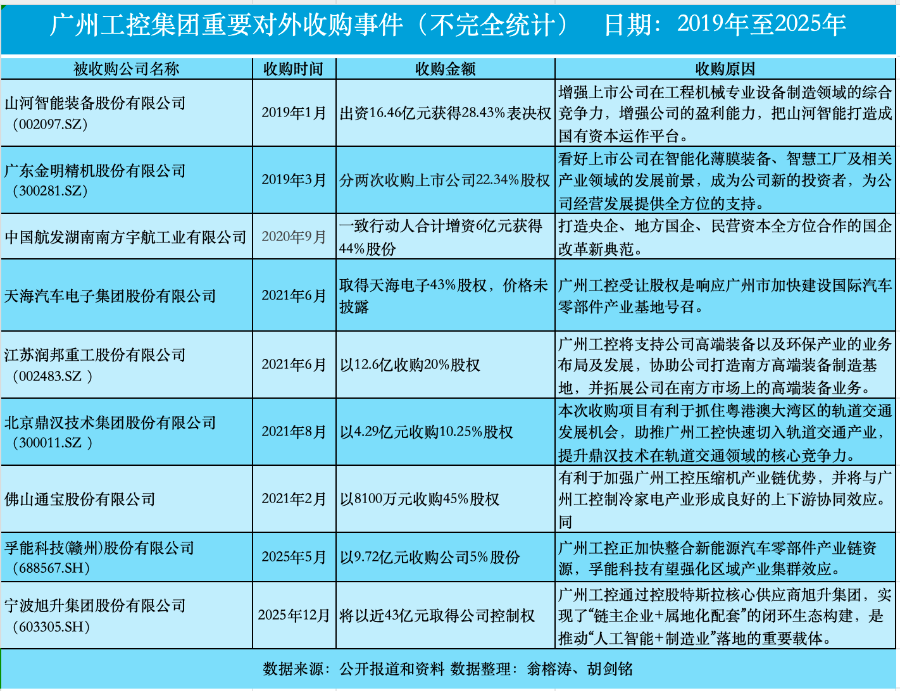
Core Viewpoint - Guangzhou Industrial Investment Holding Group Co., Ltd. (Guangzhou Gongkong Group) has announced its operational targets for 2025, projecting a year-on-year revenue growth of 14%, industrial output growth of 13%, and export growth of 12% [1] Group Summary - In 2024, Guangzhou Gongkong Group achieved a revenue of 123.82 billion yuan and a net profit of 1.51 billion yuan, indicating that the company is expected to exceed 140 billion yuan in revenue for 2025 [1] - The company has been actively expanding its industrial scale through mergers and acquisitions, extending its investment footprint from Guangdong to other provinces such as Zhejiang, Jiangsu, Jiangxi, Hunan, and Henan [1][2] - Guangzhou Gongkong Group has been listed on the Fortune Global 500 for three consecutive years, with its ranking continuously improving [1] Acquisition Strategy - Since its reorganization in 2019, Guangzhou Gongkong Group has undergone two main phases: the initial integration phase and the strategic expansion phase, becoming a significant player in local state-owned capital operations in China [2] - The company has acquired several listed subsidiaries, including Shanhe Intelligent (002097.SZ), Runbang Shares (002483.SZ), and Funeng Technology (688567.SH), covering various sectors such as equipment manufacturing, automotive parts, building materials, and home appliances [2] Financial Performance - The company reported steady growth in asset scale and revenue, with revenues of 111.2 billion yuan, 121.7 billion yuan, and 123.82 billion yuan from 2022 to 2024, while net profits were 1.74 billion yuan, 2.06 billion yuan, and 1.51 billion yuan during the same period [14] - In the first half of 2025, the company recorded a revenue of 61.98 billion yuan, an 8% year-on-year increase, but net profit decreased by nearly 20% to 999 million yuan [15] CVC Investment Platform - Guangzhou Gongkong Group's CVC investment platform, Gongkong Capital, has a management scale exceeding 20 billion yuan and focuses on industrial capital, mergers and acquisitions, industrial funds, and investments [10][11] - The platform has been involved in various strategic investments, with a total of 14 funds managed, primarily targeting sectors such as new energy, high-end equipment manufacturing, and artificial intelligence [11][12] Market Position and Future Goals - The company aims to have 10-15 listed companies by 2025, striving to become a world-class industrial investment group [6] - The acquisition strategy is characterized by high premium purchases, with some transactions exceeding a 30% premium, reflecting the company's commitment to industry consolidation and the cultivation of emerging industries [9]
下游半钢胎开工率继续回升
Hua Tai Qi Huo· 2026-01-23 03:11
1. Report Industry Investment Rating - The report suggests a cautious and bullish stance on both RU and NR, as well as BR [10]. 2. Core Viewpoints of the Report - The supply of natural rubber is expected to continue to recover this week due to less rain in overseas main producing areas and high raw material prices. Although the downstream semi - steel tire orders have improved and the overall tire start - up rate has rebounded, the overall demand is still in the off - season. The inventory accumulation pattern in China is expected to continue, but the firm raw material prices and future tire factory restocking may support the rubber price. For BR, the price of butadiene has risen due to the news of the maintenance of the US BASF butadiene plant. With the strengthening of cost - side support and a warm market atmosphere, the price of BR continues to rise. The supply of BR is abundant, but the start - up rate has no room for further improvement due to production profit losses. The price of butadiene is expected to be firm, and the price of BR will follow the upward trend of butadiene [10]. 3. Summary by Relevant Catalogs Market News and Data - **Futures**: On the previous trading day, the closing price of the RU main contract was 15,850 yuan/ton, up 105 yuan/ton from the previous day; the NR main contract was 12,735 yuan/ton, up 120 yuan/ton; the BR main contract was 12,270 yuan/ton, up 355 yuan/ton [1]. - **Spot**: The price of Yunnan - produced whole latex in the Shanghai market was 15,600 yuan/ton, up 100 yuan/ton; the price of Thai mixed rubber in Qingdao Free Trade Zone was 14,880 yuan/ton, up 80 yuan/ton; the price of Thai No. 20 standard rubber in Qingdao Free Trade Zone was 1,905 US dollars/ton, up 15 US dollars/ton; the price of Indonesian No. 20 standard rubber in Qingdao Free Trade Zone was 1,825 US dollars/ton, up 15 US dollars/ton; the ex - factory price of BR9000 of PetroChina Qilu Petrochemical was 12,000 yuan/ton, up 300 yuan/ton; the market price of BR9000 of Zhejiang Transfar was 11,850 yuan/ton, up 250 yuan/ton [1]. Market Information - **Import of Natural Rubber**: In December 2025, China's natural rubber (including technical classification, latex, smoked sheets, primary forms, mixed rubber, and compound rubber) imports were 803,400 tons, a month - on - month increase of 24.84% and a year - on - year increase of 25.4%. From January to December 2025, the cumulative import volume was 6.6751 million tons, a cumulative year - on - year increase of 17.94% [2]. - **Export of Rubber Tires**: In 2025, China's rubber tire exports reached 9.65 million tons, a year - on - year increase of 3.6%; the export value was 167.7 billion yuan, a year - on - year increase of 2%. Among them, the export volume of new pneumatic rubber tires reached 9.29 million tons, a year - on - year increase of 3.3%; the export value was 161.1 billion yuan, a year - on - year increase of 1.8%. In terms of the number of tires, the export volume reached 7.0162 billion, a year - on - year increase of 3.1% [2]. - **Automobile Production and Sales**: In December 2025, China's automobile production and sales were 3.296 million and 3.272 million respectively, a month - on - month decrease of 6.7% and 4.6%, and a year - on - year decrease of 2.1% and 6.2% respectively. In 2025, the annual automobile production and sales were 34.531 million and 34.4 million respectively, a year - on - year increase of 10.4% and 9.4%, reaching a new historical high and ranking first in the world for 17 consecutive years [2]. ANRPC Report - In November 2025, the global natural rubber production was expected to decrease by 2.6% to 1.474 million tons, a 1.5% decrease from the previous month; the consumption was expected to decrease by 1.4% to 1.248 million tons, a 0.9% decrease from the previous month. In the first 11 months, the cumulative global natural rubber production was expected to increase by 2% to 13.375 million tons, and the cumulative consumption was expected to decrease by 1.7% to 13.932 million tons [3]. Market Analysis Natural Rubber - **Spot and Spread**: On January 22, 2026, the RU basis was - 250 yuan/ton (- 5), the spread between the RU main contract and mixed rubber was 970 yuan/ton (+ 25), the NR basis was 604.00 yuan/ton (- 14.00); the whole latex was 15,600 yuan/ton (+ 100), the mixed rubber was 14,880 yuan/ton (+ 80), the 3L spot was 16,200 yuan/ton (+ 100). The STR20 was quoted at 1,905 US dollars/ton (+ 15), the spread between whole latex and 3L was - 600 yuan/ton (+ 0); the spread between mixed rubber and styrene - butadiene rubber was 2,880 yuan/ton (- 20) [4]. - **Raw Materials**: The price of Thai smoked sheets was 60.05 Thai baht/kg (+ 0.56), the price of Thai glue was 57.30 Thai baht/kg (+ 0.10), the price of Thai cup rubber was 52.20 Thai baht/kg (+ 0.10), and the spread between Thai glue and cup rubber was 5.10 Thai baht/kg (+ 0.00) [5]. - **Start - up Rate**: The start - up rate of all - steel tires was 62.53% (- 0.49%), and the start - up rate of semi - steel tires was 73.84% (+ 1.31%) [6]. - **Inventory**: The social inventory of natural rubber was 584,897 tons (+ 16,724), the inventory of natural rubber in Qingdao Port was 1,273,967 tons (+ 17,175), the RU futures inventory was 108,390 tons (+ 3,900), and the NR futures inventory was 56,750 tons (- 202) [6]. Cis - 1,4 - Polybutadiene Rubber (BR) - **Spot and Spread**: On January 22, 2026, the BR basis was - 420 yuan/ton (- 5), the ex - factory price of butadiene of Sinopec was 9,900 yuan/ton (+ 300), the price of BR9000 of Qilu Petrochemical was 12,000 yuan/ton (+ 300), the price of BR9000 of Zhejiang Transfar was 11,850 yuan/ton (+ 250), the price of private cis - 1,4 - polybutadiene rubber in Shandong was 11,550 yuan/ton (+ 350), and the import profit of cis - 1,4 - polybutadiene rubber in Northeast Asia was - 1,562 yuan/ton (+ 252) [7]. - **Start - up Rate**: The start - up rate of high - cis cis - 1,4 - polybutadiene rubber was 76.12% (- 3.57%) [8]. - **Inventory**: The inventory of cis - 1,4 - polybutadiene rubber traders was 6,350 tons (- 1,690), and the inventory of cis - 1,4 - polybutadiene rubber enterprises was 29,050 tons (+ 2,150) [9].
利多因素消化橡胶冲高回落:橡胶周报-20260119
Bao Cheng Qi Huo· 2026-01-19 02:49
1. Report's Investment Rating for the Industry - No information provided regarding the industry investment rating in the report. 2. Core Viewpoints - Rubber futures in China initially rose due to better - than - expected domestic auto production and sales data but later retreated as positive data was digested and the energy - chemical sector corrected. The RU2605 contract of Shanghai rubber futures reached a maximum of 16,480 yuan/ton and ended the week with a cumulative decline of 1.22% to 15,835 yuan/ton; the TS2603 contract of standard rubber futures reached 13,305 yuan/ton and dropped 1.58% to 12,745 yuan/ton; the NR2603 contract of synthetic rubber futures reached 12,470 yuan/ton and fell 2.07% to 11,815 yuan/ton. With the previous positive factors realized, the rubber market is at a stage of divergence between bulls and bears, and it is expected that rubber futures will maintain a high - level consolidation trend in the future [5][14][59]. 3. Summary by Relevant Catalogs 3.1 Market Review - **1.1 Spot price slightly declined, and basis discount converged** - In the week of January 16, 2026, the spot price of Shanghai Yunnan state - owned whole latex (SCRWF) oscillated around 15,650 yuan/ton, with a week - on - week decrease of 50 yuan/ton. The basis between the spot price of SCRWF and the futures price of the RU2605 contract was at a discount of 185 yuan/ton, and the degree of discount slightly converged [9]. - **1.2 Positive factors digested, and rubber prices rose first and then fell** - Benefiting from better - than - expected domestic auto production and sales data, domestic rubber futures rose initially. However, as the positive data was digested and the energy - chemical sector corrected, rubber prices gave back their gains. The RU2605 contract of Shanghai rubber futures reached a maximum of 16,480 yuan/ton and ended the week with a cumulative decline of 1.22% to 15,835 yuan/ton; the TS2603 contract of standard rubber futures reached 13,305 yuan/ton and dropped 1.58% to 12,745 yuan/ton; the NR2603 contract of synthetic rubber futures reached 12,470 yuan/ton and fell 2.07% to 11,815 yuan/ton [13][14]. 3.2 Global Rubber Market Supply - Demand Improvement in Q3 2025 - **2.1 Output of Southeast Asian rubber - producing countries increased slightly year - on - year, and consumption decreased slightly year - on - year** - From May to November, rubber - producing areas in Yunnan and Hainan in China and Southeast Asian countries are in the peak tapping season. In November 2025, the total rubber production of ANRPC member countries was 1.1677 million tons, a month - on - month decrease of 0.0057 million tons and a year - on - year decrease of 0.0674 million tons (a decline of 5.46%). From January to November 2025, the total production was 10.3887 million tons, a slight increase of 0.0482 million tons (an increase of 0.47%) compared with the same period last year. In November 2025, the total rubber consumption of ANRPC member countries was 0.9116 million tons, a month - on - month increase of 0.0112 million tons and a year - on - year increase of 0.011 million tons (an increase of 1.22%). From January to November 2025, the total consumption was 9.9974 million tons, a slight decrease of 0.2243 million tons (a decline of 2.19%) compared with the same period last year. Due to normal tapping in Southeast Asian countries and weakening global demand, the rubber market supply - demand structure is weakening, and rubber prices may face pressure in the future [26][30]. - **2.2 China's rubber imports increased significantly in November 2025** - China's natural rubber import dependence is about 80%. In November 2025, China imported 790,000 tons of natural and synthetic rubber (including latex), a year - on - year increase of 11%. From January to November 2025, the total import was 7.572 million tons, a year - on - year increase of 16.5% [33]. - **2.3 Growth rate of domestic tire production slowed down, and industry operating rate declined slightly** - In November 2025, the output of Chinese rubber tire casings was 101.828 million pieces, a year - on - year decrease of 2.6%. From January to November 2025, the cumulative output was 1.103115 billion pieces, a slight year - on - year increase of 0.6%, and the growth rate slowed down significantly compared with the first half of the year. As of January 16, 2026, the capacity utilization rate of Chinese semi - steel tire sample enterprises was 72.53%, a week - on - week increase of 8.75 percentage points and a year - on - year decrease of 5.03 percentage points; the capacity utilization rate of full - steel tire sample enterprises was 63.02%, a week - on - week increase of 7.52 percentage points and a year - on - year increase of 5.21 percentage points [36]. - **2.4 China's auto production and sales increased significantly year - on - year in 2025** - In 2025, China's auto production and sales reached 34.531 million and 34.4 million vehicles respectively, a year - on - year increase of 10.4% and 9.4%. Passenger vehicle production and sales were 30.27 million and 30.103 million vehicles, a year - on - year increase of 10.2% and 9.2%. Commercial vehicle production and sales were 4.261 million and 4.296 million vehicles, a year - on - year increase of 12% and 10.9%. Auto exports exceeded 7 million vehicles, reaching 7.098 million vehicles, a year - on - year increase of 21.1%. In December 2025, the inventory warning index of Chinese auto dealers was 57.7%, a year - on - year increase of 7.5 percentage points and a month - on - month increase of 2.1 percentage points. The logistics prosperity index in December 2025 was 52.4%, a month - on - month increase of 1.5 percentage points. In December 2025, China's heavy - truck market sold about 95,000 vehicles, a month - on - month decrease of about 16% and a year - on - year increase of about 13%. In 2025, the total sales volume of the heavy - truck market reached a new high in the past four years, with 1.137 million vehicles, a year - on - year increase of about 26% [40][41]. - **2.5 Shanghai Futures Exchange (SHFE) warehouse receipts increased significantly, and Qingdao Bonded Area inventory increased slightly** - As of the week of January 16, 2026, the SHFE rubber futures inventory increased significantly week - on - week, with registered warehouse receipts increasing by 3,900 tons to 108,390 tons compared with the week of January 9. As of January 4, 2026, the total inventory of natural rubber in Qingdao's bonded and general trade was 548,300 tons, a week - on - week increase of 23,500 tons (a growth rate of 4.48%). The general trade inventory increased by 16,900 tons to 460,300 tons (a growth rate of 3.80%), and the bonded area inventory increased by 8.16% [57]. 3.3 Conclusion - Currently, the natural rubber production areas in Yunnan and Hainan in China are in the non - tapping season, and the supply pressure of domestic whole latex has significantly decreased. However, Southeast Asia has not entered the low - production season, and supply pressure still exists. The domestic auto production and sales data in the downstream of the rubber market are optimistic, and the heavy - truck sales data in December are better than expected. However, the crude oil price has given back its geopolitical premium, and the correction of the energy - chemical sector has dragged down the high - level adjustment of rubber futures. As the previous positive factors are gradually realized, the rubber market is at a stage of divergence between bulls and bears, and it is expected that rubber futures will maintain a high - level consolidation trend in the future [59].