汽车及其零部件

Search documents
欧盟碳边境调节机制正式落地 对我国影响几何
Xin Lang Cai Jing· 2026-01-19 02:05
Core Viewpoint - The implementation of the EU Carbon Border Adjustment Mechanism (CBAM) starting January 1 will significantly impact China's high-carbon industries, particularly steel and aluminum exports to the EU, which account for approximately 3.5% of China's total exports to the EU [1][10]. Group 1: Short-term Impact - The short-term pressure on Chinese exporters due to CBAM is manageable, as the initial carbon cost is set at a low base of 2.5% [3][12]. - Companies that have not undertaken energy-saving and carbon reduction measures will face the most significant challenges under CBAM [1][11]. - The default emission values set by the EU for Chinese products are generally higher than the global average, creating an unfair disadvantage for Chinese exporters [3][12]. Group 2: Compliance and Adaptation - Exporting companies need to shift from relying on default values for carbon reporting to establishing their own carbon monitoring and reporting systems [4][13]. - The implementation of CBAM will require strict compliance with carbon data reporting across the supply chain, affecting not only manufacturers but also upstream suppliers [14]. - Engaging with third-party certification bodies to obtain independent verification reports can enhance the credibility and compliance of carbon data [14]. Group 3: Long-term Strategy - Companies must focus on long-term low-carbon transformation strategies to remain competitive in international markets [16]. - The expansion of CBAM to include 180 downstream products by 2028 will broaden the scope of carbon cost calculations, necessitating a comprehensive approach to carbon footprint management [16]. - Collaboration with partners who have established low-carbon transition plans and transparent carbon data will be crucial for maintaining competitiveness [16]. Group 4: Policy and Market Dynamics - The Chinese government is advocating for fair trade practices and is prepared to take necessary measures against any unfair trade restrictions imposed by the EU [17]. - The establishment of a domestic carbon market and potential introduction of auction mechanisms could help alleviate carbon cost pressures on companies [16]. - Financial institutions may introduce green finance policies to support companies in their transition to low-carbon operations [16].
欧盟碳边境调节机制正式落地对我国影响几何
中国能源报· 2026-01-12 05:55
Core Viewpoint - The implementation of the EU Carbon Border Adjustment Mechanism (CBAM) starting January 1 will significantly impact China's high-carbon industries, particularly steel and aluminum exports to the EU, which account for approximately 3.5% of China's total exports to the EU [2][3]. Group 1: Short-term Impact - The short-term pressure from CBAM is manageable, with the initial carbon cost set at a base rate of 2.5%, allowing companies some time to adapt [3]. - Companies that have not undertaken energy-saving and carbon-reduction transformations will face the most significant challenges, especially those relying on default values for carbon emissions reporting [2][3]. - The default emission values set by the EU are particularly high for Chinese products, creating a barrier for exports [2][3]. Group 2: Carbon Management and Compliance - Exporting companies must shift from relying on default values to establishing their own carbon data monitoring and reporting systems to avoid increased carbon costs [5]. - Over 90% of Chinese companies used global average default values during the trial phase, which will lead to higher costs once country-specific default values are published [5]. - Companies are encouraged to engage with third-party certification bodies to enhance the credibility and compliance of their carbon data [5]. Group 3: Long-term Strategy - In the long term, companies need to focus on low-carbon transformation as a key strategic direction for sustainable development [8]. - The expansion of CBAM to include 180 downstream products by 2028 will increase the complexity of carbon footprint calculations, necessitating a comprehensive approach to carbon management across the supply chain [8]. - Companies should evaluate potential partners based on their carbon data transparency and low-carbon transition plans to ensure compliance and competitiveness [8]. Group 4: External Environment and Policy Recommendations - There is a call for the improvement of the domestic carbon market and the introduction of quota auction mechanisms to create a more competitive environment for companies [9]. - Diplomatic efforts are suggested to negotiate with the EU for recognition of China's carbon pricing, which could alleviate some of the carbon cost burdens on Chinese exporters [9]. - The Chinese government aims to maintain fair trade practices and protect the interests of its enterprises while addressing global climate change challenges [9].


商务部就欧盟碳边境调节机制有关问题答记者问
Xin Lang Cai Jing· 2026-01-01 05:24
Core Viewpoint - The Chinese government expresses serious concerns and strong opposition to the EU's Carbon Border Adjustment Mechanism (CBAM), which is set to be implemented on January 1, 2026, citing unfair treatment and discrimination against Chinese products [1][2]. Group 1: EU's CBAM Implementation - The EU has recently released legislative proposals and implementation details regarding CBAM, including setting default carbon emission intensity values and plans to expand the product coverage [1]. - The EU's default values for carbon emission intensity are significantly higher than China's current levels and future development trends, which is viewed as unfair and discriminatory [1]. Group 2: Expansion of CBAM - Starting in 2028, the EU plans to expand the CBAM to include approximately 180 downstream products, such as machinery, automobiles and their parts, and household appliances [1]. - The design of these rules is seen as exceeding the scope of climate change response and exhibiting clear unilateralism and trade protectionism [1]. Group 3: Double Standards and Trade Protectionism - The EU has modified its 2035 ban on new fuel vehicles, relaxing green regulations internally while promoting protectionism externally under the guise of climate action [2]. - This contradictory approach is characterized as a typical double standard, ignoring historical emissions responsibilities and the development stages of countries [2]. Group 4: Call for Fair Trade Practices - The Chinese government urges the EU to adhere to international climate and trade rules, abandon unilateralism and protectionism, and promote the liberalization and facilitation of trade and investment in the green sector [2]. - China is willing to cooperate with the EU to address global climate change challenges but will take necessary measures to respond to any unfair trade restrictions [2].
印度拓展与中东地区经贸关系
Xin Lang Cai Jing· 2025-12-27 04:16
Core Insights - India has signed a Comprehensive Economic Partnership Agreement (CEPA) with Oman, marking Oman as the second Middle Eastern country to enter such an agreement with India after the UAE [1] - The CEPA aims to enhance the price competitiveness of exports between India and Oman, positioning Oman as a strategic gateway for Indian businesses to access markets in the Gulf, Africa, and West Asia [1][2] Trade Aspects - Oman commits to zero tariff access for 98.08% of products from India, covering 99.38% of India's total exports to Oman, including sectors like gems, textiles, pharmaceuticals, and automobiles [1] - India will reduce tariffs on approximately 77.79% of Omani products, while maintaining protective measures on sensitive items such as dairy and gold [1] Investment Aspects - The CEPA further relaxes market entry restrictions, allowing Oman to open 127 sub-sectors to Indian investment, with service contractors' stay extended from 90 days to 2 years, and permitting 100% foreign direct investment in key service sectors [1] Strategic Importance - Despite a projected bilateral trade volume of only $10.61 billion for FY 2024-2025, Oman is India's fourth-largest energy supplier and is strategically located along the critical Strait of Hormuz [2] - The agreement is part of India's broader strategy to deepen economic ties with Middle Eastern countries, especially in light of rising tariffs from the US and uncertain trade negotiations [2] Historical Context - The CEPA with the UAE, signed in May 2022, has led to significant trade growth, with bilateral trade exceeding $100 billion in FY 2024-2025, marking a 19.6% increase year-on-year [3] - Non-oil trade between India and the UAE has surged, with a 20.5% increase in FY 2024 and a 33.9% increase in the first half of FY 2025 [3] Future Prospects - India is accelerating negotiations for a bilateral investment treaty with Saudi Arabia and has signed a new investment agreement with Israel, indicating a commitment to enhancing economic cooperation in the region [4] - The Middle East is viewed as a crucial area for India's economic corridor project linking India, the Middle East, and Europe, with increasing investments expected [4] Challenges - India faces challenges in its trade relations with Middle Eastern countries, including a trade deficit due to heavy reliance on energy imports, with exports to Saudi Arabia at approximately $12 billion against imports exceeding $30 billion [5] - Geopolitical instability in the Middle East poses risks to energy security and infrastructure projects, complicating India's strategic interests in the region [6]
比美国更反华国家出现?墨西哥突然对中方发难,原来我们早有准备
Sou Hu Cai Jing· 2025-12-19 04:55
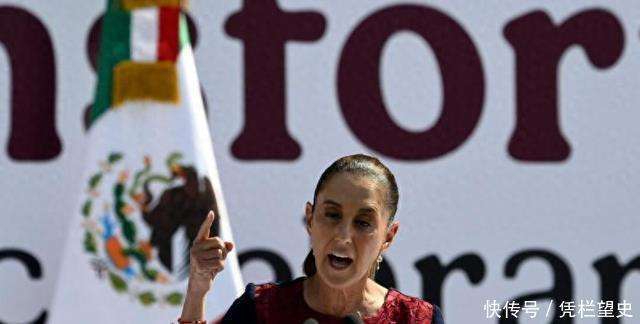
Core Insights - Mexico has decided to impose high tariffs on China, reaching up to 50%, despite a temporary truce in the US-China trade war, aiming to stimulate domestic manufacturing and address long-standing trade deficits [1][3] - The new law, passed by the Mexican Congress, targets over 1,400 products initially, with around 300 items exempted, and is expected to increase Mexico's import revenue by 8.3% by 2026 [1][4] Group 1: Economic Implications - The new tariff policy could generate an additional $3.76 billion in revenue for Mexico, alleviating fiscal pressure and addressing the growing trade deficit with China [4] - Mexican industries such as textiles and steel, which have struggled to compete with Chinese products, are expected to benefit from the tariffs, potentially revitalizing local manufacturing [4] Group 2: Political Context - The decision is influenced by pressure from the US, as the Trump administration warned Mexico of a potential 30% tariff and the termination of the USMCA if it did not restrict Chinese goods [3] - Mexico's economic stability is heavily reliant on trade with the US, with over 80% of its exports going to the US and Canada, making it vulnerable to external pressures [3] Group 3: Long-term Risks - The tariff policy may lead to retaliatory measures from China, which could impose its own tariffs on Mexican goods, creating economic strain for Mexico [4] - Increased production costs in sectors like electronics and automotive due to tariffs may reduce Mexico's competitiveness and deepen its economic dependence on the US [4]
武汉吉利汽车实业公司增资至6.5亿
Sou Hu Cai Jing· 2025-12-03 07:09
Group 1 - The core point of the article is that Wuhan Geely Automobile Industry Co., Ltd. has increased its registered capital from approximately 120 million RMB to about 650 million RMB, representing an increase of about 450% [1] - The company was established in February 2019 and is involved in the manufacturing, sales, and technical consulting services of automobiles and their parts [1] - The current shareholders of the company are Wuhan Economic Development Investment Co., Ltd. holding approximately 86% and Geely Automobile Group Co., Ltd. holding about 14% [1]

又征新关税?美政府借由“国家安全”,对多个行业启动调查
Huan Qiu Shi Bao· 2025-09-25 22:32
Group 1 - The U.S. Department of Commerce has initiated a new round of "Section 232" investigations into imports of robots, industrial machinery, and medical devices to assess whether these imports threaten national security [1][2] - The investigation began on September 2 and includes products such as masks, syringes, infusion pumps, and programmable computer-controlled machinery [1] - The automotive industry is expected to be the most affected sector due to its high reliance on imported industrial robots, with 13,747 units installed last year [1][2] Group 2 - Potential tariffs on medical devices and protective equipment may increase costs for hospitals and patients, impacting access to critical equipment and services [2] - The investigation is based on the Trade Expansion Act's Section 232, which has previously been used to impose tariffs on various products, including automobiles and steel [2] - Ongoing trade negotiations with various partners are complicated by these investigations, with the U.S. recently confirming the effectiveness of a trade agreement with the EU [2][3] Group 3 - Southeast Asian countries are particularly concerned about the impact of U.S. tariffs, facing rates between 19% to 20%, with Laos and Myanmar facing as high as 40% [3] - South Korea is struggling to advance trade agreements with the U.S. due to investment and visa issues, affecting the implementation of tariff reductions [3]
法外长反咬一口:欧盟今天向美国屈服,明天中国就会来要价
Sou Hu Cai Jing· 2025-07-18 12:00
Group 1 - The EU is considering a strong stance in trade negotiations with the US, as French Minister Barrow emphasizes the need to avoid compromising with Washington, warning that it could set a dangerous precedent for future negotiations with China [1][2] - Barrow calls for the EU to prepare for retaliation if no agreement is reached before the deadline, highlighting the importance of defending both short-term economic interests and long-term credibility [1][2] - The EU is currently facing a challenging negotiation process with the US, with French officials expressing strong dissatisfaction over the proposed 30% tariffs on EU exports to the US, which could disrupt transatlantic supply chains [5][6] Group 2 - The EU is contemplating countermeasures against the US, including a second round of tariffs on US goods valued at approximately €72 billion (around 602.9 billion RMB), which includes products like Boeing aircraft and whiskey [6][7] - There are internal divisions within the EU regarding the response to US tariffs, with some officials advocating for a balanced approach while others push for stronger retaliatory measures [6][7] - The ongoing trade tensions highlight significant disagreements between the EU and the US in various sectors, including automotive, safety standards, agriculture, and high technology, raising the risk of a full-blown trade war [7]

28国决定不忍了!准备“亮剑”回击美国重税,特朗普要遭反噬了?
Sou Hu Cai Jing· 2025-07-18 03:02
Group 1 - The European Union (EU) is preparing to retaliate against the United States' tariffs, with a new countermeasure list that includes a wide range of American products valued at €72 billion [5][6] - The EU's countermeasure list is detailed and spans 206 pages, including items such as Boeing aircraft, automobiles, and bourbon whiskey [5] - Despite the EU's ability to retaliate with other goods, it has refrained from including major U.S. military products in its countermeasure list due to its reliance on U.S. military supplies [6][8] Group 2 - Brazil is also considering a response to U.S. tariffs, with President Lula announcing the formation of a cross-departmental committee to strategize on trade negotiations and countermeasures [10][11] - The actions of the EU and Brazil indicate a growing resistance among countries against U.S. tariff policies, which could lead to a broader international backlash if successful [13]
欧盟或对美国仪器征收反制关税,货值近50亿欧元
仪器信息网· 2025-07-15 14:38
Group 1 - The European Commission has announced a countermeasure plan in response to the U.S. President Trump's decision to impose a 30% tariff on EU imports starting August 1, 2025 [1] - If U.S.-EU trade negotiations fail, the EU is prepared to impose additional tariffs on U.S. imports valued at €72 billion (approximately $84 billion) [1] - The 206-page countermeasure list includes various products, with the most affected being aircraft and parts (€11 billion), machinery (€9.4 billion), automobiles and parts (€8 billion), agricultural products (€6 billion), and precision instruments (€5 billion) [1] Group 2 - The EU had previously prepared a first phase of countermeasures targeting U.S. goods worth €21 billion, which was initially set to take effect on July 14 but was postponed to early August due to ongoing negotiations [1]