
沪铝主力合约

Search documents
瑞达期货铝类产业日报-20260318
Rui Da Qi Huo· 2026-03-18 10:13
1. Report Industry Investment Rating No relevant information provided. 2. Core Views of the Report Alumina - The alumina main contract fluctuates strongly, with increasing open interest, spot discount, and weakening basis. The raw material side shows a seasonal recovery in bauxite mining in Guinea, but due to geopolitical conflicts, shipping capacity decreases and shipping costs rise, leading to only a small decline in bauxite prices. On the supply side, smelters have gradually resumed work, with the industry operating at a relatively high level, and the domestic alumina supply remains high, with a long - term oversupply. On the demand side, the geopolitical disputes in the Middle East limit electrolytic aluminum production capacity in the region, affecting global supply and reducing alumina demand in the Middle East, which may impact domestic export demand. Domestically, the replacement of electrolytic aluminum production capacity gradually ramps up, and the demand for alumina is stable. Overall, the alumina fundamentals may be in a stage of oversupply and stable demand. Technically, the 60 - minute MACD shows that the double lines are above the 0 - axis, and the green bars are expanding. The view is to trade with a light position in a volatile manner, paying attention to controlling the rhythm and trading risks [2]. Electrolytic Aluminum - The Shanghai aluminum main contract fluctuates, with increasing open interest, spot discount, and strengthening basis. On the raw material side, alumina prices rise due to geopolitical factors, while aluminum prices remain strong, and aluminum smelters still have good profit margins. On the supply side, the capacity replacement projects of electrolytic aluminum plants are gradually put into production, and with good smelting profits, the upstream operation is expected to remain at a high level, and the domestic electrolytic aluminum supply is stable. On the demand side, the downstream operation has improved during the week, but high aluminum prices still suppress consumption continuity. Downstream aluminum processing enterprises mostly adopt a strategy of buying on dips, the market demand has slightly recovered, the downstream inventory has decreased, and the accumulation rate of electrolytic aluminum social inventory has slowed down. Overall, the fundamentals of Shanghai aluminum may be in a stage of stable supply and slightly recovering demand. In terms of options, the call - put ratio of at - the - money option positions is 1.65, a month - on - month increase of 0.0254, indicating a bullish sentiment in the options market, and the implied volatility has slightly increased. Technically, the 60 - minute MACD shows that the double lines are below the 0 - axis, and the green bars are slightly converging. The view is to conduct short - term long trading with a light position on dips, paying attention to controlling the rhythm and trading risks [2]. Cast Aluminum - The cast aluminum main contract fluctuates downward, with decreasing open interest, spot premium, and strengthening basis. On the supply side, the price of scrap aluminum fluctuates upward with aluminum prices. Scrap aluminum holders mostly adopt a strategy of selling at high prices. Since recycled aluminum enterprises were actively purchasing in the early stage, they currently adopt a strategy of purchasing on demand, resulting in a mediocre performance in the scrap aluminum spot market. In terms of production, cast aluminum production dropped significantly in February and is expected to rebound significantly after resuming work in March, so the domestic cast aluminum alloy supply will increase. On the demand side, downstream die - casting plants, having replenished their inventories in the early stage, currently also adopt a strategy of purchasing on a just - in - time basis and mostly take a wait - and - see attitude, resulting in a dull trading performance in the cast aluminum alloy spot market. Overall, the fundamentals of cast aluminum alloy may be in a stage of increasing supply and mediocre demand. Technically, the 60 - minute MACD shows that the double lines are below the 0 - axis, and the green bars are slightly converging. The view is to conduct short - term long trading with a light position on dips, paying attention to controlling the rhythm and trading risks [2]. 3. Summary According to the Directory Market Data - **Futures Market**: The closing price of the Shanghai aluminum main contract is 24,800 yuan/ton, down 190 yuan; the closing price of the alumina futures main contract is 3,048 yuan/ton, down 25 yuan. The LME three - month electrolytic aluminum quotation is 3,364.50 US dollars/ton, down 27.50 US dollars, and the LME aluminum inventory is 440,325 tons, down 2,500 tons. The Shanghai aluminum main - second contract spread is - 135 yuan/ton, up 10 yuan; the alumina main - second contract spread is - 38 yuan/ton, up 13 yuan. The open interest of the Shanghai aluminum main contract is 307,325 lots, down 3,577 lots; the open interest of the alumina main contract is 273,929 lots, down 6,625 lots [2]. - **Spot Market**: The price of Shanghai Non - ferrous A00 aluminum is 24,510 yuan/ton, down 390 yuan; the spot price of alumina in Shanghai Non - ferrous is 2,680 yuan/ton, up 15 yuan. The average price of ADC12 aluminum alloy ingots in the country is 25,000 yuan/ton, down 100 yuan; the price of AOO aluminum in the Yangtze River Non - ferrous Market is 24,960 yuan/ton, down 510 yuan. The basis of cast aluminum alloy is 1,405 yuan/ton, up 30 yuan; the basis of electrolytic aluminum is - 290 yuan, down 200 yuan [2]. Upstream Situation - The national alumina operating rate is 82.10%, down 0.39 percentage points; the alumina production is 801.08 million tons, down 12.72 million tons; the alumina production capacity utilization rate is 83.00%, down 1.00 percentage point. The demand for alumina (electrolytic aluminum part) is 731.29 million tons, up 25.33 million tons; the alumina supply - demand balance is 28.90 million tons, up 2.32 million tons. The average price of crushed primary aluminum in Foshan metal scrap is 19,250 yuan/ton, up 150 yuan; the average price in Shandong metal scrap is 18,650 yuan/ton, up 50 yuan. China's import volume of aluminum scrap and waste is 194,102.07 tons, up 31,482.14 tons; the export volume is 70.80 tons, down 0.73 tons. The export volume of alumina is 21.00 million tons, up 4.00 million tons; the import volume is 22.78 million tons, down 0.46 million tons [2]. Industry Situation - The import volume of primary aluminum is 189,196.58 tons, up 43,086.86 tons; the export volume is 37,575.30 tons, down 15,472.39 tons. The total electrolytic aluminum production capacity is 4,540.20 million tons, unchanged. The electrolytic aluminum operating rate is 98.93%, up 0.04 percentage points; the aluminum product production is 613.56 million tons, up 20.46 million tons; the export volume of unwrought aluminum and aluminum products is 43.00 million tons, down 11.00 million tons. The production of recycled aluminum alloy ingots is 27.08 million tons, down 39.41 million tons; the export volume of aluminum alloy is 2.55 million tons, down 0.51 million tons [2]. Downstream and Application - The built - in production capacity of recycled aluminum alloy ingots is 126.00 million tons, unchanged. The National Housing Climate Index is 91.45, down 0.44. The aluminum alloy production is 182.50 million tons, unchanged. The automobile production is 341.15 million vehicles, down 10.75 million vehicles [2]. Option Situation - The 20 - day historical volatility of Shanghai aluminum is 22.28%, up 0.28 percentage points; the 40 - day historical volatility is 31.29%, down 0.07 percentage points. The implied volatility of the Shanghai aluminum main at - the - money option is 22.72%, down 0.0190 percentage points; the call - put ratio of Shanghai aluminum options is 1.68, up 0.0247 [2]. Industry News - The Ministry of Finance will continue to implement a more proactive fiscal policy in 2026, focusing on seven aspects: supporting the construction of a strong domestic market; accelerating the cultivation and growth of new drivers; promoting high - level scientific and technological self - reliance; increasing efforts to improve people's livelihood; promoting new urbanization and regional coordinated development; accelerating the comprehensive green transformation; and strengthening financial scientific management. - The State - owned Assets Supervision and Administration Commission of the State Council emphasizes focusing on "two major" and "two new" areas, planning and implementing a number of major projects and landmark projects in advance. It will also deeply implement the "AI+" special action of central enterprises, accelerate digital and intelligent transformation, and create a number of emerging pillar industries according to the situation of each enterprise. It will also optimize the layout and adjust the structure of the state - owned economy around the "three concentrations" of state - owned capital. - The National Energy Administration data shows that from January to February, the cumulative social electricity consumption was 1654.6 billion kWh, a year - on - year increase of 6.1%, with the growth rate 4.7 percentage points higher than the same period last year. Among them, the electricity consumption growth rates of the charging and swapping service industry and the Internet data service industry reached 55.1% and 46.2% respectively. - The "Fed whisperer" said that the Fed tends to remain silent this week, and recent shocks have become two - way factors. - US President Trump said he hopes to postpone his visit to China by about one month due to the war with Iran and has requested to postpone the China - US summit. The Chinese Foreign Ministry spokesman Lin Jian said that China and the US are maintaining communication on President Trump's visit to China [2].
瑞达期货铝类产业日报-20260312
Rui Da Qi Huo· 2026-03-12 09:34
1. Report Industry Investment Rating - Not provided in the document 2. Core Views - For alumina, the fundamentals may be in a stage of both supply and demand increase. It's suggested to trade with a light position in a volatile market and control the rhythm and trading risks [2] - For electrolytic aluminum, the fundamentals of Shanghai aluminum may be in a situation of both supply and demand increase, with seasonal accumulation of aluminum ingot inventory. It's recommended to trade with a light position by buying short on dips and control the rhythm and trading risks [2] - For cast aluminum alloy, the fundamentals may be in a stage of both supply and demand increase, with downstream purchasing意愿 driving industrial inventory reduction. It's advised to trade with a light position by buying short on dips and control the rhythm and trading risks [2] 3. Summary by Relevant Catalogs 3.1 Futures Market - The closing price of the main contract of Shanghai aluminum is 25,240 yuan/ton, up 25 yuan; the closing price of the main contract of alumina futures is 2,865 yuan/ton, down 4 yuan [2] - The spread between the main and the second - consecutive contracts of Shanghai aluminum is - 130 yuan/ton, down 5 yuan; the spread between the main and the second - consecutive contracts of alumina is - 35 yuan/ton, up 10 yuan [2] - The LME aluminum three - month quotation is 3,457 US dollars/ton, up 57 US dollars; the LME aluminum inventory is 450,125 tons, down 2,250 tons [2] - The closing price of the main contract of cast aluminum alloy is 23,990 yuan/ton, up 105 yuan; the registered warehouse receipts of cast aluminum alloy on the Shanghai Futures Exchange are 55,360 tons, down 540 tons [2] 3.2 Spot Market - The average price of Shanghai Non - ferrous Network A00 aluminum is 25,260 yuan/ton, up 230 yuan; the average price of ADC12 aluminum alloy ingots nationwide is 25,100 yuan/ton, up 300 yuan [2] - The Shanghai Wumao aluminum premium/discount is - 130 yuan/ton, up 10 yuan; the LME aluminum premium/discount is 26.51 US dollars/ton, up 3 US dollars [2] - The basis of cast aluminum alloy is 1,110 yuan/ton, up 195 yuan; the basis of electrolytic aluminum is 20 yuan/ton, up 205 yuan [2] 3.3 Upstream Situation - The alumina production is 801.08 million tons, down 12.72 million tons; the demand for alumina (electrolytic aluminum part) is 731.29 million tons, up 25.33 million tons [2] - The average price of crushed raw aluminum in Foshan metal scrap is 19,000 yuan/ton, down 700 yuan; the average price of crushed raw aluminum in Shandong metal scrap is 18,400 yuan/ton, down 450 yuan [2] - The export volume of alumina is 21 million tons, up 4 million tons; the import volume of alumina is 22.78 million tons, down 0.46 million tons [2] 3.4 Industry Situation - The import volume of primary aluminum is 189,196.58 tons, up 43,086.86 tons; the export volume of primary aluminum is 37,575.30 tons, down 15,472.39 tons [2] - The production of aluminum products is 613.56 million tons, up 20.46 million tons; the export volume of unwrought aluminum and aluminum products is 42.96 million tons, down 11.04 million tons [2] - The production of recycled aluminum alloy ingots is 27.08 million tons, down 39.41 million tons; the export volume of aluminum alloy is 2.55 million tons, down 0.51 million tons [2] 3.5 Downstream and Application - The production of automobiles is 341.15 million vehicles, down 10.75 million vehicles; the national real estate climate index is 91.45, down 0.44 [2] - The production of aluminum alloy is 182.50 million tons, unchanged [2] 3.6 Option Situation - The 20 - day historical volatility of Shanghai aluminum is 23.39%, down 0.02%; the 40 - day historical volatility of Shanghai aluminum is 32.60%, unchanged [2] - The implied volatility of the at - the - money option of Shanghai aluminum is 28.7%, up 0.0070; the call - put ratio of Shanghai aluminum options is 1.70, down 0.1340 [2] 3.7 Industry News - In February, automobile production and sales decreased both month - on - month and year - on - year, and new energy vehicle production and sales also decreased year - on - year [2] - The China Development Forum 2026 will be held in Beijing from March 22nd to 23rd [2] - The latest US inflation data in February met market expectations, but the impact of the oil price surge caused by the Iranian situation was not reflected [2] - G7 leaders discussed the Middle East situation and its economic impact [2] - The energy price surge caused by the Iranian war is reshaping the European Central Bank's policy expectations [2]
贵金属转为失速暴跌:金银高位去杠杆,全球市场迎来压力测试
Xin Lang Cai Jing· 2026-02-02 07:17
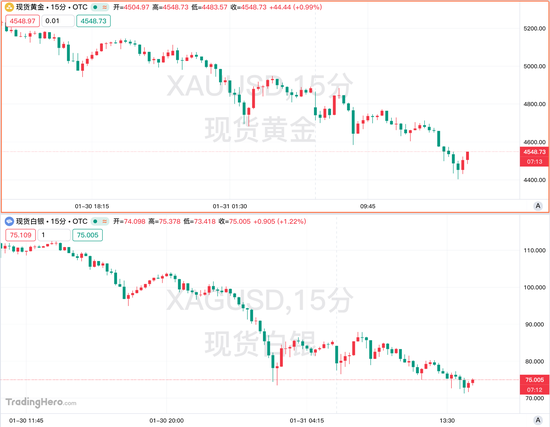
Core Viewpoint - The precious metals market is experiencing a historic crash, with gold prices nearing $4,400 per ounce and silver prices dropping below $72 per ounce, erasing significant gains made throughout the year [1][3][15]. Market Performance - On the previous Friday, gold and silver prices plummeted, with silver falling 26% in less than 20 hours, marking the largest single-day drop in history, while gold dropped 9%, the worst performance since the 1980s [3][17]. - The domestic futures market also saw a "limit down" trend, with significant declines across various sectors, including energy and precious metals, where contracts for SC crude oil and fuel oil hit their limits with declines of 7.02% and 7.01% respectively [3][17]. Regulatory Changes - CME raised margin requirements for Comex gold and silver futures in response to the volatility, increasing gold margins from 6% to 8% and silver from 11% to 15%, effective February 2 [4][18]. - The Thailand Futures Exchange expanded its price limits for gold and silver futures due to significant price drops, allowing for greater fluctuations in trading [4][18]. Analyst Perspectives - Analysts suggest that the recent declines in precious metals are driven by a deleveraging process rather than a fundamental shift in market conditions, indicating a simultaneous sell-off of precious metals and risk assets [5][19]. - CBA commodity strategist Vivek Dhar noted that the market's reaction to Kevin Walsh's nomination as Fed Chair and the strengthening dollar has pressured precious metals, but he views the current drop as an adjustment rather than a fundamental change, maintaining a bullish outlook for gold prices in Q4 [7][21]. - CMC Markets' Christopher Forbes described the situation as a typical deleveraging phase, where previously accumulated leverage is being cleared, leading to a concentrated sell-off in liquid assets [8][22]. Market Dynamics - The rapid price changes in precious metals are seen as a result of position liquidation rather than a clean macro revaluation, with potential for further declines depending on whether forced selling continues [9][23]. - Analysts from Singapore's OCBC Bank highlighted that the ongoing decline reflects a combination of technical and emotional pressures, with sensitivity to dollar movements and Fed policy uncertainty exacerbating the situation [9][23]. Institutional Role - Increased trading activity from institutions has been noted, as they seek liquidity and manage positions amid heightened volatility, which has also impacted other markets like Bitcoin and equities [13][26]. - The volatility in gold and silver has triggered liquidity pressures and margin calls among institutional investors, contributing to broader market declines [13][26].

四大证券报精华摘要:1月23日
Zhong Guo Jin Rong Xin Xi Wang· 2026-01-23 00:17
Group 1: Commercial Aerospace - The Chinese commercial aerospace sector is entering a new phase aimed at large-scale launches and commercial closed-loop systems, with significant breakthroughs expected in rocket capacity over the next 3 to 5 years [1] - By 2025, China's commercial aerospace is projected to complete 50 launches, accounting for 54% of total space launches, with 25 commercial rockets launched and 311 commercial satellites in orbit, representing 84% of total satellites [1] - The capital market for commercial aerospace companies is accelerating, with several leading firms preparing for IPOs, including Blue Arrow Aerospace and Zhongke Aerospace [1] Group 2: Public Fund Performance - The latest public fund reports reveal that the top ten holdings include companies like Zhongji Xuchuang, Ningde Times, and Tencent, with notable increases in holdings for companies like Zhongji Xuchuang, which saw an increase of 22.602 billion yuan [2] - The automotive industry is facing cost pressures due to rising prices of memory chips and metals, impacting supply chain dynamics and competition [2] Group 3: Biopharmaceutical Industry - Over 50 biopharmaceutical companies have disclosed their 2025 performance forecasts, with nearly 50% showing positive expectations, particularly in the CXO sector, where WuXi AppTec anticipates a revenue increase of approximately 15.84% [3] - The biopharmaceutical industry is expected to enter a new phase of high-quality development as structural reforms and supportive policies continue to evolve [3] Group 4: Fundraising and Market Trends - The public fund market has seen a resurgence, with several equity funds raising over 7 billion yuan, indicating a positive trend in active equity fund performance [4] - The Shanghai Suiruan Technology Co., Ltd. has received approval for its IPO, aiming to raise 6 billion yuan for product development and business expansion [5] Group 5: Aluminum Market - The aluminum market has shown strong performance, with prices rising over 12% since mid-December 2025, supported by favorable macroeconomic conditions and demand for aluminum in various applications [6] - The copper-aluminum price ratio exceeding 4 suggests a potential shift towards aluminum in sectors like air conditioning, indicating new demand growth [6] Group 6: Banking Sector - Five listed banks have reported a year-on-year increase in net profit for 2025, with improvements in non-performing loan ratios for three banks [9] - The banking sector is expected to maintain stable performance, supported by improved funding costs and a potential stabilization of net interest margins [9] Group 7: Chemical Industry - The chemical industry is experiencing positive performance, with over 60% of companies reporting improved earnings, driven by rising prices of certain chemical products [10] - The DOP market is expected to maintain upward momentum due to strong raw material prices and limited supply, indicating a stable support for pricing [10]





沪铝主力合约日内大涨4%
Mei Ri Jing Ji Xin Wen· 2026-01-05 11:32
Group 1 - The core point of the article is that the main contract for aluminum in Shanghai has experienced a significant increase of 4%, currently priced at 23,650.00 yuan per ton [1]
避险与基本面双支撑,金银铝齐涨,机构:有色矿业“春季攻势”有望前置
Jin Rong Jie· 2026-01-05 02:35
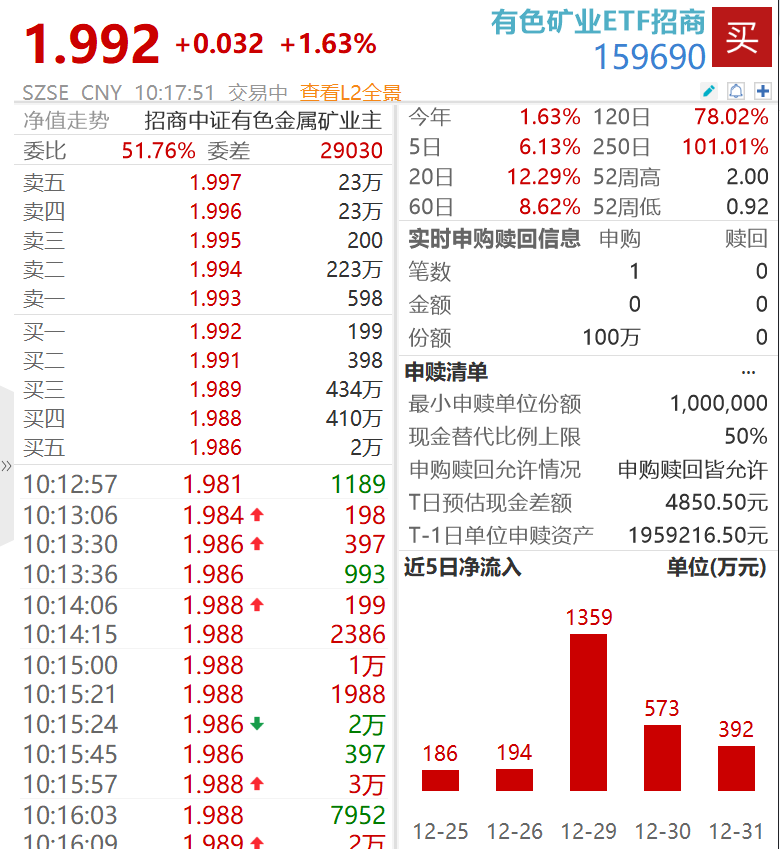
Group 1 - Commodity prices continue to rise, with spot silver surpassing $76 per ounce, increasing over 4% in a single day [1] - The main contract for aluminum on the Shanghai Futures Exchange (SHFE) opened higher and has seen an increase of over 4%, reaching the highest level since October 2021 [1] - Precious metals and industrial metals both experienced significant gains, with Hunan Silver rising over 9% and companies like China Aluminum, Xinyi Silver, and Western Gold also seeing increases [1] Group 2 - Geopolitical tensions have heightened market risk aversion, providing support for precious metal prices [2] - Recent adjustments in trading rules and economic data expectations have led to increased volatility in gold and silver prices [2] - Industrial metals like copper and aluminum maintain a strong performance, with SHFE aluminum rising 2.32% last week despite a 0.49% decline in copper [2][3] Group 3 - Bloomberg Commodity Index will undergo adjustments starting January 8, which may temporarily suppress precious metal prices due to potential sell-offs by passive tracking funds [4] - Long-term outlook remains positive for precious metals, with expectations of continued upward trends led by silver [4] - The copper and aluminum sectors are anticipated to see increased investment as they are viewed as undervalued, with a potential spring rally expected [4]

滚动更新丨A股主要指数集体高开,军工股全线走强
Di Yi Cai Jing Zi Xun· 2026-01-05 01:40
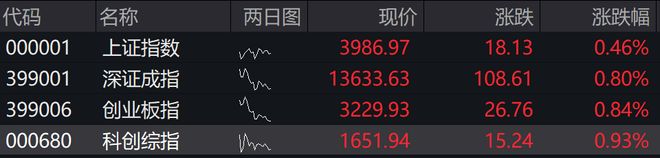
Market Overview - The A-share market opened higher with the Shanghai Composite Index up by 0.46% to 3986.97, the Shenzhen Component Index up by 0.80% to 13633.63, the ChiNext Index up by 0.84% to 3229.93, and the STAR Market Index up by 0.93% to 1651.94 [1][2] - The Hong Kong stock market also opened positively, with the Hang Seng Index rising by 0.09% to 26361.44 and the Hang Seng Tech Index increasing by 0.33% to 5755.28 [4][5] Sector Performance - In the A-share market, commercial aerospace stocks continued to perform well, military industry stocks showed strong gains, brain-computer interface concept stocks were active, and oil and gas stocks led in gains [2] - Conversely, sectors such as Hainan Free Trade Zone, Yushubot, and stablecoin themes experienced pullbacks [2] Company News - Meike Home (美克家居) resumed trading and hit the daily limit up, announcing plans to acquire 100% equity of Wande Optoelectronics [2]
LME期铜料将录得16年来最大年线涨幅 为表现最佳的基本金属
Wen Hua Cai Jing· 2025-12-31 10:47
Group 1 - LME copper prices experienced a slight decline but are expected to record the largest annual gain since 2009 in 2025, driven by supply concerns and demand growth from AI and energy sectors [1] - Year-to-date, copper prices have surged over 42% due to uncertainties surrounding US tariffs and production disruptions at mines [1] - Three-month copper futures fell by 0.49% to $12,497 per ton, while the Shanghai copper main contract rose by 0.84% to 98,240 yuan per ton, with a cumulative increase of 33.27% this year [1] Group 2 - COMEX copper inventories have reached a historical high of 490,722 tons, increasing by 426.75% year-to-date, while LME copper inventories have decreased by 44.91% to 149,475 tons [2] - Tin is projected to have the second-largest annual gain among base metals, with three-month tin futures down 1.67% but expected to record a 42% annual increase [2] Group 3 - Aluminum is identified as a winner among base metals this year, with LME three-month aluminum rising by 0.44% and expected to achieve over a 17% annual gain [3] - Nickel prices are anticipated to record an annual gain for the first time since 2023, with three-month nickel futures down 1.35% but projected to have over an 8% annual increase [3] Group 4 - Other base metals showed mixed performance, with three-month zinc down 0.24% and three-month lead up 0.22% [4]
伦敦期铜持稳在略低于纪录高点,谨慎迎接美联储决议
Wen Hua Cai Jing· 2025-12-10 09:22
Group 1 - The core viewpoint of the articles highlights the fluctuations in metal prices, particularly copper and aluminum, influenced by market expectations regarding the Federal Reserve's policy decisions and supply dynamics [1][2]. Group 2 - As of December 10, London copper prices remained stable, slightly below record highs, with a 0.68% increase to $11,565 per ton [1]. - The Shanghai Futures Exchange reported a 0.23% decrease in the main copper contract, closing at 91,850 yuan per ton [1]. - Speculators reduced their net long positions in COMEX copper futures and options by 4,155 contracts to 62,397 contracts as of the week ending November 4 [1]. Group 3 - Overseas aluminum suppliers have raised their quotes for shipments to Japan in Q1 2024, with premiums of $190-203 per ton over LME spot prices, marking an increase of 121%-136% compared to Q4 2023 [2]. - In LME base metals, three-month aluminum rose by 0.37% to $2,867 per ton, while zinc, lead, nickel, and tin also saw price increases [2]. - In Shanghai, the main aluminum contract fell by 0.25% to 21,935 yuan per ton, while other metals like zinc and nickel also experienced declines [2].
有色金属基础周报:宏观影响减弱,有色金属整体延续调整-20251124
Chang Jiang Qi Huo· 2025-11-24 08:09
1. Report Industry Investment Rating - The report does not provide a unified industry - wide investment rating. Instead, it gives specific investment suggestions for different metals: - Copper: Suggests waiting and seeing or trading in a light - position range [3] - Aluminum: Recommends waiting and seeing [3] - Zinc: Advises range trading [3] - Lead: Recommends range trading and being cautious and bearish [3] - Nickel: Suggests cautious short - holding or waiting and seeing [4] - Stainless steel: Recommends waiting and seeing [4] - Tin: Advises cautious range trading [4] - Industrial silicon: Recommends waiting and seeing [4] - Polysilicon: Suggests low - buying and high - selling [4] - Lithium carbonate: Recommends exiting and waiting and seeing [4] 2. Report's Core View - The macro - environment has a significant impact on metal prices. For example, the uncertainty of the Fed's policy and geopolitical conflicts affect market sentiment. At the same time, the fundamentals of supply and demand also play a crucial role in determining metal prices. Some metals are facing supply - side challenges such as production cuts or disruptions, while others are affected by changes in downstream demand. Overall, the market is complex and volatile, and different metals show different trends and investment opportunities [3][4]. 3. Summary According to Related Catalogs 3.1 Metals Market Analysis 3.1.1 Copper - Price trend: The Shanghai copper main contract continues to show a high - level volatile pattern. In the short term, it will remain at 85,000 - 88,000. The long - term demand outlook is optimistic, but in the short term, it is necessary to be vigilant about the suppression of consumption by high copper prices and the pressure brought by changes in the Fed's policy expectations [3]. - Fundamentals: Market consumption has improved recently, and social inventories have declined. The focus has shifted to the long - term contract negotiation of mines. Freeport - McMoRan plans to resume large - scale production in the Grasberg mine in Indonesia in the second quarter of 2026, which is expected to ease the anxiety about mine - end supply [3]. 3.1.2 Aluminum - Price trend: The price has fallen from a high level. The aluminum price is expected to fluctuate at the current position. - Fundamentals: The price of bauxite in Shanxi and Henan is stable, while the price of imported bauxite in Guinea has decreased. The operating capacity of alumina has increased, and the inventory has also increased. The operating capacity of electrolytic aluminum remains unchanged. Some enterprises have carried out production reduction and technological transformation. The downstream demand is gradually entering the off - season, and the inventory of aluminum ingots has decreased slightly [3]. 3.1.3 Zinc - Price trend: The zinc price has fluctuated weakly in the range of 22,000 - 22,800 yuan/ton. - Fundamentals: The processing fees of domestic and imported zinc mines have continued to decline, and there are expectations of production cuts. Terminal consumption is weak, and the inventory is still at a high level [3]. 3.1.4 Lead - Price trend: The Shanghai lead main contract shows a bearish trend and is expected to fluctuate weakly after a rapid decline. The reference range is 16,800 - 17,300 yuan/ton. - Fundamentals: The supply of Shanghai lead has decreased, and the prices of lead concentrate, lead ingots, and waste batteries have all declined. With the completion of the first large - capacity all - solid - state battery production line in China, the market is affected [3]. 3.1.5 Nickel - Price trend: The price has declined widely and is expected to continue to decline. - Fundamentals: The global refined nickel has continued to accumulate inventory. The price of nickel ore is stable, the price of nickel iron has declined, and the pattern of nickel iron surplus continues. The downstream stainless steel is in the off - season, with weak demand and continuous increase in inventory. The price of nickel sulfate has slightly declined, and the demand is weak [4]. 3.1.6 Tin - Price trend: The price shows a high - level volatile pattern and is expected to rise overall. The reference range is 280,000 - 300,000 yuan/ton. - Fundamentals: The domestic refined tin production has increased year - on - year, and the import of tin concentrate has increased month - on - month. The export of refined tin in Indonesia has decreased. The semiconductor industry is expected to continue to recover, and the inventory is at a medium level. The supply of tin ore is expected to improve [4]. 3.1.7 Industrial Silicon and Related Products - Price trend: Industrial silicon is at high risk and is recommended to wait and see; polysilicon is recommended for low - buying and high - selling. - Fundamentals: The production of industrial silicon has decreased, and the inventory of polysilicon has increased. The production of organic silicon has increased, and enterprises have reached a price - holding consensus and formulated production - cut measures. The production of the photovoltaic industry chain is expected to decline slightly [4]. 3.1.8 Lithium Carbonate - Price trend: The price has risen and then fallen, and it is expected to fluctuate strongly. - Fundamentals: The supply of lithium carbonate is in a tight balance. The production in October has increased month - on - month, and the import has also changed. The downstream demand is strong, especially in the energy storage field. However, there are still uncertainties in the mining rights of Yichun mines [4]. 3.2 Macroeconomic Data - The report provides a series of macro - economic data, including the US economic data (such as the New York Fed manufacturing index, durable goods orders, unemployment rate, etc.), euro - zone inflation data, and China's loan market quotation rate (LPR). These data reflect the current economic situation of different regions and have an impact on the metal market [12][15][16].