
虾蟹类

Search documents
2025年12月CPI同比上涨0.8% 扩内需促消费政策继续显效
Chang Jiang Shang Bao· 2026-01-12 04:54
Group 1: CPI Analysis - In December 2025, the Consumer Price Index (CPI) increased by 0.8% year-on-year, marking the highest level since March 2023, with a month-on-month increase of 0.2% [2][3] - The rise in CPI was driven by increased consumer demand due to the upcoming New Year holiday, with prices for communication tools, baby products, entertainment durable goods, and household appliances rising between 1.4% and 3.0% [2] - Food prices contributed significantly to the CPI increase, with a year-on-year rise of 1.1%, particularly driven by fresh vegetables and fruits, which saw price increases of 18.2% and 4.4% respectively [3][4] Group 2: PPI Analysis - The Producer Price Index (PPI) showed a month-on-month increase of 0.2% in December 2025, marking three consecutive months of growth, with the year-on-year decline narrowing to 1.9% [6][7] - The improvement in PPI is attributed to enhanced supply-demand dynamics in the industrial sector, supported by ongoing capacity governance policies and the positive impact of international commodity prices [6][7] - Key industries such as coal mining and lithium-ion battery manufacturing experienced price increases, indicating a recovery in industrial production and demand [6][7] Group 3: Sector-Specific Insights - The prices in the coal mining and washing industry increased by 1.3% and 0.8% respectively, continuing a five-month upward trend, while prices in the new energy vehicle manufacturing sector shifted from decline to increase [6][7] - The digital economy, new materials, and green transition sectors showed strong performance, with prices for external storage devices and components rising by 15.3% and for biomass liquid fuels by 9.0% [7] - Consumer spending in cultural and quality goods has surged, leading to price increases in related manufacturing sectors, such as a 23.3% rise in the price of arts and crafts products [7]

去年12月南京CPI同比上涨0.5%
Xin Lang Cai Jing· 2026-01-11 18:13
Core Insights - In December, Nanjing's Consumer Price Index (CPI) increased by 0.5% year-on-year, with food prices decreasing by 1.1% and non-food prices rising by 0.9% [1][2] - Month-on-month, the CPI rose by 0.1%, with food prices down by 0.5% and non-food prices up by 0.2% [1][3] Year-on-Year Analysis - Among the eight categories, five saw price increases while three experienced declines. Notable increases were in clothing (2.2%), household goods and services (2.2%), education and entertainment (2.3%), healthcare (3.1%), and other goods and services (19.7%). Conversely, food and tobacco, housing, and transportation and communication prices fell by 0.6%, 0.6%, and 3.3% respectively [1] - The decline in food prices by 1.1% was less than the previous month, contributing to a total price level decrease of approximately 0.19 percentage points. Fresh vegetables, fruits, and freshwater fish saw price increases of 12.4%, 2.2%, and 1.0%, while pork and eggs dropped significantly by 17.4% and 12.9% [1] Month-on-Month Analysis - In December, five categories increased while three decreased. Increases were noted in clothing (0.2%), household goods and services (0.5%), education and entertainment (0.2%), healthcare (0.6%), and other goods and services (3.1%). Decreases were observed in food and tobacco, housing, and transportation and communication by 0.2%, 0.2%, and 0.5% respectively [3] - Food prices decreased by 0.5%, contributing to a total price level decrease of about 0.08 percentage points. Fresh food prices fell by 0.7%, with specific declines in fresh vegetables (2.0%), pork (1.3%), freshwater fish (2.0%), crab and shrimp (2.2%), and eggs (0.5%) [3] - Non-food prices shifted from a 0.2% decline in November to a 0.2% increase in December. Industrial consumer goods prices rose by 0.6%, with gasoline and diesel prices decreasing by 1.2% and 1.4% respectively. Gold jewelry prices increased by 4.9%, while platinum jewelry prices surged by 22.5% [3]
上月CPI同比上涨0.8% 回升至2023年3月以来最高
Sou Hu Cai Jing· 2026-01-11 12:33
Group 1: CPI Analysis - In December 2025, the Consumer Price Index (CPI) increased by 0.2% month-on-month and 0.8% year-on-year, marking the highest level since March 2023 with a 0.1 percentage point increase from November [1] - The core CPI rose by 1.2% year-on-year, maintaining a growth rate above 1% for four consecutive months [5] - The increase in CPI was primarily driven by rising prices of industrial consumer goods, excluding energy, and a significant rise in food prices, particularly fresh fruits and seafood [4][6] Group 2: PPI Analysis - The Producer Price Index (PPI) fell by 1.9% year-on-year in December 2025, but the decline was less severe than in November, with a 0.3 percentage point narrowing of the drop [3][7] - Month-on-month, the PPI increased for three consecutive months, indicating a strengthening trend [3] - Factors contributing to the PPI increase include seasonal demand improvements and rising prices in the non-ferrous metals sector, which have been supported by anti-involution measures [7][8] Group 3: Sector-Specific Insights - The prices in the non-ferrous metal mining sector have been rising for 22 consecutive months, driven by both international demand for key metals and domestic growth in high-end manufacturing sectors such as lithium batteries and photovoltaic equipment [9] - The government's policy to stabilize growth in the non-ferrous metal industry aims for an average annual increase of 5% in value-added output from 2025 to 2026 [9]
2025年12月份CPI和PPI出炉 扩内需政策助力供需关系改善
Zheng Quan Ri Bao· 2026-01-09 16:25
Group 1: CPI Analysis - In December 2025, the Consumer Price Index (CPI) increased by 0.2% month-on-month and 0.8% year-on-year, with core CPI (excluding food and energy) rising by 1.2% year-on-year [1][3] - The rise in CPI was primarily driven by increased prices in non-energy industrial consumer goods, which rose by 0.6%, contributing approximately 0.16 percentage points to the month-on-month CPI increase [2] - Food prices rose by 1.1% year-on-year, significantly contributing to the CPI increase, while energy prices decreased by 3.8% [3] Group 2: PPI Analysis - The Producer Price Index (PPI) rose by 0.2% month-on-month in December 2025, marking three consecutive months of increase, while the year-on-year decline narrowed to 1.9% [5] - Factors contributing to the PPI increase include seasonal demand improvements and rising prices in the non-ferrous metals sector [5][6] - Positive changes in various industries were noted, with prices in coal mining, lithium-ion battery manufacturing, and photovoltaic equipment showing reduced year-on-year declines [5][6] Group 3: Economic Outlook - The overall economic indicators suggest a stable improvement in China's economy, with demand gradually recovering and supply-side structural optimization continuing [7] - The implementation of consumption-boosting policies has shown significant effects, particularly in the cultural and quality consumption sectors [7] - The combination of favorable weather conditions and effective consumption policies has led to a notable increase in food prices, contributing to the CPI's upward trend [4][7]
从CPI同比上涨0.8%看中国经济的“稳”与“进”
Yang Shi Wang· 2026-01-09 07:25
Core Insights - The Consumer Price Index (CPI) for December 2025 increased by 0.8% year-on-year, marking the highest level since March 2023, with a month-on-month increase of 0.2% after a previous decline [1] - The core CPI, excluding food and energy, rose by 1.2% year-on-year, maintaining a growth rate above 1% for four consecutive months [1] - The increase in consumer demand, driven by policy incentives and seasonal factors, has led to price increases in various categories, including fresh fruits and seafood [1] Economic Policies and Consumer Behavior - The implementation of major policies aimed at expanding domestic demand has positively impacted consumer sentiment, with initiatives such as the trade-in policy for consumer goods and targeted consumption promotion actions [1] - There has been a notable increase in the consumption of automobiles, mobile phones, and home appliances, with price trends significantly better than in previous years [1] Annual Overview - For the entire year of 2025, the national CPI remained flat compared to the previous year, while the core CPI saw a modest increase of 0.7% [1]
从CPI同比上涨0.8%看中国经济的“稳”与“进” 提振消费政策效果持续显现
Yang Shi Wang· 2026-01-09 05:28
Group 1 - The core viewpoint of the news is that the Consumer Price Index (CPI) in December 2025 increased by 0.8% year-on-year, marking the highest level since March 2023, driven by increased consumer demand and policy incentives [1][3]. - In December 2025, the month-on-month CPI shifted from a decrease of 0.1% in the previous month to an increase of 0.2%, influenced by heightened consumer demand before the holiday season [3]. - The core CPI, excluding food and energy prices, rose by 1.2% year-on-year, maintaining a growth rate above 1% for four consecutive months [1][3]. Group 2 - The National Development and Reform Commission highlighted that the implementation of major policies aimed at expanding domestic demand, such as the trade-in policy for consumer goods, has effectively boosted consumer willingness and potential [5]. - There has been a notable increase in the consumption of related goods such as automobiles, mobile phones, and home appliances, with price trends significantly better than in previous years [5]. - For the entire year of 2025, the national CPI remained flat compared to the previous year, while the core CPI increased by 0.7% [8].
解读:2025年12月份CPI同比涨幅继续扩大 PPI同比降幅收窄
Guo Jia Tong Ji Ju· 2026-01-09 03:00
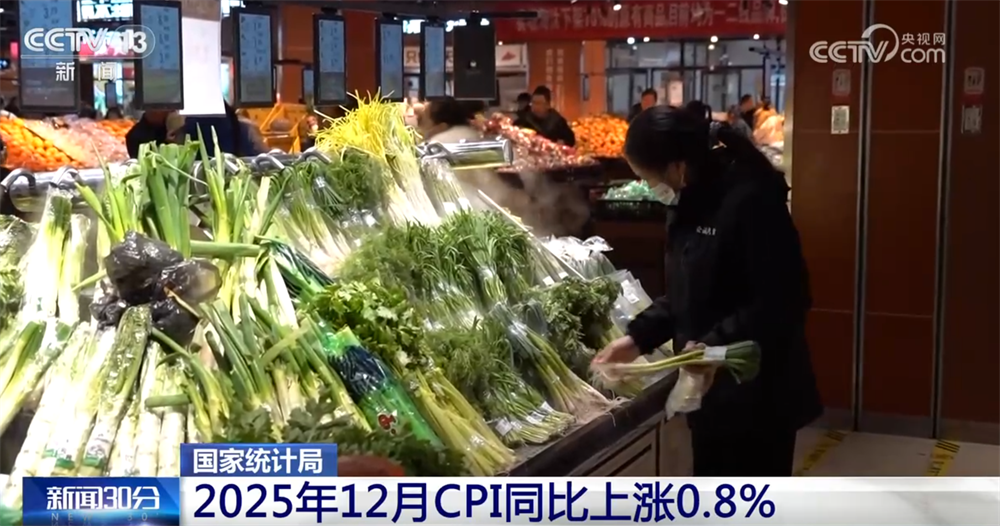
Group 1: CPI Analysis - The Consumer Price Index (CPI) increased by 0.2% month-on-month and 0.8% year-on-year, with the core CPI rising by 1.2% year-on-year, indicating a recovery in consumer demand as New Year's approaches [1][2][3] - The month-on-month increase in CPI was primarily driven by rising prices of industrial consumer goods, excluding energy, which rose by 0.6%, contributing approximately 0.16 percentage points to the CPI increase [2] - Food prices rose by 1.1% year-on-year, with significant increases in fresh vegetables (18.2%) and fresh fruits (4.4%), contributing approximately 0.17 percentage points to the year-on-year CPI increase [3] Group 2: PPI Analysis - The Producer Price Index (PPI) rose by 0.2% month-on-month, marking the third consecutive month of increase, with the growth rate expanding by 0.1 percentage points compared to the previous month [4] - The month-on-month PPI increase was supported by improved supply-demand dynamics, with notable price increases in coal mining (1.3%) and lithium-ion battery manufacturing (1.0%) [4] - Year-on-year, the PPI decreased by 1.9%, but the decline rate narrowed by 0.3 percentage points, reflecting positive changes in certain industries due to ongoing macroeconomic policies [4]
国家统计局:2025年12月CPI同比上涨0.8% PPI同比下跌1.9%
Guo Jia Tong Ji Ju· 2026-01-09 01:52
Group 1: CPI Overview - In December 2025, the national consumer price index (CPI) increased by 0.8% year-on-year, with urban areas rising by 0.9% and rural areas by 0.6% [1] - The CPI rose by 0.2% month-on-month in December, with both urban and rural areas experiencing the same increase [1] - For the entire year of 2025, the CPI remained unchanged compared to the previous year [1] Group 2: Year-on-Year Price Changes - In December, food, tobacco, and alcohol prices rose by 0.8% year-on-year, contributing approximately 0.24 percentage points to the CPI increase [2] - Fresh vegetable prices surged by 18.2%, impacting the CPI by approximately 0.39 percentage points, while fresh fruit prices increased by 4.4%, contributing about 0.09 percentage points [2] - Prices for pork decreased by 14.6%, leading to a CPI decrease of about 0.20 percentage points [2] Group 3: Month-on-Month Price Changes - In December, food, tobacco, and alcohol prices increased by 0.2% month-on-month, contributing approximately 0.05 percentage points to the CPI [3] - Fresh fruit prices rose by 2.6%, impacting the CPI by about 0.05 percentage points, while fresh vegetable prices increased by 0.8%, contributing approximately 0.02 percentage points [3] - Prices for clothing and transportation remained stable, while housing prices decreased by 0.1% [3] Group 4: PPI Overview - In December 2025, the industrial producer price index (PPI) decreased by 1.9% year-on-year, with the decline narrowing by 0.3 percentage points from the previous month [8] - Month-on-month, the PPI rose by 0.2%, with the increase expanding by 0.1 percentage points compared to the previous month [8] - For the entire year of 2025, the PPI fell by 2.6% [8] Group 5: Year-on-Year PPI Changes - In December, the prices of production materials decreased by 2.1%, contributing approximately 1.53 percentage points to the overall decline in the PPI [9] - Prices in the mining industry fell by 4.7%, while raw materials and processing industries saw declines of 2.6% and 1.6%, respectively [9] - Life goods prices decreased by 1.3%, impacting the PPI by about 0.35 percentage points [9] Group 6: Month-on-Month PPI Changes - In December, production materials prices increased by 0.3%, contributing approximately 0.24 percentage points to the overall PPI increase [10] - Prices in the mining industry rose by 0.8%, while life goods prices remained stable [10] - Prices for non-ferrous metals and fuel power categories saw increases, while black metal materials prices decreased by 0.4% [10] Group 7: CPI and PPI Insights - The CPI's month-on-month increase was driven by rising industrial consumer goods prices, with core CPI (excluding food and energy) rising by 1.2% [18][19] - The PPI's month-on-month increase reflects improvements in supply-demand structures and seasonal demand increases in certain industries [21] - The overall economic policies have positively influenced price trends in various sectors, leading to a narrowing of price declines in specific industries [22]
国家统计局:12月CPI同比上涨0.8% PPI环比涨幅扩大
Guo Jia Tong Ji Ju· 2026-01-09 01:47
Group 1: Consumer Price Index (CPI) Insights - In December 2025, the national Consumer Price Index (CPI) increased by 0.8% year-on-year, with urban areas rising by 0.9% and rural areas by 0.6% [1][3][22] - Food prices rose by 1.1%, while non-food prices increased by 0.8%. The prices of consumer goods went up by 1.0%, and service prices saw a 0.6% increase [1][3][24] - The core CPI, excluding food and energy, rose by 1.2%, marking a continuous increase for four months [22][24] Group 2: Producer Price Index (PPI) Insights - In December 2025, the Producer Price Index (PPI) decreased by 1.9% year-on-year, but the decline was narrower than the previous month by 0.3 percentage points. Month-on-month, the PPI increased by 0.2%, with the growth rate expanding by 0.1 percentage points [12][13][27] - The prices of industrial producers' outgoing products were influenced by a 2.1% decline in production materials, which affected the overall PPI level [16][21] - The prices of coal mining and washing, as well as lithium-ion battery manufacturing, showed positive changes, with respective increases of 1.3% and 1.0% month-on-month [25][27] Group 3: Price Changes in Specific Categories - In December, the prices of food, tobacco, and alcohol rose by 0.8% year-on-year, contributing approximately 0.24 percentage points to the CPI increase [6][22] - Fresh vegetable prices surged by 18.2%, while fresh fruit prices increased by 4.4%, significantly impacting the CPI [6][24] - The prices of industrial producer inputs, particularly in the construction materials and non-metallic categories, saw a decline of 6.4% year-on-year [19][21] Group 4: Overall Economic Context - The expansion of domestic demand and consumption policies continued to show effects, with increased consumer demand leading to a rise in the CPI [22][23] - The overall industrial production prices reflected a mixed trend, with some sectors experiencing price increases due to improved supply-demand structures [25][27] - The overall economic environment is characterized by a combination of rising consumer prices and declining producer prices, indicating a complex economic landscape [22][27]
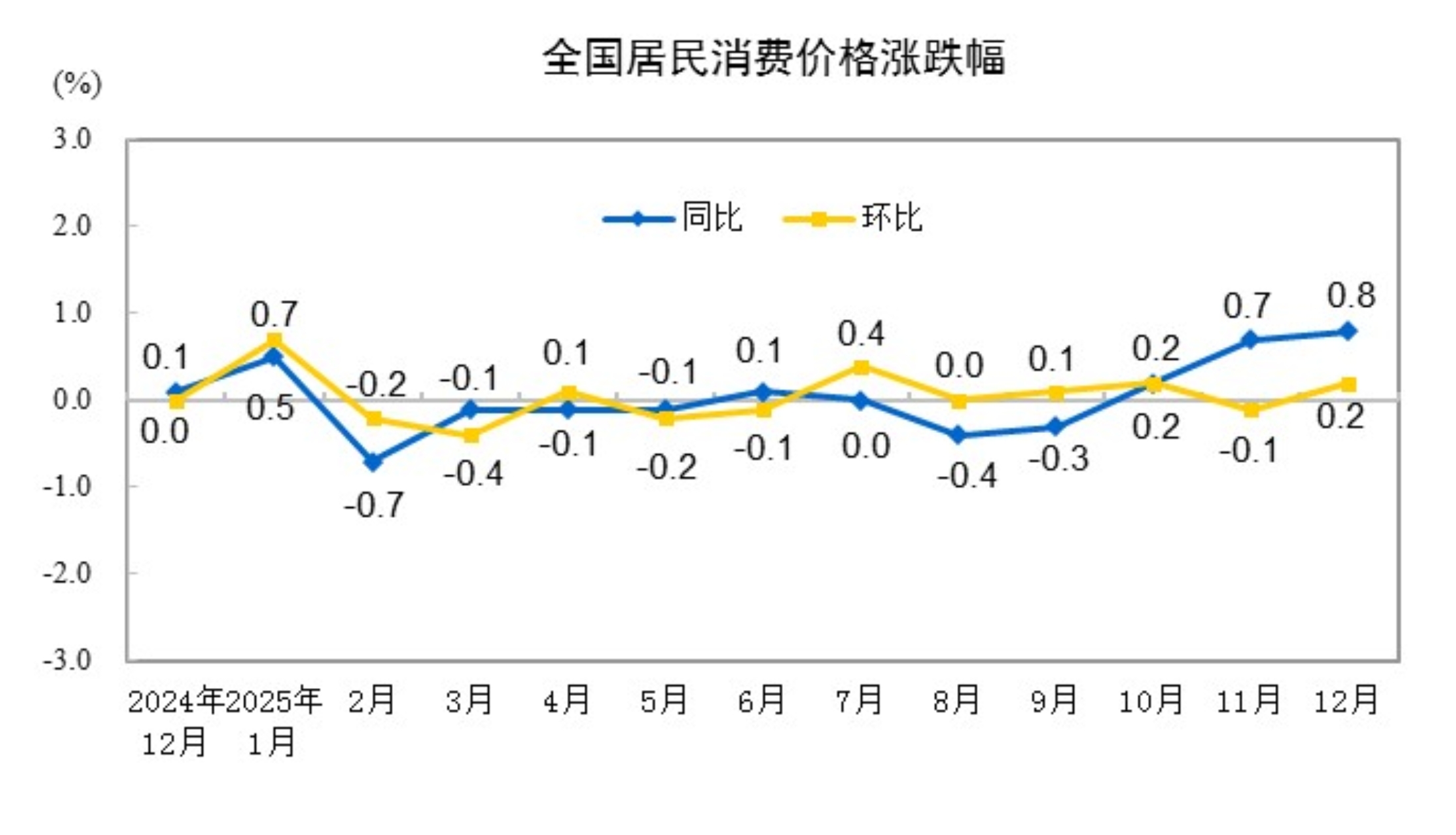
中国12月CPI环比由降转涨,同比涨幅继续扩大,核心CPI上涨1.2%
Hua Er Jie Jian Wen· 2026-01-09 01:35
Group 1: CPI Analysis - In December, the Consumer Price Index (CPI) increased by 0.8% year-on-year, up from 0.7% in the previous month, marking the highest level since March 2023 [1][4] - The core CPI, excluding food and energy, rose by 1.2% year-on-year, maintaining above 1% for four consecutive months [4] - The increase in CPI was primarily driven by a rise in food prices, which increased by 1.1%, with fresh vegetables and fruits seeing significant price hikes of 18.2% and 4.4% respectively [4][3] Group 2: PPI Analysis - The Producer Price Index (PPI) rose by 0.2% month-on-month, marking the third consecutive month of increase, with the growth rate expanding by 0.1 percentage points from the previous month [5][7] - Year-on-year, the PPI decreased by 1.9%, but the decline was narrower by 0.3 percentage points compared to the previous month, indicating some positive changes in certain industries [7] - Key industries such as coal mining and lithium-ion battery manufacturing saw price increases, reflecting improvements in supply-demand dynamics and ongoing policy effects [5][6]