
音像器材

Search documents
社零总额超1.6万亿、增速4.6%,上海的消费驱动力何来?
Sou Hu Cai Jing· 2026-01-26 03:04
Core Insights - Shanghai's retail sales reached 1,660.093 billion yuan in 2025, marking a year-on-year growth of 4.6%, surpassing the national average growth rate [1][4] - The growth reflects the effectiveness of Shanghai's government policies aimed at boosting consumption and stabilizing economic growth, showcasing the city's resilience and innovative capacity in the consumer market [1][4] Economic Performance - The retail sales growth of 4.6% is seen as a significant achievement, boosting market confidence and indicating strong recovery potential in Shanghai's consumption landscape [4][5] - Fashion categories, including clothing and cosmetics, account for nearly 40% of total retail sales, reinforcing Shanghai's status as a "fashion consumption capital" [1][4] Policy and Measures - The Shanghai government has implemented various measures to stimulate service consumption and enhance the quality of services, indicating a systematic expansion of service supply to meet diverse consumer needs [5][10] - Policies such as "two new" initiatives (large-scale equipment updates and trade-in programs) have shown positive results, with significant growth in retail sales across various categories [7][10] Consumer Trends - The online consumption share increased from 45.3% in 2024 to 50.5% in 2025, highlighting the robust innovation in business models [4][11] - The "immediate purchase and refund" tax refund service for international tourists saw a remarkable growth of approximately 80% in sales, indicating its effectiveness in attracting inbound consumption [11] Future Outlook - In 2026, Shanghai aims to continue driving high-quality development in the business sector by aligning new demand with new supply, fostering a more vibrant consumer market [2][12] - The city plans to enhance its consumption ecosystem by optimizing supply, innovating consumption scenarios, and maintaining a dual-driven approach of policies and activities [14][15]


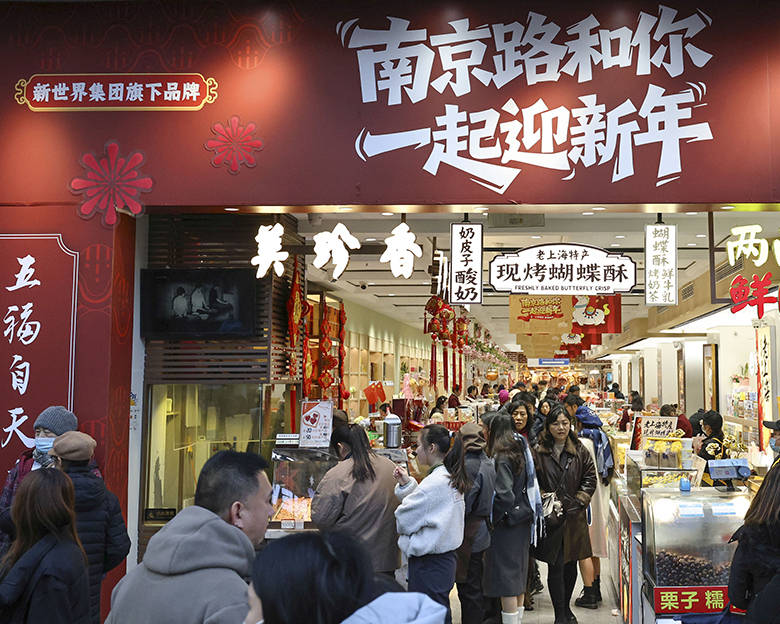
2025年杭州经济成绩单“出炉”
Mei Ri Shang Bao· 2026-01-21 22:31
Economic Overview - In 2025, Hangzhou's GDP reached 23,011 billion yuan, growing by 5.2% year-on-year, surpassing the national average by 0.2% [1] Agriculture - The total output value of agriculture, forestry, animal husbandry, and fishery in Hangzhou was 569 billion yuan, with growth rates of 3.8% for planting, 5.3% for forestry, 0.2% for animal husbandry, and 4.2% for fishery [2] - Major agricultural products included a total grain output of 599,000 tons (up 3.9%), vegetable output of 3,860,000 tons (up 3.6%), and fruit output of 900,000 tons (up 3.9%) [2] Industrial Growth - The added value of industrial enterprises above designated size was 4,624 billion yuan, with significant growth in the computer, communication, and other electronic equipment manufacturing (up 13.4%) and automotive manufacturing (up 36.7%) [3] - New quality productivity showed remarkable results, with high-tech industries, strategic emerging industries, and high-end equipment manufacturing growing by 7.5%, 10.0%, and 9.5% respectively [3] - Production of new energy vehicles, industrial robots, and 3D printing equipment saw explosive growth rates of 383.0%, 38.6%, and 15.1% respectively [3] Service Sector - The added value of the service industry was 16,997 billion yuan, with the profit-making service sector growing by 7.0% and financial services by 6.4% [4] - From January to November, the revenue of the service industry above designated size reached 21,168 billion yuan, growing by 8.1%, with the information transmission, software, and IT services sector growing by 13.4% [4] Consumer Market - The total retail sales of consumer goods in Hangzhou reached 9,499 billion yuan, indicating a stable and upgrading consumption pattern [5] - The "8+4" economic policy led to significant growth in retail sales of household appliances (up 42.8%) and communication equipment (up 31.4%) [5] - Upgrading consumption demands were strong, with sports and entertainment goods growing by 45.3% and cosmetics by 12.3% [5] Foreign Trade - The total import and export value was 9,072 billion yuan, with exports at 6,469 billion yuan and imports at 2,603 billion yuan [6] - The export of electromechanical products reached 3,107 billion yuan (up 10.9%), and high-tech products reached 1,001 billion yuan (up 9.9%) [6] - The private economy accounted for 77.0% of total exports, with exports to Belt and Road countries growing by 14.1% [6] Living Standards - The per capita disposable income of residents was 80,017 yuan, with balanced growth across four income sources [7] - Urban residents had a per capita disposable income of 86,640 yuan (up 3.9%), while rural residents had 53,565 yuan (up 5.4%), narrowing the income gap to 1.62 [7] Price Stability - In 2025, the consumer price index remained stable compared to the previous year, with six categories of goods experiencing price increases and two categories seeing declines [8] - Hangzhou aims to achieve a GDP of 30 trillion yuan and a per capita GDP of over 30,000 USD by 2030, focusing on policy coordination and market demand stimulation [8]
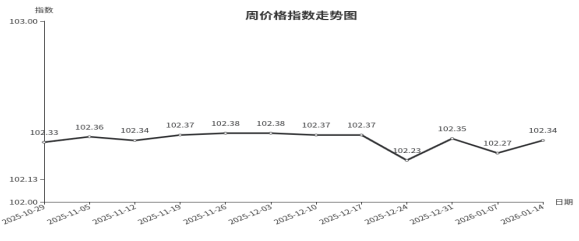
临沂商城周价格总指数为102.34点,环比上涨0.07点
Zhong Guo Fa Zhan Wang· 2026-01-16 06:33
Core Insights - The overall price index of Linyi Mall increased to 102.34 points this week, reflecting a slight week-on-week rise of 0.07 points, but a year-on-year decline of 1.50 points [1] Price Index Summary - Among 14 categories of goods, 5 categories saw price increases, 7 remained stable, and 2 categories experienced price declines. The top three categories with price increases were building decoration materials, steel, and household appliances and audio-visual equipment [3] Building Decoration Materials - The weekly price index for building decoration materials reached 107.49 points, with a week-on-week increase of 0.81 points. The largest increase was in the decorative materials subcategory, driven by rising aluminum prices, which increased production costs [5][7] Steel - The weekly price index for steel rose to 95.25 points, with a week-on-week increase of 0.18 points. Various subcategories, including profiles, pipes, and construction steel, saw price increases, while plate prices slightly declined. The market remains in a seasonal downturn with limited demand [8] Household Appliances and Audio-Visual Equipment - The weekly price index for household appliances and audio-visual equipment increased to 103.03 points, with a week-on-week rise of 0.07 points. The price of audio-visual equipment and refrigeration appliances increased, while prices for water heaters and purification appliances saw minor declines [10] Daily Necessities - The weekly price index for daily necessities decreased to 102.68 points, with a week-on-week decline of 0.02 points. Prices for bags, crafts, toys, and beauty products fell, influenced by seasonal demand reduction and e-commerce price competition [13] Clothing and Accessories - The weekly price index for clothing and accessories fell to 103.51 points, with a week-on-week decrease of 0.02 points. The decline was driven by clearance promotions for winter inventory, particularly in footwear, while clothing prices remained stable overall [16] Price Index Table - A detailed table shows the price index changes for various categories, highlighting the overall index increase and specific category movements [17]
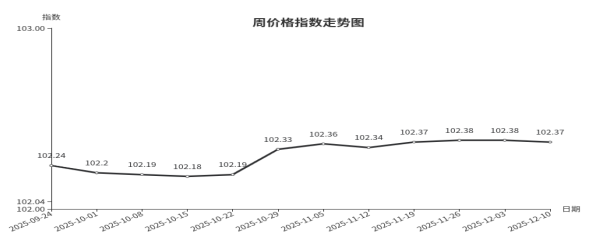
临沂商城价格指数分析(12月4日—12月10日)
Zhong Guo Fa Zhan Wang· 2025-12-12 05:00
Core Viewpoint - The overall price index in Linyi Mall has shown a slight decline this week, indicating a trend of decreasing prices across various categories, with specific categories experiencing both increases and decreases in their respective indices [1][17]. Price Index Summary - The total price index for Linyi Mall this week is 102.37 points, down 0.01 points from the previous week, reflecting a decrease of 0.01% week-on-week and a year-on-year decrease of 1.56% [1]. - Among 14 categories of goods, 2 categories saw price increases, 6 remained stable, and 6 experienced price declines [3]. Category-Specific Price Movements - **Steel Products**: The weekly price index for steel products is 96.04 points, up 0.02 points from the previous week. The construction steel and profile steel categories saw increases, while pipe materials remained stable. The overall market is experiencing limited price increases due to seasonal factors and reduced construction activity [5][8]. - **Lighting Products**: The weekly price index for lighting products is 104.29 points, up 0.02 points. There was a slight increase in prices for lighting accessories and home lighting, driven by a slight recovery in sales due to upcoming festive activities [9][6]. - **Board Products**: The weekly price index for board products is 97.39 points, down 0.04 points. The market is entering a seasonal consumption lull, leading to decreased demand and lower average sales prices for main products like solid wood boards and woodworking boards [12][10]. - **Furniture**: The weekly price index for furniture is 88.54 points, down 0.02 points. The market is characterized by low customer traffic, with sales primarily driven by retail, leading to price reductions as merchants compress profits to stimulate transactions [15][13]. - **Home Appliances and Audio-Visual Equipment**: The weekly price index for this category is 103.01 points, down 0.02 points. Significant price drops were noted in refrigeration appliances, while some minor increases were observed in water heaters and personal electronics. Sales have slightly declined as the month progresses, contributing to downward price pressure [18][16].
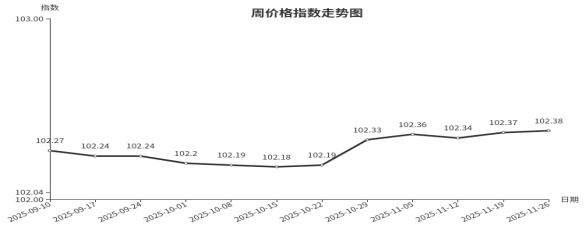
本周临沂商城周价格总指数为102.38点,环比上涨0.01点(11月20日—11月26日)
Zhong Guo Fa Zhan Wang· 2025-11-28 08:01
Core Insights - The overall price index of Linyi Mall increased slightly to 102.38 points this week, reflecting a marginal week-on-week rise of 0.01 points, but a year-on-year decline of 1.50 points [1] Price Index Summary - **Household Appliances and Audio-Visual Equipment**: The price index rose to 103.03 points, up by 0.08 points week-on-week, driven by increased sales of personal appliances like foot baths and hair dryers, despite slower sales of air conditioners and kitchen appliances [5] - **Building and Decoration Materials**: The index increased to 106.17 points, up by 0.08 points week-on-week, influenced by rising aluminum prices, although overall market demand remains weak due to lower temperatures [8] - **Steel**: The index reached 95.99 points, with a week-on-week increase of 0.02 points, but the market is experiencing seasonal slowdowns in construction activity, leading to reduced purchasing enthusiasm [10] - **Clothing and Accessories**: The index fell to 103.64 points, down by 0.02 points week-on-week, with notable price drops in footwear, although there was an increase in wholesale transactions for certain apparel items [13] - **Cultural and Office Supplies**: The index decreased to 108.63 points, down by 0.01 points week-on-week, as demand weakened and inventory levels were reduced by distributors [16] - **Daily Necessities**: The index dropped to 102.77 points, down by 0.01 points week-on-week, with price declines in various categories, although some items like jewelry saw price increases [19] Price Index Table Summary - The overall price index increased from 102.37 to 102.38 points, with various categories showing mixed results in price changes [21]
开源证券:社零数据增速环比继续回落 但部分消费环比改善较好
Zhi Tong Cai Jing· 2025-11-17 06:21
Core Viewpoint - The report from Kaiyuan Securities indicates a continued decline in the growth rate of social retail sales in October 2025, with expectations for more fiscal policies to support domestic demand and a recovery in consumer spending [1] Monthly Observation - In October 2025, the total retail sales of consumer goods increased by 2.9% year-on-year, with a month-on-month decline of 0.1 percentage points from September [1] - The consumption structure showed marginal recovery in food, beverages, tobacco, and catering due to holiday spending, while the "trade-in" policy's diminishing effect and a high base from the previous year led to negative growth in appliances and automotive categories [1] - Catering and above-limit catering revenue increased by 3.8% and 3.7% year-on-year, respectively, with month-on-month growth of 2.9 percentage points and 5.3 percentage points from September, supported by holiday travel [1] - Sub-sectors such as grain and oil food, beverages, and tobacco saw year-on-year increases of 9.1%, 7.1%, and 4.1%, respectively, with significant month-on-month improvements [1] Quarterly Observation - The growth rate of social retail sales is expected to continue declining in Q4 2025, although there may be marginal improvements in the growth rates of catering and food and beverage sectors [2] - In October 2025, the retail sales growth rate decreased by 0.6 percentage points compared to Q3 2025, primarily due to the weakening effect of subsidy policies and a high base from the previous year [2] - The growth rates for grain and oil food, beverages, and tobacco in October 2025 improved compared to Q3 2025, indicating a positive trend in food and beverage consumption [2] Industry Observation - The liquor industry is still in a bottoming phase, with structural differentiation in consumption during the October holiday, showing recovery in mass banquets and family gatherings, while business consumption remains weak [3] - The snack industry demonstrates resilience due to its high-frequency demand, supported by holiday consumption, with leading companies enhancing competitiveness through product innovation and channel expansion [3]
重磅经济数据即将发布 央地加力冲刺全年经济增长目标
Di Yi Cai Jing· 2025-11-12 12:54
Core Viewpoint - The upcoming economic data release by the National Bureau of Statistics on November 14 is expected to show a slowdown in several macroeconomic indicators for October, influenced by a higher base from the previous year and increased external uncertainties. Economists maintain a stable outlook for China's economy, projecting a 5% growth target for the year, with a focus on domestic demand recovery amid a complex external environment [1][8]. Economic Growth and Policy Measures - The First Financial Research Institute's Chief Economist Confidence Index remains at 50.3, indicating stable economic performance [1]. - The government is intensifying growth stabilization policies to consolidate and expand the economic recovery momentum, aiming to achieve key annual targets [1][9]. Industrial Growth - The average forecast for October's industrial added value year-on-year growth is 5.7%, down from 6.5% in the previous month [2]. - The manufacturing PMI fell to 49.0%, indicating a contraction in manufacturing activity, influenced by pre-holiday demand release and a complex international environment [2][3]. - High-frequency data shows a decline in production indices, with steel production maintaining a strong performance, while chemical production also saw improvements [3]. Consumer Spending - The forecast for October's retail sales growth is 2.7%, down from 3% in the previous month, influenced by holiday consumption and promotional activities [4][5]. - The automotive sector reported record production and sales figures, with significant growth in new energy vehicle sales [5]. Investment Trends - Fixed asset investment is expected to decline by 0.8% year-on-year, with infrastructure investment showing signs of potential recovery due to new policy measures [6][7]. - The real estate sector continues to face challenges, with declining transaction volumes in major cities [6][7]. Economic Outlook - Despite external challenges, China's economy demonstrated resilience with a 5.2% growth in the first three quarters of the year [8]. - The government emphasizes the need for effective policy implementation to support both short-term growth and long-term development [8][9]. - Local governments are actively deploying measures to stimulate consumption and investment, including issuing consumption vouchers and launching major infrastructure projects [10].
(经济观察)消费稳步扩大 中国经济主引擎持续发力
Zhong Guo Xin Wen Wang· 2025-10-20 11:50
Group 1 - The core viewpoint of the article highlights that China's consumer market is steadily expanding, with a 4.5% year-on-year growth in retail sales of consumer goods in the first three quarters, contributing 53.5% to economic growth, an increase of 9 percentage points from the previous year [1][2] - The increase in consumer spending is attributed to effective consumption-boosting policies, including the issuance of 300 billion RMB in special bonds to support the replacement of old consumer goods [1][2] - The retail sales of household appliances, cultural office supplies, furniture, and communication equipment have all seen double-digit growth due to the "old for new" policy, with over 8.3 million applications for car replacements this year [1][2] Group 2 - Service consumption has also accelerated, with service retail sales growing by 5.2% year-on-year, outpacing goods retail sales by 0.6 percentage points [2] - New consumption models such as instant retail, live streaming sales, and social e-commerce are rapidly growing, with online retail sales increasing by 9.8% year-on-year [2] - Despite the growth in consumption, the retail sales growth rate is still below the overall economic growth rate, indicating a need to enhance consumer willingness [2][3] Group 3 - Future strategies should focus on stabilizing and expanding employment, promoting stable income growth, and enhancing consumer capacity and willingness [3] - There is a call for more systematic and comprehensive measures to stimulate domestic demand and release consumption potential, alongside current consumption-boosting policies [3] - Maintaining economic stability and growth is crucial for boosting consumer confidence and expectations in the face of increasing uncertainties [3]
国家统计局:宏观政策主动作为和精准发力 主要宏观经济指标总体平稳
Sou Hu Cai Jing· 2025-10-20 05:06
Group 1 - The core viewpoint of the article emphasizes that China's economy has shown resilience and steady progress in 2023, supported by proactive macroeconomic policies and effective implementation of various initiatives aimed at expanding domestic demand and revitalizing the capital market [1][2][3][4] Group 2 - The release of consumption potential is being facilitated through the issuance of 300 billion yuan in special long-term bonds to support consumer goods replacement, contributing to a 53.5% growth in final consumption expenditure's contribution to economic growth, an increase of 9.0 percentage points from the previous year [2] - The optimization and upgrading of industries are being promoted through a combination of fiscal and financial policies, resulting in a 14.0% year-on-year increase in investment in equipment and tools, which has significantly driven overall investment growth [2] - New growth drivers are steadily emerging, with significant increases in the value added of industries such as lithium-ion battery manufacturing (29.8%), shipbuilding (22.9%), and electric motor manufacturing (17.1%) in the first three quarters [3] - The orderly flow of the economic cycle is being enhanced by focusing on expanding domestic demand and improving market competition, leading to a 106.8% year-on-year increase in stock trading volume in the Shanghai and Shenzhen markets [4]
十一假期期间事件点评:不确定性提升,黄金牛市延续
Shanghai Securities· 2025-10-08 11:01
Market Performance - During the National Day holiday (October 1-7, 2025), the Nasdaq, S&P 500, and Dow Jones Industrial Average increased by 0.57%, 0.39%, and 0.44% respectively[3] - The Nasdaq China Technology Index rose by 1.59%, while the Hang Seng Index increased by 0.38% during the same period[3] Bond Market - U.S. Treasury yields primarily decreased, with the 10-year yield falling by 2 basis points to 4.14% as of October 7, 2025[4] - The yield curve steepened, with all maturities except for the 30-year remaining unchanged or decreasing during the holiday[4] Currency Trends - The U.S. Dollar Index increased by 0.78%, with the dollar appreciating against the Euro, Pound, and Yen by 0.65%, 0.17%, and 2.70% respectively[5] - The offshore RMB depreciated against the U.S. dollar, rising to 7.1458, a 0.24% increase[5] Gold Market - Gold prices surged, with London spot gold rising by 4.02% to $3979.00 per ounce, and COMEX gold futures increasing by 3.40% to the same price[6] - A rebound in domestic gold prices is anticipated post-holiday due to the significant rise in international prices[6] Economic Uncertainty - The U.S. government shutdown began on October 1, 2025, due to budget disagreements, which may lead to increased unemployment and reduced consumer spending, negatively impacting GDP growth[7] - The delay in non-farm payroll data release adds to economic uncertainty, affecting market predictions[8] Political Developments - Japan's political landscape may shift with the election of the first female president of the Liberal Democratic Party, which could escalate geopolitical tensions in East Asia due to her conservative stance[9] Monetary Policy - The central bank plans to conduct a 1.1 trillion yuan reverse repo on October 9, 2025, to maintain liquidity, despite a net withdrawal in October due to maturing repos[10] Consumer Spending - The fourth batch of 690 billion yuan in special bonds for consumer goods has been allocated, expected to boost retail sales in the fourth quarter[10] Investment Strategy - The market may present structural investment opportunities in sectors such as AI, energy storage, and gold, while the bond market remains attractive despite short-term risks[11]